
The Real Reason Socializing Wears You Out (And Why That’s Not a Flaw)
I used to believe there was something fundamentally off about me.
I’d show up at networking mixers, cocktail hours, even laid-back barbecues with friends, and watch other men switch on.
They’d grow louder, more animated, energized by the crowd as if they’d plugged into some invisible power source.
By the end of the night, they seemed more alive than when they arrived, already lining up plans for the next get-together before this one had even ended.
Meanwhile, I’d be standing there holding a beer I barely touched, feeling like a slow leak had been opened somewhere inside me.
Every conversation, every forced chuckle, every round of “so what do you do?” drained a little more from the tank.
By the time I reached my car, I was completely spent. And I’d ask myself: What is wrong with me?
If any of this sounds familiar, and if you’re reading this, chances are it does, let me share something it took me years to grasp: there is nothing wrong with you. Nothing at all.

What made it more confusing was that this wasn’t always me...
In high school, I was social. Loud enough. Always around people. Later, in my early years in New York, I could still tap into that version of myself.
Late nights, packed rooms, conversations stacked on conversations. I knew how to work a room, or at least survive one without feeling hollowed out.
But somewhere along the way, the center of gravity shifted.
The noise stopped feeding me. The constant back-and-forth started to feel thin. My focus narrowed. Priorities hardened. I didn’t become antisocial. I just became quieter.
Less performative. Less interested in being “on” for the sake of it.
What I once read as a personal failure or a shrinking social battery was really something else: maturity changing the terms. Not a loss of skill, but a change in appetite. I wasn’t broken. I just wasn’t loud anymore.
You’re Not Broken, You’re Just Built Differently
We’ve been sold a lie, particularly as men. The lie says that the extroverted way of being is the right way, the healthy way, the normal way. That real men are gregarious, social, comfortable in any crowd.
That if you’re not energized by gatherings, if you don’t seek out constant interaction, then you’re somehow deficient. Antisocial. Maybe even weak.
This is complete nonsense.
Philosopher Alan Watts understood something fundamental about human nature: the universe expresses itself in infinite variety.
Some creatures are nocturnal, some diurnal. Some hunt in packs, others alone. And among humans, some of us are built to process the world internally, in depth, in silence and solitude.
We’re not lesser versions of extroverts. We’re different instruments in the orchestra, playing different notes. Both are necessary for the symphony.
Think about it: if being social was the only valuable trait, we’d never have the philosophers, the inventors, the artists, the deep thinkers who need long stretches of solitude to do their work.
The men who changed the world weren’t all working the room at cocktail parties.

What’s Actually Happening When You Walk Into That Room
Let me break down what’s actually going on, because once you understand it, you’ll stop treating yourself like a problem and start respecting how you’re built.
When you walk into a crowded room, your nervous system kicks into high gear. You’re reading the space, not just consciously, but far below awareness.
You’re noticing tone, facial micro-expressions, posture, subtle emotional shifts moving through the group.
You’re processing an enormous volume of information, far more than you realize.
The extroverted man in that room is doing something else. He’s projecting outward. Sending energy and receiving it back through interaction.
It’s a loop, and for him it’s invigorating because he’s designed for outward processing.
But you’re doing the opposite.
You’re absorbing everything.
You’re like a sponge soaking up the emotional climate of the room. And you’re not observing it from a safe distance.
You’re feeling it.
If someone nearby is anxious, your body registers that anxiety. If there’s unresolved tension between two people across the room, you sense it like a ripple in the air.
You’re not just attending the gathering. You’re internally processing it.
And that costs energy. A lot of it.
I remember a company holiday party years ago. On paper, it was perfectly fine. Good food. Free drinks. Friendly coworkers.
But I could feel everything. The junior employee desperate to impress leadership. The strain between two managers who’d clashed earlier that day. The forced cheer from people who would rather be home with their families.
By the time the speeches began, I was exhausted, and I hadn’t done anything except stand there holding a glass.

It’s the difference between watching a river from the bank and swimming through it. The extrovert stands on shore, observing, commenting, enjoying the scene.
You’re in the water, experiencing every current, every temperature shift, every undercurrent.
No wonder you’re drained afterward. You’ve been working, even if no one else can see it.
The Problem of Pretense
There’s another layer to this that’s crucial to understand, especially as we get older and the pretense becomes harder to stomach.
Most social gatherings operate on a certain level of performance. People are presenting their social selves. The version that’s acceptable, pleasant, and appropriate for the occasion.
They’re not being authentic. Not really. They’re playing the game, wearing the mask.
For most people, this is acceptable. They slip into the role easily. They might not even notice they’re doing it.
But you notice.
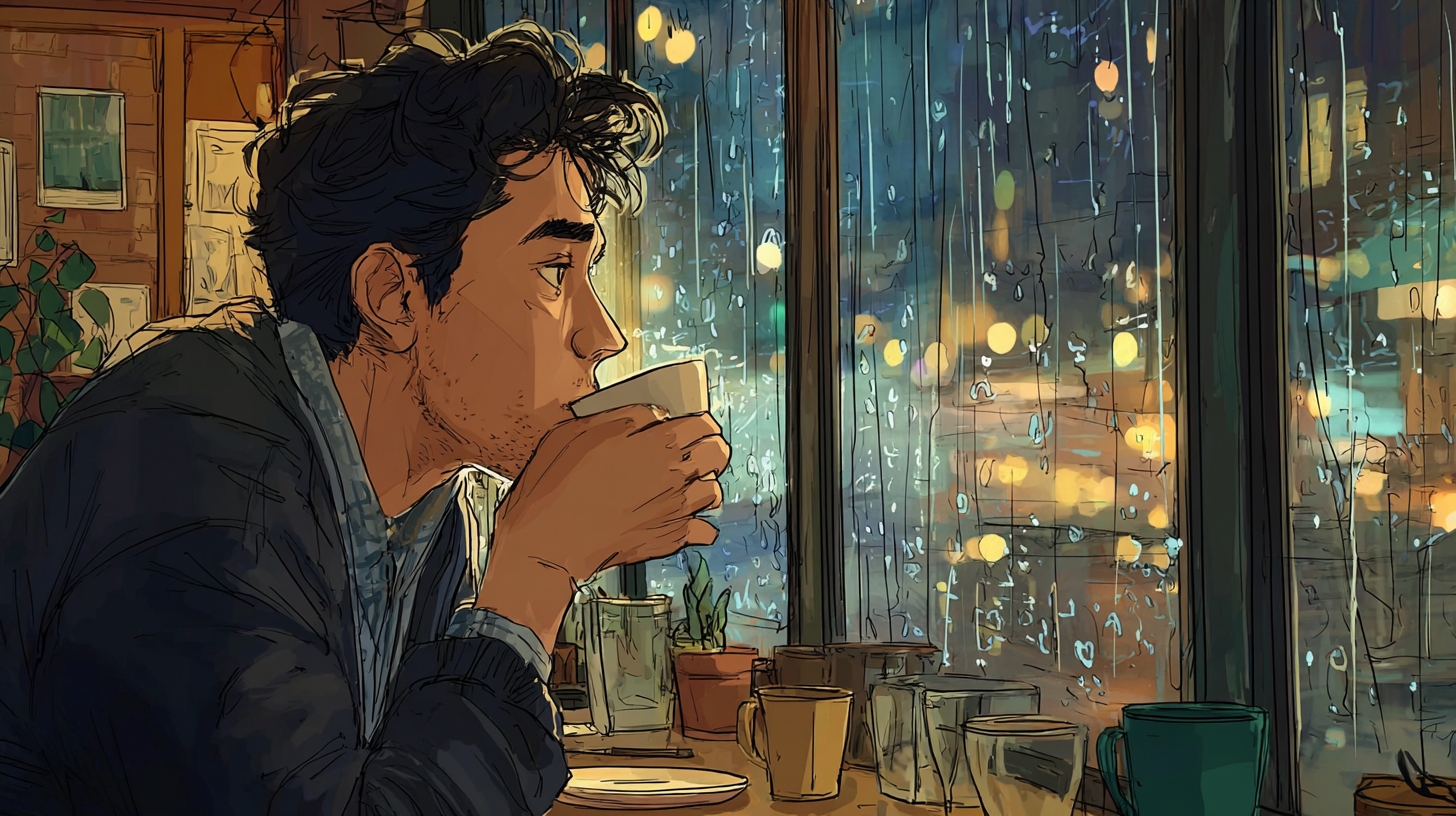
You notice the gap between what people are saying and what they’re actually feeling.
You notice the forced laughter, the polite lies, the guy talking about how great his marriage is when you can see the strain in his eyes.
You notice the conversations that are all surface and no substance, sports scores, real estate prices, and complaints about traffic.
And this creates a kind of dissonance in you. A friction. Because you can’t quite participate in the pretense with the same ease.
You want something real. Something genuine. Some actual connection beneath all the social choreography.
I’ve sat through countless dinners where we’re supposedly among “friends,” yet we’re all carefully avoiding any topic that might reveal who we actually are.
No one talks about their fears, their doubts, the questions that keep them up at night. No one admits they don’t have it all figured out.
Everyone’s performing success, performing happiness, performing the role of the man who’s got his shit together.
And you’re sitting there thinking: Is anyone else aware this is all theater?
This awareness is exhausting. This double consciousness, being in the experience while simultaneously being aware of the artificiality of it, takes a toll.
It’s like being in a play where everyone else has forgotten they’re actors and thinks the stage is real life, and you’re the only one who can still see the scenery for what it is.
The Restoration of Solitude
Now contrast this with what happens when you’re alone.
When you’re alone, you can drop all the masks. You don’t have to perform. You don’t have to manage anyone else’s emotional state or navigate complex social dynamics. You can just be.
And in that being, in that simple, uncomplicated existence, there’s a profound rest.
The extrovert experiences being alone differently. For him, solitude can feel empty, under-stimulating, maybe even a bit depressing. He needs the external input, the interaction, the stimulation of other minds and personalities to feel fully alive.

But for you, solitude is not deprivation. It’s restoration.
It’s where you recharge. Where you process all that input you’ve been absorbing. Where you integrate your experiences. Where you reconnect with yourself.
I’ve learned that my best thinking happens alone. My clearest insights come during long walks by myself or quiet mornings with coffee before anyone else is awake.
The projects I’m most proud of, the creative work, the problems I’ve solved, almost all of it happened in solitude.
This is why, after a gathering, you need a significant recovery period. You’re not just tired from staying up late.
You’re tired because you’ve been processing vast amounts of subtle information, maintaining your social performance, managing the dissonance between authenticity and pretense, and absorbing the emotional field of everyone around you.
You need time to discharge all of that. To let your nervous system settle. To return to your baseline.
Explore More: The Loneliness of Outgrowing Everyone Around You: A Truth for Men Over 40
This Is Not a Weakness
Here’s what you need to understand in your bones: this is not something to be fixed or overcome.
The depth of processing you’re capable of, the sensitivity of your perception, these are gifts.
Yes, they come with challenges. Yes, they make certain situations more difficult. But they also allow you to see things others miss.
To understand at levels others cannot reach. To experience life with a richness and depth that the purely extroverted person may never know.
The problem is not that you’re drained by social gatherings.
The problem is that we live in a society that has organized itself around extroverted values and then pathologized everyone who doesn’t fit that mold.
We’ve created a world where constant interaction is valued over deep reflection. Where breadth of social connection is prized over depth of understanding.
Where being the life of the party is seen as superior to being the thoughtful observer in the corner.
But think about what the world would lose if everyone was an extrovert.
Who would do the deep thinking? Who would create the art, write the books, make the scientific discoveries that require long hours of solitary focus?
Who would see the patterns that emerge only in quiet contemplation? Who would understand the subtle truths that reveal themselves only to those who know how to be still?
The universe needs both. It needs the ones who are energized by interaction and the ones who are energized by solitude. It needs the broadcasters and the receivers.
It needs those who skim along the surface of life and those who dive into the depths.
Both are necessary. Both are valuable. Both are exactly as they should be.

How to Navigate Your Nature
Once you accept this about yourself, truly accept it, not just intellectually but deep down. Everything changes.
You stop trying to force yourself to be someone you’re not. You stop feeling guilty about leaving the party early.
You stop measuring your worth by how many friends you have on Facebook or how often you go out.
Here’s what I’ve learned to do:
I’m selective about which gatherings I attend. Not every invitation requires acceptance.
I ask myself: Will this genuinely nourish me, or am I just going out of obligation or fear of missing out? Most of the time, I’m not actually missing anything.
When I do go, I set boundaries. I don’t stay until the bitter end. I permit myself to leave when I feel the drain beginning.
I’ve stopped making excuses: “I have an early morning” and started being honest: “I’m going to head out. I’ve hit my limit for the evening.”
I focus on quality over quantity. Rather than trying to work the whole room, I find the one or two people who are capable of real conversation and spend my time with them.
One genuine connection is worth a dozen superficial exchanges.
I take breaks. At longer events, I step outside. I find a quiet corner. I give myself moments of silence in the midst of the noise. Even just five minutes of solitude can reset your system.
I plan recovery time. If I have a big social event, I don’t schedule anything demanding the next day. I give myself space to recharge.
Most importantly, I’ve stopped apologizing for who I am.
Finding Your People
Here’s the beautiful thing: once you stop trying to be like everyone else, once you honor your need for solitude and limited social interaction, you’ll find that the social interactions you do have become more meaningful.
You’re no longer scattering your energy trying to please everyone or fit in.
You’re being yourself.
And that authenticity attracts the kind of connections that actually nourish rather than drain you.
You’ll find your people, the other deep processors, the other ones who prefer one profound conversation to ten superficial ones.
The other ones who know that the silence between two people can be more intimate than any words.
I’ve found my tribe in unexpected places: a book club that’s less about the books and more about the questions they raise, long phone calls with old friends who live far away but understand me better than the neighbors I see every day.
With these people, gathering doesn’t feel like such a drain because there’s less pretense, less performance, more genuine meeting.

The Gift of Your Nature
The next time you’re at a gathering and you feel that familiar drain beginning, remember this:
You’re not broken.
You’re not antisocial.
You’re not defective.
You’re a different kind of instrument, built for a different kind of music.
And the world needs your music just as much as it needs the loud, bright songs of the extroverts.
In your forties and beyond, you have the wisdom and the standing to honor your nature without apology. You don’t need to prove anything to anyone. You don’t need to be someone you’re not.
The depth you bring to the few relationships you cultivate deeply, the insights you gain from your solitary processing, and the work you do in the quiet.
These are your contributions. These are what the world needs from you.
Not your ability to work a room. Not your skill at small talk. Not your willingness to sacrifice your energy to maintain superficial connections.
Alan Watts taught that the universe expresses itself through infinite variation, and every variation has its purpose.
Your sensitivity, your need for solitude, your depth of processing, these aren’t bugs in your design. They’re features.
Honor your nature. Protect your energy. Trust that being exactly who you are is not just okay. It’s necessary.
And the next time someone asks why you’re leaving the party early, you don’t owe them an elaborate explanation. You can simply smile and say: “Because I know myself, and this is what I need.”
That’s not antisocial. That’s wisdom.
——Edited by Fernando Lahoz-García, M.A. in Journalism, Complutense University of Madrid. Based in Florida.
This article is inspired by the philosophical works and ideas of Alan Watts, the British philosopher and writer who interpreted Eastern philosophy for Western audiences. The personal reflections and contemporary examples are original. The core insights draw from Watts’ teachings on human nature, authenticity, and honoring one’s true design rather than conforming to societal expectations.

Travel Kits for Men: Essentials for Your Journey

The Moment You Stop Seeking Approval, You Start Living

How Men Over 40 Can Let Go of What Wasn’t And Embrace What Is
Stop Explaining Yourself: The Moment You Take Back Your Own Life

Traveling to Ireland Alone: Quick Guide for Men in Their 30s, 40s, and 50s+