
The Loneliness of Outgrowing Everyone Around You: A Truth for Men Over 40
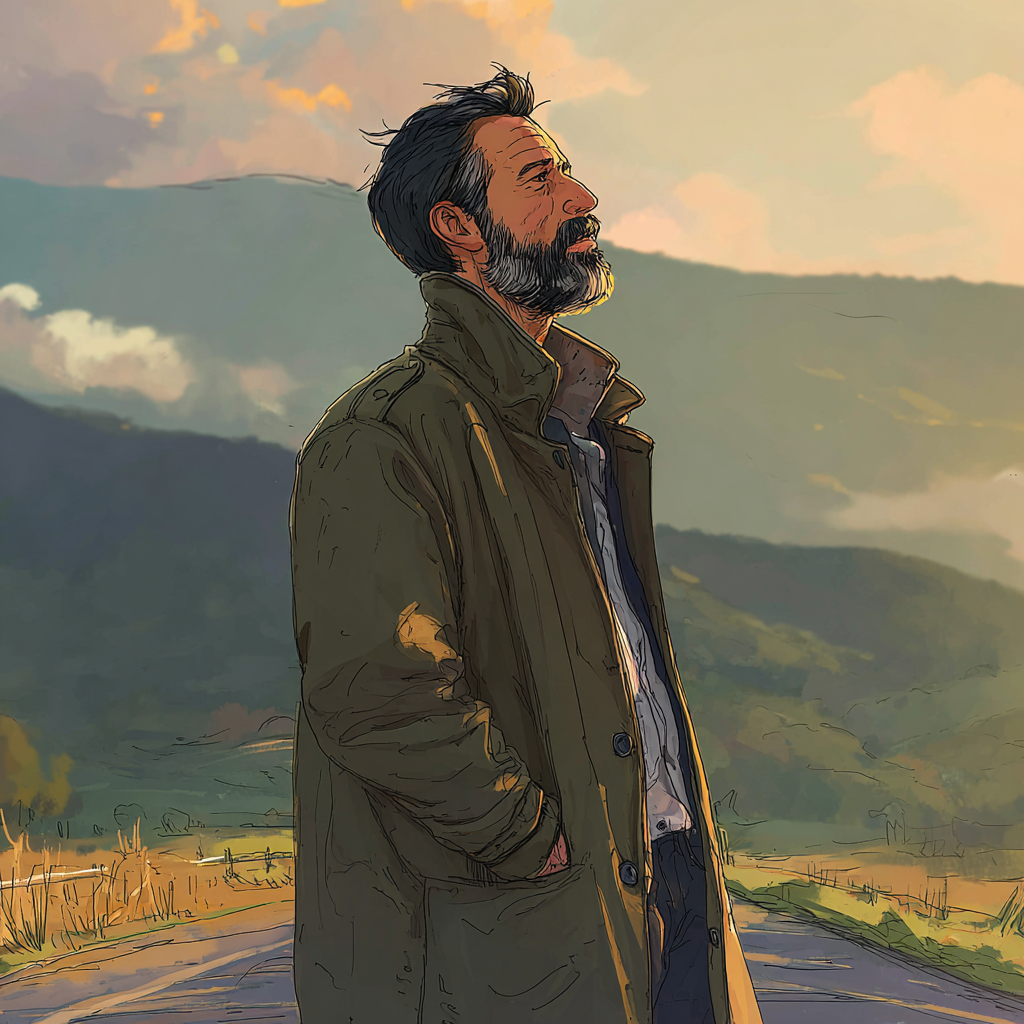
There’s a peculiar loneliness that comes with outgrowing everyone around you. Not in achievement or status, but in awareness.
Not the loneliness of being alone, but something stranger: being surrounded by people you’ve known for decades while feeling like you’re speaking a completely different language.
I’ve felt it at dinner parties where the conversation circles endlessly around mortgages and promotions.
I’ve felt it scrolling through social media, watching old friends fight the same battles they were fighting twenty years ago.
And I’ve felt it most acutely with people I love, people who know my history but can’t quite recognize who I’m becoming.
If you’re reading this and nodding along, you’re not losing your mind. You’re experiencing something that philosopher Alan Watts understood deeply: the strange and sometimes dangerous predicament of waking up while everyone around you remains asleep.
The Uncomfortable Truth About Growth
Here’s what no one tells you about personal evolution: it’s not comfortable, and it’s rarely celebrated by the people closest to you.
Think about a lobster. When it outgrows its shell, it must shed that protective armor and expose itself. Soft, vulnerable, defenseless until a new shell forms.
During those hours, every predator in the ocean would love to make a meal of it.
But if the lobster refuses to shed its shell, clinging to the safety of what it knows, it cannot grow. It remains stunted, confined, unable to reach its potential.
We’re not so different.
By the time you hit your forties, you’ve accumulated a lot of shells: beliefs about success, relationships that define you, ways of seeing the world that everyone in your circle takes for granted.
And at some point, if you’re paying attention, you start to realize these shells don’t fit anymore.
It could have happened gradually. Perhaps it was a crisis: health scare, divorce, career collapse… that cracked everything open.
Or maybe, like many of us, you simply woke up one morning and couldn’t pretend anymore that the things everyone said mattered actually mattered to you.
What It Really Means to Outgrow Others
Let me be clear about something: outgrowing people doesn’t mean you’ve become superior. That’s ego dressed up in spiritual clothing, and it’s a trap I’ve seen too many men fall into.
Suddenly they’re the “awakened” one, rolling their eyes at everyone else’s “unconsciousness.” That’s not growth. That’s just trading one form of self-importance for another.
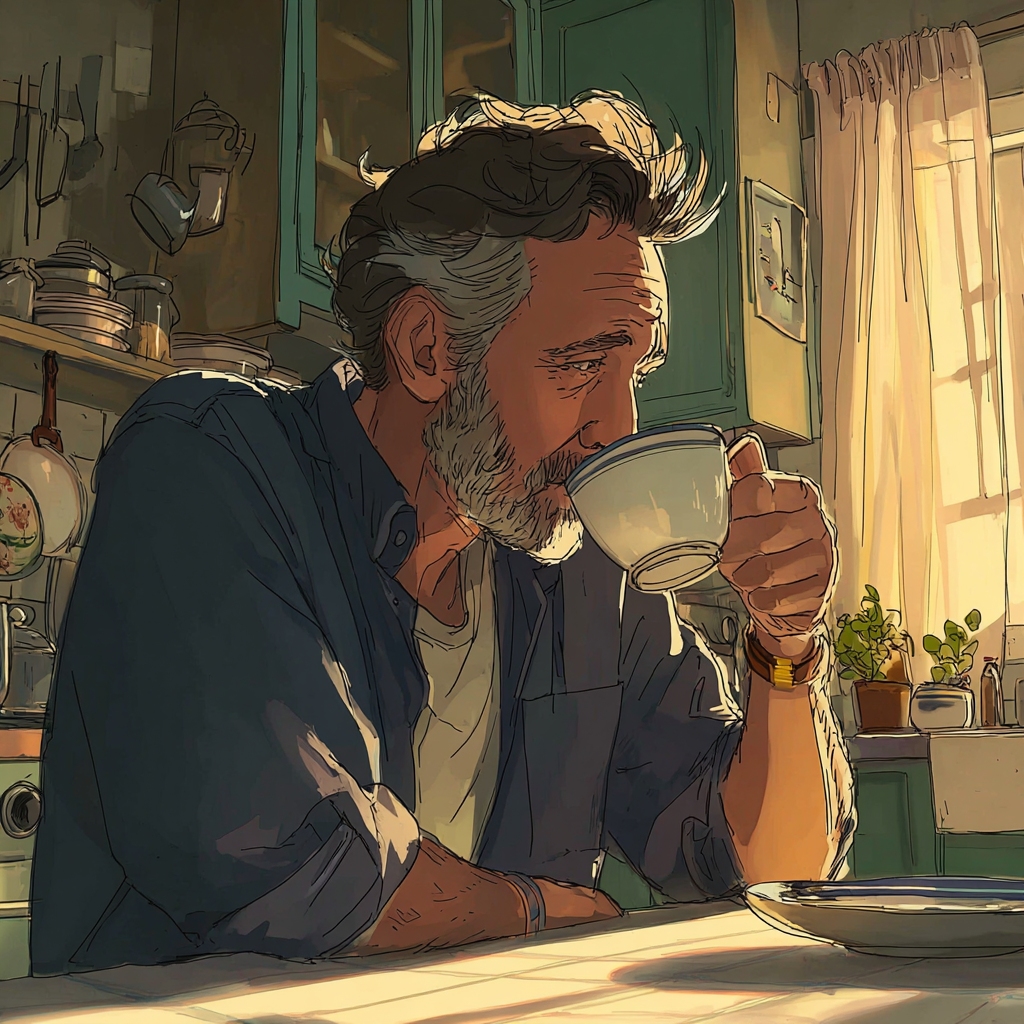
Outgrowing others simply means you’ve begun to see things they don’t see yet. You’ve asked questions they haven’t asked.
You’ve stepped outside the agreed-upon framework of reality while they remain comfortably within it.
Perhaps you’ve questioned the relentless pursuit of wealth and status that once drove you.
Perhaps you’ve realized that the expensive car and the bigger house didn’t deliver the satisfaction everyone promised they would.
Perhaps you’ve had experiences, through meditation, through suffering, through some unexpected opening. That showed you reality is far more mysterious than the solid, objective world everyone believes in.
And now you can’t unsee it.
Living Between Two Worlds
When this shift happens, you find yourself in an odd position. You’re living in two worlds simultaneously.
There’s the conventional world, the world of business meetings and quarterly projections and dinner parties where everyone compares their kids’ college admissions.
Everyone is playing their roles, taking it all very seriously. And you must participate because, well, you have bills to pay and responsibilities to meet.
But then there’s this other dimension, this deeper reality that’s always present but that most people are completely oblivious to.
The dimension where you understand that all of this, the striving, the accumulating, the endless self-improvement projects, is a kind of elaborate game we’ve all agreed to play.
And you must learn to navigate both worlds. You must learn to speak two languages: the language of the marketplace and the language of something more essential, more real.
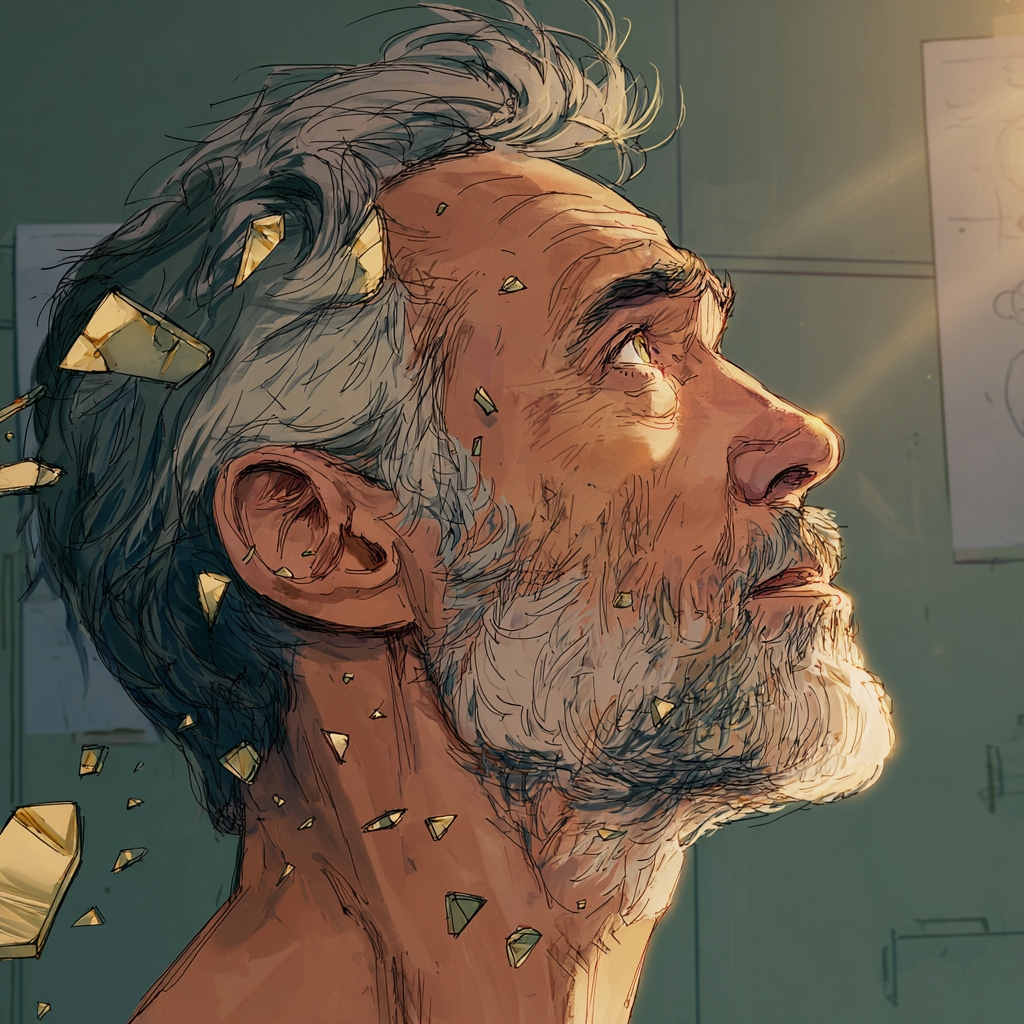
This is extraordinarily difficult.
I remember sitting in a meeting once, listening to executives debate marketing strategies with intense seriousness, and simultaneously being aware of how utterly absurd the whole thing was, not in a cynical way, but in a cosmic sense.
Like watching ants build elaborate colonies, recognizing both the beauty and the ultimately arbitrary nature of it all. I had to participate fully while also holding this larger perspective. It’s exhausting.
The Growing Distance
The people around you, your old friends, your family, maybe even your partner. They’re still operating entirely within the conventional framework.
They’re concerned with their careers, their retirement plans, and their social standing. And these concerns, which once seemed so important to you, now seem rather beside the point.
Not because you’ve become callous. Not because you don’t care about them. But because you’ve seen that there are deeper questions, more fundamental issues at stake.
But you can’t simply tell them this.
You can’t sit down at Thanksgiving dinner and announce, “You know, I’ve realized that the self is an illusion and that we’re all manifestations of one universal consciousness.”
They’ll look at you like you’ve lost your mind. Your brother-in-law will make a joke about your midlife crisis. Your mother will worry. And the conversation will quickly shift to safer topics.
So you remain silent. Or you speak in hints. Or you try to find people who understand what you’re going through.

And this is where the isolation begins.
The people you’ve known all your life, the people you love and care about, increasingly seem to be living in a different reality than you are.
You’re speaking different languages, pursuing different goals, seeing the world through entirely different lenses.
And they sense it, even if they can’t articulate it.
They sense that you’re no longer quite one of them, that you’ve changed in some fundamental way, that you’re not playing the game with the same enthusiasm you once had.
This makes them uncomfortable.
The Ways People React to Your Growth
I’ve noticed three typical responses from people when you begin to outgrow the shared framework.
Some will try to pull you back. They’ll remind you of who you “really are” (which is to say, who you used to be). “You’ve changed,” they’ll say, and it won’t be a compliment.
They’ll call you impractical, irresponsible, self-absorbed.
They’ll remind you of your duties, your place in the social order. They’ll do everything they can to squeeze you back into the box you’ve outgrown, because your transformation threatens their worldview.
Others will simply drift away. The conversations that once flowed easily now feel forced and superficial. You have less in common.
What do you talk about when you no longer care about the things you used to bond over?
The friendship gradually withers, not through any dramatic break, but through a slow, sad drifting apart.
Still others may become hostile. This is particularly true if you’ve outgrown a religious or ideological framework they’re still invested in.
Your very existence becomes a threat.
If you can question the dogmas and find them wanting, what does that say about their own unquestioned beliefs?
You become the heretic who must be saved or shunned.
The Dark Night Between Lives
Here’s what they don’t tell you about transformation: there’s a gap. A period of profound loneliness and disorientation between the old life and the new.
You’ve left behind the familiar landmarks, the comfortable certainties, but you haven’t yet arrived at anything solid to replace them. You’re in between. In limbo.
The mystics called this the dark night of the soul, and now you understand why it’s dark, you’re navigating without a map in territory none of your old friends have explored.
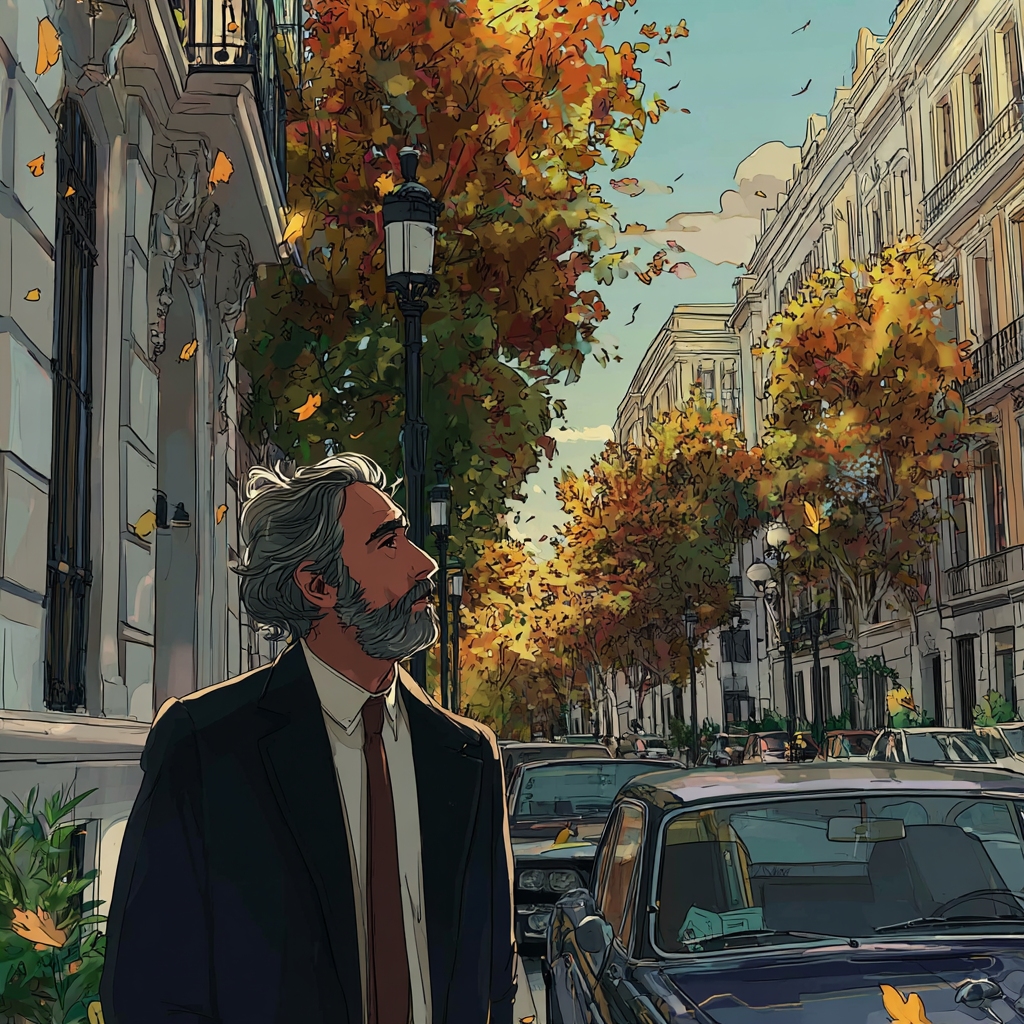
During this time, you may wonder if you’ve made a terrible mistake. If you’ve thrown away everything valuable for some nebulous spiritual fantasy.
You may long for the days when life was simpler, when you fit in, when you didn’t question everything, when you could just go along with the program like everyone else.
I spent months in this place. Feeling like I was failing at the conventional life while not yet having access to whatever came next. Too awake to go back to sleep, too uncertain to move forward with confidence.
But here’s what you must understand: this loneliness is not a sign you’ve gone wrong. It’s a sign you’re going right.
The Courage to Stand Alone
Every hero in every myth must leave the village, must venture into the unknown, must face dragons alone before returning with the treasure.
The treasure, in this case, is your authentic self—your true nature, freed from the conditioning and programming of society.
But you cannot claim this treasure while still clinging to the approval of those who represent that very conditioning.
You must be willing to stand alone. To be misunderstood. To be criticized. To be the weird one at the reunion who doesn’t quite fit anymore.
This doesn’t mean you should go out of your way to alienate people or be arrogant about your insights.
That’s just spiritual egoism, another trap.
What it means is accepting the consequences of your growth with grace and compassion.
Understanding that people are where they are, doing the best they can with the level of consciousness they have.
Not judging them or looking down on them, but simply recognizing that you’re on different paths, at least for now.
And trusting that if you’re meant to have community, it will appear.
Finding Your New Tribe
Here’s the wonderful thing: when you outgrow one level, you don’t remain alone forever.
You find others who have also outgrown that level. You discover a new community of people who speak your language, who understand your experience, who are wrestling with the same questions you are.
I’ve found these people in unexpected places: a conversation with someone at a coffee shop that went deeper than small talk, a book group that became less about the books and more about the questions they raised, online communities of men trying to figure out what masculinity means when you strip away all the cultural programming.
These communities are often hidden.
They don’t advertise. They don’t proselytize. You find them when you’re ready, when your seeking becomes sincere enough, when your loneliness becomes acute enough.
The key is not to cling desperately to old relationships out of fear, but also not to cut ties prematurely out of pride. There’s a middle way.
You maintain what connections you can maintain authentically.
You honor your history, your roots, the people who loved you before you changed. But you don’t betray yourself to preserve those connections.
You don’t make yourself small to make others comfortable.
And sometimes, miraculously, the people around you grow too.
Your transformation becomes a catalyst for their awakening. They see something in you: a peace, a clarity, a freedom. And they want it for themselves.
Then the relationship transforms along with you, deepens, becomes more real.
But you can’t force this. You can’t make people grow. All you can do is be yourself and trust that those who are ready will recognize it.
What You Gain When You Lose Everything
The danger of outgrowing everyone around you is real.
You may lose friends, family members, and communities that once defined you.
You may go through periods of profound loneliness. You may question whether it was worth it.
But I can tell you: on the other side of this danger is a freedom and authenticity that makes all the losses worthwhile.
Because what you gain is yourself. Your true self.
Not the self that was constructed to fit in, to please others, to meet expectations, to play the role of successful man that society handed you.
And once you’ve found that, once you’ve tasted that freedom, you realize you were never really losing anything real. You were only losing illusions, masks, false identities.
The real connections, the real love, the real community, these remain, or they appear anew, deeper and truer than before.
The Path Forward
If you find yourself outgrowing those around you, know that you’re not alone, even in your aloneness.
Know that this is part of the process, part of the path. Know that it’s temporary, this loneliness, this sense of being between worlds.
And know that the courage it takes to keep growing, to keep being true to what you’ve seen, even when it costs you everything familiar, this courage is the mark of something rare.
Alan Watts understood there’s no way around it. The shell must be shed. The comfortable illusions must be released.
But what emerges is so much more beautiful, so much more free, so much more alive than what was lost.
At forty-something, standing in the ruins of the life you thought you were supposed to live, you have a choice.
You can try to rebuild the same structure, climb back into the shell that no longer fits, pretend you haven’t seen what you’ve seen.
Or you can trust the process. Trust your growth. Trust that life, in its infinite intelligence, is guiding you exactly where you need to go.
Even when the path leads through darkness and uncertainty. Even when everyone thinks you’re crazy. Even when you’re not sure yourself.
The danger is real. But so is the freedom on the other side.
And you’ve come too far to turn back now.
—Edited by Fernando Lahoz-García, M.A. in Journalism, Complutense University of Madrid. Currently based in Florida.
This content is for educational purposes only and not intended to diagnose, treat, prevent or cure any physical, mental or emotional issue, disease or condition. If you are experiencing a mental health issue, please contact a professional.
This article is inspired by the philosophical works and ideas of Alan Watts, the British philosopher and writer who interpreted Eastern philosophy for Western audiences. While the personal reflections and contemporary examples are original, the core insights draw from Watts’ teachings on authenticity, transformation, and the courage required to live beyond social conditioning.
Explore More: How Men Over 40 Can Let Go of What Wasn’t And Embrace What Is

60+ Actually Good Pick-Up Lines (Plus SFW “Dirty” Ones)

What to Do When You Are Retired and Alone: Finding Purpose, Connection, and Joy

Inspirational Quotes for Men Over 40
10 Essential Tips for Maintaining Men’s Health and Wellness

Comprehensive Grooming Essentials Guide. Top Tips for Men