50 Modern Mullet Hairstyles: How-To Guide & Maintenance Tips
The modern mullet haircut has become one of the most popular men’s haircuts, blending the classic short-front, long-back formula with contemporary fades, textured layers, and precision styling that feels fresh and intentional.
What is a Modern Mullet Haircut?
The modern mullet is a revival of the signature mullet shape, with shorter hair at the front and sides and more length at the back, updated with clean tapers, fade variations, blended layers, and textured cutting techniques.
Unlike the 1980s version, today’s modern mullet is refined and versatile, ranging from subtle business-appropriate styles to bold, statement-making looks.
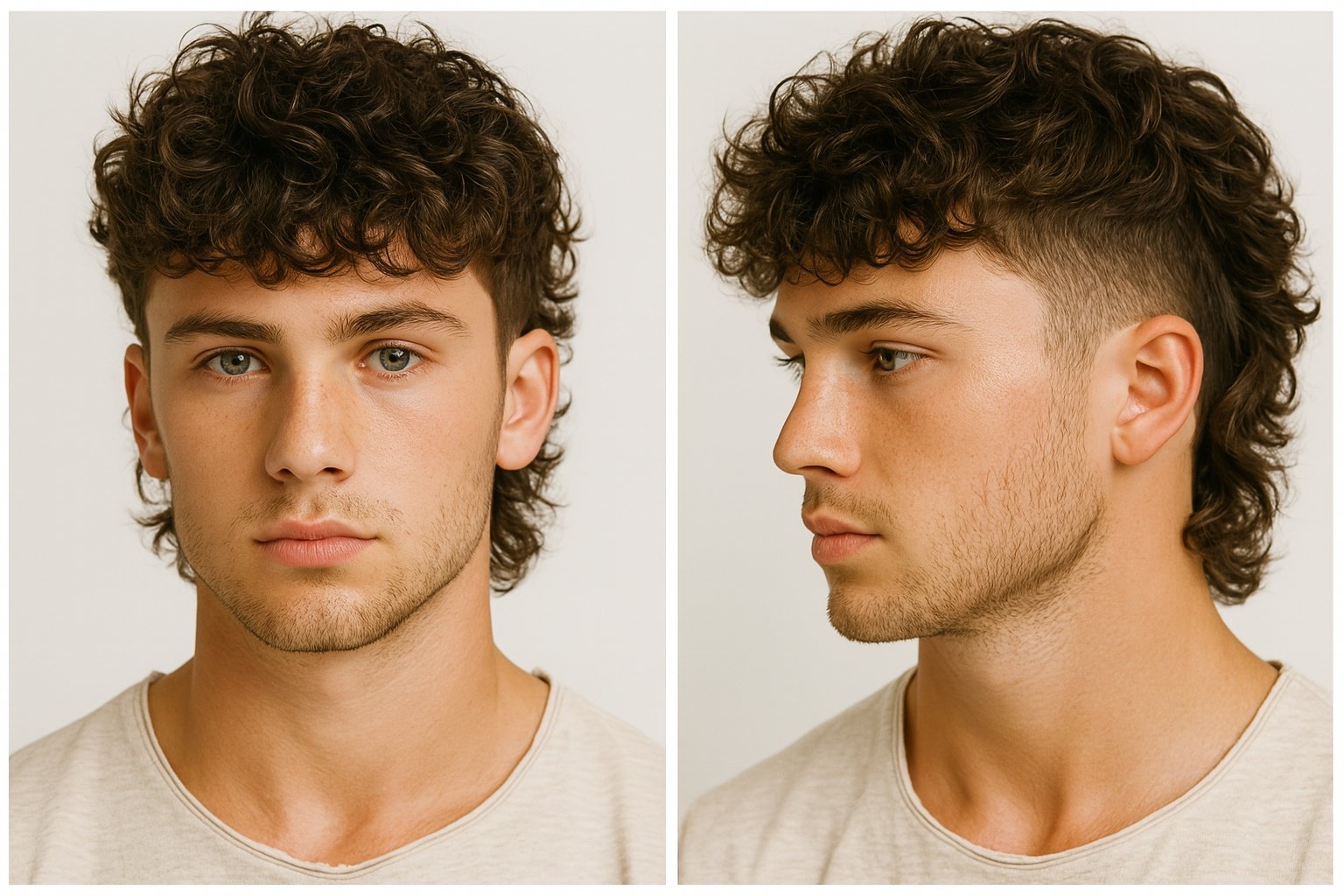
Among contemporary hairstyles, the modern mullet is one of the biggest men’s hair trends, defined by hybrid styles that combine its signature length with fades and clean, modern shaping.
Key features of a modern mullet:
- Tapered, faded, undercut, or natural sides depending on how much contrast you want
- Textured layers on top for volume and movement
- Flowing length at the back that can be styled sleek, soft, or messy
- Customizable proportions to suit different face shapes and hair types
It is a haircut that can be both polished and wild, classic and undeniably current.
50+ Modern Mullet Haircuts and Variations
The modern mullet works across different face shapes when styled strategically. Round faces look best with volume on top to add height, while angular or square faces pair well with structured fades and clean lines. For longer face shapes, softer layers and textured movement create balance.
1. Mini Mullet (Soft / Baby Mullet)
The mini mullet keeps the silhouette short, subtle, and easy to wear. The difference in length at the nape is modest, the sides stay neat, and the top can be textured or softly shaped depending on your hair type.
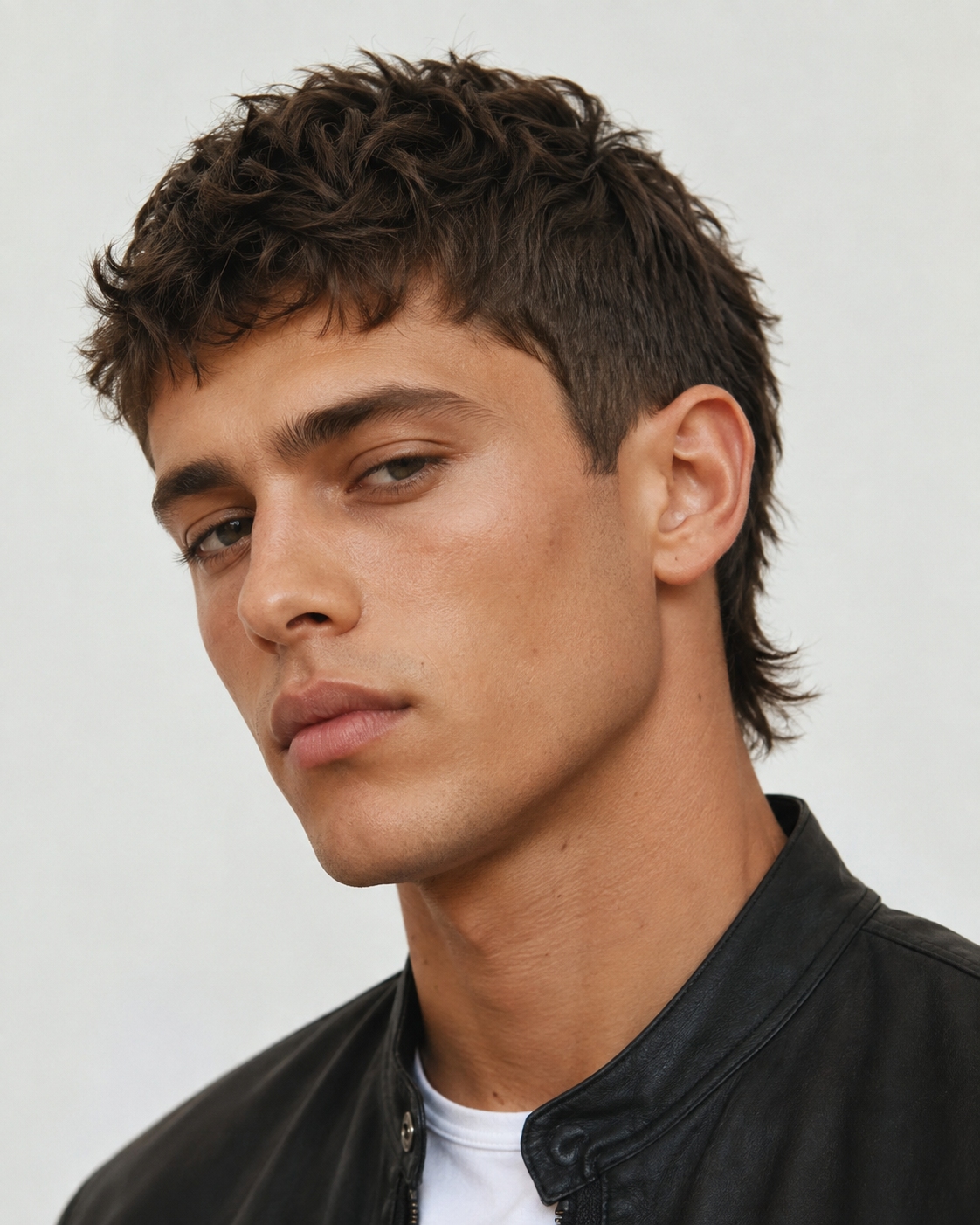
It is one of the best entry points for guys who like the idea of a mullet but want something restrained enough for everyday life.
Hair type: All textures
Maintenance: Every 4–5 weeks
Styling tip: Keep the top natural and lightly textured. The point is subtle shape, not exaggerated contrast.
2. Modern Mullet with Low Taper Fade
This version keeps the back relatively controlled while leaving more volume through the top and nape. A subtle low taper fade cleans up the sides without creating harsh contrast.
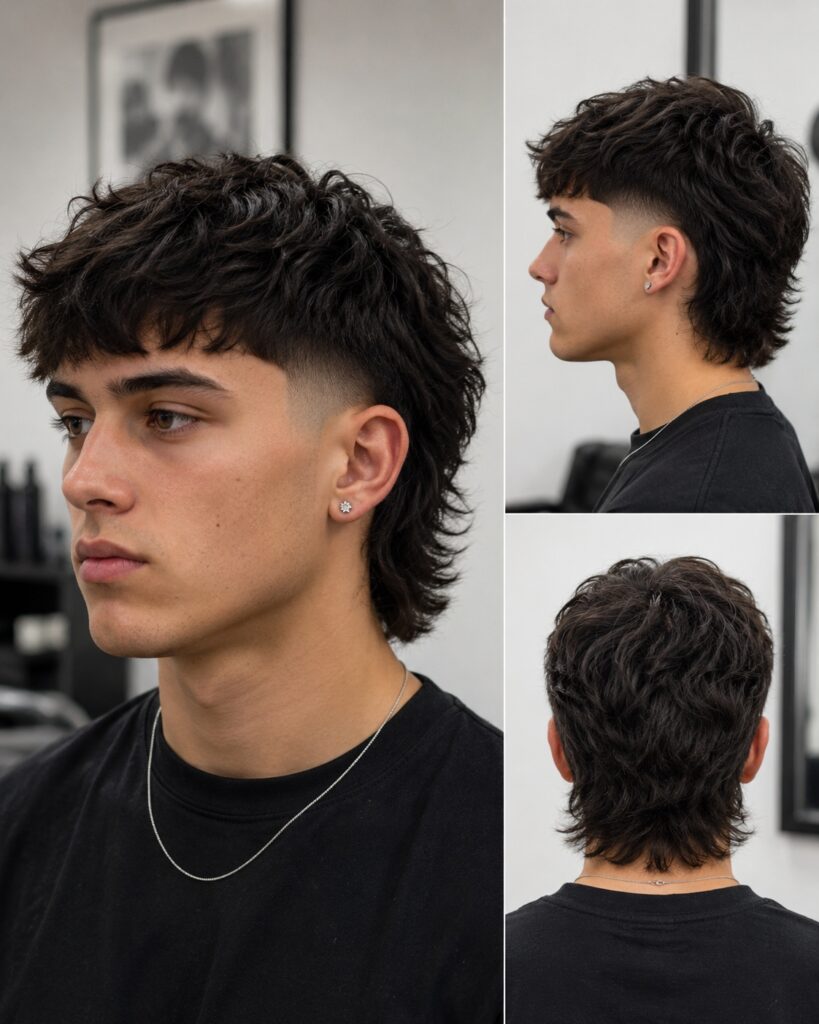
Hair type: Works on all textures, especially effective on straight to wavy hair
Maintenance: Every 3–4 weeks for taper touch-ups
Styling tip: Use matte clay for texture definition and sea salt spray for natural movement.
3. Burst Fade Mullet
The burst fade mullet follows the natural curve of the ear, forming a rounded arc that contrasts sharply with the longer hair at the back.
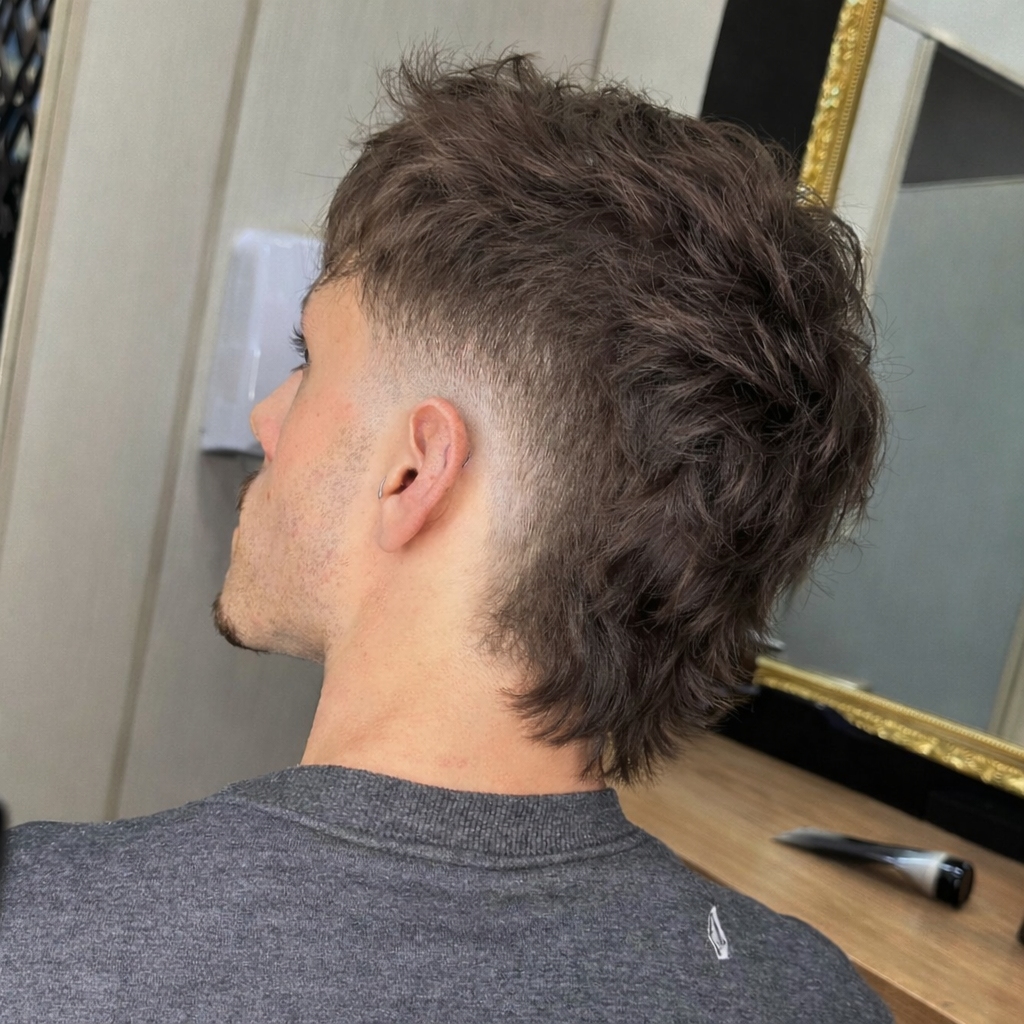
It is one of the cleanest and most sculptural mullet variations, especially when the top stays textured and the back is left to flow naturally.
Hair type: Thick to medium density, straight to wavy
Maintenance: Every 2–3 weeks for fade precision
Styling tip: Minimal styling is needed. Let the structural fade do most of the visual work and keep the top lightly textured.
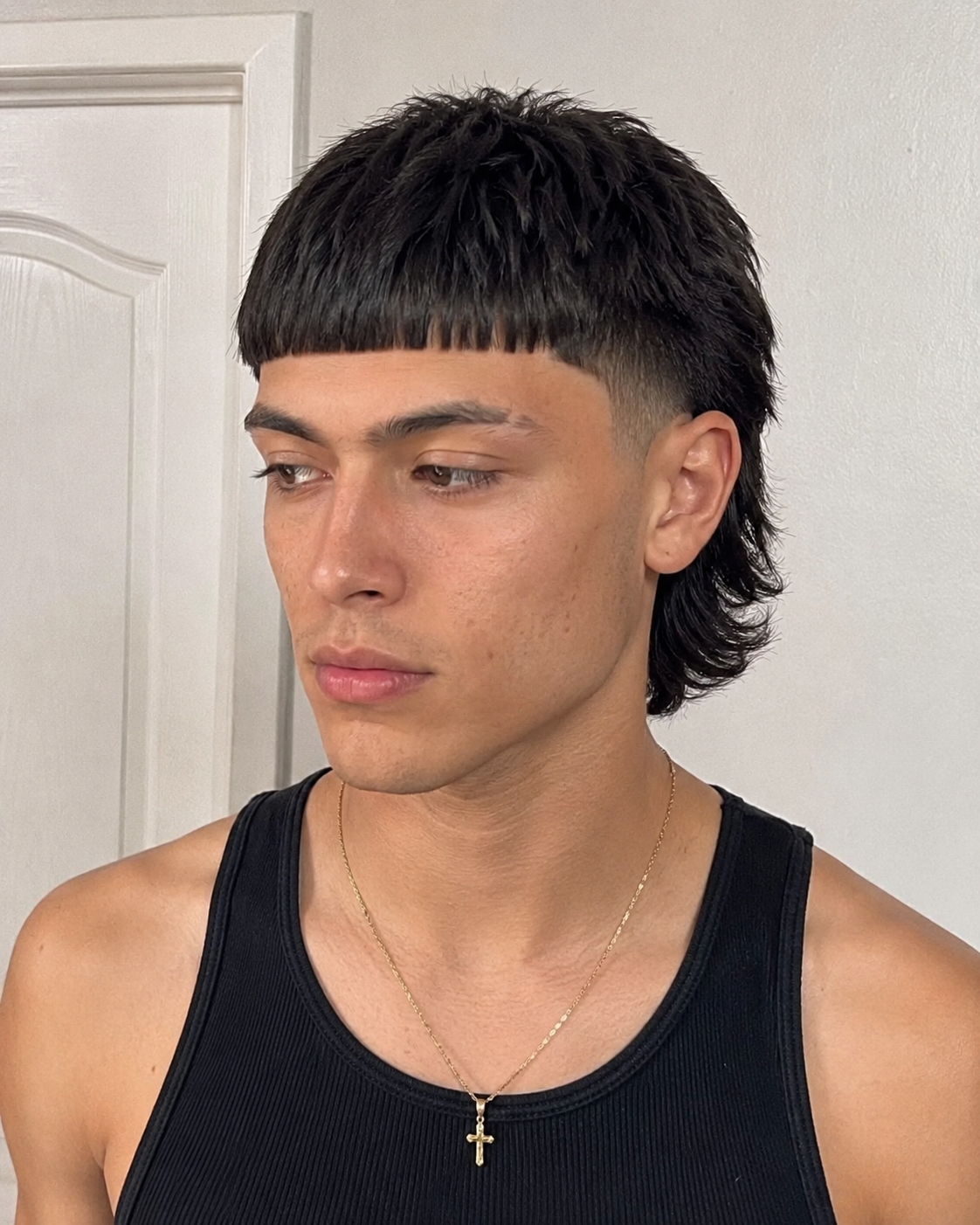
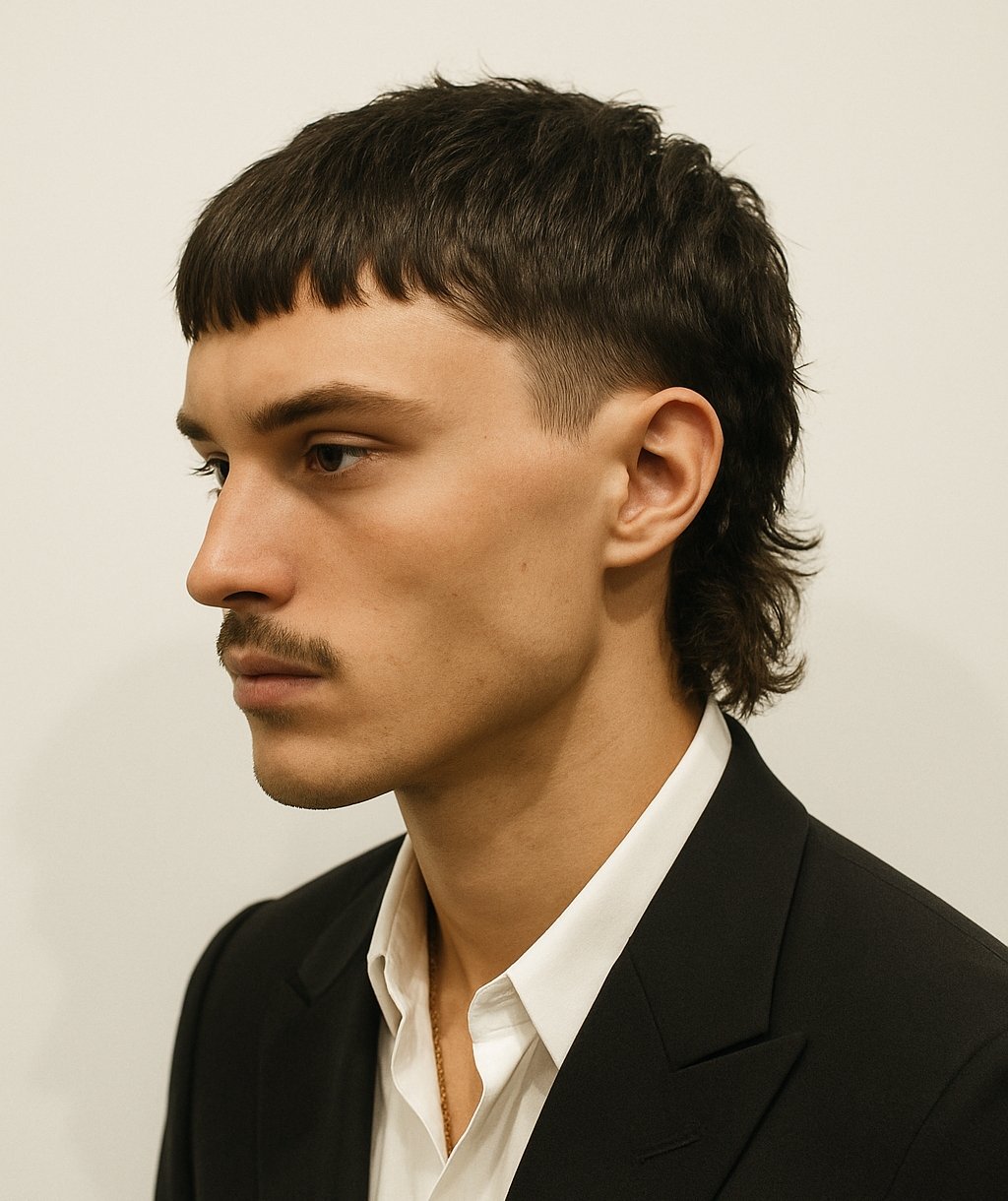
4. Edgar Cut Mullet
The Edgar mullet combines a sharp, boxy fringe with mullet length at the back. The geometric front edge is the defining feature, creating a strong contrast against the looser back section.
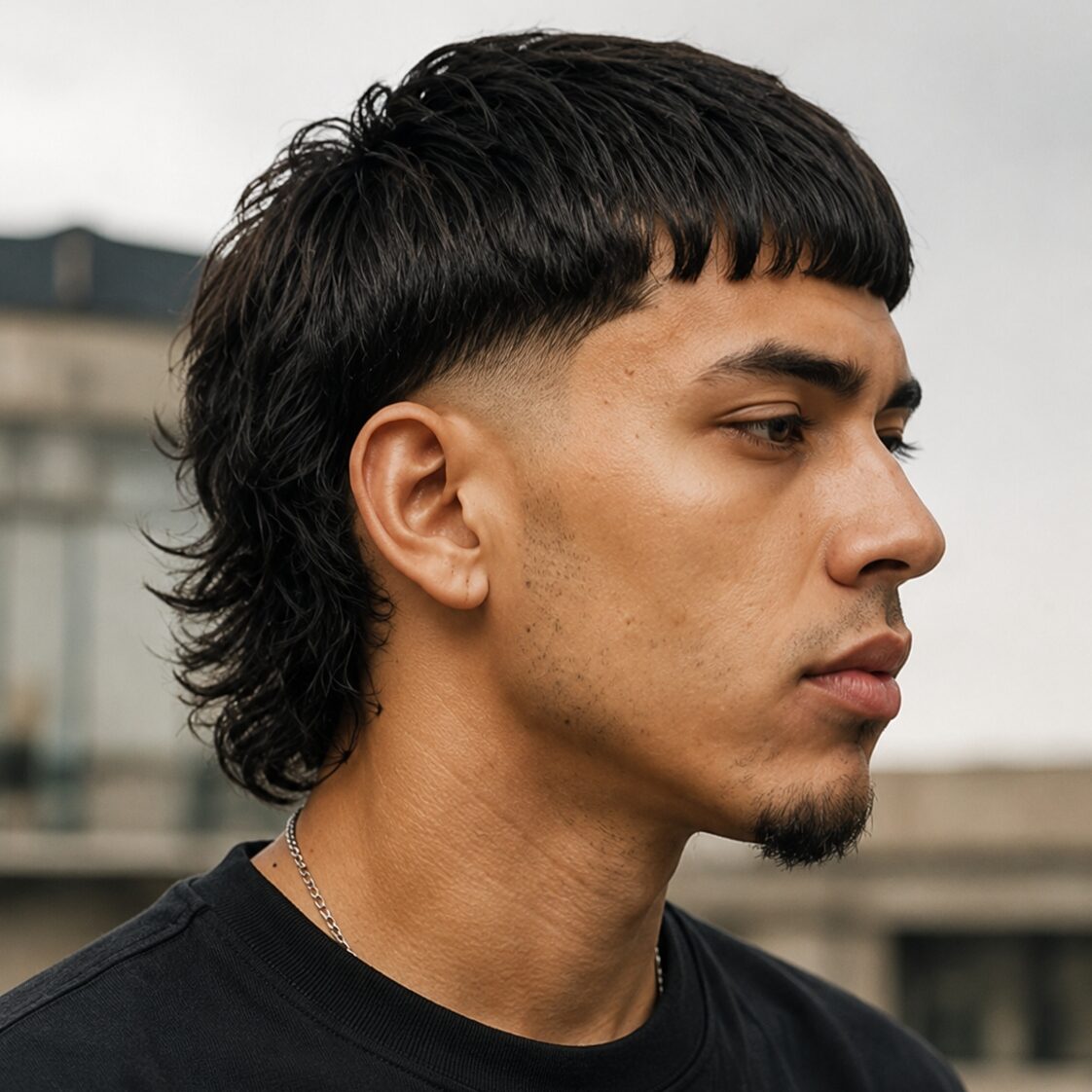
The Edgar haircut is essentially a sharper, more modern take on the classic bowl cut. Instead of keeping the hair one uniform length around the head, the Edgar pairs its signature straight, blunt fringe with tapered or faded sides and back, creating a much stronger contrast and a more defined overall shape.
Hair type: Straight to wavy, ideally medium to thick density
Maintenance: Every 2–3 weeks to keep the fringe edge crisp
Styling tip: Keep the fringe blunt and controlled. Use only a small amount of matte product to avoid softening the outline.
5. Modern Mullet with Messy Texture
Think messy front, tapered sides, and a lived-in back that looks easy rather than over-styled. This version uses texture to make the haircut feel casual and modern.
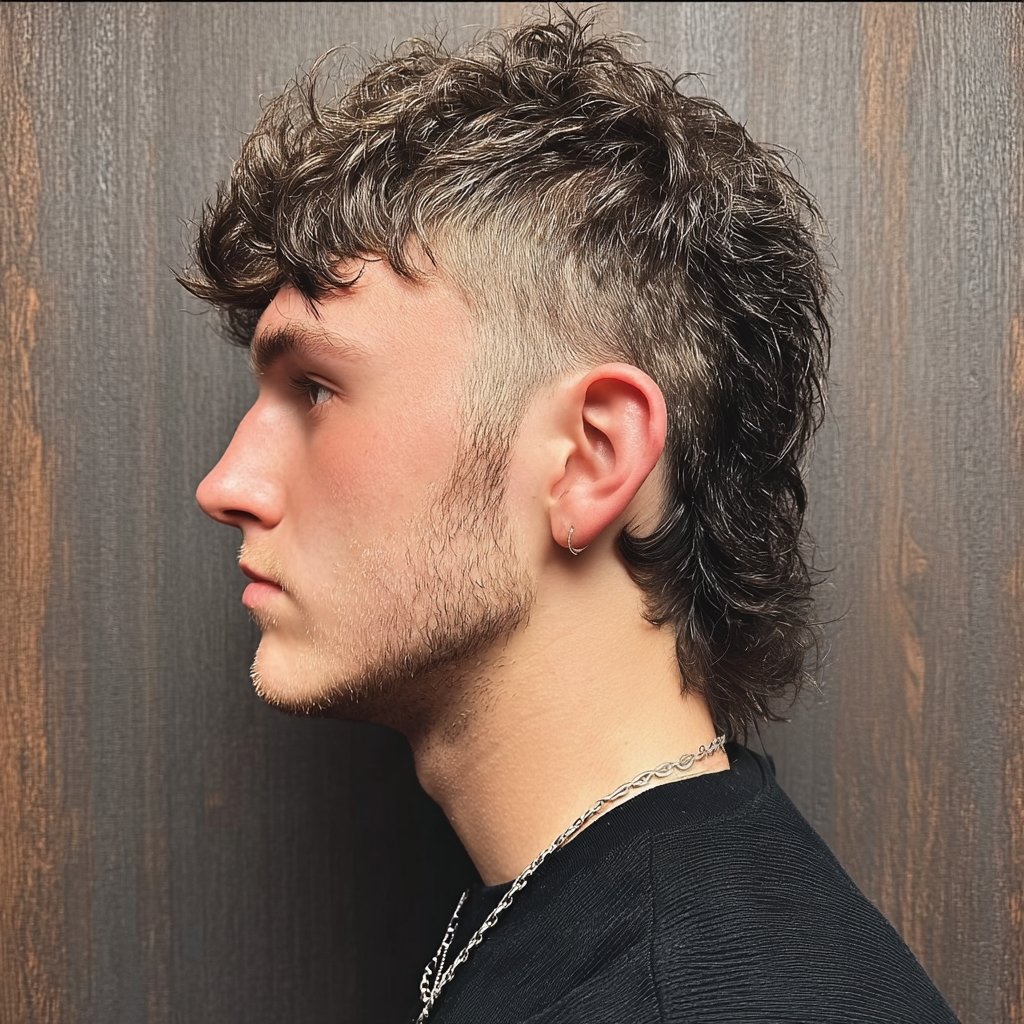
Hair type: Straight to wavy, medium thickness
Maintenance: Every 4–6 weeks
Styling tip: Apply texturizing paste for separation and use your fingers, not a comb, to keep the finish slightly undone.
6. Fluffy Modern Mullet
The fluffy mullet is built around airy volume. Instead of defining every piece with product, the haircut relies on lighter layering and root lift through the crown for a softer, fuller silhouette.

It works especially well when you want a mullet that feels youthful and easy without a fade.
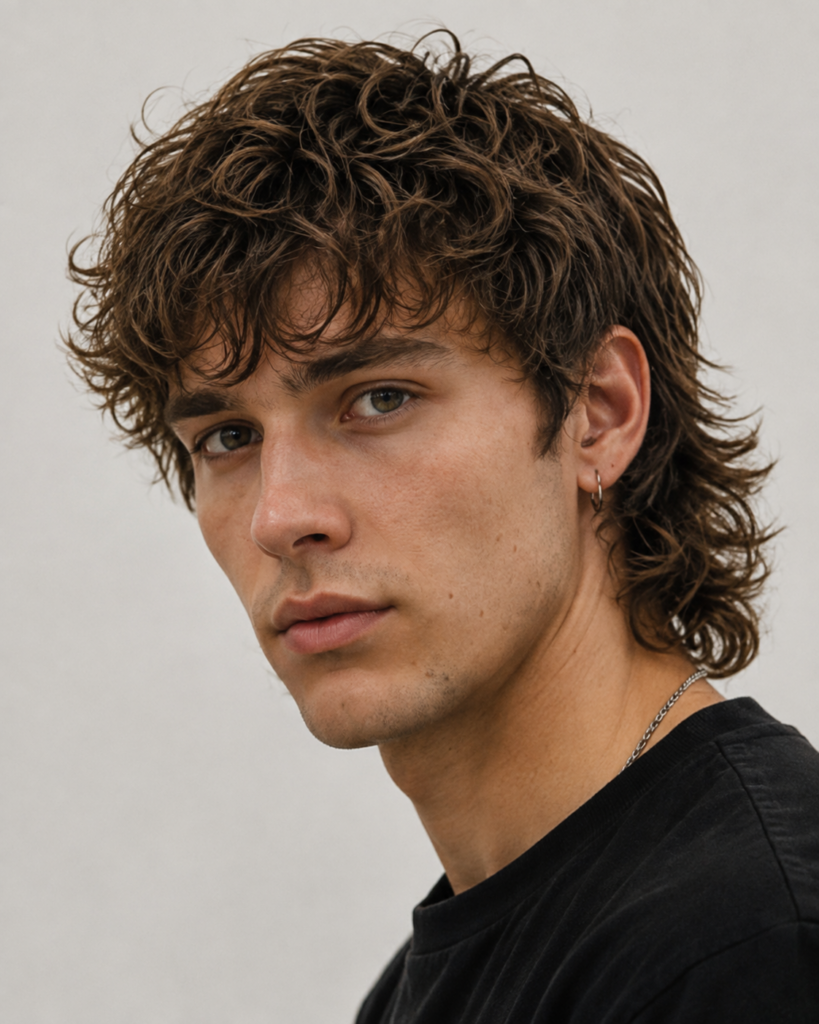
Hair type: Straight to wavy, medium to thick density
Maintenance: Every 5–6 weeks
Styling tip: Blow-dry lightly at the roots with mousse, then finish with your hands so the shape stays soft.
7. Curly Textured Modern Mullet with Taper
The curly mullet let the curls do the work. The taper around the ears gives structure, while the top and back stay loose and voluminous. This variation depends more on shape and curl placement than on sharp fading.
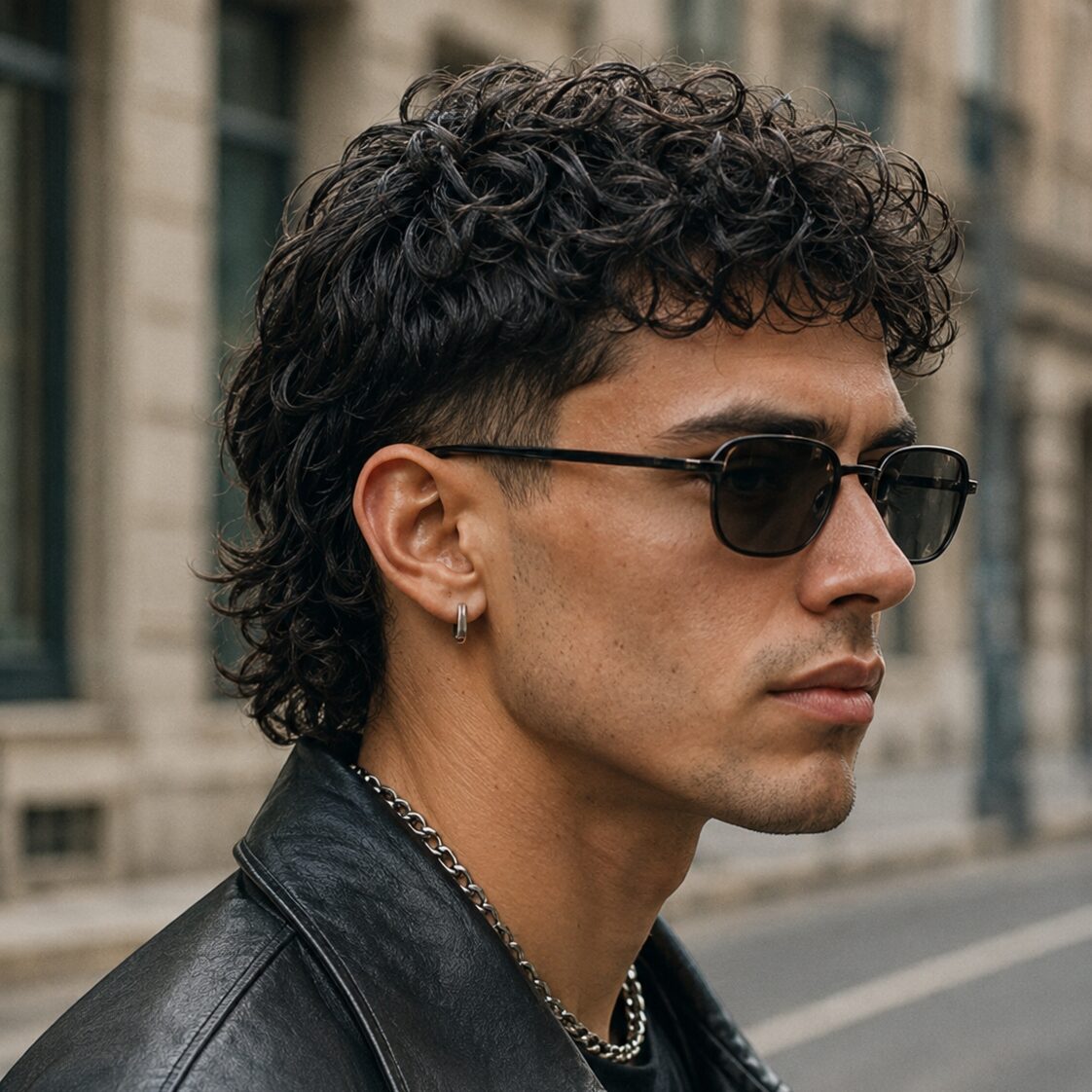
It is one of the best mullets for naturally texture-rich hair, but it works best when cut by someone who understands curls.
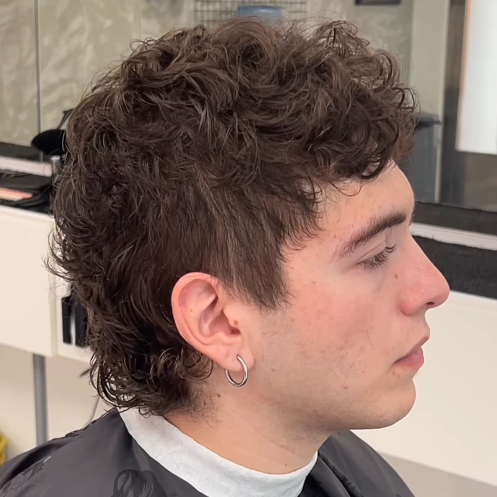
Hair type: Curly to coily textures
Maintenance: Every 4–5 weeks for shape maintenance
Styling tip: Use leave-in conditioner and curl cream, then diffuse or air-dry for definition without frizz.
8. Coily Mullet
The coily mullet keeps shape through the temples and sides while letting tighter texture build volume on top and through the back.
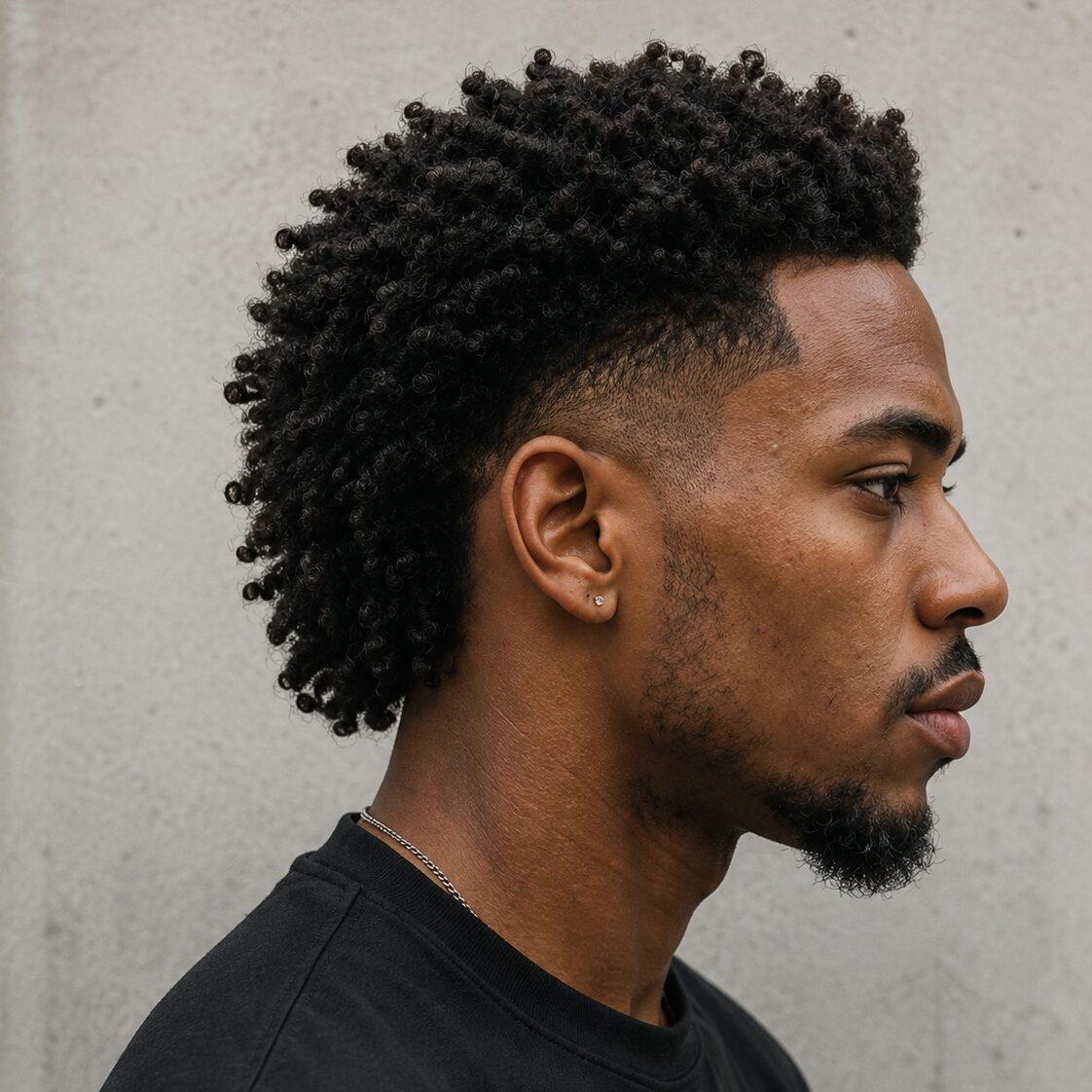
It can be worn with a taper, a soft fade, or a fuller scissor-finished edge depending on how much contrast you want.
Hair type: Coily and tightly curled textures
Maintenance: Every 4–6 weeks
Styling tip: Use a leave-in moisturizer and curl-defining cream. Ask for shape, not bulk, especially through the back.
9. Wavy Modern Mullet
The wavy modern mullet is one of the easiest versions to wear because the natural bend in the hair already creates movement through the top and back.
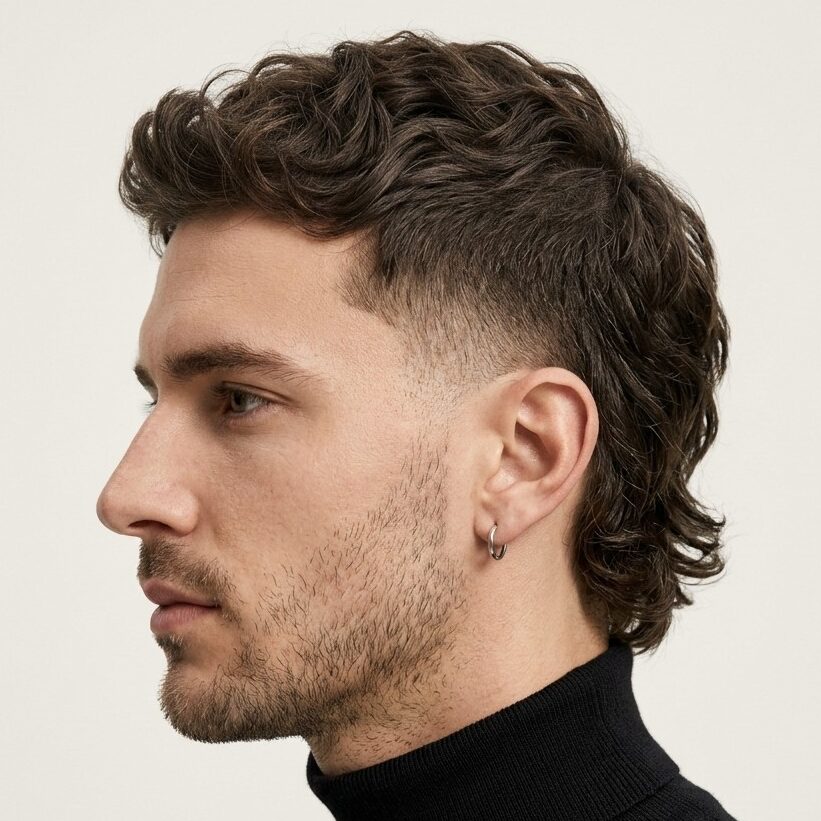
The cut looks best when the waves are enhanced rather than flattened.
It can be paired with a loose taper, grown-out sides, or even a softer scissor cut depending on how polished you want the final result to feel.
- Apply sea salt spray to damp hair
- Scrunch through the mid-lengths and ends
- Let it air-dry whenever possible for the most natural finish
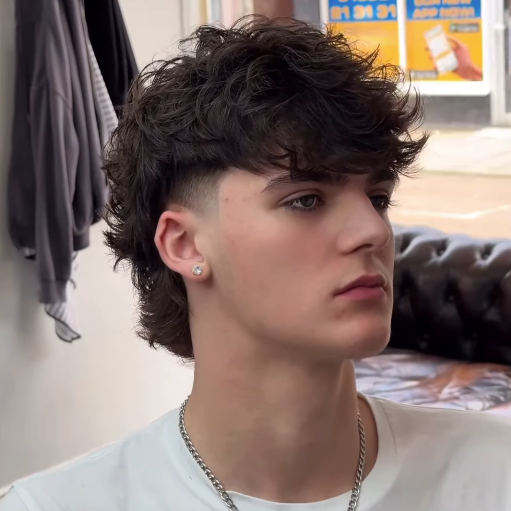
Hair type: Natural waves, especially 2A–2C patterns
Maintenance: Every 6–8 weeks
Styling tip: Use a light sea salt spray or wave cream and avoid over-brushing. The more natural the movement, the better the cut reads.
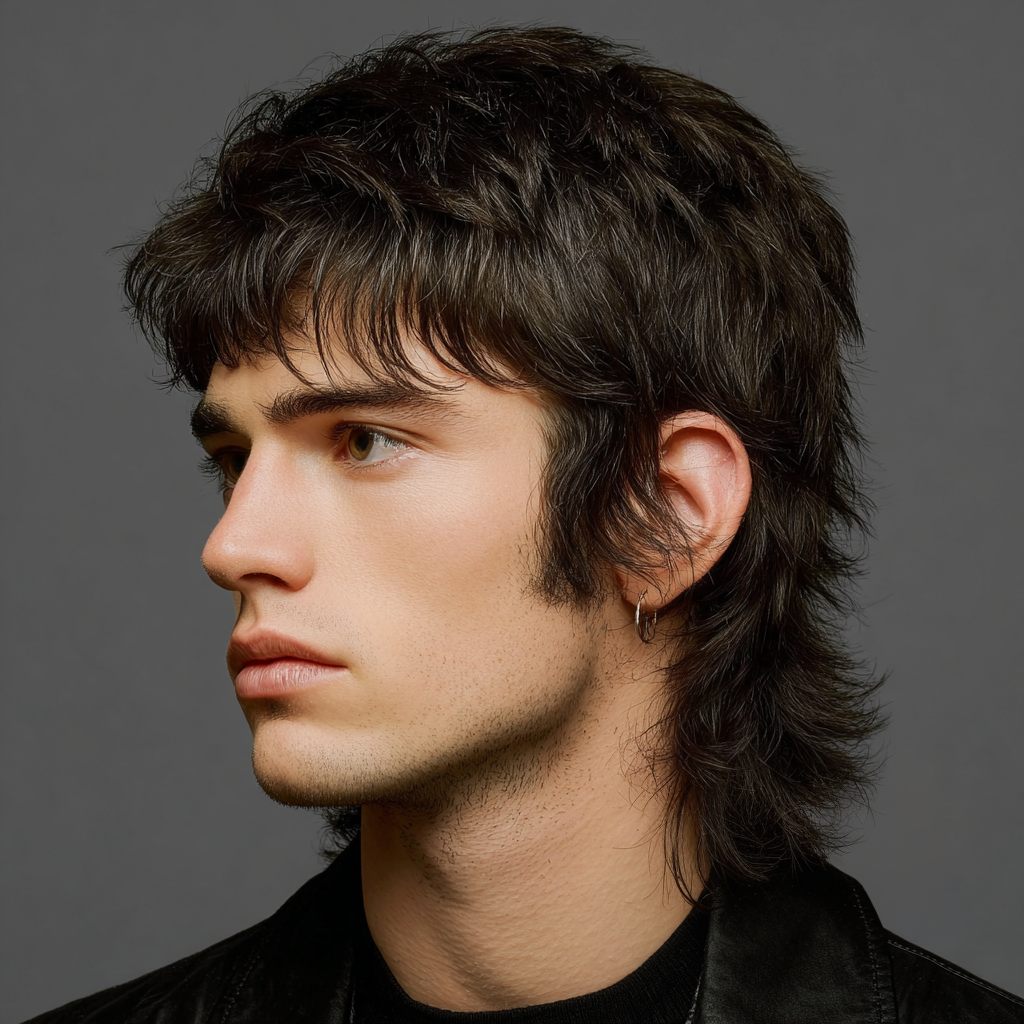
10. Shaggy-Layered Modern Mullet
The shag mullet is one of the clearest examples of a vintage-modern hybrid. It does not rely on a fade, but on broken layers from crown to nape that give the haircut softness and movement.

It keeps the rebellious feel of a mullet while making the outline more wearable and fashion-forward.
Hair type: All textures, especially wavy hair
Maintenance: Every 5–6 weeks for layer refresh
Styling tip: Use volumizing mousse for lift and a light cream or oil through the ends for a softer finish.
Explore More: Reviving Retro Cool: The Shag Haircut for Men
11. Textured Fringe Mullet
A textured fringe gives the mullet more identity from the front. Short broken pieces across the forehead add shape, while the crown and back build into the longer mullet profile behind them.

It is a smart bridge between crop-style haircuts and more alternative mullet shapes.
Hair type: Straight to wavy
Maintenance: Every 4–5 weeks
Styling tip: Use a small amount of matte paste and pinch the fringe into visible sections.
12. Straight Hair Mullet with Sharp Lines
Straight hair tends to make every perimeter, taper line, and fringe shape more visible.
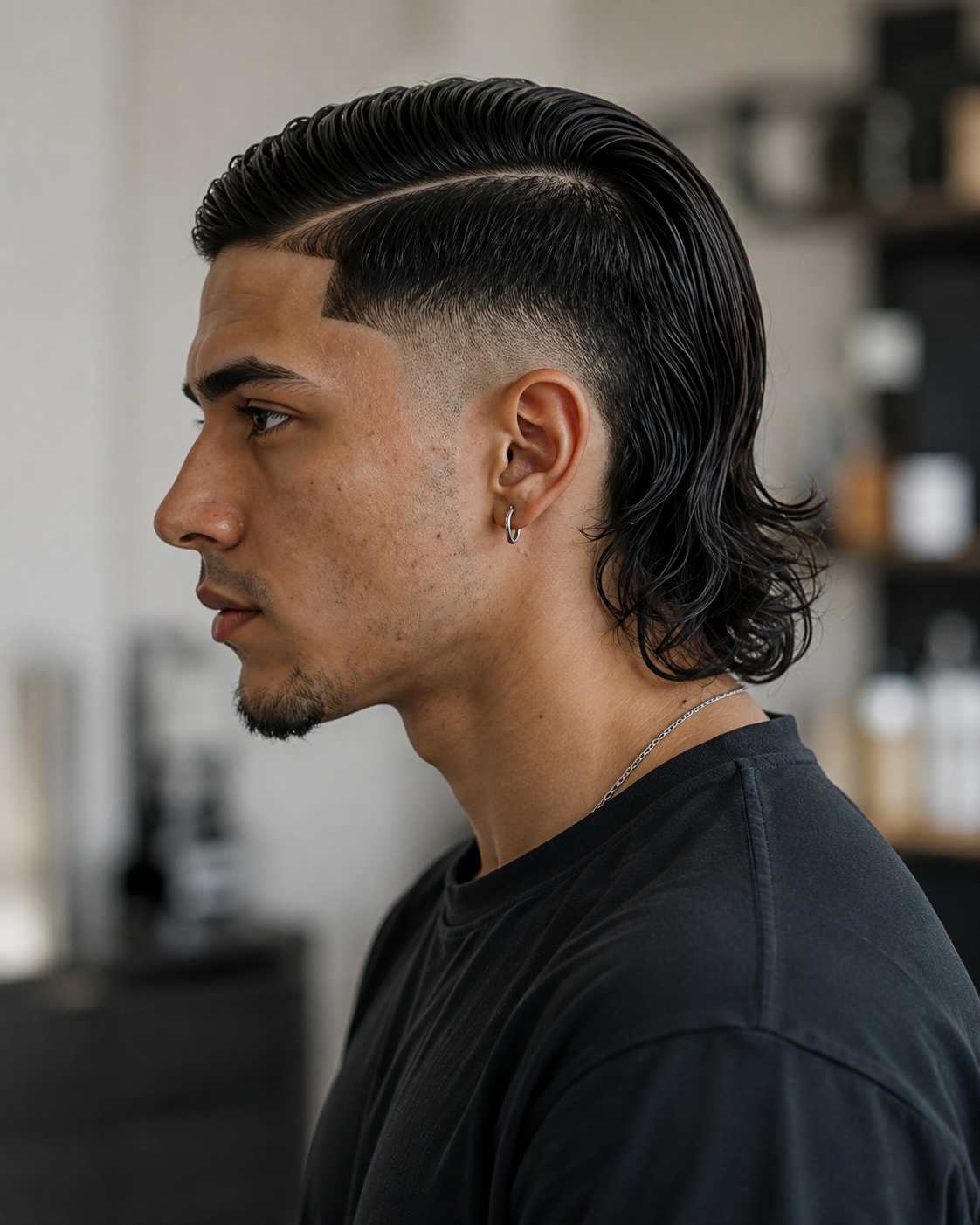
That makes cleaner, precision-led mullets especially effective on straight hair, while a little texture through the crown keeps the shape from looking too rigid.
Hair type: Straight hair, fine to thick
Maintenance: Every 4–5 weeks
Styling tip: Comb the hair into its final direction, then use a small amount of styling cream or matte paste to keep the shape defined.
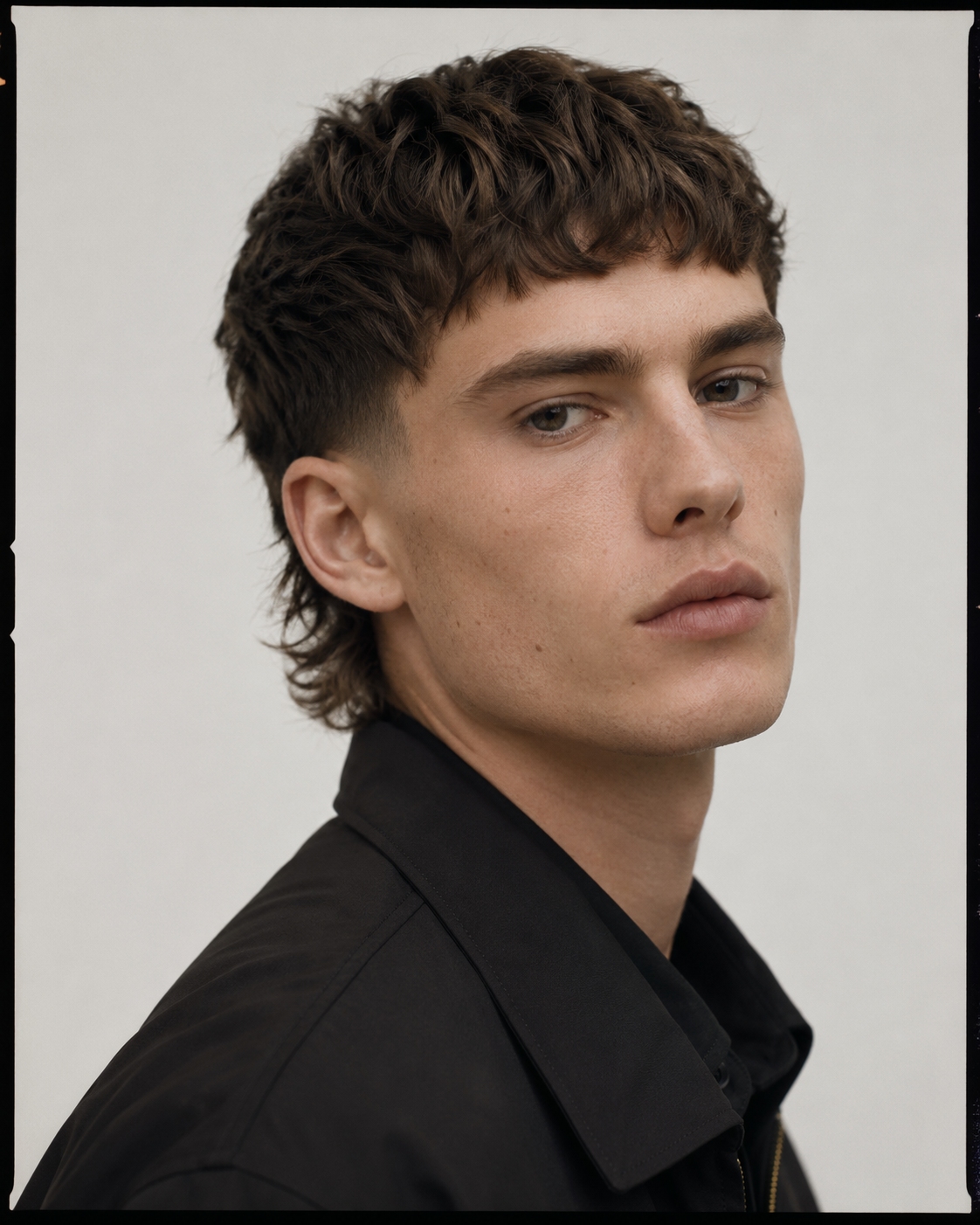
13. French Crop Modern Mullet
The French crop mullet pairs a short textured fringe with tapered sides and longer mullet length at the back. It keeps the front neat and easy to style, while the back gives the haircut its edge.
Hair type: Works on all textures, especially straight hair
Maintenance: Every 4–6 weeks
Styling tip: Work a small amount of matte paste through the fringe and leave the back more natural.
14. Mid Taper Modern Mullet
The mid taper mullet features a gradual taper that starts around temple level, creating a balanced contrast between the sides and the longer top and back.
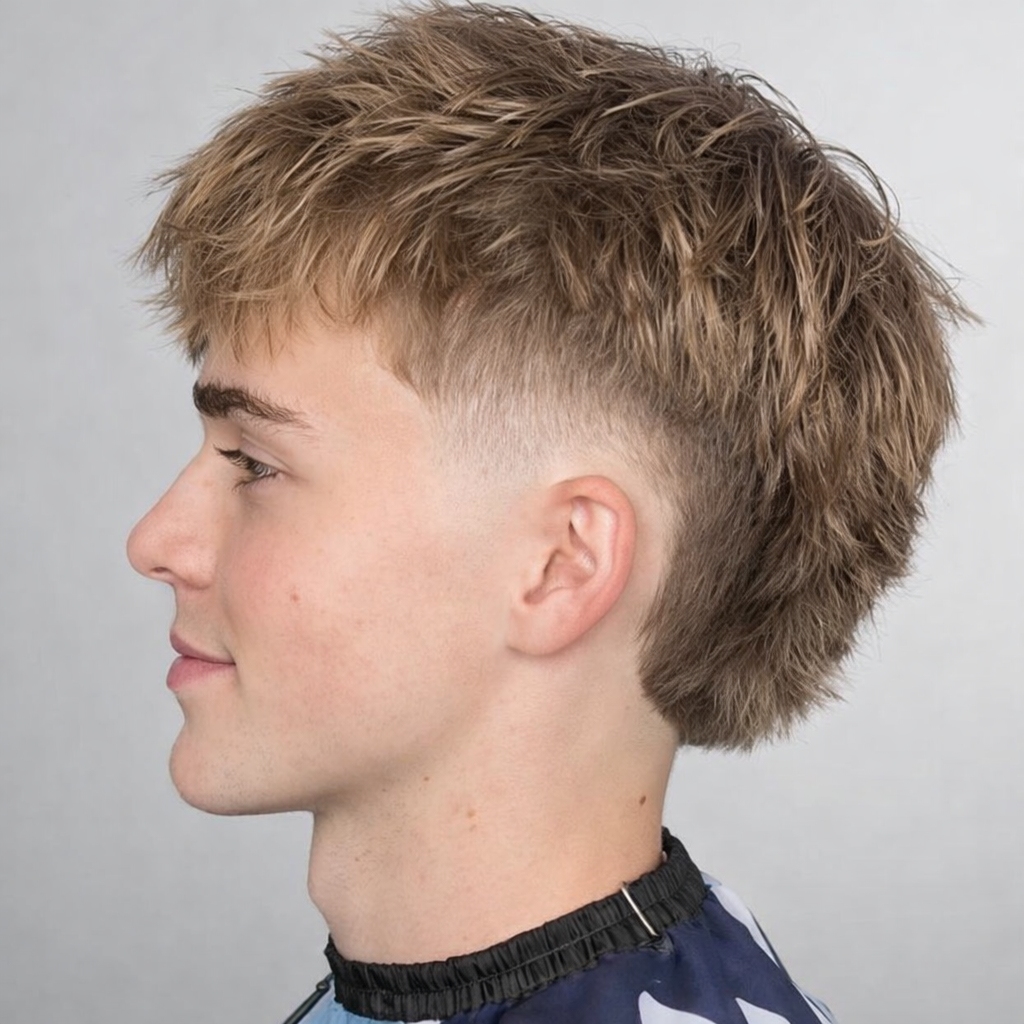
It is one of the easiest taper versions to recommend because it sits between subtle and dramatic, working across most face shapes.
Hair type: All textures
Maintenance: Every 3–4 weeks for taper freshness
Styling tip: Use texture spray or sea salt spray on the top and back for natural movement.
15. Side Part Mullet
The side part or comb over mullet gives the front of the haircut a more classic, structured feel. A defined part and cleaner top section contrast nicely with the extra length at the back.
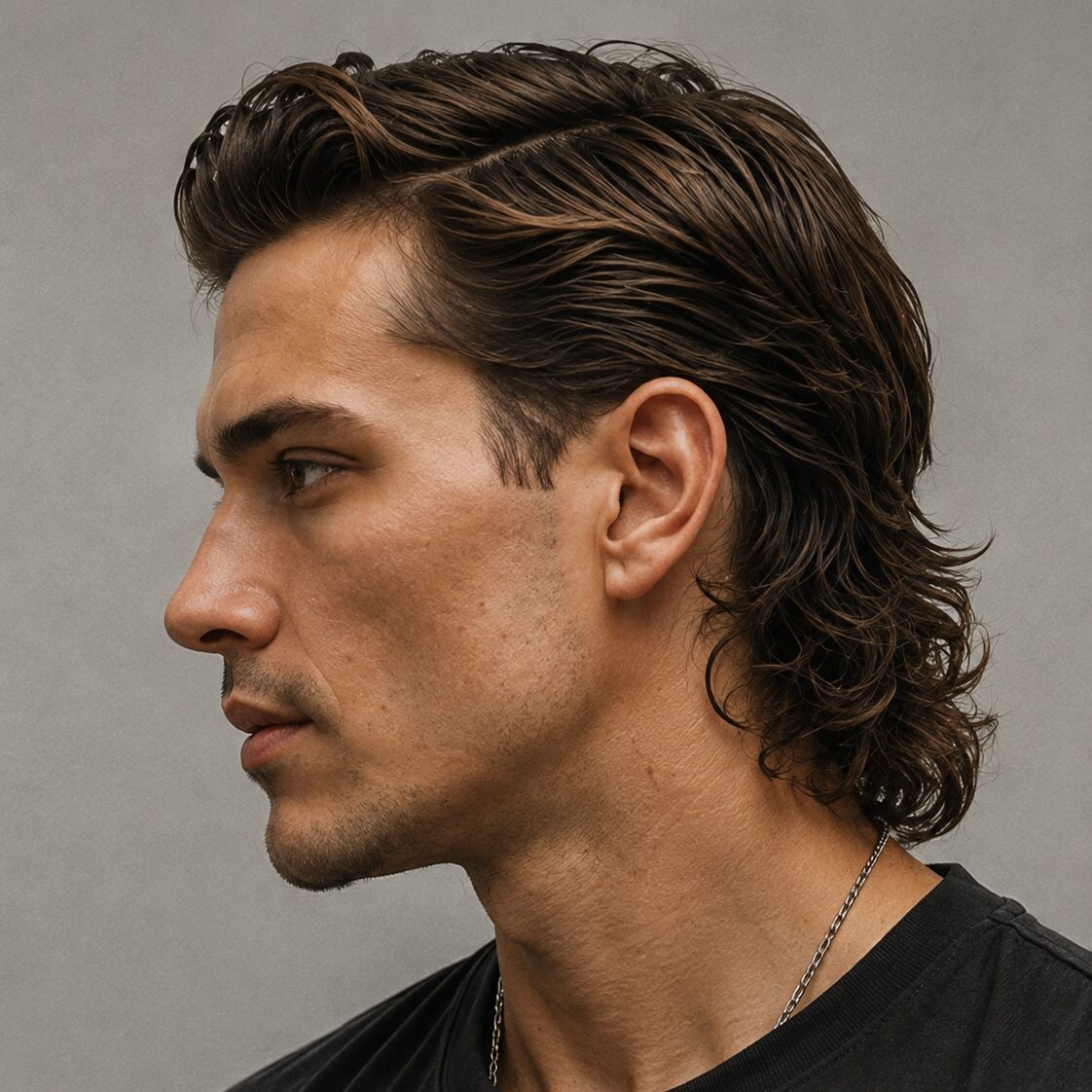
It is a good choice for men who like the mullet silhouette but still want a more composed look from the front.
Hair type: Straight to slightly wavy
Maintenance: Every 4–5 weeks
Styling tip: Establish the part while damp and use a light pomade or cream to keep the front controlled.
16. Skin Fade Mullet
The skin fade mullet takes the sides all the way down to exposed skin before blending into the longer top and back.
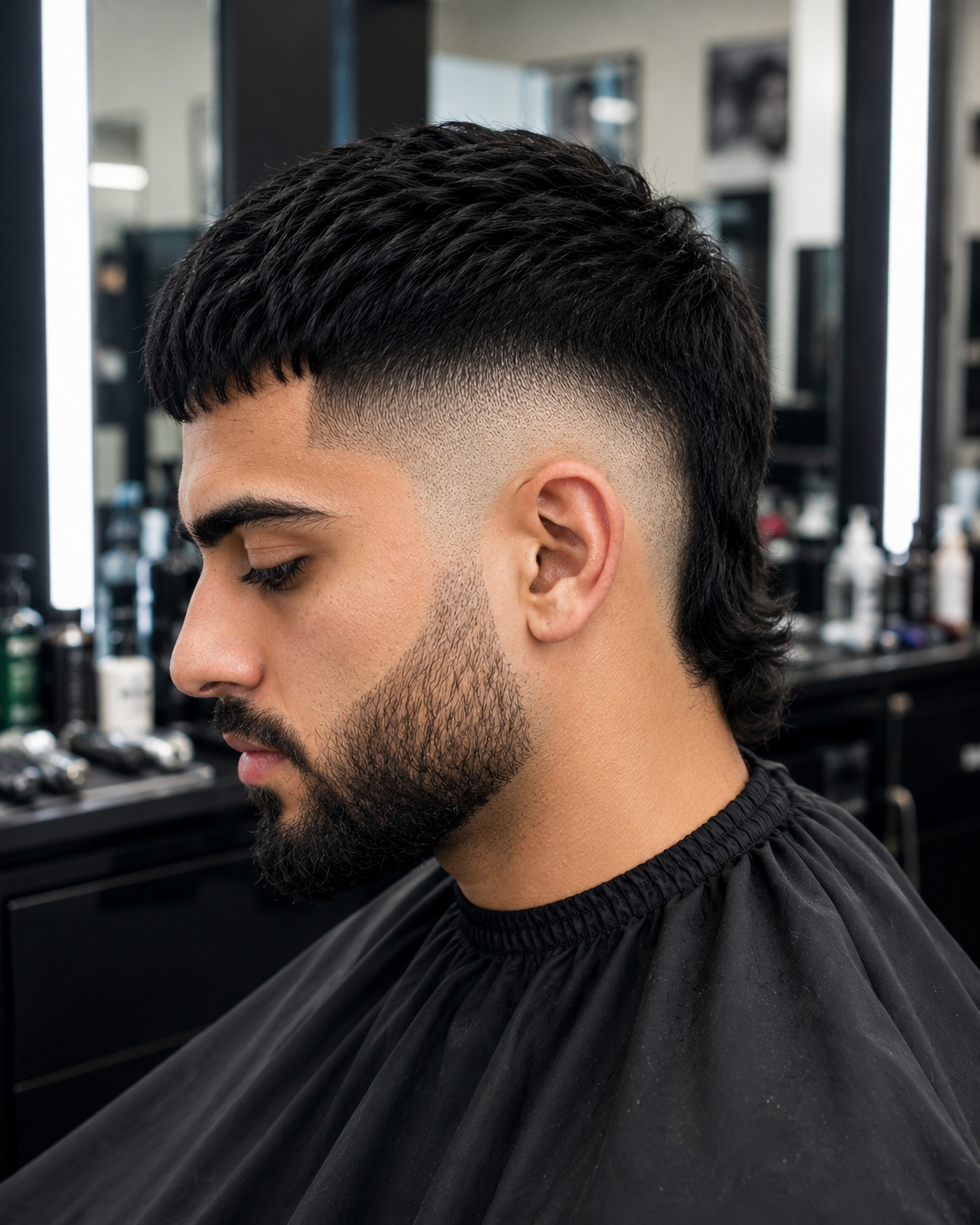
That high contrast gives the haircut a sharper and more modern finish than softer taper versions. This is the version to choose if you want the silhouette to feel clean, athletic, and clearly barbered.
Hair type: Straight, wavy, or curly
Maintenance: Every 2–3 weeks for clean skin fade upkeep
Styling tip: Keep the top matte and textured so the fade remains the sharpest element in the look.
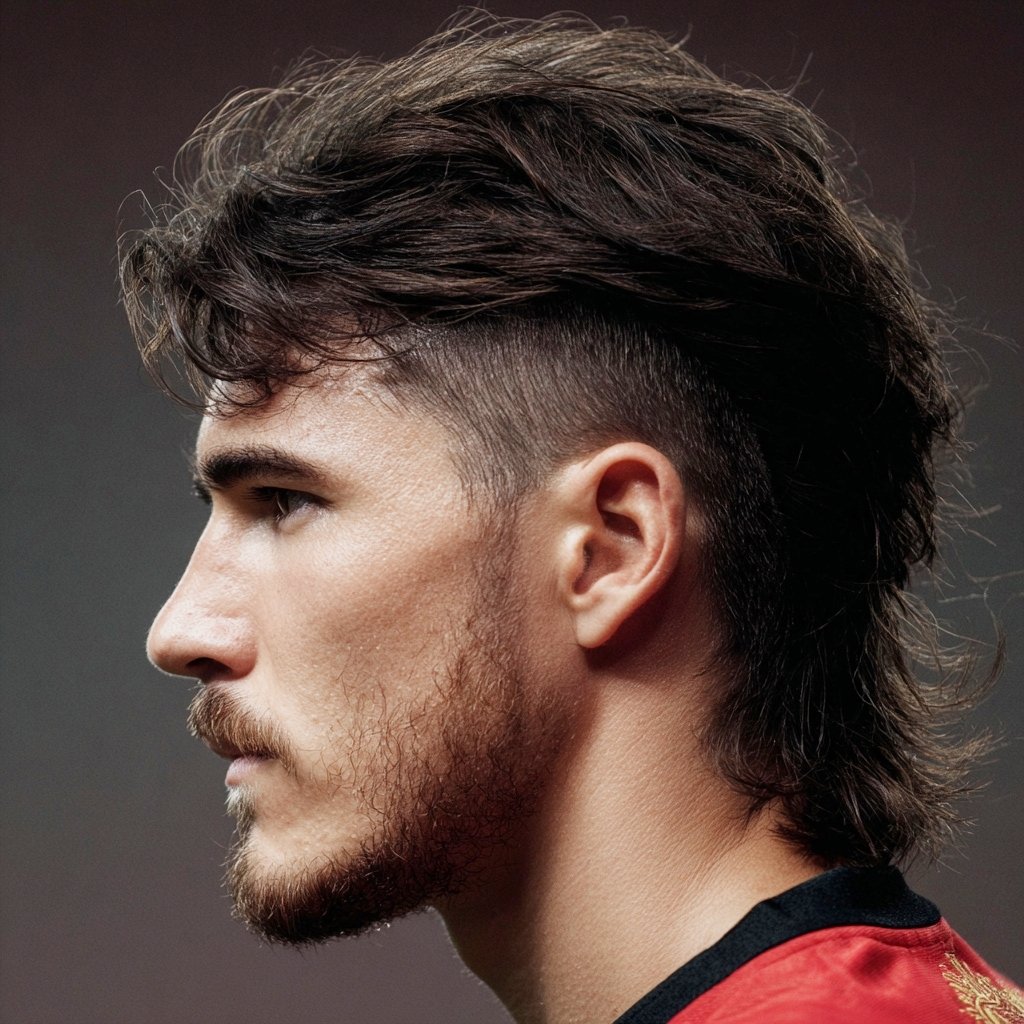
17. The Sporty Modern Mullet
This one is straight off the pitch: usually a taper or mid fade, a little height through the crown, and a looser but intentional back. It is a practical version of the cut that still feels current and sharp.
Hair type: Medium to thick density for volume retention
Maintenance: Every 4–5 weeks
Styling tip: Work a light styling cream through damp hair and finger-dry the crown for lift. Avoid heavy waxes so the cut still moves naturally.
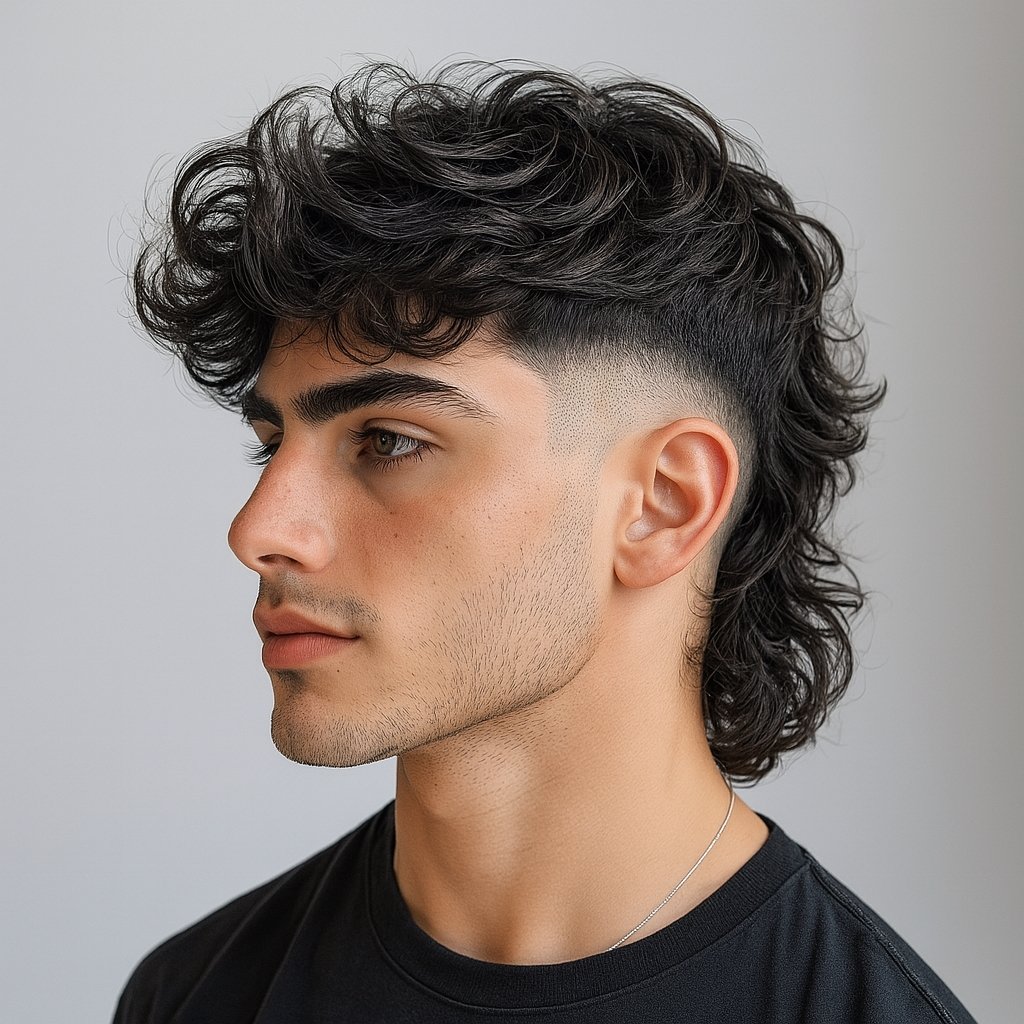
18. High Fade Modern Mullet
The high fade mullet creates strong contrast through higher faded sides while preserving noticeable top and back length. It is one of the boldest ways to wear the cut and puts the fade front and center.
Hair type: Thick or straight hair gives the most visual impact
Maintenance: Every 2–3 weeks for fade maintenance
Styling tip: Use a stronger hold product through the top and let the fade provide the clean contrast.
19. Bowl Cut Mullet
The bowl cut mullet keeps more weight through the top perimeter, often with a rounded or blunt fringe, before transitioning into longer hair at the back.
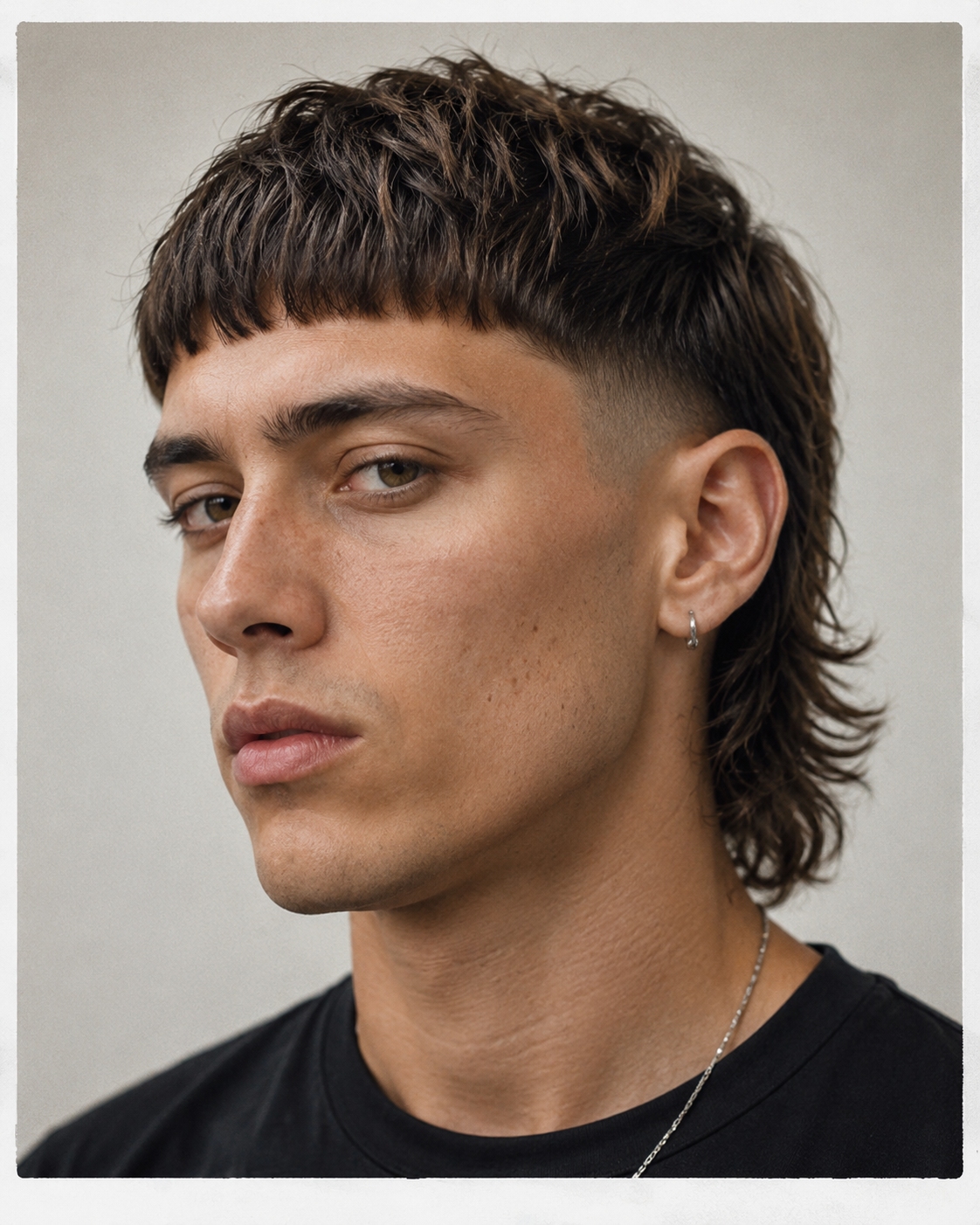
That heavier cap-like shape is what separates it from softer layered mullets. It is graphic, directional, and best when the bowl shape is crisp enough to be intentional.
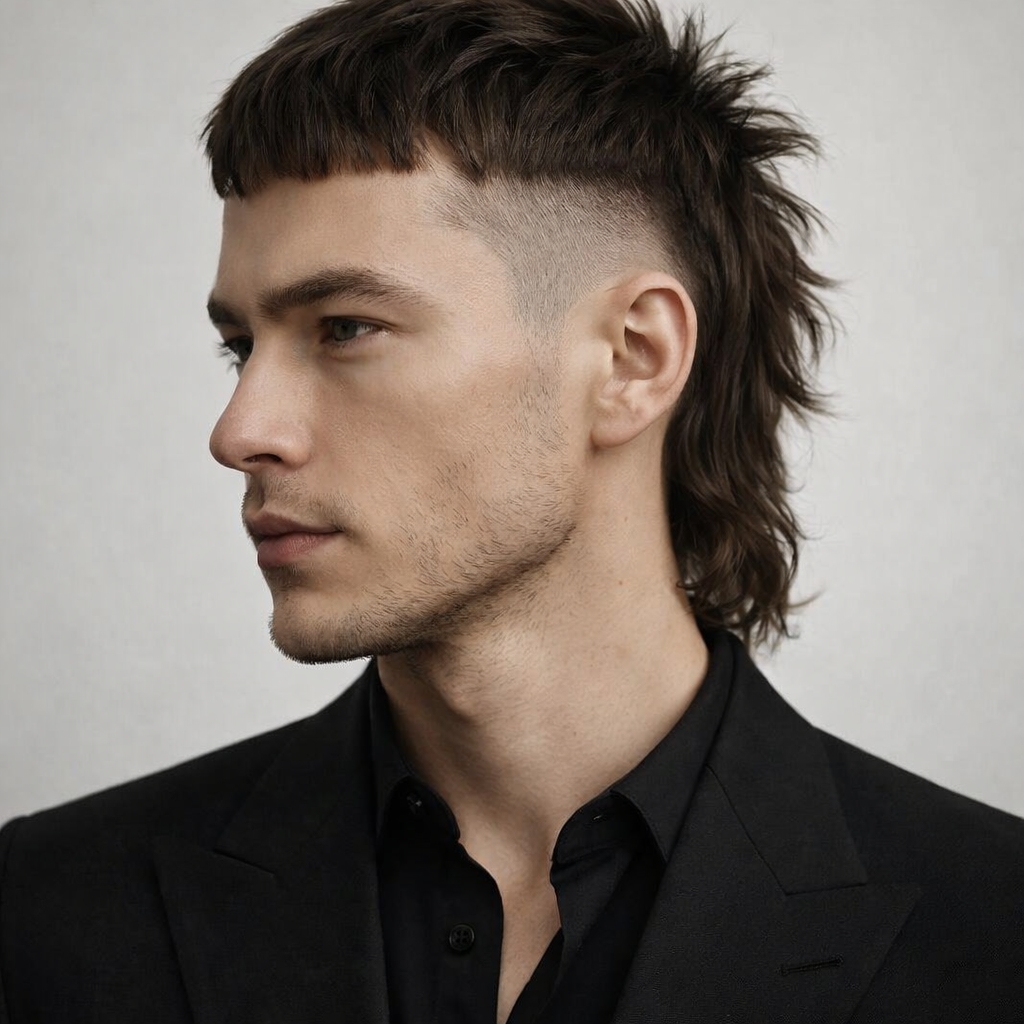
Hair type: Straight, thick hair holds the silhouette best
Maintenance: Every 4–5 weeks to keep the outline sharp
Styling tip: Blow-dry the top down and forward to preserve the rounded shape, then leave the back more relaxed.
20. Flow Mullet
The flow mullet emphasizes natural movement and length throughout, with minimal layering and maximum flow from front to back. It feels relaxed and slightly grown out, but still intentional.
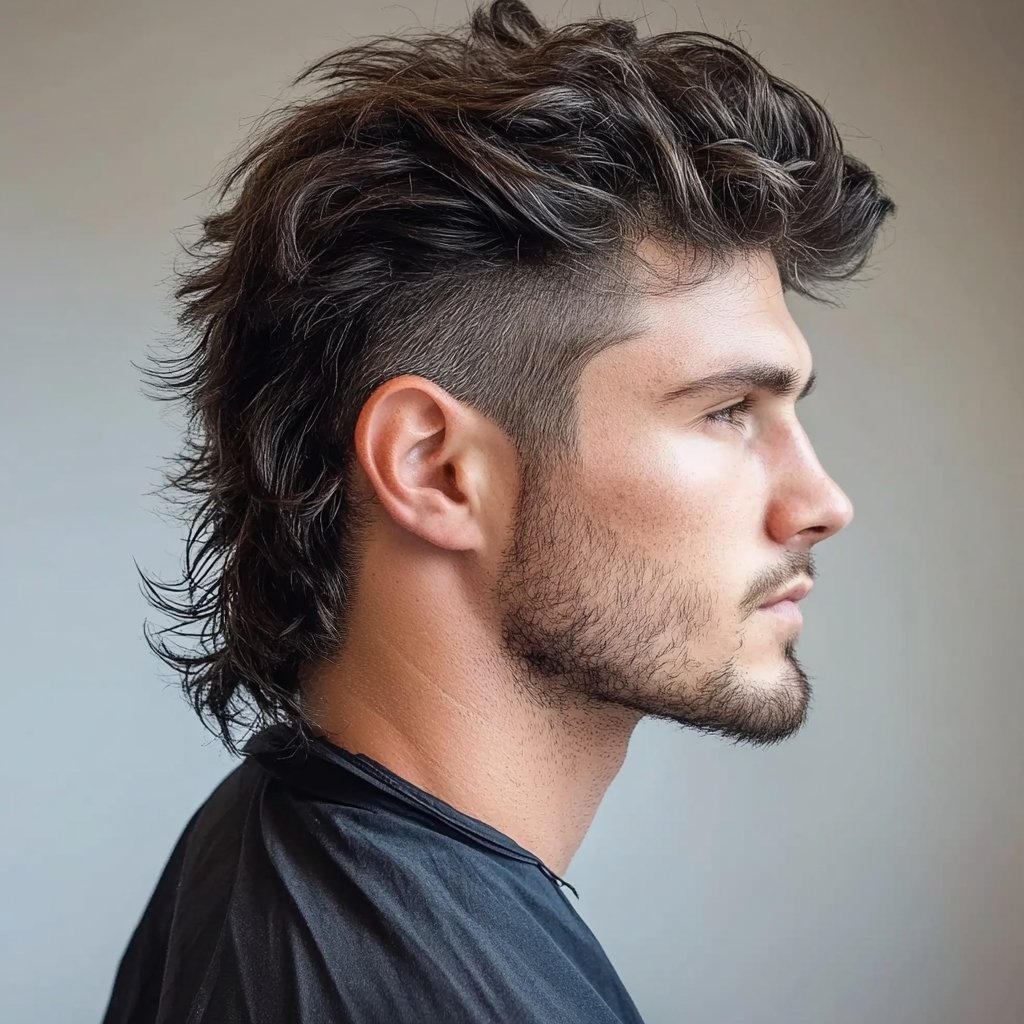
Hair type: Straight to wavy, medium density
Maintenance: Every 6–8 weeks
Styling tip: Use sea salt spray and let the hair move naturally. The goal is effortless flow rather than tightly defined structure.
Explore More Flow Hairstyles: 40 Flow Haircuts for Men from Classic Bro Flow to Modern Variations
21. Quiff Mullet
The quiff mullet builds noticeable height at the front before transitioning into a textured crown and longer back. It gives the cut a more traditionally masculine front profile without losing the mullet silhouette from the side.

This one works best when the sides stay controlled rather than overly shaved.
Hair type: Straight to wavy, medium to thick density
Maintenance: Every 4–5 weeks
Styling tip: Blow-dry the front up and back, then use matte clay for shape without adding shine.
22. High Taper Fade Mullet
The high taper fade mullet keeps the transition concentrated around the temples and sideburns, beginning higher than a low taper while preserving more weight through the sides than a true high fade.
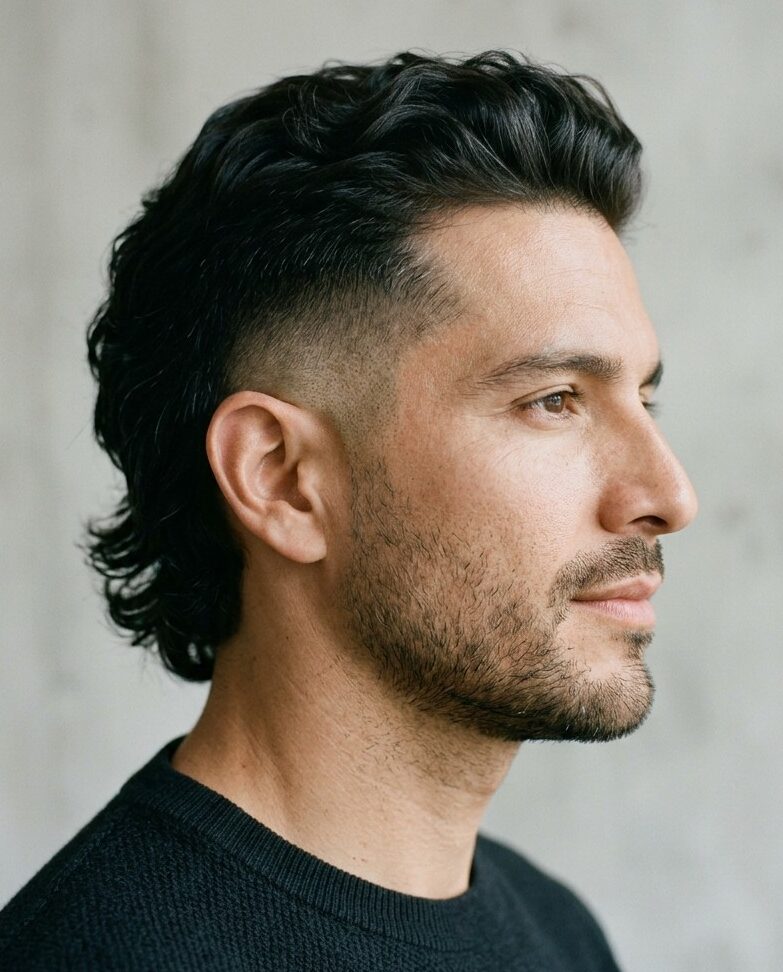
That distinction makes it cleaner than a soft taper, but less severe than a fade that clears out most of the side panel.
Hair type: Medium to thick hair for volume on top
Maintenance: Every 2–3 weeks to keep the taper sharp
Styling tip: Blow-dry the top upward and back for height while keeping the finish matte and textured.
23. Mod Cut Modern Mullet
The mod cut mullet blends a geometric fringe with scissor-cut layers through the crown and sides, then carries that shape into a longer back.
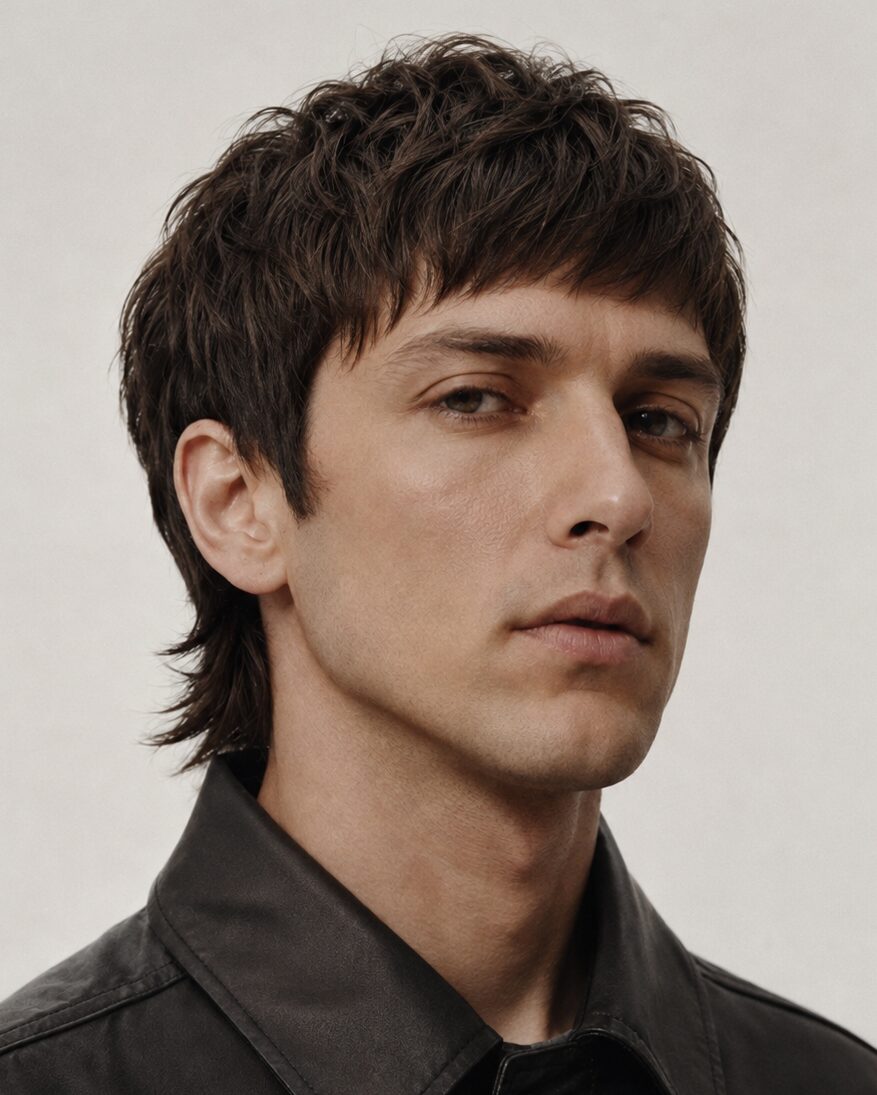
Unlike a bowl mullet, the outline is softened by movement and layering rather than one blunt heavy perimeter.
It is a sharp, fashion-forward hybrid that references 1960s mod style without feeling costume-like.
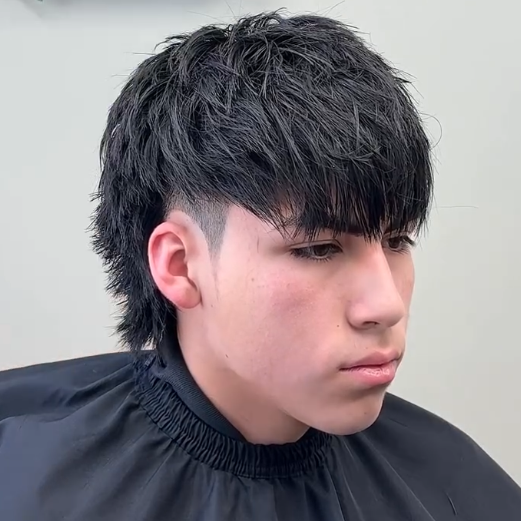
Hair type: Straight to slightly wavy, medium thickness
Maintenance: Every 4–5 weeks to keep the fringe and lines clean
Styling tip: Use light styling cream or pomade to keep the front defined while preserving movement in the back.
24. Drop Fade Mullet
The drop fade mullet features a curved fade that drops behind the ear following the shape of the head, creating a clean arc from temple to nape.
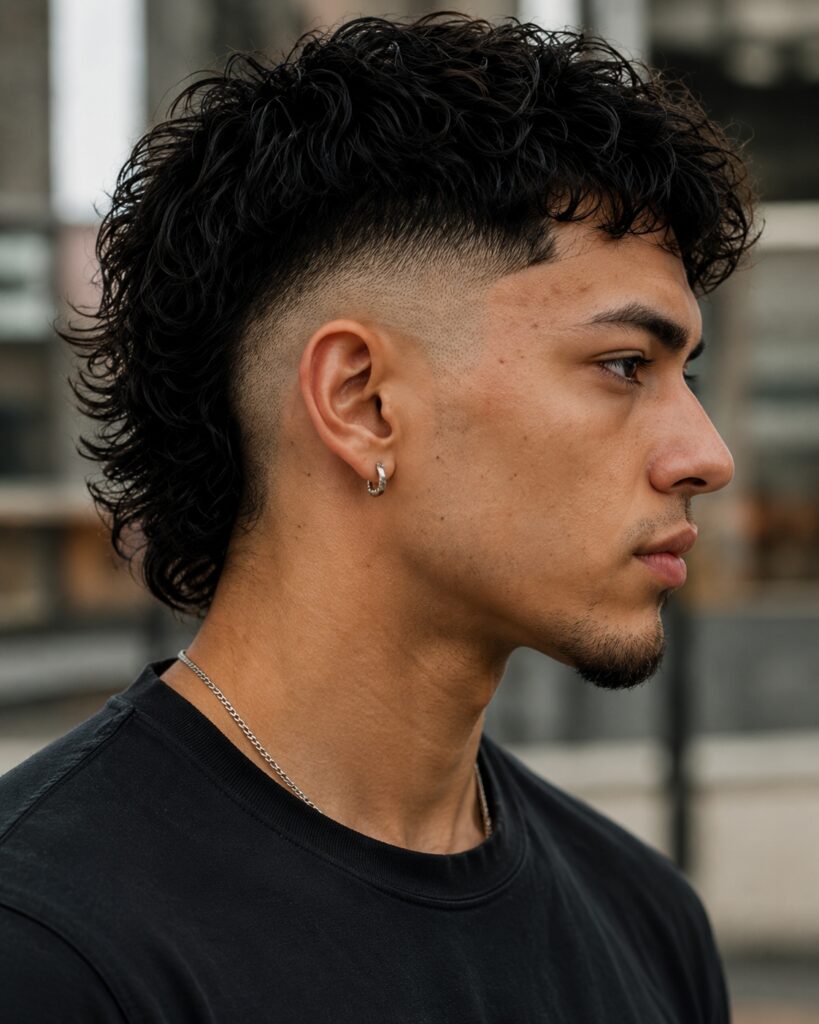
It adds a modern, athletic edge while keeping the top and back flowing naturally.
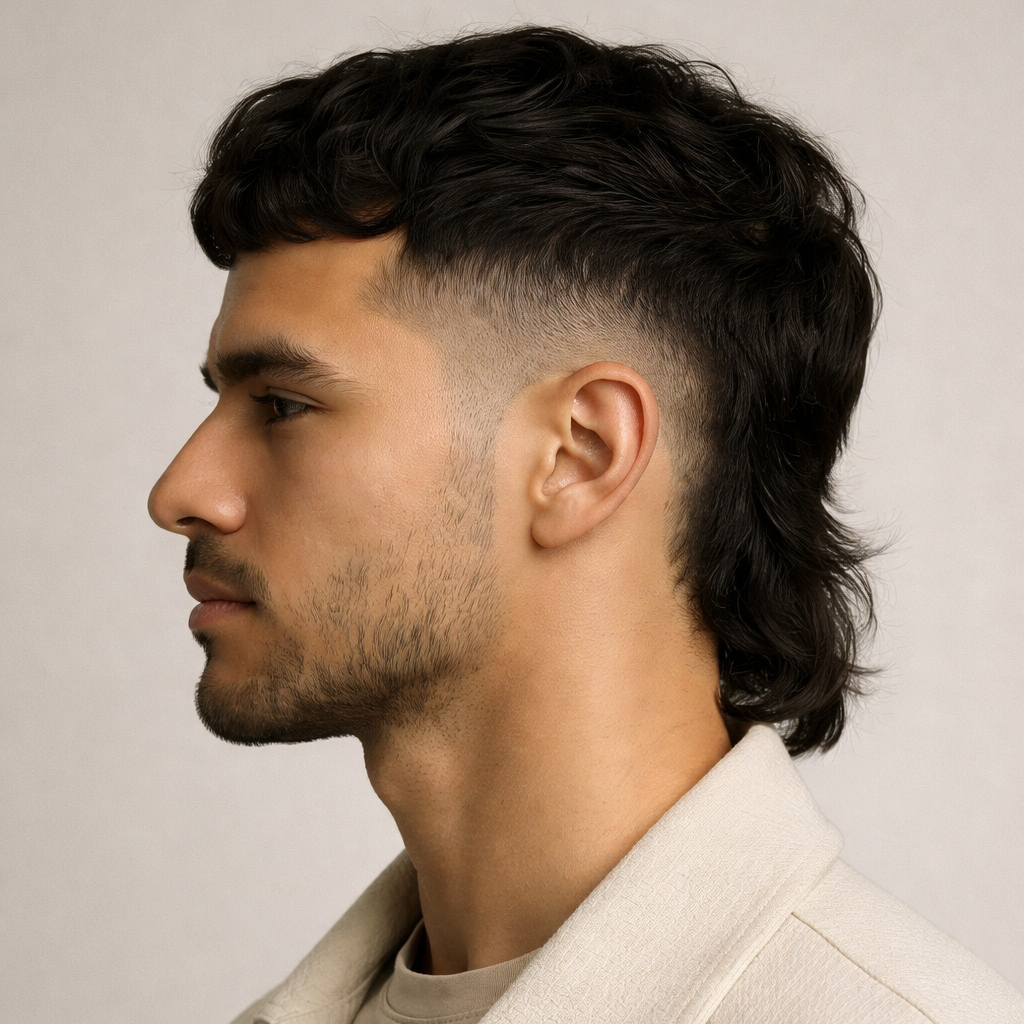
Hair type: All textures, especially effective on curly hair
Maintenance: Every 2–3 weeks for fade precision
Styling tip: Keep the top lightly textured and let the drop fade provide the main structure.
25. Feathered Modern Mullet
The feathered mullet uses lighter directional layers that sweep away from the face and continue through the sides and back. Compared with a shag mullet, it feels less choppy and more fluid.

It is an especially strong option if you want a softer retro influence without losing shape.
Hair type: Straight to wavy, medium density
Maintenance: Every 5–7 weeks
Styling tip: Blow-dry the front away from the face and use a light cream or flexible spray to hold the movement.
26. Wolf Cut Modern Mullet
The wolf cut mullet blends heavy shaggy layering through the crown and top with the longer back of a mullet. It is one of the most volume-heavy versions of the cut and often has more face-framing texture than classic mullets.
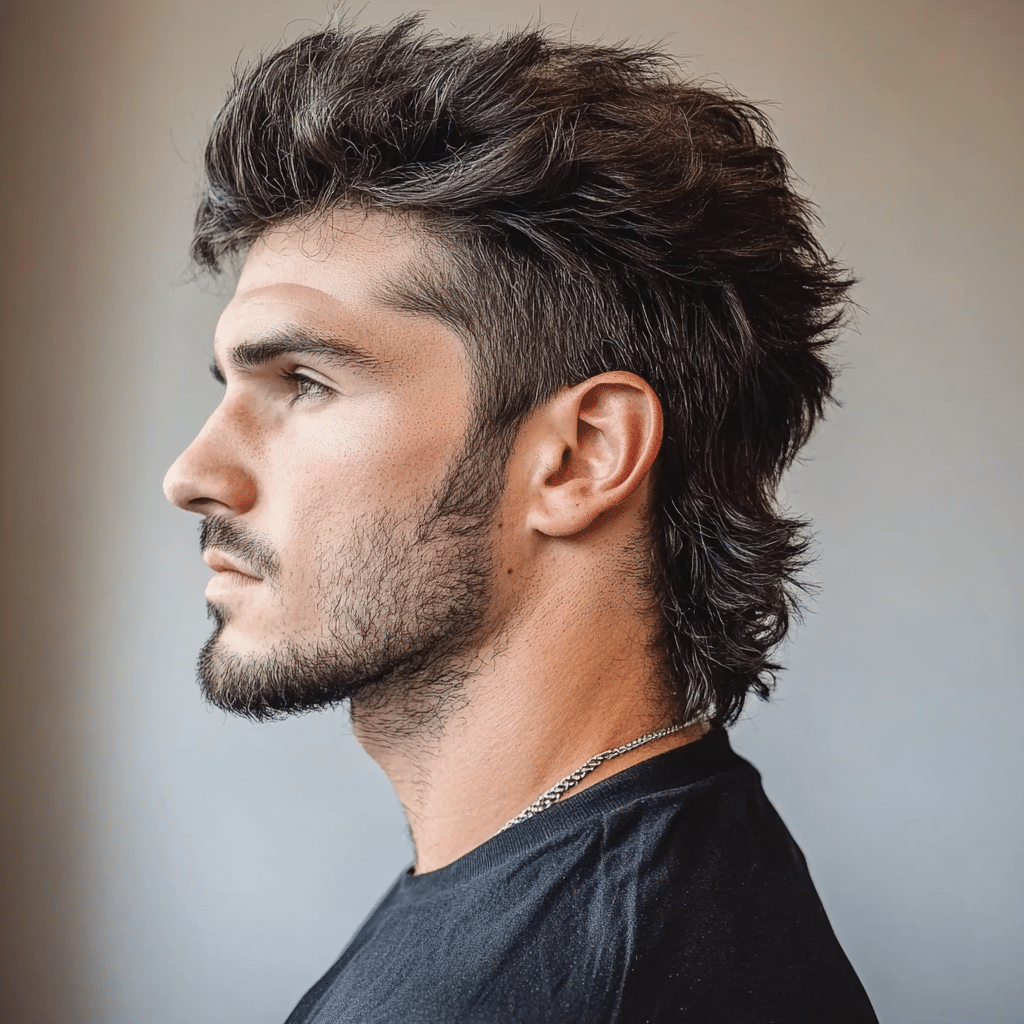
Hair type: All textures, especially wavy to curly
Maintenance: Every 5–6 weeks to maintain the layers
Styling tip: Use sea salt spray or texturizing spray and let the cut look slightly lived in.
27. Middle Part Mullet
The middle part mullet uses a center-parted front that often falls into curtain-like sections, while the longer back keeps the mullet silhouette visible.
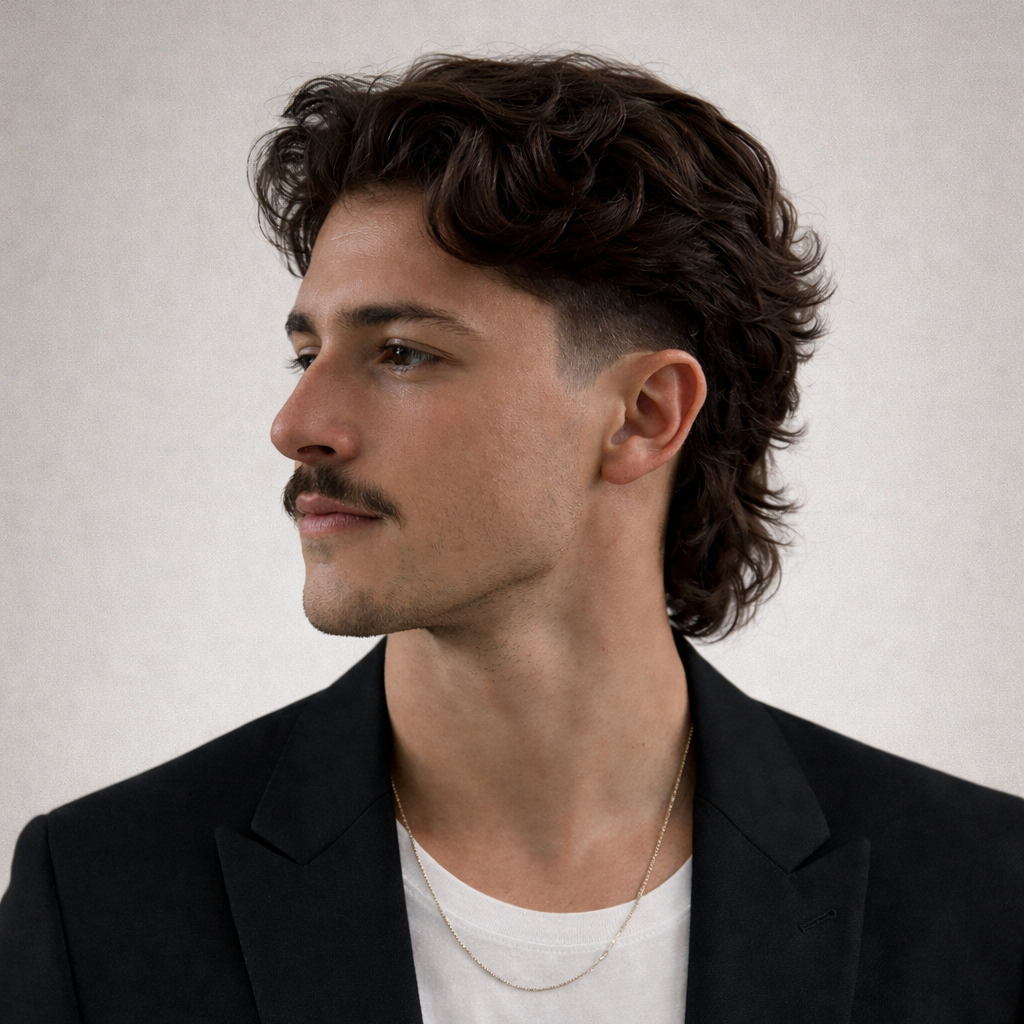
This makes it softer and more fashion-forward than a blunt-fringe mullet, and particularly good for straight or lightly wavy hair.
Hair type: Straight to wavy, medium thickness
Maintenance: Every 4–5 weeks
Styling tip: Apply a light cream to damp hair, create the center part, and let the front fall naturally rather than forcing too much hold.
28. Two-Block Inspired Mullet
The two-block inspired mullet takes its influence from the shape and separation rather than the part itself. The top stays noticeably longer than the shorter side panels, while extra length through the back turns the structure into a mullet.

Hair type: Straight to slightly wavy, medium to thick density
Maintenance: Every 4–5 weeks
Styling tip: Keep the top loose and directional while preserving the visible separation between the longer top and shorter sides.
29. Natural No-Fade Mullet
The natural no-fade mullet is defined more by outcome than technique. There is no exposed skin, the area around the temples and ears keeps more visible fullness, and the haircut grows out more softly than fade-heavy versions.
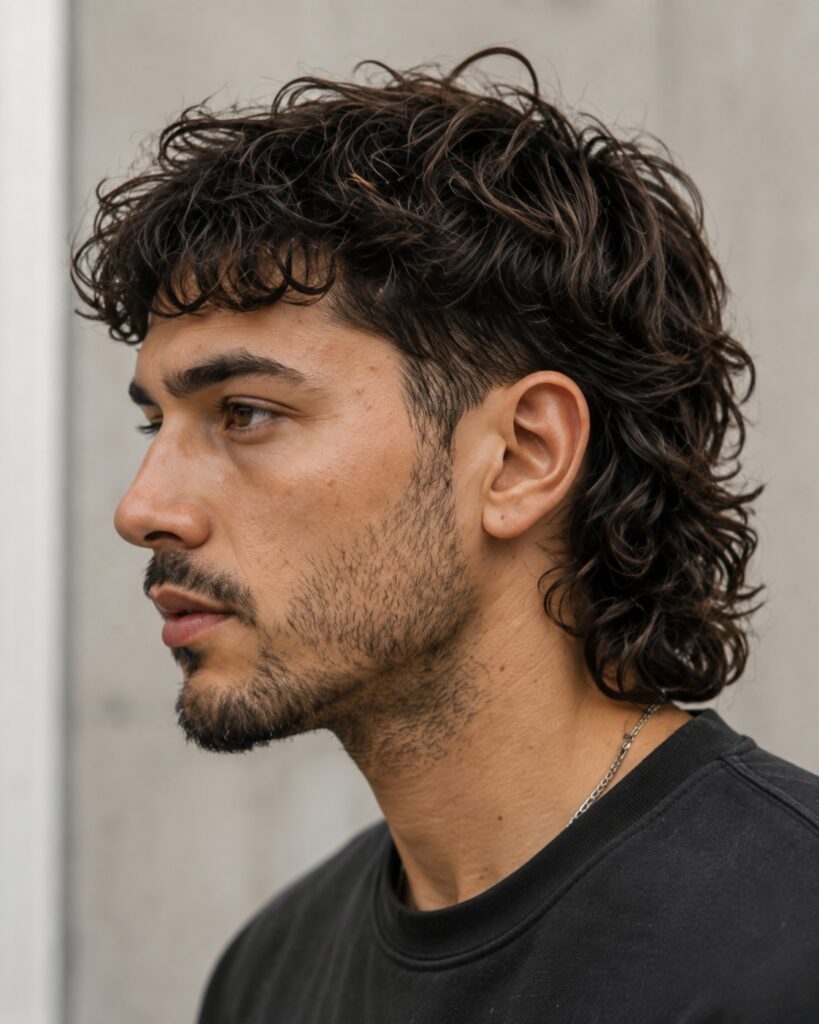
Hair type: All textures
Maintenance: Every 6–8 weeks
Styling tip: Work with the natural direction of the hair around the sides. The goal is controlled fullness, not a hidden fade.
30. Scissor-Cut Mullet
The scissor-cut mullet is about technique. Instead of relying on strong clipper work, the barber uses point-cutting, scissor graduation, and internal weight removal to build the shape more softly through the temples, crown, and back.
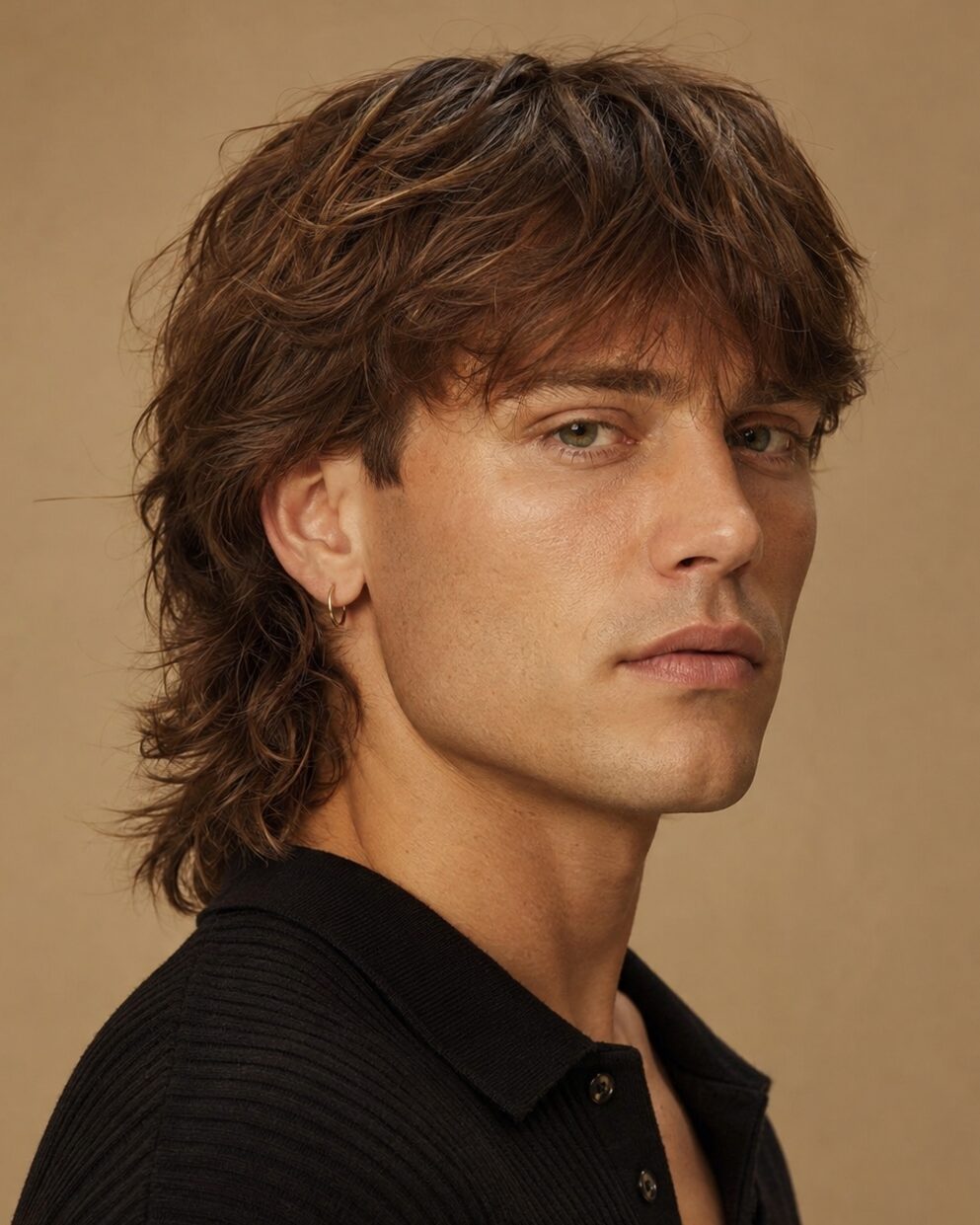
The result feels more editorial and less aggressively barbered, with movement doing more of the work than exposed skin.
Hair type: Straight, wavy, or curly
Maintenance: Every 6–8 weeks
Styling tip: Work a small amount of light styling cream through damp hair, then air-dry or finger-dry so the scissor-cut layers stay soft and mobile.
31. Slicked Back Mullet
This variation features a polished top combed smoothly backward, contrasting with the longer hair at the back. It is a refined way to wear a mullet when you want the cut to look more deliberate and formal.
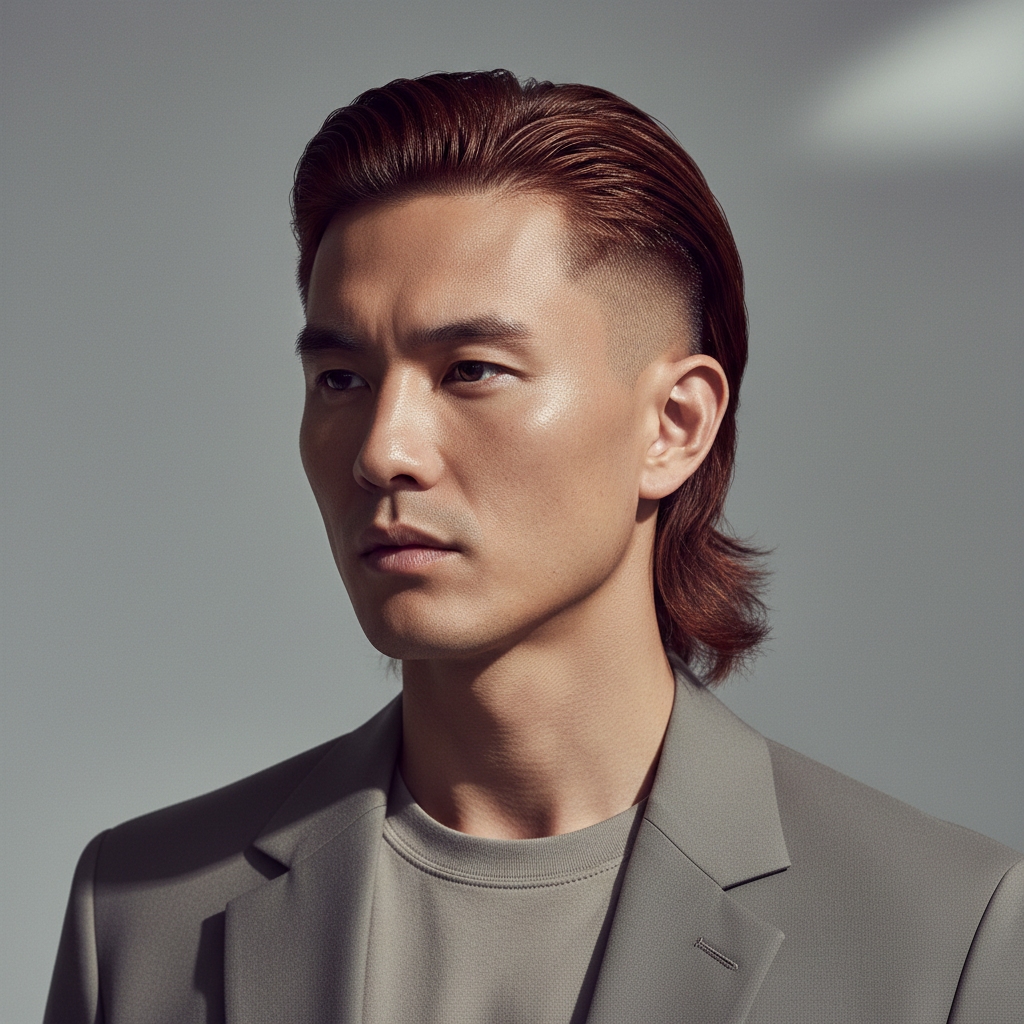
Hair type: Straight to wavy, medium thickness
Maintenance: Every 4–5 weeks
Styling tip: Use pomade or styling cream on damp hair and comb back smoothly. Keep the back slightly softer so the look doesn’t become too stiff.
32. Surfer Blowout Mullet
The blowout mullet pushes the crown and front upward for a fuller, more dramatic silhouette. Unlike fluffier softer versions, the emphasis here is on visible height and deliberate lift.

Hair type: Medium to thick density
Maintenance: Every 4–5 weeks
Styling tip: Blow-dry the top upward with a brush or fingers, then use light hold product to preserve the lift.
Similar Hairstyles for Men: 10 Trendsetting Surfer Hairstyles for Men to Ride the Wave
33. V-Shaped Mullet with Tapered Sides
The V-shaped mullet uses the nape as the focal point, bringing the back to a soft point while keeping the sides tapered and the top textured. It is one of the strongest examples of how nape detailing can change the whole haircut.
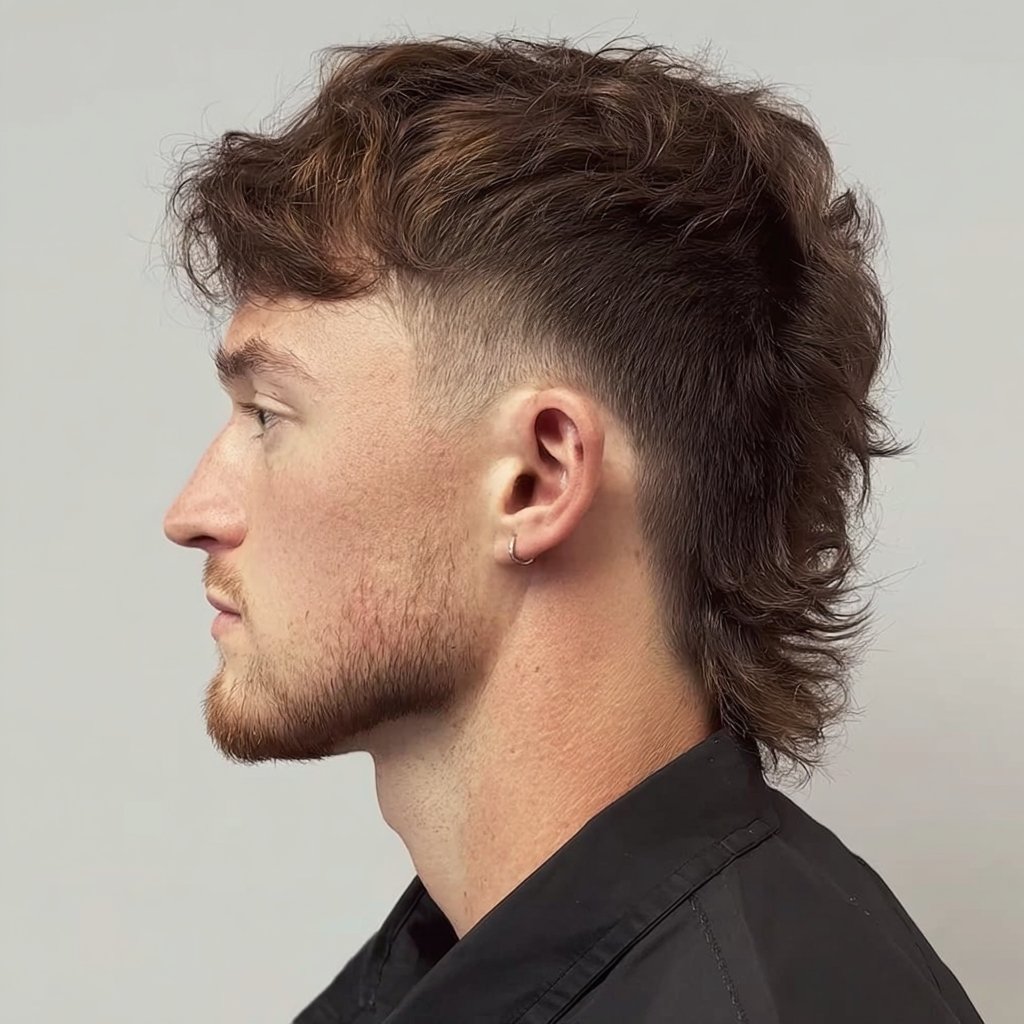
Hair type: Straight to slightly wavy for the cleanest lines
Maintenance: Every 4–5 weeks for V-shape precision
Styling tip: Ask for clear neckline detailing and keep the top textured so the sharper nape stays the focal point.
34. Ivy League Mullet
The Ivy League mullet pairs a neat, shorter, side-parted top with unexpected length at the back. That contrast between polished front and looser rear section is what makes it work.
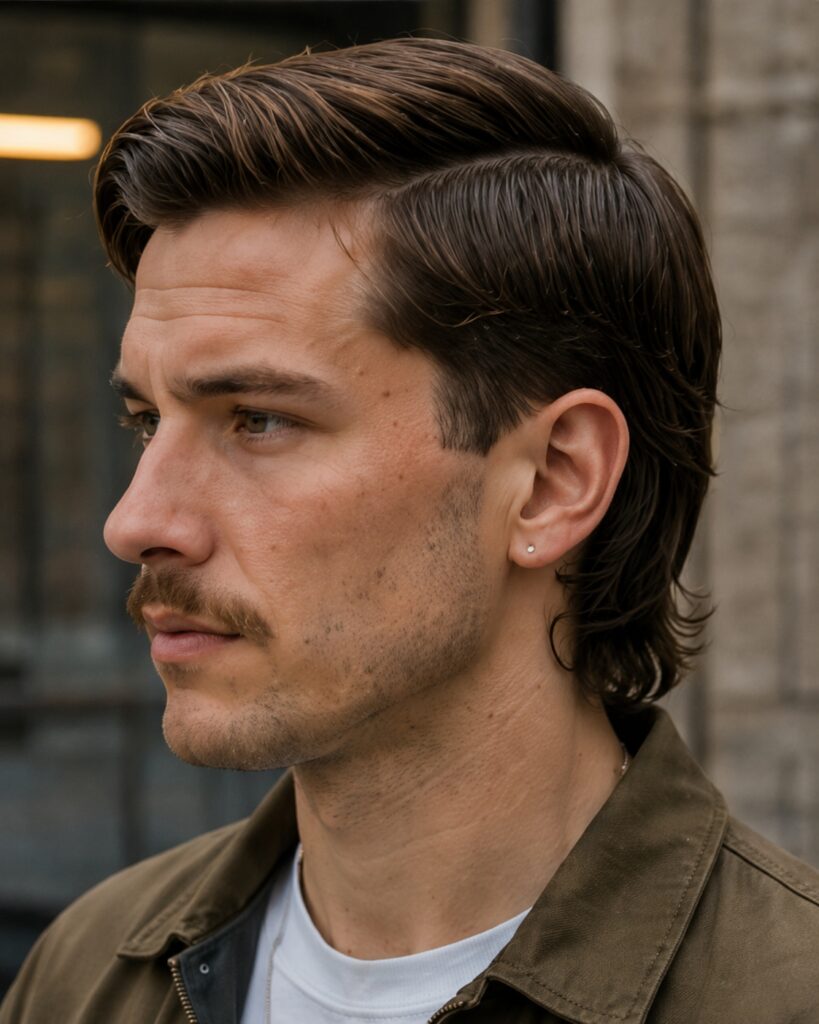
It is preppier than most mullets, but still distinct enough to avoid looking like a conventional short haircut.
Hair type: Straight to slightly wavy, fine to medium density
Maintenance: Every 3–4 weeks
Styling tip: Blow-dry the front into a soft side part and use a light cream or pomade for control, keeping the back looser so the contrast stays visible.
35. Permed Modern Mullet
The permed mullet adds chemical texture and volume through a perm treatment, turning straighter hair into defined curls or waves through the top and back.
It is a strong option for men who like the fuller curly-mullet look but do not naturally have that texture.
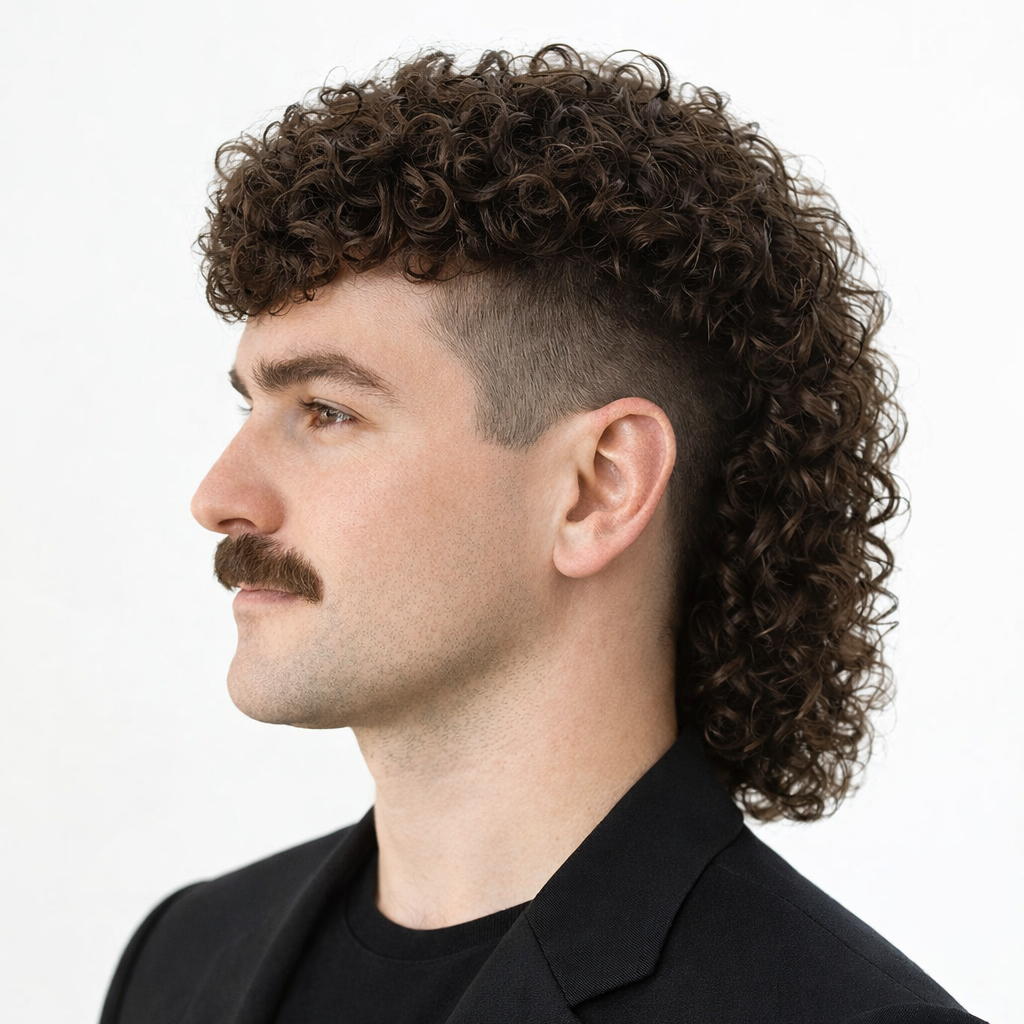
Hair type: Straight hair that needs added texture
Maintenance: Every 3–4 months for perm refresh, plus shape trims every 4–5 weeks
Styling tip: Use curl cream and diffuse or air-dry. The perm should do most of the heavy lifting.
36. Hard Part Mullet
A shaved hard part adds a crisp graphic detail to the haircut without changing the core mullet shape. It works especially well on side-parted or cleaner tapered variations.
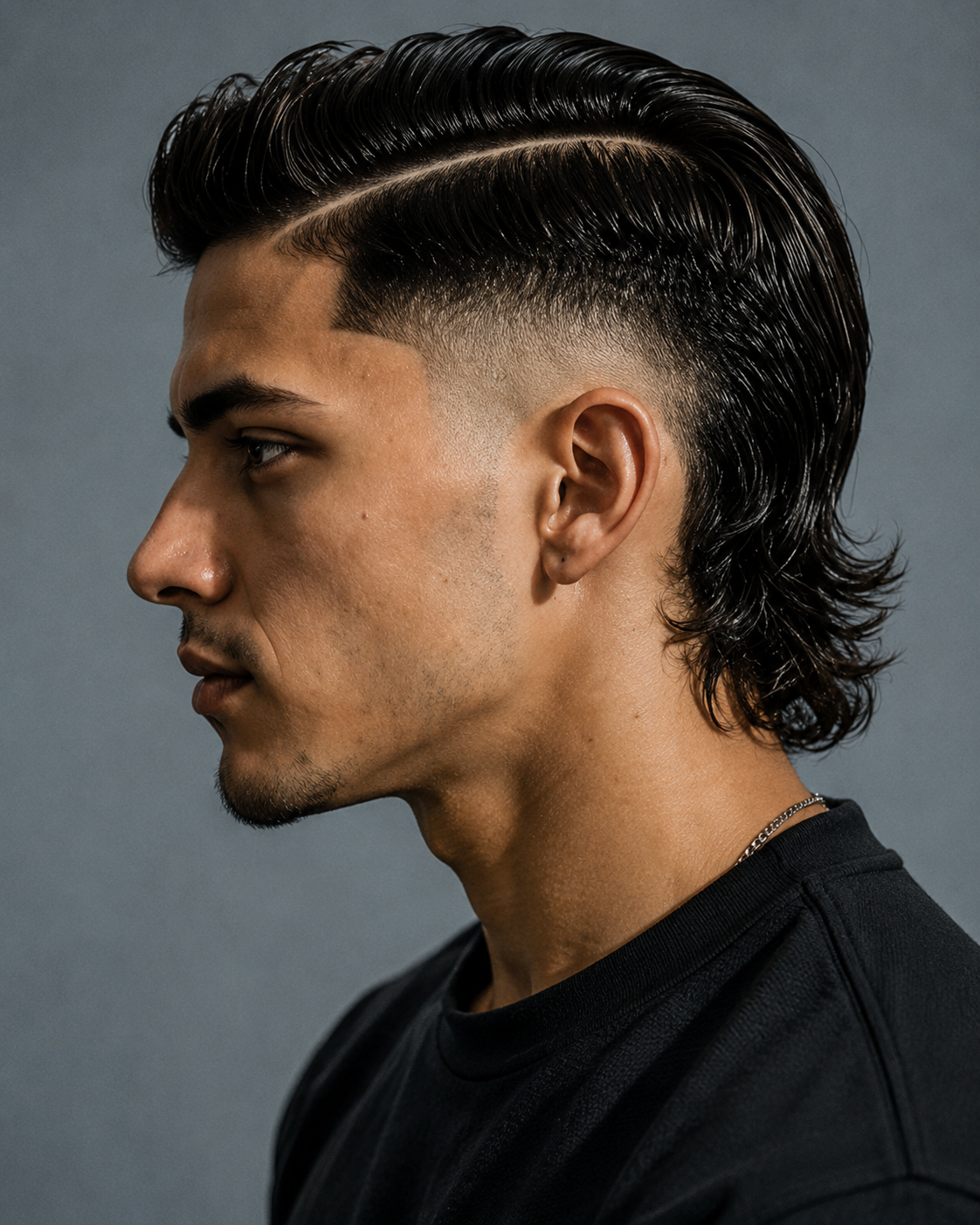
This is one of the simplest ways to add personality while keeping the silhouette otherwise straightforward.
Hair type: Straight to wavy, medium thickness
Maintenance: Every 2–3 weeks to keep the part crisp
Styling tip: Comb the hair away from the part so the shaved line stays visible.
37. Grunge Modern Mullet
The grunge modern mullet channels a 1990s alternative feel with deliberately messy texture and uneven layers. It is less about barber precision and more about a lived-in, anti-polished attitude.
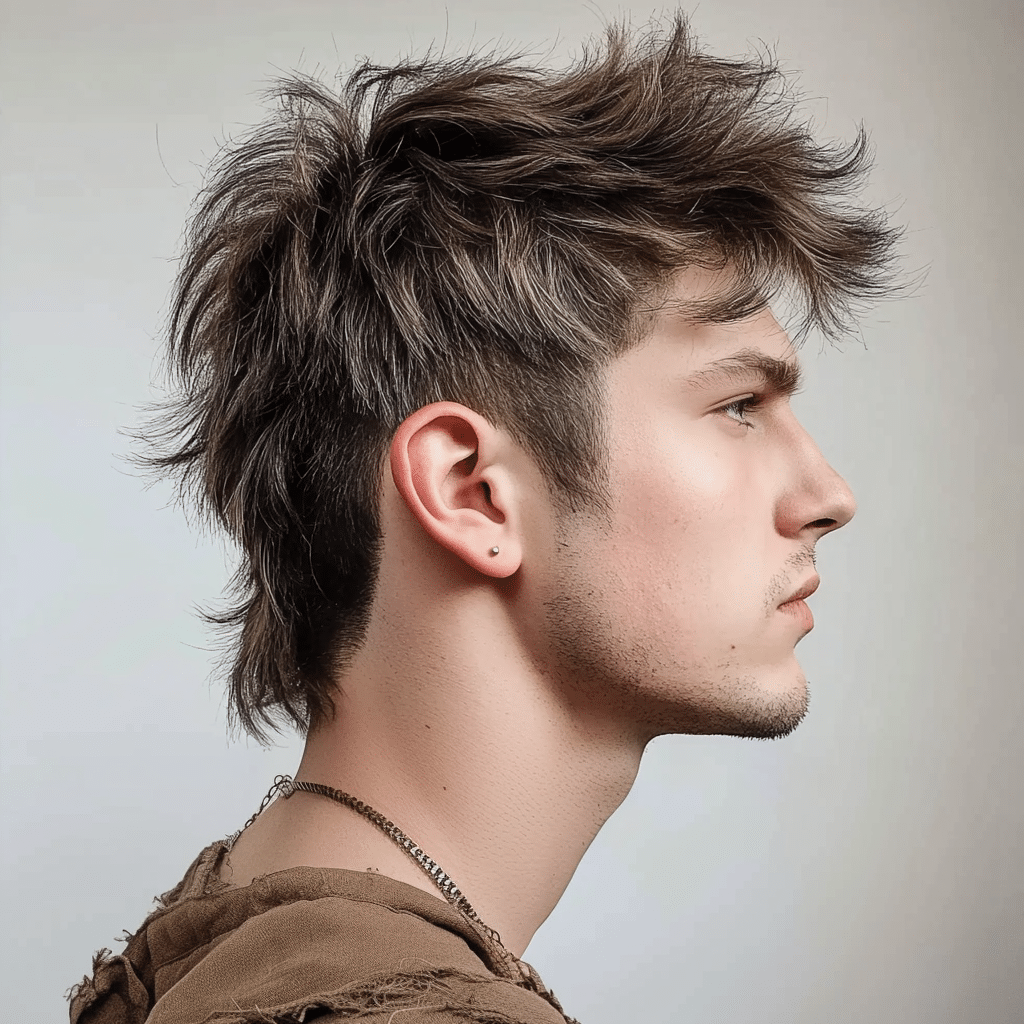
Hair type: All textures, especially wavy or straight
Maintenance: Every 5–7 weeks
Styling tip: Air-dry with minimal product and let the haircut stay slightly imperfect.
38. Fine or Thin Hair Mullet
Fine hair can work surprisingly well with a mullet when the crown is not over-thinned and the back length stays controlled. The right version creates lift through the top without making the overall silhouette look flat.
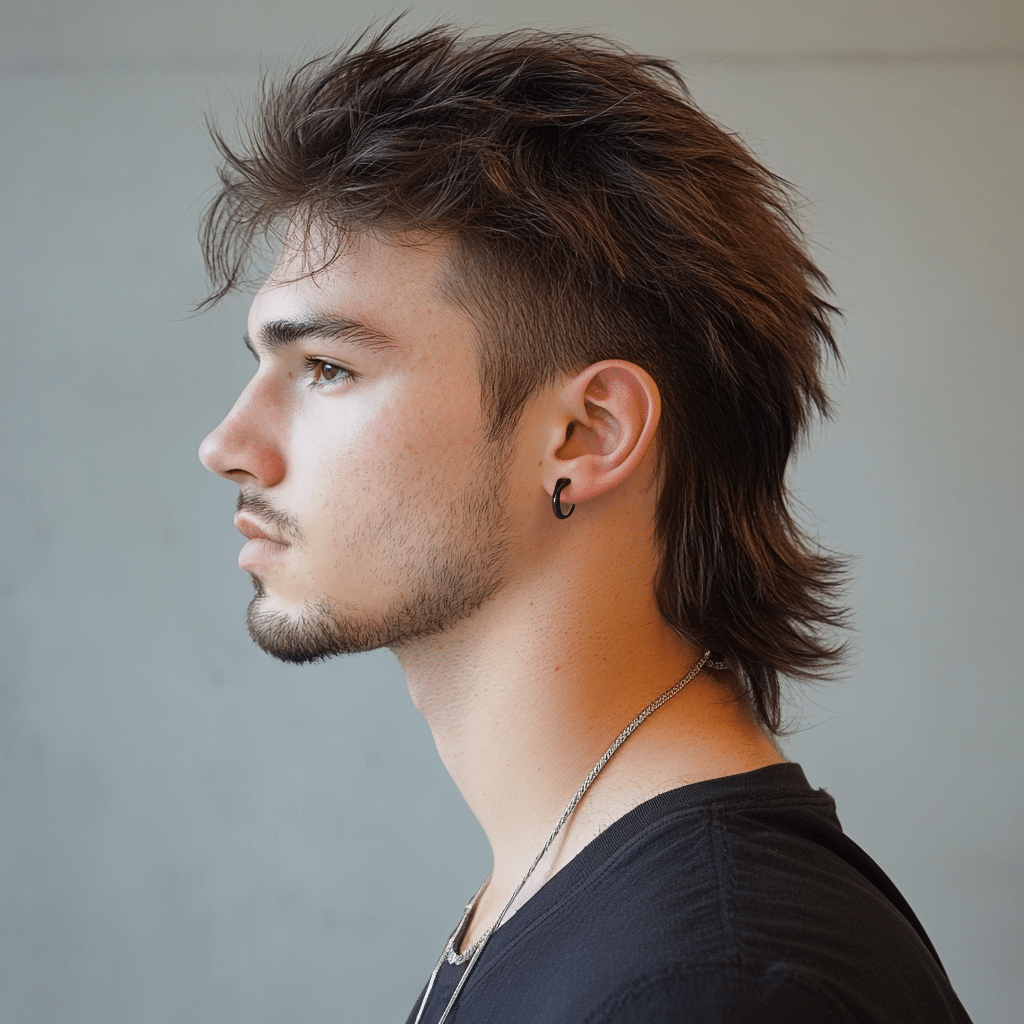
Keep the crown slightly longer and avoid aggressive thinning; a little root lift helps the shape look fuller without forcing extra length at the back.
Hair type: Fine or lower-density straight to wavy hair
Maintenance: Every 4–6 weeks
Styling tip: Use volumizing mousse or texture spray and avoid heavy products that flatten the crown.
39. Undercut Modern Mullet
The undercut mullet creates a true disconnection between the top and back and the shorter sides underneath. Compared with a taper or fade, the separation is much more obvious and graphic.
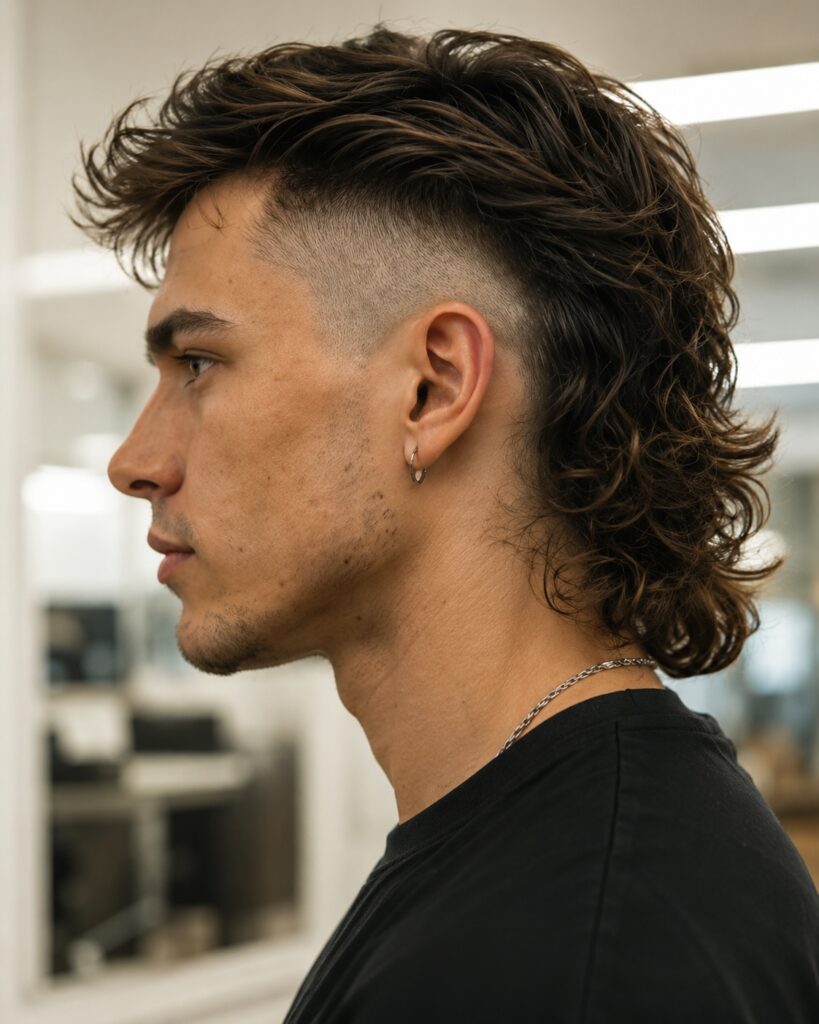
It is one of the highest-contrast mullet versions and works best when the top has enough length and presence to justify the disconnection.
Hair type: Medium to thick hair for optimal volume on top
Maintenance: Every 3–4 weeks to keep the undercut sharp
Styling tip: You can style the top sleek or textured, but the disconnect should remain clearly visible.
Explore More: 15+ Undercut Hairstyles for Men of All Ages
40. Thick Hair Mullet
Thick hair naturally gives the mullet volume, but it usually needs internal weight removal to keep the shape from becoming bulky through the sides and crown.
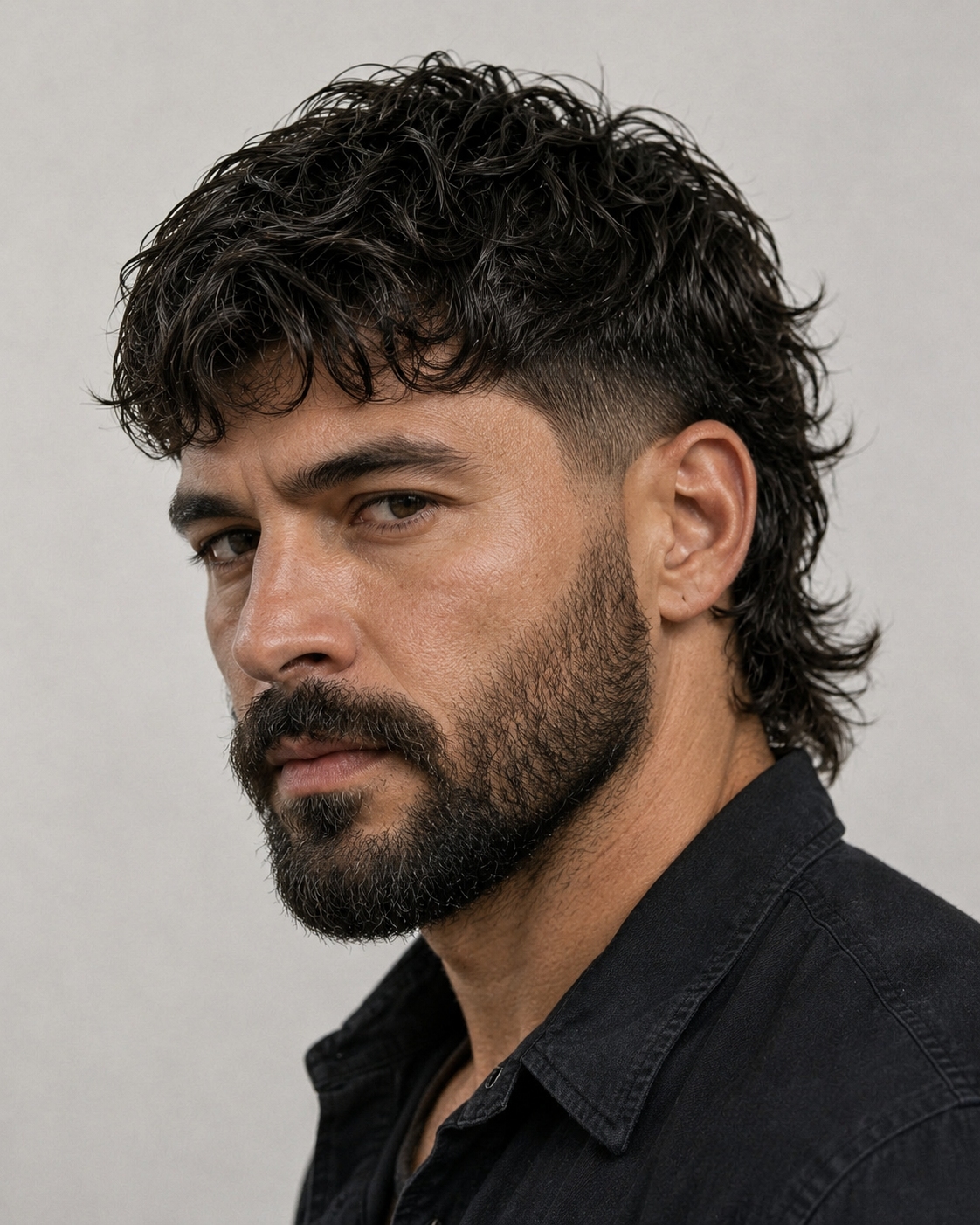
When done properly, thick hair makes for one of the richest and most dimensional versions of the haircut.
Hair type: Thick or coarse density
Maintenance: Every 4–5 weeks
Styling tip: Ask for internal weight removal rather than just shorter length. A matte clay can control expansion without making the hair stiff.
41. Mohawk Modern Mullet
The mohawk modern mullet, sometimes called a mulhawk, combines a textured strip of longer hair down the center with shorter faded or buzzed sides and mullet length at the back.
It channels punk energy, but the cleaner sides and more controlled top keep it wearable.
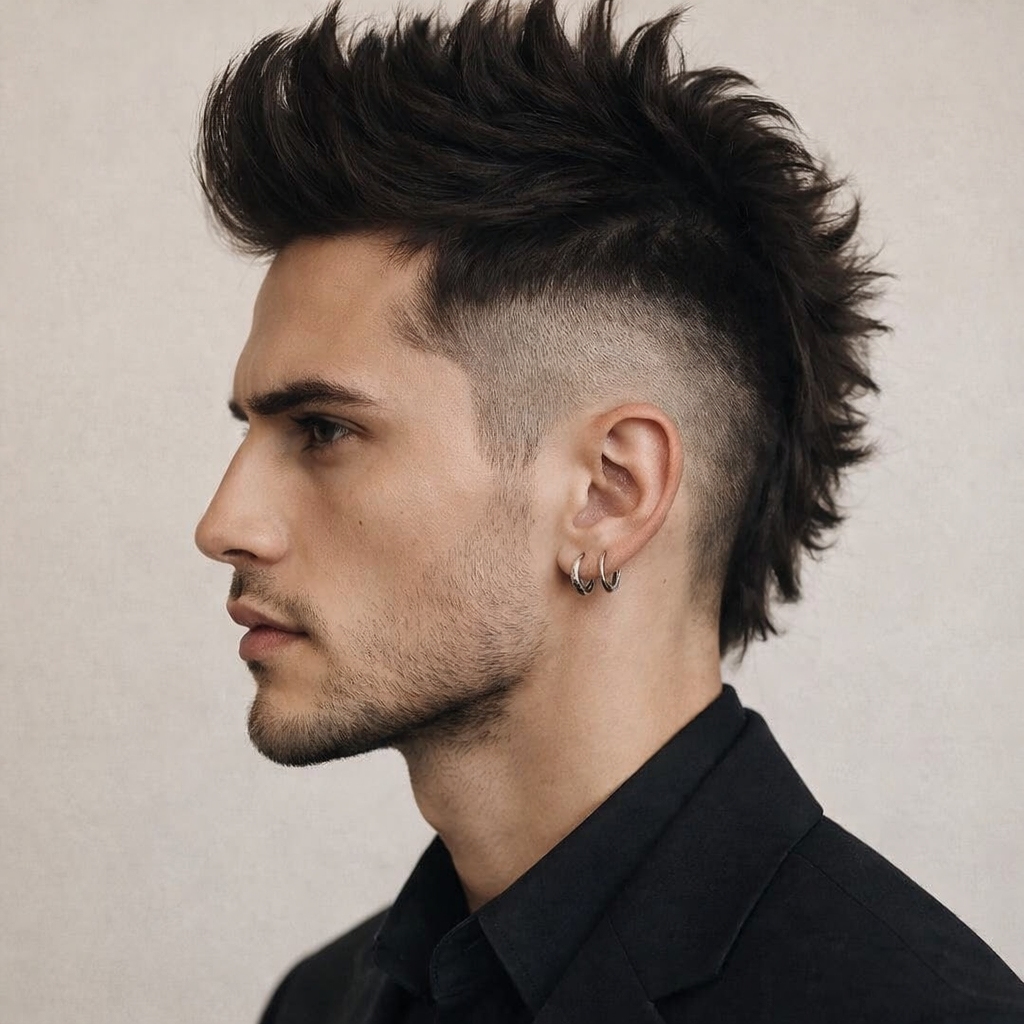
Hair type: Medium to thick hair for volume
Maintenance: Every 3–4 weeks for side upkeep
Styling tip: Use stronger hold on the center section and keep the sides clean so the shape remains obvious.
42. Skater Mullet
The skater mullet looks grown in, easy, and slightly imperfect. The sides are usually fuller than on fade-based mullets, and the back is allowed to move more naturally with minimal daily styling.

It is one of the best examples of a mullet that looks better a couple of weeks after the cut than the day after.
Hair type: Straight to wavy
Maintenance: Every 6–8 weeks
Styling tip: Air-dry with sea salt spray or a little texture cream. The cut should feel easy, not over-finished.
43. Spiky Mullet
The spiky mullet adds vertical texture through the top while keeping the back longer and freer. It is a higher-energy variation that feels more explicit in its attitude than most softer modern mullets.
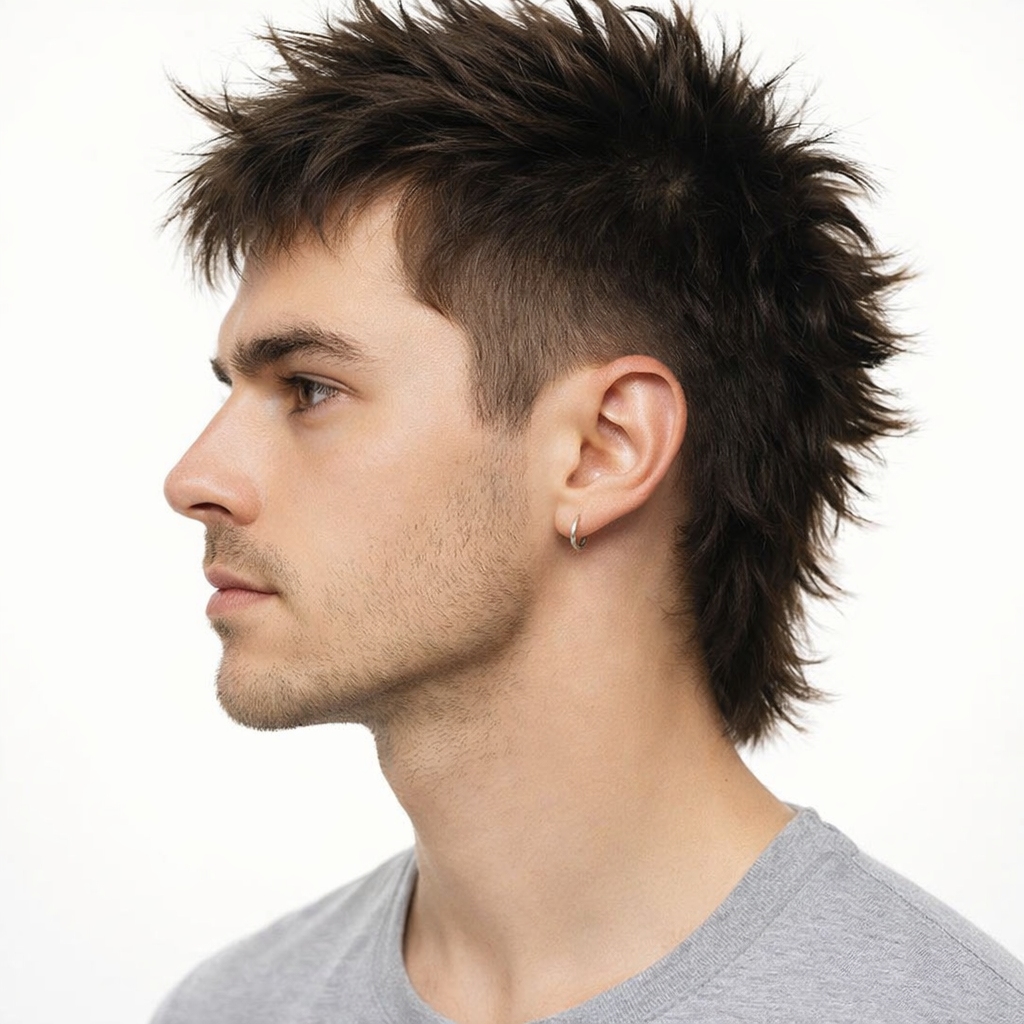
Hair type: Medium to thick hair that holds texture well
Maintenance: Every 3–4 weeks
Styling tip: Use strong-hold product through the top and shape the spikes with fingers rather than making them too rigid.
44. Braided Mullet
The braided mullet is as much a styling direction as a haircut. Cornrows or plaits shape the top and sides, while the back is left longer and looser for contrast.
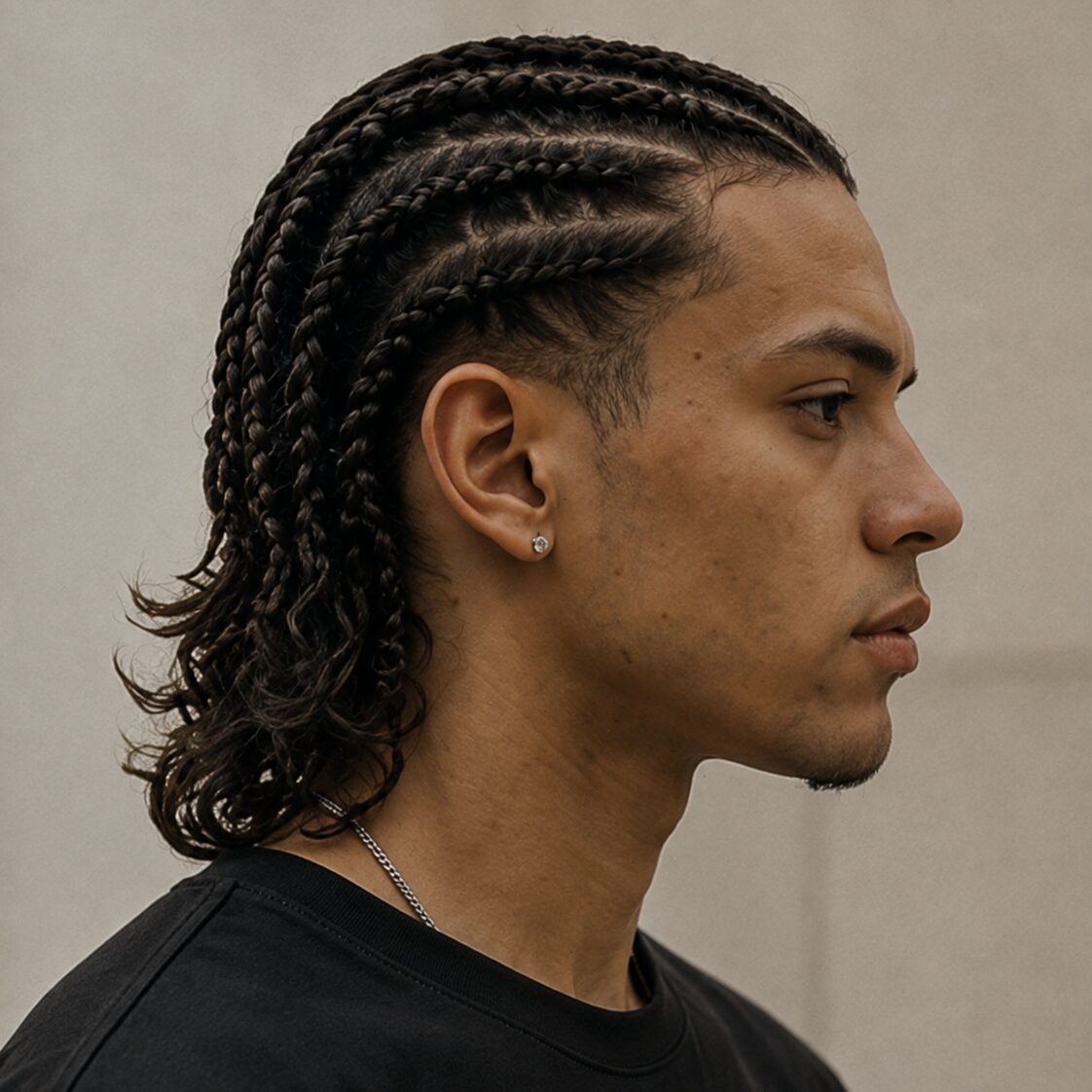
On coily and curly hair, the braid pattern can keep the top controlled while the longer back creates the contrast that makes the mullet shape visible.
Hair type: Coily to curly hair that holds braids well
Maintenance: Braids refreshed every 2–3 weeks
Styling tip: Keep the scalp moisturized and work with someone experienced in braid pattern and placement.
45. Long Mullet
The long mullet pushes the back well past the collar, sometimes to the shoulders, while keeping the front and sides shorter for contrast. It is one of the most dramatic versions of the cut and requires the most commitment.
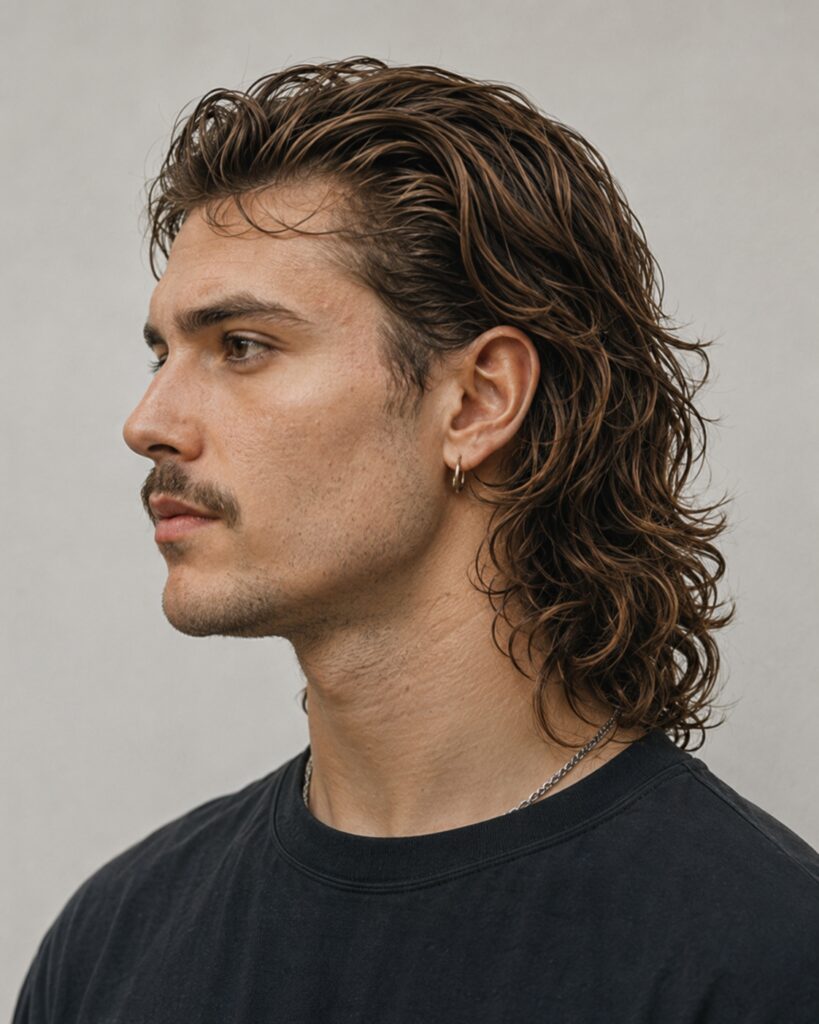
Done badly, it looks unintentional. Done well, it becomes one of the most visually striking ways to wear the shape.
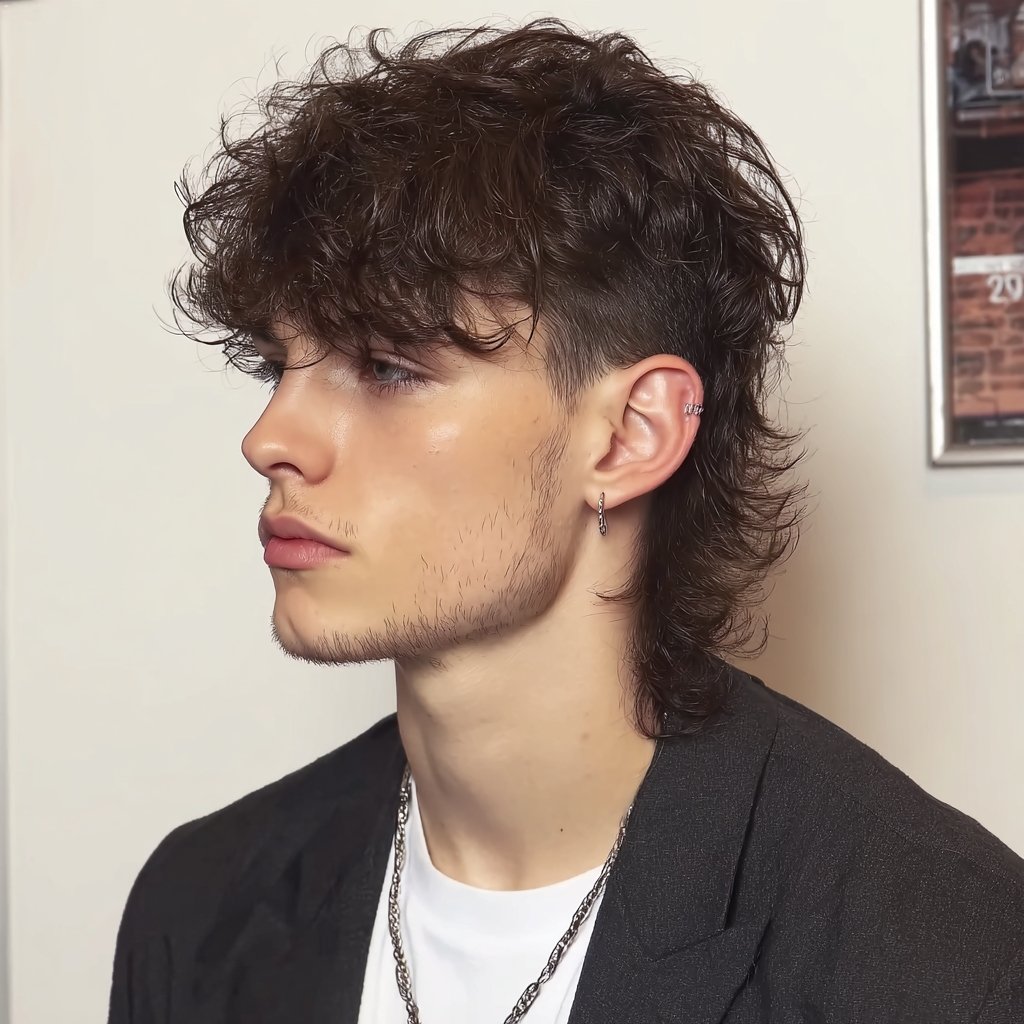
Hair type: Straight to wavy, with enough length to stay healthy and intentional
Maintenance: Every 6–8 weeks for shape
Styling tip: Use lightweight oil through the ends and keep the back conditioned so the length looks deliberate, not neglected.
46. K-Pop Inspired Sleek Mullet
This variation draws on K-pop styling language with feathered layering, pronounced crown shape, and a smoother, more polished finish through the top and sides.
It is less rugged than grunge or shag versions and more dependent on heat styling and precision.
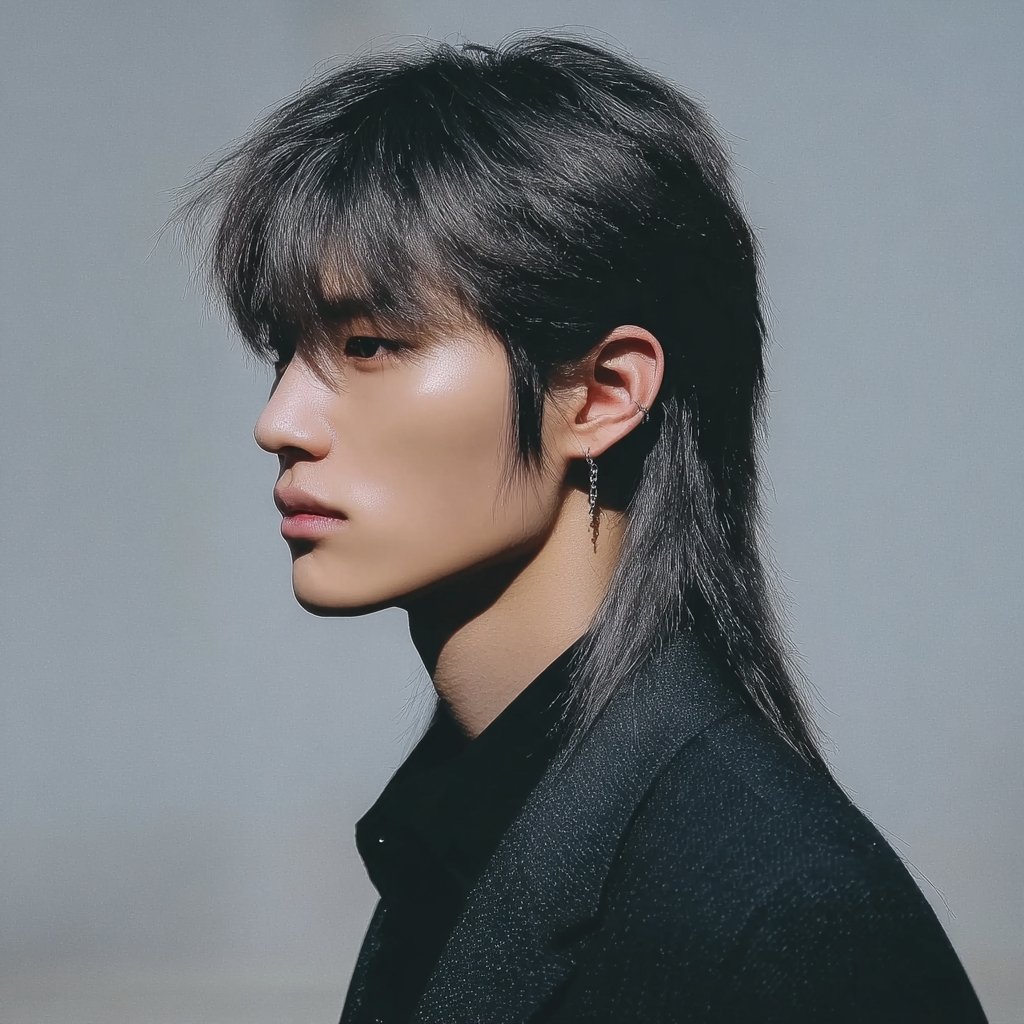
Hair type: Straight, thick hair that holds structure well
Maintenance: Every 3–4 weeks for precision
Styling tip: Use a blow dryer and, if needed, a straightener with light product to keep the finish smooth and shaped.
47. Hair Tattoo Mullet
The hair tattoo mullet adds clipper-cut lines or designs into the shorter sides, turning the haircut into something more graphic and personalized. The mullet itself stays the base, but the design work becomes part of the identity.
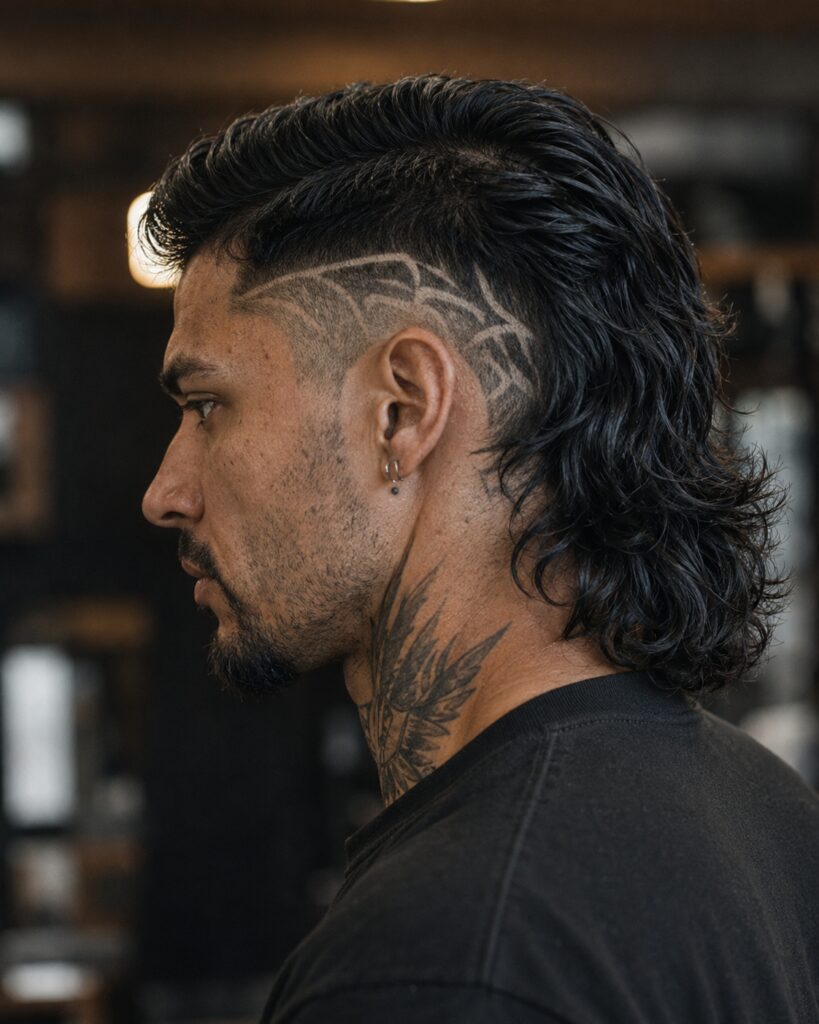
It is high-maintenance, but visually distinctive when done by a barber with strong clipper design skills.
Hair type: Most textures; designs usually read best on darker hair
Maintenance: Every 1–2 weeks to keep the design sharp
Styling tip: Choose a barber with a strong design portfolio. The haircut depends heavily on execution.
48. Rockstar Mullet
The rockstar mullet goes bigger on crown volume, longer on layers, and lighter on precision fading. It is one of the loosest and loudest versions of the haircut, built more around attitude than tidy technique.

Think arena-stage energy rather than polished barbershop restraint.
Hair type: Thick hair with medium to long length works best
Maintenance: Every 6–8 weeks
Styling tip: Use texturizing spray and let the hair keep some mess. Too much polishing weakens the look.
49. Color-Tipped Mullet
The color-tipped mullet keeps the haircut itself relatively simple and uses the ends of the back section to add contrast. It works best when there is enough visible length for the color change to read clearly.

Keeping the rest of the haircut simple makes the color at the nape read more clearly, especially when the tips are styled with a little separation rather than pressed flat.
Hair type: Best on medium to long mullet lengths
Maintenance: Color touch-ups every 6–8 weeks
Styling tip: Keep the rest of the haircut understated so the color detail remains the focal point.
50. The Grown-Up Mullet
Not every guy reaching for a mullet is 22. The grown-up mullet dials the shape back with a cleaner taper, slightly shorter back length, and a more restrained overall silhouette.
It proves the haircut can work especially well after 40 when the proportions are handled with some discipline.
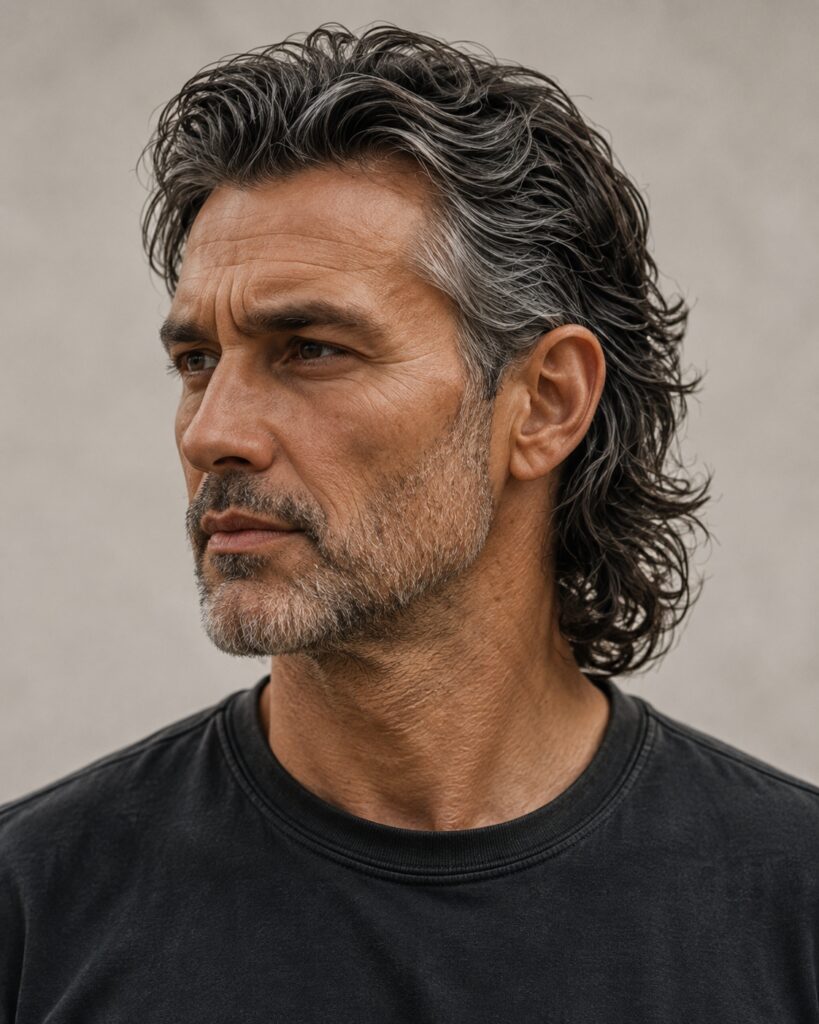
Hair type: All textures, including gray and salt-and-pepper hair
Maintenance: Every 4–5 weeks
Styling tip: Keep the finish matte and natural. The best grown-up mullets look intentional rather than flashy.
More Style Tips for Mature Men: The Men Who Look Better at 55 Than They Did at 35 All Did One Thing
Frequent Questions
How is a modern mullet different from a traditional mullet?
The modern version uses cleaner tapers, fades, blended layers, and more deliberate shaping to create a polished, contemporary look. The classic 1980s mullet was usually more extreme: shorter in front, longer in back, and far less refined in between.
How often should I get my mullet trimmed?
Every 4–6 weeks is ideal for most modern mullets. If you wear a skin fade, drop fade, or high fade version, you may want touch-ups every 2–3 weeks. Softer no-fade or scissor-cut mullets can usually go a bit longer.
How do you style a modern mullet?
Styling a modern mullet is about enhancing texture, creating lift through the crown when needed, and letting the back look intentional rather than neglected.
Step 1: Start with clean, towel-dried hair.
Pat the hair dry and apply a pre-styler such as sea salt spray, mousse, or curl cream depending on your texture.
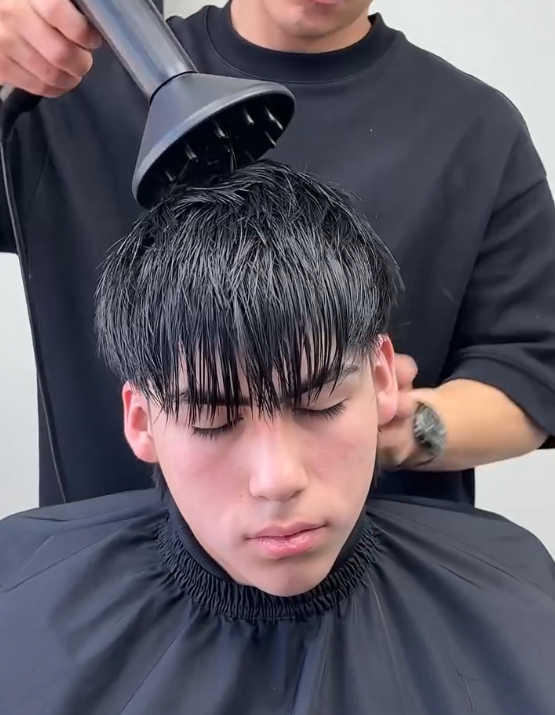
Step 2: Blow-dry with intention.
Use a round brush for volume, a diffuser for curls, or your fingers for a softer finish. Lift the crown if you want height, and either flick or soften the back depending on the style.
Step 3: Apply the right finishing product.
- Use matte clay or paste for choppy textured versions
- Use styling cream or pomade for cleaner, more defined versions
- Use curl cream or leave-in conditioner for wavy, curly, and coily mullets
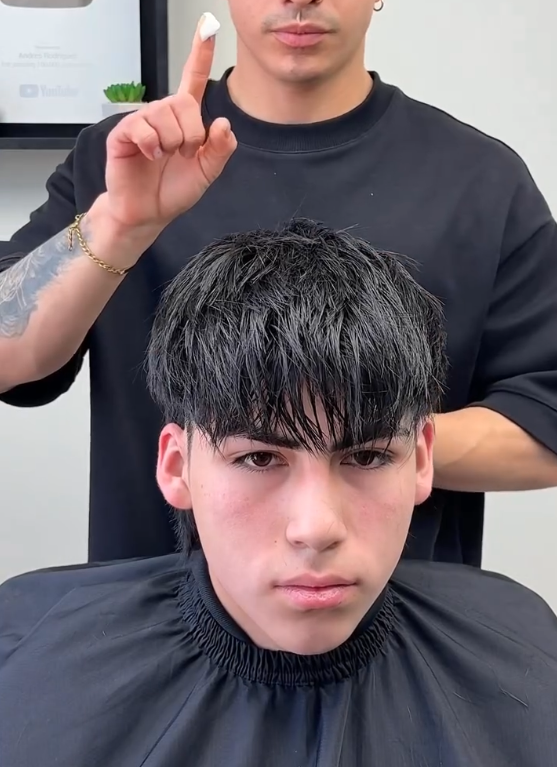
Step 4: Detail the fringe or front section.
Use your fingers to piece out the fringe, shape a part, or smooth the top depending on the variation you’re wearing.
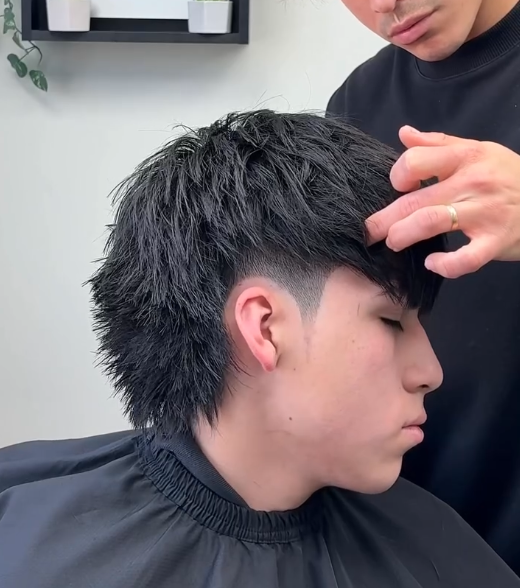
Step 5: Don’t forget the back.
Add a little product through the back section if needed so it doesn’t look limp or disconnected. Sometimes the smallest bit of definition makes the haircut look much more intentional.
Style tip: A little intentional mess goes a long way. The best modern mullets usually look shaped, not stiff.
How is a modern mullet cut?
A modern mullet starts by deciding how much length to preserve at the nape and how much contrast to create through the sides. The crown is then layered to connect the shorter front to the longer back. Depending on the variation, the sides can be faded, tapered, disconnected, or left fuller and scissor-cut.
Best products for styling a modern mullet
Sea Salt Spray: A good option for natural texture and movement.
Matte Clay: Ideal for choppy definition without unwanted shine.
Light Styling Cream: Best when you want control without flattening the shape.
Curl Cream or Leave-In Conditioner: Essential for curly, coily, or permed mullets.
How do you grow a modern mullet?
Start by growing out the back and top while keeping the sides cleaner with tapers, softer trims, or shape maintenance. A good modern mullet grows with guidance; it should look intentional at every stage rather than simply overgrown.
How do you ask for a modern mullet at the barbershop?
Be specific. Ask for shorter tapered, faded, or scissor-cut sides; textured layering on top; and extra length at the back. Mention if you want details such as a burst fade, drop fade, fringe, side part, or a more subtle mini mullet shape. Bring reference photos from the front, side, and back if you can.
Final Notes
The modern mullet is part throwback, part evolution, and still one of the most versatile men’s haircuts right now. Whether you prefer a subtle mini mullet, a barber-sharp skin fade, or a long textured version, the best results come down to choosing the right proportions for your hair type and face shape.
Explore More Mullet Hairstyles
Mullet Hairstyles for Men: The Iconic Cut Reimagined
Low Taper Mullet, Mid Taper Fade, or High Skin Fade? Breaking Down the Best Mullet Styles
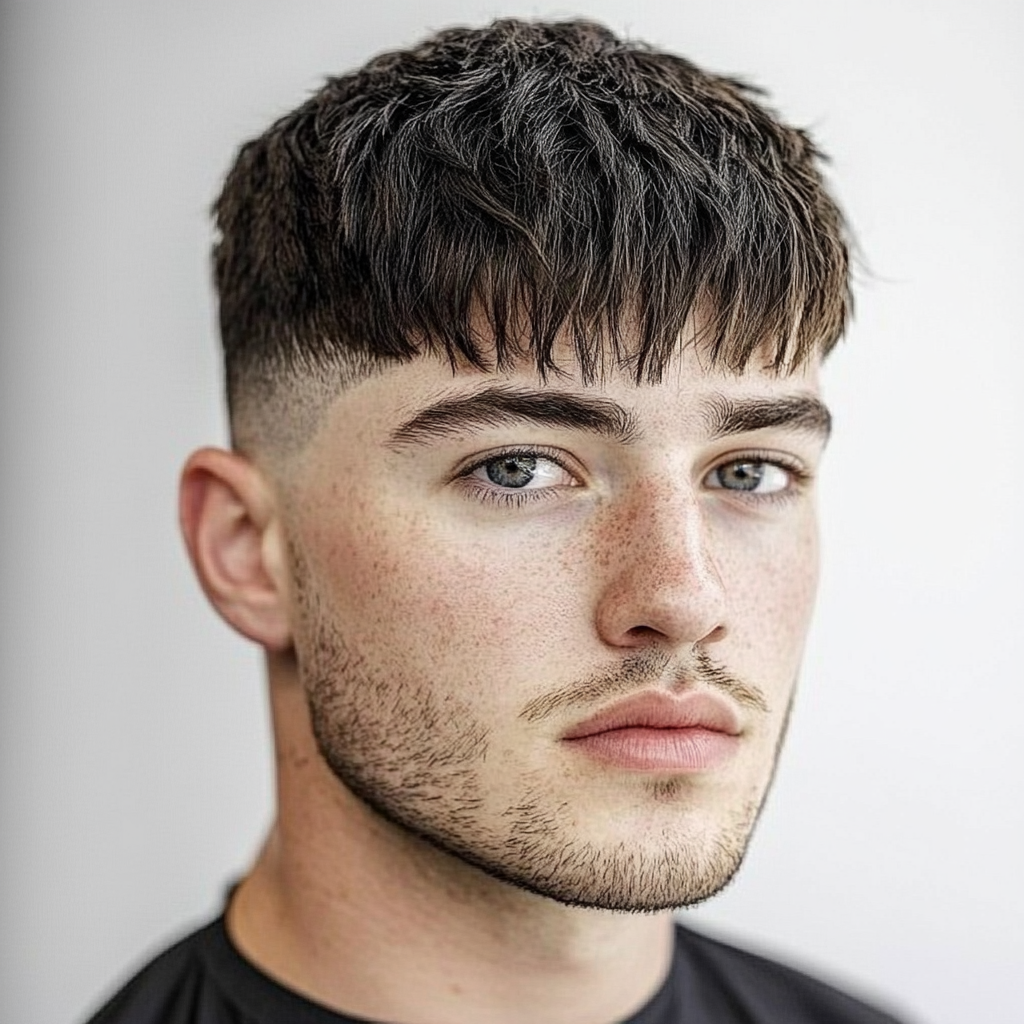
Modern Men’s Haircuts: Top Trendy Hair Styles Right Now
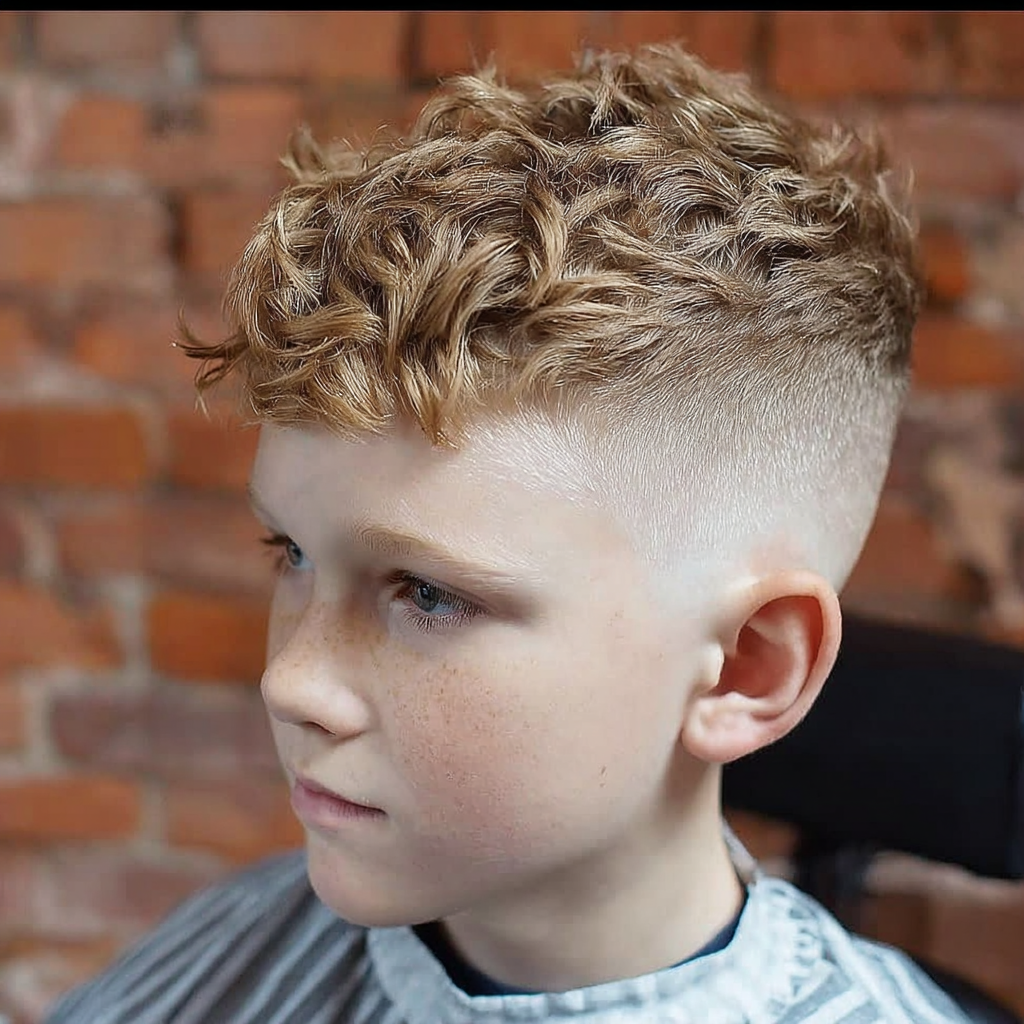
40+ Boys Haircuts and Hairstyles: Ultimate Guide for Trendy Kids
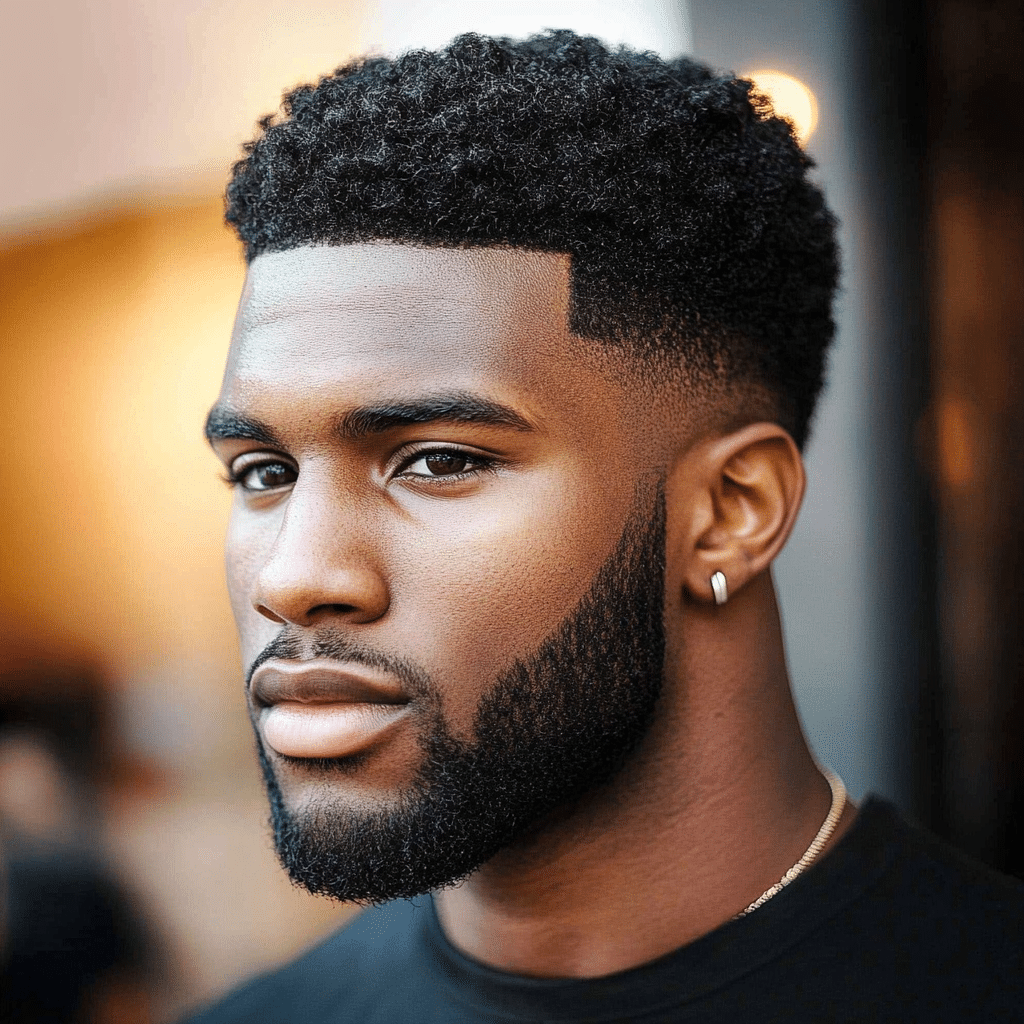
Low Fade Black Men’s Haircuts: Sleek & Stylish Looks
![1960s Hairstyles for Men —[some] still on trend today](https://vagazine.com/vaga_v3/wp-content/uploads/2023/01/comparison_of_60s_mens_hairstyles_ivy_league_haircut-1.png)
1960s Hairstyles for Men —[some] still on trend today

20+ Caesar Hairstyles for Men: The Modern Haircut Guide