French Crop Haircut for Men: 35+ Modern Styles, Fades and Barber Tips
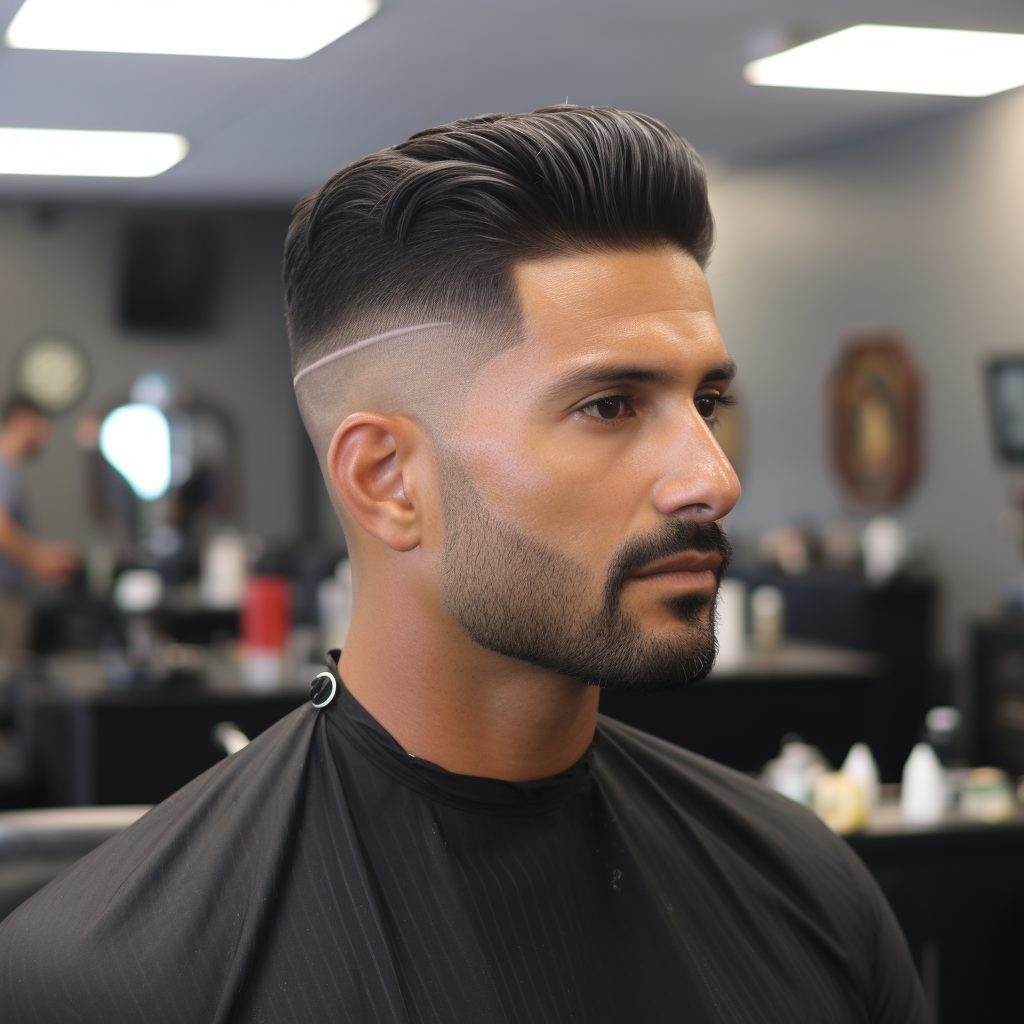
The french crop haircut works because it is built around control: fringe direction, surface texture, and contrast at the sides.
The fringe moves forward. The top is cut short enough to hold shape, but not so short that it loses texture.
The sides can be faded, tapered, dropped, or left softer depending on how sharp you want the silhouette to read.
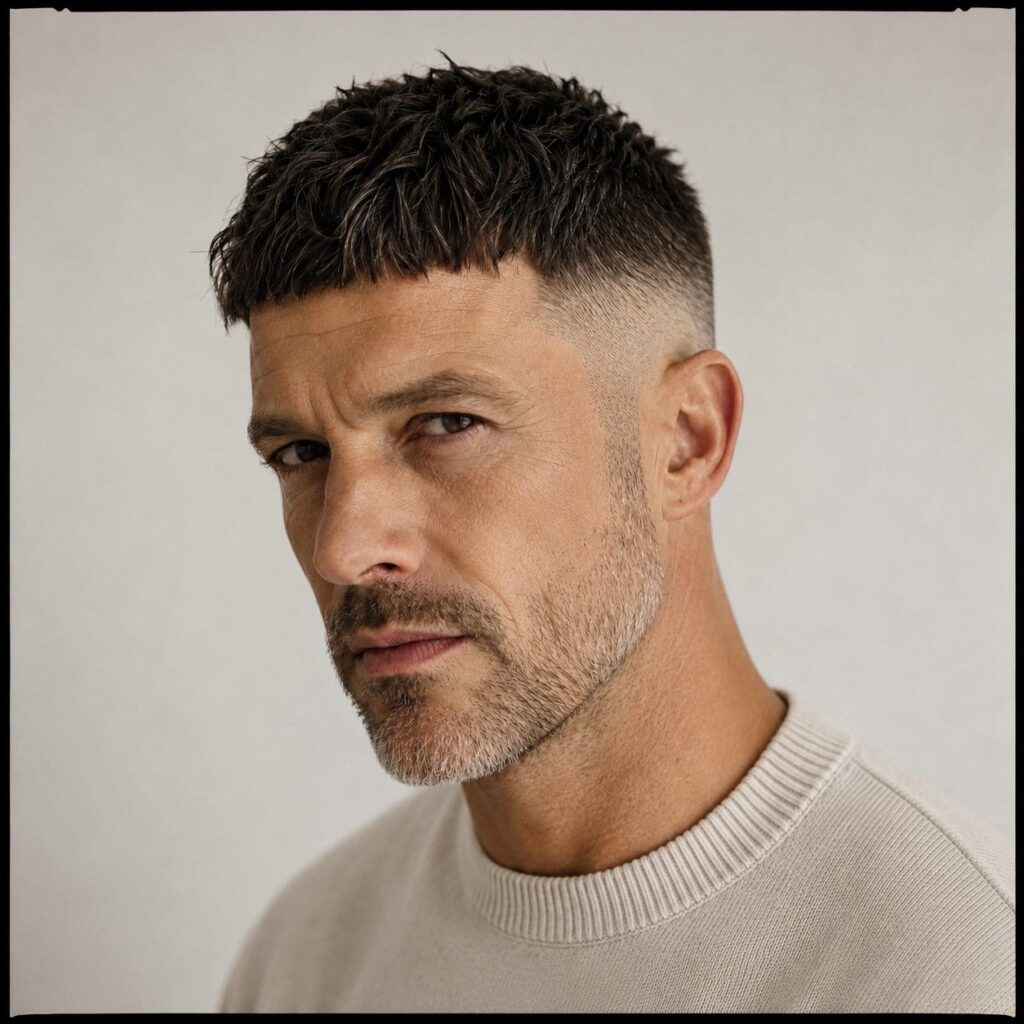
A french crop is not just “short hair with bangs.” It is a balance between weight, movement, and the way the front hairline frames the face.
We have organized 35 french crop hairstyle variations by silhouette, fade contrast, hair texture, fringe shape, and styling finish. What changes in each version, who it suits, and how to explain it clearly in the barber chair.
How to Read a French Crop Before Choosing One
Start with the fringe. A blunt fringe creates a graphic line across the forehead. A broken fringe feels softer and more editorial. A longer fringe adds movement and can help balance a higher forehead.
A micro fringe makes the haircut sharper and more intentional. The same french crop can look classic, aggressive, relaxed, or fashion-forward depending on that front edge.
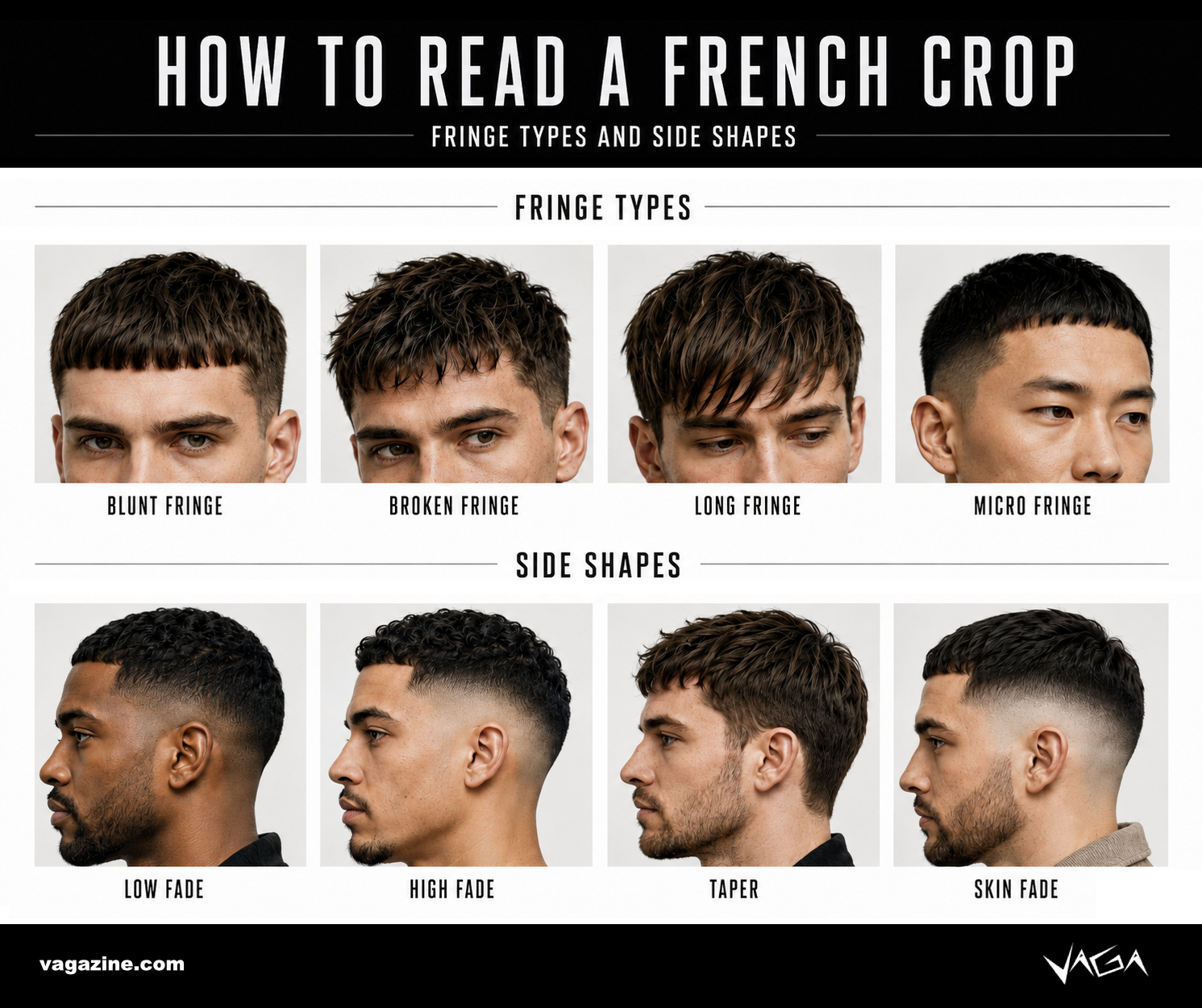
Then look at the sides. A low fade keeps the shape compact. A high fade makes the top look heavier and more sculptural. A taper keeps more softness around the sideburns and neckline.
A skin fade turns the cut into a statement because the contrast becomes part of the design. The fade is not just a technical detail. It changes the entire mood of the haircut.
Finally, think about finish. Matte clay gives separation. Texture powder adds lift to fine hair. Cream keeps curls and waves flexible. Pomade only makes sense when the crop leans cleaner, smoother, or side-parted.

Don’t hesitate to try different options. The wrong product can make a french crop haircut collapse into a helmet.
French Crop Hairstyles by Shape, Texture and Fade
French crop variations are separated by what changes visually: the weight of the fringe, the texture through the top, the height of the fade, and how much contrast you want around the temples and ears.
1. Classic French Crop Haircut
The clean reference point: short, tapered sides, a compact textured top, and a fringe that moves forward without becoming too heavy.
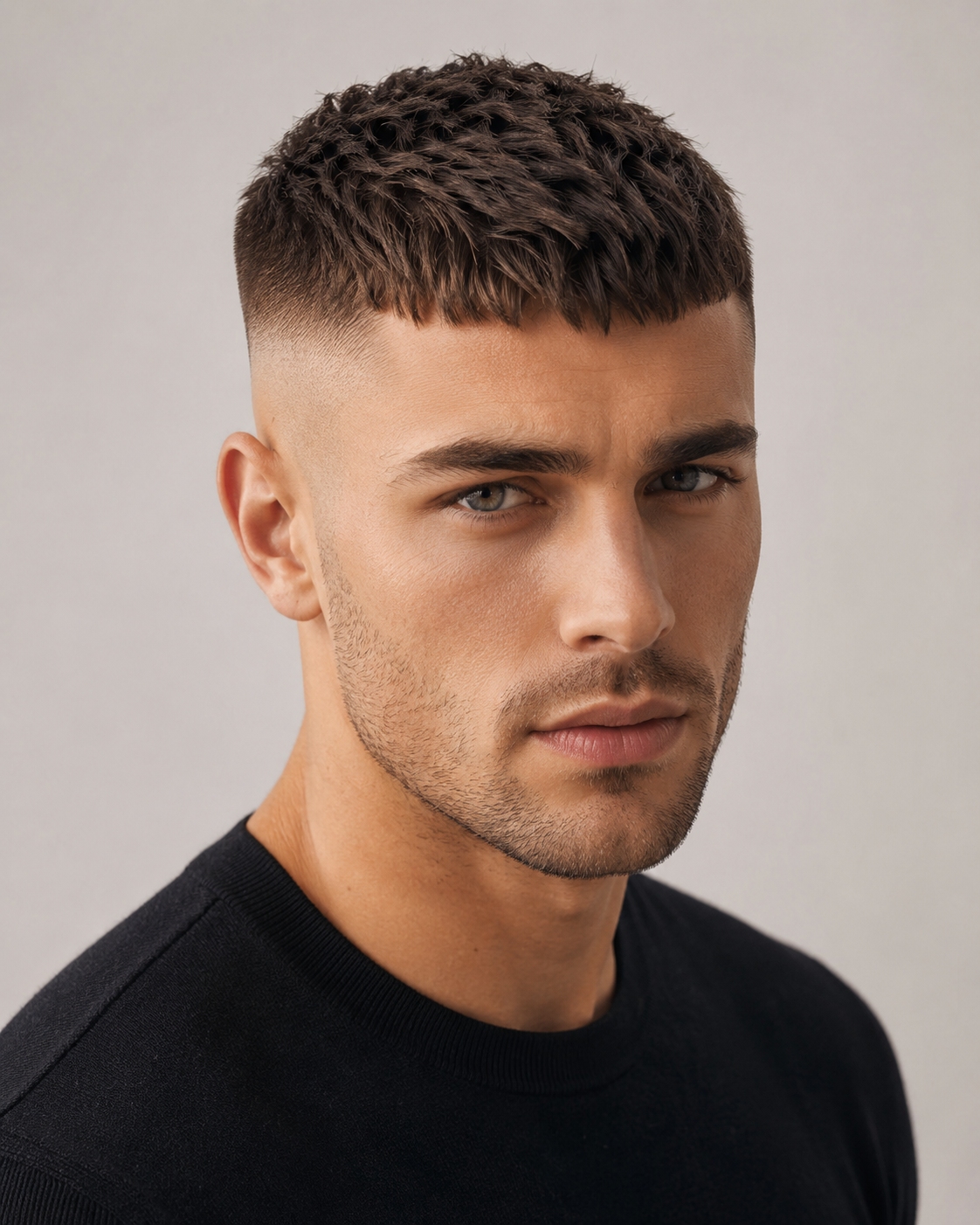
The fringe cannot be too long, the sides cannot be too disconnected, and the top needs point-cutting or light texture so it breaks naturally.
Best for: Balanced first french crop, medium density, clean texture
Styling: Matte clay or light paste worked forward
Maintenance: Every 4–5 weeks
Face shapes: Most, especially oval and square
2. Textured French Crop
The texture is the point here. Choppy layers through the top create separation, while the fringe breaks into pieces instead of forming one flat line.
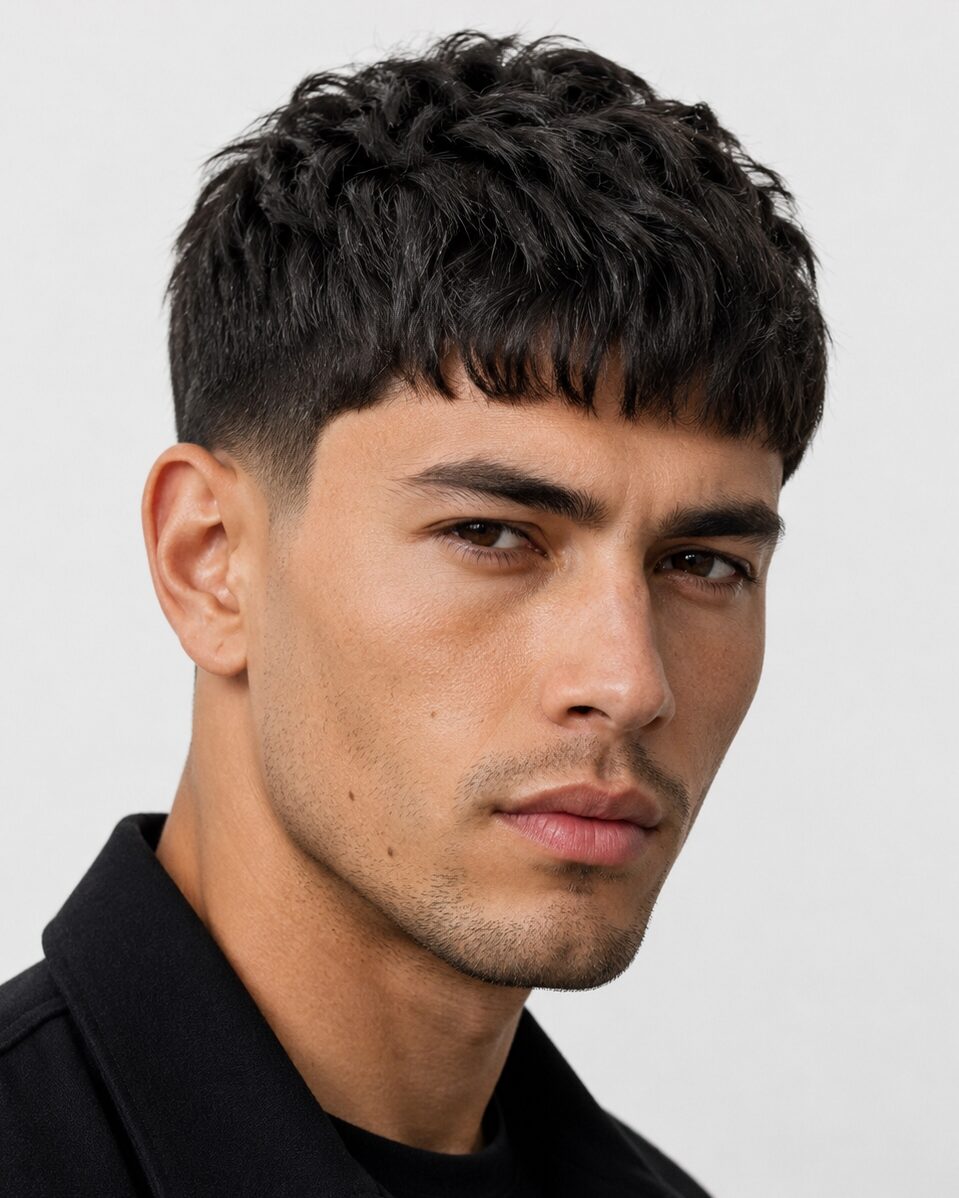
It gives the french crop more movement. Ask for point-cutting, slicing, or razor texture through the top depending on your hair type. The goal is not mess for the sake of mess.
Best for: Men who want visible texture and a less rigid fringe
Styling: Matte clay applied with fingers
Maintenance: Every 4 weeks
Face shapes: All, especially square and oval
3. Modern French Crop Fade
This is the contemporary salon-and-barbershop version: textured top, fringe forward, and faded sides that sharpen the silhouette.
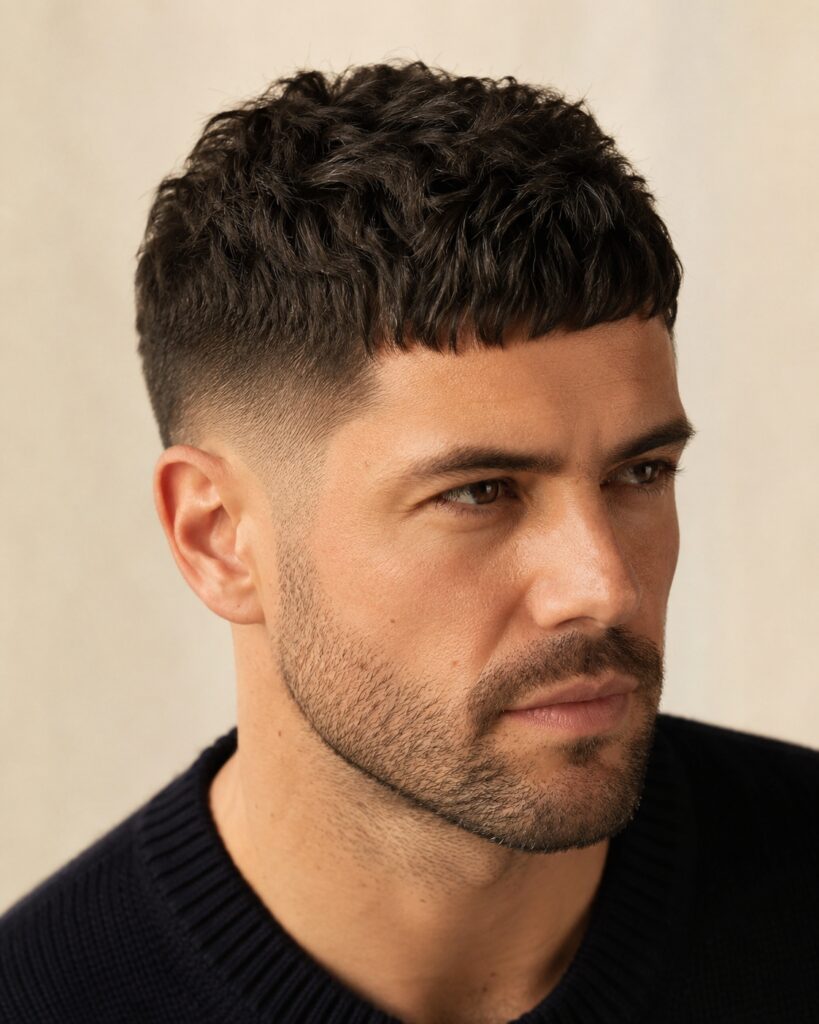
The fade should support the top rather than steal the entire haircut. If the top has no texture, the fade just becomes expensive trimming around a flat surface.
Use this variation when you want the crop to read modern but still wearable. The important distinction is not simply the “fade.” It is how much contrast the fade creates against the weight of the fringe.
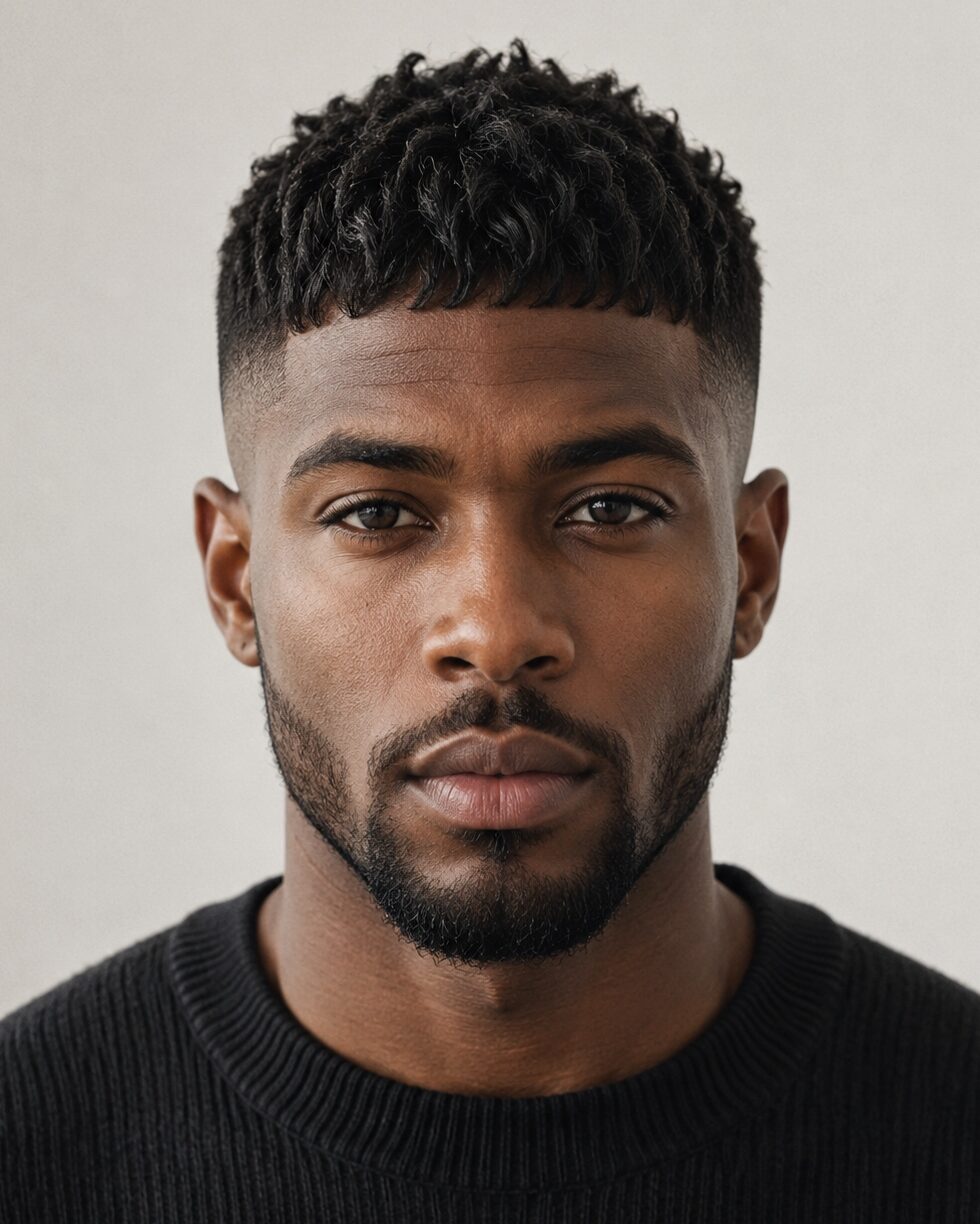
Best for: Modern crop shape, medium to thick hair, clean contrast
Styling: Clay or molding paste
Maintenance: Every 3–4 weeks
Face shapes: Most face shapes
Explore More: Textured Hairstyles for Men: Top Picks of All Time
4. Low Fade French Crop
The low fade is softer than a high fade but still sharper than a taper. The result is compact, controlled, and easy to style without making the sides look severe.
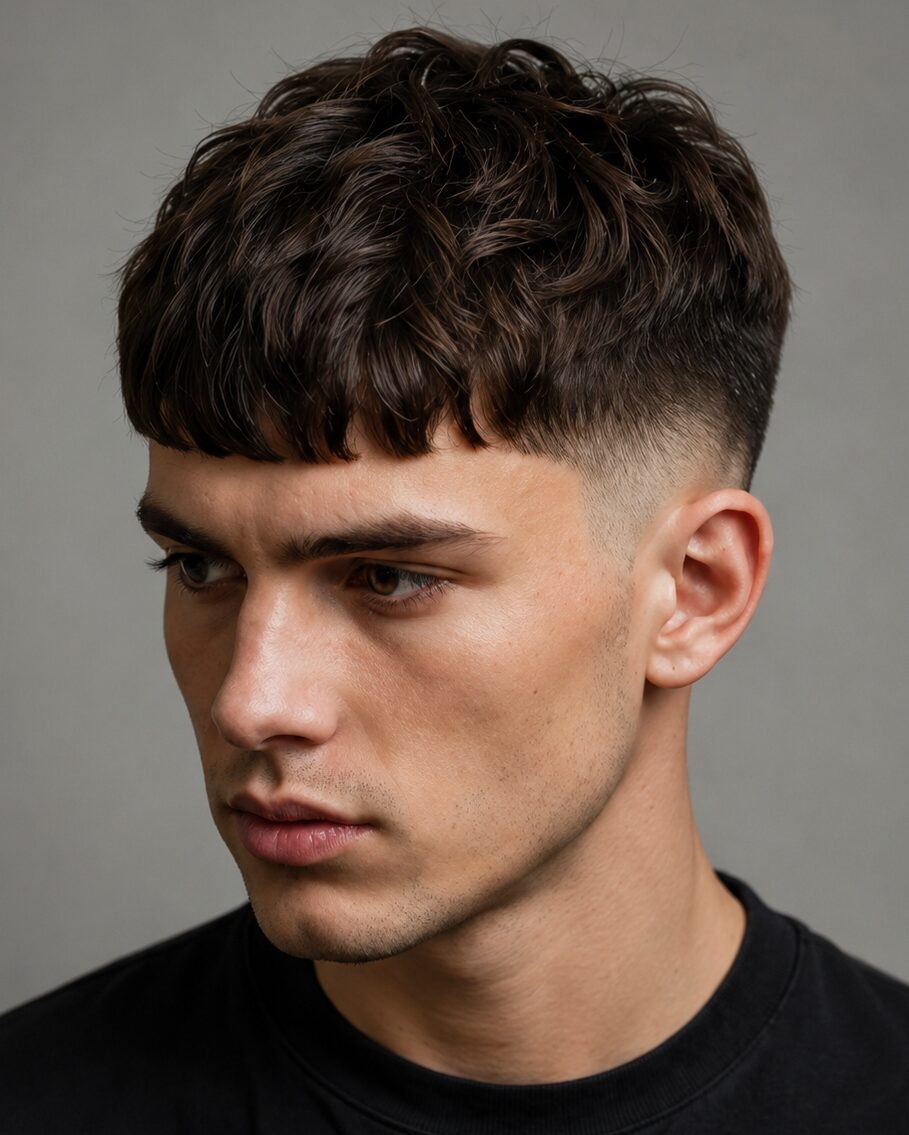
This works especially well when the fringe has texture rather than a hard straight line.
A low fade lets the haircut grow out with less drama, while still giving the crop a sharp enough outline.
Best for: Subtle contrast, fine to medium hair, softer silhouettes
Styling: Light clay or styling cream
Maintenance: Every 4–5 weeks
Face shapes: All
More Modern Hairstyles: Fade Haircuts for Men: 25+ Modern, Versatile Styles
5. Balanced Mid Fade French Crop
The mid fade is the balance point: more contrast than a low fade, less exposed than a high or skin fade.
It starts around the middle of the sides and gives the top enough visual support without making the fade the only thing anyone sees.
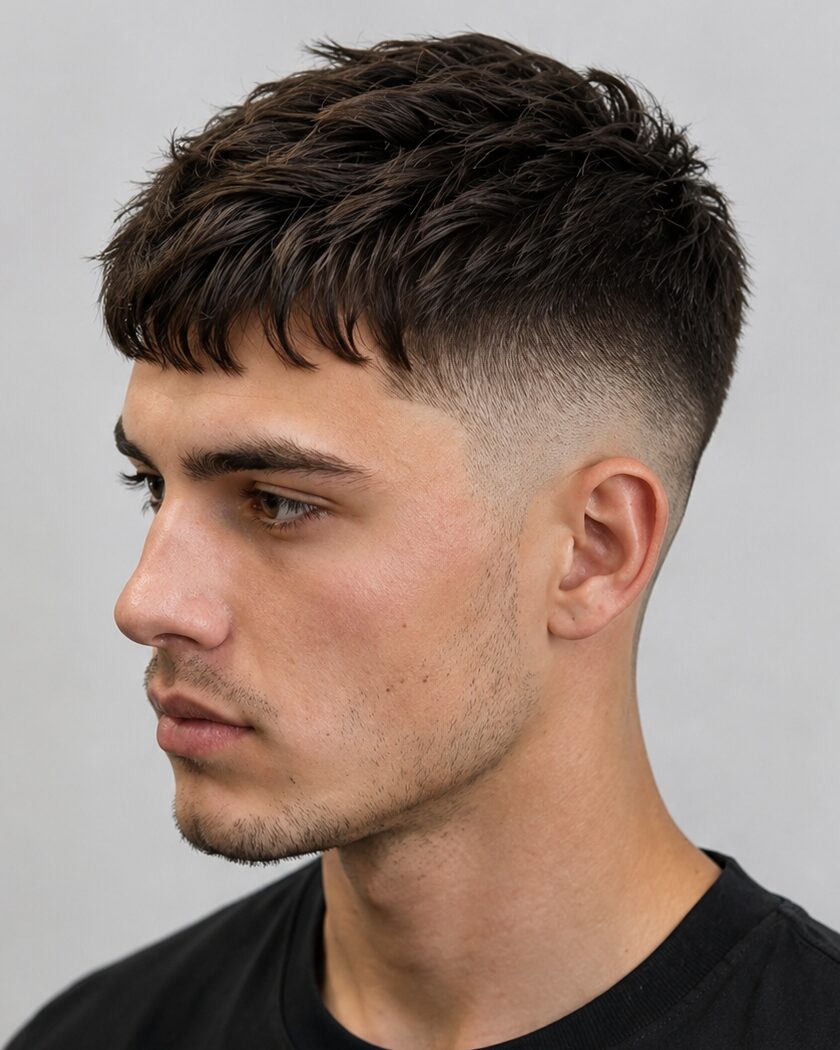
This is useful when the fringe has weight and the top has texture, but you do not want the haircut to become overly sharp at the temples.
The mid fade works best when blended cleanly into the upper shape so the crop feels sculpted, not sliced in half.
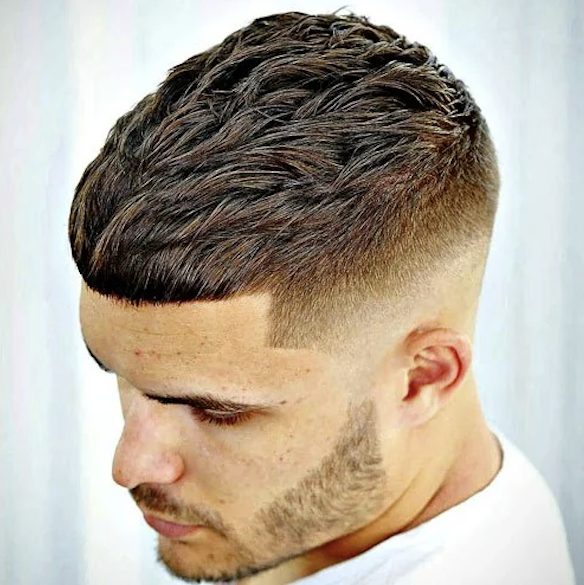
Best for: Balanced fade contrast, medium to thick hair, versatile crop shapes
Styling: Matte clay or paste
Maintenance: Every 3 weeks
Face shapes: All
Read More: Mid Taper Fade & Mid Fade: Complete Style Guide for Straight, Curly, Fluffy, and Messy Hair
6. High Fade French Crop
The high fade lifts the contrast above the temple and makes the textured top look heavier and more graphic.
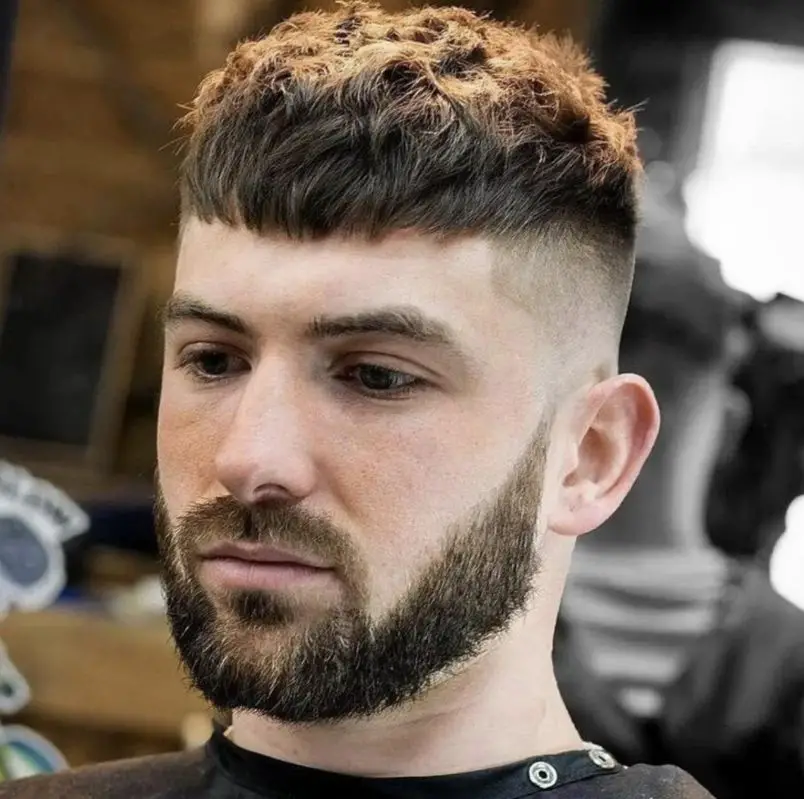
Best when the top has enough density to hold its own. The barber needs to leave enough weight through the fringe to balance the fade.
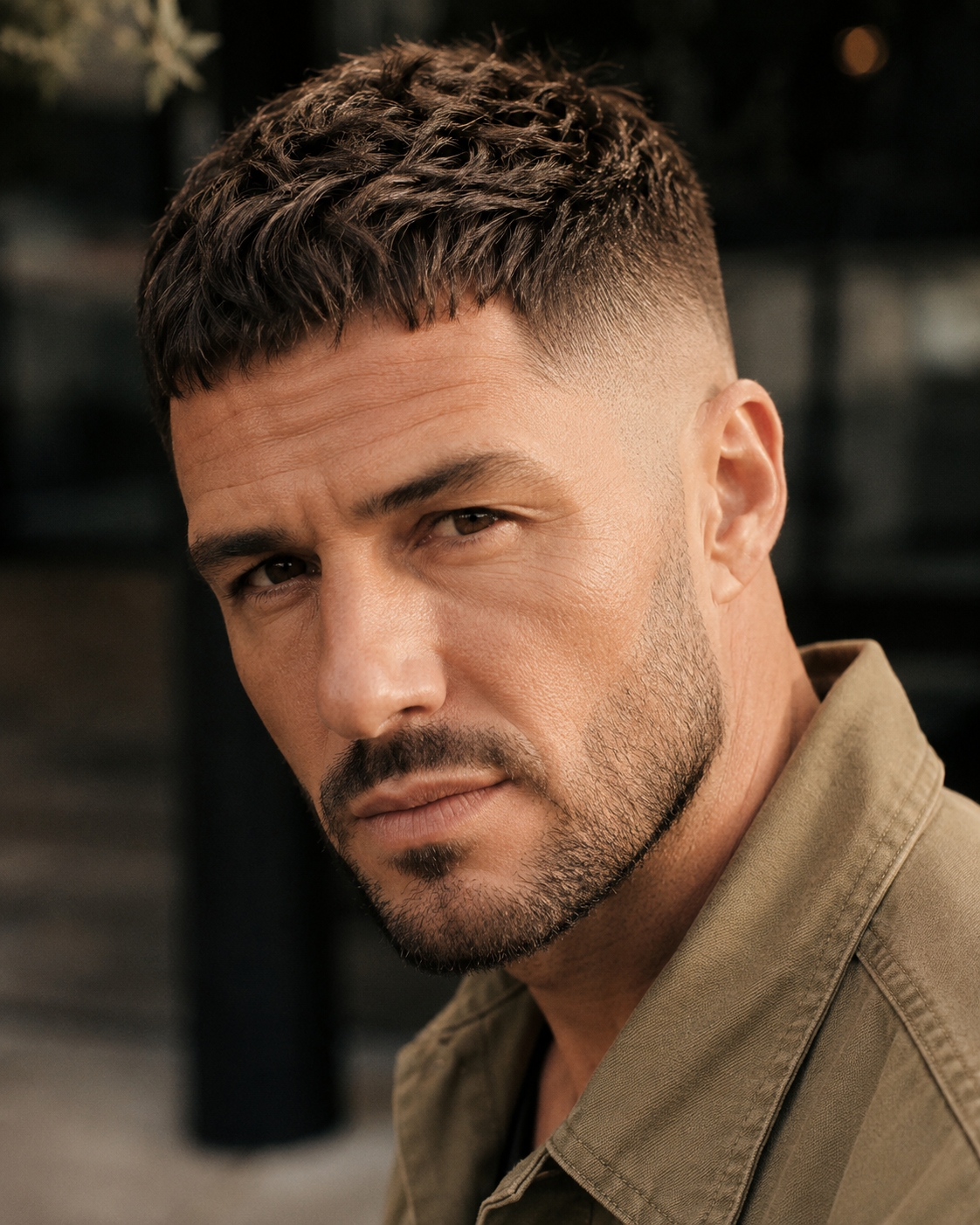
This is where the french crop becomes more of a statement cut. The sides disappear, the fringe becomes stronger, and the shape gets sharper from every angle.
Best for: Strong contrast, sharper silhouettes
Styling: Strong-hold matte clay or paste
Maintenance: Every 2–3 weeks
Face shapes: Round, oval, square
7. Skin Fade French Crop
The skin fade takes the sides down to bare skin, which makes the top look more dramatic.
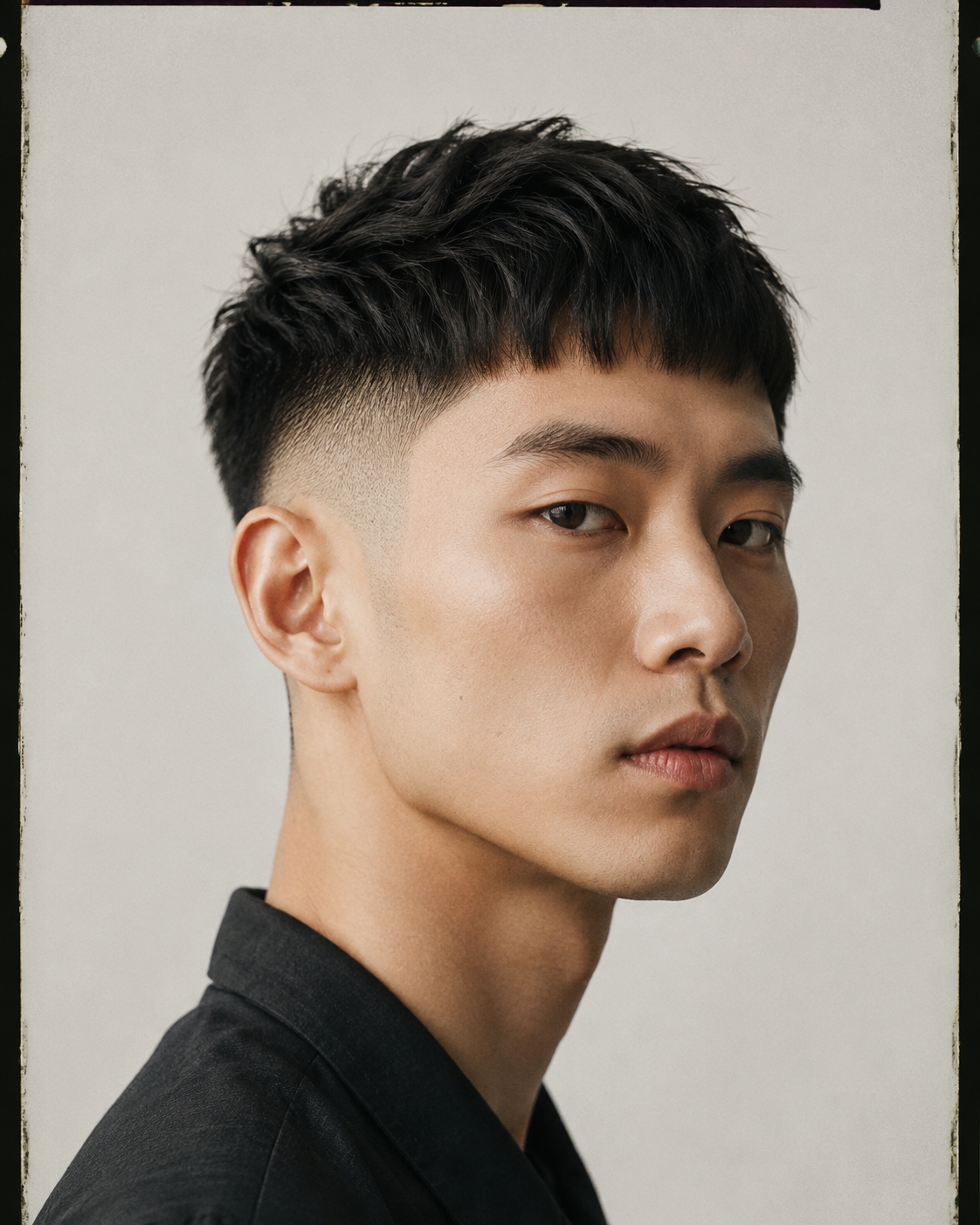
It is the sharpest version of the classic fade family and the least forgiving when it grows out. Fresh, it looks precise.
The top needs texture and a deliberate fringe shape. If the fringe is too blunt, the cut can become overly hard. If it is too soft, the skin fade overwhelms it.
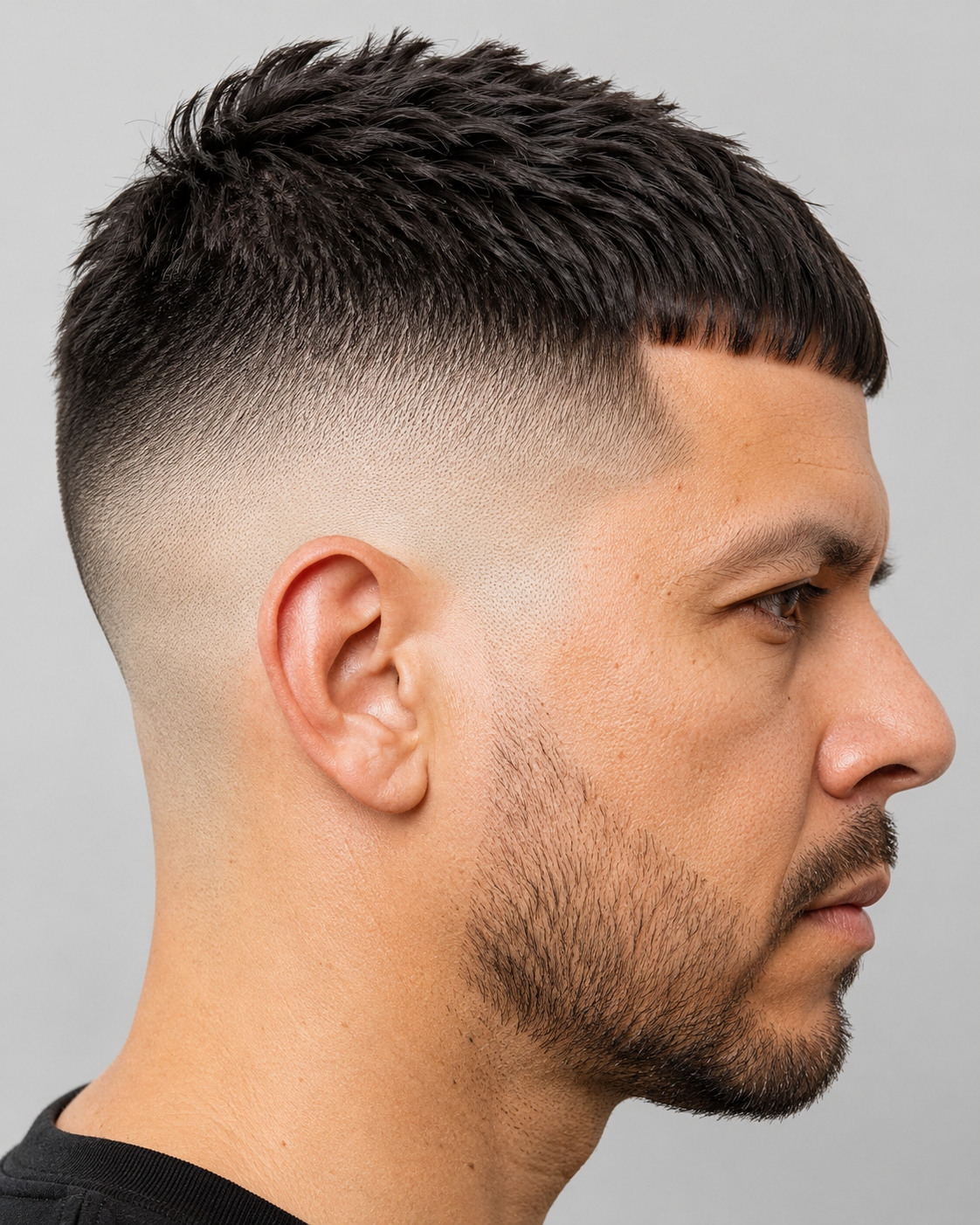
The best version balances sharp sides with a top that still has movement.
Best for: Maximum fade contrast, dense hair, sharp grooming detail
Styling: Strong-hold paste or matte clay
Maintenance: Every 2–3 weeks
Face shapes: Oval, rectangular, square
8. Curly French Crop
Curly hair gives the french crop volume and movement that straight hair has to manufacture with product.
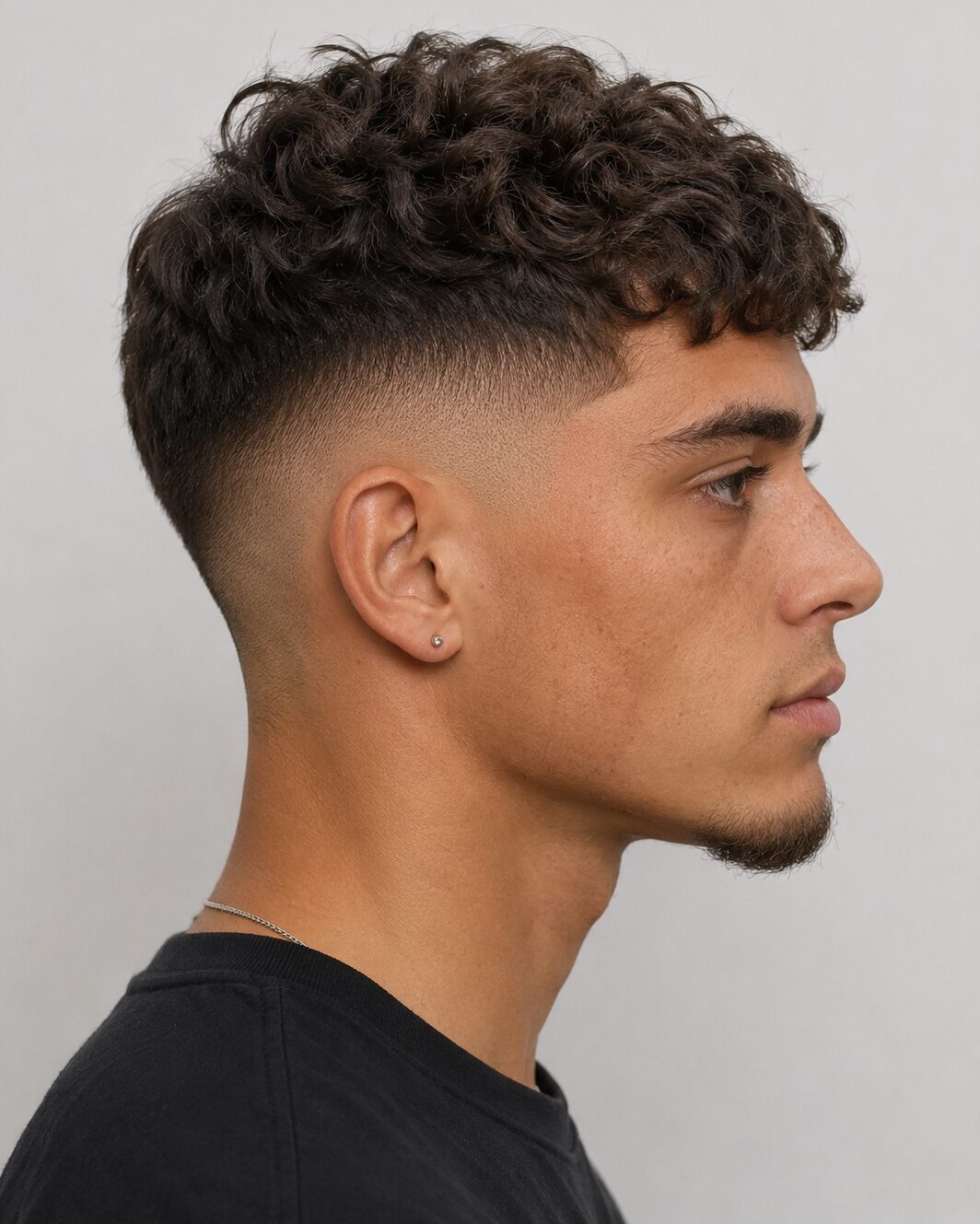
The fringe does not need to fall in a perfect horizontal line. Let the curl pattern break the front naturally while the sides control the width.
The mistake is cutting the top too short or forcing the curls into a blunt shape. A curly crop should respect the curl, not punish it.
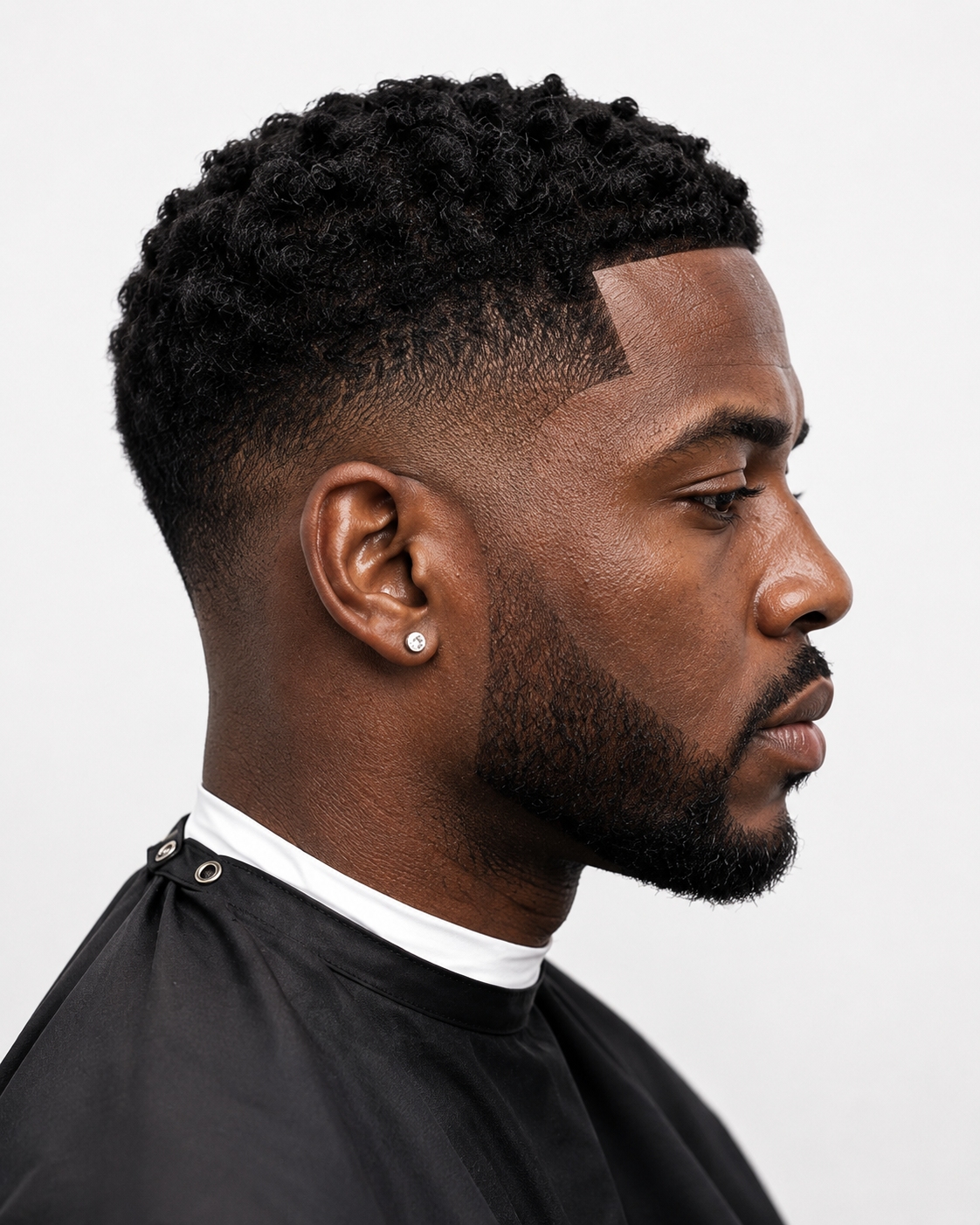
Keep enough length for definition, then tighten the sides so the silhouette stays clean.
Best for: Natural curls, controlled volume, texture-led crops
Styling: Curl cream or light defining cream
Maintenance: Every 3–4 weeks
Face shapes: Round, oval, heart
9. Wavy French Crop Haircut
Short wavy hair gives the crop a softer, more lived-in front edge. The wave breaks the fringe naturally, which makes the haircut feel less rigid.
It is one of the easiest textures for this cut because the movement is already there. Keep the sides clean and let the top do the work.
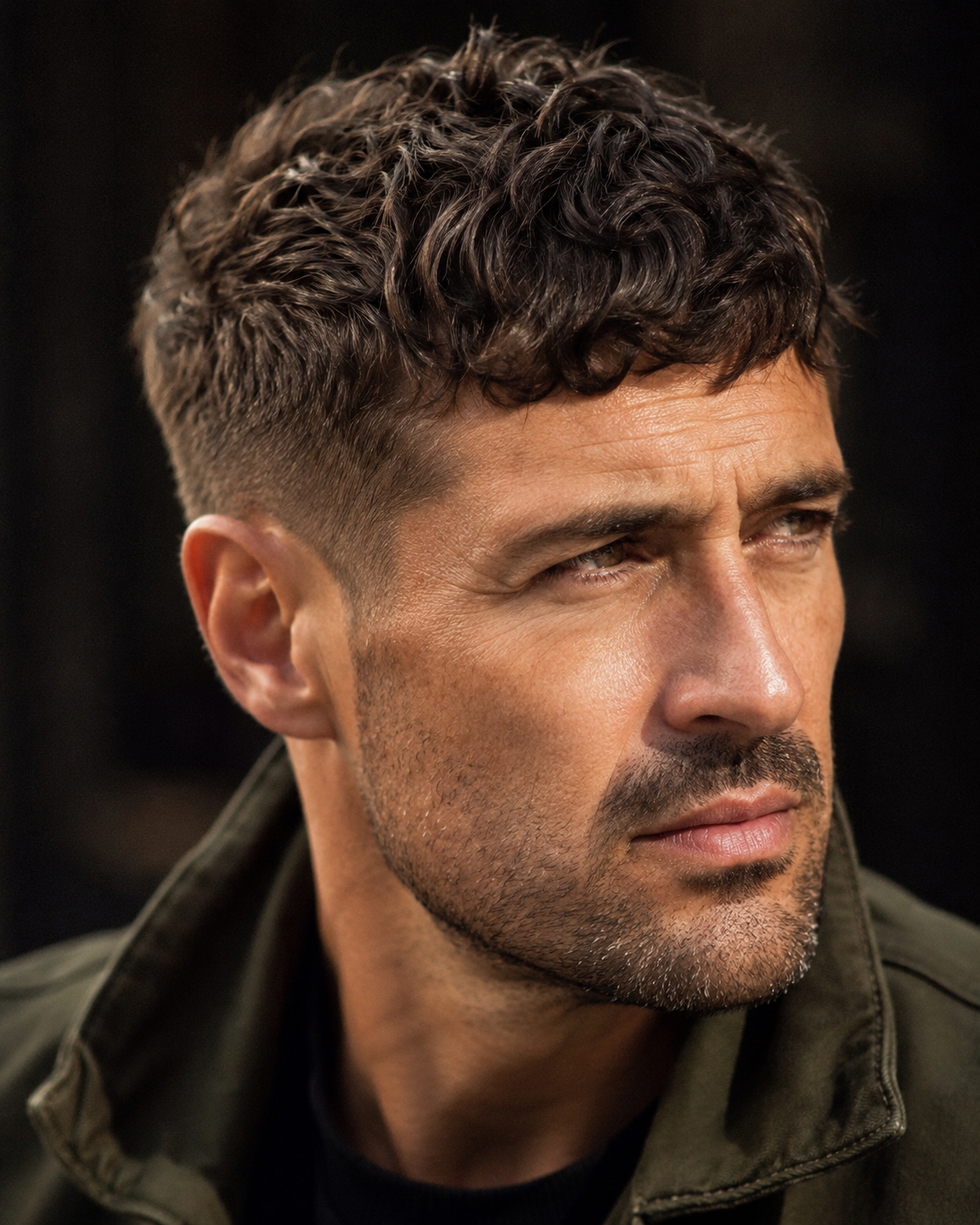
Rough-drying with fingers usually gives a better finish than trying to comb every piece into place.
A little imperfection is the whole advantage.
Best for: Natural movement, relaxed texture, soft fringe lines
Styling: Sea salt spray or light cream
Maintenance: Every 4 weeks
Face shapes: All, especially angular faces
10. French Crop for Receding Hairline
The forward fringe is one of the most useful shapes for a receding hairline because it gives the front of the haircut a purpose. It covers without looking like concealment, and the shorter sides move attention away from the temples.
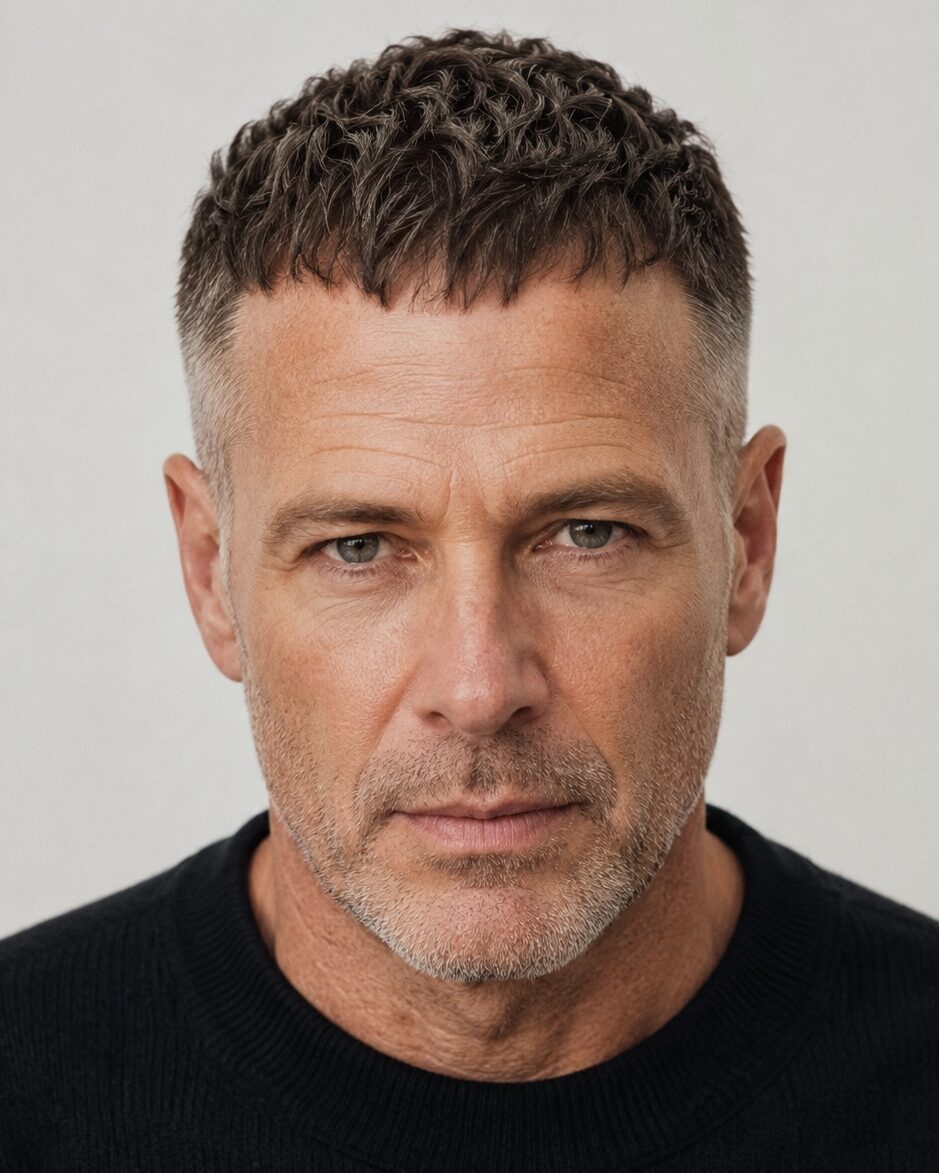
The key is controlled length. Too long and the fringe separates in the wrong places.
Too short and it stops helping. Ask for texture that follows the natural growth direction so the hair sits forward instead of fighting itself all day.
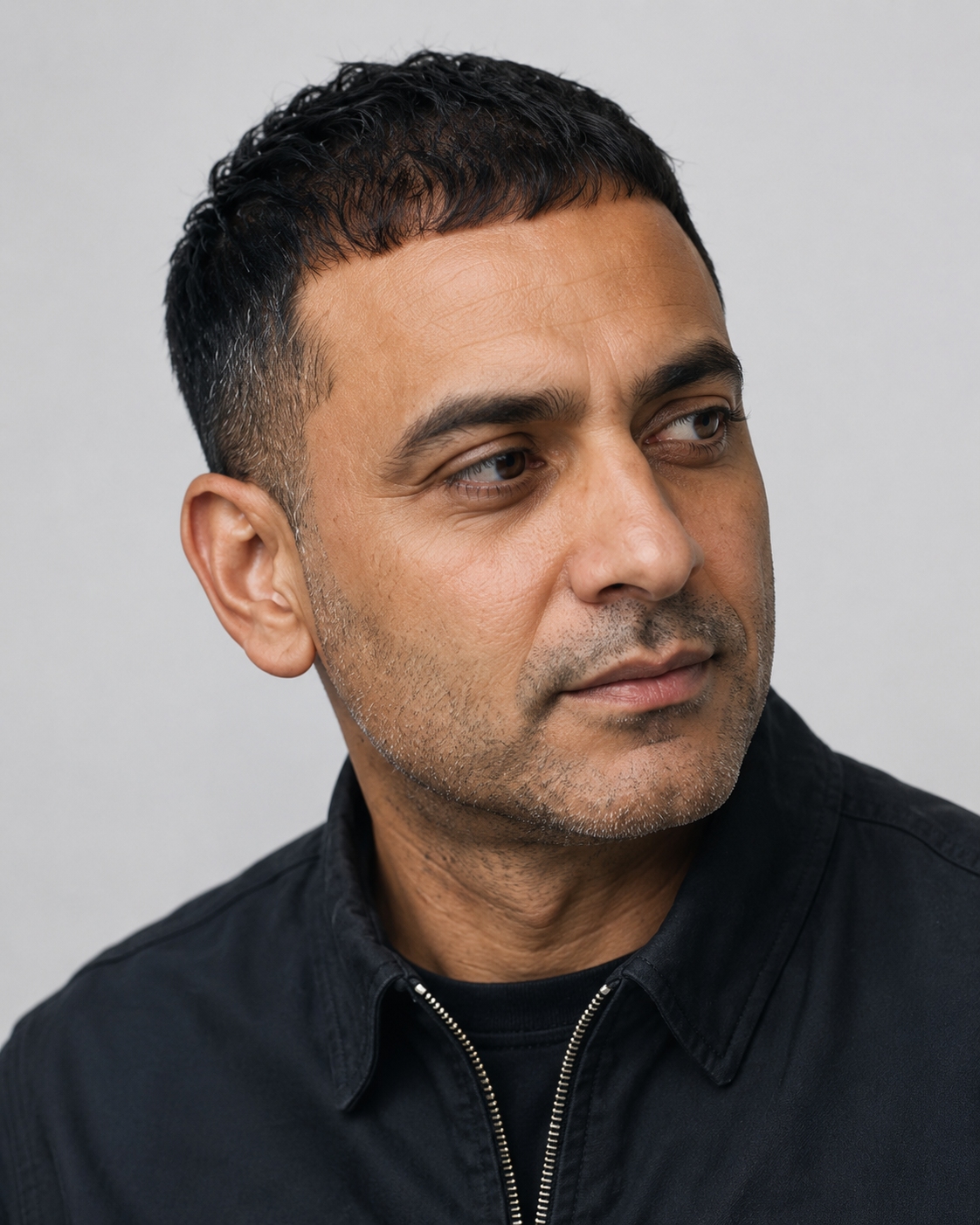
Best for: Receding hairlines, mature hairlines, practical face-framing
Styling: Light clay, blow-dry forward
Maintenance: Every 4 weeks
Face shapes: All
11. Textured French Crop with Beard
The beard changes the crop by giving the lower half of the face more structure.
A cropped fringe and faded sides frame the upper face; a shaped beard anchors the jaw.
Together, they create a stronger head shape than either element can manage alone.
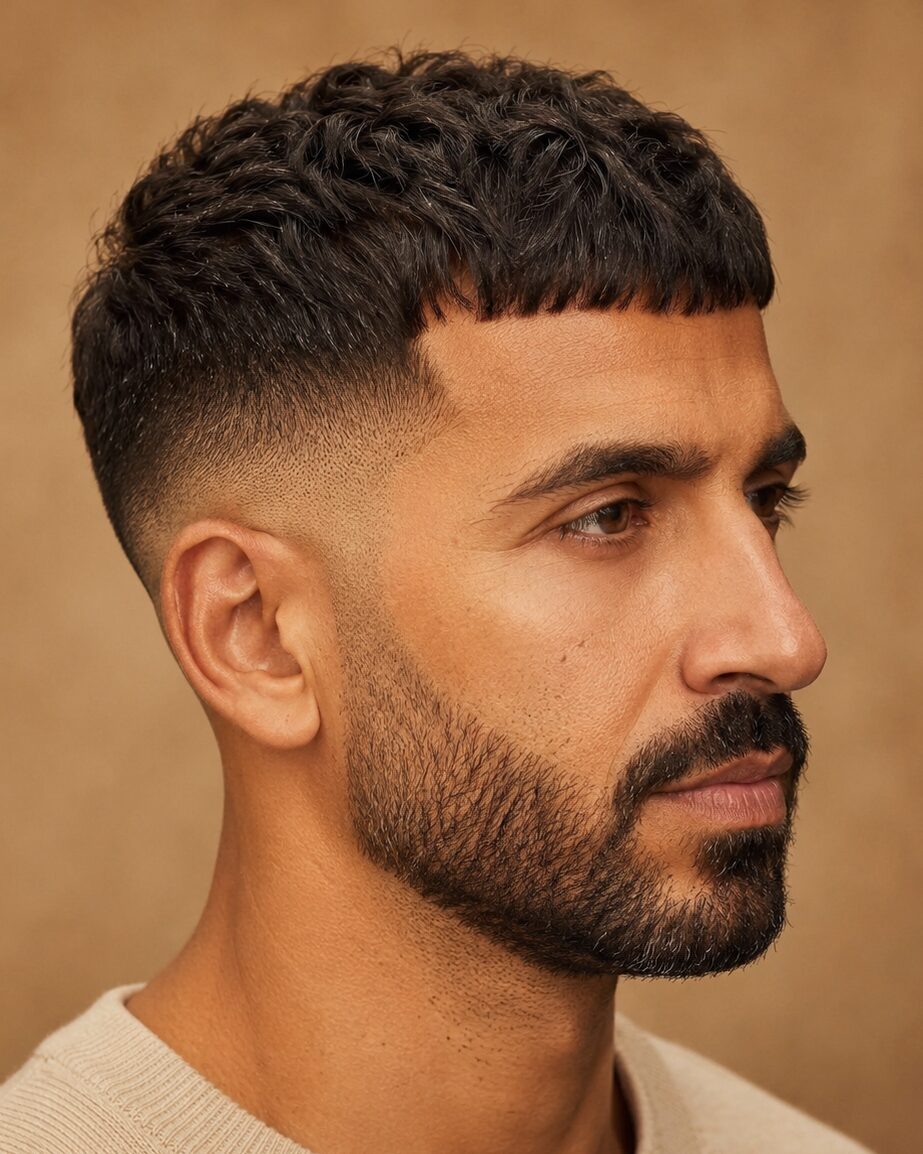
The fade should either blend into the beard line or finish cleanly above it. The beard cannot be shapeless if the haircut is precise. Keep the cheek line, neckline, and sideburn transition intentional.
Best for: Strong facial structure, beard balance, mature grooming
Styling: Clay on top, beard balm or light oil below
Maintenance: Every 3 weeks
Face shapes: Round, square, oval
12. Drop Fade French Crop
The drop fade curves behind the ear and falls lower toward the back of the head. That curve changes the side profile, making the crop look more sculpted than a standard horizontal fade.
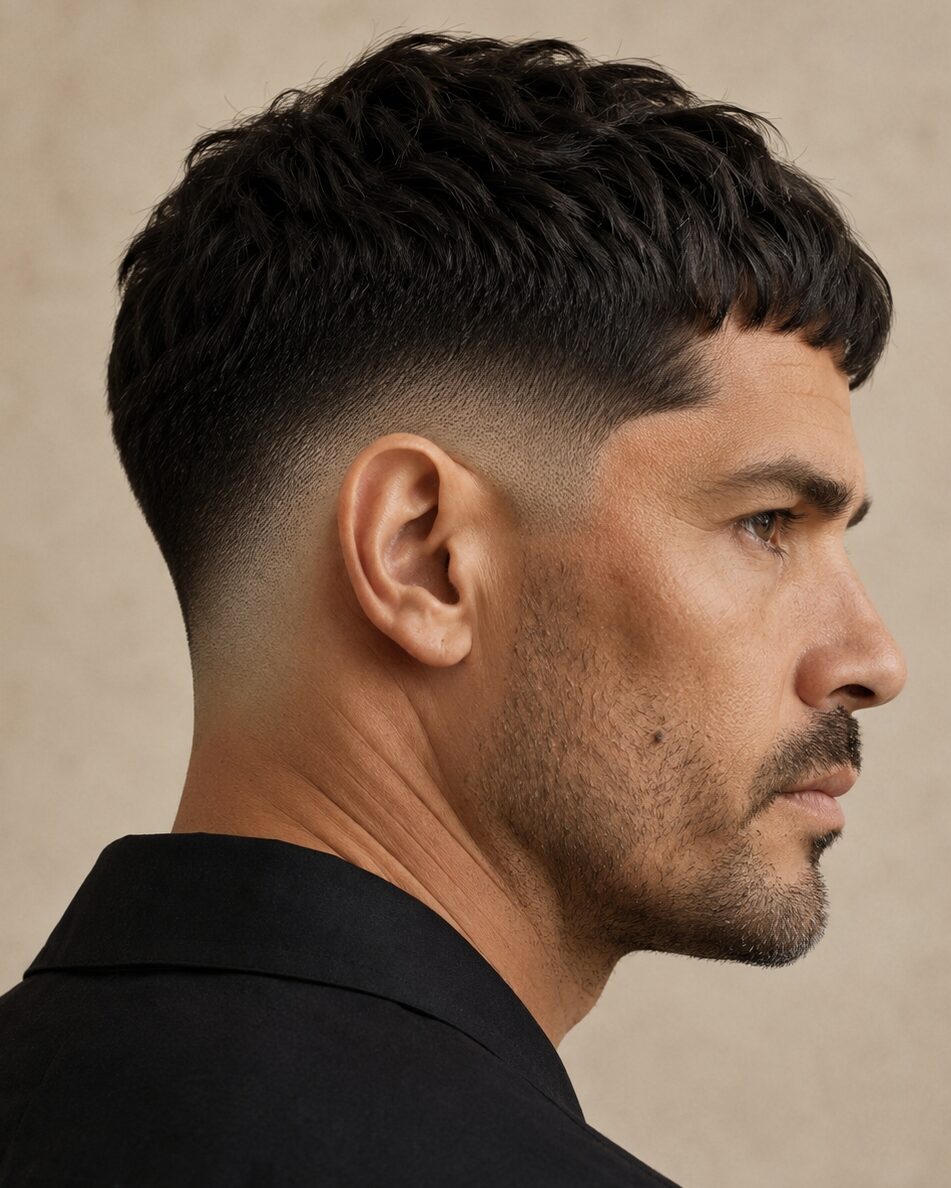
This is a good choice when the top is simple but you still want detail in the silhouette. Ask specifically for the fade to drop behind the ear.
Best for: Side-profile detail, sculpted fade shape, modern barbering
Styling: Clay or molding paste
Maintenance: Every 2–3 weeks
Face shapes: Oval, round
13. Burst Fade French Crop Haircut
The burst fade radiates around the ear instead of moving straight across the side. It gives the haircut a rounder, more dynamic shape and makes the ear area part of the design.
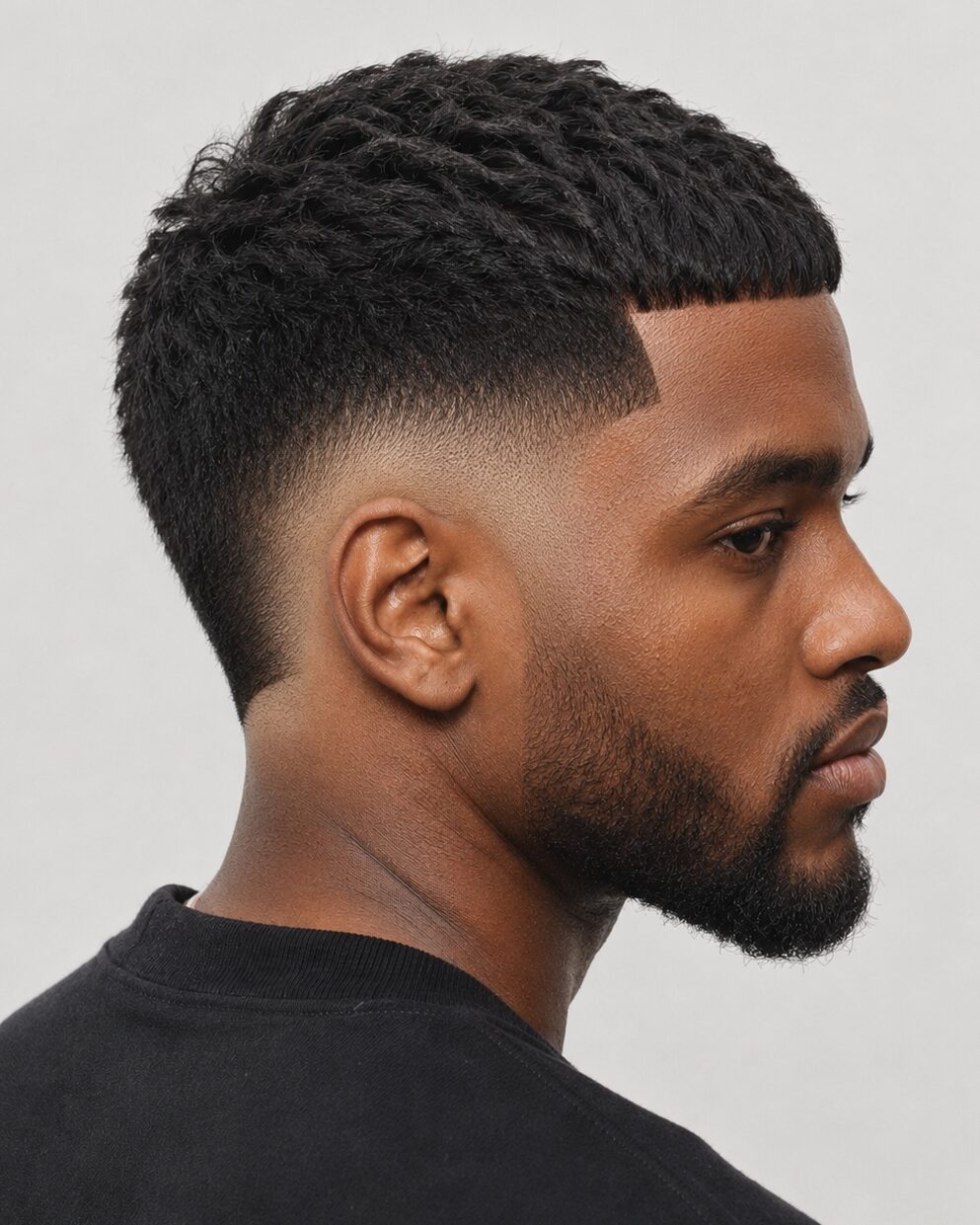
With a french crop, the burst fade works best when the top has visible texture and the fringe is not overly flat. The result feels more current and slightly more experimental without turning the cut into costume.
Best for: Modern fade detail, textured tops, stronger side shape
Styling: Strong-hold clay
Maintenance: Every 2–3 weeks
Face shapes: Oval, square
French Crop Haircuts by Hair Type
Hair type changes the french crop haircut more than the fade does.
Straight hair gives precision. Wavy hair gives movement. Curly hair gives volume and shape. Fine hair needs lift and broken texture. Thick hair needs weight removal.
The best version is not the one with the trendiest name. It is the one that works with the density, direction, and the natural behavior of your hair.
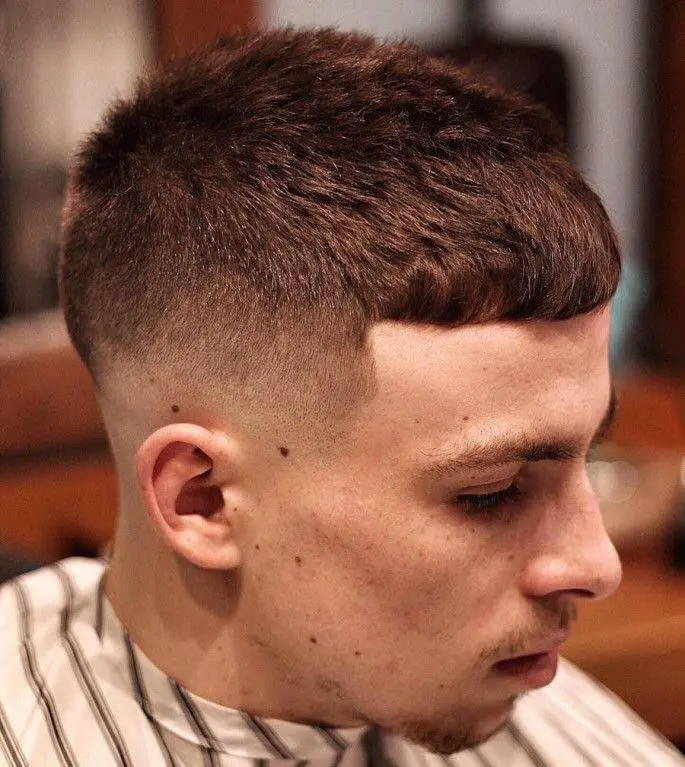
14. Straight Hair French Crop Haircut
Straight hair gives the crop precision. The fringe line is easier to control, the top can sit cleanly, and the finish looks sharp with very little daily work.
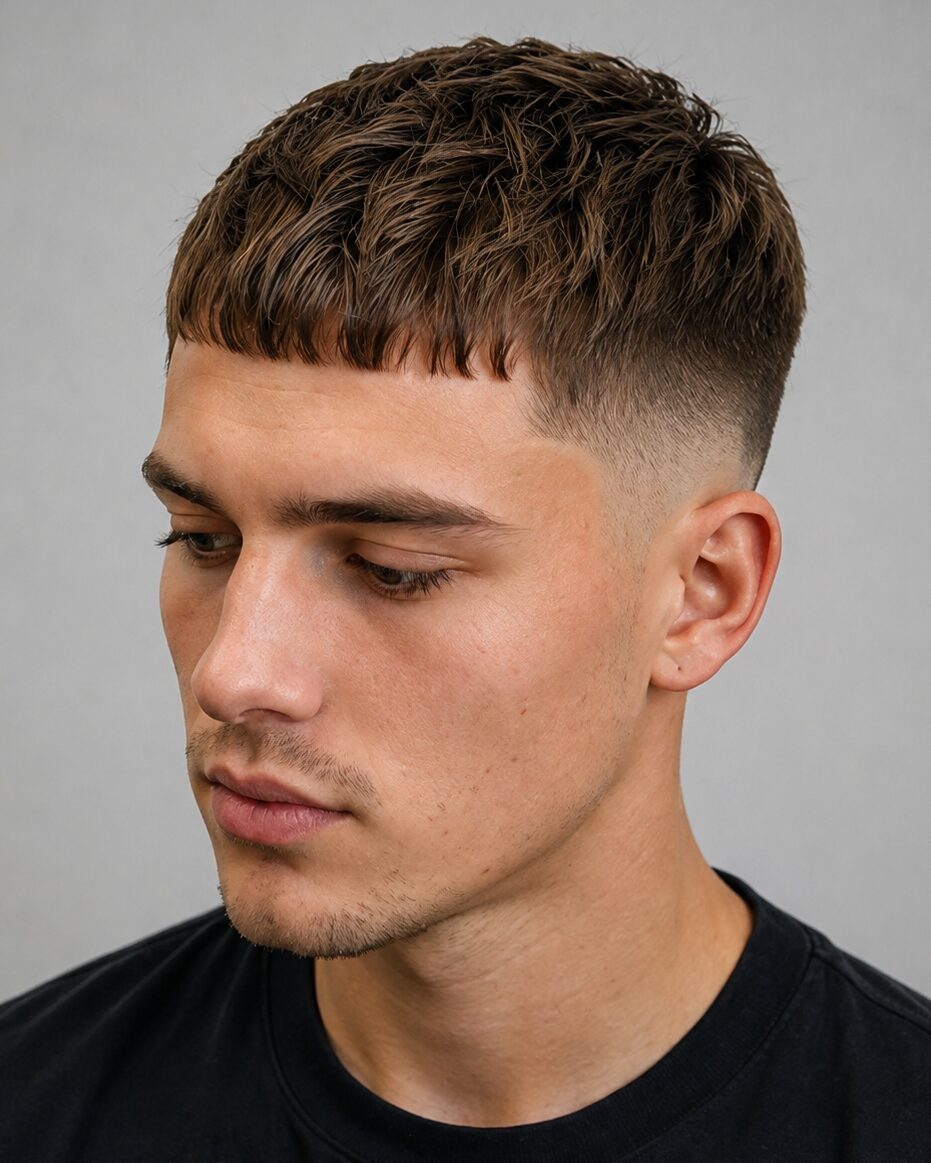
The risk is flatness. Straight hair needs internal texture or the top can look heavy and lifeless.
Ask your barber to break up the top with point-cutting or light slicing. You want the hair to move forward in sections, not fall as one solid panel.
Best for: Clean fringe lines, straight density, precise texture
Styling: Clay or paste, blow-dry forward
Maintenance: Every 3–4 weeks
Face shapes: Oval, square
More Hairstyling Tips: 40+ Straight Hair Hairstyles for Guys All Ages
15. Thick Hair French Crop
Thick hair gives the french crop strength: a fuller fringe, better volume, and stronger contrast against the fade. The challenge is bulk.
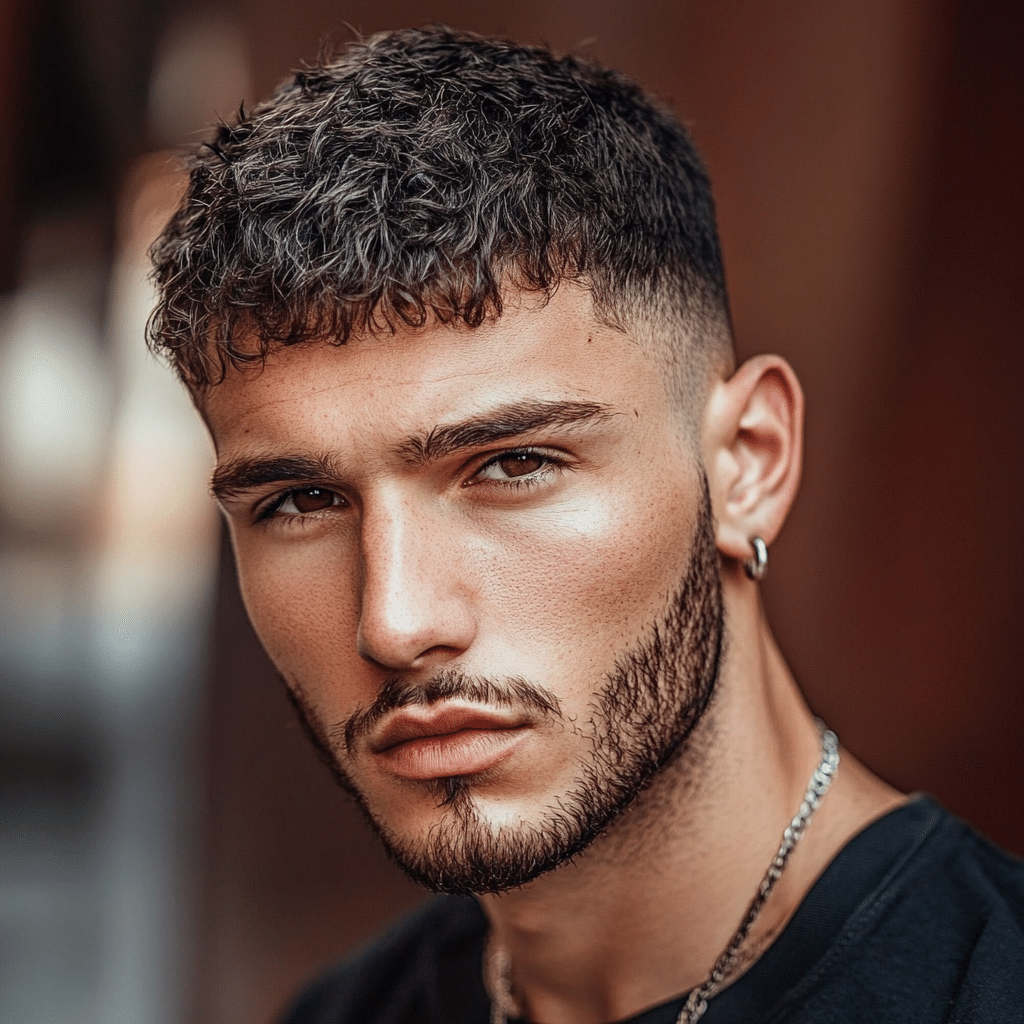
If the top is not debulked properly, it can become a shelf instead of a textured crop.
Ask for weight removal through the interior while keeping the outer shape intact. The cut should look full, not inflated. There is a difference, despite what certain barbershop mirror selfies keep trying to prove.
Best for: Dense hair, strong fringe, visible texture
Styling: Strong-hold matte clay
Maintenance: Every 3 weeks
Face shapes: Round, oval, square
Explore More: Best Haircuts for Men with Thick Hair
16. Fine Hair French Crop
Fine hair can benefit from a french crop because the forward fringe creates the illusion of density.
The trick is to avoid one blunt, heavy layer across the top.
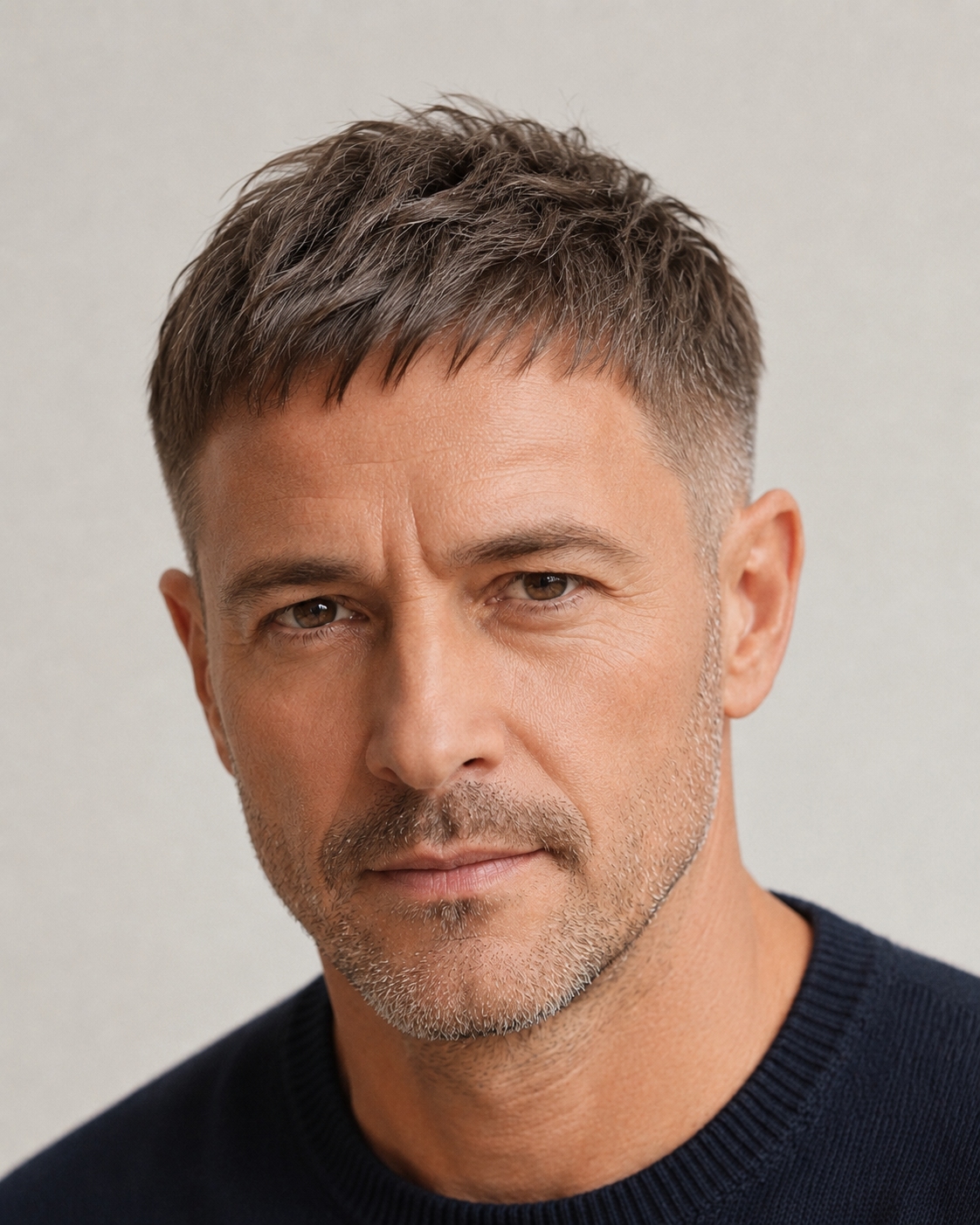
Fine hair needs broken texture, root lift, and a softer fade or taper that does not make the top look too sparse.
Texture powder is often more useful than heavy clay. Use it at the roots after blow-drying forward, then finish with a small amount of light product. Heavy product will collapse the shape.
Best for: Fine hair, lower density, subtle coverage
Styling: Texture powder plus light clay
Maintenance: Every 4–5 weeks
Face shapes: All
17. Two-Block Inspired French Crop
The two-block inspired french crop blends the compact fringe of a crop with the cleaner separation and fuller upper shape associated with the two-block cut.
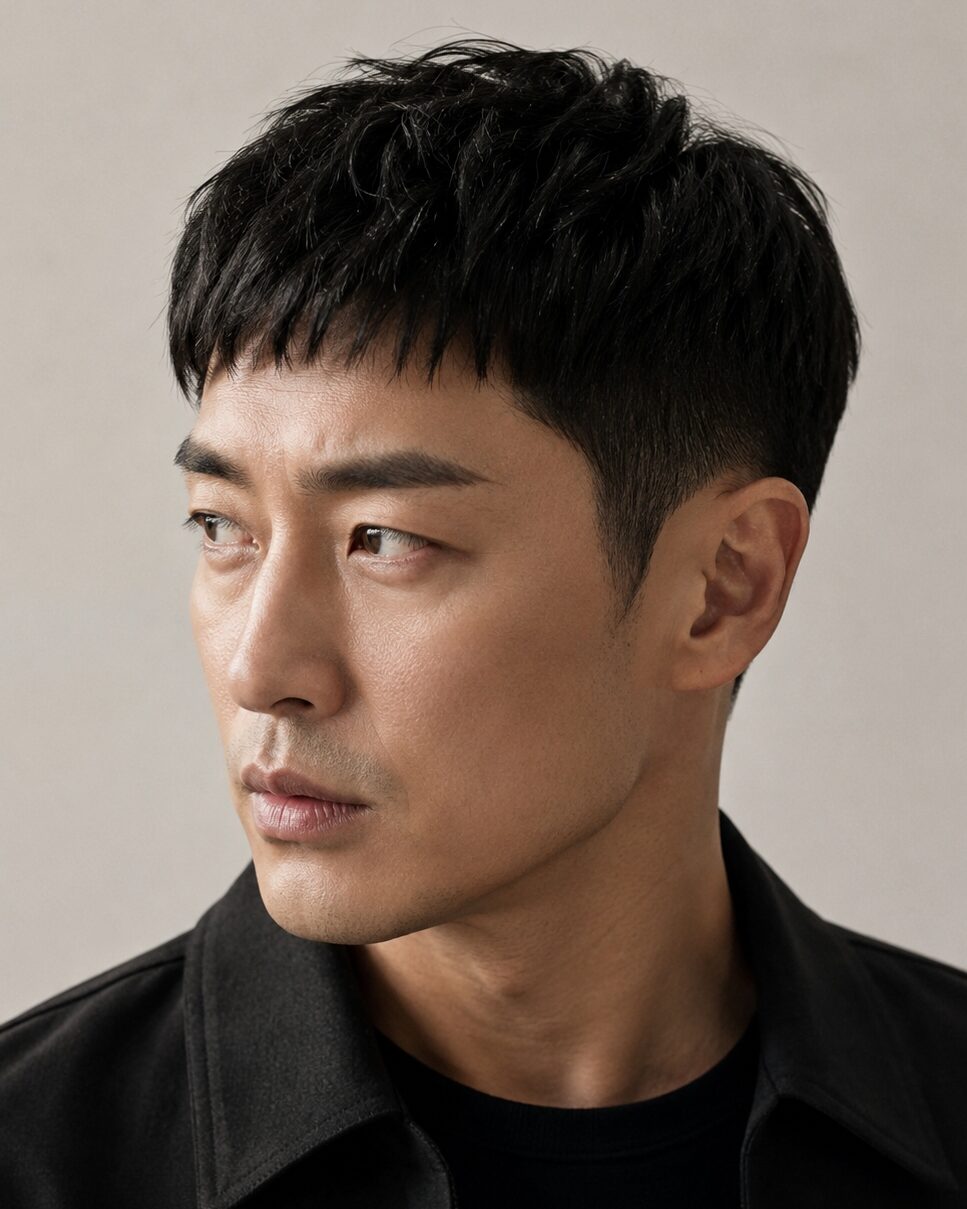
A textured fringe works especially well here because it keeps the silhouette controlled. A low or mid taper often suits this style better than an aggressive skin fade, since the goal is polish and shape rather than maximum contrast.
Best for: Thick straight hair, compact fringe shapes, clean modern structure
Styling: Clay or paste, minimal product needed
Maintenance: Every 4 weeks
Face shapes: Oval, round
18. Soft Layered French Crop
The soft layered french crop is a cleaner, more relaxed version of the classic barber crop. The fringe falls forward naturally, the top keeps movement, and the sides are usually tapered rather than taken down to a harsh skin fade.
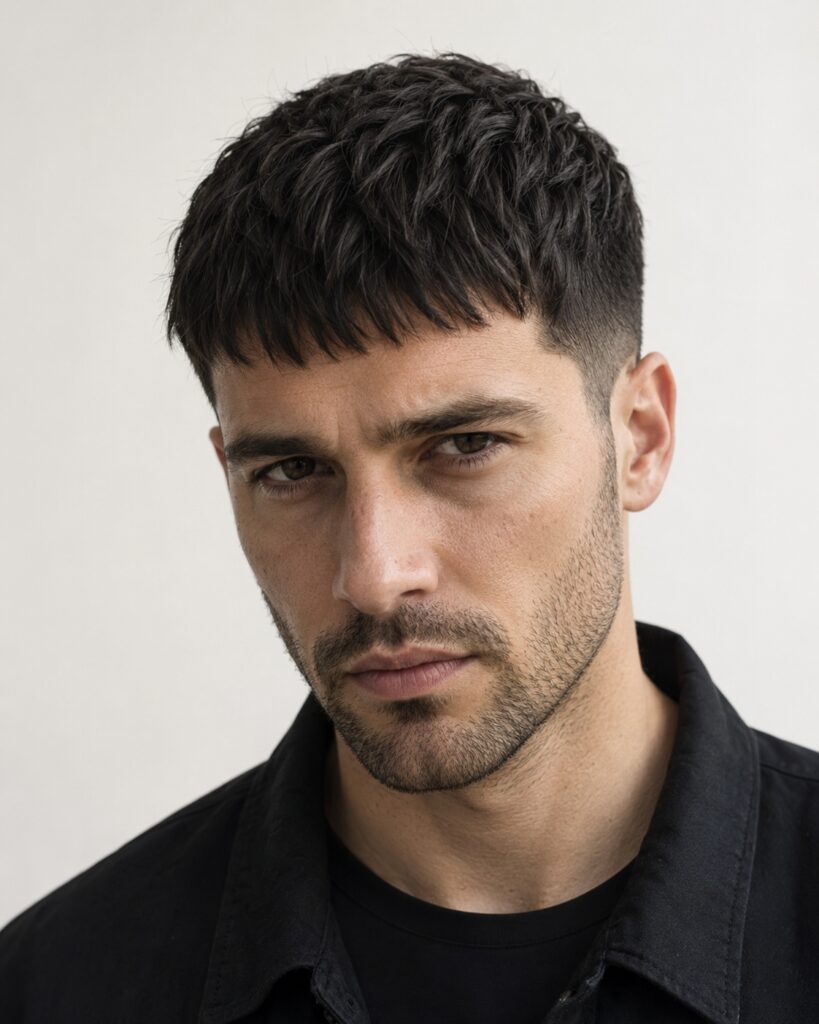
The key is subtle layering hair through the top. The barber should keep enough length for the fringe to move, while removing enough weight so the haircut does not sit flat or heavy.
Best for: Soft layering, natural fringe, clean everyday styling
Styling: Light cream, matte paste, or blow-dry for direction
Maintenance: Every 5 weeks
Face shapes: Oval, heart, rectangular
19. Platinum French Crop
Silver platinum hair changes how the crop reads because texture becomes more visible. Light hair catches the separation in the fringe, shows the top layers more clearly, and makes the fade contrast feel more graphic.
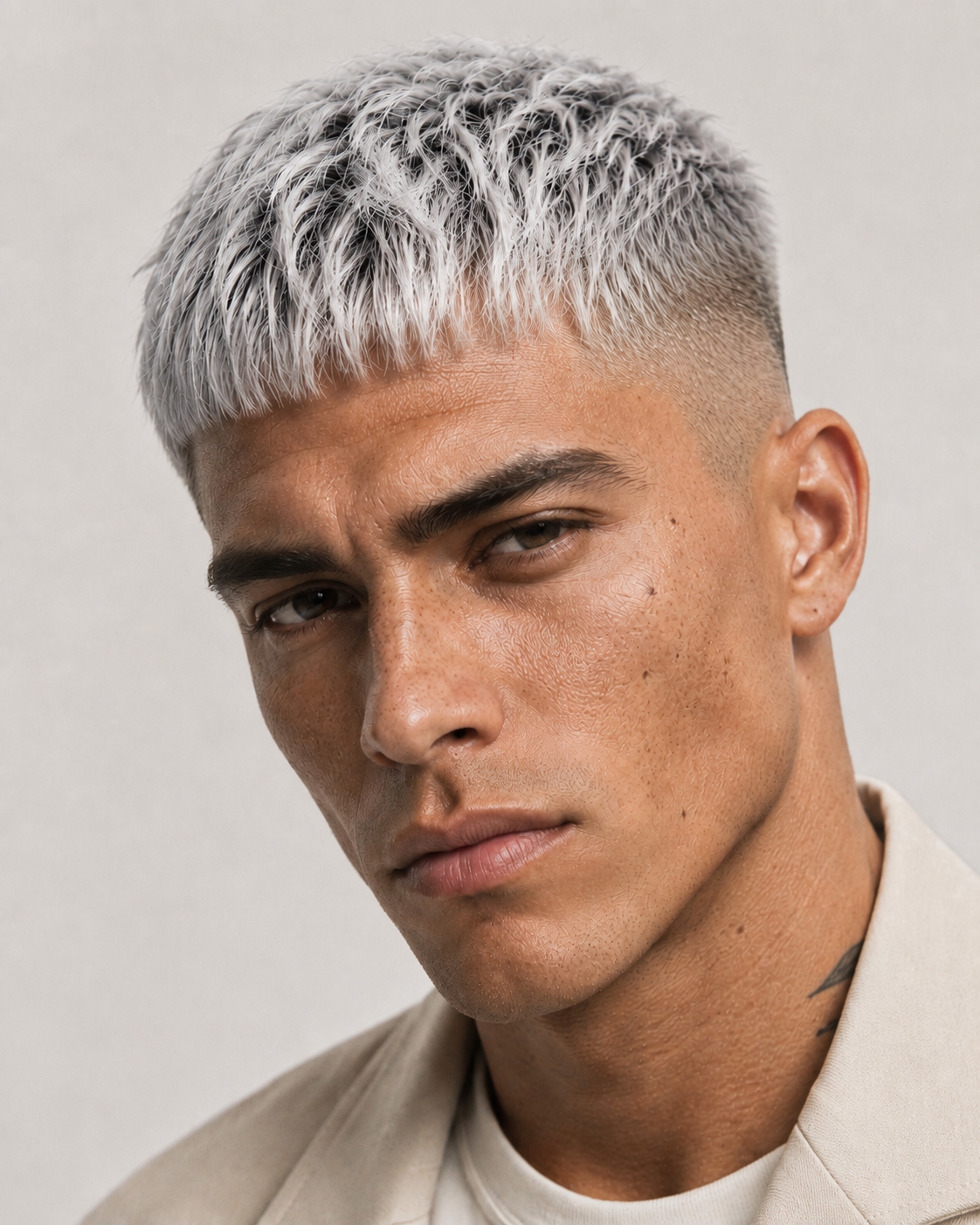
If the blonde is color-treated, the haircut and color schedule need to work together. A textured fringe with obvious regrowth can look accidental fast.
Keep the roots and fade tidy if the color is meant to feel intentional.
Best for: Natural or color-treated blonde hair, visible texture, graphic contrast
Styling: Clay or paste
Maintenance: Every 3–4 weeks for cut, color-dependent
Face shapes: All
French Crop Style Variations
Once the basic architecture is set, the styling choices do most of the talking.
These variations are less about whether the fade sits one centimeter higher and more about how the haircut feels when it is styled.
20. Longer Fringe
A longer fringe softens the french crop and gives the front more movement. Instead of a short blunt line, the hair falls in pieces across the forehead, which can make the cut feel more relaxed and more fashion-led.
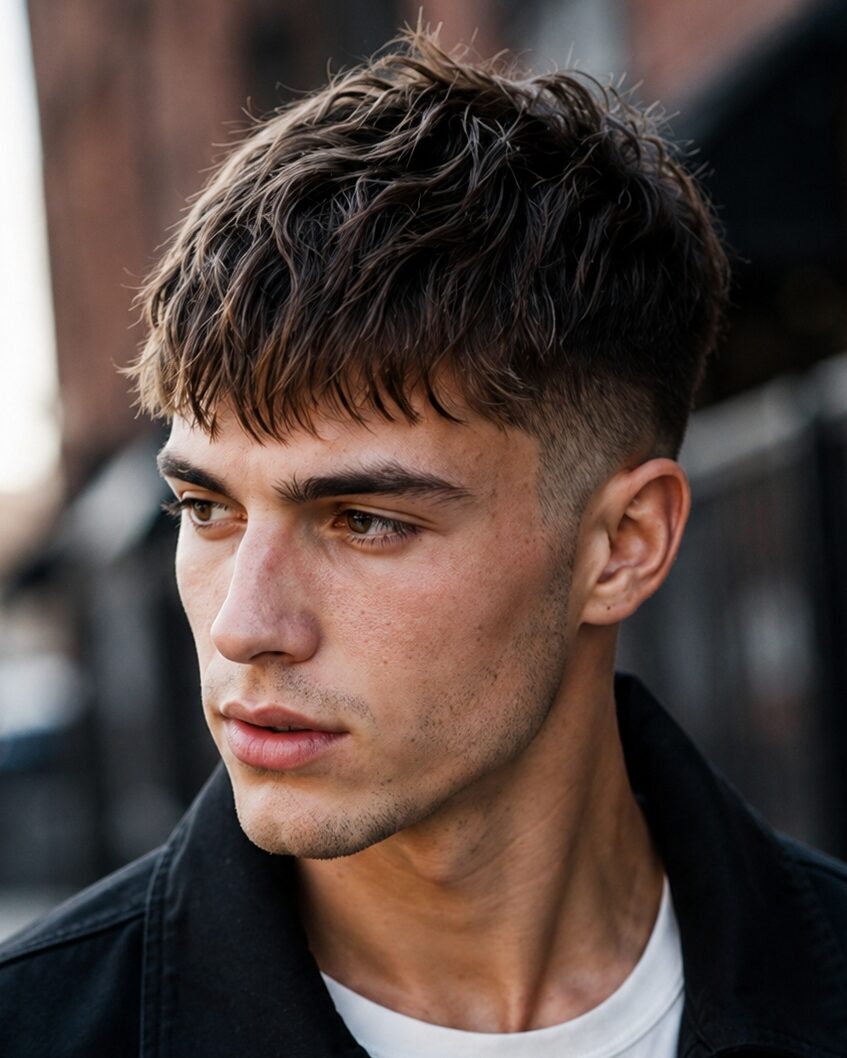
The sides still need to stay controlled. Without that contrast, this becomes medium-length hair brushed vaguely forward, a category of haircut nobody asked to emotionally support.
Best for: Softer fringe, higher foreheads, natural texture
Styling: Light paste or cream, blow-dry forward
Maintenance: Every 5–6 weeks on fringe
Face shapes: Oval, heart, oblong
More Trendy Cuts for Men: 30+ Fringe Haircut Styles for Men: Modern and Classic Variations
21. Messy French Crop
The messy french crop version breaks the front into uneven pieces. The top has direction, but not too much direction. It should look loose, touchable, and intentional without looking arranged one strand at a time.
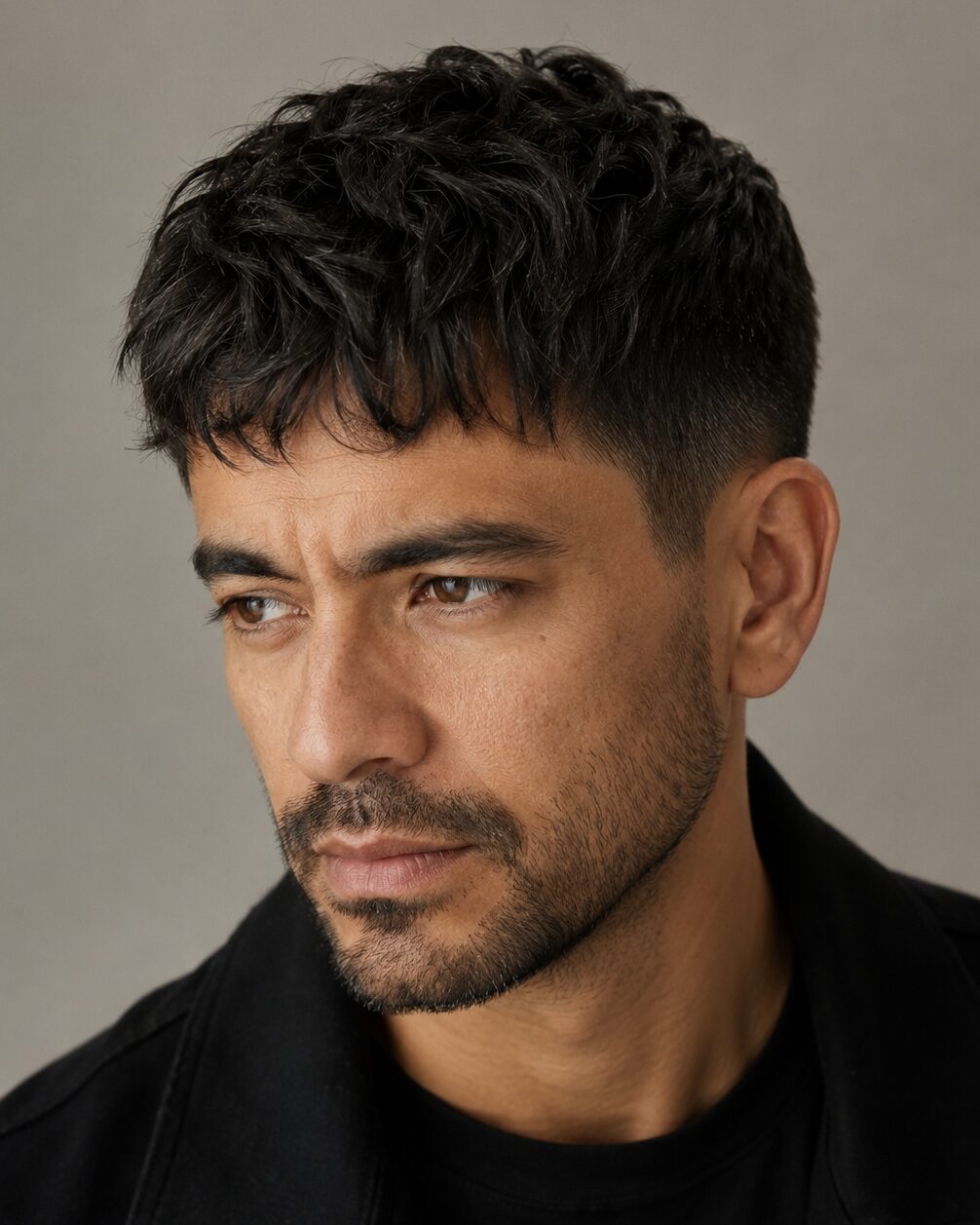
Rough-dry with fingers, add a small amount of clay, and stop early. Overworking this style ruins it. The styling should look like control disguised as effortlessness.
Best for: Wavy or thick hair, relaxed texture, broken fringe
Styling: Light clay applied loosely with fingers
Maintenance: Every 4 weeks
Face shapes: All
22. French Crop Quiff
The front lifts slightly before moving forward, giving the crop more height without turning it into a full quiff. This is useful when the face needs a little vertical balance or when the top has enough density to support lift.
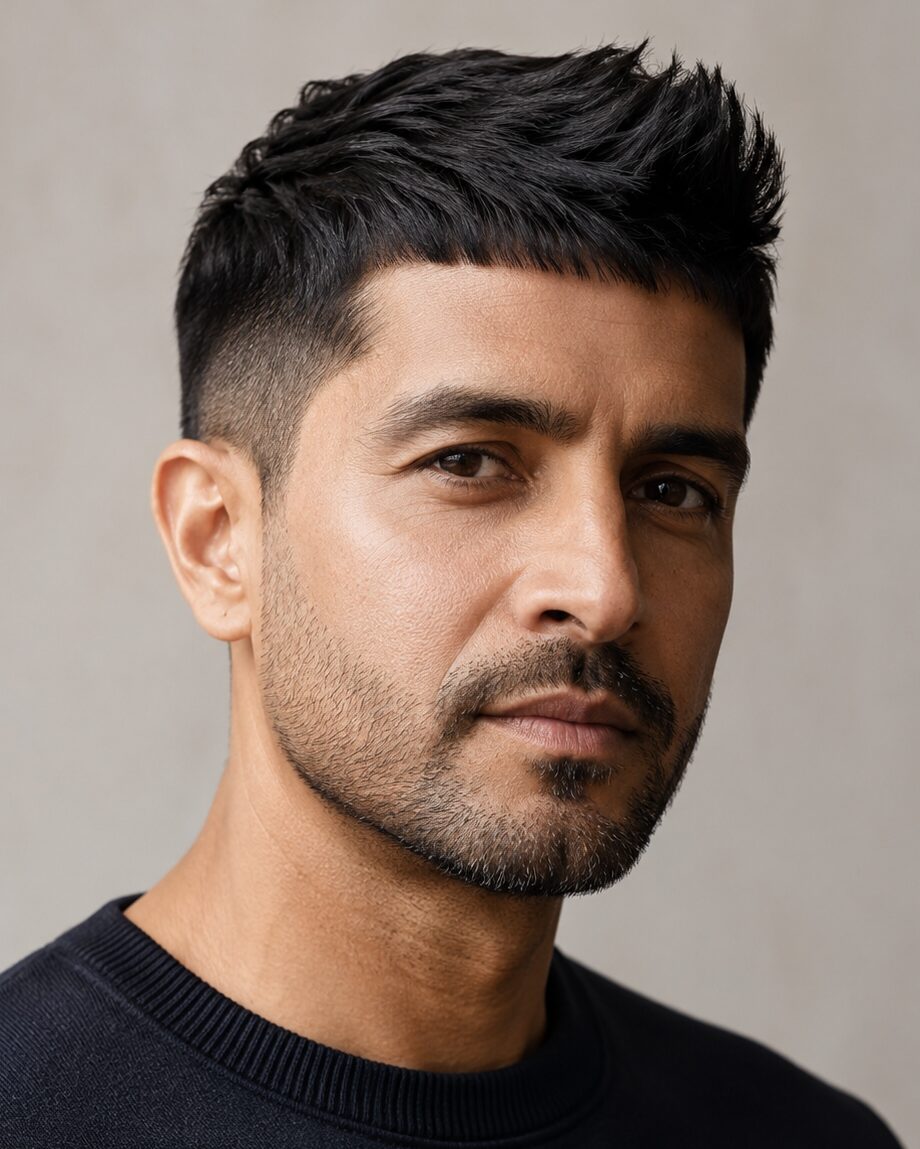
Blow-dry the front upward first, then forward. Finish with matte clay so the shape holds without becoming stiff. The lift should feel built into the haircut, not glued onto it.
Best for: Added height, rounder faces, thicker front sections
Styling: Blow-dry plus light matte clay
Maintenance: Every 4 weeks
Face shapes: Round, oval
23. Side-Part French Crop
A subtle side part or slightly side-swept fringe shifts the french crop into a cleaner, more groomed register without removing the forward fringe. The top still moves toward the forehead, but the part creates direction and polish.
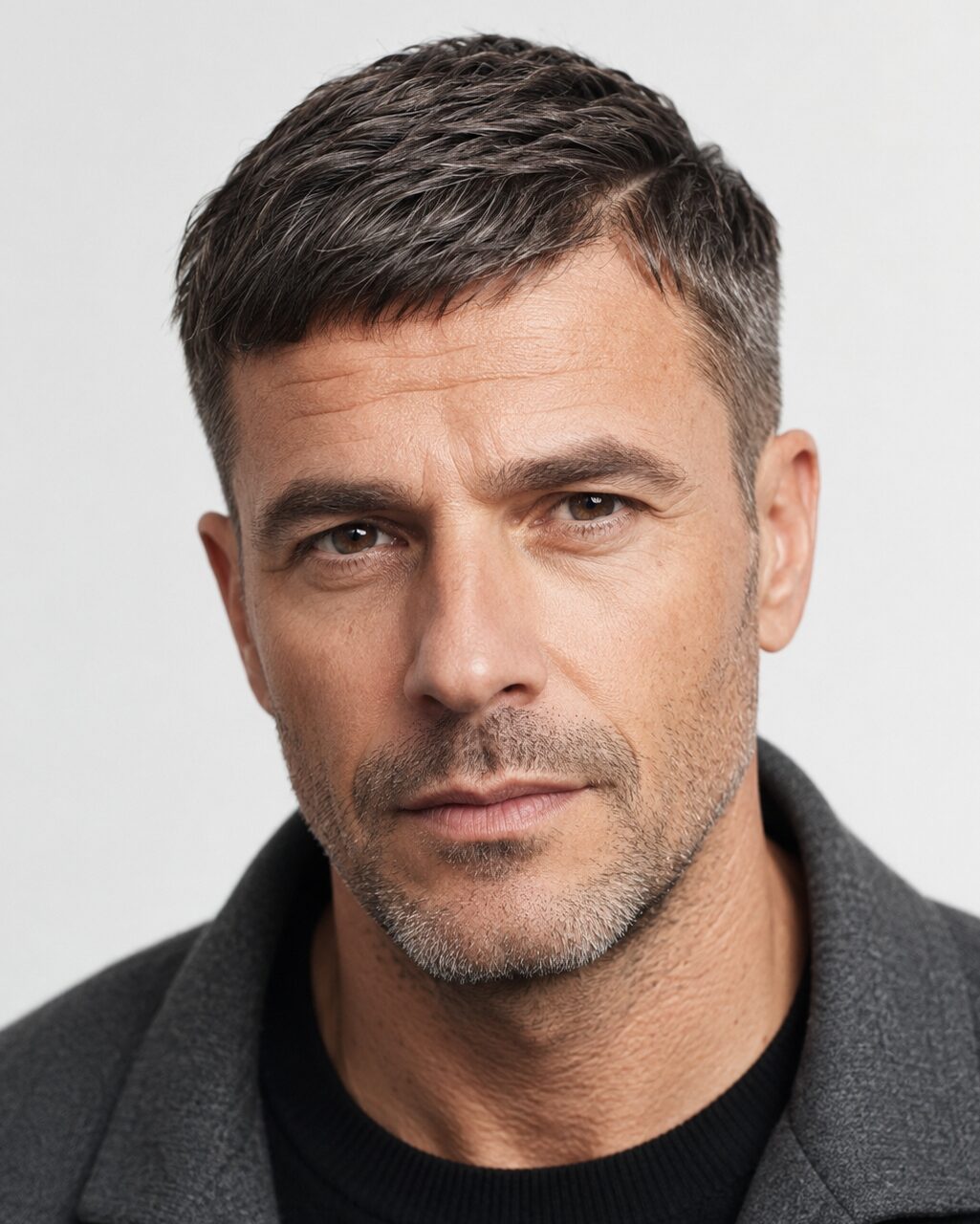
This version works best when the part is soft rather than carved in. Use a comb to guide the front, then leave some texture in place.
Best for: Cleaner styling, mature grooming, controlled texture
Styling: Light pomade or cream, fine-tooth comb
Maintenance: Every 4 weeks
Face shapes: Oval, square, rectangular
24. Tapered Crop
A taper keeps more softness around the sides and neckline than a fade. The hair shortens gradually, but it does not disappear into skin as aggressively.
This makes the crop feel more natural and less graphic.
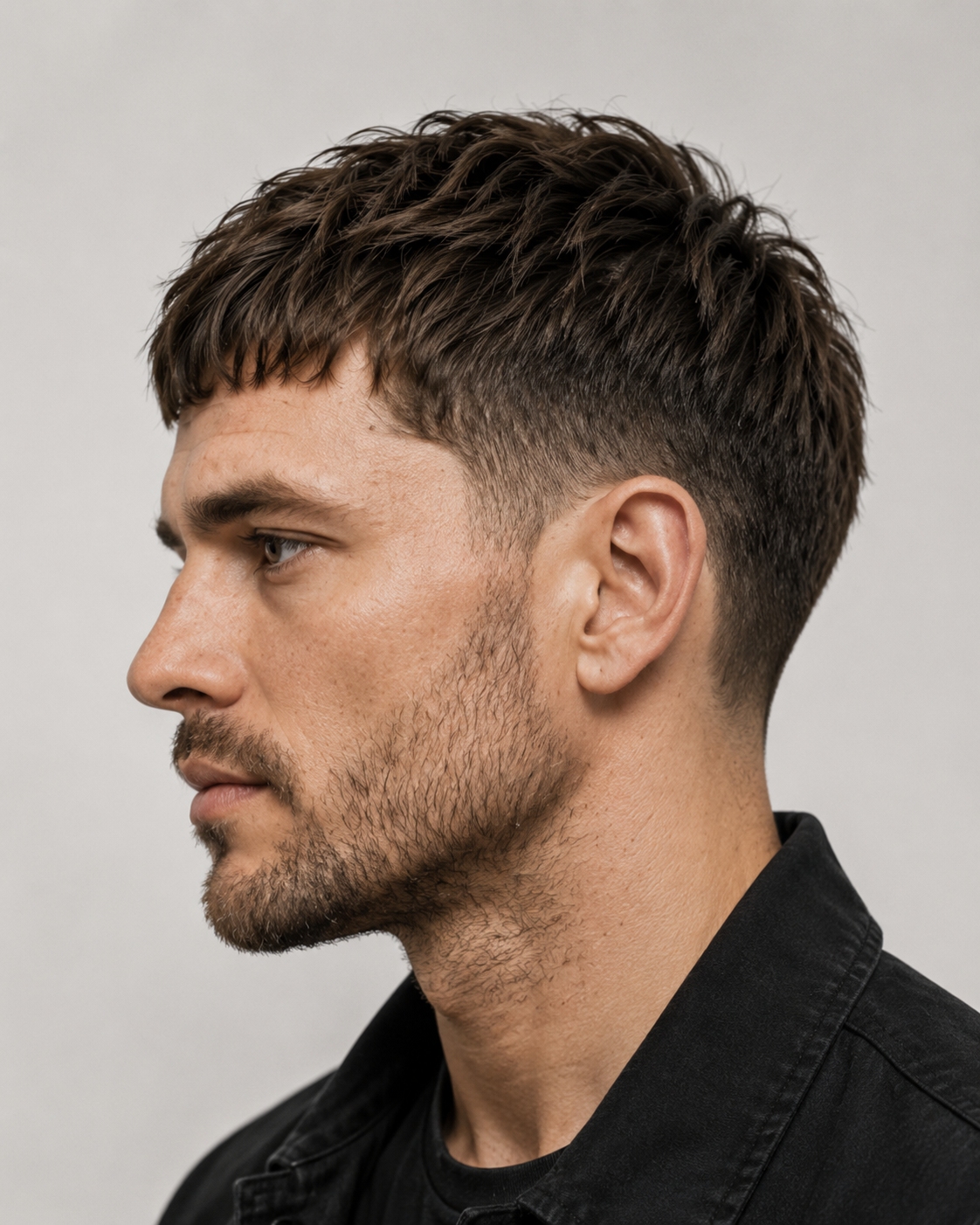
The top still needs texture and a clear fringe direction. Without that, a tapered crop can look unfinished rather than understated.
Ask for a clean taper around the sideburns and nape with enough length left to preserve the head shape.
Best for: Softer sides, natural grow-out, controlled shape
Styling: Light to medium clay
Maintenance: Every 4–5 weeks
Face shapes: All
25. Low Taper French Crop
The low taper keeps the sides fuller and concentrates the shortening near the sideburns and neckline. It is the softest version of the crop’s side shape, especially when paired with a slightly broken fringe.
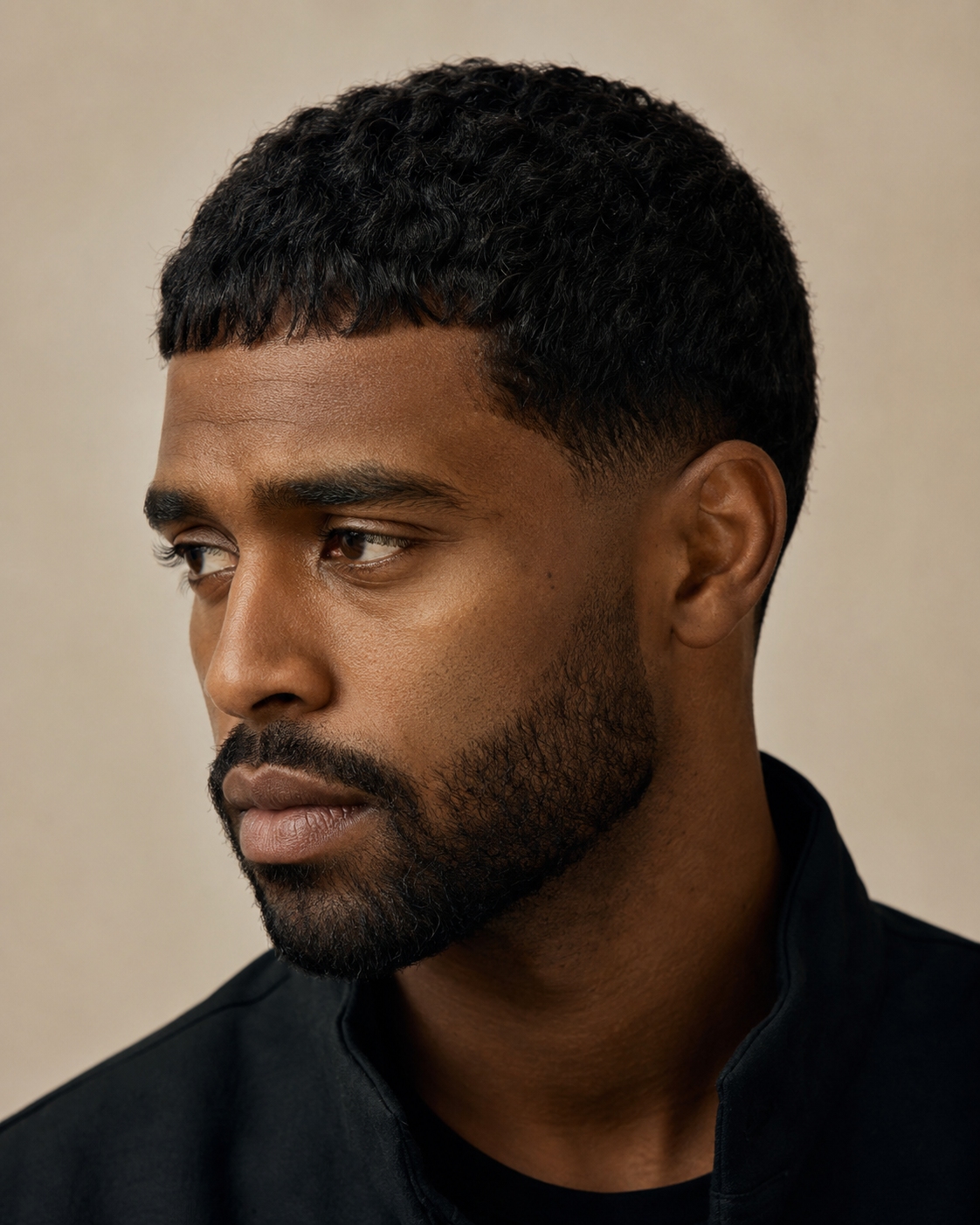
Use this when you want the french crop to feel more natural and less barber-shop sharp. The haircut still needs clean edges, but the contrast stays quiet.
Best for: Soft grow-out, fuller sides, subtle structure
Styling: Light cream or matte paste
Maintenance: Every 5–6 weeks
Face shapes: Rectangular, oval, heart
Worth Reading: Low Taper vs Mid Taper: Key Differences Explained
26. Mid Taper French Crop
The mid taper gives more structure than a low taper without the hard contrast of a fade. It narrows the sides through the middle of the head while keeping the transition softer and more natural.
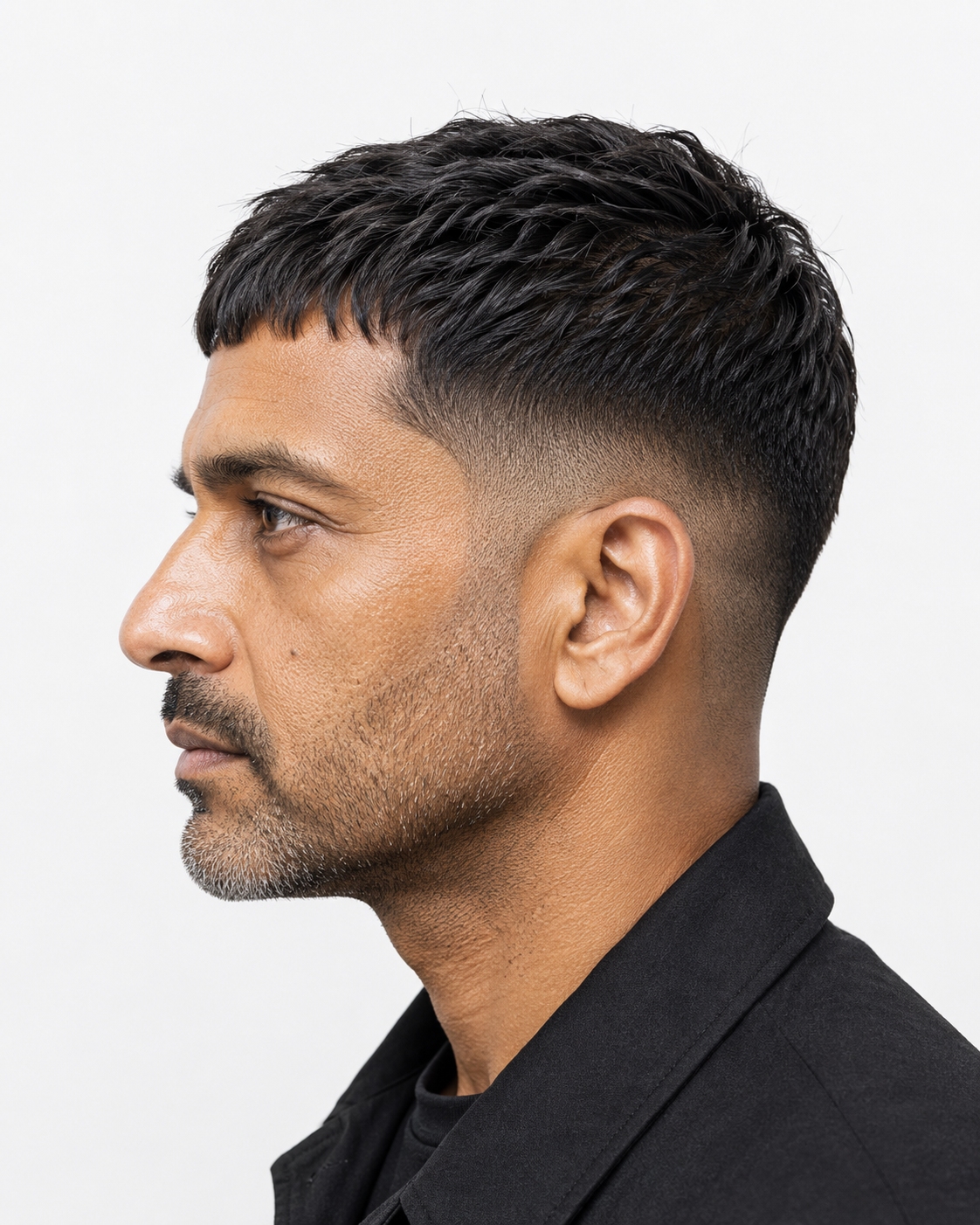
This is a strong option for textured crops because it controls width without making the top feel disconnected. The shape grows out better than most skin fades and still looks designed.
Best for: Texture-friendly shape, medium contrast, softer barbering
Styling: Matte clay
Maintenance: Every 4 weeks
Face shapes: All
27. French Crop Undercut
The undercut creates a hard separation between the sides and the top. There is no smooth fade transition.
The top sits over the sides with obvious contrast, which makes the crop more graphic and more severe.
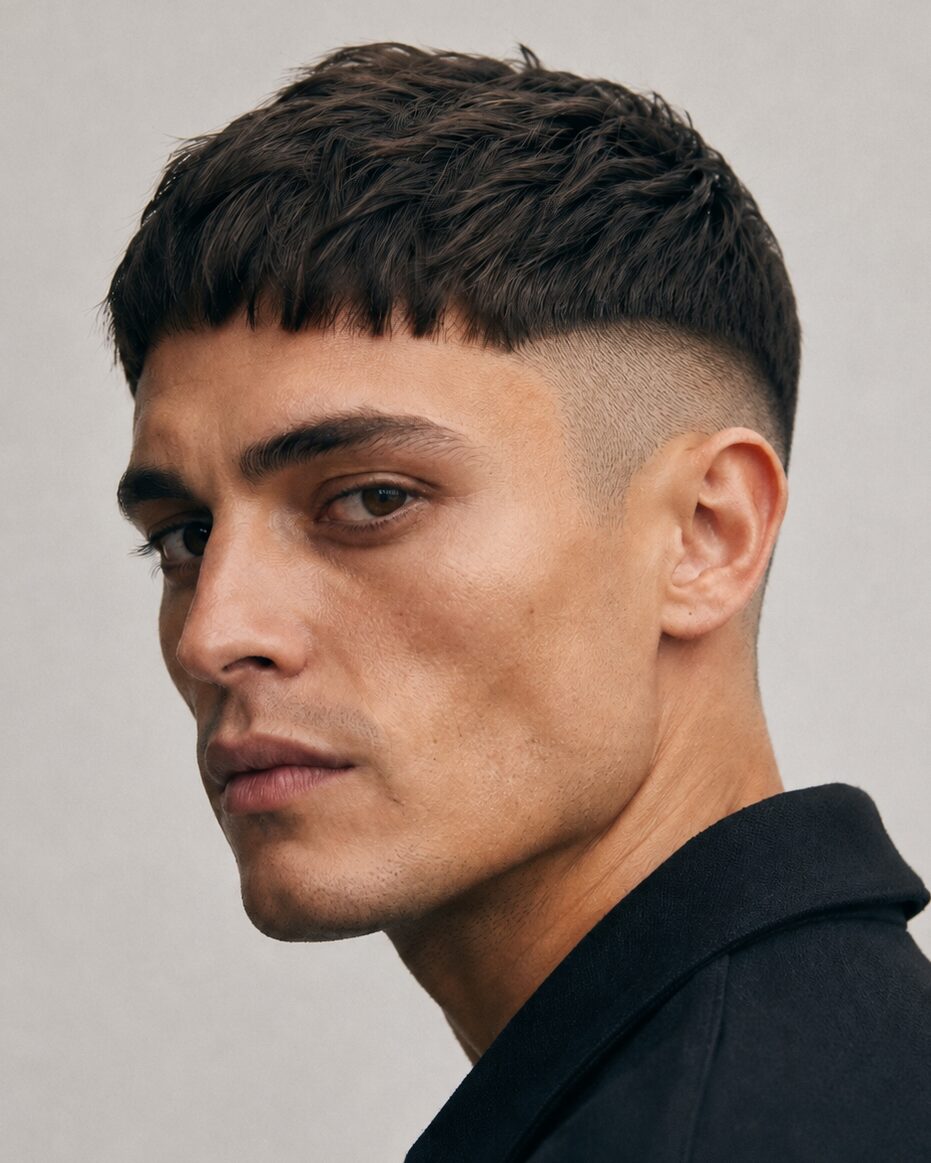
It works best with thick hair and a confident fringe shape. If the top is too thin, the disconnection can expose more than it enhances. Keep the texture strong enough to justify the contrast.
Best for: Thick hair, graphic contrast, disconnected shape
Styling: Strong-hold clay or paste
Maintenance: Every 2–3 weeks
Face shapes: Oval, square
28. Short French Crop Haircut
The short crop keeps the fringe minimal and the top compact. It sits close to crew cut territory, but the forward direction of the fringe keeps it in the french crop family.
The shape needs precision because there is not much length to hide mistakes. A short crop is simple, not lazy.
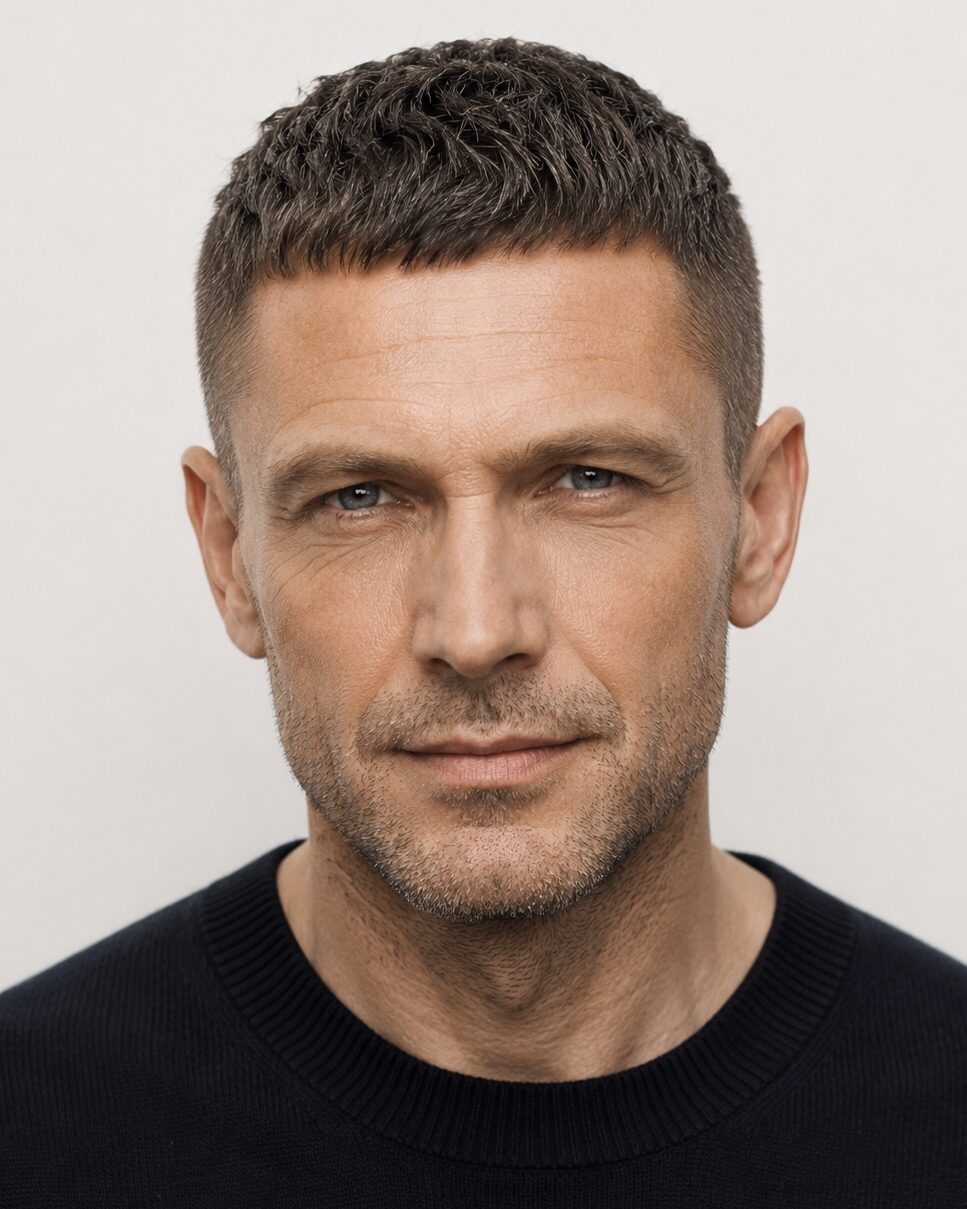
The top should still have slight texture so it does not become a flat cap.
Best for: Minimal styling, compact texture, sharp short hair
Styling: Light cream or nothing
Maintenance: Every 2–3 weeks
Face shapes: Oval, square, rectangular
29. Long Textured Fringe
The long french crop keeps more weight through the top and fringe. It gives the haircut more movement and more styling options while still using the same forward architecture.
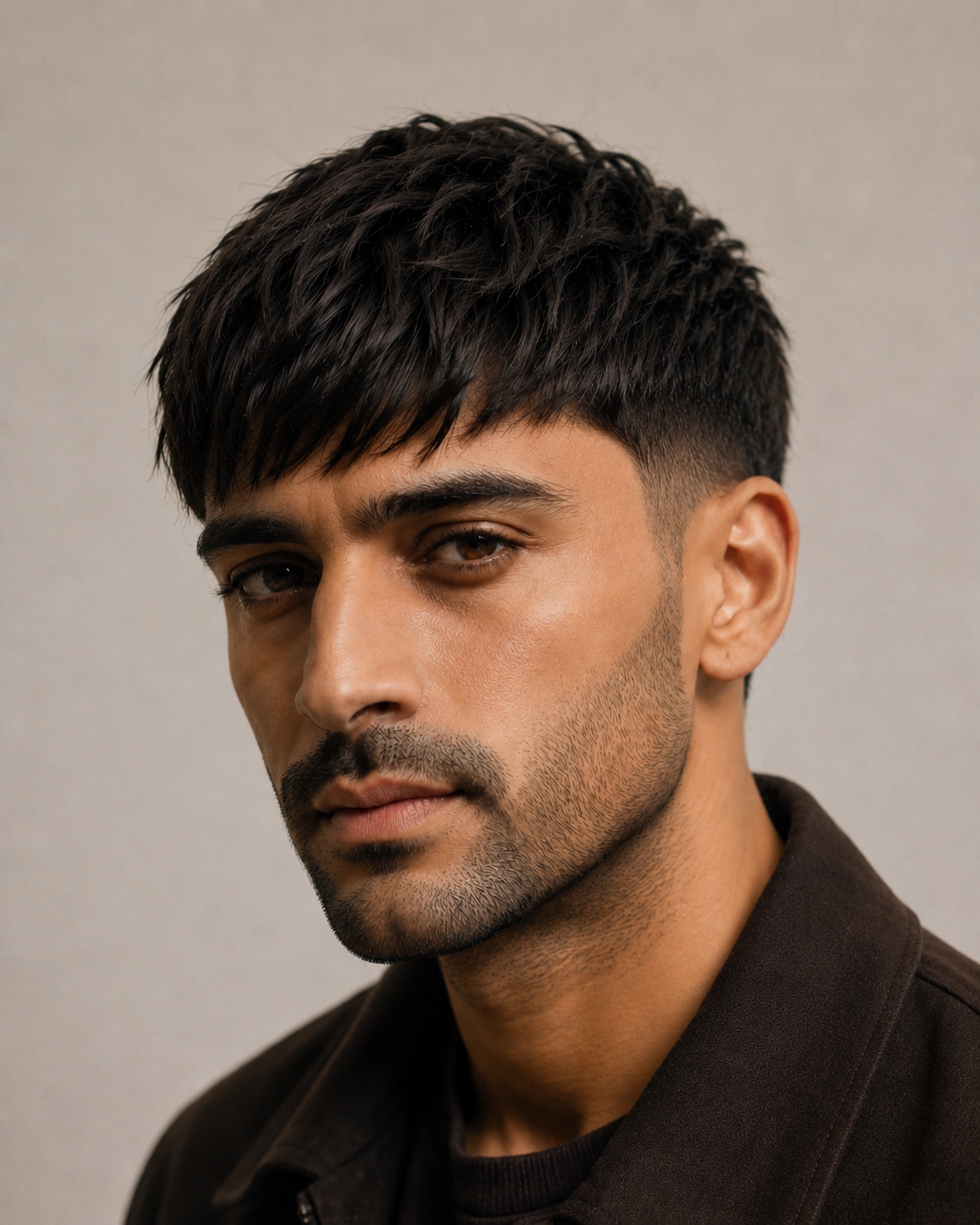
The sides need to stay tight enough to preserve contrast. Otherwise, the cut loses its crop shape and turns into general medium hair.
Best for: Longer fringe, styling options, strong natural movement
Styling: Blow-dry plus medium clay or cream
Maintenance: Every 5 weeks
Face shapes: Oval, square
30. French Crop Modern Mullet
The front keeps the crop language: fringe forward, texture on top, cleaner sides. The back grows longer, creating tension between a controlled front and a looser nape.
This is not a mistake you slowly grow into. This modern mullet version is shaggier and needs intention. Keep the front sharp and the back textured, or the hybrid loses its point.
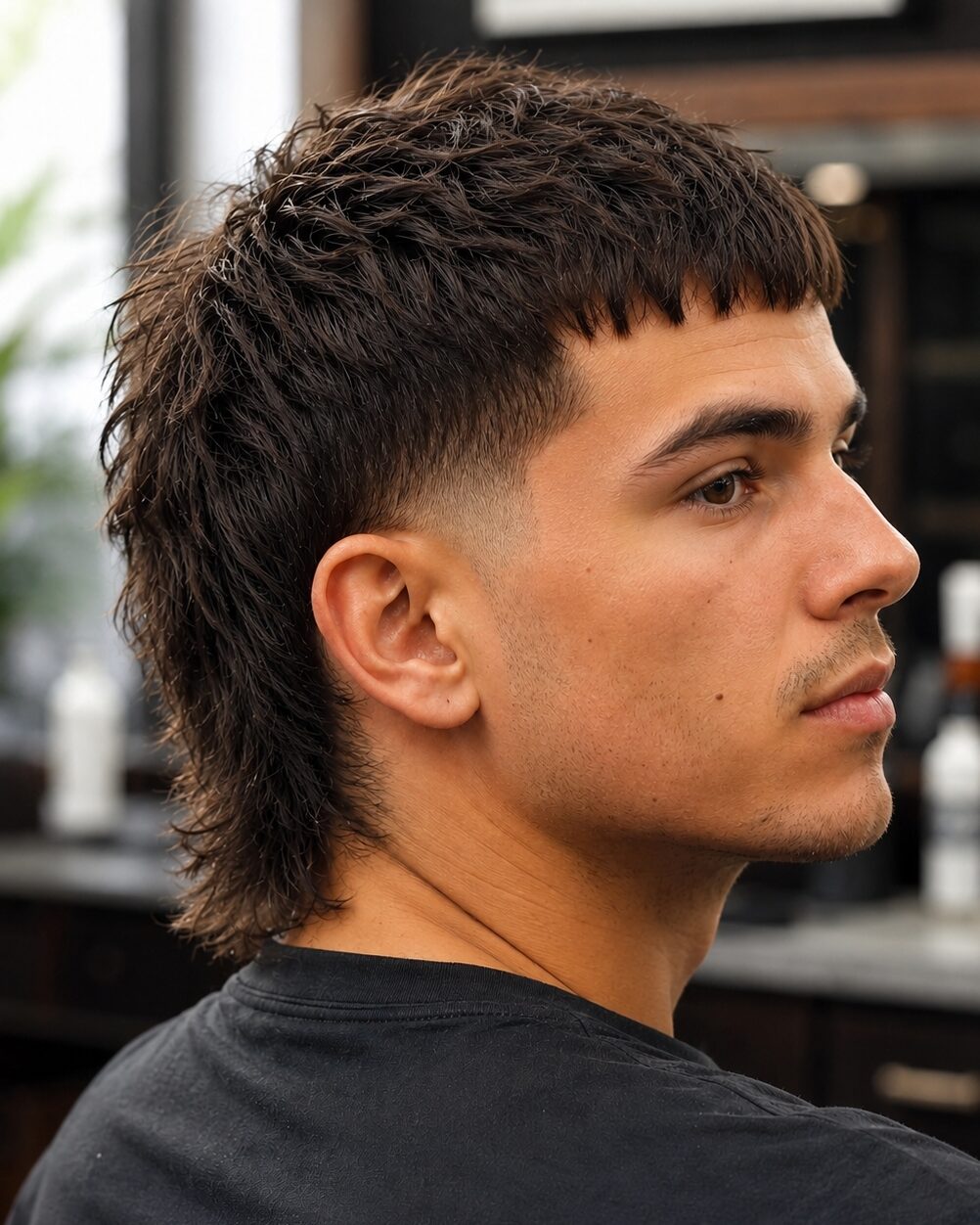
Best for: Hybrid shapes, creative styling, stronger profile detail
Styling: Clay on top, light product through the back
Maintenance: Every 4 weeks on fade
Face shapes: Oval, rectangular
Statement French Crop Hairstyles and Modern Barbering Details
These versions push the french crop further: sharper lines, color contrast, temple fades, spiky texture, fluffy volume, and hybrid shapes.
They are more specific and more image-driven, which also makes them useful for search.
31. Edgar Cut Hybrid
The Edgar pushes the crop’s blunt fringe into geometric territory. The line across the forehead becomes the main feature, usually paired with a high fade and tightly defined edges.
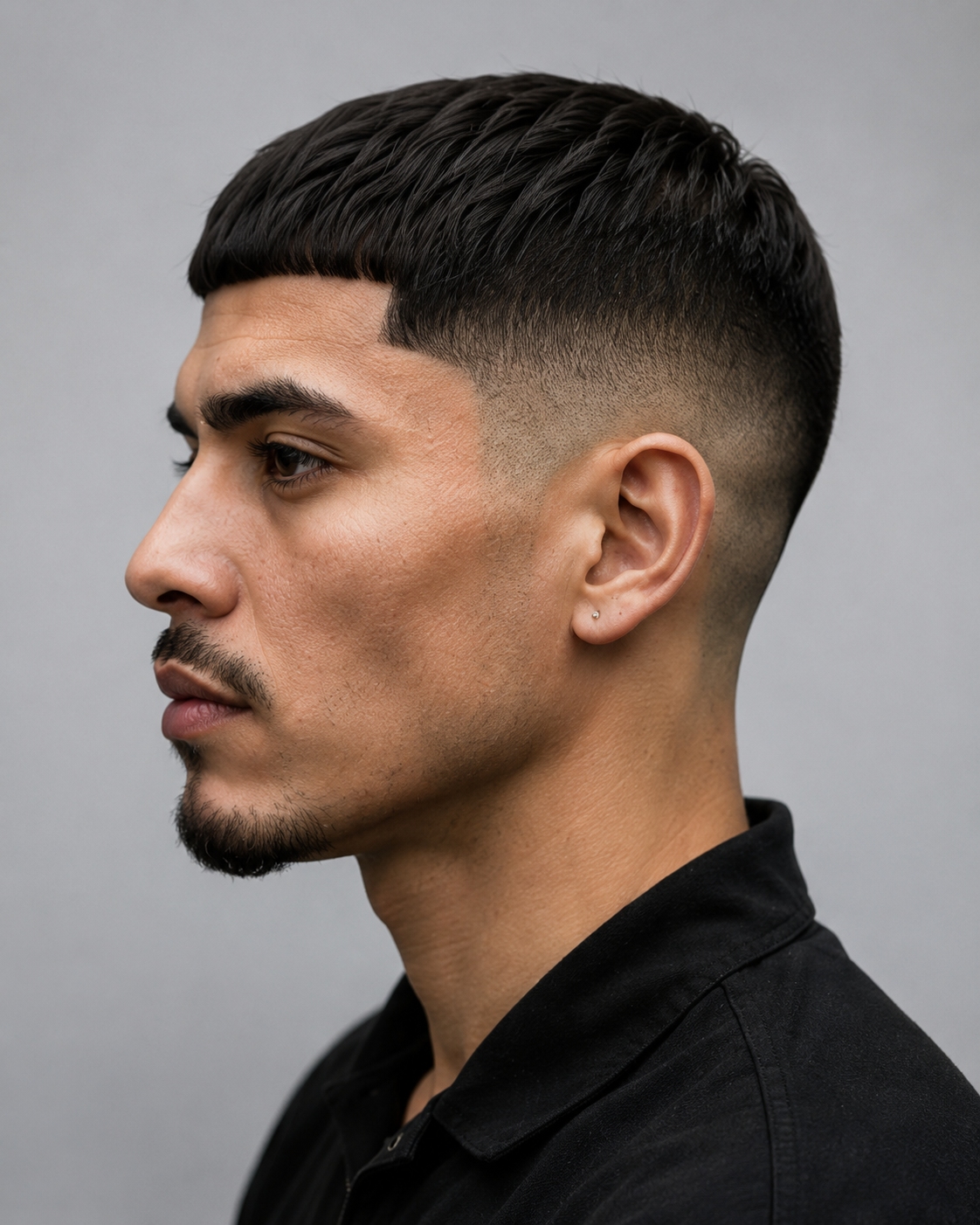
This is much sharper than a classic french crop and works best on thick, straight hair. The horizontal line needs precision.
Best for: Thick straight hair, hard fringe lines, bold geometry
Styling: Strong-hold paste
Maintenance: Every 2–3 weeks
Face shapes: Oval, square
32. French Crop with Line Up
A line up defines the forehead, temples, and sideburns with clipper or razor precision. On a french crop, it turns the forward fringe into a sharper graphic frame.
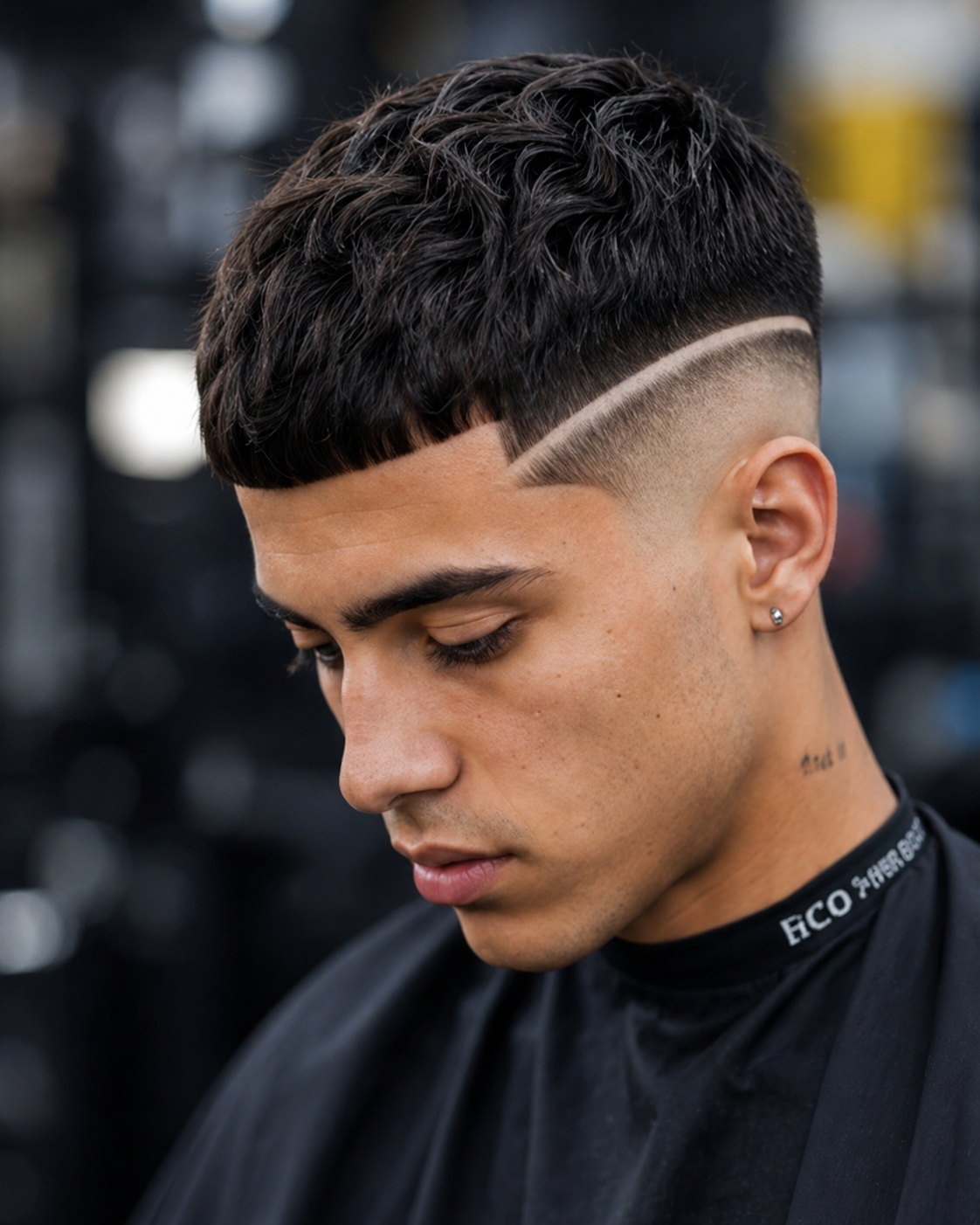
The line up has to match the haircut’s density. Too sharp on soft hair can look disconnected. Done well, it gives the crop a crisp finish and makes the front edge look cleaner immediately.
Best for: Crisp hairlines, graphic edges, defined temple detail
Styling: Clay, keep product away from the hairline
Maintenance: Every 2–3 weeks
Face shapes: Square, oval
33. Fluffy French Crop
Fluffy hair adds air and lift through the top. The fringe still moves forward, but it has bounce rather than a flat blunt edge.
It works naturally with wavy or curly hair and can be built on straight hair with the right drying technique.

Use a diffuser, texture spray, or light cream before any clay. The finish should feel soft, not spiky. Volume is the point, but controlled volume.
Best for: Soft volume, wavy hair, airy texture
Styling: Texture spray, diffuser, light matte paste
Maintenance: Every 4 weeks
Face shapes: Oval, heart, angular faces
34. Spiky French Crop
The spiky crop uses choppy top texture to create short defined points while keeping the fringe direction forward. It is sharper and more energetic than the messy fringe version.
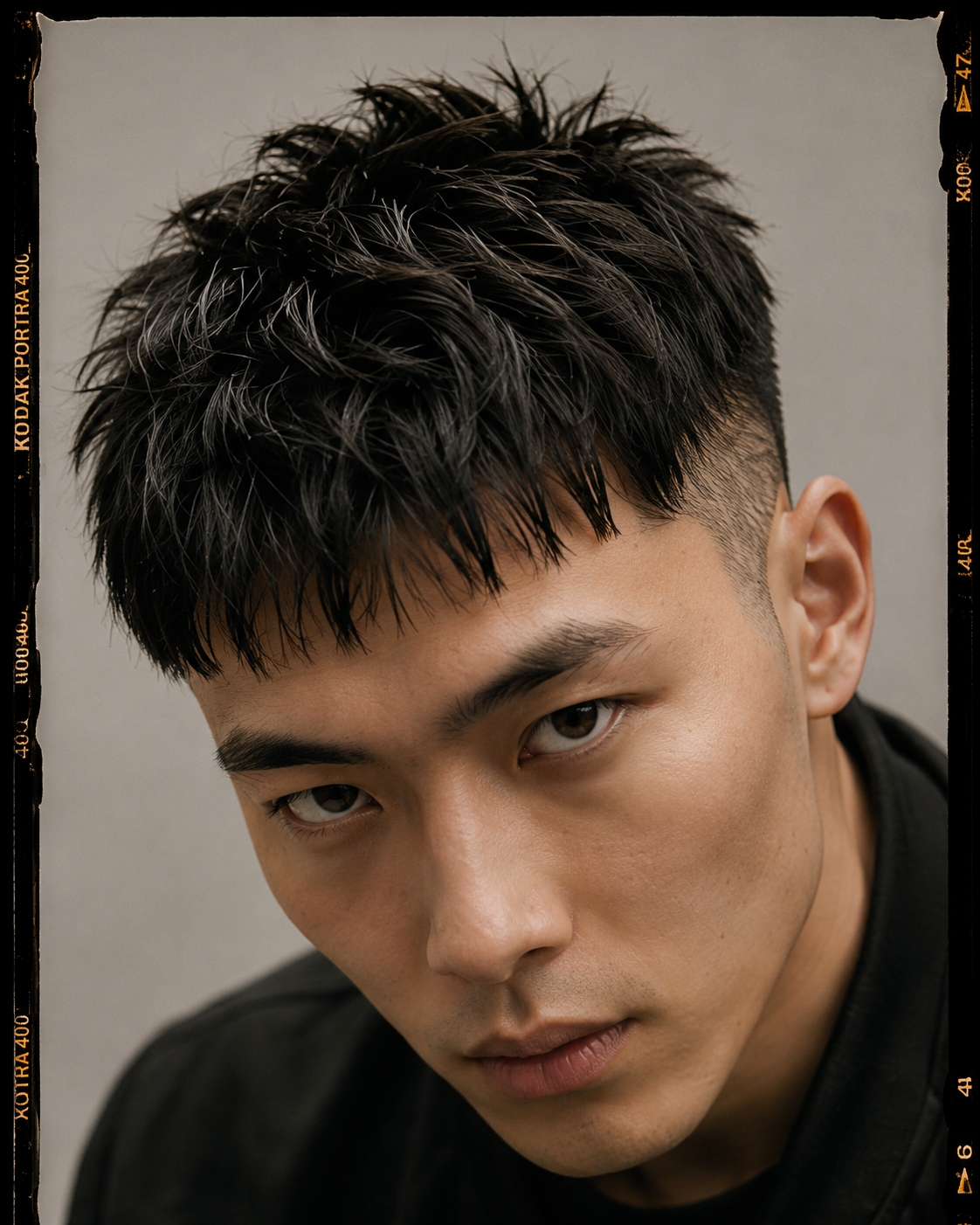
The spikes should come from the cut, not from overloading product. Ask for short, broken layers through the top and use a matte paste that gives separation without turning the hair glossy.
Best for: Choppy texture, high definition, thicker hair
Styling: Matte paste or clay
Maintenance: Every 3–4 weeks
Face shapes: Oval, square, round
35. Temple Fade French Crop
The temple fade concentrates the fade detail around the temples while leaving the rest of the side shape less aggressive. It gives the crop a sharper front corner without committing to a full high fade.
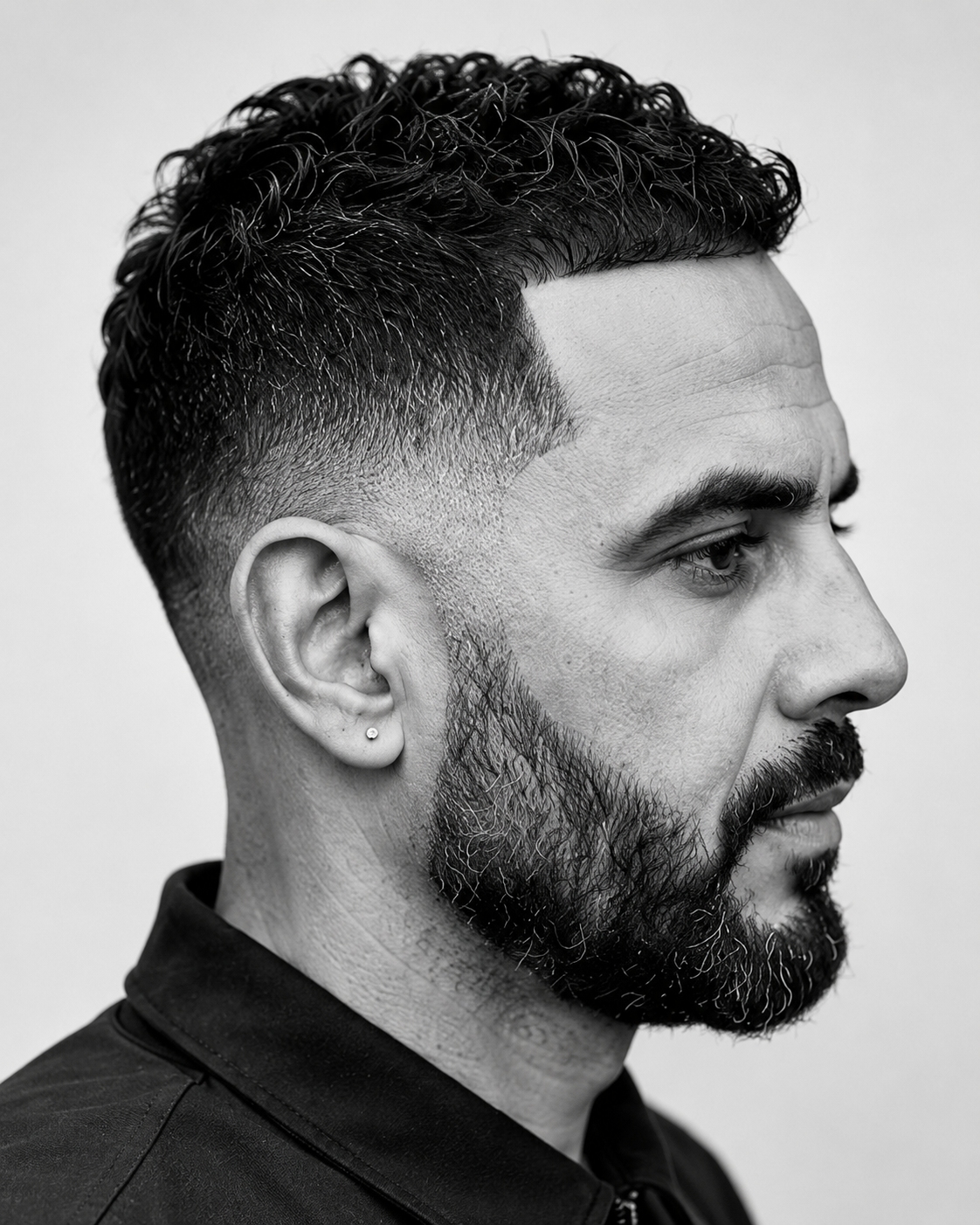
This is especially useful when the haircut needs definition around the face. The temple area frames the fringe, so a clean temp fade can make the whole cut feel more deliberate.
Best for: Temple definition, sharper face framing, subtle fade detail
Styling: Clay or light paste
Maintenance: Every 2–3 weeks
Face shapes: Oval, round, square
How to Ask Your Barber for a French Crop
Most miscommunications at the barbershop happen because “short” and “textured” mean different things to different people. Three variables to specify before you sit down.
Fade height: low, mid, high, taper, or skin. Fringe style: blunt, textured, or long.
And how much length stays on top.
“I want a French crop: [low / mid / high] fade on the sides, fringe pushed forward [blunt and straight / textured and broken up], and some texture on top. Not too long on top. I’ll show you a photo.”
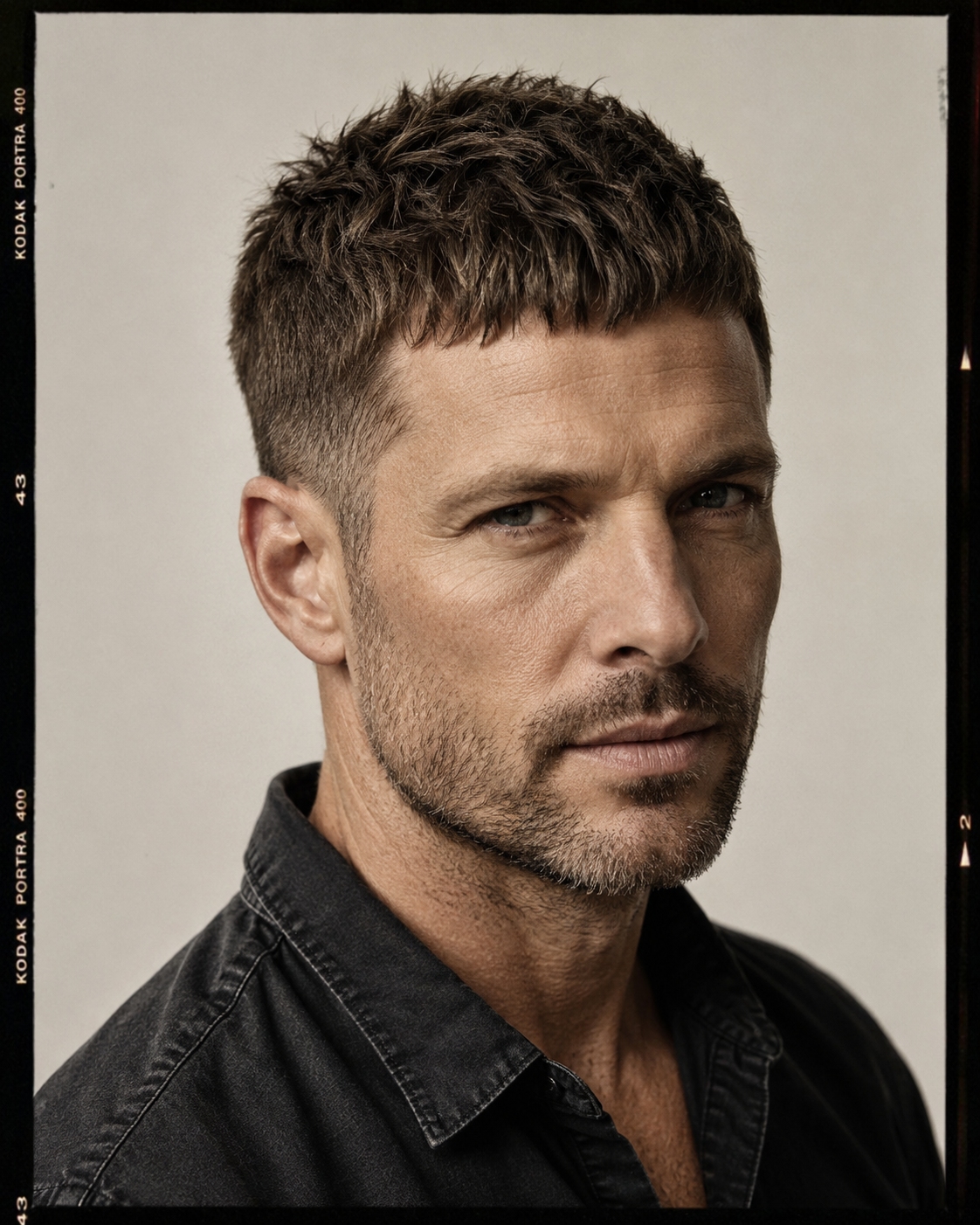
The photo matters more than any description. Bring it. The best barbers will look at it for five seconds and ask one follow-up question. That’s how you know you’ve found the right one.
Styling and Hair Product Tips
Start on damp hair. Towel-dry until damp, not dripping. Products distribute better and the style sets more naturally than on bone-dry hair.
If you’ve let it dry completely, a quick spray of water from a bottle fixes it.
Pre-styler first if your hair needs it. Sea salt spray for wavy or fine hair: adds texture and body before the clay goes in.
Volumizing mousse for fine, flat hair that needs lift. Skip both if your hair already has enough natural texture to work with.
Blow-dry forward. Aim the dryer toward the forehead, use fingers or a vent brush to direct the hair. Focus on the crown and the fringe.
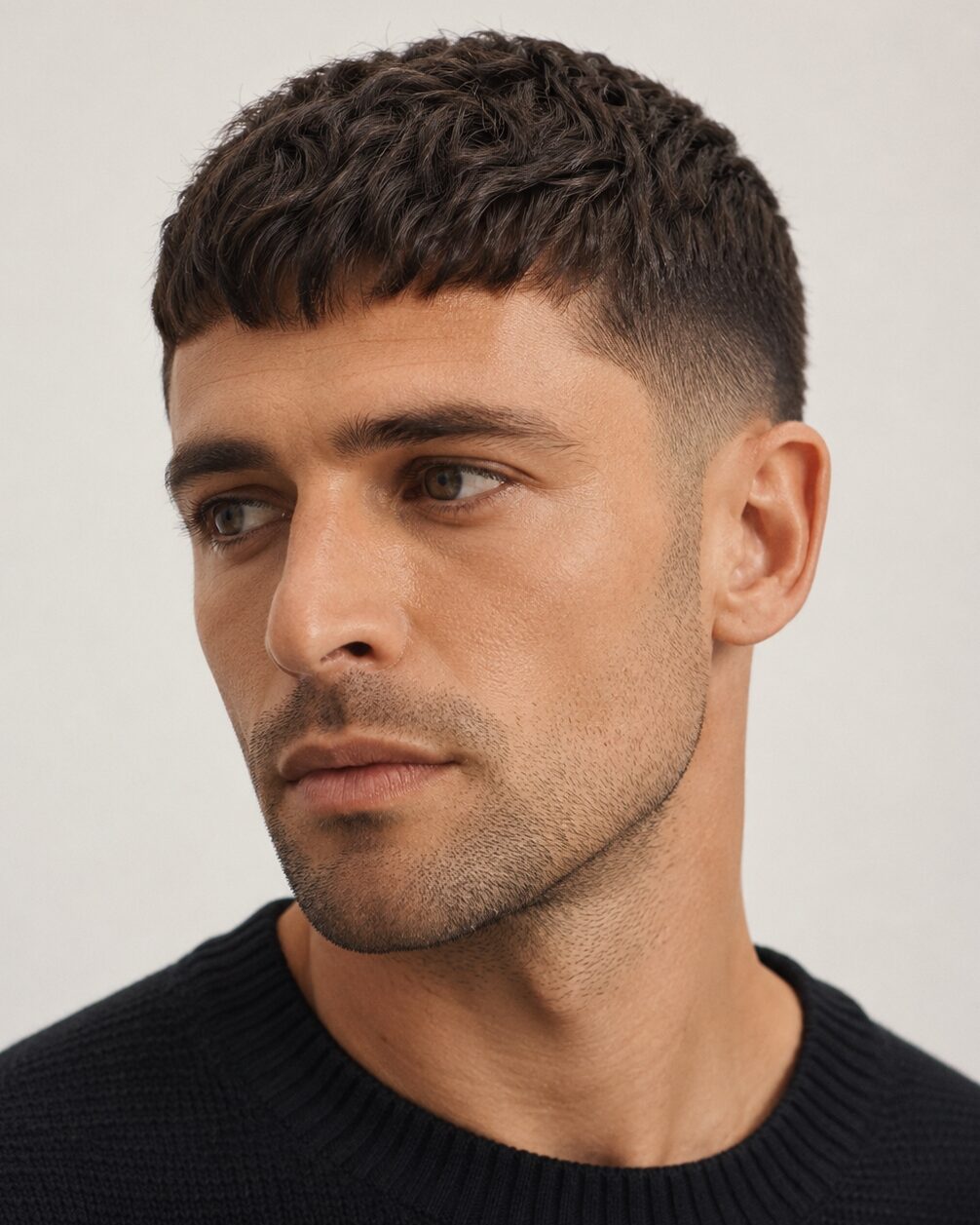
Medium heat, medium speed. This sets the direction the fringe holds all day.
It’s the step most men skip and then wonder why the product doesn’t last.
Finish with the right product. For most french crops: a matte clay or molding paste.
Rub a small amount between palms until it almost disappears, then apply from roots to tips, shaping the fringe last. Avoid gel.
It kills texture and shines too much. Avoid heavy wax if your hair has any weight to it.
Thinking on Getting This Cut…
What exactly is a French Crop?
A men’s haircut with faded or tapered sides and a blunt or textured fringe pushed forward over the forehead. The top is kept short and textured. Low maintenance, high impact, works across most face shapes and hair types.
What’s the difference between a French Crop and a Caesar Cut?
The Caesar has a uniform short length all over with a very blunt horizontal fringe. The french crop typically has more contrast between the sides and top. The finish is textured rather than flat. The fringe length varies more.

Learn More: 20+ Caesar Hairstyles for Men: The Modern Haircut Guide
What’s the difference between a French Crop and a Crew Cut?
A crew cut has no fringe. The hair tapers uniformly from front to back. The crop has a defined fringe pushed forward. The crew cut is more conservative. The french crop has more visual presence and a contemporary edge without being high-maintenance.
Is the French Crop good for a receding hairline?
Yes. The forward fringe covers the front effectively. The short sides draw attention away from the temples. It works because it frames the face rather than trying to disguise anything. That always reads better.
Does the French Crop work for men over 40?
It’s one of the best cuts for men over 40. A low or mid fade grows out more gracefully than a skin fade and requires fewer barber visits. The side part variation reads as sophisticated rather than trend-driven.
For men with thinner hair or a receding hairline, the fringe structure solves problems that most other short cuts don’t address.
How often should I get a French Crop trimmed?
Skin fade: every 2–3 weeks. High or mid fade: every 3 weeks. Low fade or taper: every 4–5 weeks. The fringe is the tell. Once it starts reaching eyebrow level and splitting to the side, it’s time.
Can I get a French Crop with curly hair?
Yes. Keep the sides faded tight to control volume and let the curls define the top. Use curl cream on damp hair and air dry or diffuse. The fringe will curl forward naturally. That’s exactly the direction you want.
What product should I use for a French Crop?
Matte clay or molding paste for most hair types. Texture powder at the roots for fine or flat hair. Sea salt spray as a pre-styler for wavy hair. Avoid gel. It kills the texture. Avoid anything too heavy if your hair is fine.
What do I ask my barber for a French Crop?
Specify the fade height, the fringe style, and how much texture you want on top. Then show a photo. The photo is more useful than any description.
Is the French Crop high maintenance?
Daily styling takes under three minutes with the right product. The maintenance cost is the barber schedule. A skin or high fade needs a trim every 2–3 weeks to stay sharp. A low fade or taper gives you 4–5 weeks.
Choose the fade height based on your actual schedule, not the one you’d like to have.
Professional Hairstyles for Men with Edgy Personal Style
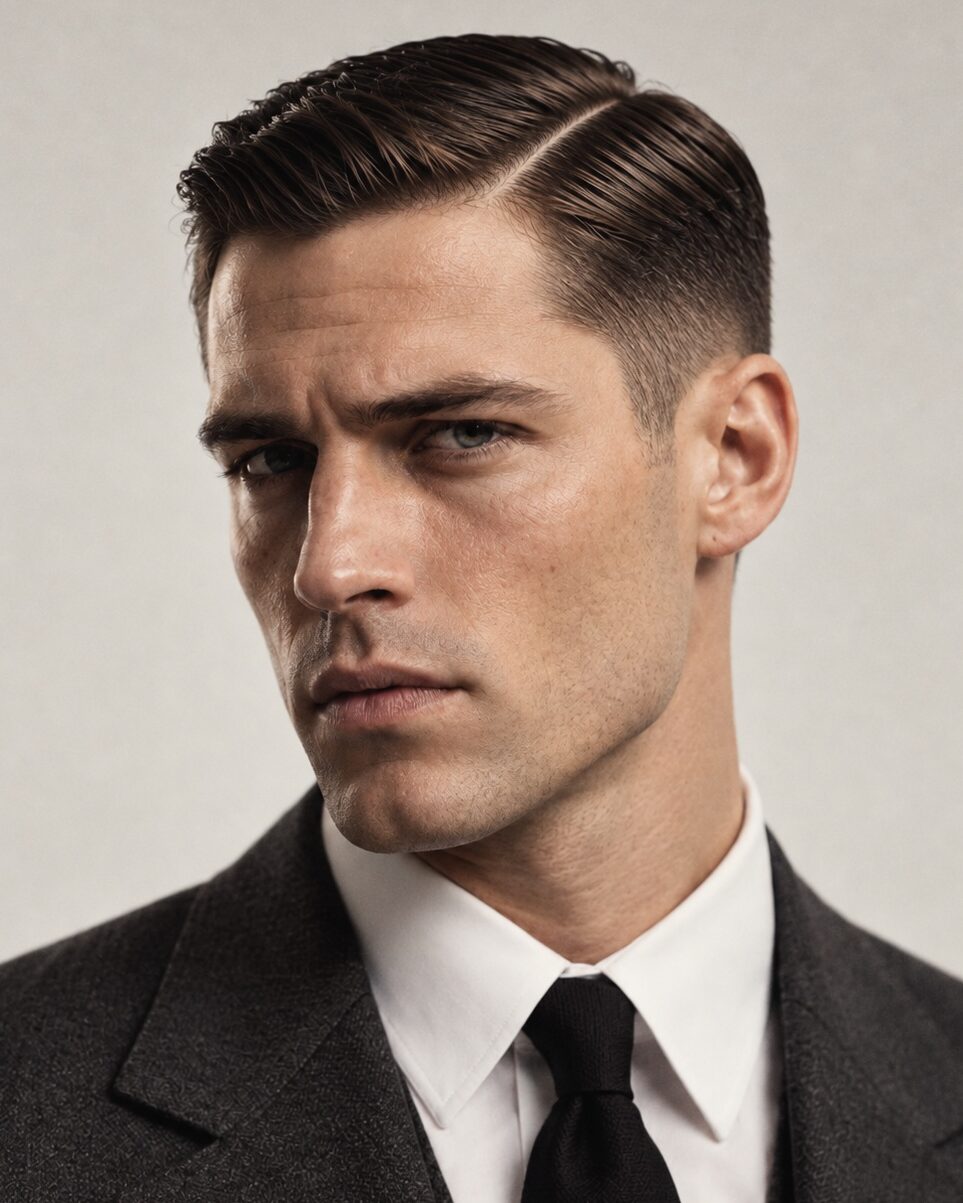
20+ Best Ivy League Haircuts for Men: Clean, Sharp, and Timeless
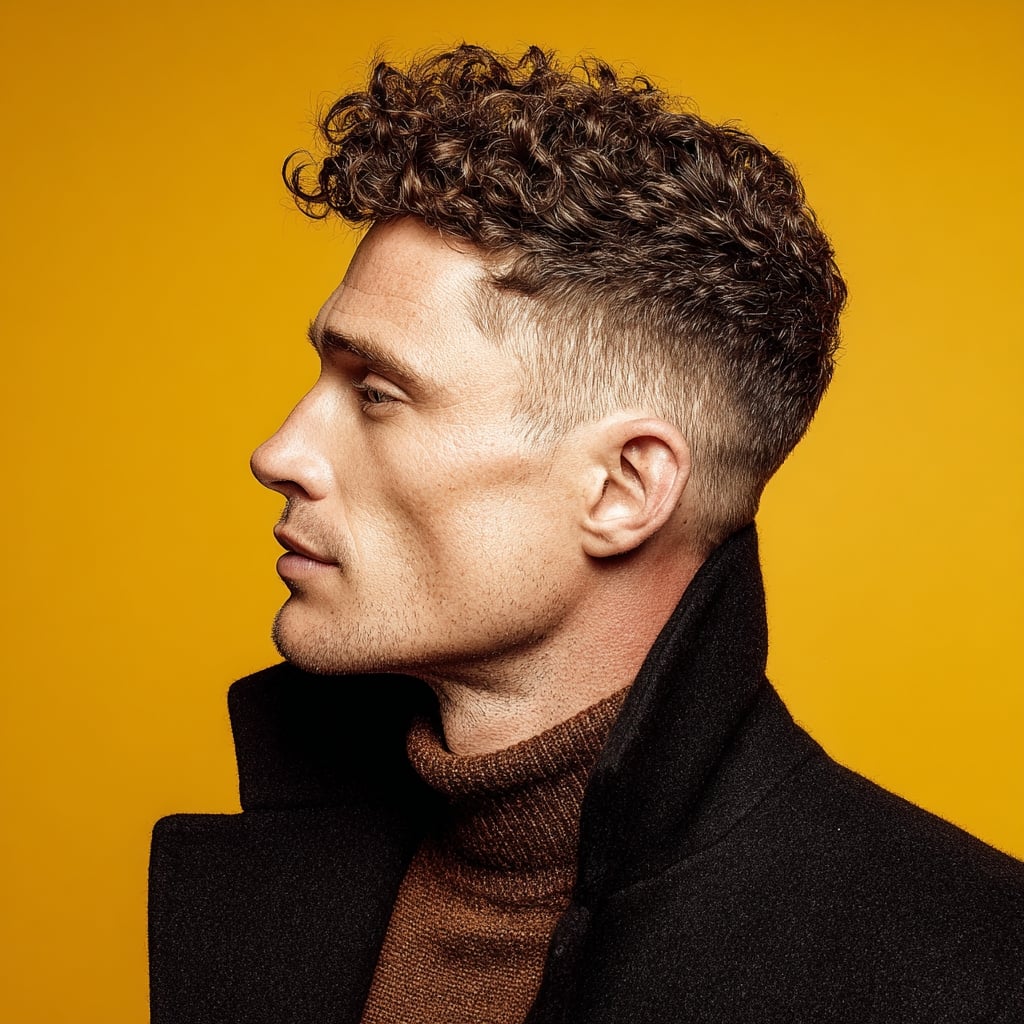
Modern Haircuts for 40-Year-Old Men: Stylish Edgy Looks
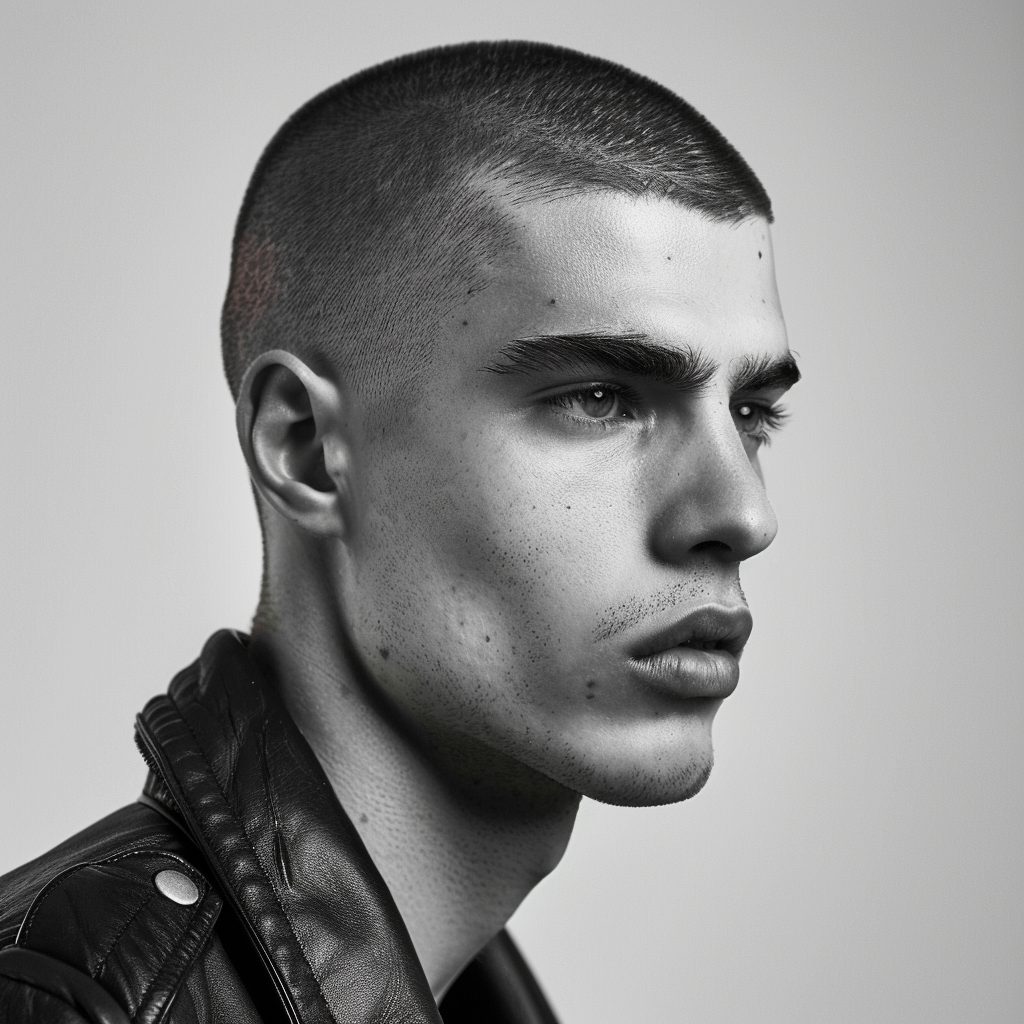
Easy Men’s Hairstyles: Quick, Stylish Looks

How to Get a Fluffy Fringe and 5 Male Hairstyles to Rock It