Business Haircuts for Men: 40+ Professional, Formal & Office Styles
The best business haircut looks intentional, works with your natural hair and fits the environment you actually work in.
In a formal or corporate office, a business cut usually means a classic taper, side part or Ivy League.
In a business-casual or creative office, it can just as easily be a textured crop, low fade, natural curls or longer hair brushed cleanly away from the face.
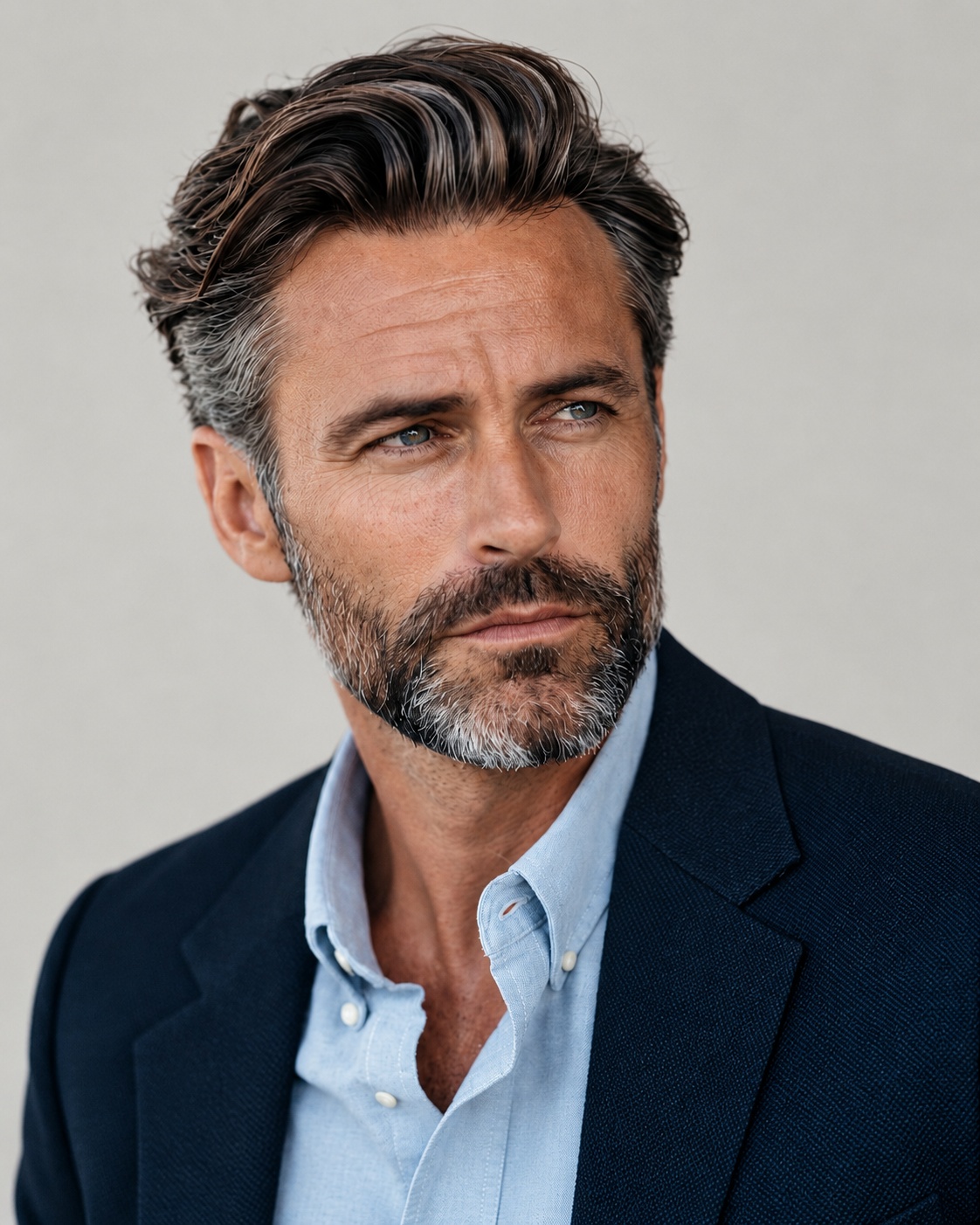
After two decades working in advertising and corporate fashion, I have learned that hair communicates more than people realize. In an interview, a pitch or a board meeting, the right haircut can make you look sharper, more current and more considered before you have even said a word.
It is rarely about having the most fashionable cut. What matters is that the shape looks intentional, the hair is well maintained, and the style works with your texture, age and professional environment.
Below are 40 business and professional hairstyles for men, from short office cuts to medium and longer styles, grouped by style, texture and hair needs. Each one includes the impression it tends to create, the settings where it works best, what to ask your barber and how to style it.
In This Guide
- Classic, corporate and formal office haircuts (1-14)
- Business hairstyles with volume and movement (15-22)
- Modern business-casual haircuts (23-28)
- Medium and long professional hairstyles (29-30)
- Wavy, curly and coily hair (31-34)
- Men over 40, gray and thinning hair (35-38)
- Creative workplaces (39-40)
- How to choose an office haircut, haircuts for interviews and key meetings, matching the dress code, what to tell your barber, how to style it and FAQ
Classic, Corporate & Formal Office Haircuts
These are the cuts with the widest professional range. They can move between a formal office, client meetings and business-casual settings simply by changing the finish.
1. Classic Scissor Taper
The classic taper gradually shortens around the ears and neckline while retaining more length through the upper sides and top.
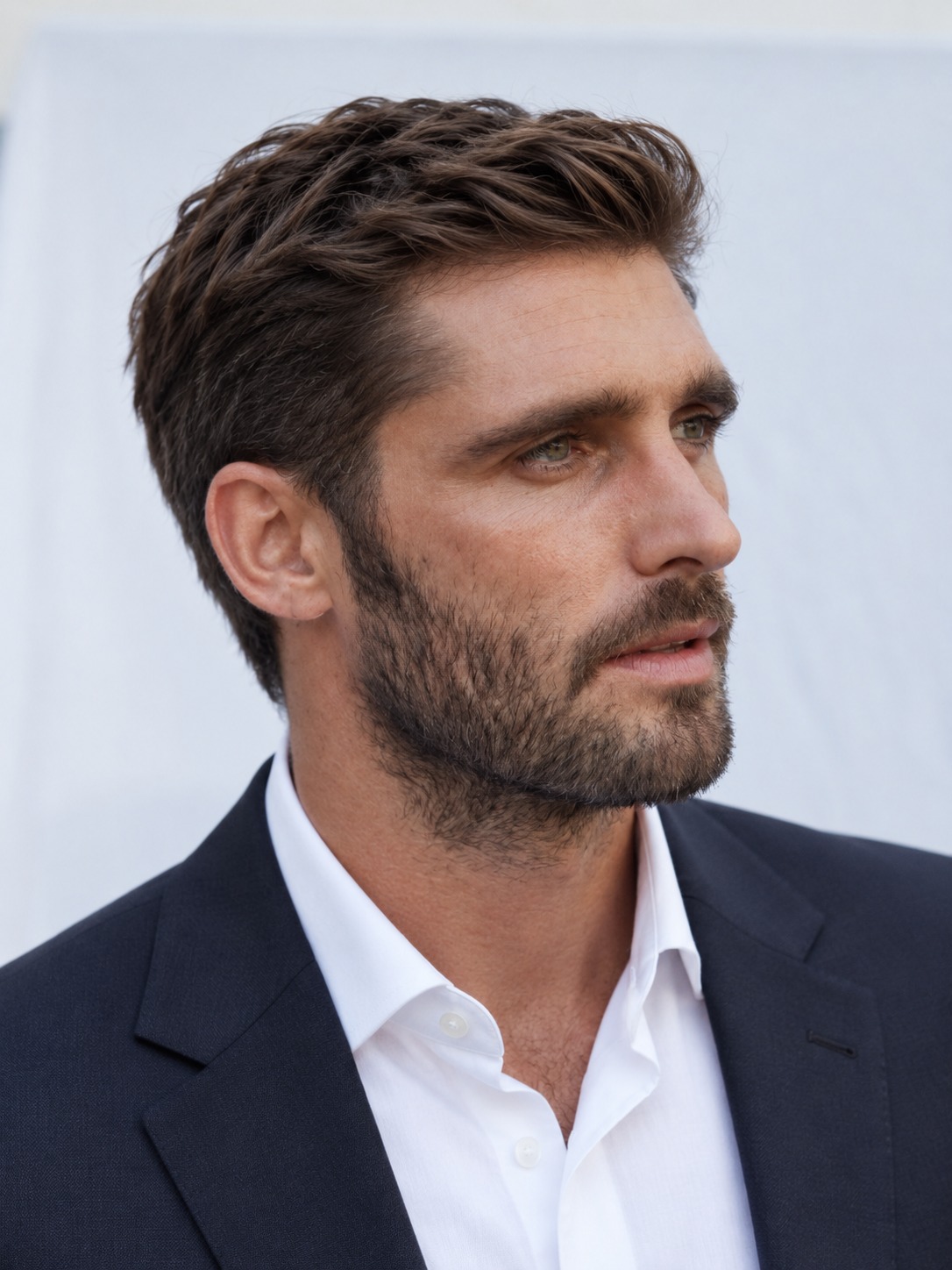
It is one of the safest starting points if you need a formal haircut that does not look too old-fashioned.
The impression: Reliable and composed without looking dated. It is the safest single choice for a first interview in almost any industry, because nobody reads it as careless or as trying too hard.
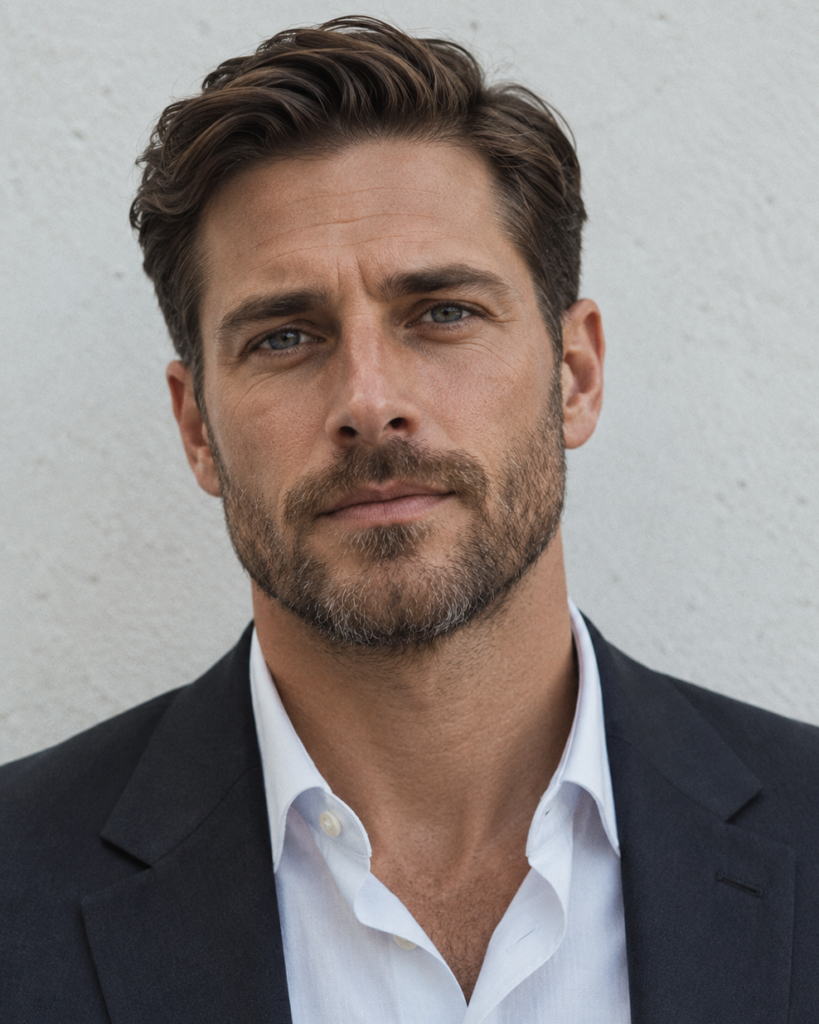
Hair type: Straight or wavy hair, fine through thick density.
Ask your barber: “Classic taper, not a skin fade. Keep some weight through the sides and around two to three inches on top so I can part or brush it back.”
Styling: Blow-dry into direction and finish with a small amount of styling cream or matte paste.
2. Brushed-Up Business Taper
This version keeps extra length at the front so the hair can be brushed up and slightly back with your hands, instead of being combed into a side part.
It sits between the two extremes: less sculpted than a pompadour, less traditional than a side part or comb over. The texture is cut into the top, so it can be styled in seconds with your fingers and still looks deliberate when a few strands move out of place during the day.
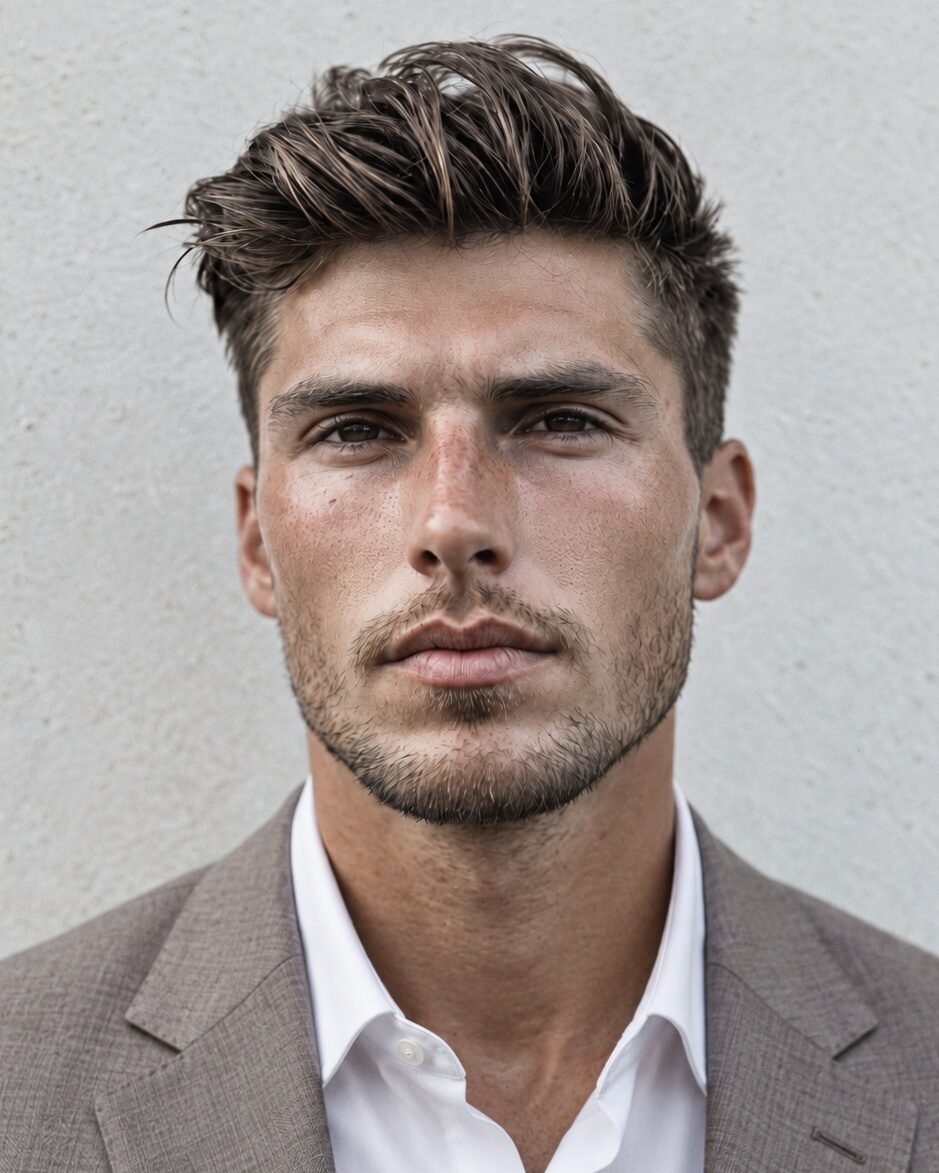
The impression: Energetic, current and unforced. It suits client-facing roles in consulting, sales or media where you want to look sharp but approachable; in a very traditional law firm, keep the top shorter and the lift lower.
Hair type: Medium-to-thick straight or lightly wavy hair.
Ask your barber: “Tapered sides with around two to three inches through the front, cut with texture so I can brush it up and back with my fingers.”
Styling: Rough-dry upward with your hands, then work a small amount of matte paste or clay through the top. No comb needed.
3. Natural Side Part
The side part remains one of the most adaptable professional hairstyles because the same basic haircut can look formal or relaxed depending on how precisely it is styled.
The barber follows where your hair naturally separates instead of cutting a line. That keeps the part soft, avoids a shaved line and lets the hair fall back into place easily after a long day.
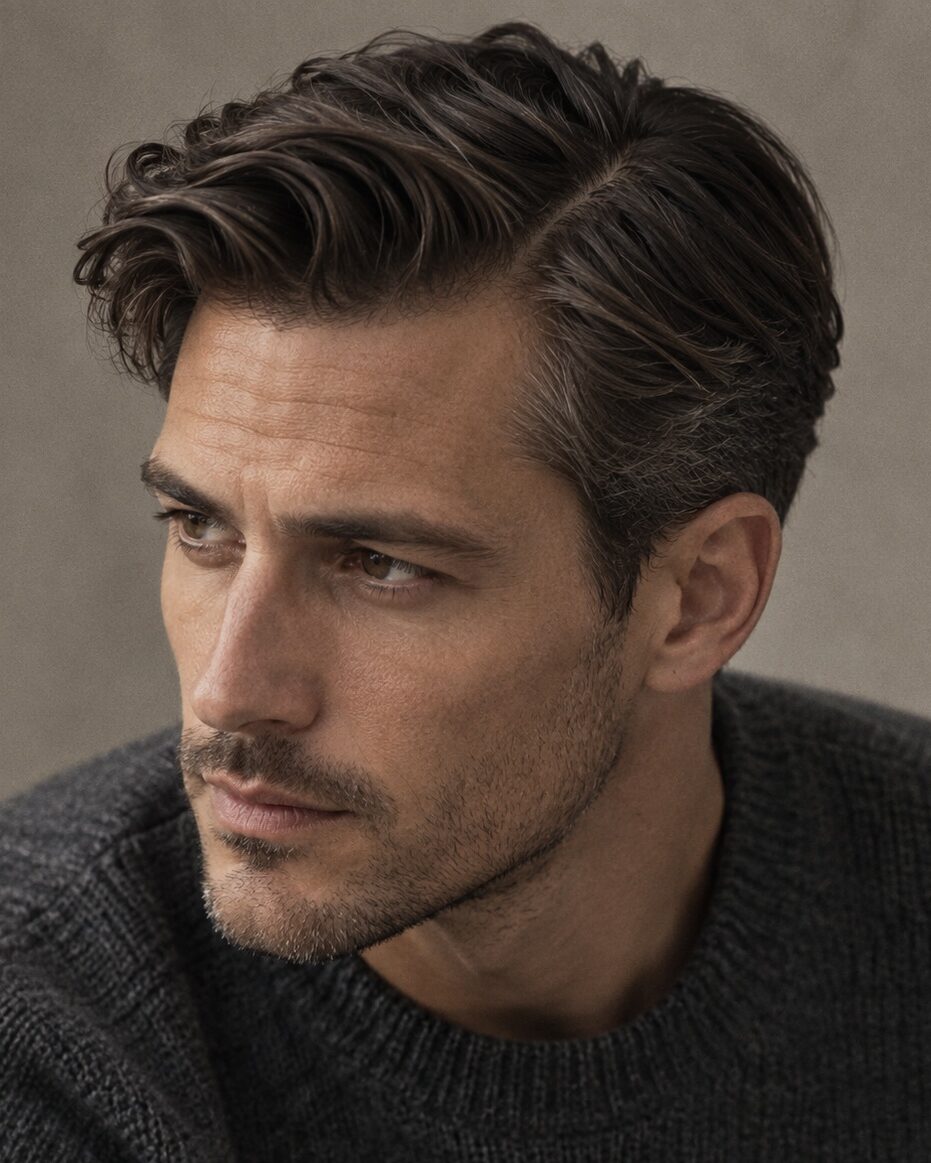
The impression: Considered and quietly confident. It works well in meetings with senior people because it looks groomed without looking styled for the occasion. It is also one of the few cuts that looks equally right with a suit or a crewneck.
Hair type: Straight and wavy hair with medium density.
Ask your barber: “Follow my natural part, keep some weight around the temples and taper the perimeter softly. No hard part.”
Styling: Establish the part while the hair is damp, blow-dry across it and finish with a light cream or low-shine paste.
4. Side-Swept Professional Cut
A side-swept cut works particularly well if your hair naturally wants to move diagonally rather than separate cleanly along one line. Leaving a little more length through the front gives it a softer, less corporate character.
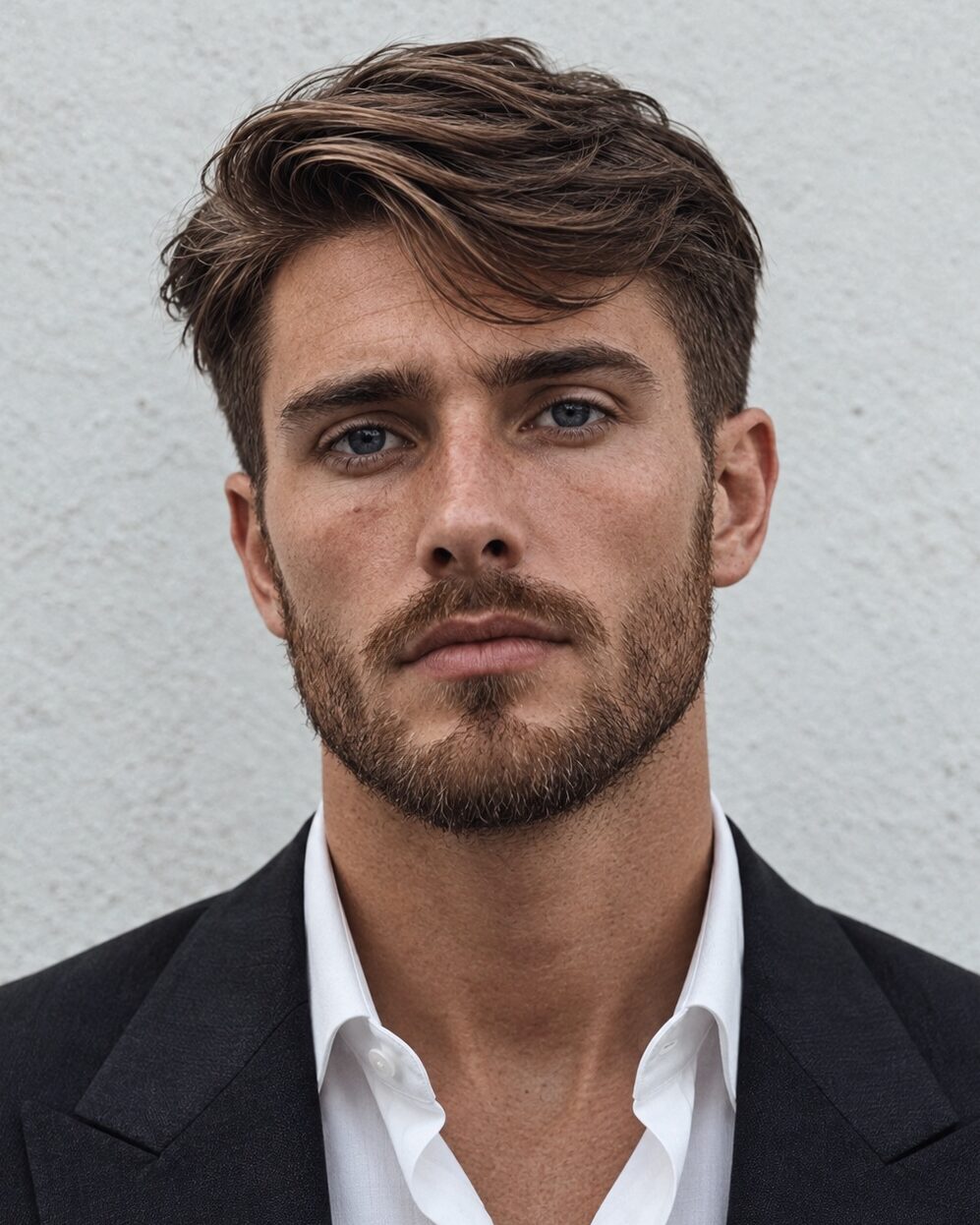
A closer taper gives the side-swept style a sharper, more contemporary office finish.
The impression: Relaxed and personable. Good for roles built on relationships, such as account management or HR, and for business-casual offices; it can read too casual for a board presentation.
Hair type: Straight to lightly wavy medium-length hair.
Ask your barber: “Leave enough length through the front to sweep naturally to one side, with blended scissor-cut sides.”
Styling: Blow-dry diagonally using your fingers rather than a fine comb.
5. Classic Comb Over
The difference from a side part is mostly the finish. A comb over is combed through with visible direction and usually held with gel or pomade, which makes it read more formal.
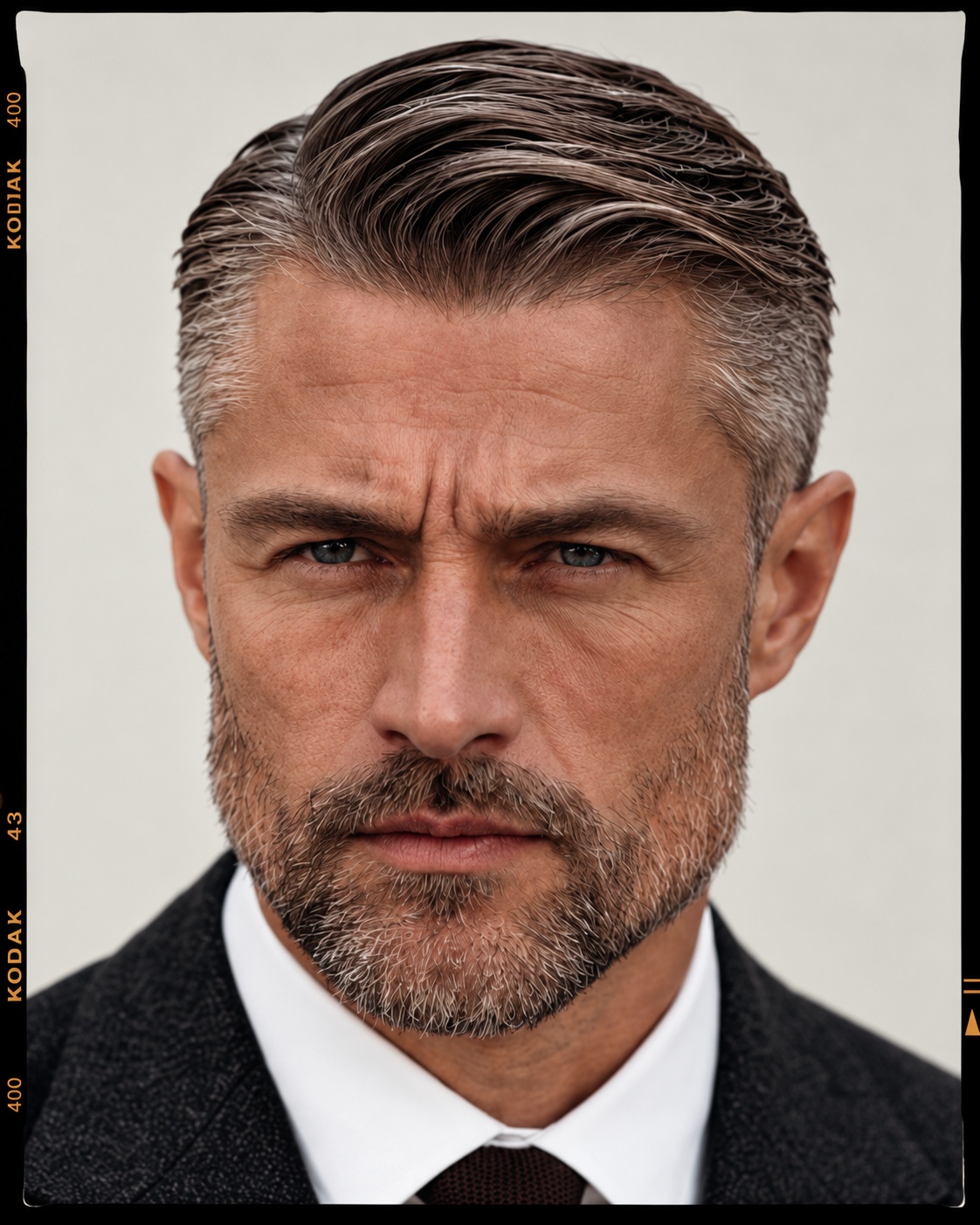
A side part is softer, with a more natural transition on either side of the part. The comb over creates a more deliberate, polished direction than a relaxed side part.
The impression: Formal, deliberate and a little old-school. It fits banking, law and high-level client dinners; in a startup or creative agency, it can look like you dressed for a different company.
Hair type: Straight or lightly wavy hair with fine-to-medium density.
Ask your barber: “Natural side part with enough length to comb fully across, keeping the sides connected and tapered.”
Styling: Use a light pomade on damp hair and comb outward from the part. Loosen the surface slightly afterward if it feels too rigid.
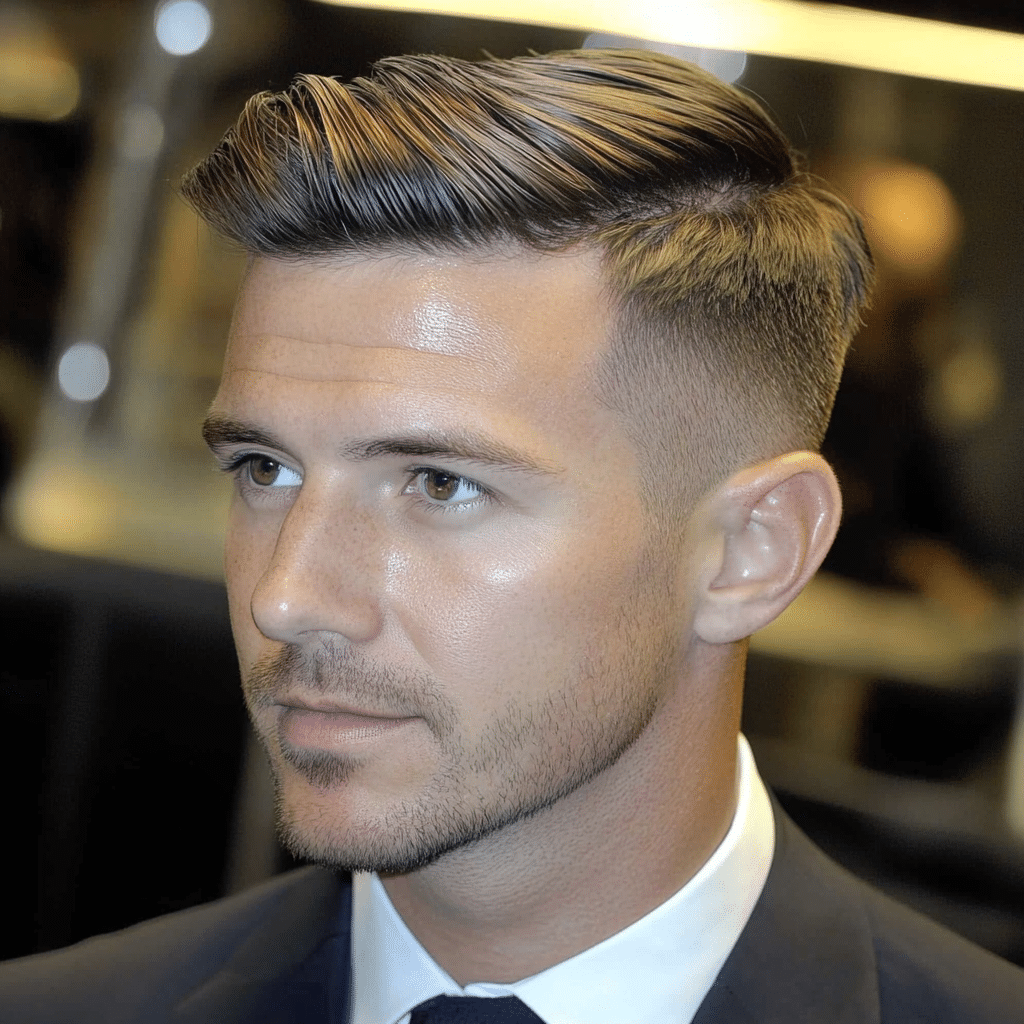
6. Taper Fade Comb Over
Taking the lower sides closer makes the comb over look more contemporary. Keeping the fade low prevents the sides from becoming the main feature.
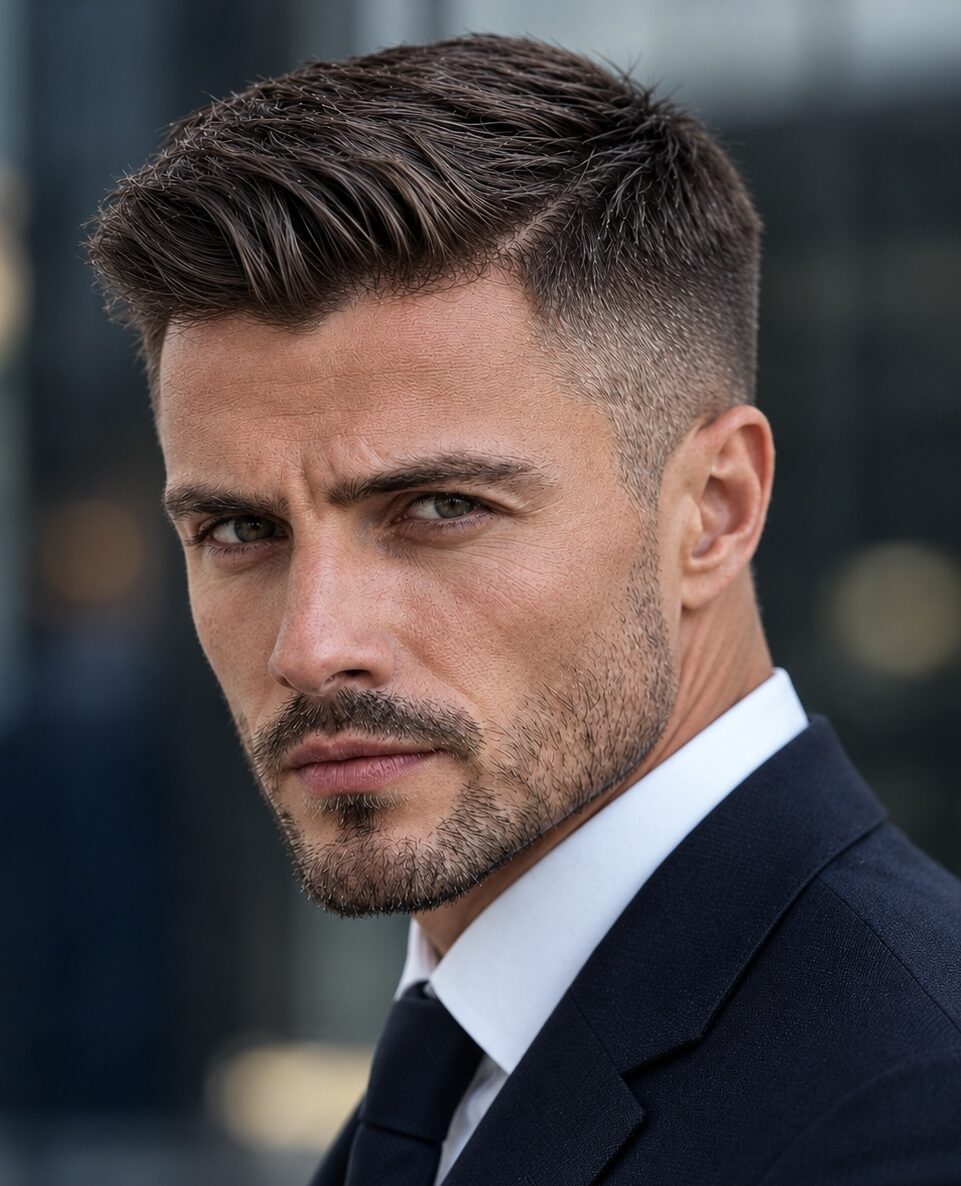
The impression: Clean-cut and modern without looking styled. The crisp sides keep it professional, while the loose top keeps it relaxed, which suits younger professionals in tech, sales and consulting. Comb it through with a little pomade when you need it sharper for a client meeting.
Hair type: Straight and wavy hair with medium-to-thick density.
Ask your barber: “Comb-over length on top with a low-to-mid taper fade, keeping some weight through the upper sides. Leave the top textured so I can wear it loose or combed.”
Styling: Matte paste worked through with your fingers for everyday; a light pomade and a comb for a sharper finish.
7. Executive Contour
The executive contour is one of the clearest examples of what people mean by an executive haircut. The top moves across and slightly backward from a defined part while the sides remain connected and neatly tapered.
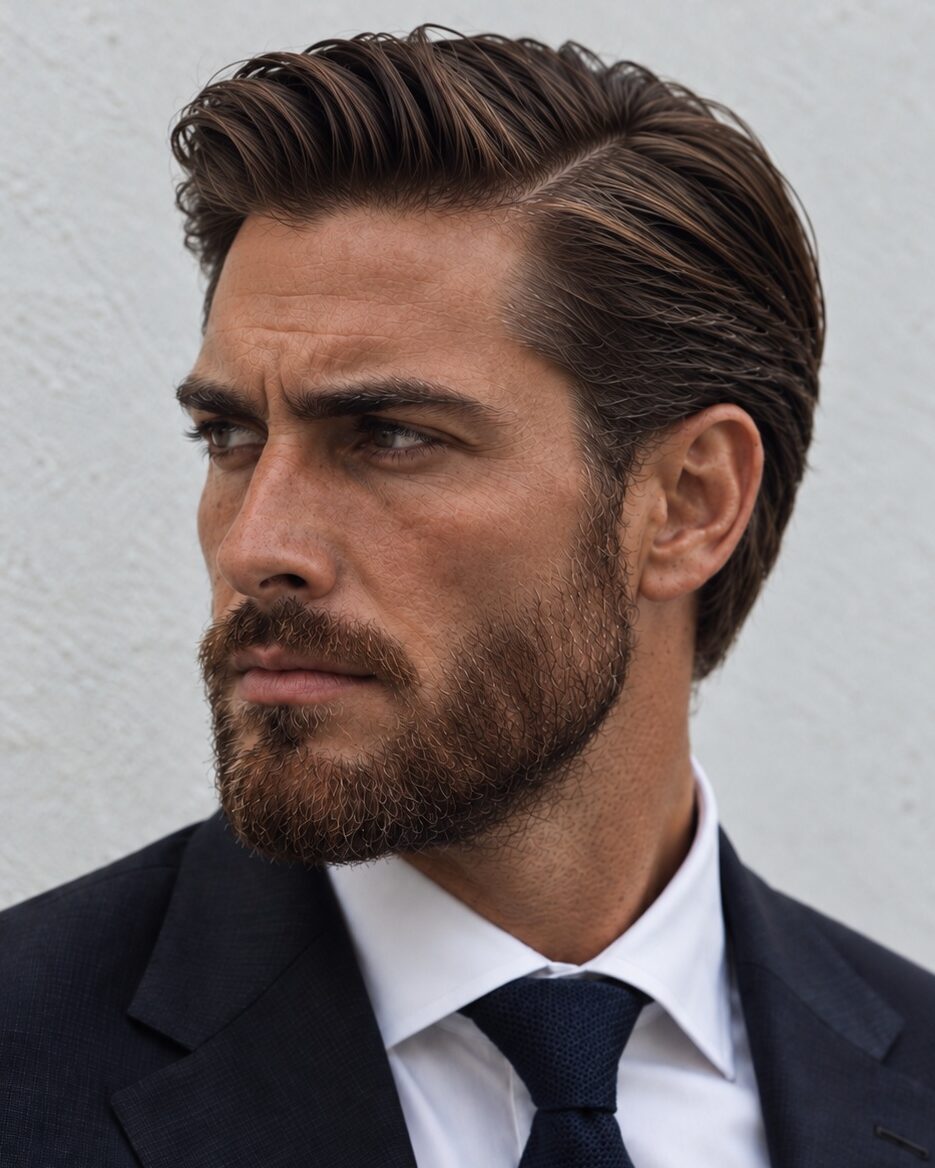
The impression: Authority. This is the haircut that looks at home at the head of the table, in a board meeting or on a conference stage. The risk is looking stiff if the styling gets too heavy.
Hair type: Straight or lightly wavy hair with medium-to-thick density.
Ask your barber: “Executive contour with a natural part, connected sides and enough length to direct the top across and slightly back.”
Styling: Styling cream for a softer result or flexible pomade for more structure.

Watch how a barber builds the executive contour, from part line to finish:
8. Soft Modern Executive Contour
The modern version keeps the architecture of the executive contour but relaxes the surface. Instead of obvious comb lines, the top has softer movement.
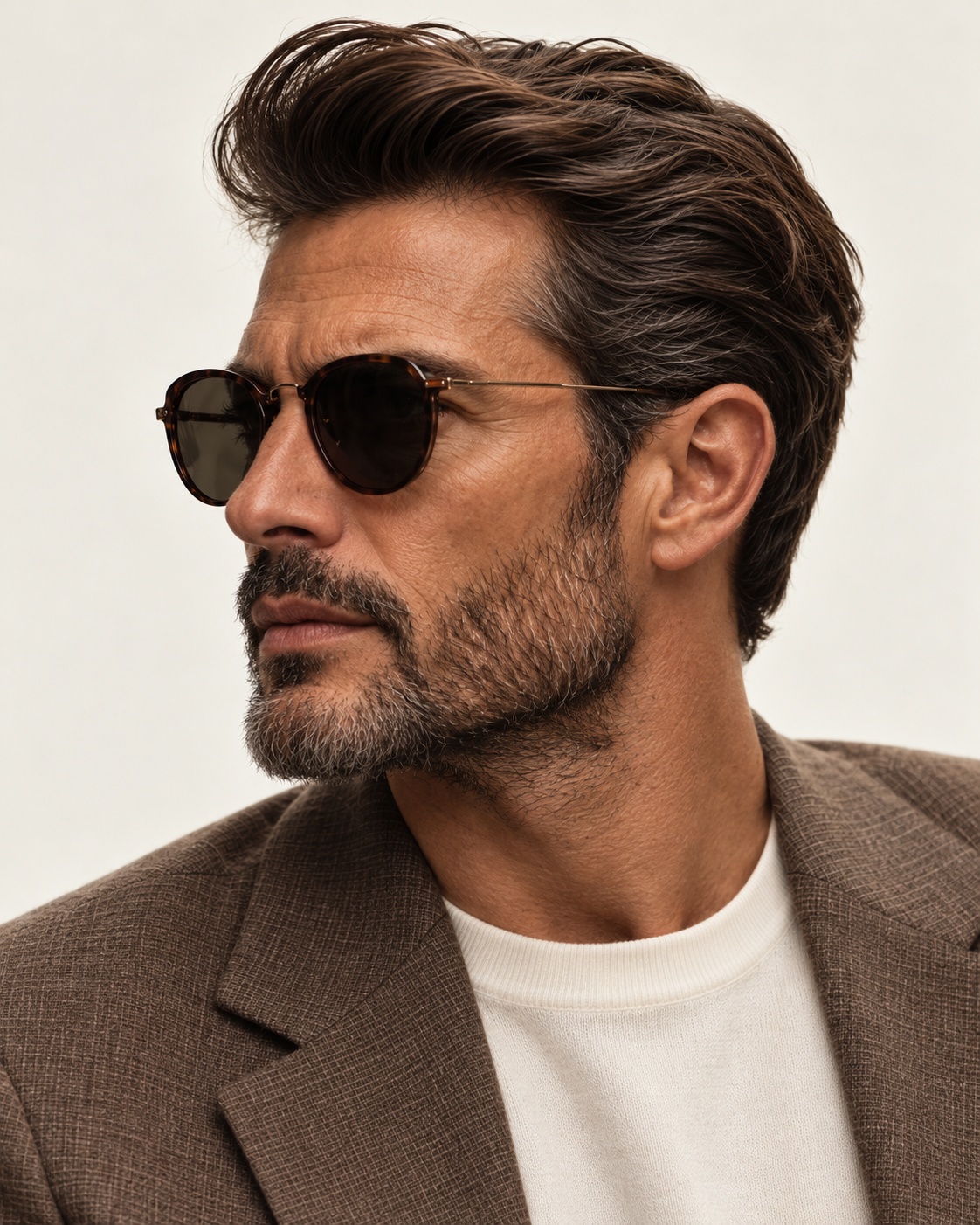
The impression: Senior but approachable. It gives you the structure of an executive haircut for investor meetings or leadership roles, without the rigidity that can make you seem distant.
Hair type: Straight or wavy hair with medium density.
Ask your barber: “Classic executive shape, but keep the top textured enough that I can finish it with my fingers.”
Styling: Blow-dry into direction, then use cream rather than hard-setting gel.
Explore The Look: Stylish Hairstyles for Men Over 50 with Glasses
9. Classic Ivy League
The Ivy League haircut, also known as the Princeton or Harvard clip, keeps the sides and back short while leaving enough length through the front and crown for a controlled sweep or short part.
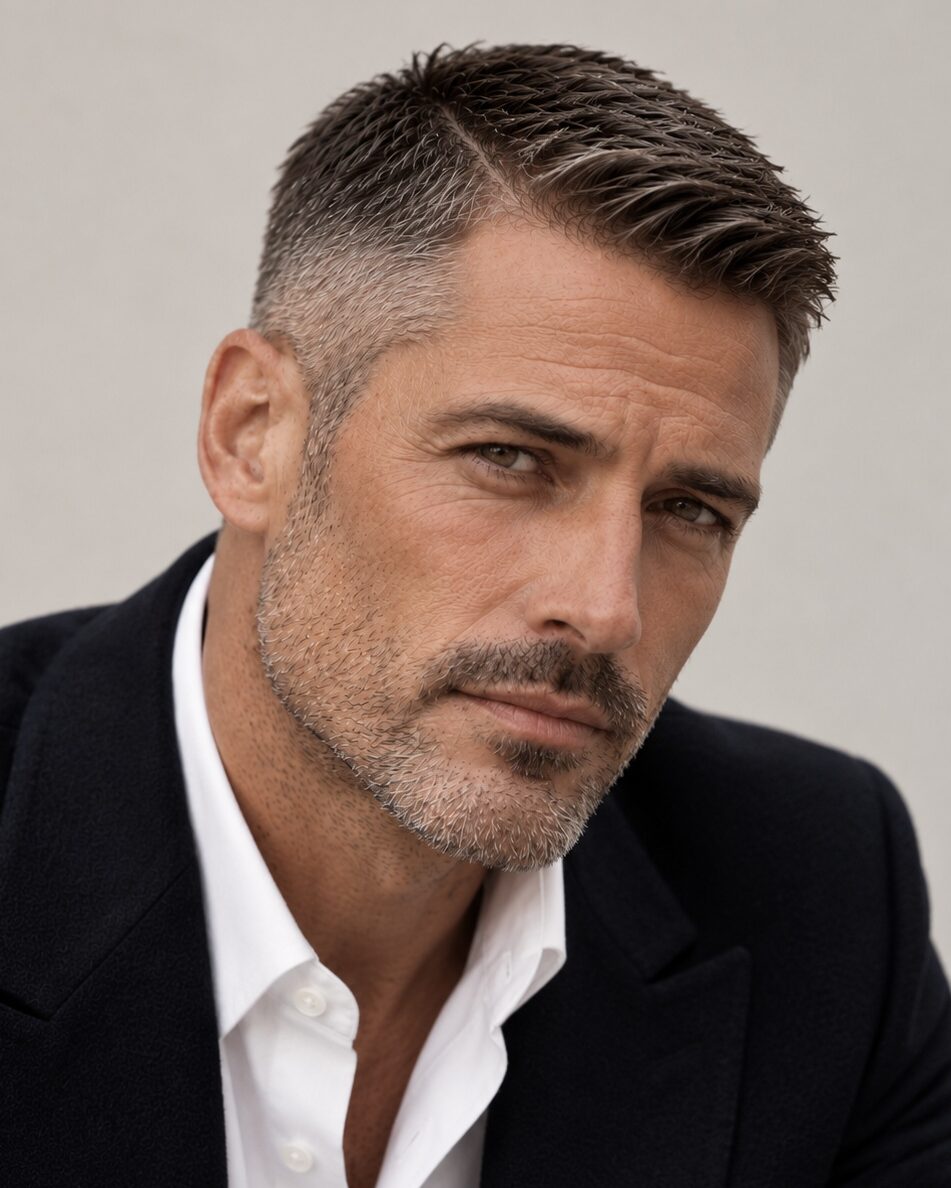
It sits between a crew cut and a classic taper, which makes it one of the most versatile short business haircuts for men who want minimal styling without looking severe.
The impression: Clean, capable and unfussy. It is one of the best choices for interviews and first days at a new job because it looks well kept from every angle and asks almost nothing of your morning.
Hair type: Straight and wavy hair, fine through thick density.
Ask your barber: “Short tapered sides with enough length through the front for a natural side sweep. Keep the transition connected.”
Styling: Matte cream for a natural finish or light pomade for a sharper part.
10. Longer Textured Ivy League
Leaving additional length through the top makes the Ivy League less rigid and allows more natural texture to show. It works particularly well on wavy hair, where the extra length lets the bend come through without losing the Ivy League’s neat outline.
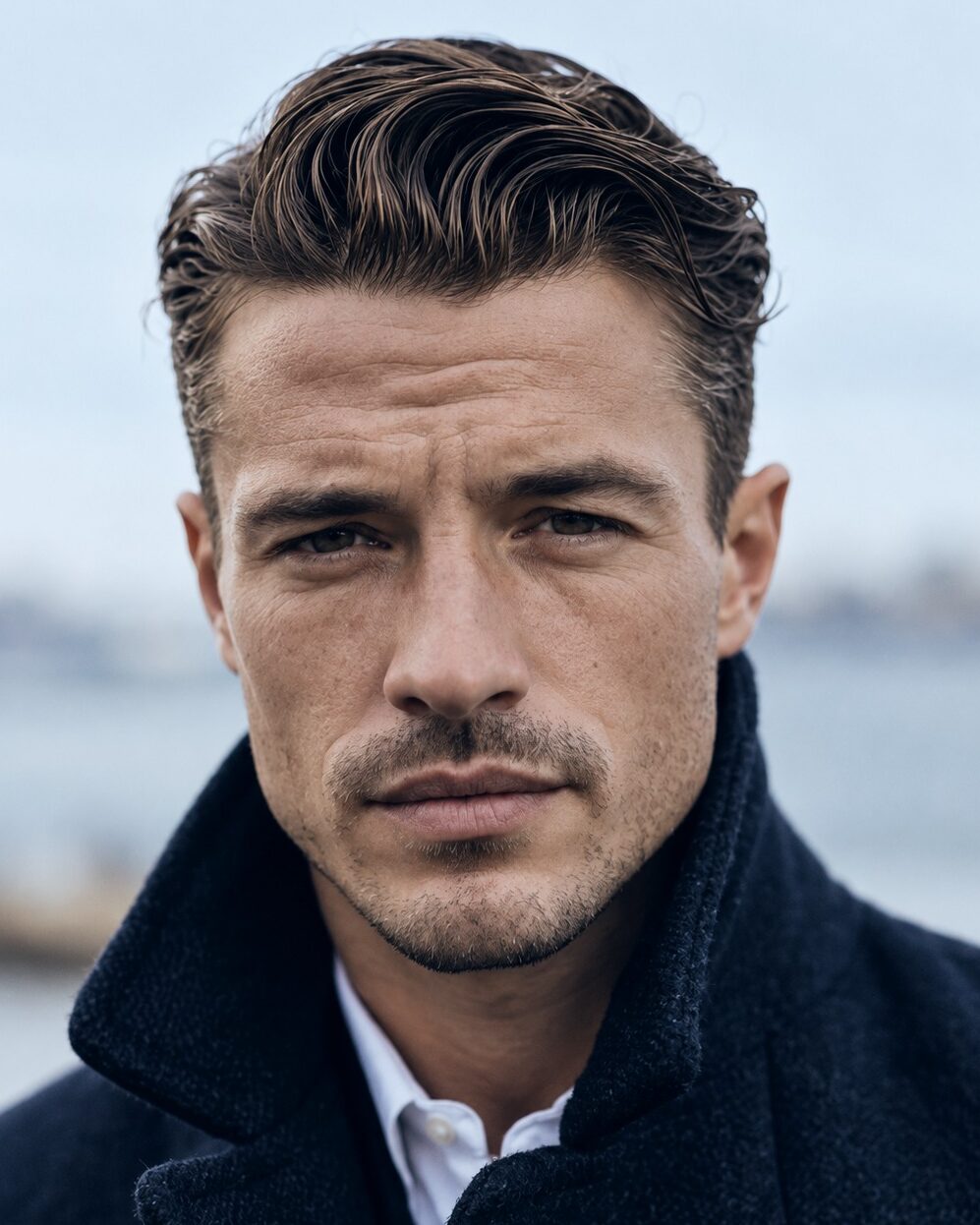
The impression: Polished with a bit of ease. It works in business-casual offices and for creative leads who still want to look organized in front of clients.
Hair type: Medium-density straight or wavy hair.
Ask your barber: “Ivy League proportions, but leave the top longer and textured so I can wear it more naturally.”
Styling: Finger-style with cream or soft matte paste.
11. Business Crew Cut
A compact crew cut is one of the easiest professional options when styling time needs to stay minimal. Named after the haircut worn by college rowing crews and later adopted by the military, it keeps the hair short but gradually leaves more length toward the front, which creates shape without requiring much daily styling.
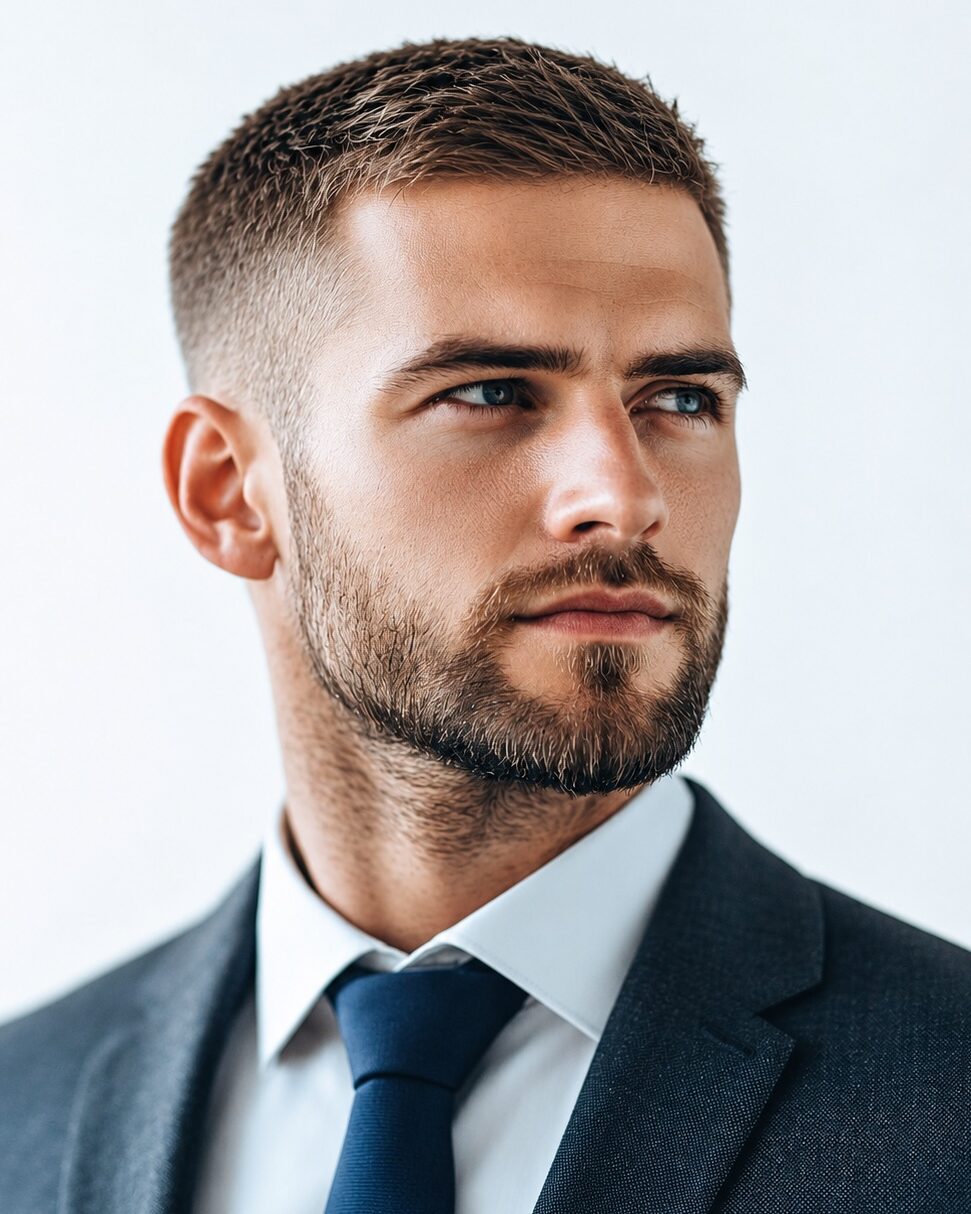
The impression: Disciplined and practical. It fits operations, engineering, logistics and any role where decisiveness counts; paired with tailoring, it looks sharp rather than severe.
Hair type: Straight, wavy and moderately thinning hair.
Ask your barber: “Crew cut with slightly more length through the front and a soft taper rather than a high skin fade.”
Styling: Usually none. Use a fingertip of matte paste if you want definition through the front.
12. Longer Professional Crew Cut
This sits between a conventional crew cut and an Ivy League. The top remains compact but has enough length to create direction.
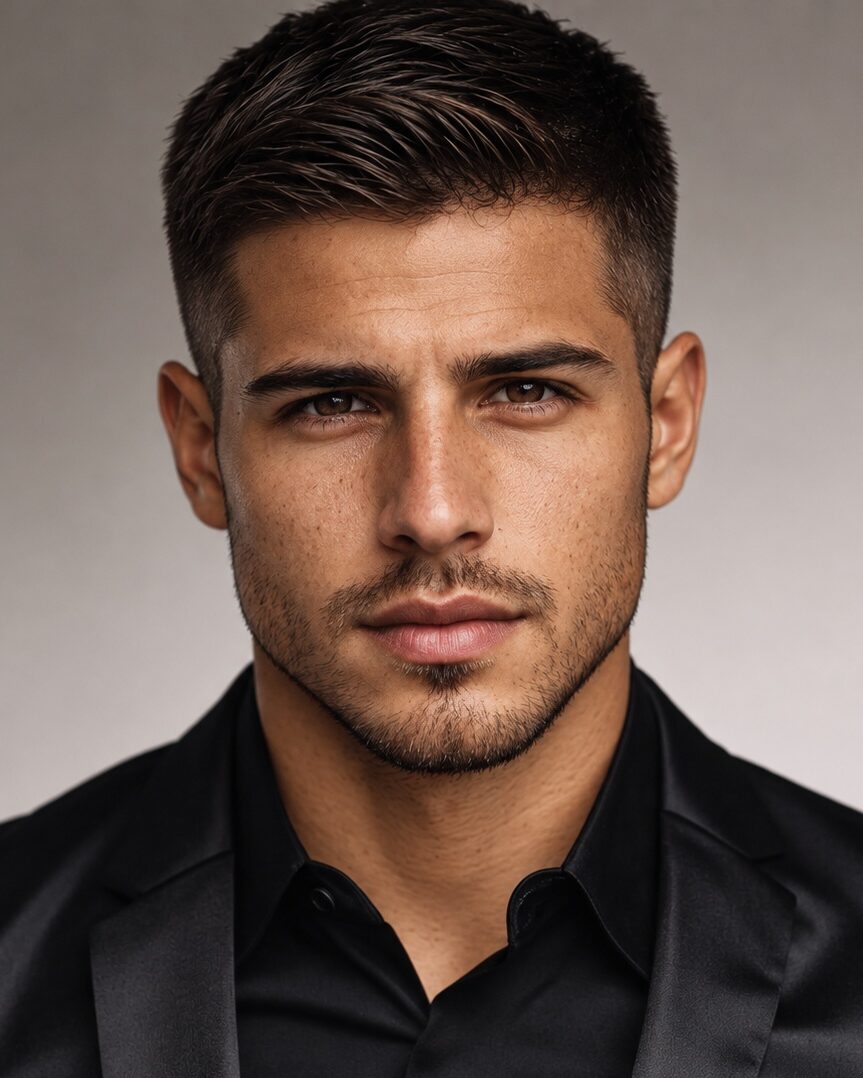
The impression: Neat but less strict than a classic crew cut. A good choice for early-career professionals and for offices that are formal on paper but relaxed in practice.
Hair type: Straight or wavy hair with fine-to-medium density.
Ask your barber: “Long crew cut with a little extra front length and tapered sides.”
Styling: Matte cream or paste, used sparingly.
13. Number 4 Business Buzz Cut
A Number 4 buzz cut leaves roughly half an inch of hair, creating a cleaner but less severe result than an extremely close military cut.
See our buzz cut guide for the full range of clipper lengths.
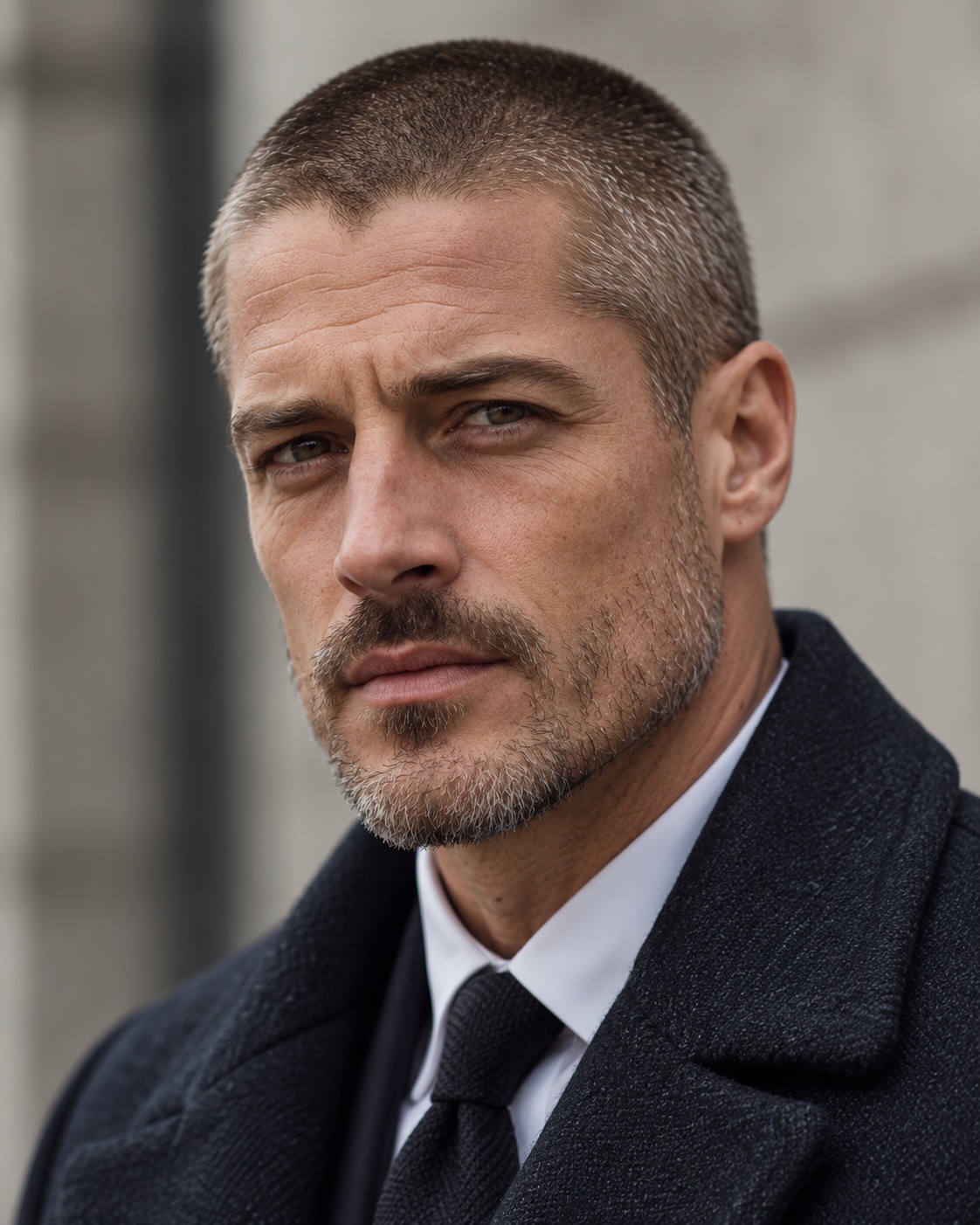
The impression: Direct and no-nonsense. It works well in tech, startups and operations; in a traditional firm, a well-kept neckline and good tailoring do most of the work. This haircut works especially well on men with a widow’s peak receding hairline.
Hair type: Most textures, including receding or thinning hair.
Ask your barber: “Longer buzz, around a Number 3 or 4, with clean natural edges.”
Styling: None. Keep the scalp moisturized and the neckline tidy.
14. Buzz Cut with Low Fade
Taking the sides down to a low fade gives a buzz cut a sharper, more deliberate outline than a uniform clipper length. The fade starts just above the ears and neckline, so the top keeps its even, compact shape while the perimeter looks clean and precise.
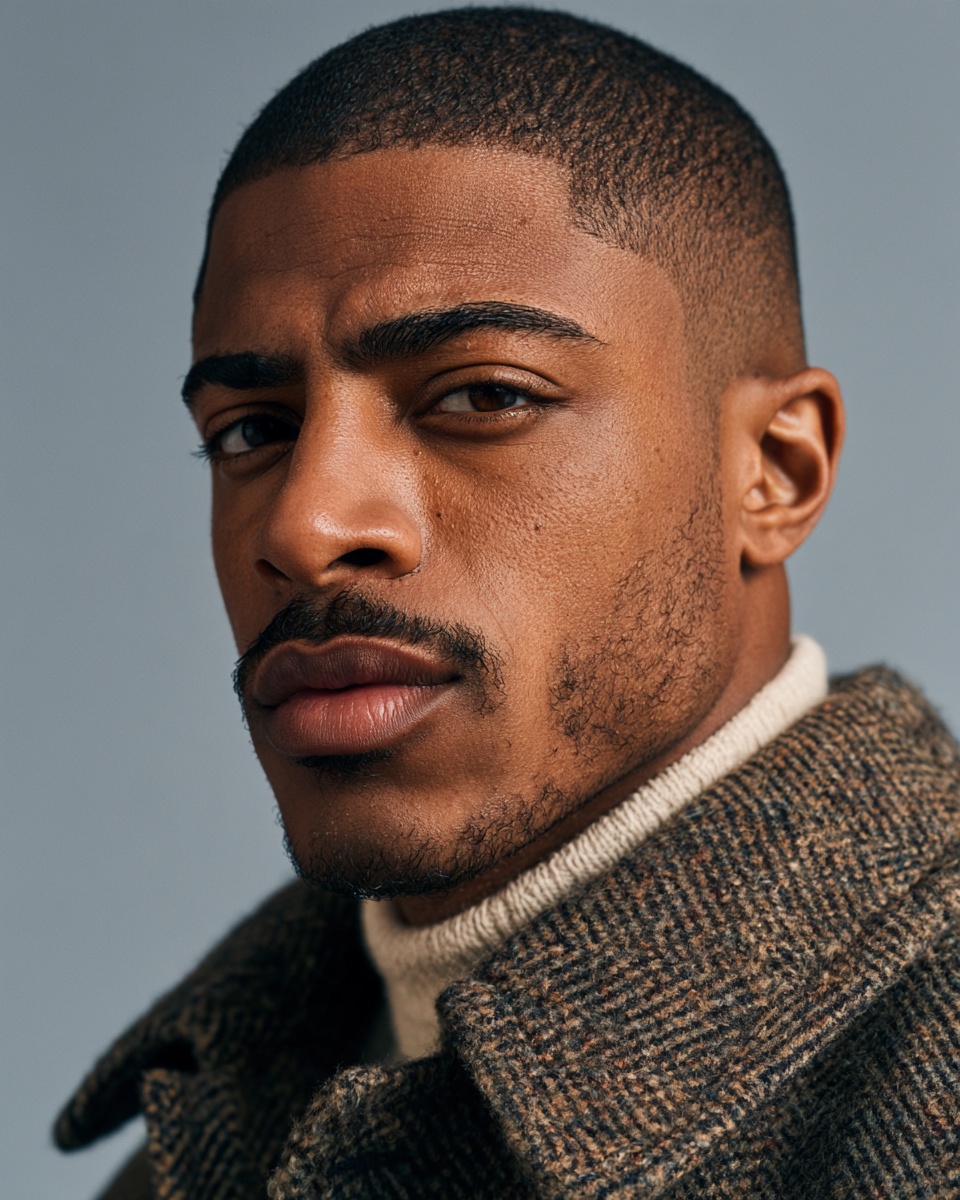
The impression: Sharp, disciplined and current. It looks immaculate in a client meeting or on camera, and it suits finance, sales and tech equally well. The trade-off is upkeep: the fade and line-up lose their edge within two to three weeks, so it only reads as polished if you keep it fresh.
Hair type: Coily, curly or straight hair; especially effective on dense, coarse hair.
Ask your barber: “Short buzz on top, around a Number 1 or 2, with a low fade around the ears and neckline and a clean, natural line-up at the front.”
Styling: None needed. A light moisturizer or leave-in keeps coily hair and scalp from looking dry.
Business Hairstyles with Volume & Movement
These styles introduce more lift, direction or length while still maintaining a deliberate office-ready shape.
15. Slick Business Pompadour
The pompadour became a rock ‘n’ roll signature in the 1950s. The professional pompadour keeps its characteristic backward sweep but drops the extreme height of the rockabilly versions.
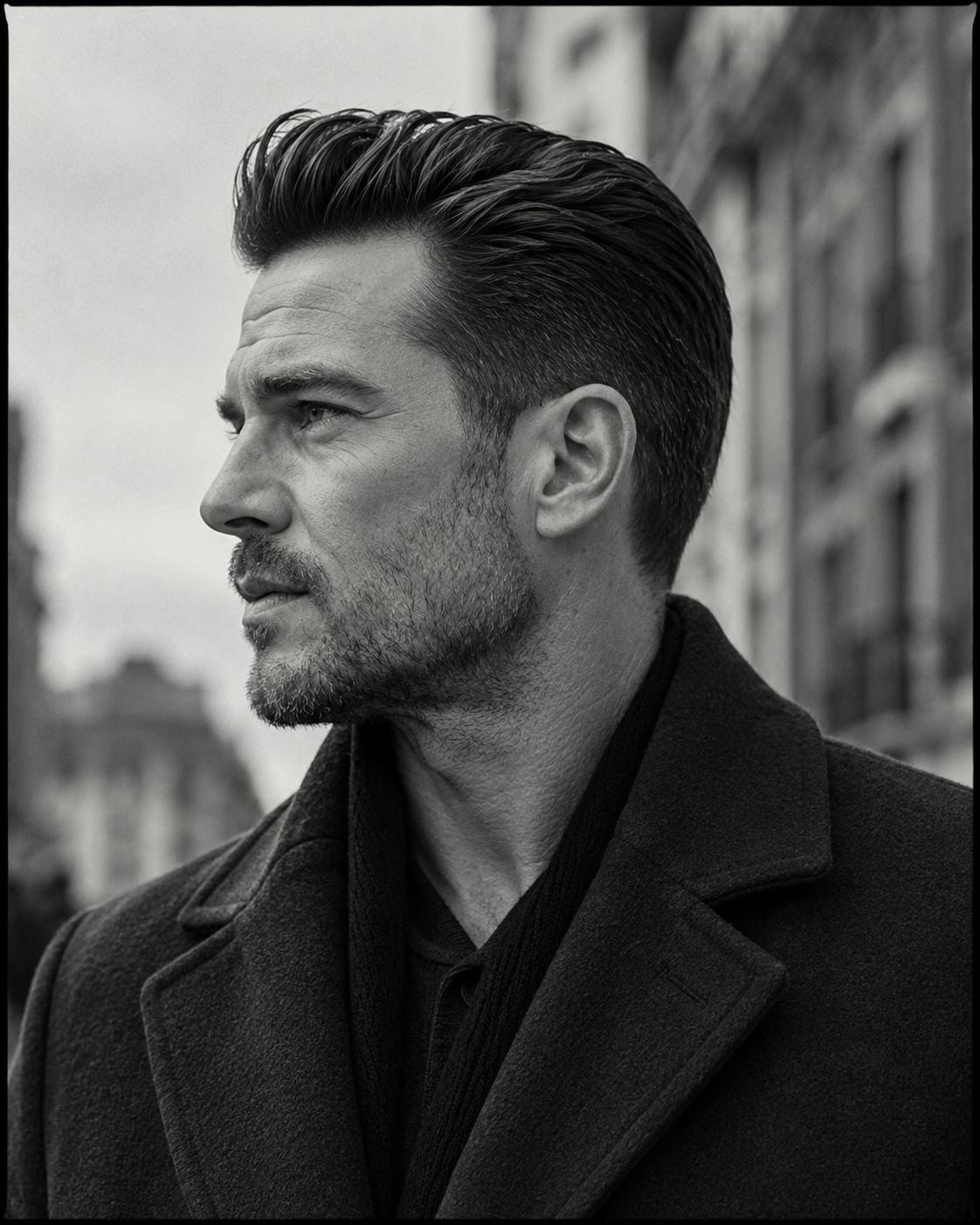
To keep it office-appropriate, the rule is restraint: moderate height, connected sides rather than a fade, and a soft shine rather than a wet finish. The moment it starts to look sculpted, it reads as a style statement rather than a business haircut.

The impression: Confident, with some presence. Suited to sales, hospitality, media and client dinners where personality is part of the job; keep the height low for conservative rooms.
Hair type: Medium-to-thick straight or wavy hair.
Ask your barber: “Leave enough front length for a low pompadour, gradually shorter toward the crown, with tapered sides and some weight around the temples.”
Styling: Blow-dry backward first, then use pomade or styling cream to support the shape.
16. Modern Professional Pompadour
Faded sides make the pompadour feel more current and put the focus on the shape of the top. The height stays controlled, so the overall look reads confident rather than retro.
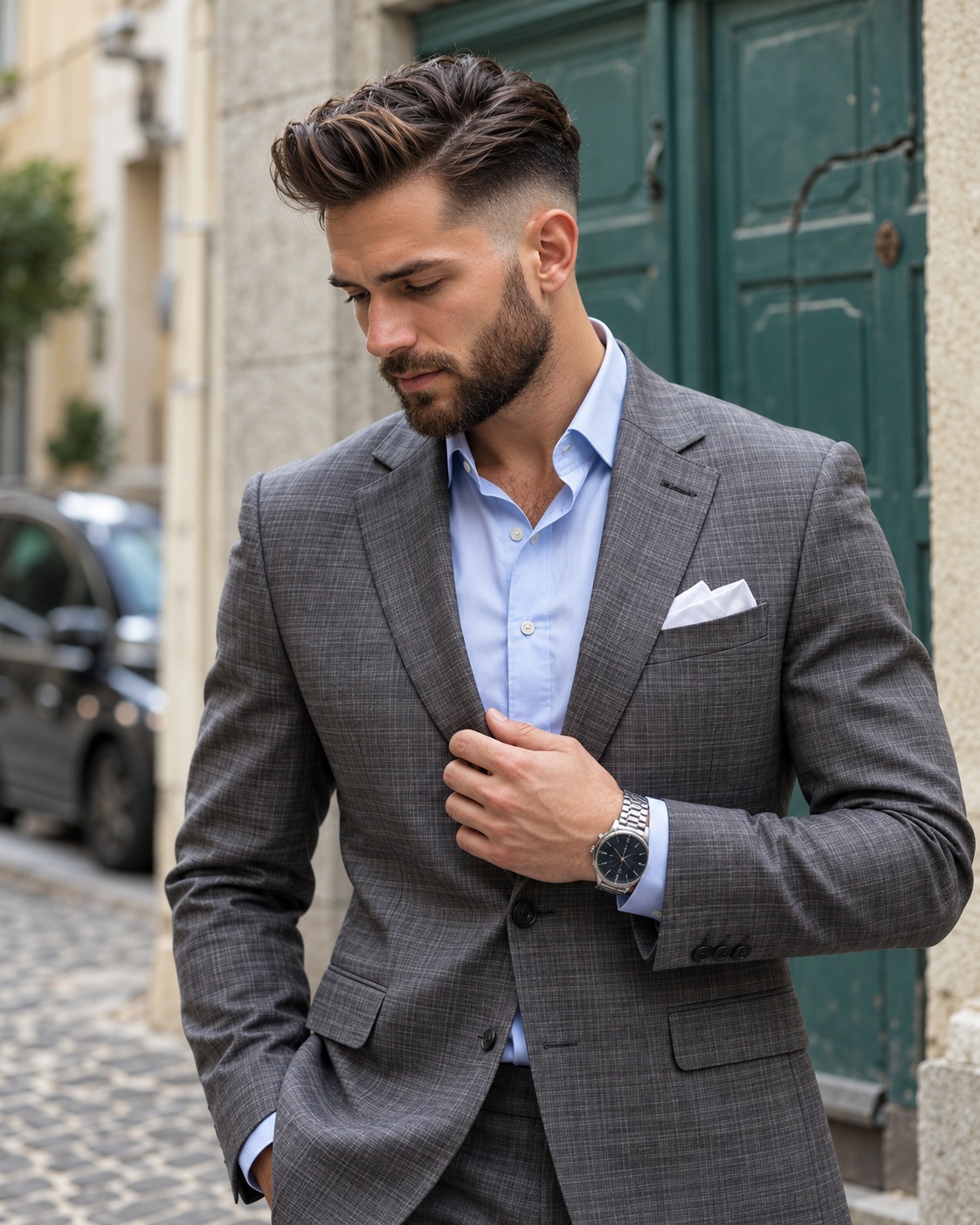
The impression: Fashion-aware and self-assured. It fits design, fashion, marketing and creative leadership; in a law firm or bank, it can draw more attention than you want.
Hair type: Thick straight or wavy hair.
Ask your barber: “Professional pompadour with controlled height and faded sides, but keep enough upper-side weight that the top does not look isolated.”
Styling: Blow-dry first, then apply flexible pomade or paste from the back toward the front.
17. Textured Business Quiff
The quiff evolved from the pompadour as a looser, more textured alternative. It moves upward and backward through the front, usually with more visible separation than a pompadour.
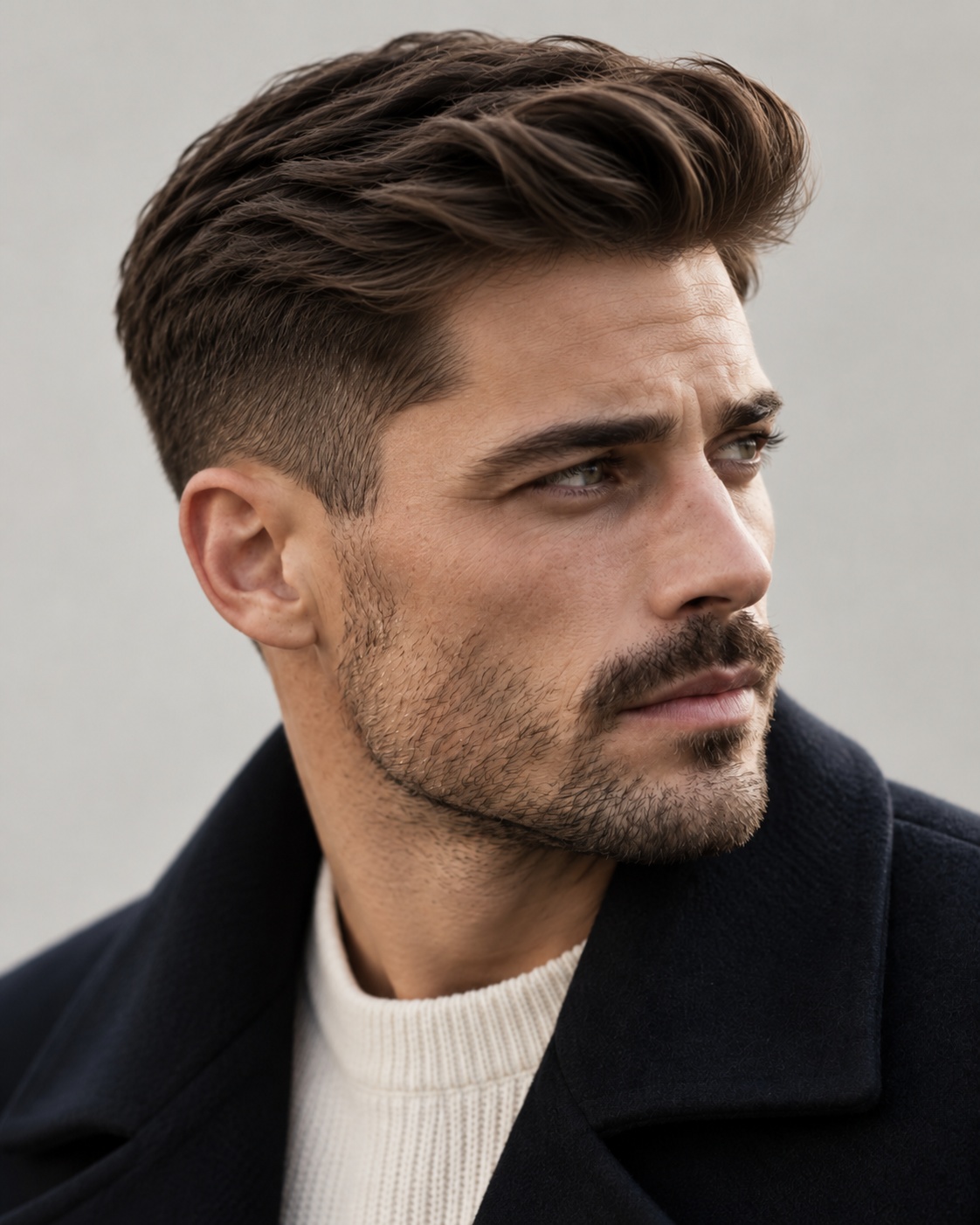
The impression: Young, current and energetic. It works for startups, tech and agencies, and for men in their twenties and thirties who want to look modern at work rather than conservative.
Hair type: Medium or thick straight-to-wavy hair.
Ask your barber: “Short textured quiff with two to three inches at the front and clean tapered sides.”
Styling: Blow-dry upward and back, then separate the surface with matte clay.
18. Neat Corporate Quiff
This version reduces both texture and height, creating a cleaner silhouette than the typical modern quiff. It keeps a little lift at the front but sits close enough to the head to look at home with a suit and tie.
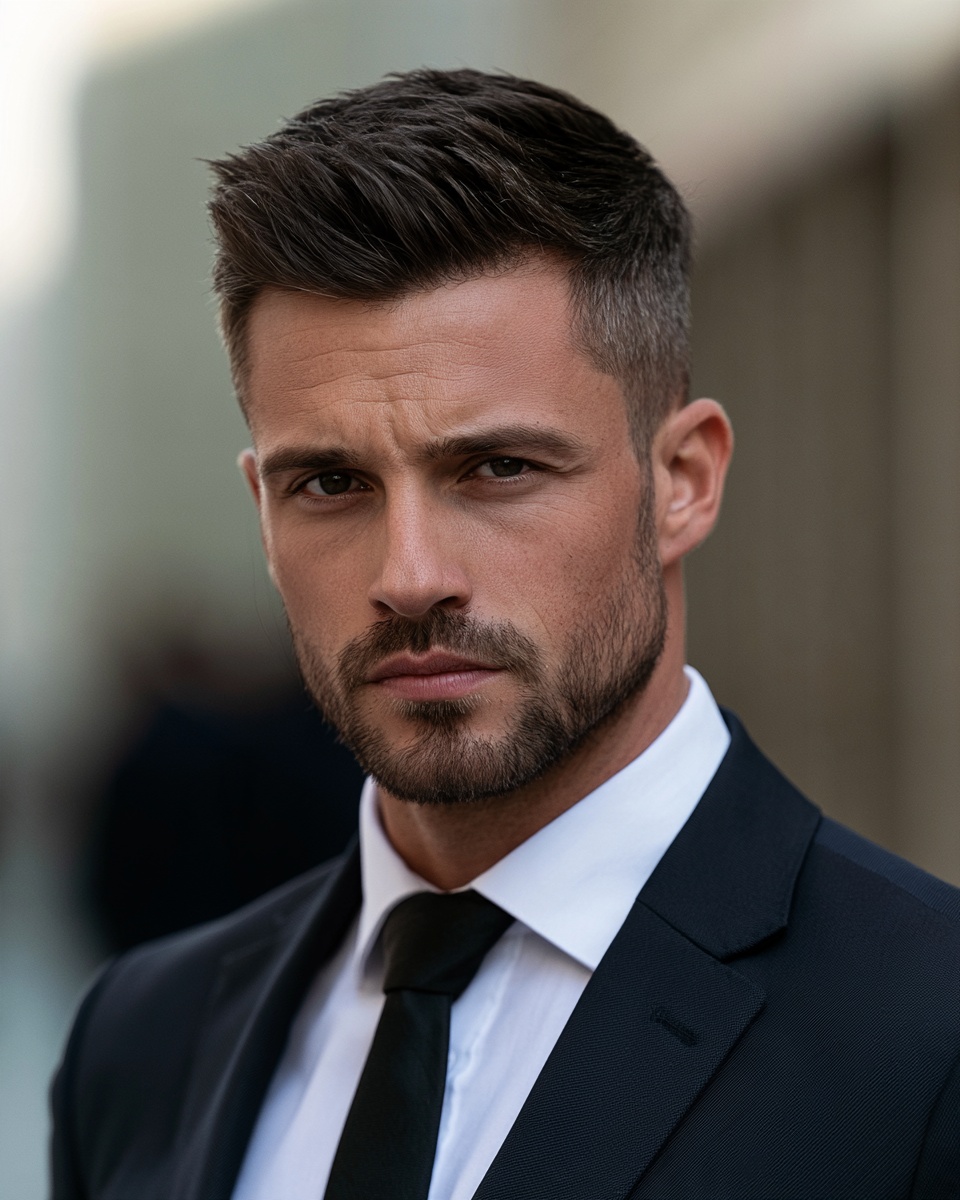
The impression: Modern but respectable. A good compromise if you work somewhere formal but do not want a haircut that makes you look older than you are.
Hair type: Medium-density straight or lightly wavy hair.
Ask your barber: “Short controlled quiff with moderate front length and neatly tapered sides.”
Styling: Blow-dry into shape and use styling cream or soft paste.
19. Classic Slick Back
The slick back works particularly well for men who prefer medium length because it clears the face without requiring a visible side part. Unlike a sharper undercut, the sides stay connected to the top, so the silhouette looks fuller and grows out more gracefully between cuts.
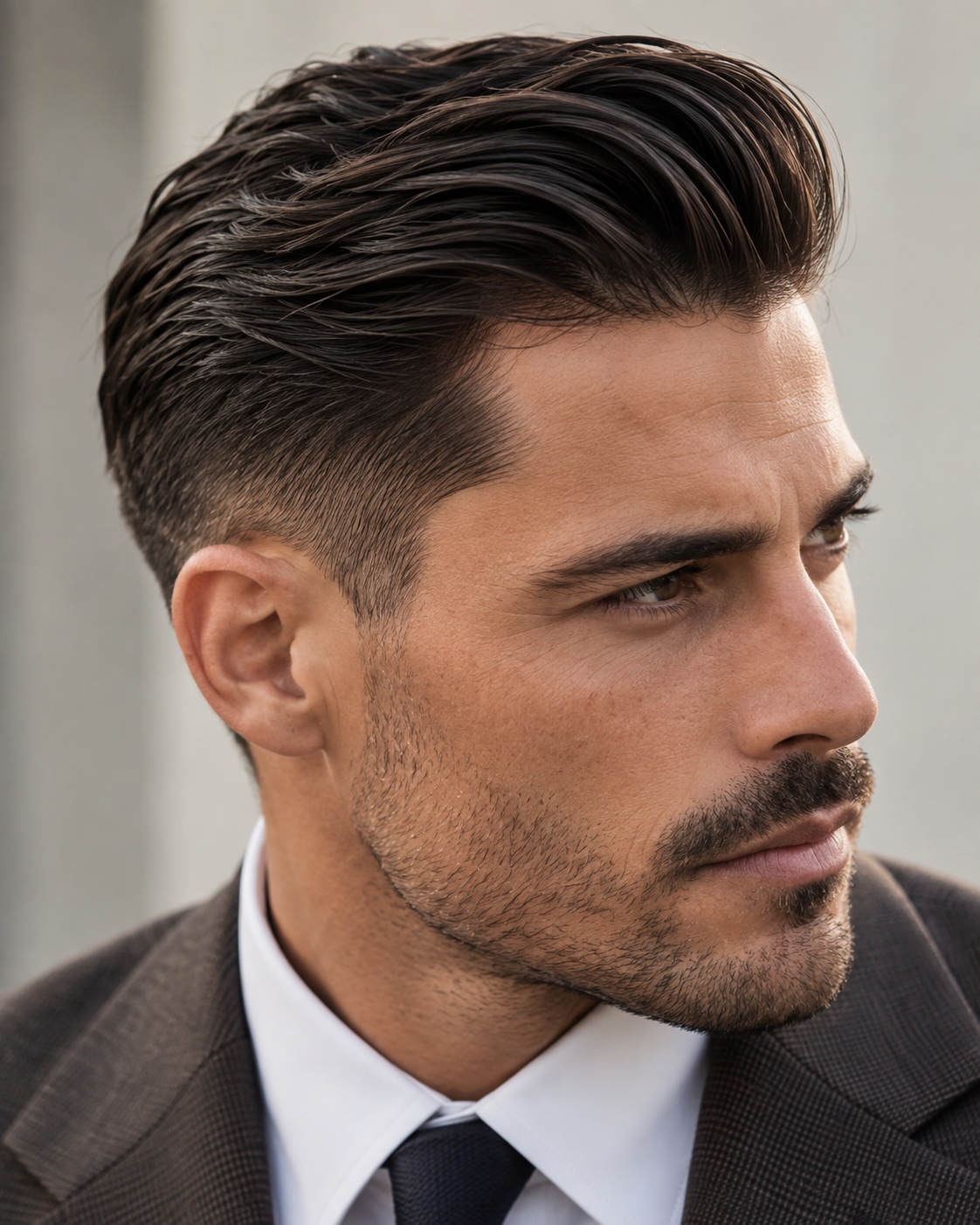
The impression: Confident and deliberate, with a little old-school authority. Strong for client dinners, finance and sales; it can look too polished in a startup.
Hair type: Straight and wavy medium-to-thick hair.
Ask your barber: “Leave enough length from the front through the crown to brush everything backward, with tapered connected sides.”
Styling: Blow-dry backward and finish with cream or flexible pomade.
20. Long Brushed-Back Flow
This version of the flow keeps the movement controlled and away from the face. Rather than falling naturally around the temples and ears, the hair is layered so the entire top and sides can be brushed backward into a cleaner, more deliberate shape. The result feels polished without becoming slick or rigid.
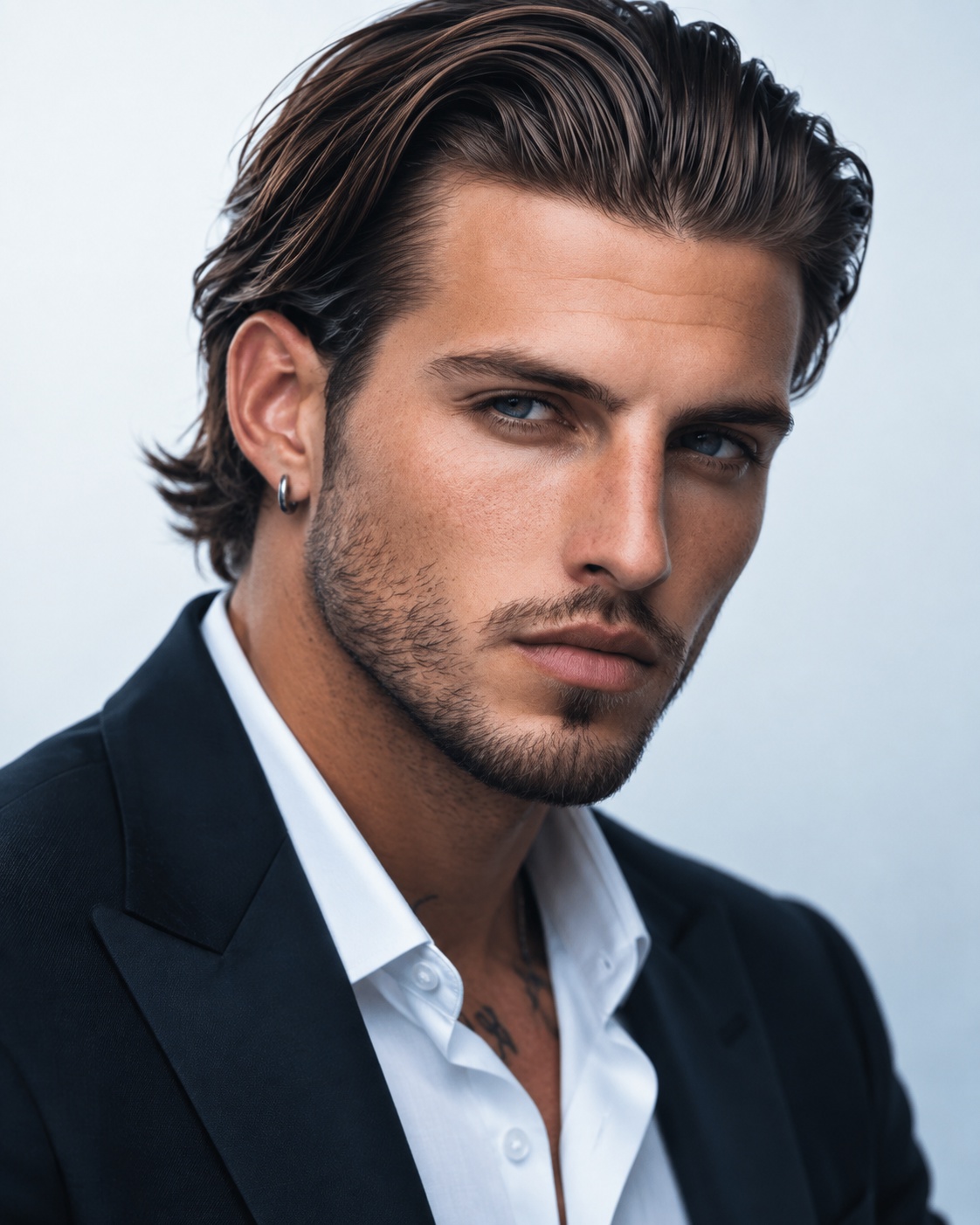
The impression: Refined, creative and self-assured. It works especially well in fashion, luxury, architecture and creative industries; in a conservative corporate environment, keep the finish controlled and the rest of the look sharp.
Hair type: Medium or longer straight and wavy hair.
Ask your barber: “Keep the length through the top and sides, add long connected layers, and shape it so the hair naturally moves backward away from the face.”
Styling: Blow-dry the hair backward from the hairline, then use a small amount of light cream or flexible-hold product to keep the movement in place without flattening it.
21. Executive Undercut
An undercut creates a clearer break between the longer top and shorter sides than a taper does. Paired with a defined side part and a neatly combed top, it keeps an executive structure while the shorter sides add a sharper, more modern edge.
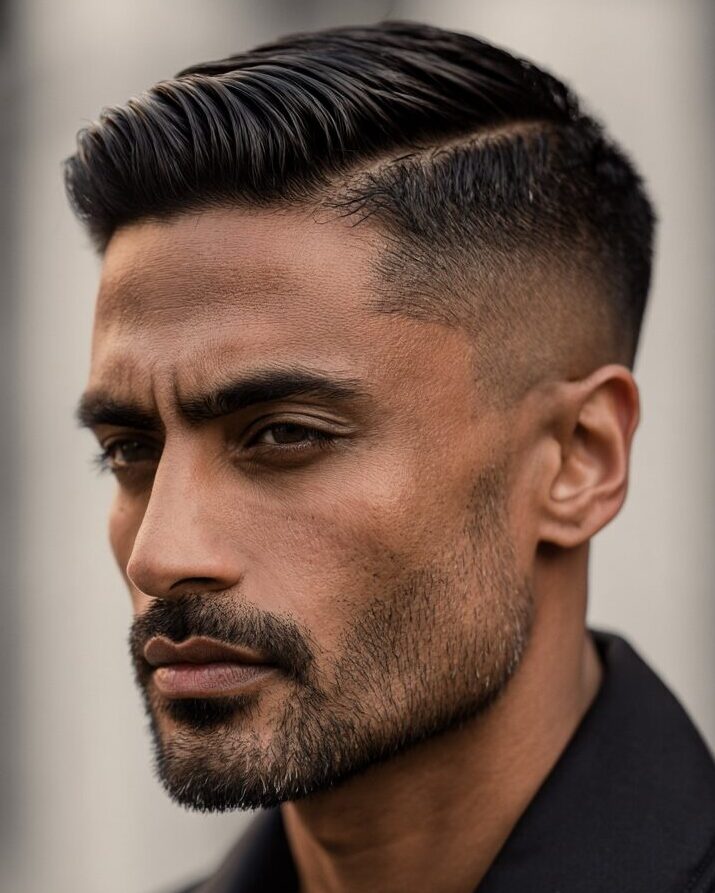
The impression: Contemporary and sharp. It suits tech, consulting and international business environments where a modern edge is welcome but a fashion statement is not.
Hair type: Thick straight hair.
Ask your barber: “Keep several inches on top with a defined side part, and take the sides short with a clear but clean disconnection.”
Styling: Brush back with cream, paste or flexible pomade.
22. Slicked-Back Undercut
Here the disconnection sits higher and the top is longer, so the contrast becomes part of the look rather than a detail. It fits naturally into fashion, design, technology and other environments where more contemporary grooming is common.
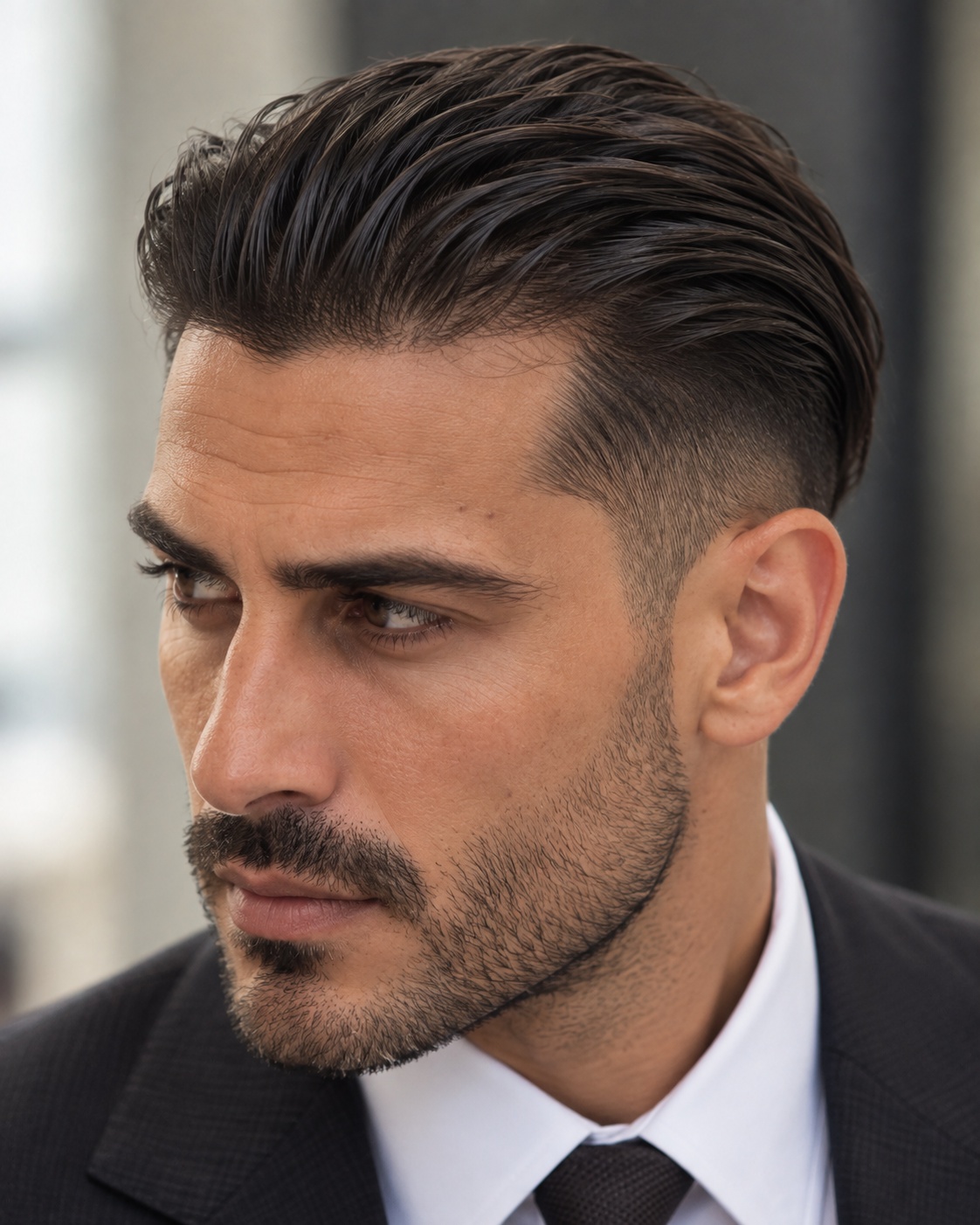
It works best on dense hair. On a thinning crown, a long slicked top tends to separate and show scalp, which undoes the sharpness of the cut.
The impression: Bold and fashion-conscious. Best in creative industries and at evening events; rarely the right call for a first interview at a traditional firm.
Hair type: Thick straight or wavy hair.
Ask your barber: “Long slicked-back top with short undercut sides, but keep the disconnection low enough to grow out cleanly.”
Styling: Blow-dry back and finish with low-shine pomade.
Modern Business-Casual Haircuts
Shorter, textured cuts that look current in a business-casual office without asking for much time in the morning.
23. Smart-Casual Textured Crop
A textured crop is one of the easiest modern office haircuts because it looks current without requiring a defined part or an elaborate morning routine. The texture is cut into the top, so it holds its shape with very little product and still looks deliberate at the end of the day.
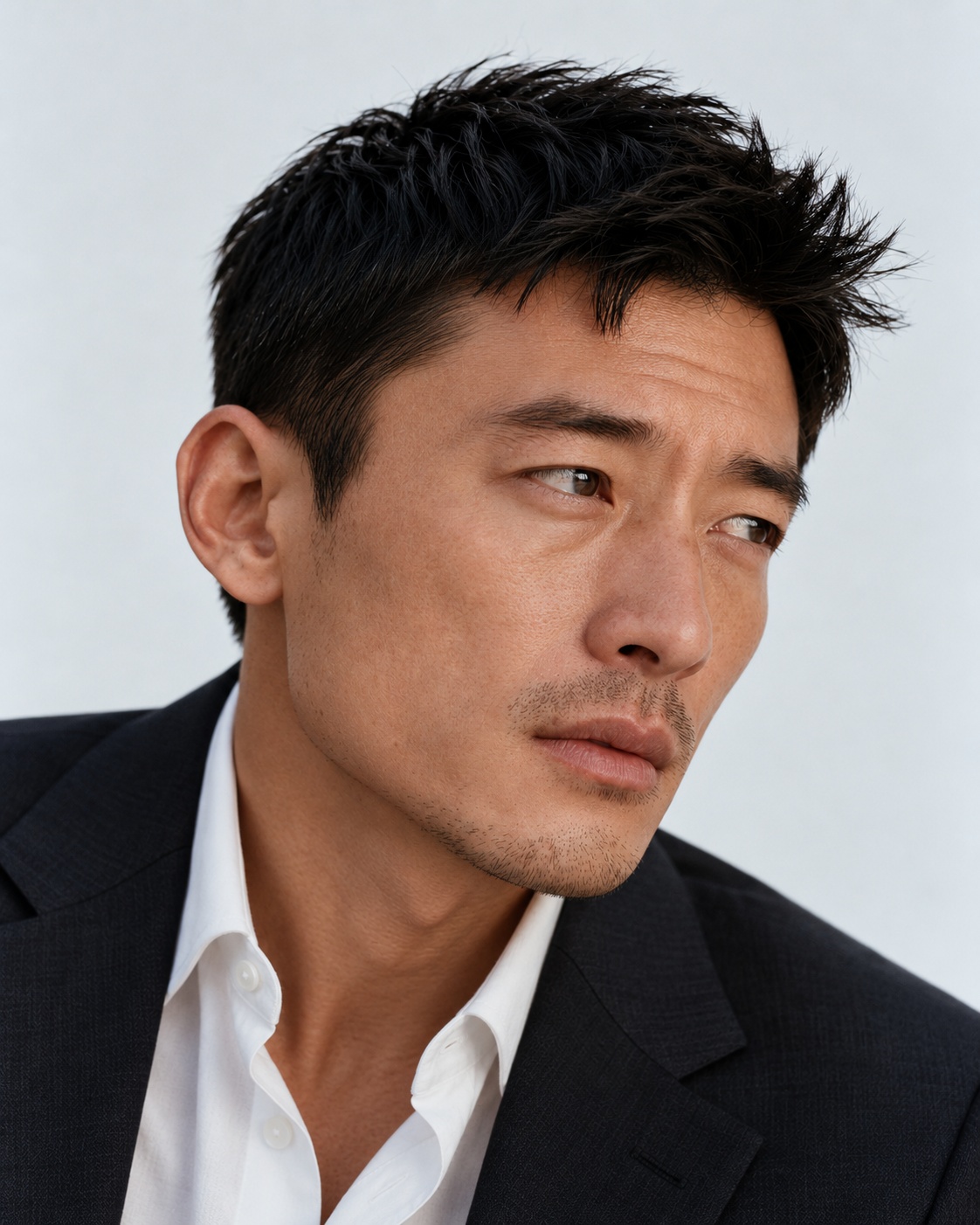
The impression: Easygoing and current. It fits business-casual offices, tech and creative teams; for a formal interview, a tidier finish or one of the side part styles above is safer.
Hair type: Straight or lightly wavy fine-to-medium hair.
Ask your barber: “Short textured crop with broken movement through the top and softly tapered sides.”
Styling: Work a small amount of matte paste through dry hair from back to front.
24. Textured Crop with Fade
A fade takes the sides down to the skin so the textured top stands out more sharply. Here the fringe is worn forward, which keeps the outline compact and makes it one of the easiest ways to look current with almost no styling.
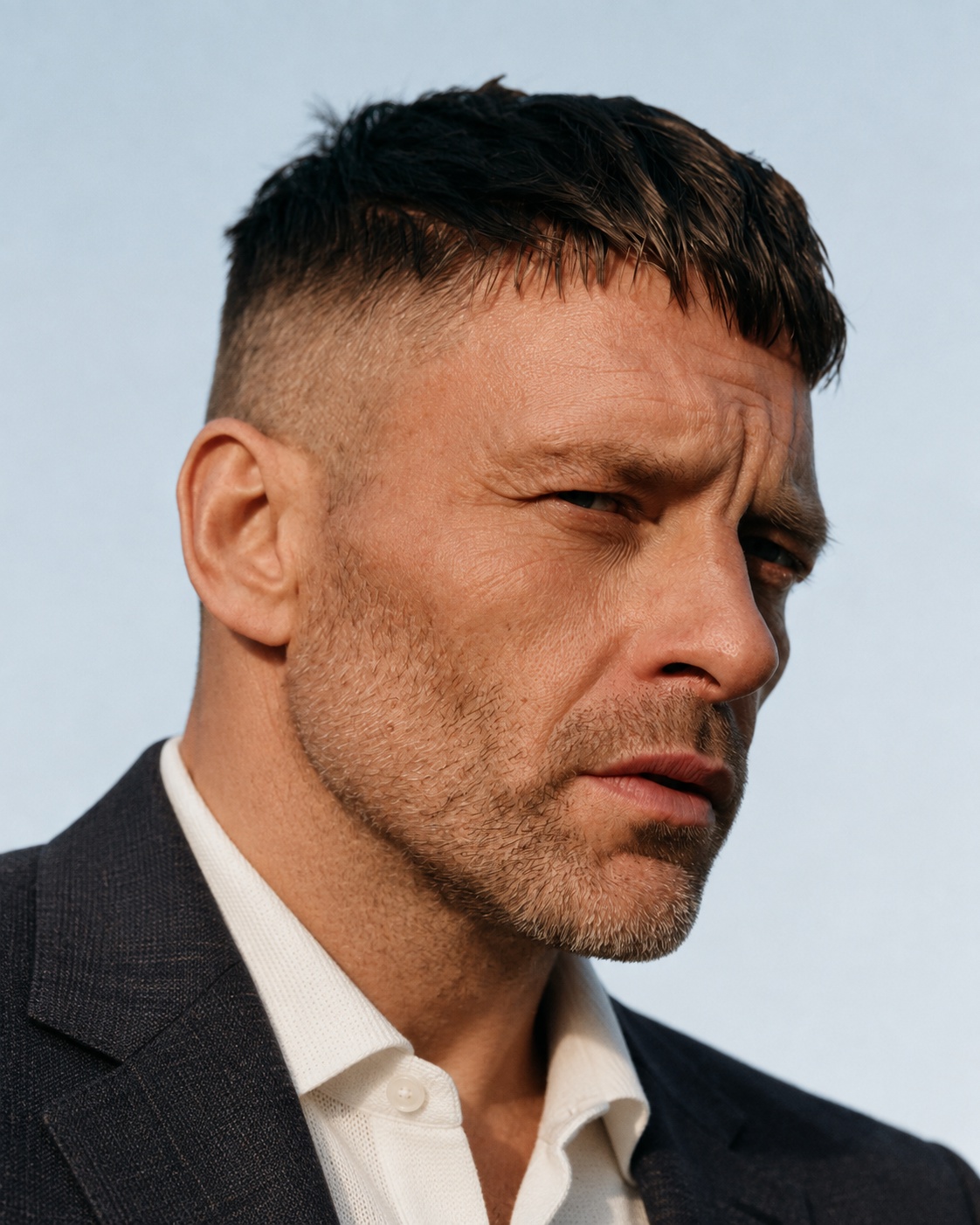
The impression: Clean and modern with minimal effort. It looks sharp on video calls and in business-casual offices, and reads more put-together than a plain crop. More appropriate for creative environments.
Hair type: Fine-to-thick straight or wavy hair.
Ask your barber: “Textured crop with a short, slightly forward fringe and a mid fade on the sides.”
Styling: Matte paste or light clay.
25. French Crop
The French crop directs the hair slightly forward into a short fringe. That makes it useful for men who do not want to expose the entire front hairline, and it is one of the few short cuts that looks equally at home with a suit or a knit polo.
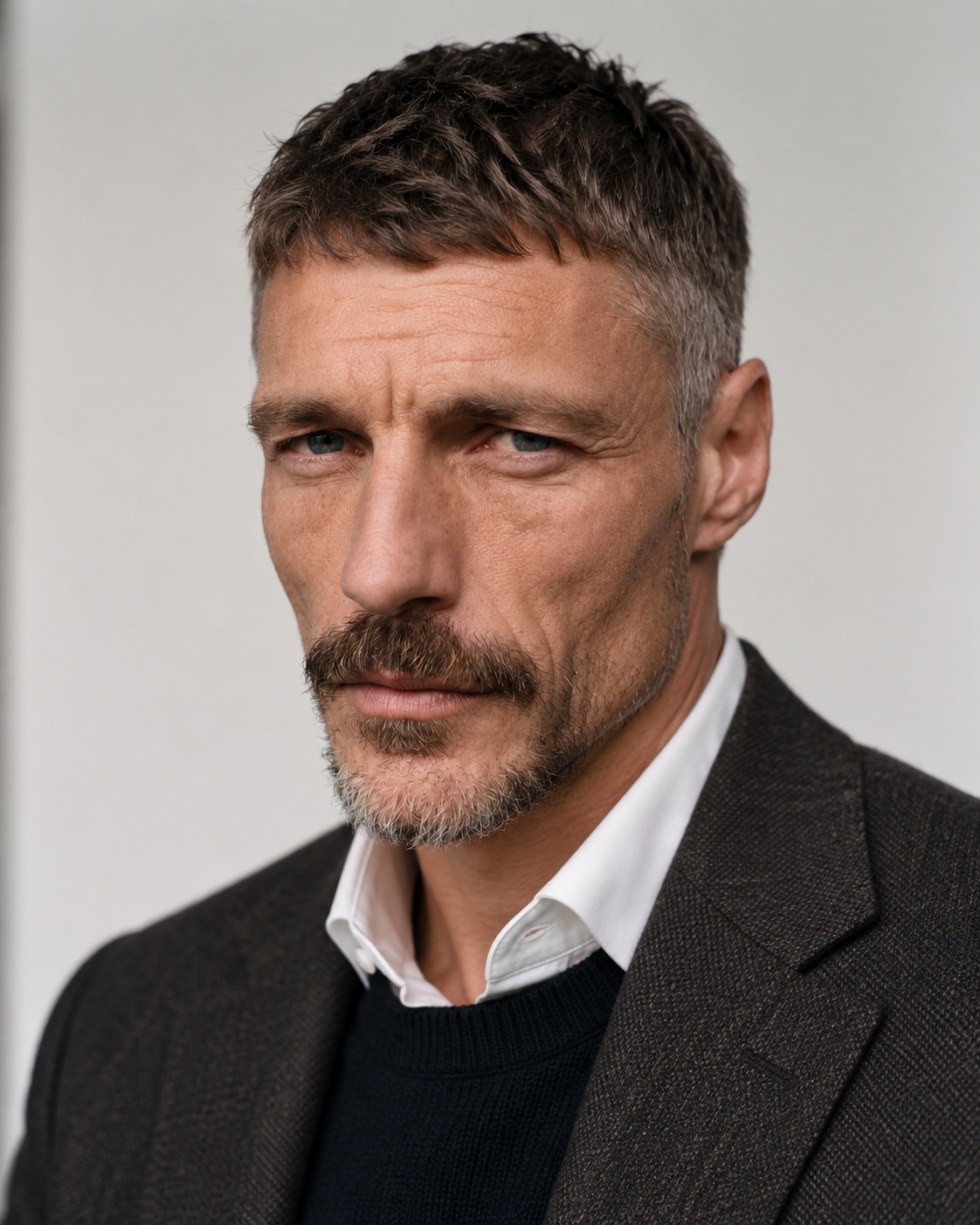
The impression: Understated, with a European feel. It suits men who want to look modern without drawing attention, and works as well in a meeting room as at a client lunch.
Hair type: Straight and wavy hair, fine-to-medium density and mild temple recession.
Ask your barber: “Short French crop with texture, a broken natural fringe and softly tapered sides.”
Styling: Matte cream or light paste, worked forward.
26. Textured Fringe with Taper
Where the classic French crop relies on scissor texture and a gentle outline, this version adds a low taper so the temples and neckline look sharper. The top is also more broken up, which gives it a more contemporary finish.
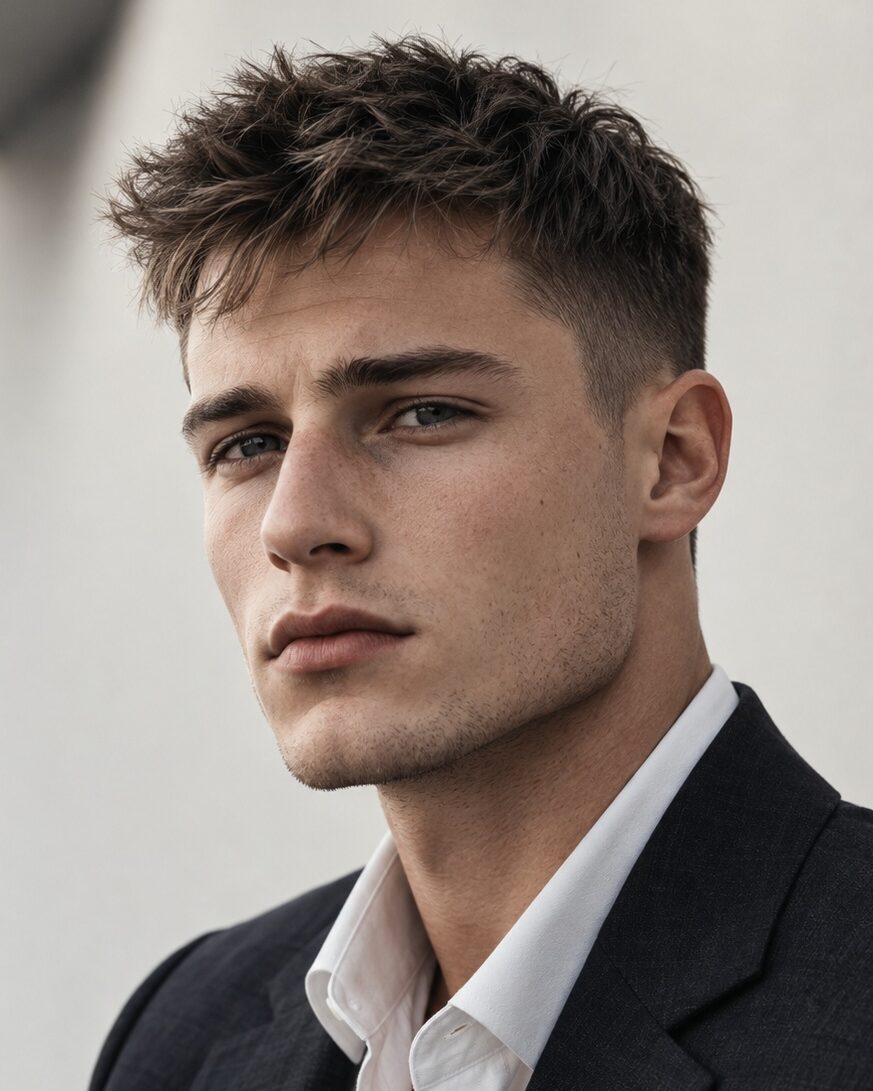
It is one of the most practical modern short cuts for men who want a current look with almost no styling time.
The impression: Sharp, young and low-maintenance. A strong choice for tech, startups and agencies; slightly too casual for the most conservative corporate settings.
Hair type: Straight or slightly wavy hair.
Ask your barber: “Textured French crop with a low taper, keeping the fringe irregular rather than blunt.”
Styling: Texture paste or clay, applied sparingly.
27. Low Business Fade
A fade is a cutting technique, not a dress code. Keeping it low creates a clean modern perimeter without making the contrast the main feature.
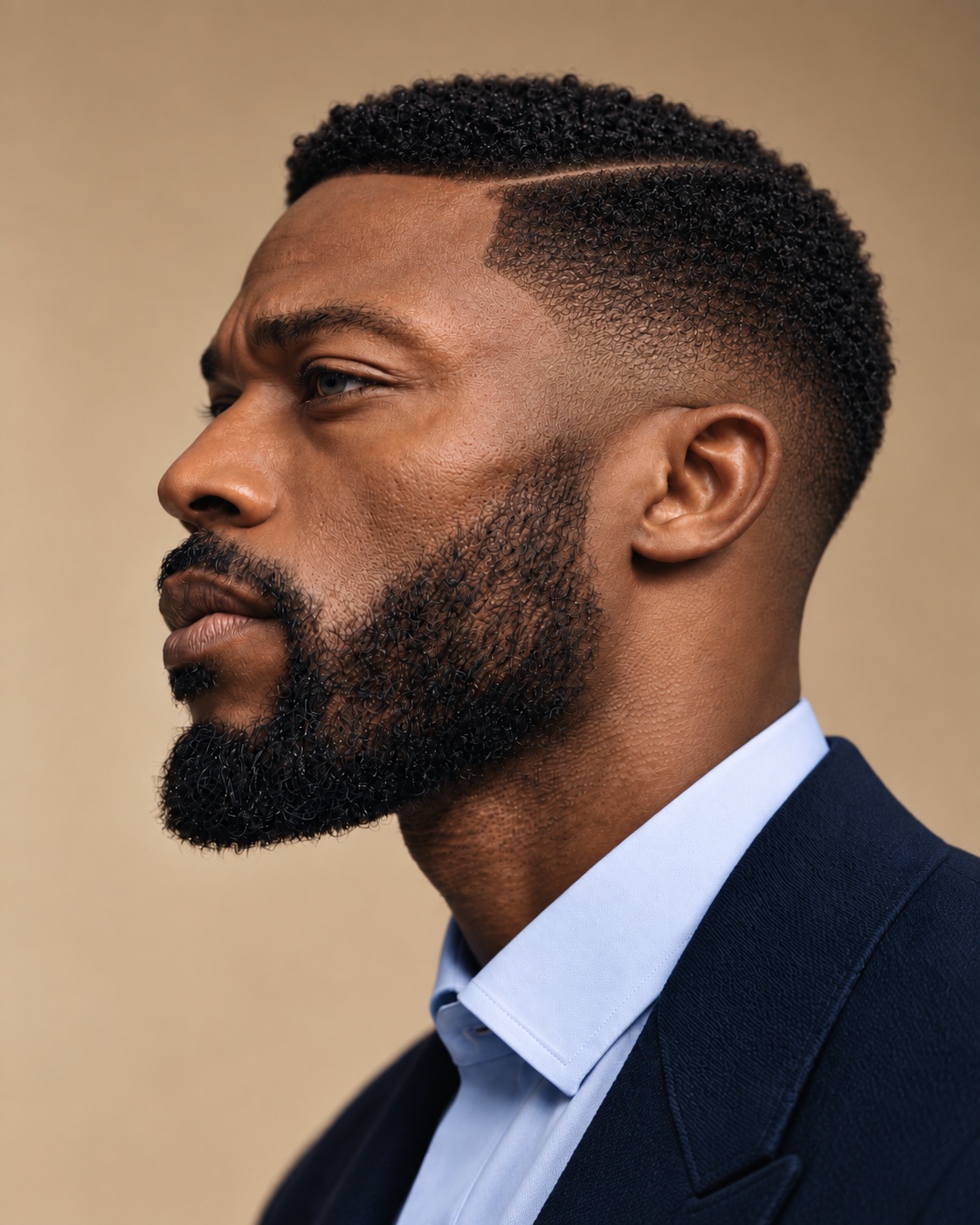
See our complete fade haircut guide for the differences between low, mid and high fades.
The impression: Clean and contemporary. It works in most modern offices and looks especially sharp in client-facing roles. Keeping the fade low is what keeps it professional.
Hair type: Most hair types.
Ask your barber: “Low fade that stays around the ears and neckline, with enough weight through the upper sides that the top remains connected.”
Styling: Depends on the top. Matte paste for a crop, cream or light pomade for a side part.
28. Temple Fade Office Haircut
A temple fade takes only the sideburn and temple region very short. It is a useful compromise if you want extremely clean edges without fading the entire side of the head.
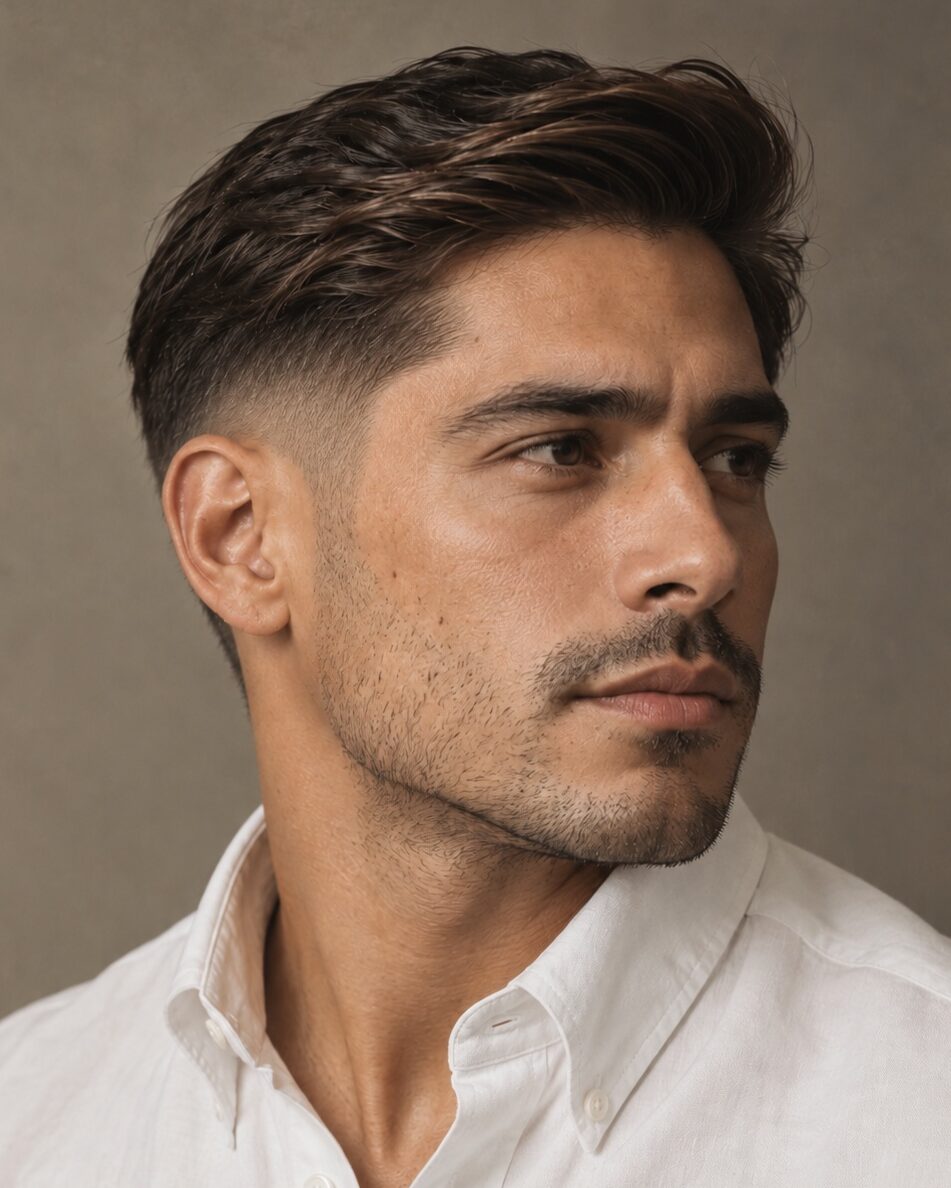
For how high or low to take it, see our high vs. low temple fade comparison.
The impression: Precise and well groomed. Clean edges signal attention to detail, which helps in sales, consulting and any role where you meet new people every week.
Hair type: Straight, wavy, curly and coily hair.
Ask your barber: “Temple fade only, keeping the rest of the side connected with the top.”
Styling: Depends on the top. Side sweep, crop and curls all work.
Medium & Long Professional Hairstyles
Longer hair does not need to be cut short simply because you work in an office. Shape and control matter more than length alone. The longer slick back (20) also belongs here.
29. Medium Brush Back
A scissor cut with enough length on top can be brushed away from the face while keeping natural movement through the sides and crown. Unlike a slick back, the finish stays soft and slightly textured, which makes it easier to wear every day.
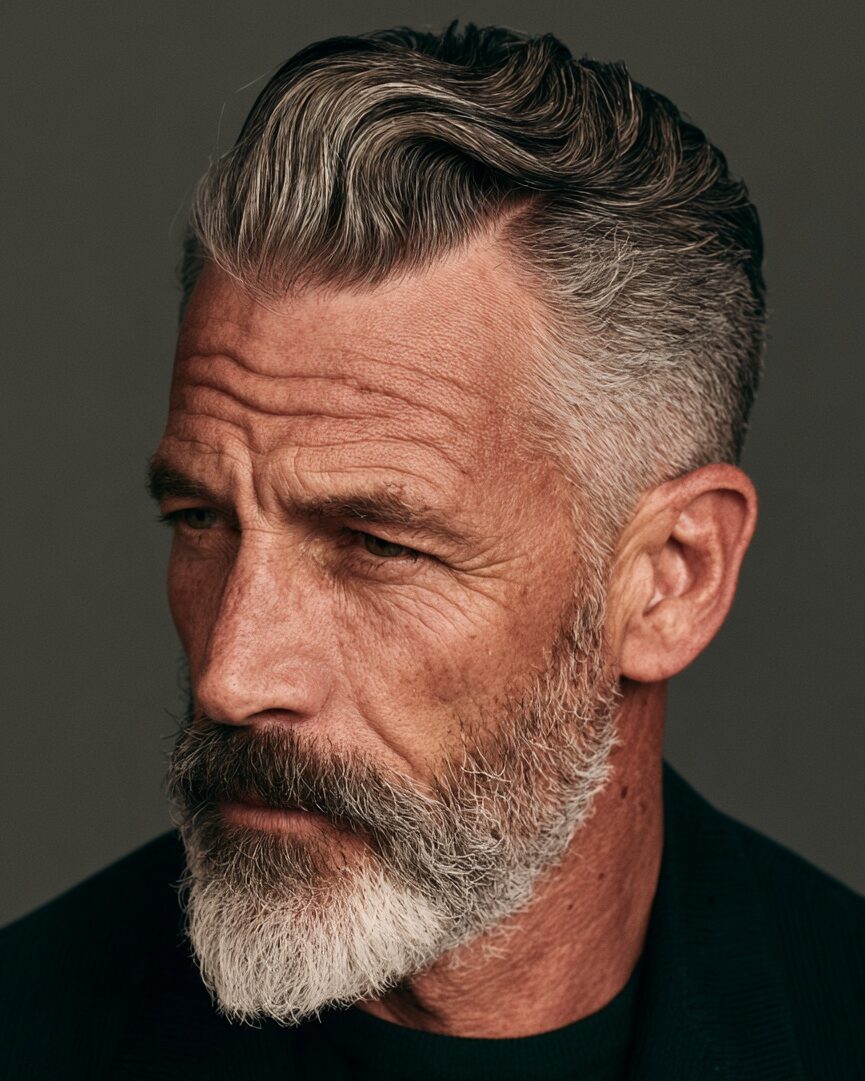
The impression: Relaxed confidence. It suits senior creatives, consultants and founders who want to look experienced without looking corporate.
Hair type: Medium-to-thick straight or wavy hair.
Ask your barber: “Medium scissor cut with enough layering to brush backward naturally. Keep some weight around the sides instead of fading them.”
Styling: Blow-dry backward with your fingers and finish with styling cream.
30. Neat Professional Man Bun
For long hair, a knot at the back of the head generally looks more restrained than a high bun on the crown.
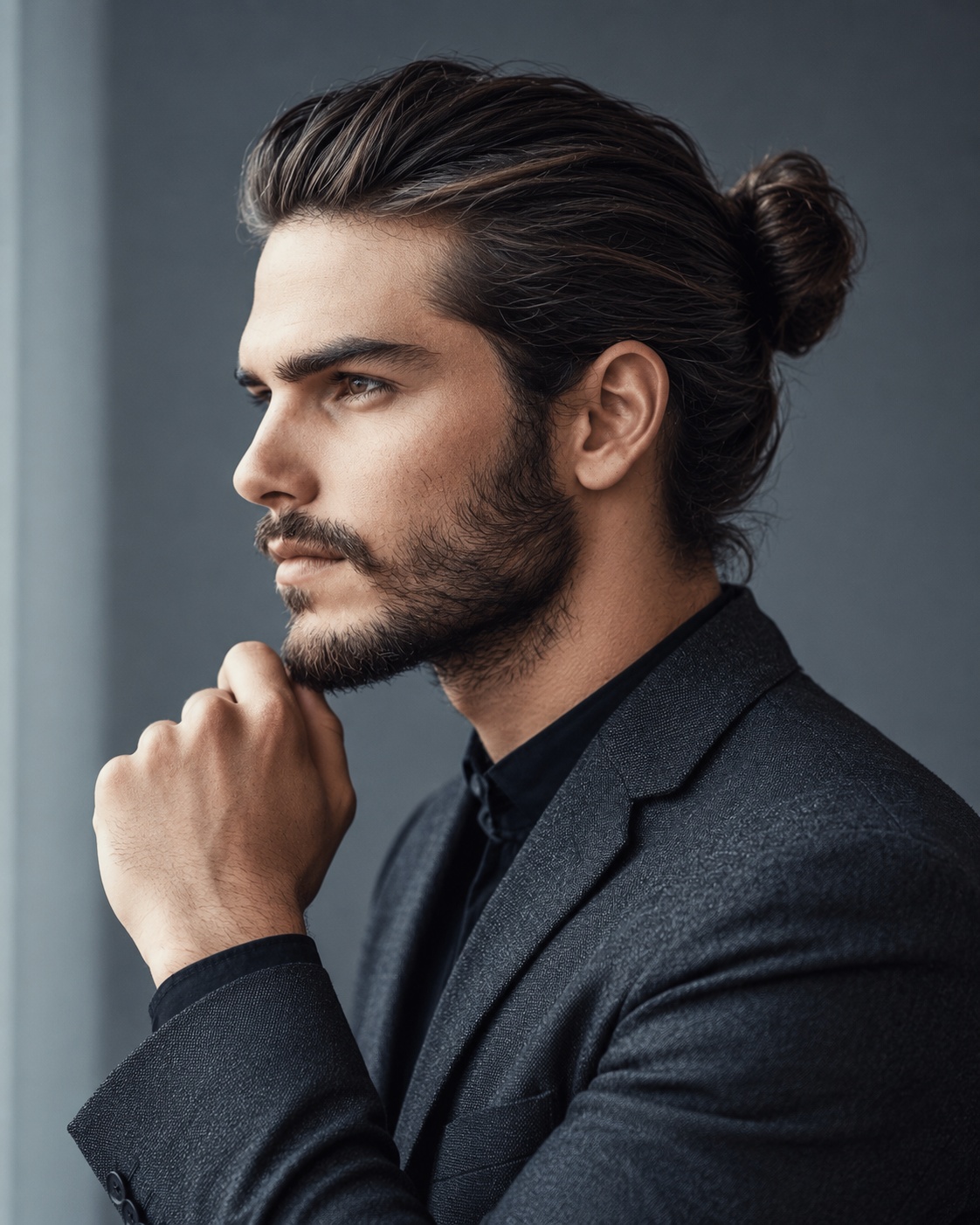
The impression: Individual and self-assured. It works in creative, tech and academic environments; for a conservative office or a formal interview, check the dress code first.
Hair type: Long straight, wavy or curly hair.
Ask your barber: “Keep the length even enough to tie back, remove some bulk underneath so the knot sits flat, and tidy the ends.”
Styling: Brush or finger-comb backward and secure loosely enough to avoid unnecessary tension around the hairline.
For longer options, see our guide to men’s long haircuts for cutting long hair so it ties back cleanly.
Professional Haircuts for Wavy, Curly & Coily Hair
Professional hair does not mean straight hair. The objective is to give the natural texture a deliberate shape rather than forcing every hair type into the same silhouette.
31. Wavy Flow
Wavy hair grown out to ear or collar length can simply be pushed back and left to fall into its own shape. Instead of fighting the wave with a comb and heavy pomade, the cut does the work: long layers let the bend form, and the sides stay soft over the ears rather than cut short.
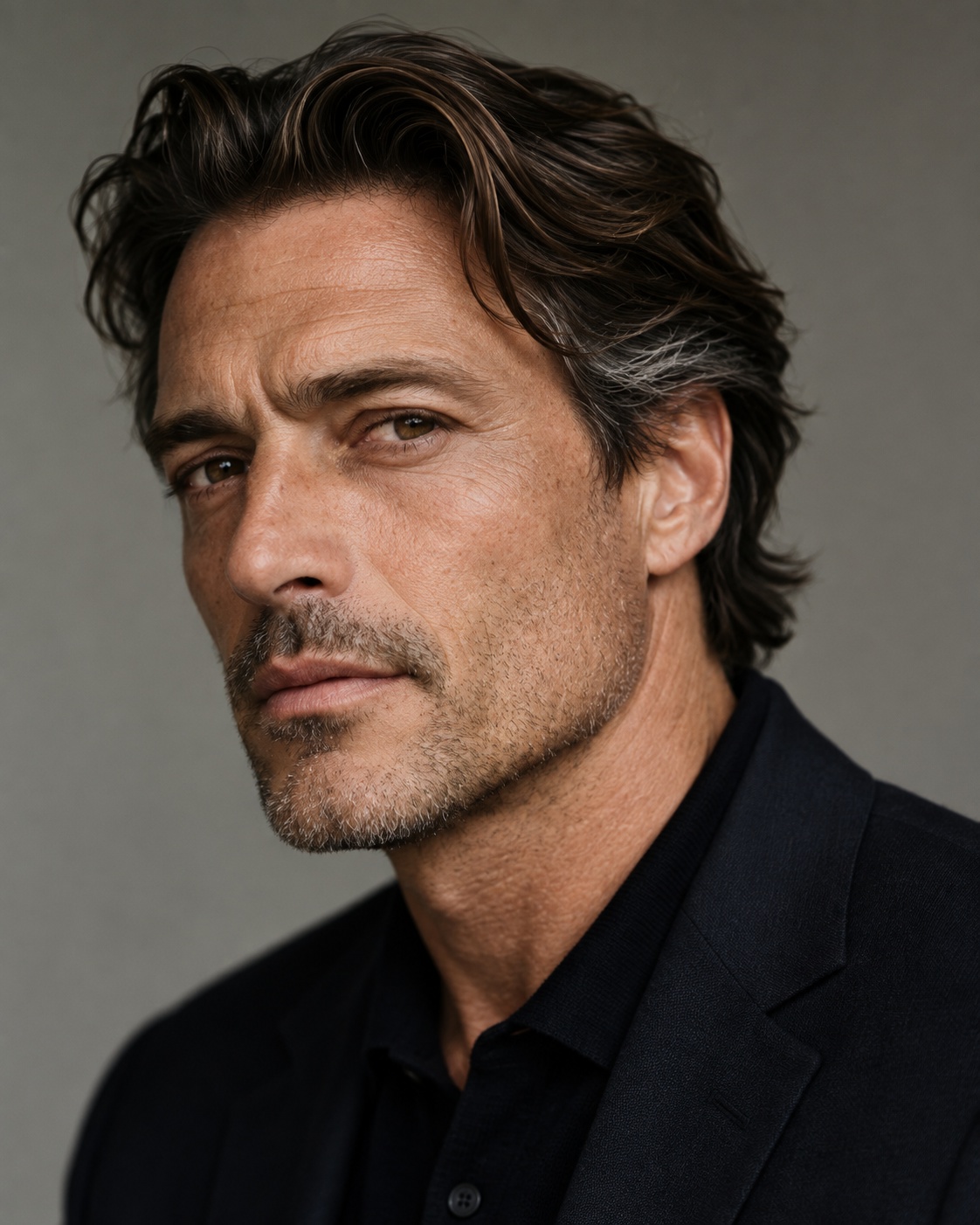
The result looks polished at a distance and relaxed up close.
The impression: Polished but natural. It says you look after yourself without spending the morning on it, which works in client meetings and everyday office life alike.
Hair type: Medium-density wavy hair.
Ask your barber: “Keep the length around the ears and collar, with long layers through the top so the waves can flow back. Tidy the perimeter but don’t taper the sides short.”
Styling: Apply light cream to damp hair, push it back with your fingers and let it air-dry. No comb.
Explore Similar Looks: 40 Flow Haircuts for Men from Classic Bro Flow to Modern Variations
32. Wavy Taper
If your waves fight a precise part, a simple taper with natural top movement can look better than forcing the hair into a rigid shape. Where the wavy flow above keeps length over the ears, this version keeps the waves on top and tapers the sides closer, so it looks neater and grows out more predictably.
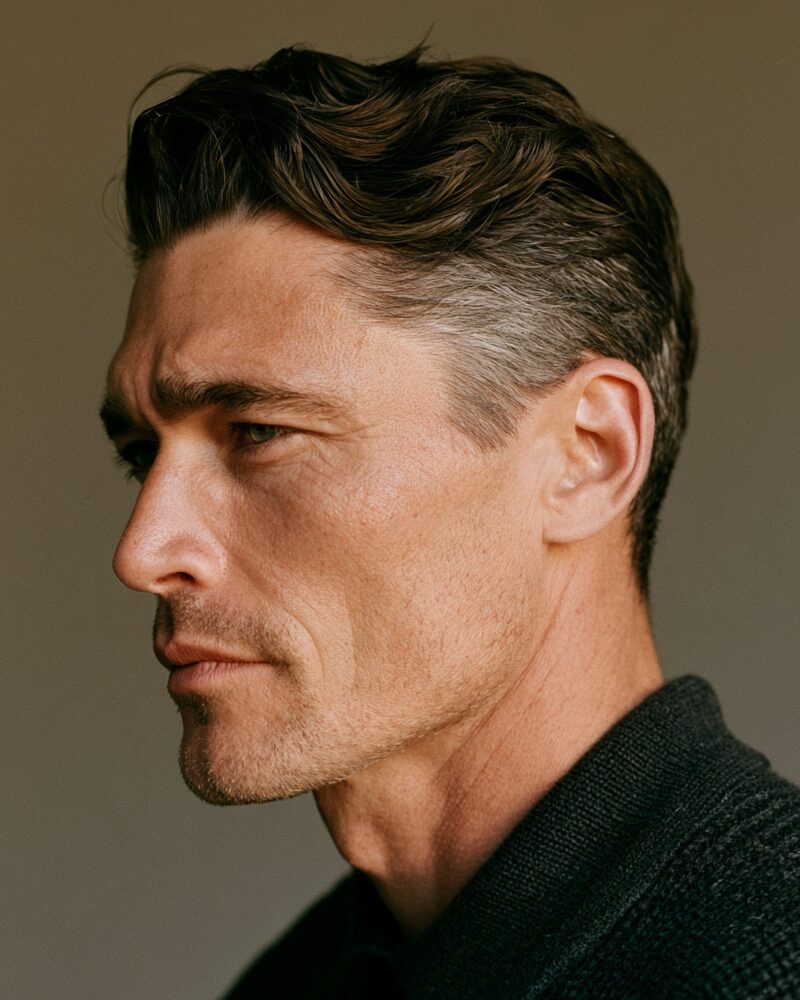
The impression: Approachable and relaxed. A good fit for business-casual offices and team leadership roles where warmth counts as much as authority.
Hair type: Medium-to-thick wavy hair.
Ask your barber: “Keep the natural wave through the top and taper the perimeter without cutting the upper sides too short.”
Styling: Styling cream, lightweight mousse or a small amount of curl cream.
33. Curly Taper
A curly taper cleans the perimeter without removing the volume and shape that make the curls work. Keeping weight through the upper sides stops the top from looking like a separate block of curls, and the tapered neckline keeps the shape tidy as it grows.
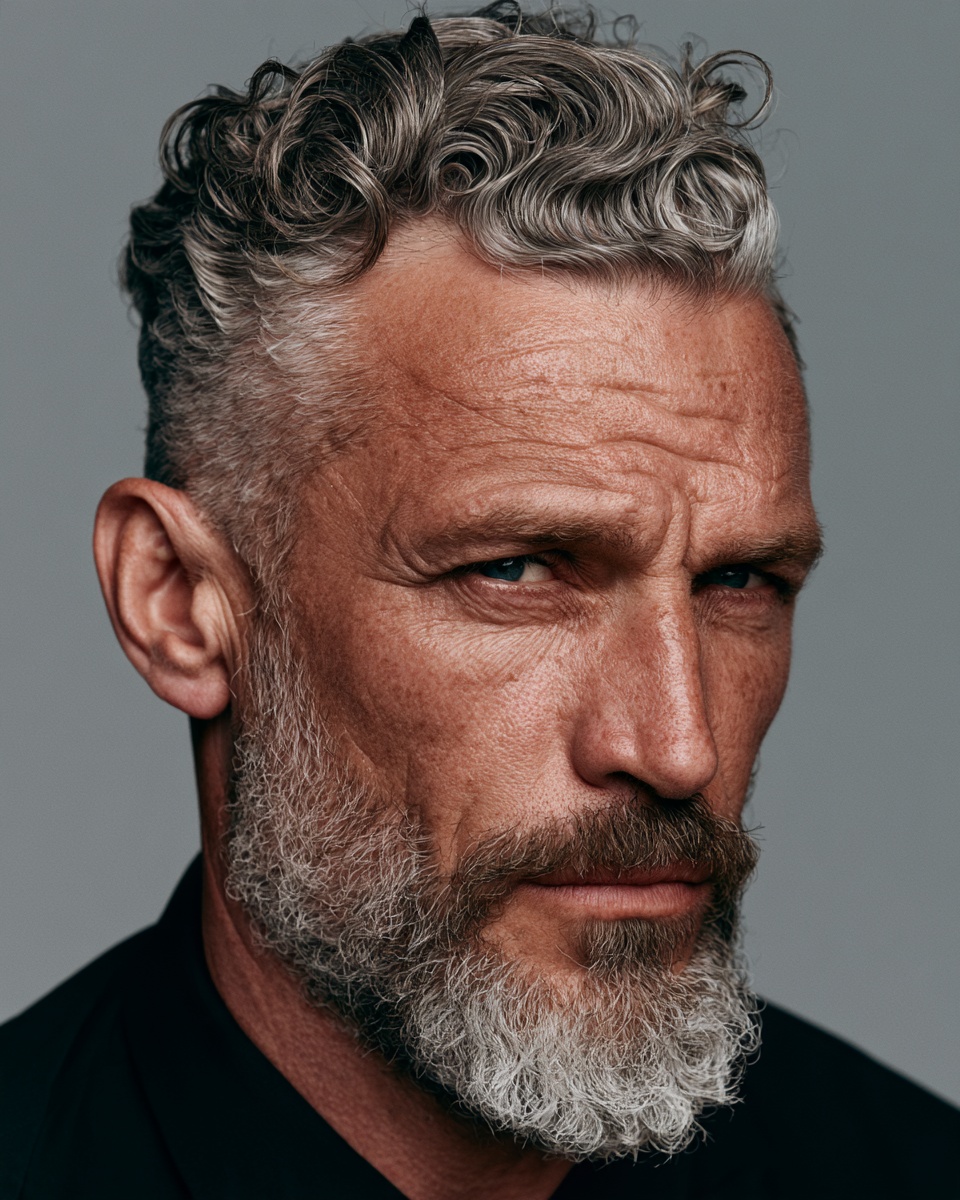
The impression: Confident and authentic. Natural texture with a clean professional outline works in every setting, from interviews to board meetings, as long as the perimeter is kept sharp.
Hair type: Curly hair with medium-to-thick density.
Ask your barber: “Keep the natural curl and upper-side volume, shape the silhouette and taper only the temples and neckline.”
Styling: Apply curl cream or light gel while the hair is wet, then air-dry or diffuse.
34. Short Afro with Taper
A short shaped Afro retains natural texture while using the outline to create structure. Cleaning up the temples and neckline gives the cut a precise frame without removing the fullness that gives the style its character.
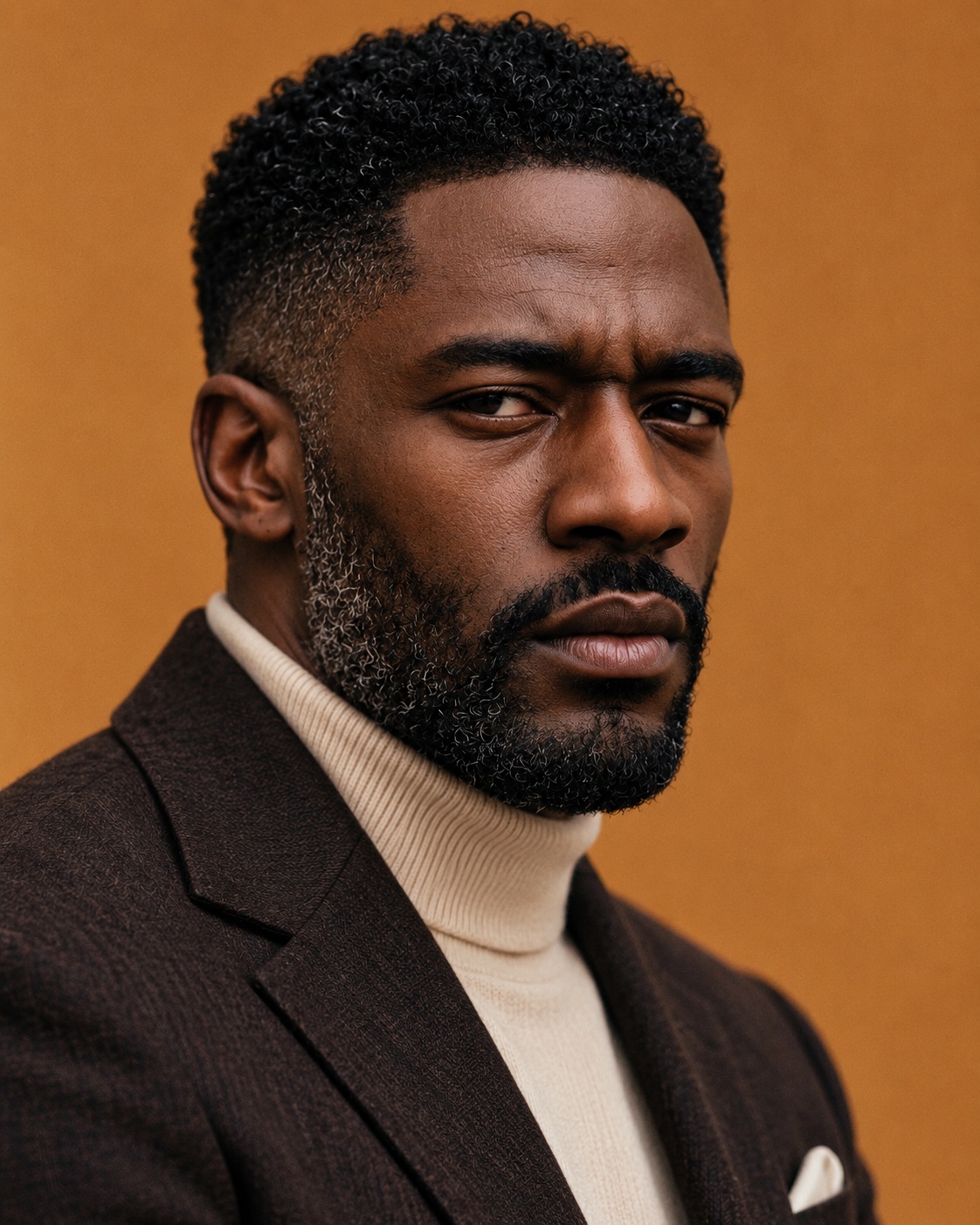
The impression: Polished and assured. A well-shaped Afro reads as deliberate and professional in any workplace; what matters is a clean, even outline.
Hair type: Coily hair.
Ask your barber: “Short natural Afro with a balanced shape and subtle taper around the temples and neckline.”
Styling: Prioritize moisture and definition rather than heavy hold.
For additional options, see our guide to professional Black men’s hairstyles.
Business Haircuts for Men Over 40, Gray & Thinning Hair
Hair rarely behaves the same at 50 as it did at 25. Density changes, temples move and gray strands reflect light differently. The goal is not automatically to cut everything shorter.
It is to adjust the proportions to the hair you have now. For more short, low-maintenance ideas, see our guide to short hairstyles for gray hair in your 40s.
Should you color your gray for work? It is a personal choice, not a professional requirement. If you do color, blending (partial coverage that leaves some gray showing) usually looks more natural than a single solid shade, which can read flat against mature skin. If you keep the gray, keep the cut sharp: a well-maintained silver taper reads more polished than dyed hair with visible regrowth.
35. Silver Classic Taper
Gray and silver hair naturally creates more visible texture because individual strands catch the light differently. A classic taper and soft side sweep can use that dimension rather than trying to flatten it.
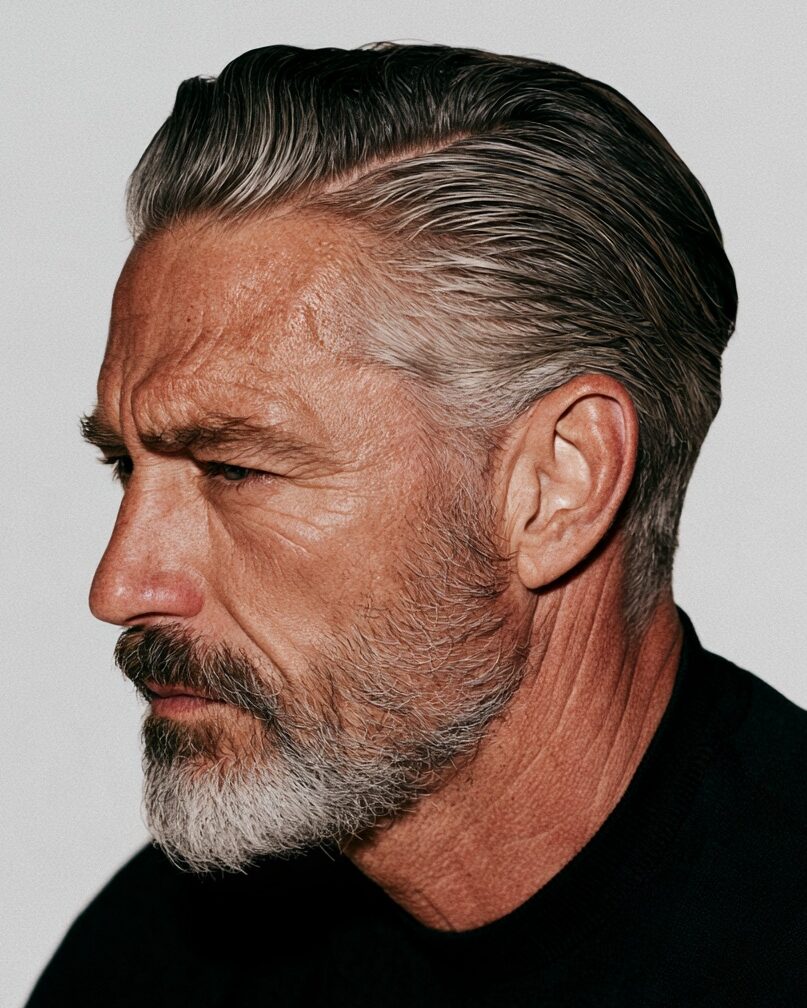
The impression: Experienced and at ease. Worn well, gray hair signals seniority rather than age, which is an advantage in leadership, advisory and client-facing roles.
Hair type: Gray, silver and white hair with reasonable coverage through the top.
Ask your barber: “Classic taper with enough top length for natural movement. Keep the sides blended rather than extremely short.”
Styling: Use lighter products as density decreases. Heavy pomade can separate fine silver strands and expose more scalp.
See our guide to hairstyles for gray hair over 50 for more ideas.
36. Short Professional Caesar
The Caesar keeps the top short and directs it forward into a compact fringe. It is particularly useful when recession is concentrated at the temples, because the forward direction softens the outline without trying to hide it.
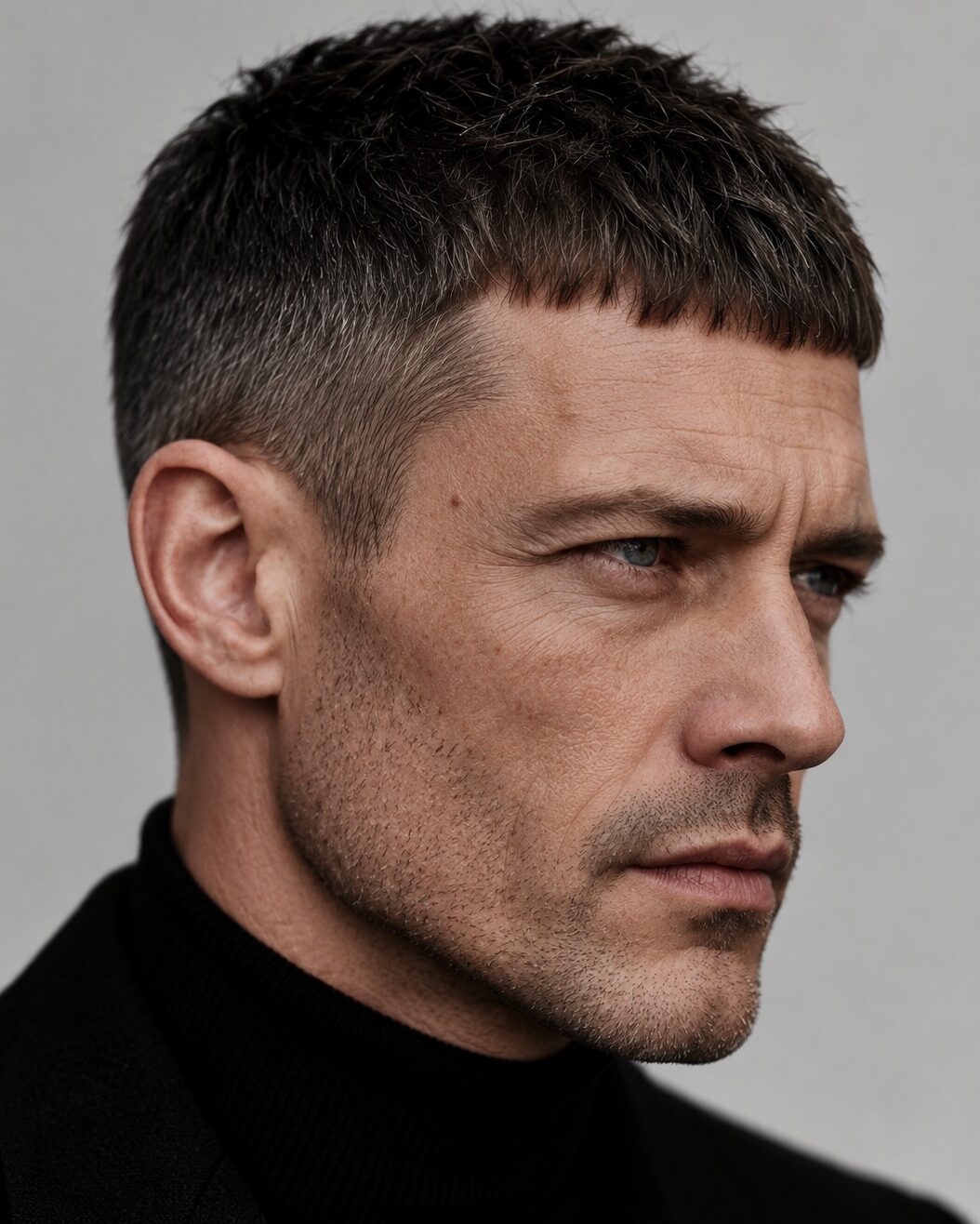
The impression: Tidy and unfussy. It suits men who want one look that works from a Monday meeting to the weekend without changing anything.
Hair type: Fine-to-medium hair and early-to-moderate temple recession.
Ask your barber: “Short Caesar, around an inch on top, styled forward with a soft natural fringe and subtle taper.”
Styling: Finger-style forward with matte cream.
37. Textured Caesar for Fine Hair
Fine hair tends to separate and show scalp when it is combed back or slicked down. Pushing a short, textured top forward keeps the density where it is most visible and stops the hair collapsing into one flat, shiny shape.
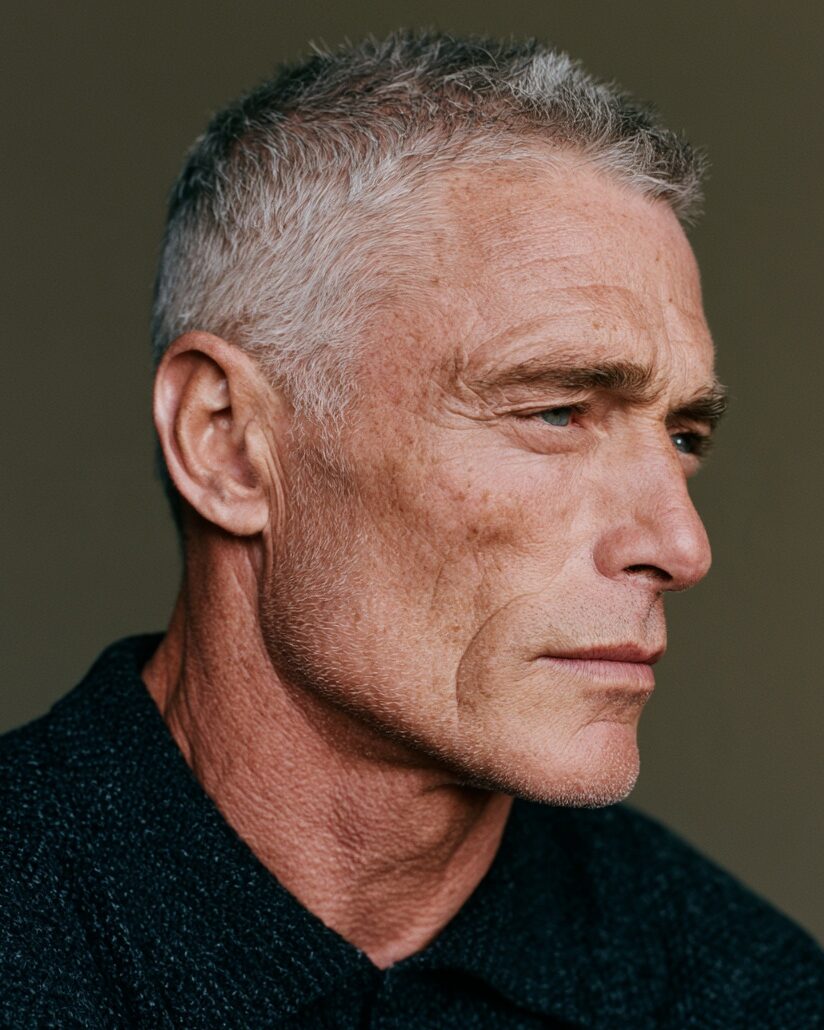
Compared with the standard Caesar, the surface is deliberately broken up, and the fringe is left irregular so there is no hard line drawing attention to the hairline.
The impression: Fresh and more energetic than a combed style that shows scalp. That difference matters in interviews and presentations, where you want attention on what you are saying.
Hair type: Fine or thinning hair with reasonable coverage through the front.
Ask your barber: “Short textured Caesar with a broken fringe and no sharp line across the front.”
Styling: Lightweight matte paste or texture powder.
38. Short Textured Cut for a Receding Hairline
When the temples begin moving back, excessive height can make the difference between the front and sides more obvious. A compact textured top often creates a more cohesive shape.
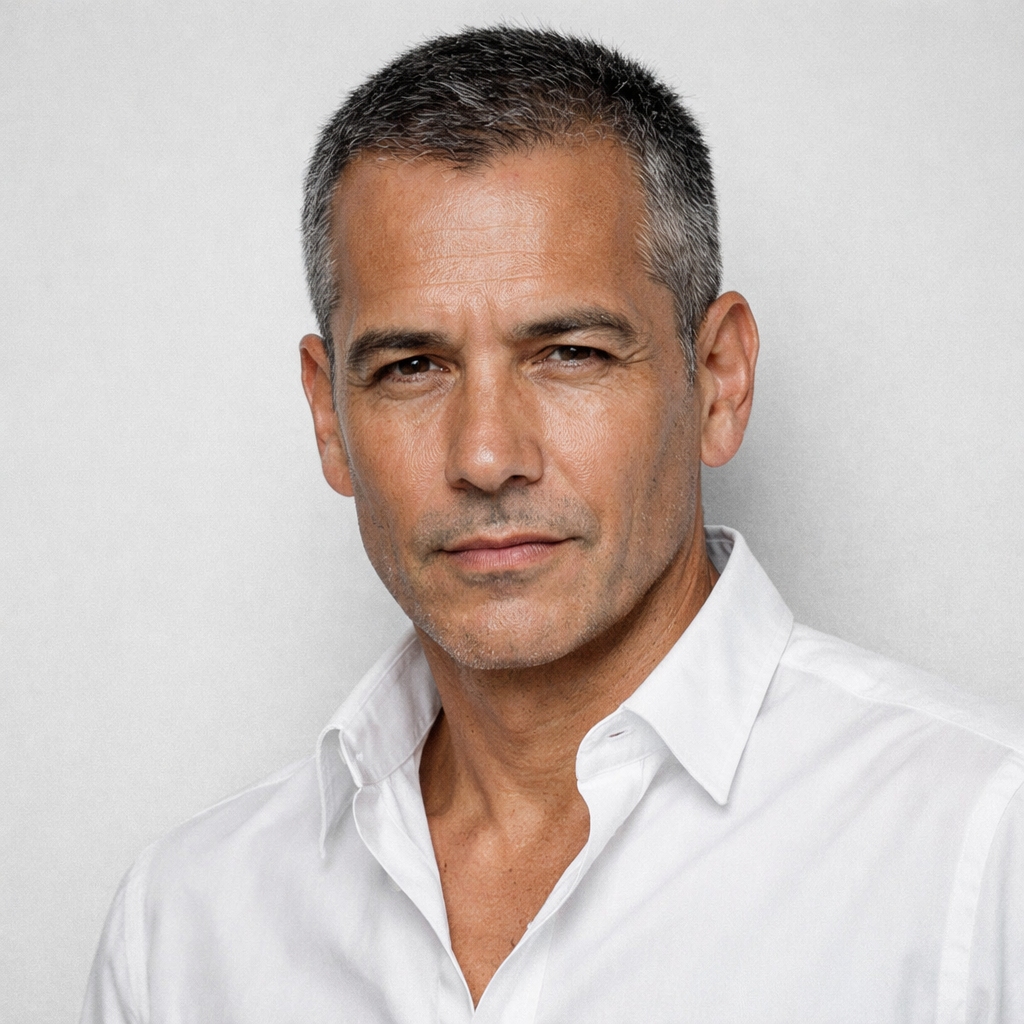
The impression: Confident and honest. Working with a receding hairline reads as self-assured, while a comb-over or an artificial hairline tends to do the opposite.
Hair type: Early-to-moderate recession and fine-to-medium density.
Ask your barber: “Work with my natural hairline. Keep the top short and textured and use a soft taper. Don’t square off the front.”
Styling: Use light matte products and avoid heavy wet finishes.
See our haircuts for receding hairlines for more specific options.
Business Haircuts for Creative Workplaces
Creative offices often allow more movement, length and individuality. The important distinction is between intentional texture and hair that has simply lost its shape.
39. Short Business Shag
A shorter shag can work particularly well in advertising, fashion, media and design because it has more personality than a standard taper without becoming difficult to maintain. The layers add movement through the crown and sides, while a clean neckline keeps it reading as intentional rather than overgrown.
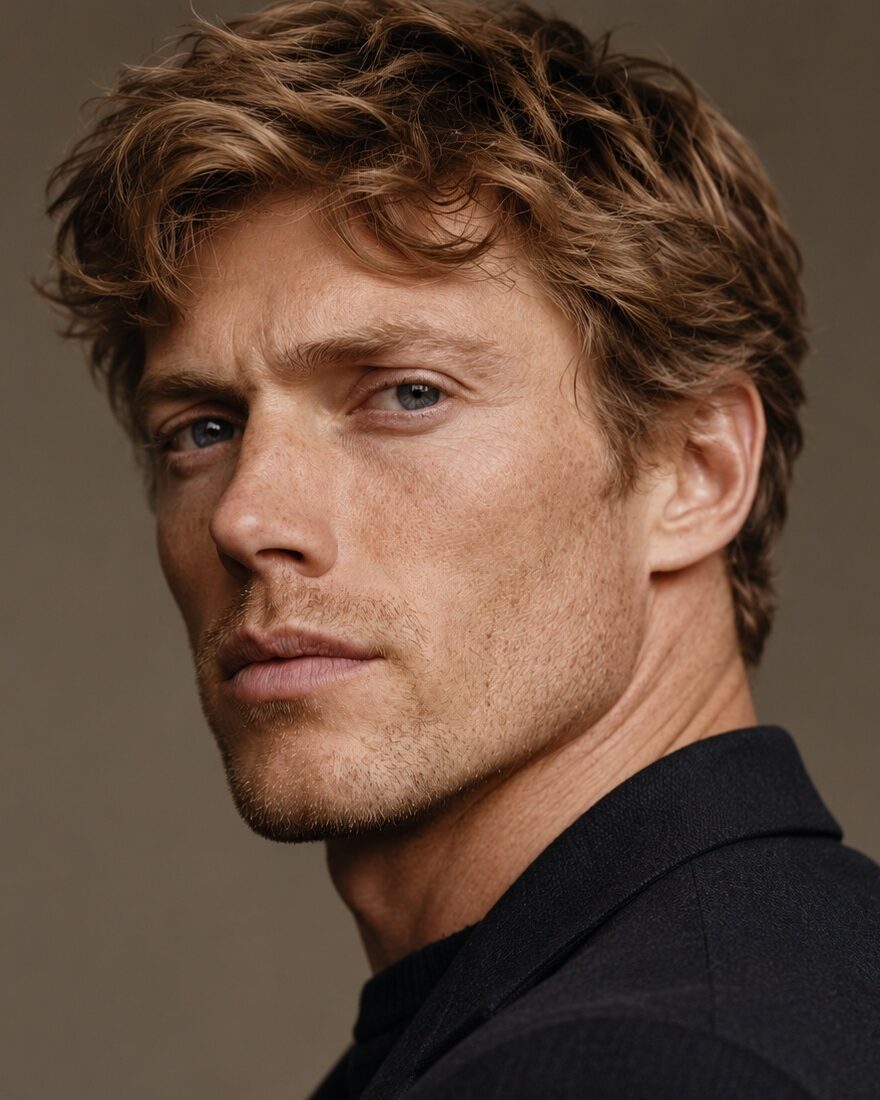
The impression: Creative and individual. Right for advertising, fashion, media and design, where personal style is part of the pitch; out of place in a conservative finance or law office.
Hair type: Straight-to-wavy medium-density hair.
Ask your barber: “Short layered shag with movement through the crown and sides, but keep the outline clean around the ears and neckline.”
Styling: Lightweight cream or sea salt spray.
40. Medium Controlled Office Shag
The longer interpretation works best when natural wave or bend contributes to the shape. The neckline and area around the ears should remain deliberate even as the layers grow.
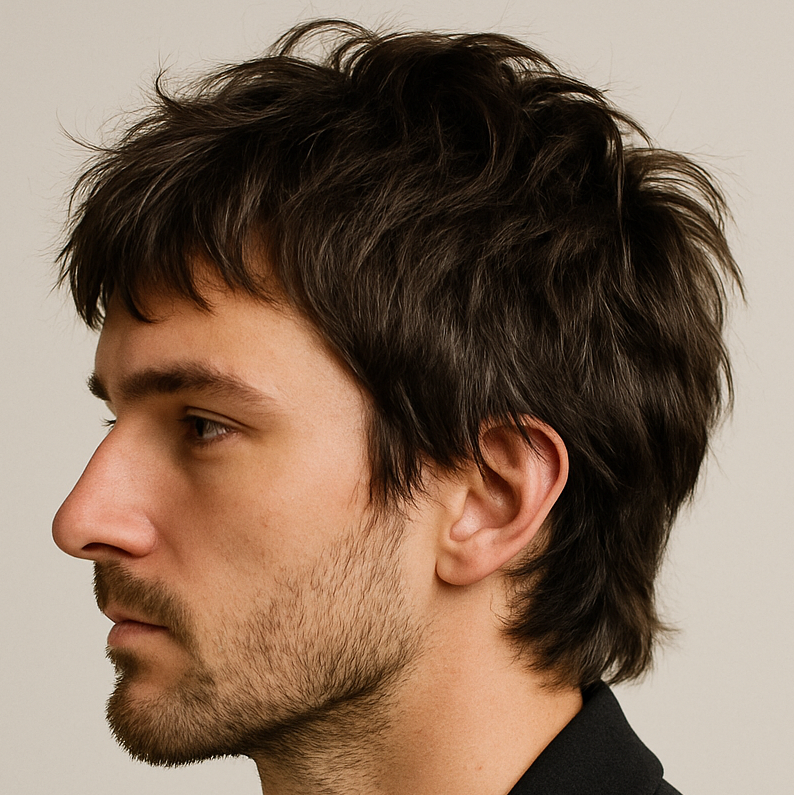
The impression: Artistic and relaxed. It suits creative directors, architects and people in the arts; for a formal interview outside those fields, choose something shorter.
Hair type: Wavy medium-to-thick hair.
Ask your barber: “Medium layered shag with natural movement but keep the perimeter intentional and avoid a pronounced mullet shape.”
Styling: Styling cream, mousse or sea salt spray, depending on texture.
How to Choose an Office Haircut for Your Workplace
Having worked across advertising, fashion, beauty and luxury, I’ve seen how contextual the word professional actually is. A haircut that looks completely normal inside a creative agency can attract more attention in a conservative corporate environment, while a very rigid executive cut can feel equally out of place in a design or fashion setting.
Finance, law and traditional corporate: Start with the classic taper, Ivy League, side part, executive contour or crew cut. Softer transitions and controlled styling usually travel furthest.
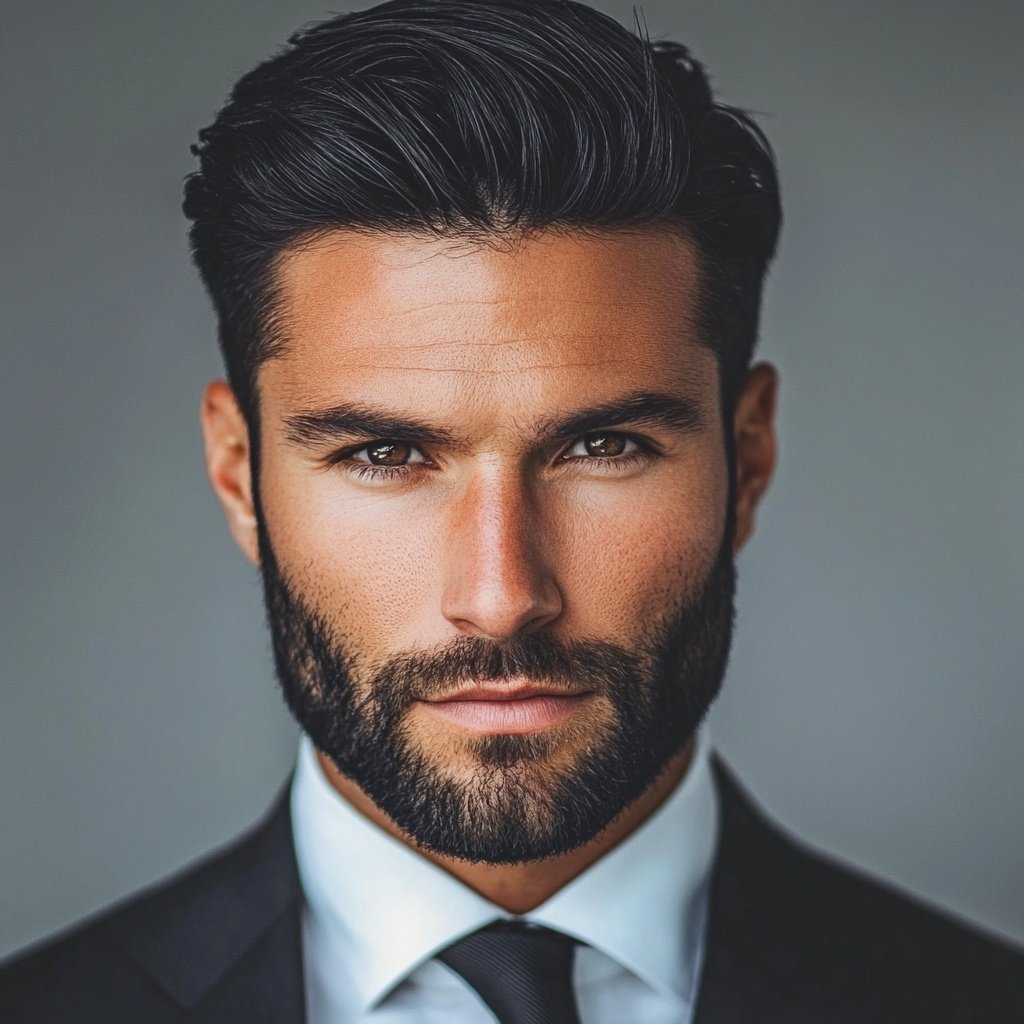
Consulting, sales and client-facing work: Ivy League cuts, side parts, tapers, restrained pompadours and slick backs work particularly well because they can move between meetings, travel and evening events.
Business-casual offices: Textured crops, low fades, quiffs, wavy tapers and softer side sweeps introduce more personality without requiring an unconventional haircut.
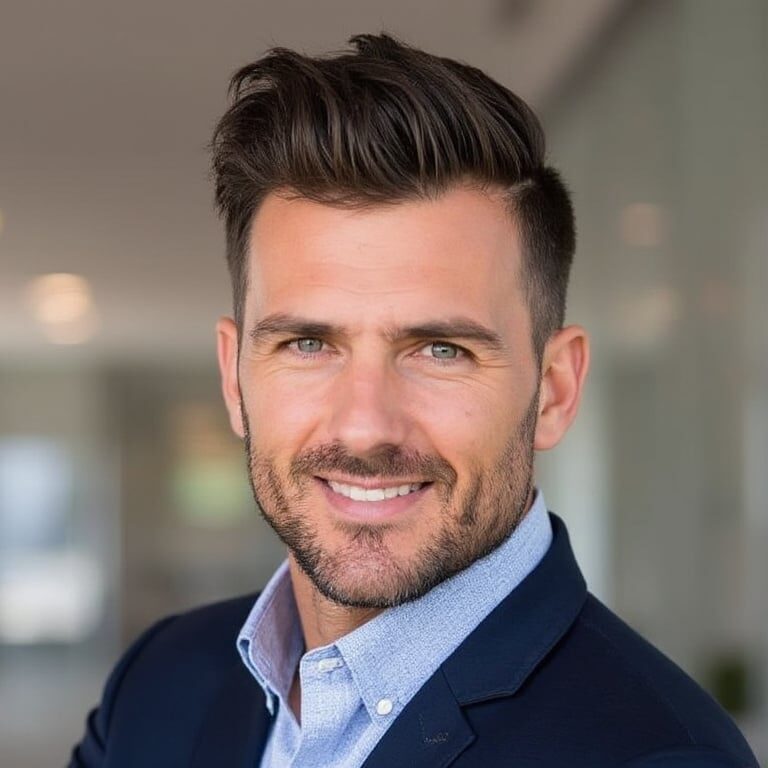
Technology and startups: Practicality often matters more than traditional grooming codes. Crops, buzz cuts, tapers, curls, brush backs and longer hair can all work.
Fashion, advertising, media and design: Longer hair, shags, undercuts, textured quiffs and more individual styling usually have considerably more room.
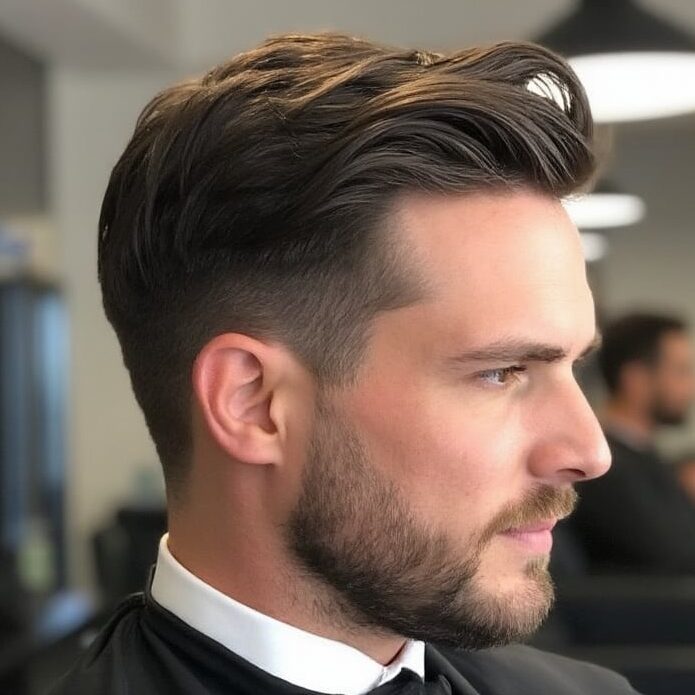
These are starting points rather than rules. The actual culture of the company matters more than the industry label.
Business Haircuts for Interviews and Key Meetings
Most men think about their haircut most carefully before a specific moment: an interview, a first day, a meeting with the CEO. These are the cuts from this guide that tend to work best for each one.
| Occasion | Strong choices | Why |
|---|---|---|
| Job interview | Classic taper (1), natural side part (3), classic Ivy League (9), curly taper (33) | Wear a maintained version of a cut that already suits you, and book it three to five days ahead. |
| First day at a new job | Classic Ivy League (9), business crew cut (11), french crop (25) | Low risk and easy to style while you learn how the office actually dresses. |
| CEO or board meeting | Executive contour (7), soft modern executive contour (8), silver classic taper (35) | Structure without stiffness. Avoid anything that looks freshly trend-led. |
| Client pitch or presentation | Natural side part (3), slick business pompadour (15), temple fade office haircut (28) | Clean outlines read well from across a room and under stage lighting. |
| Client dinner or evening event | Classic comb over (5), classic slick back (19), longer professional FLOW (20) | A little more shine works at night than it does at 9 a.m. |
| Video calls | Brushed-up business taper (2), textured crop with fade (24), wavy taper (32) | Webcams tend to flatten hair, so some texture and lift on top reads better on screen. |
Match the Haircut to the Dress Code
Hair and clothes are read together. A sharp executive contour looks mismatched with a hoodie, and a loose shag can look out of place with a three-piece suit. Before an interview or a first day, find out what the office actually wears: check the company’s dress code if there is one, ask the recruiter or HR, or look at recent photos of the team on LinkedIn or the company website.
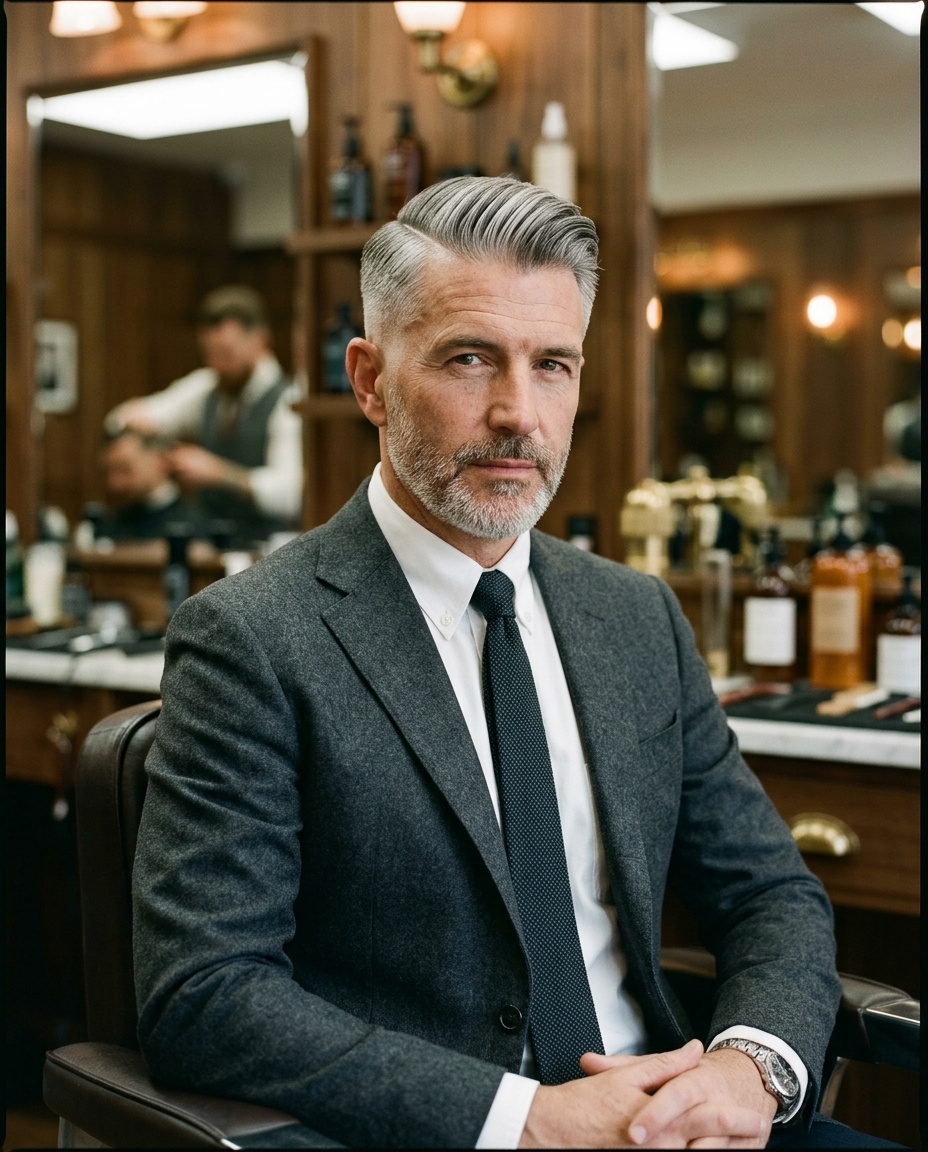
If the answer is business casual, our guide to men’s business casual outfits shows what to wear, and our list of business casual essentials covers the pieces to build it from. For weddings, galas and black-tie events, see our guide to wedding and black-tie hairstyles for men.
Business Haircuts with a Beard
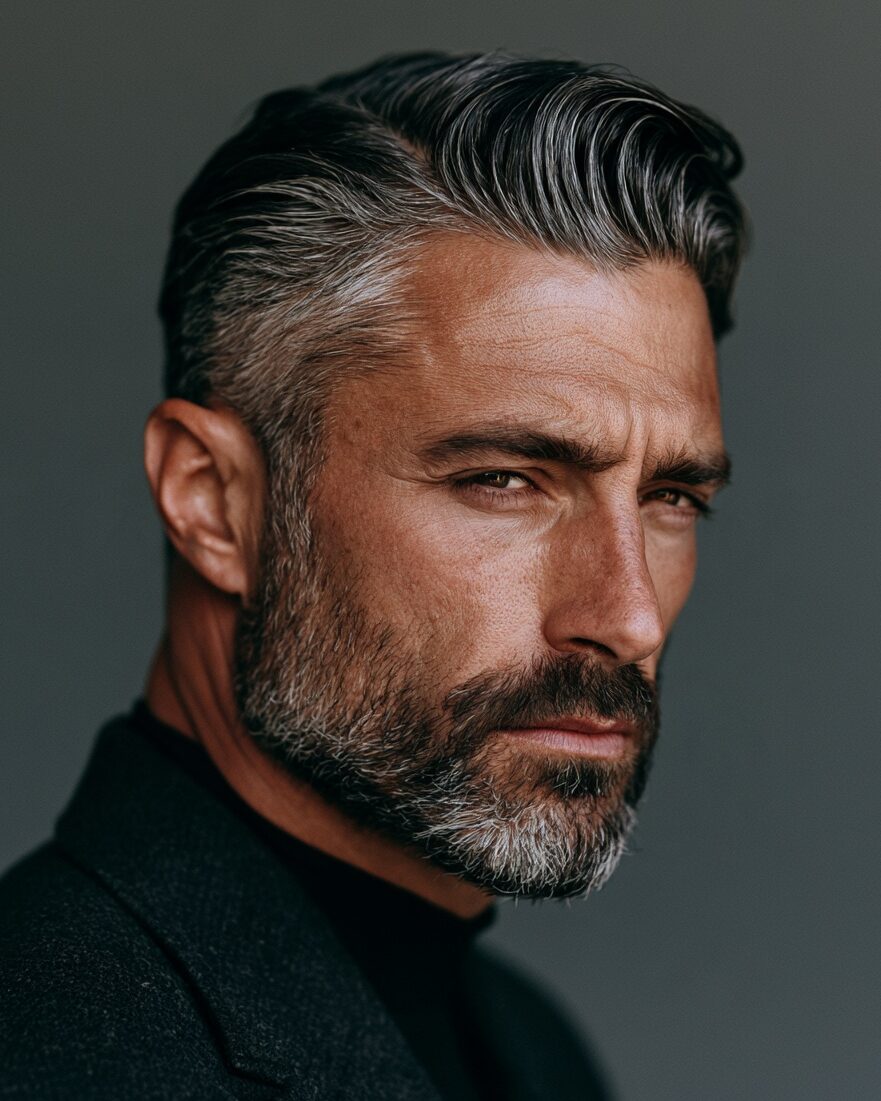
A beard does not require a different haircut, but the transition through the sideburns matters.
With a fade, the barber can gradually move from very short hair into a fuller beard. With a classic taper or longer side part, leaving slightly more weight around the temple often creates a more coherent result.
Avoid making every line equally aggressive. An extremely hard hairline, skin fade and perfectly boxed beard can make the barbering dominate the overall look.
What to Tell Your Barber
A reference photo helps, but your barber also needs what a photo cannot show: how often you can come back, whether you use a hair dryer, what your office is like and what you dislike about your current cut. “Keep the sides connected, I don’t want much scalp showing” or “I want this to hold its shape for five or six weeks” tells a barber far more than asking for a “professional haircut.”
How to Style Professional Hair Without Overdoing It
A good professional hairstyle usually uses less visible product than you think. Product should support the haircut rather than become the haircut.
Styling cream: Good for classic tapers, Ivy League cuts, side parts, brush backs and wavy hair when you want control without stiffness.
Matte paste or clay: Useful for textured crops, Caesar cuts, short quiffs and crew cuts. Use very little on fine hair.
Pomade: Works particularly well for comb overs, slick backs, executive contours and pompadours. Low or medium shine generally feels more contemporary for everyday office use.
Texture powder: Useful on short fine hair when you need root grip without wetness.
Curl cream: Better than dry clay for most curly styles. Apply while the hair is still wet enough for the curl pattern to form cleanly.
Sea salt spray: Adds movement to waves and layered styles, although it can be drying if your hair is already naturally dry.
How the Classic Businessman Haircut Evolved
Neatly combed, side-directed hair has signaled discipline and status for a long time. Even in ancient Rome, carefully arranged hair was part of how a man presented himself in public life.
The modern idea of office hair took shape in the mid-20th century. 1950s and 1960s office cuts were highly directional, with visible side parts, comb lines and significantly more pomade than most men would use today.
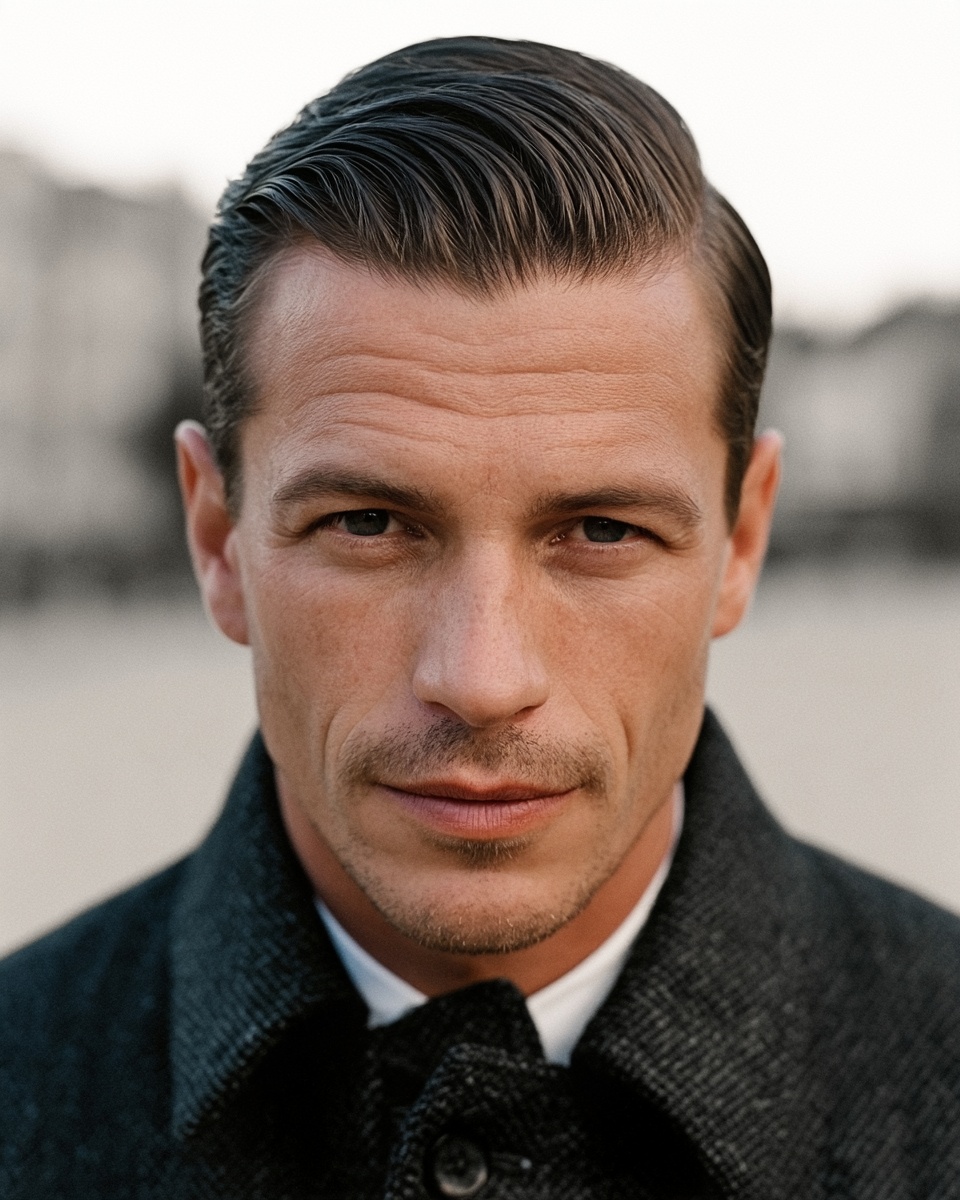
Those proportions still influence the executive contour, side part, comb over and business pompadour, but the modern versions tend to use softer texture, less shine and more natural movement.
Frequently Asked Questions About Business Haircuts
What is the best business haircut for men?
There is no universal best option, but the classic taper, Ivy League and side part have unusually broad range because they can be made more or less formal without changing the underlying haircut. A crew cut is a strong low-maintenance choice, while a textured crop or low fade works well in more contemporary workplaces.
What is a business cut?
“Business cut” is barbershop shorthand for a classic taper on the back and sides with enough length on top for a side part or neat side sweep. It is the default office haircut because it looks controlled, suits most face shapes and grows out predictably.
What is an executive haircut?
There is no single standardized executive haircut. The phrase usually describes controlled styles such as the executive contour, classic taper, Ivy League and side part, where the proportions are clean and the styling is deliberate without extreme contrast.
What haircut do CEOs usually have?
Most senior executives wear some version of the classic taper, executive contour or Ivy League: short to medium length, softly tapered sides and a side-directed top. The common thread is not a specific cut but consistency. The hair looks the same on Monday and Friday because it is maintained on a regular schedule.
What is the classic businessman haircut?
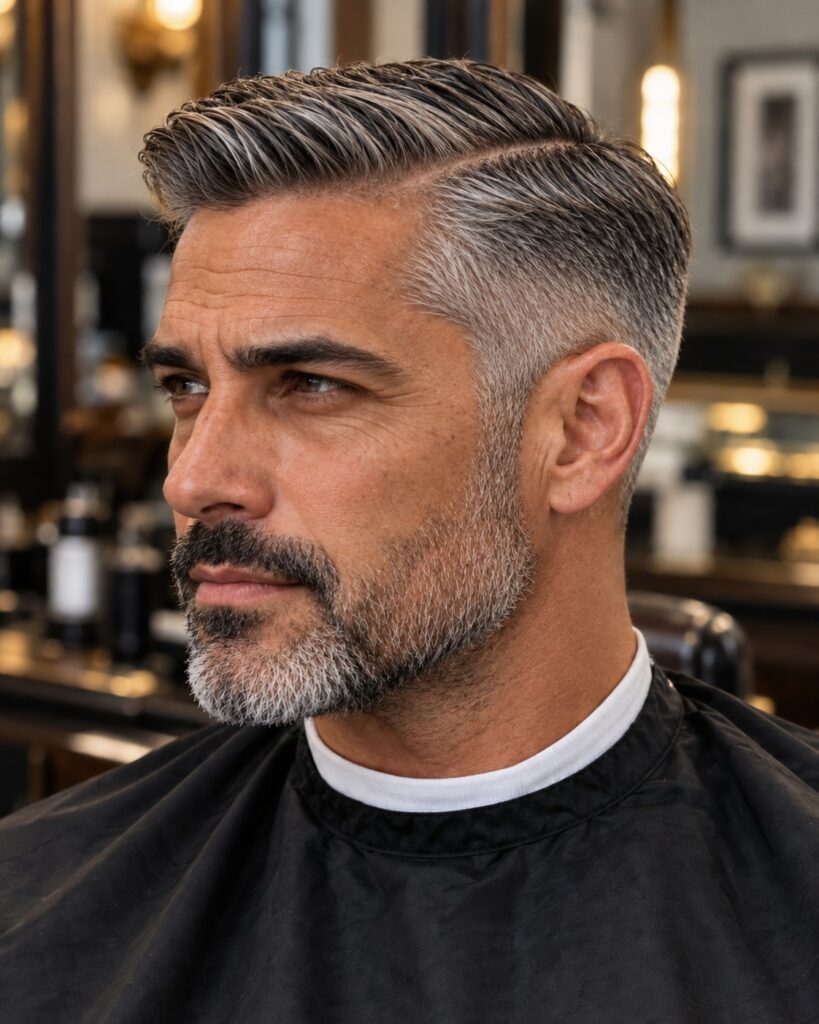
The classic businessman haircut is the side-parted office cut that became standard in the 1950s and 1960s: tapered back and sides, a defined part, and the top combed neatly across with pomade. Today the same shape is usually worn softer, with less shine and more natural texture. The closest modern versions are the classic taper (1), natural side part (3) and classic executive contour (7).
Are fades professional?
Yes. A low fade or temple fade can sit beneath a crop, side part, quiff or curly top without overwhelming the haircut. A high skin fade creates much stronger contrast and therefore reads as more contemporary, so workplace culture becomes more relevant.
What is a good formal haircut for the office?
A classic taper, Ivy League, executive contour, side part or shorter crew cut are among the easiest formal haircuts for men in a conservative office, because they retain enough weight to look controlled and grow out predictably.
What business haircut works best for thinning hair?
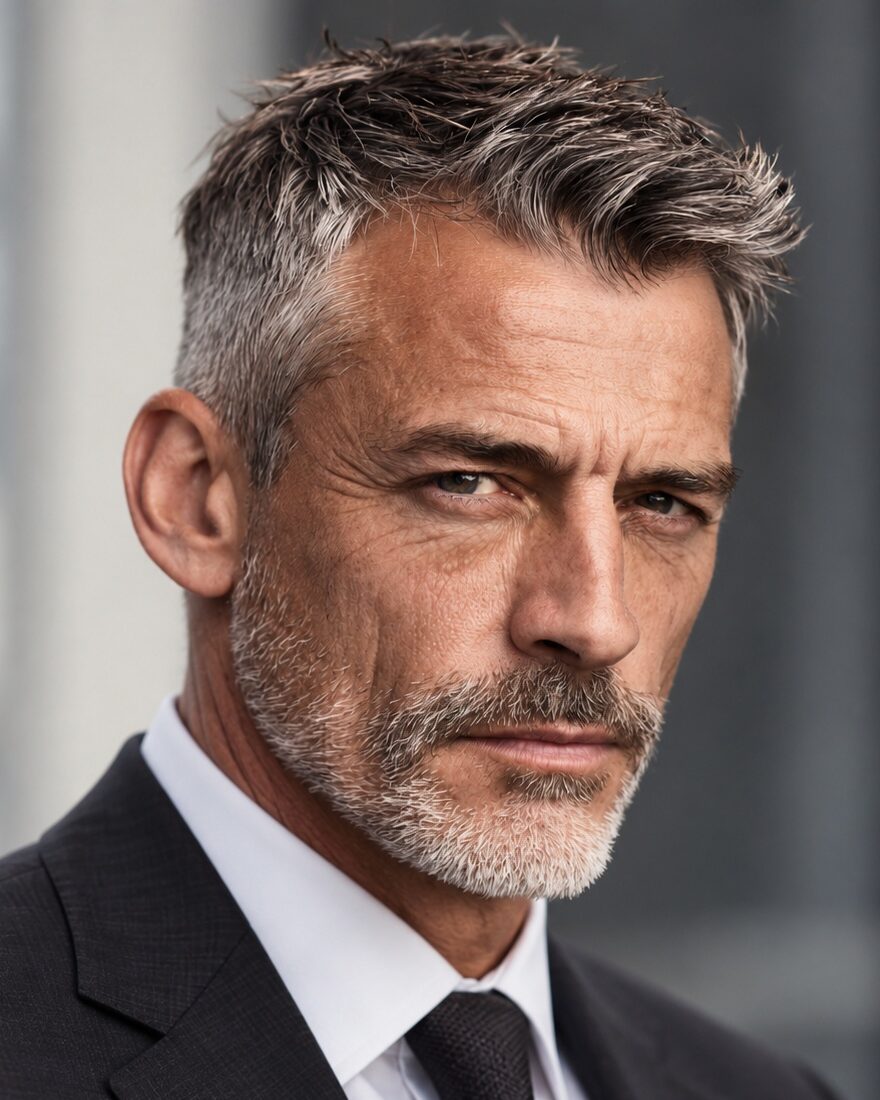
A short textured crop, crew cut, compact Ivy League, Caesar or buzz cut can all work because they reduce the visual difference between denser and finer areas. Heavy shine usually makes thinning more visible by grouping individual strands together.
What professional haircut works with a receding hairline?
A French crop, Caesar, short Ivy League, textured crop, crew cut or buzz cut can all work depending on the recession pattern and remaining density. Work with the actual shape of the hairline rather than manufacturing a perfectly straight front edge.
Can curly hair look professional?
Yes. Natural curls do not need to be straightened or cut extremely short. A curly taper or properly shaped natural cut controls the silhouette while preserving the texture that gives the hair its character.
Can men wear long hair in a professional office?
Yes. Medium and long hair can be brushed back, layered, tucked behind the ears or secured in a low knot. Workplace culture matters more than length alone, although maintaining the shape becomes increasingly important as the hair grows.
What haircut should I get before a job interview?
Choose a maintained version of a haircut that already suits you rather than adopting an unfamiliar style for one meeting. If possible, get the haircut a few days beforehand so it has time to settle and you can work out how it styles at home.
How long before an important meeting should I get a haircut?
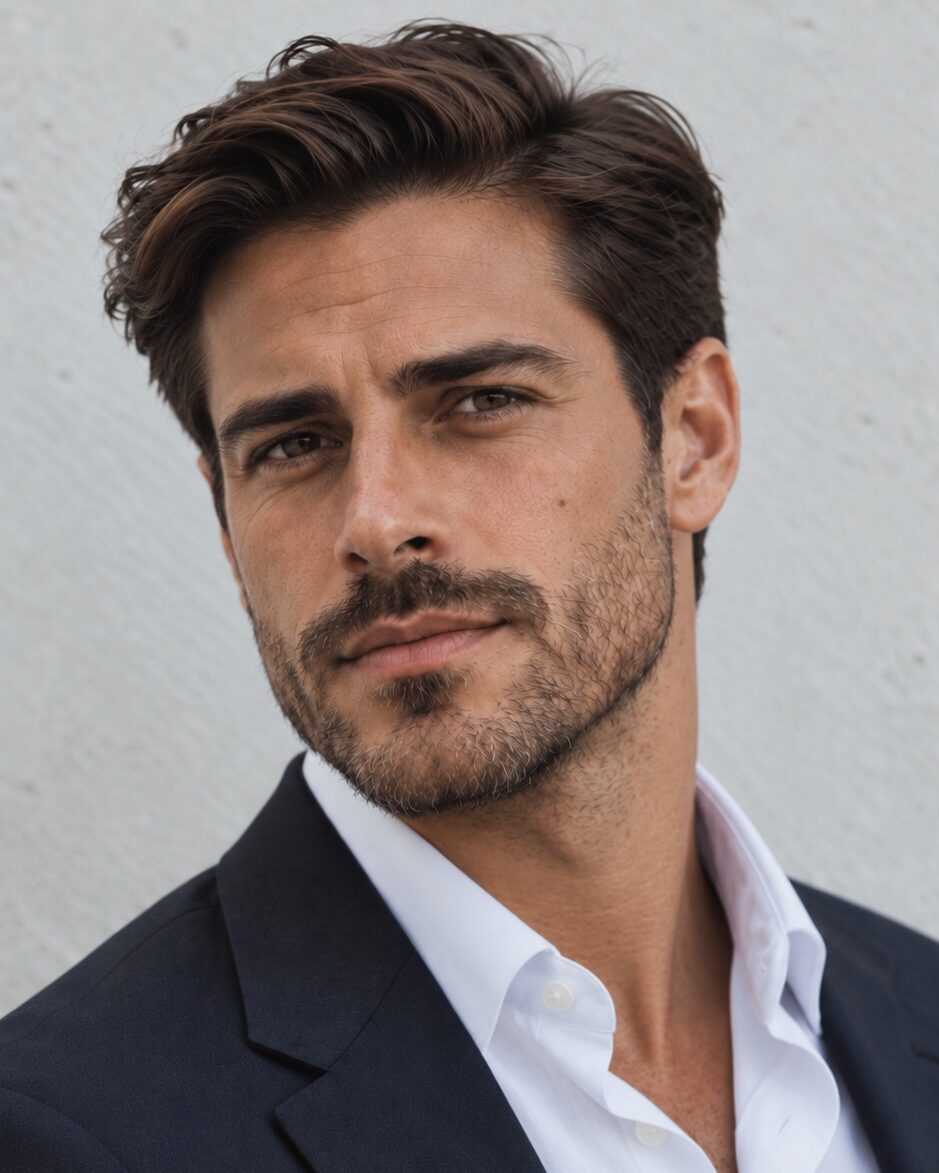
For most cuts, around 2-5 days beforehand works well. A very fresh fade or sharply cut perimeter often looks more natural once it has softened slightly.
What hairstyle should I wear to a wedding, gala or black-tie event?
Formal events involve a different styling conversation from everyday office hair. For grooms, wedding guests, tuxedos and high-shine evening finishes, see our guide to wedding and black-tie hairstyles for men.
Finding the Right Business Haircut
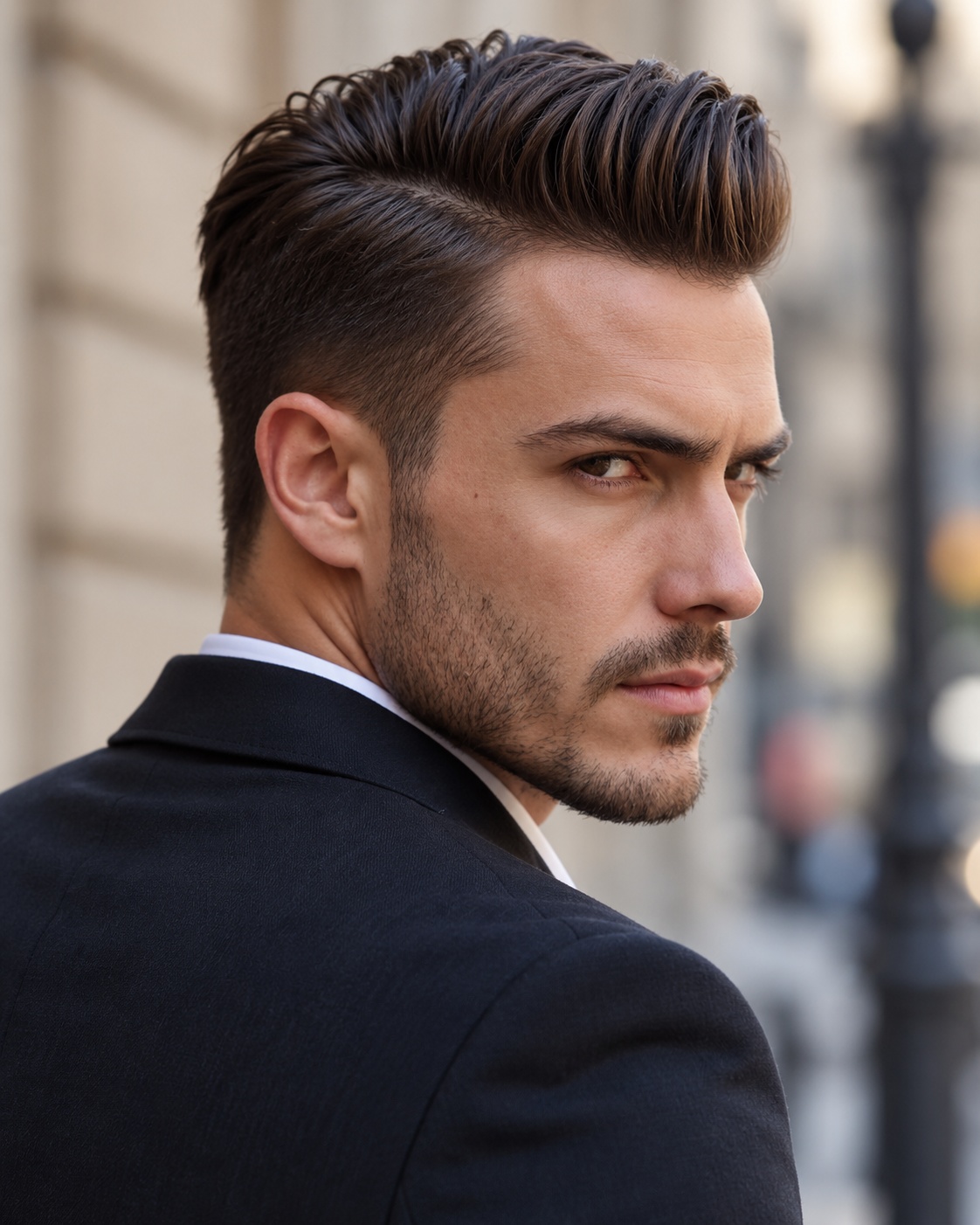
The strongest business haircut is not necessarily the shortest, safest or most conservative one. It is the haircut that works with your texture, density, hairline, routine and workplace.
A classic taper, Ivy League or side part remains difficult to beat when versatility is the priority. A textured crop, low fade, French crop, curly taper or short quiff brings the same idea into a more contemporary office. Medium brush backs, longer slick backs and controlled shags work when the environment allows more personal expression.
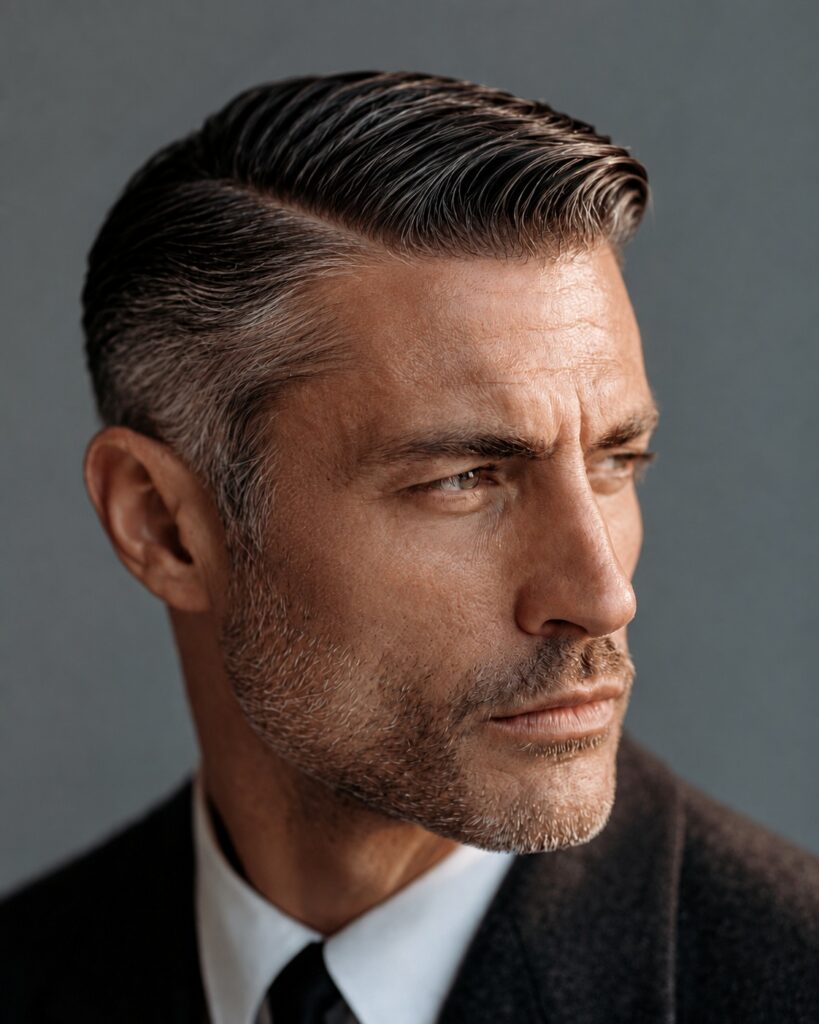
As your hair changes, the strategy can change with it. Gray hair can become part of the texture. A receding hairline can become part of the shape instead of something to conceal. Fine hair often benefits from lighter styling rather than more product.
Start with what your hair naturally does well, decide how polished your actual workplace requires you to be, and ask your barber to build the haircut around those two things.
The Taper Fade Comb Over: A Celebs and Soccer Players Trend

25 Short Haircuts for Men: Best Hairstyles for Every Occasion

How to Grow Long Hair Fast | Easy Steps and Tips for Men

Twist Hairstyles for Men: Effortless Style, Cultural Significance, and How to Nail the Look

20 Side Swept Fringe Haircuts for Men: Modern Styles That Work
