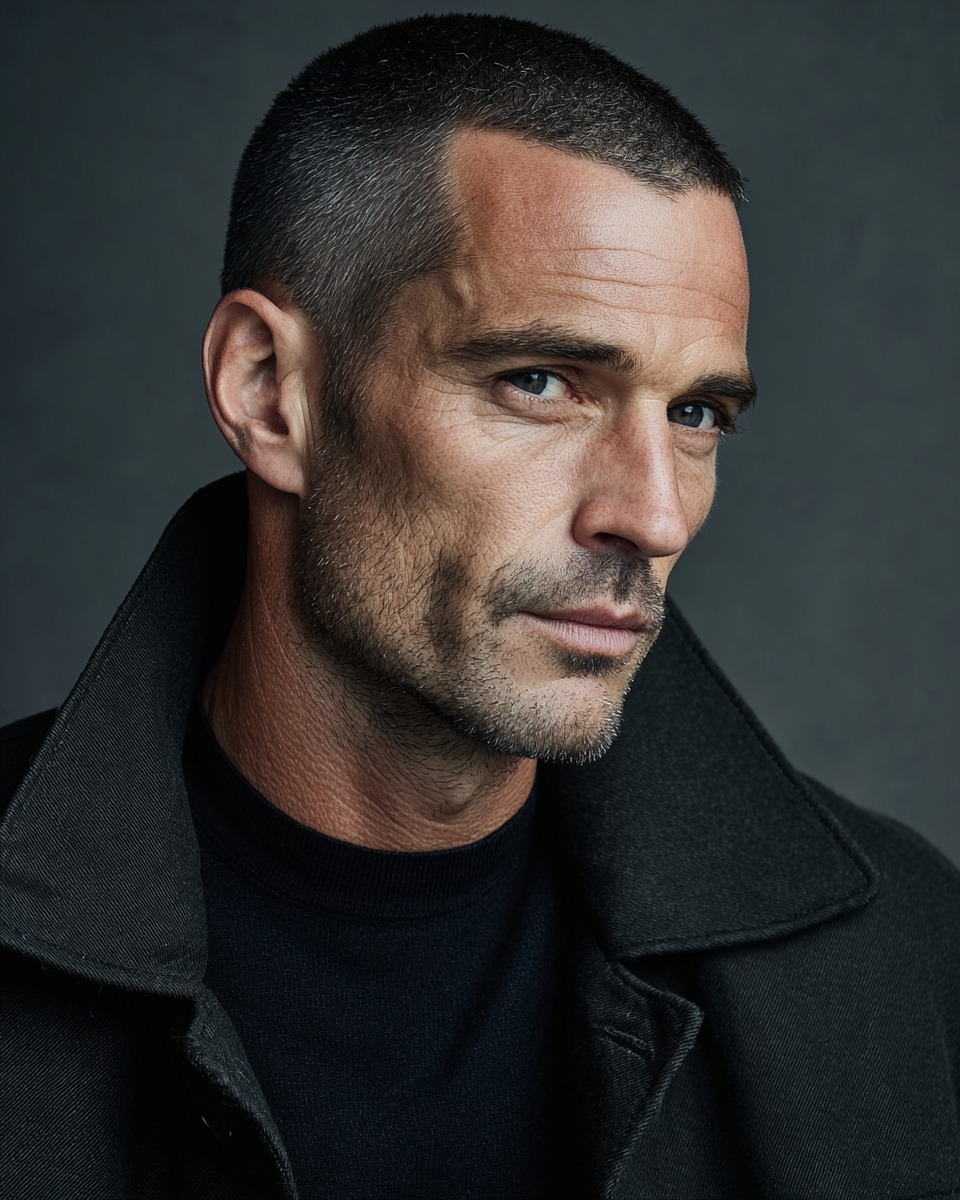
20+ Best Ivy League Haircuts for Men: Classic Style, Modern Edge
The traditional Ivy League haircut is a longer, side-partable version of the classic crew cut. The hair is left longest at the front, with enough length to form a side part, short sweep, or small brush-up, then gradually shortened toward the crown, with traditionally tapered sides and back. Also known as the Princeton cut or Harvard clip, it became closely associated with mid-century American collegiate style.
Over time, that classic collegiate shape has expanded into a much broader range of modern interpretations. The classic taper is still here, but so are low fades, textured finishes, longer tops, curly versions, softer cuts for thinning hair, and sharper barbershop variations.
20 Ivy League Hairstyles for Men
Today, the Ivy League cut can be worn with more length, texture, stronger side parts, fades, tapers, or a softer natural finish. What connects these modern interpretations is less a strict formula than the haircut’s signature clean-cut, collegiate character: short, controlled sides, a neat but styleable top, and an overall polished shape. The styles below show how the original haircut has evolved while keeping that recognizable Ivy League look.
If you prefer something even shorter, compare these styles with a crew cut. For sharper contemporary variations, see the taper fade haircut.
1. Classic Ivy League
The classic Ivy League is the reference point for everything else on this list: short tapered sides, enough length through the front to part neatly, and no dramatic contrast. It looks considered without looking engineered.
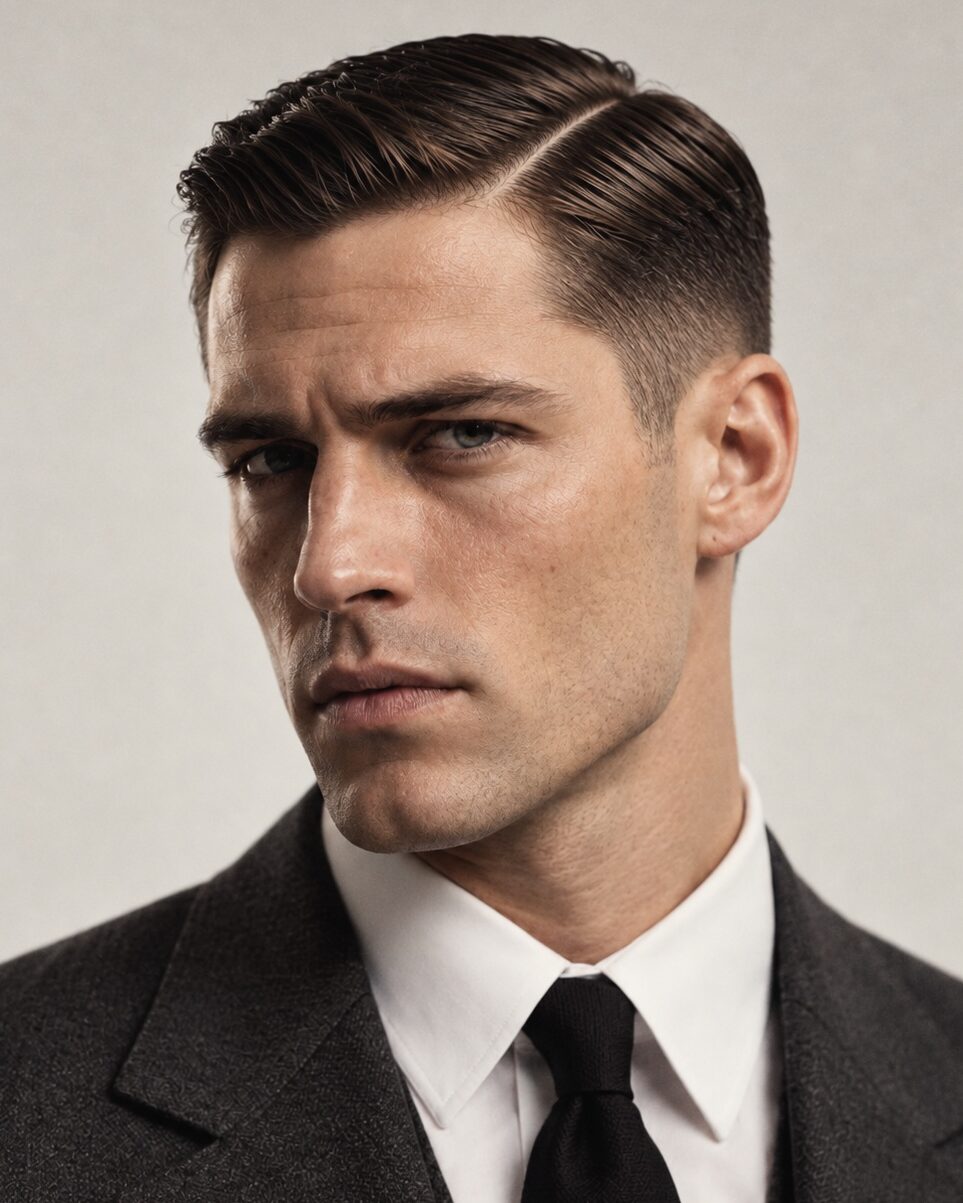
Best for: Straight to slightly wavy hair; professional settings; most face shapes.
Ask your barber: Keep roughly 1.5–2 inches on top, leave enough length to part, and taper the sides naturally rather than taking them too tight.
Styling: Light grooming cream or medium-hold pomade.
2. Modern Ivy League with Low Taper Fade
The modern variation adds length and texture. A low taper fade sharpens the perimeter without changing the haircut’s character. The cut still reads classic but the added layers and texture make it more current.
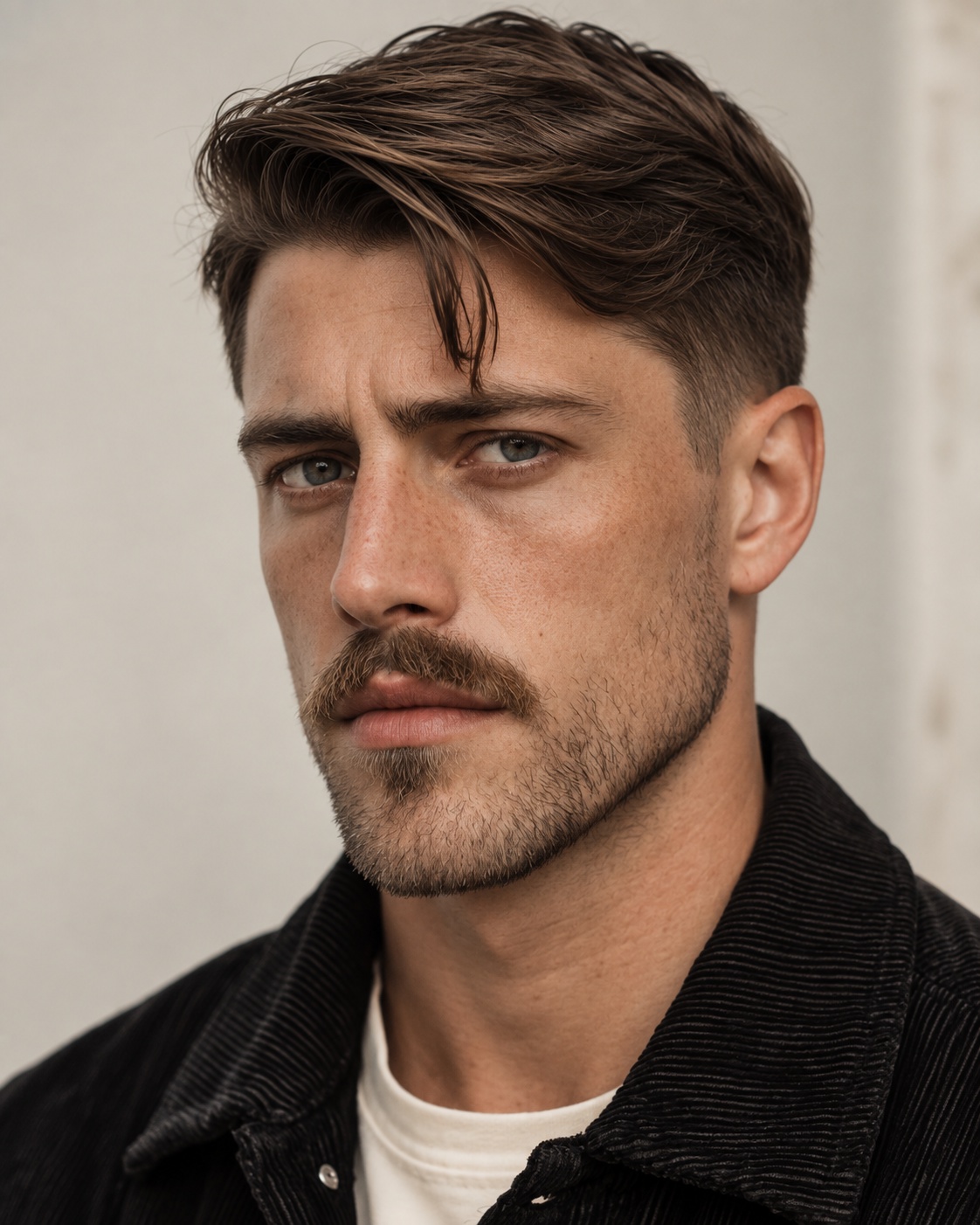
Best for: Men who want a modern update without a severe fade.
Ask your barber: Add more length and texture on top, with a low taper or fade around the ears and nape.
Styling: Light pomade or cream, combed or finger-swept to the side.
3. Modern Ivy League with Mid Taper
The mid taper fade creates more visible separation between the top and sides. It feels more contemporary than a traditional taper but still keeps enough weight through the upper sides to avoid turning the cut into a disconnected undercut hairstyle.
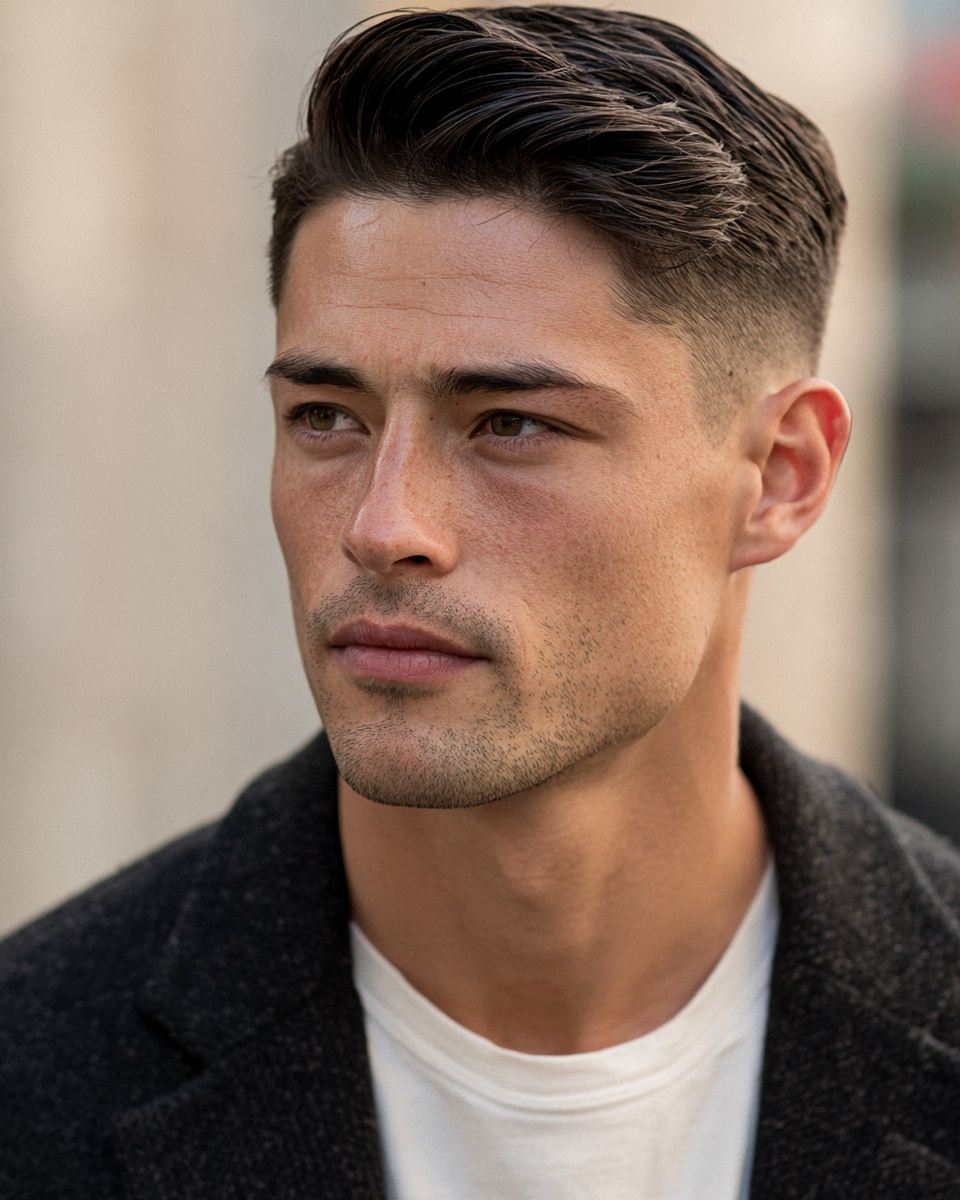
Best for: Medium to thick hair; men who want more definition.
Ask your barber: Mid fade on the sides with enough length on top to preserve the Ivy League side sweep.
Styling: Matte paste for a natural finish or pomade for more polish.
4. Ivy League with Fade
This fade haircut is the most assertive version of the classic formula. By removing more weight from the sides, it makes the longer top read more prominently and gives the haircut a younger, more fashion-forward silhouette.
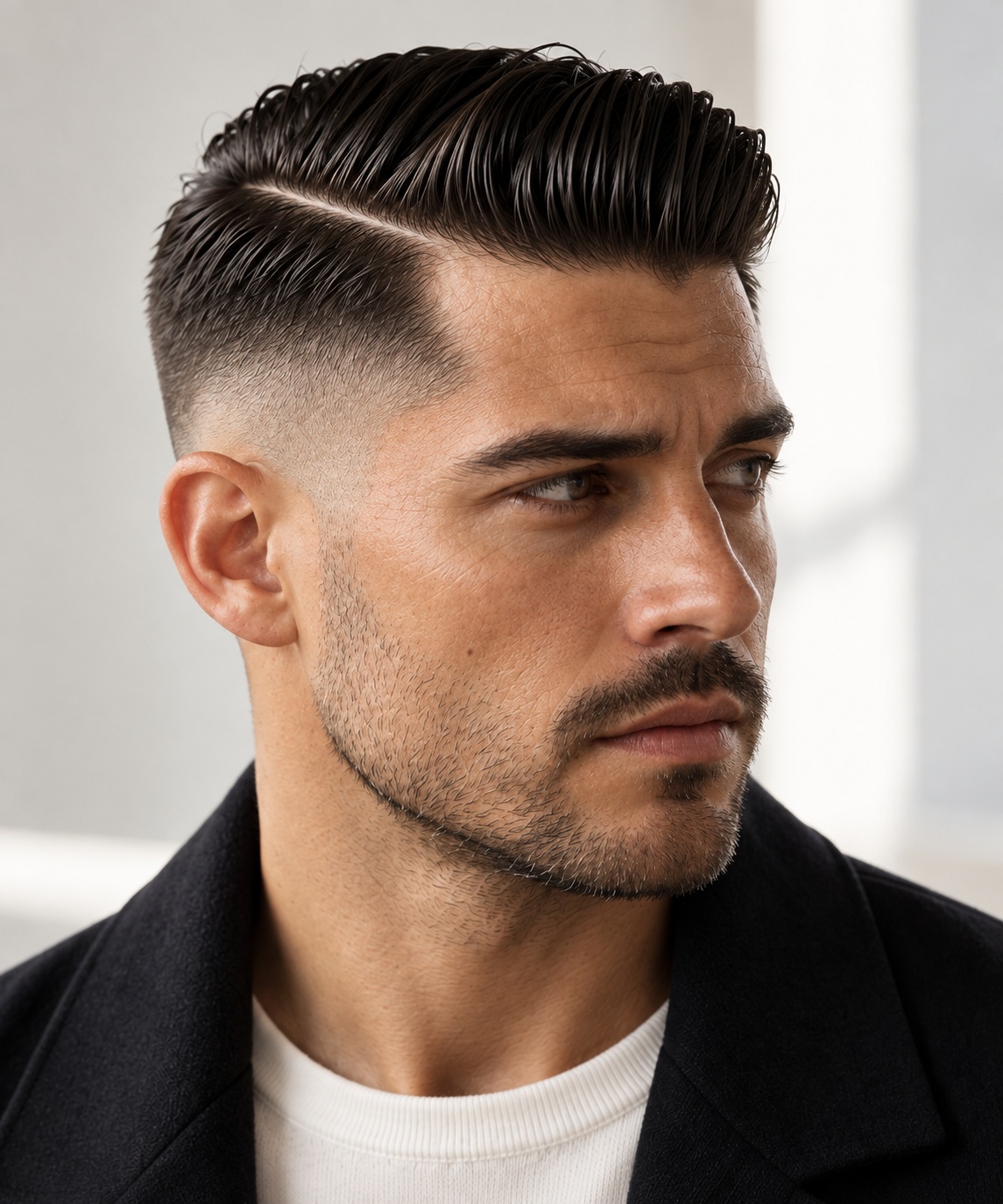
The defined side part keeps it rooted in the Ivy League, while the extra lift and slicked-back volume at the front give it a subtle pompadour influence.
Best for: Men who like strong contrast and very clean sides.
Ask your barber: Keep the Ivy League shape on top but take the fade higher around the temples.
Styling: Matte clay or paste with controlled movement.
5. Textured Ivy League Hairstyle
The textured Ivy League keeps the same proportions but drops the polished comb-over. Point-cut texture and a matte finish let the top move more naturally, which makes the haircut feel less formal and more current.
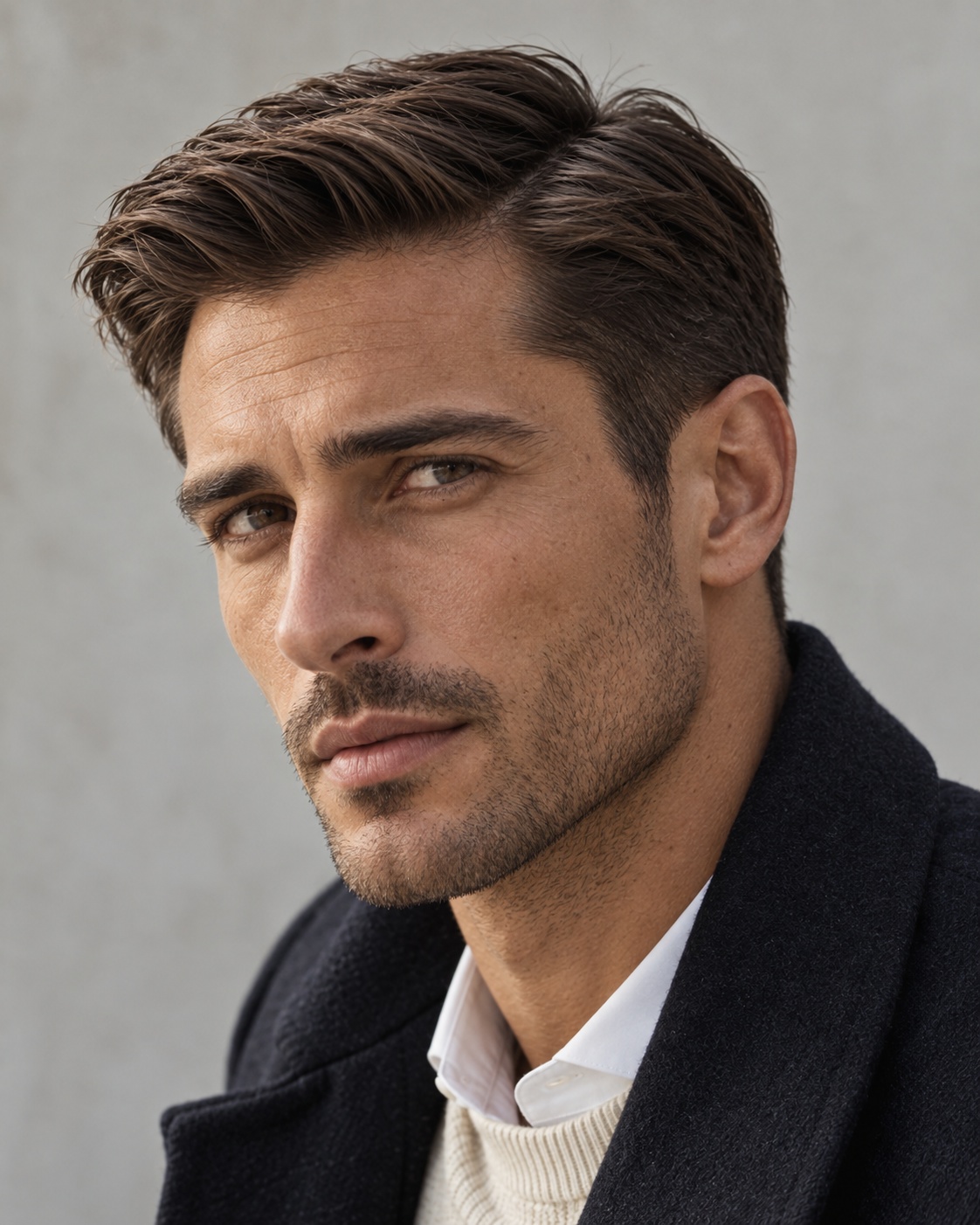
Best for: Thick or slightly wavy hair; casual-professional environments.
Ask your barber: Keep the Ivy League proportions but add texture through the top so it can be finger-styled.
Styling: Matte clay, fiber, or paste.
6. Ivy League with Fade and Hard Part
A hard part turns the Ivy League’s naturally understated parting into a deliberate design feature. It makes the cut more graphic and barbershop-driven, but it also increases maintenance because the shaved line grows out quickly.
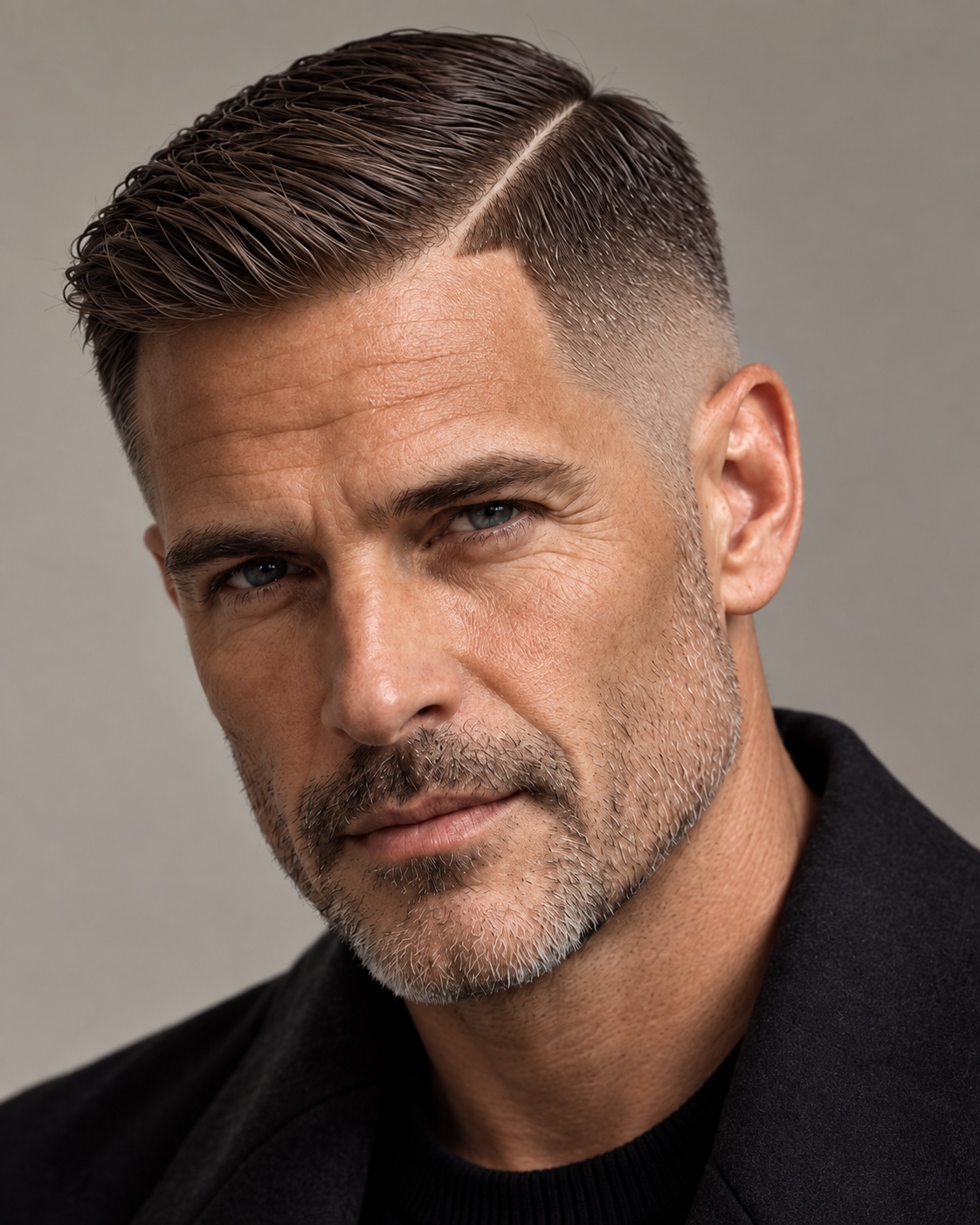
Best for: Straight hair and men who like crisp detailing.
Ask your barber: Follow the natural part line and define it with a narrow razor part.
Styling: Pomade or cream to keep the division clean.
7. Formal Ivy League
This is the classic version of the mid-century Ivy League with collegiate roots: neatly tapered sides, a defined side part, and a little more polish through the top. The finish should look groomed rather than glossy, with just enough product to hold the shape.
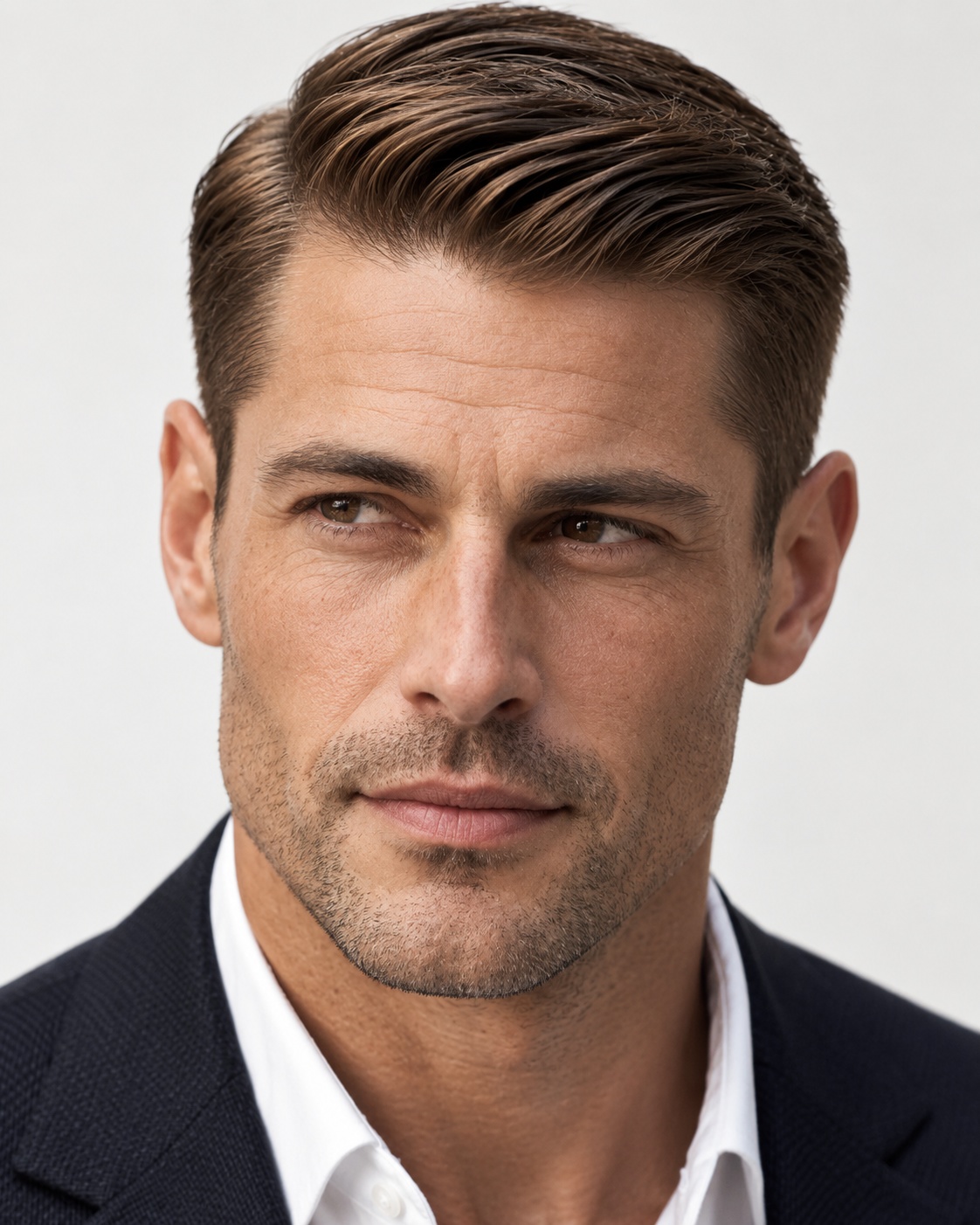
Best for: Straight to slightly wavy hair and men who like classic preppy style.
Ask your barber: Keep a traditional scissor taper with around 2 inches on top and a clean side part.
Styling: Small amount of pomade or grooming cream.
Explore the Look: Business Haircuts for Men: 40+ Professional, Formal & Office Styles
8. Short Ivy League
The short Ivy League sits very close to a crew cut but leaves just enough length at the front to establish a part. It is clean, compact, and one of the lowest-maintenance ways to wear the style.
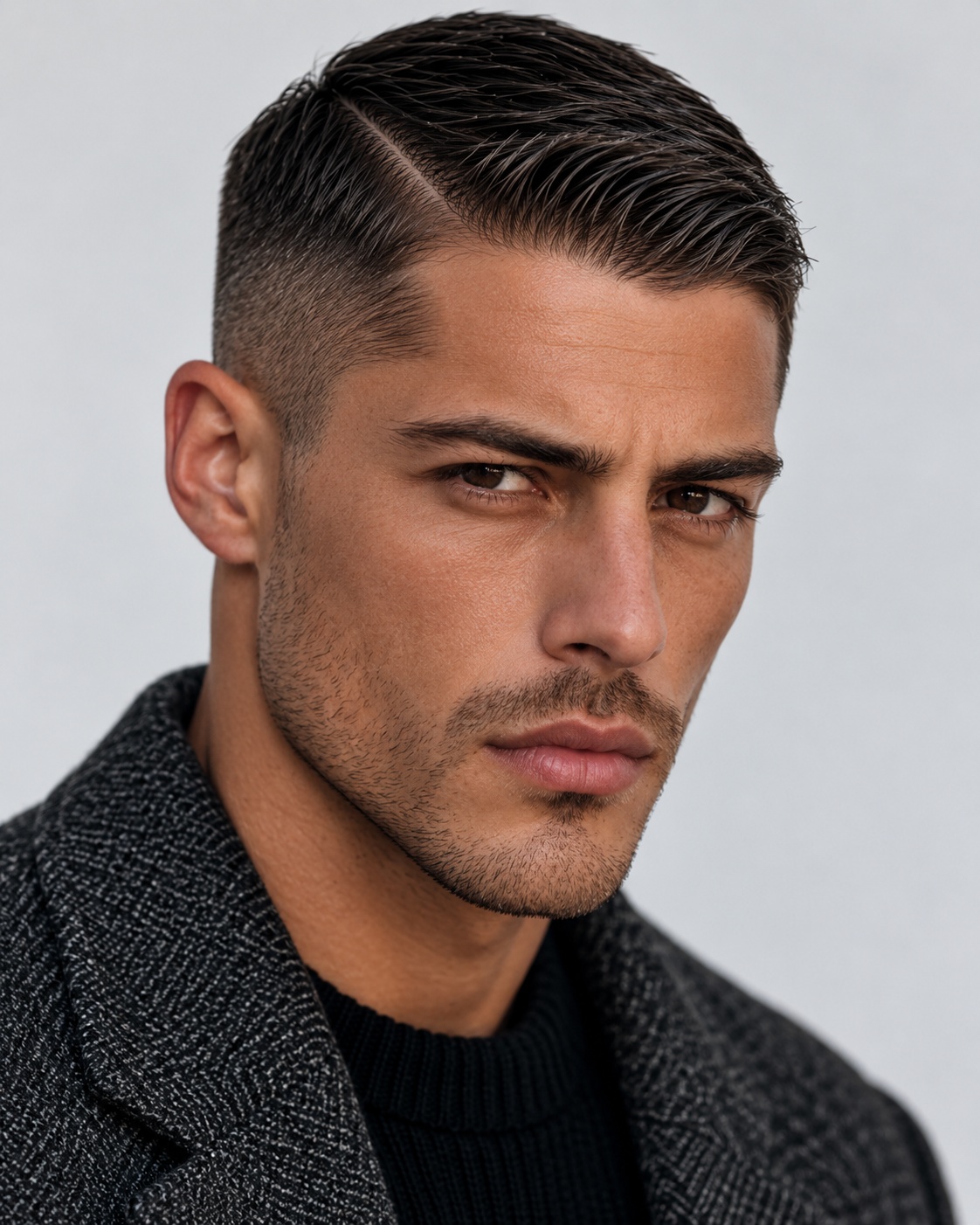
Best for: Straight or wavy hair, active lifestyles, and men who want very little styling.
Ask your barber: Keep roughly 1–1.25 inches at the front, shorter through the crown, with a soft traditional taper.
Styling: Usually just a touch of cream or nothing at all.
9. Modern Princeton Ivy League Cut
Princeton is historically another name for the Ivy League, but today the term is sometimes used for a slightly longer, softer interpretation. The extra length gives the front more movement and makes it easier to wear swept to the side, lightly brushed back, or simply allowed to fall naturally.
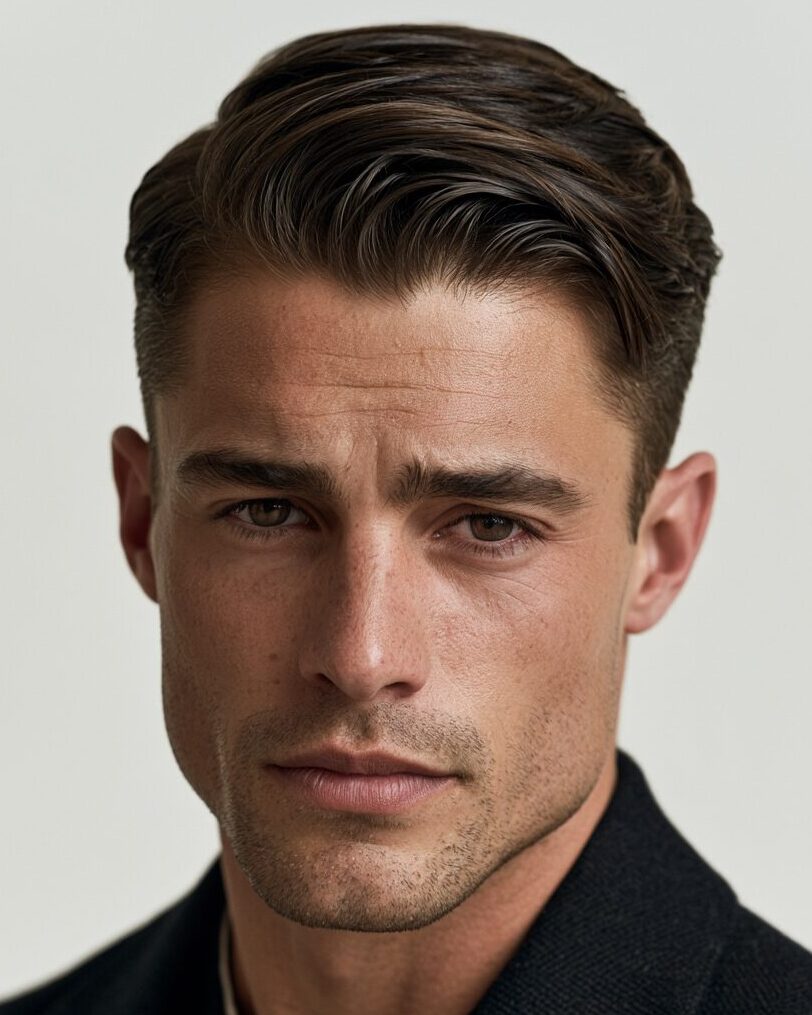
Best for: Any hair type.
Ask your barber: Keep the classic taper but leave extra length through the top and front.
Styling: Light cream or soft paste.
10. Old Money Ivy League Cut
The Old Money Ivy League keeps the classic side-parted shape but styles it with a clean, gelled finish. The sides are neatly tapered while the top is combed into place with visible shine, giving the haircut a polished, preppy look with a slightly vintage feel.

Best for: Straight to slightly wavy hair with medium density.
Ask your barber: Keep 2–3 inches on top with a clean taper and enough length for a defined side part.
Styling: Use a small amount of hair gel or gel-pomade and comb the top neatly to the side for a smooth, glossy finish.
11. Short Slick-Finish Ivy League
This version of the Ivy League also keeps the old-school side-parted structure but styles it with a smoother, glossier finish. Instead of looking dry or textured, the hair is combed neatly into place with visible shine, giving the cut a sharper, more polished feel.
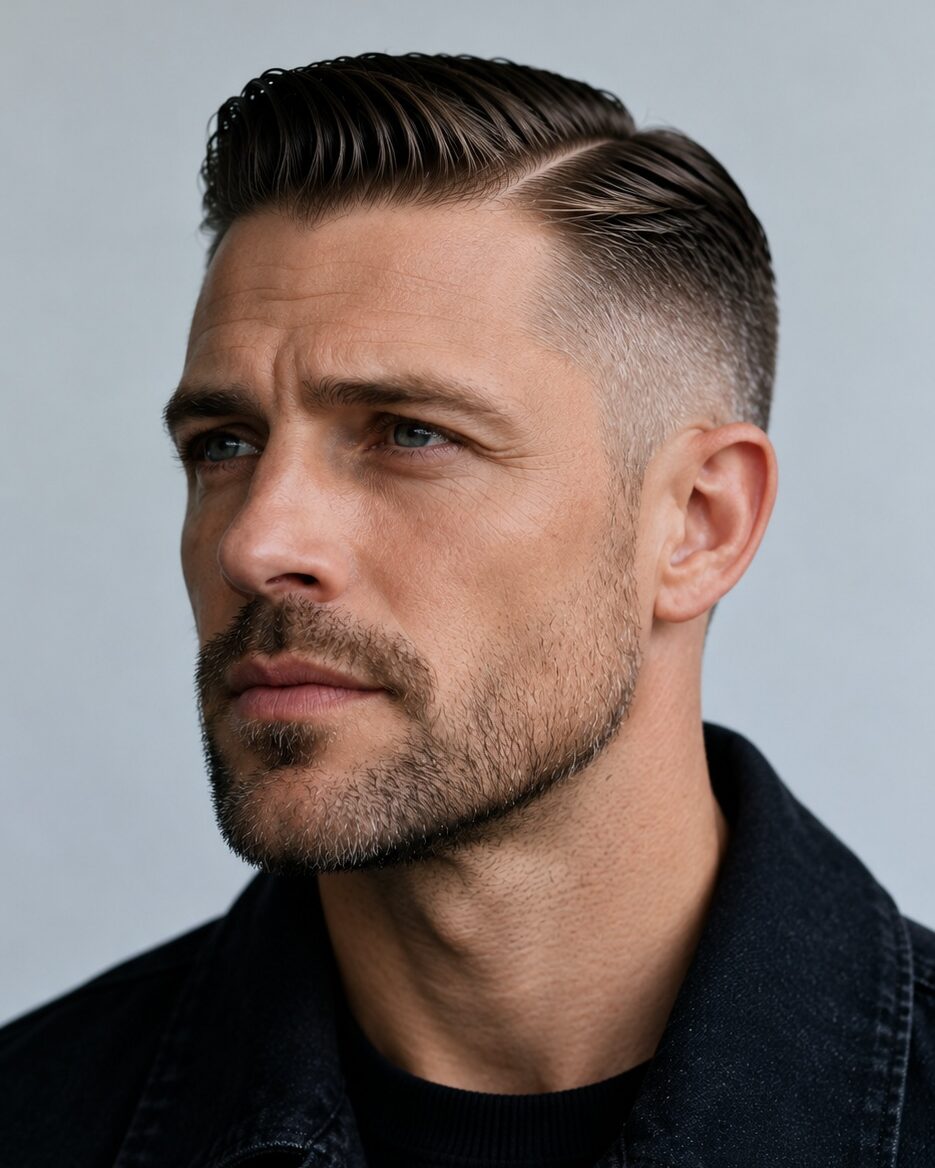
Best for: Straight to slightly wavy hair with medium density.
Ask your barber: Keep 2–2.5 inches on top with a clean taper and enough length to define a neat side part and smooth finish.
Styling: Use a pomade or gel-pomade for shine and comb the hair neatly into place.
Explore More: 20 Slick Back Hairstyles for Men: Classic, Textured, and Modern Cuts
12. Greaser Ivy League Haircut
This hybrid takes the sheen and attitude of 1950s greaser hair. It’s the point where the Ivy League starts borrowing from the pompadour: the side part stays, but the top is pulled up and back with shine and noticeable lift.
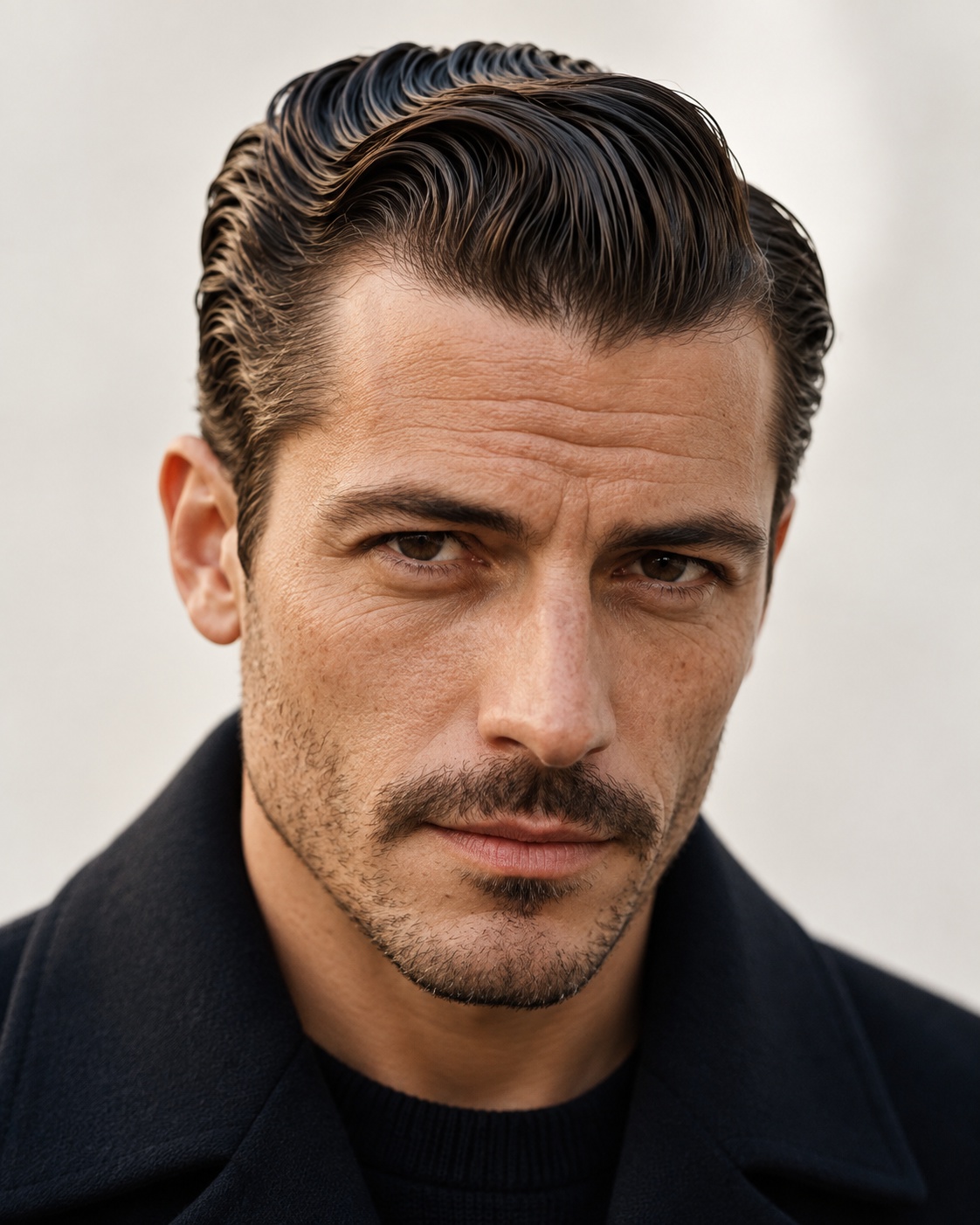
Best for: Straight, dense hair and vintage-inspired styling.
Ask your barber: Keep the Ivy League proportions but leave enough front length to sweep slightly up and back.
Styling: Medium-shine pomade and a comb.
Discover More: 1950s Men’s Hairstyles Still on Trend Today
13. Ivy League Comb-Over
The comb-over is the most traditional way to style the Ivy League. All the top length follows the side part in one controlled direction, giving the haircut a precise, formal finish without adding much height.
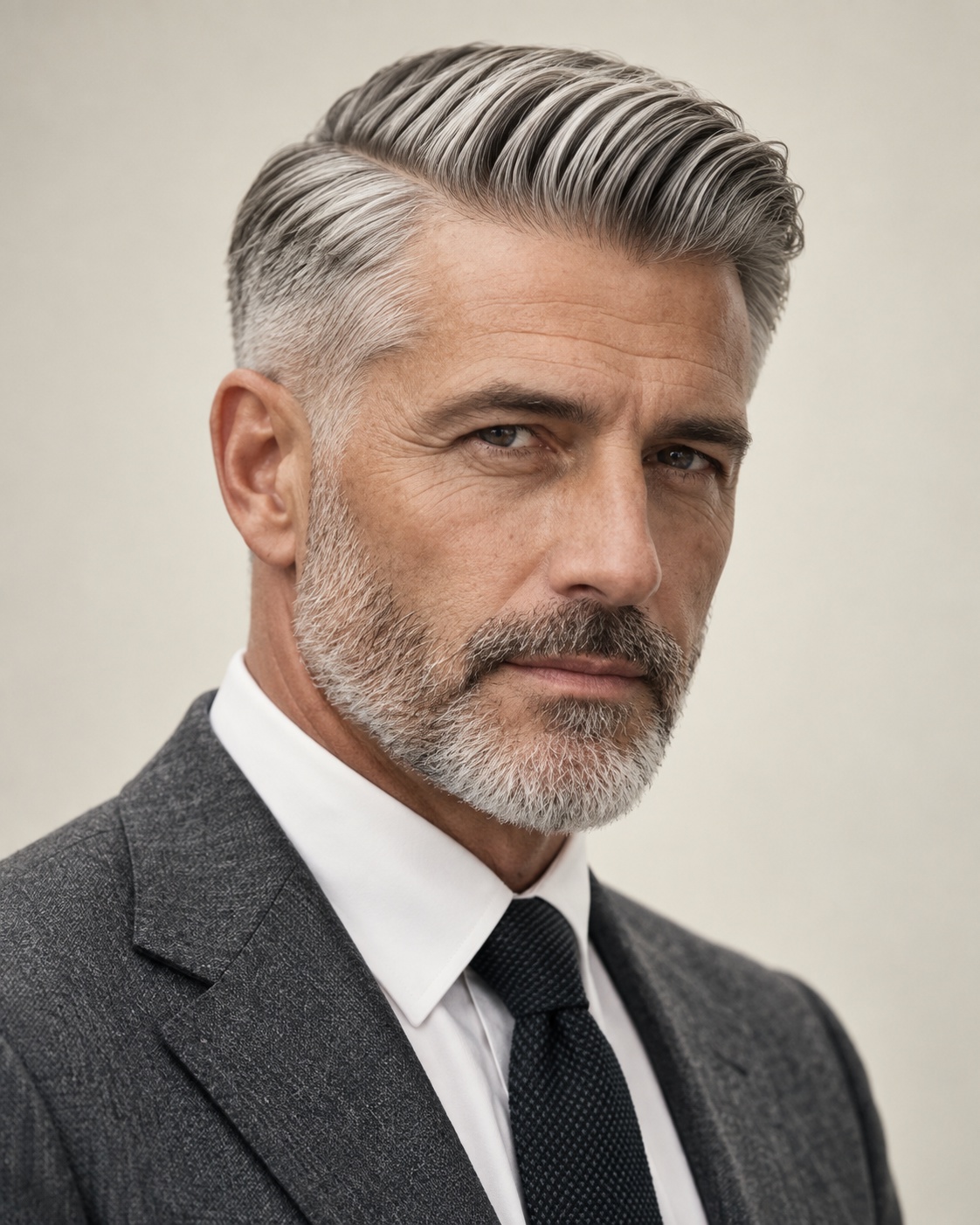
Unlike a pompadour haircut, the emphasis here is on direction rather than height: the hair moves across the head in a smooth, structured sweep instead of being pushed dramatically upward and back.
Best for: Straight or slightly wavy hair and formal settings.
Ask your barber: Leave enough top length for a clean side comb-over and keep the taper conservative.
Styling: Medium-hold cream or pomade.
Worth Reading: Side Part vs. Comb Over: Key Differences & Styling Guide
14. Ivy League with Skin Fade
The skin fade creates the strongest contrast in the lineup. The top remains partable and recognizably Ivy League, while the sides fade completely to skin for a much sharper modern finish.
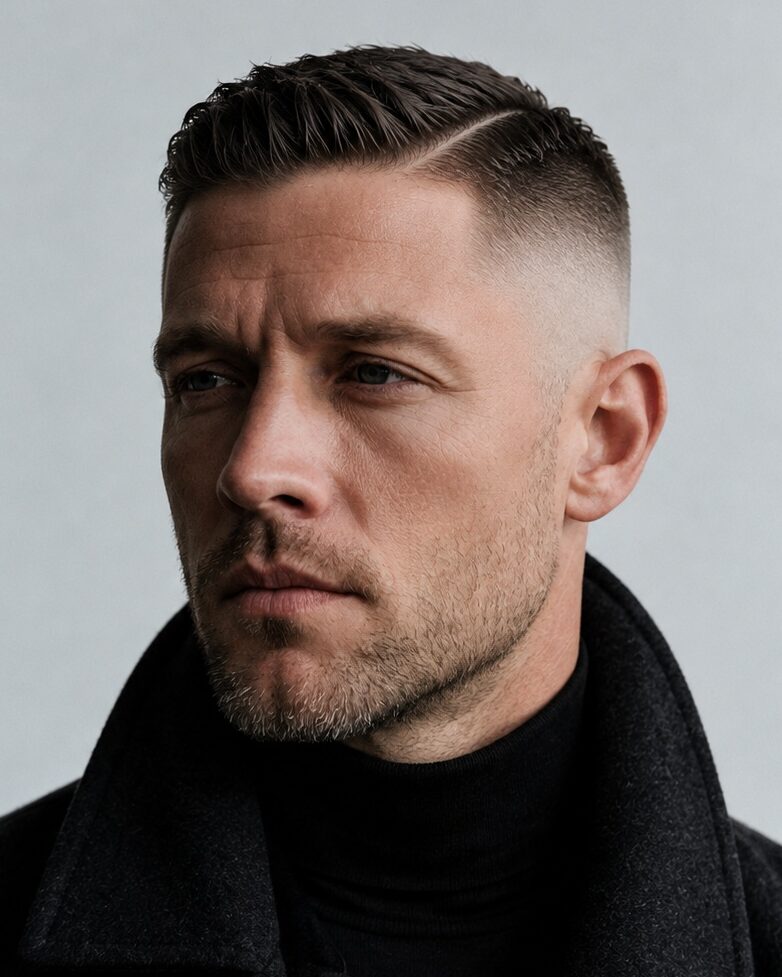
Best for: Men who like a very clean finish and do not mind regular barber visits.
Ask your barber: Skin fade through the sides while preserving enough top length for a side part.
Styling: Keep the top simple and controlled.
15. Ivy League with Quiff
The quiff version uses the extra length at the front to create a controlled lift before the hair sweeps backward or to the side. It adds presence without becoming a full quiff or pompadour.
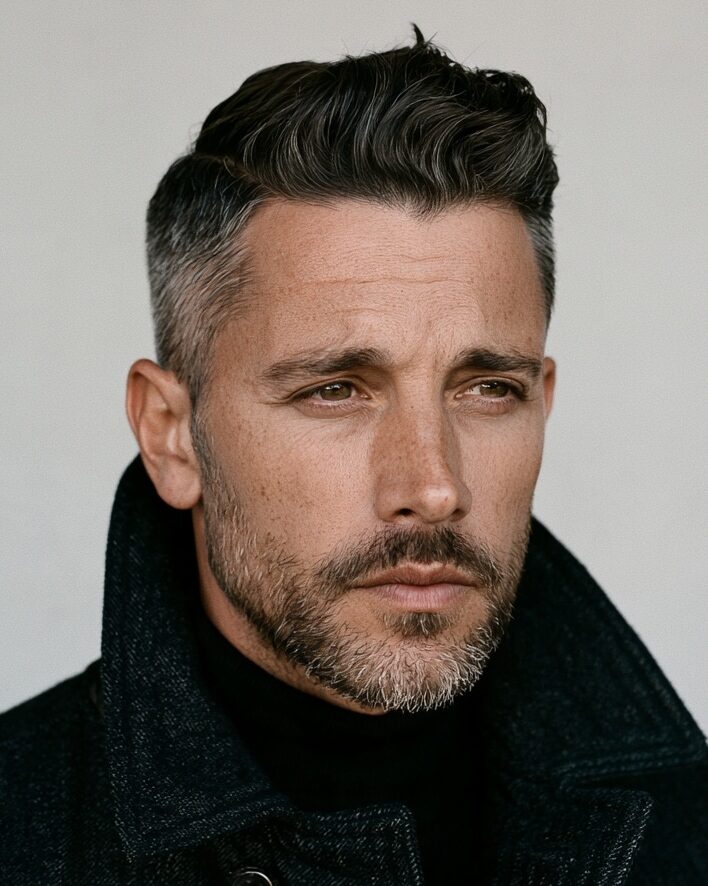
Best for: Straight to wavy hair with medium or thick density.
Ask your barber: Leave the front slightly longer than the crown while keeping the sides neatly tapered.
Styling: Blow-dry the front upward and finish with matte paste.
Explore Similar Cuts: 20 Quiff Hairstyles for Men: Modern Haircuts for Every Occasion
16. Ivy League with Natural Part
A softer take on the classic Ivy League, with a natural side part, relaxed texture, and enough length on top to fall into place without looking overly styled.
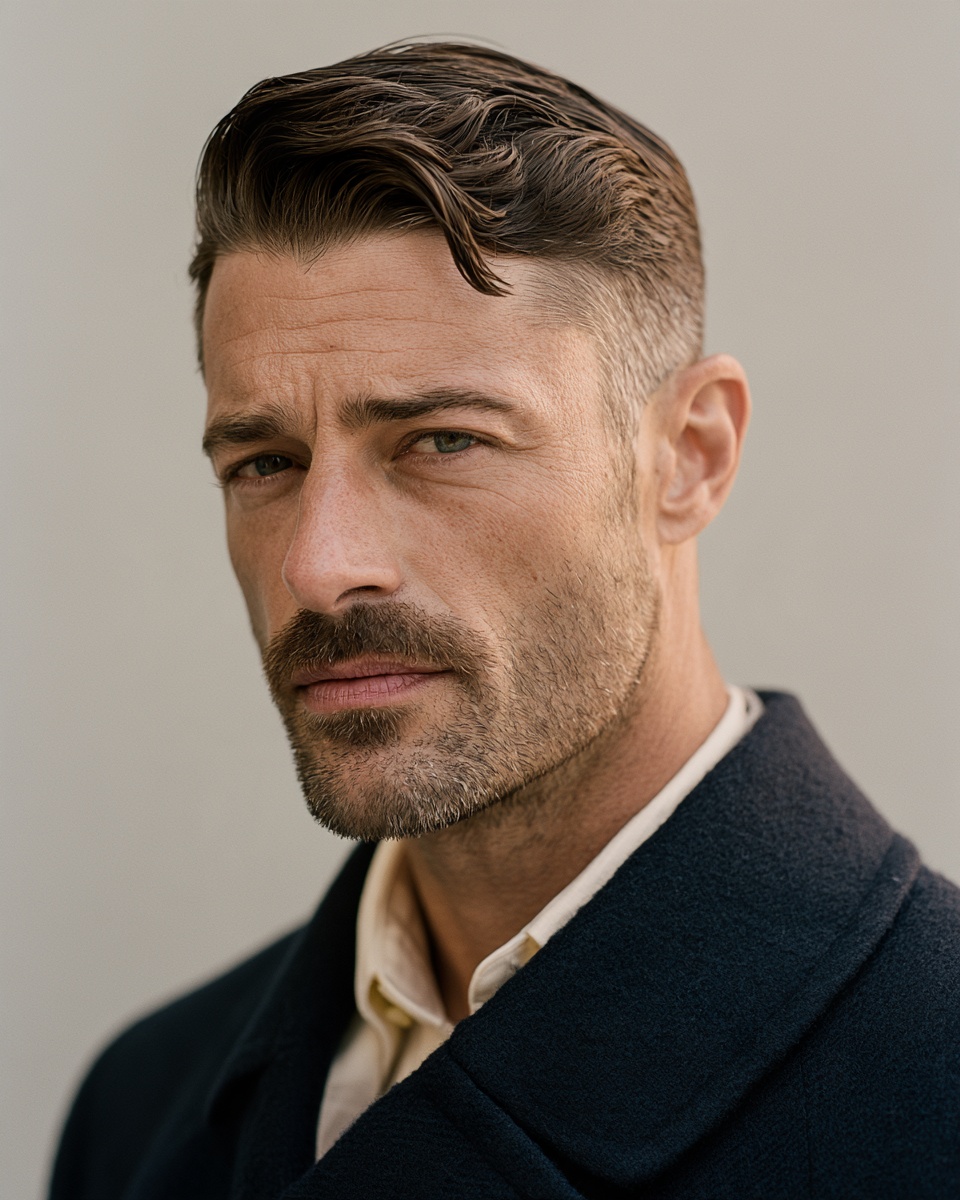
Best for: Men who want an easy, low-maintenance finish.
Ask your barber: Work with my natural part and growth pattern rather than creating a hard line.
Styling: Very small amount of cream, then finger-style or comb lightly.
17. Messy Ivy League
The messy Ivy League keeps the compact proportions but drops the precise combing. A little point-cut texture lets the top fall naturally, making the haircut easier to wear casually.
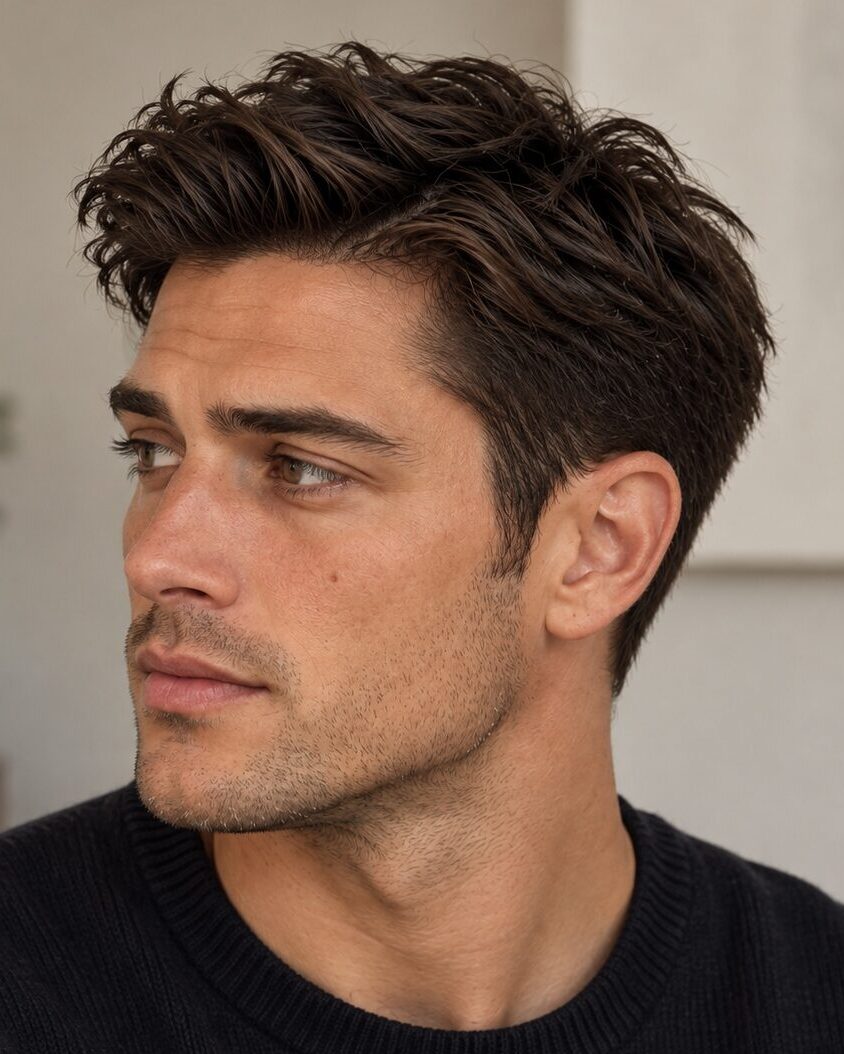
Best for: Thick, wavy, or naturally textured hair.
Ask your barber: Keep the Ivy League outline but add enough texture for finger styling.
Styling: Matte paste or clay.
Explore Similar Hairstyles: Messy Haircuts for Men: Ultimate Effortlessly Cool Looks
18. Ivy League for Wavy Hair
Natural wave softens the Ivy League and makes it feel less formal. Rather than flattening the top, let the wave create shape while the taper keeps the sides controlled.
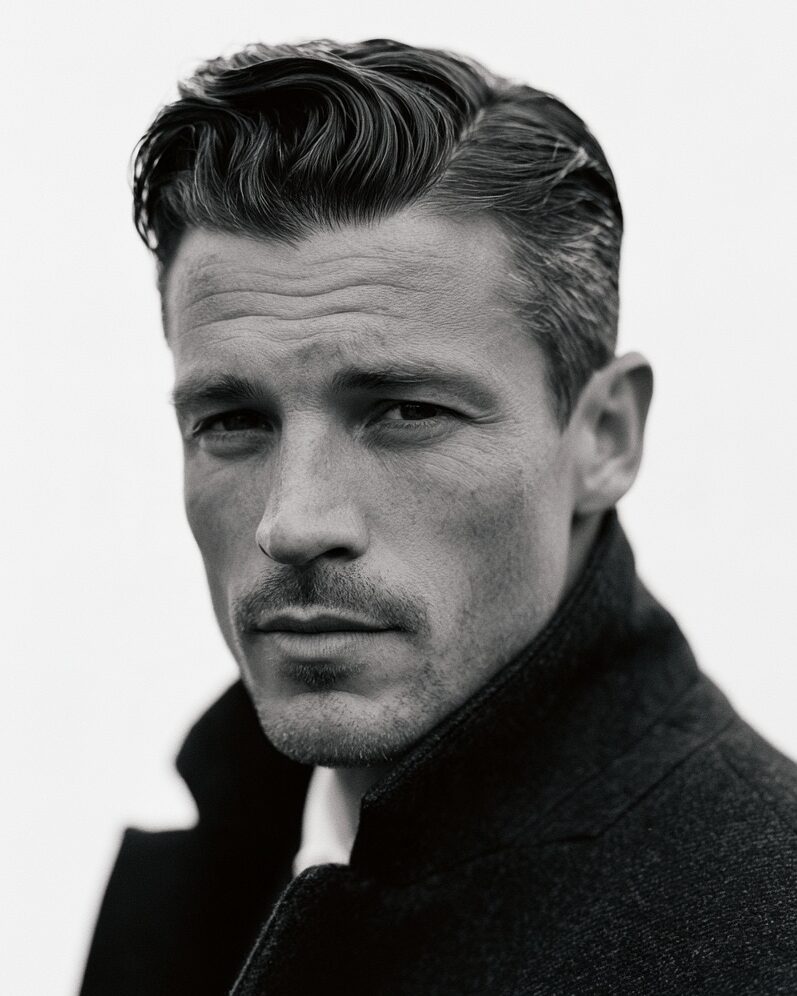
Best for: Naturally wavy hair.
Ask your barber: Leave enough top length for the wave to form and taper the sides without cutting the shape too square.
Styling: Lightweight cream or soft paste.
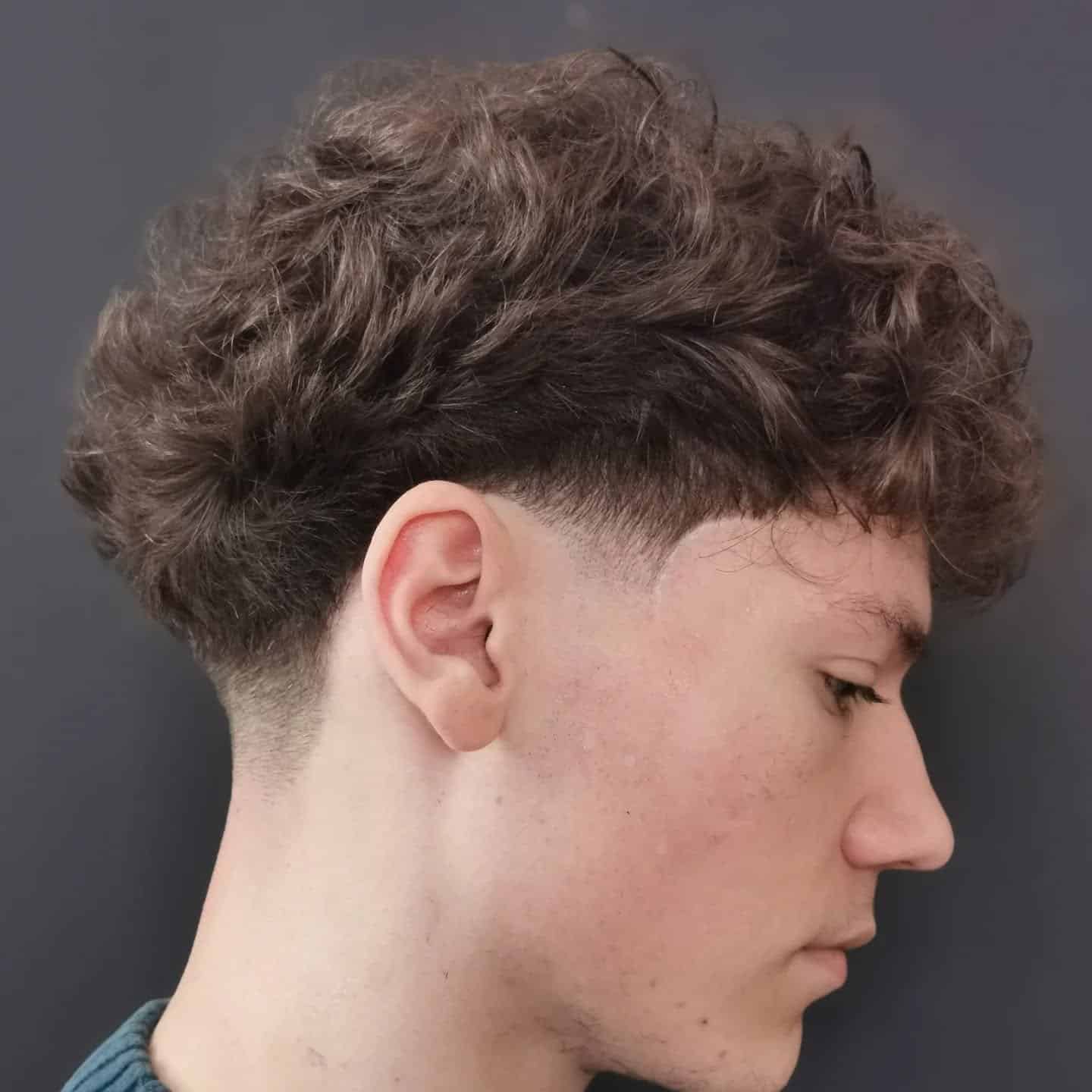
19. Ivy League for Curly Hair
With curly hair, the classic side part becomes less important than the silhouette. The top stays long enough for the curl pattern to form while the sides remain short enough to preserve the Ivy League’s compact shape.
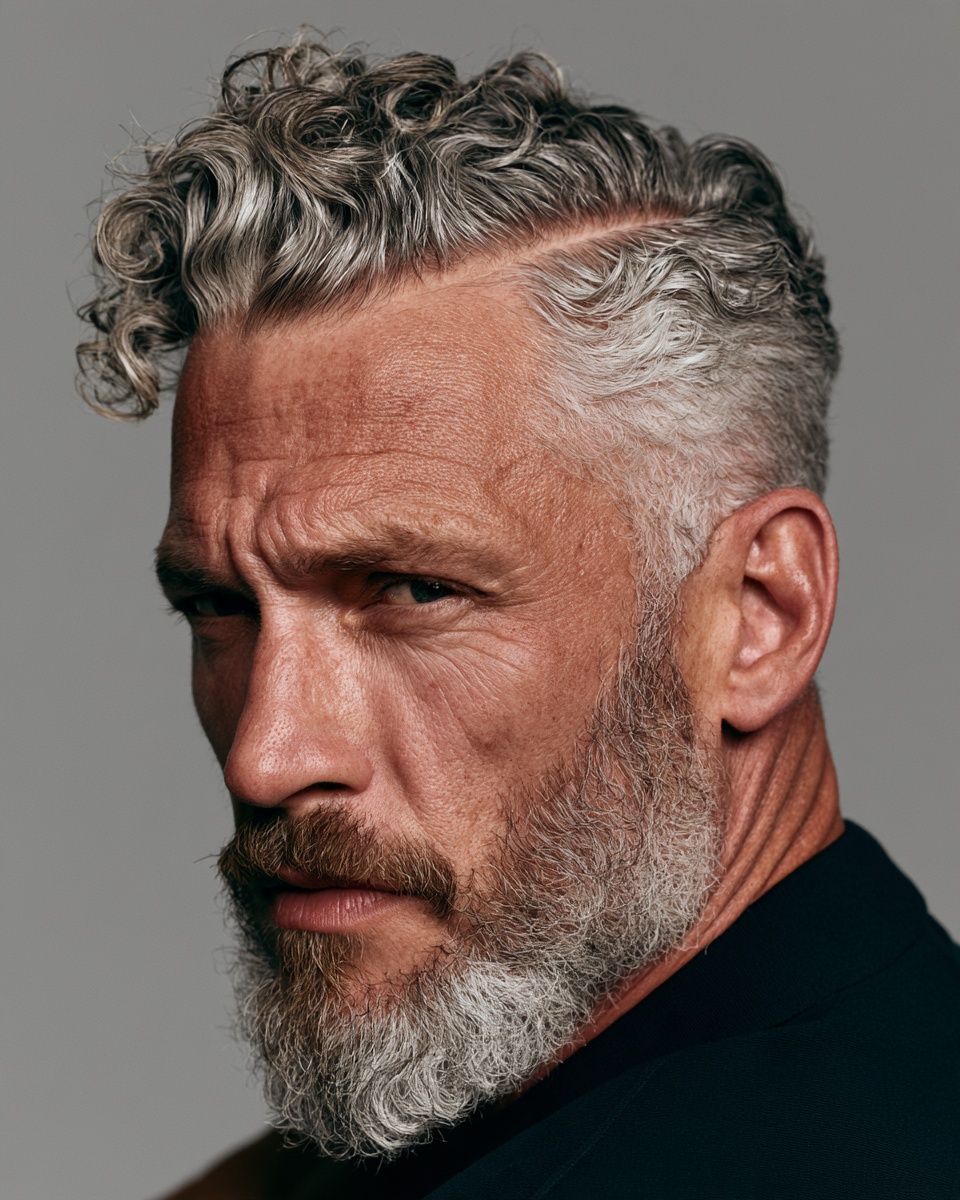
Best for: Loose to medium curls.
Ask your barber: Preserve curl definition on top and keep the sides neatly tapered.
Styling: Curl cream or flexible gel.
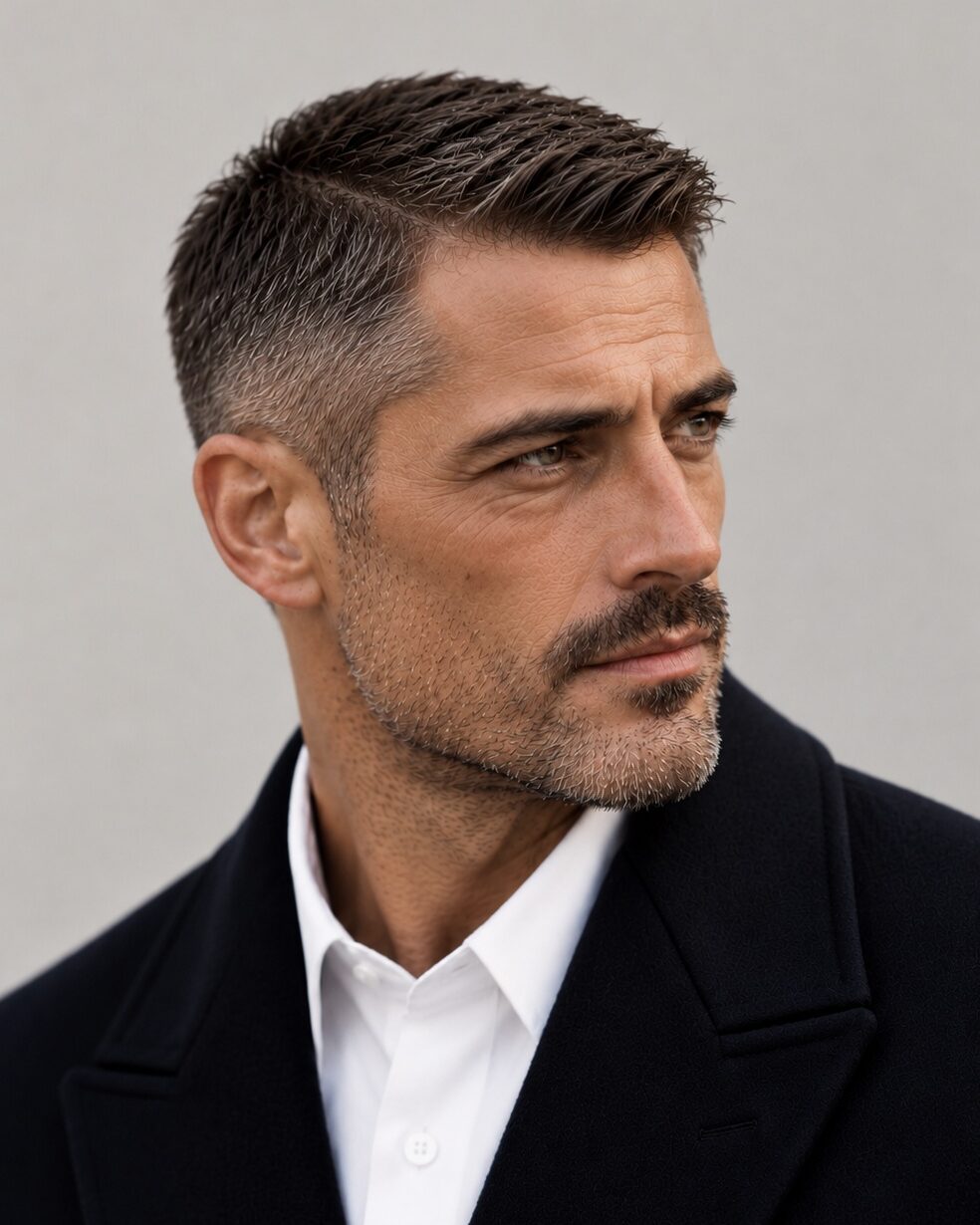
20. Silver Fox Ivy League
Gray hair adds texture and dimension on its own, so the Ivy League can carry a little more length and lift on top without looking styled. Brushed up and back, it reads confident and distinguished, and it works just as well with a full beard as clean-shaven.
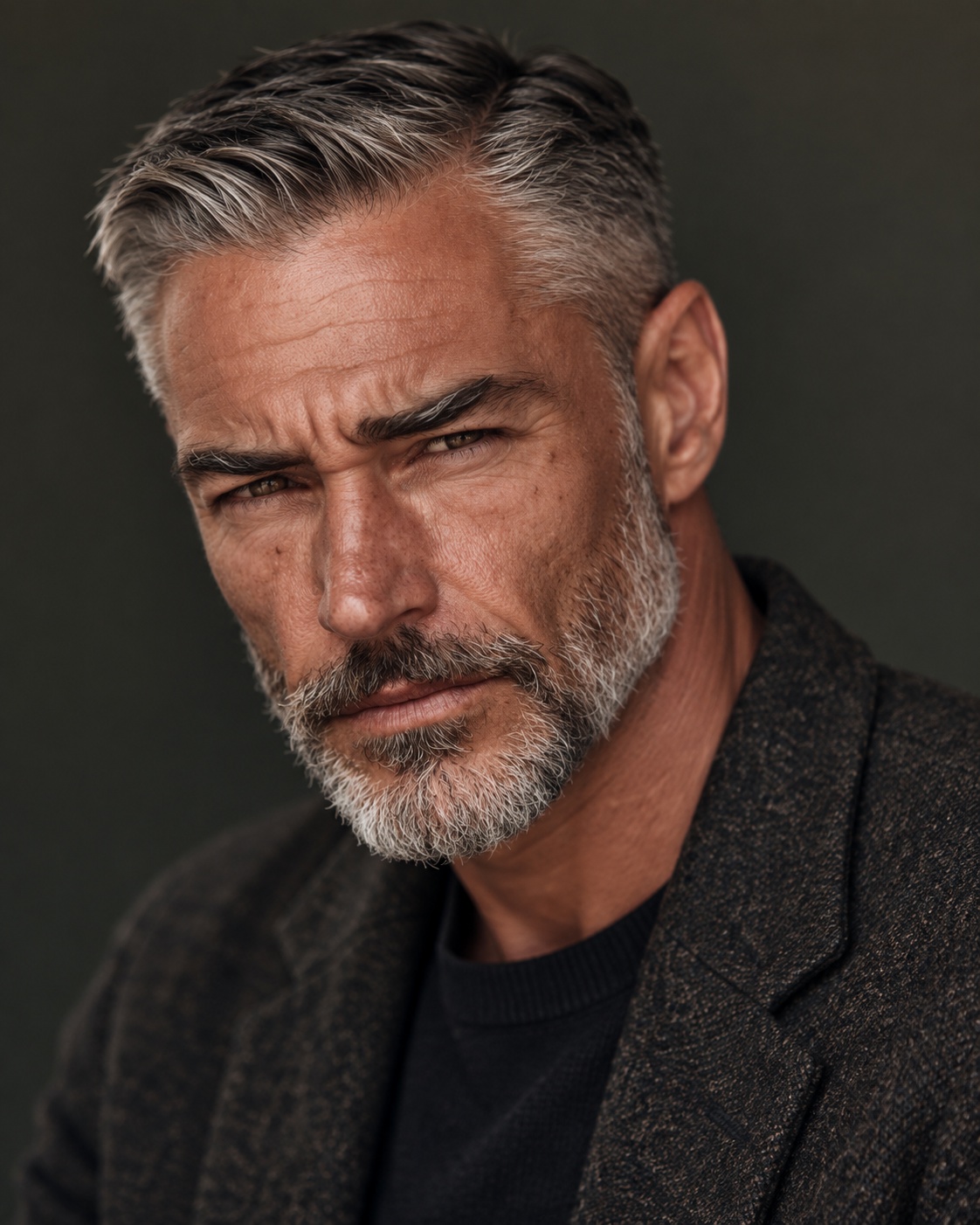
Is your hairline receding? Keep the top shorter, around 1–1.5 inches, and soften the part. See our guide to receding hairline haircuts for men over 50.
Best for: Gray, silver or salt-and-pepper hair with good density on top.
Ask your barber: Keep around 2 inches on top, taper the sides softly, and leave enough length at the front to brush up and back.
Styling: Light matte cream or paste. Heavy shine can make gray hair look flat.
Ivy League Haircut with Beard or Stubble
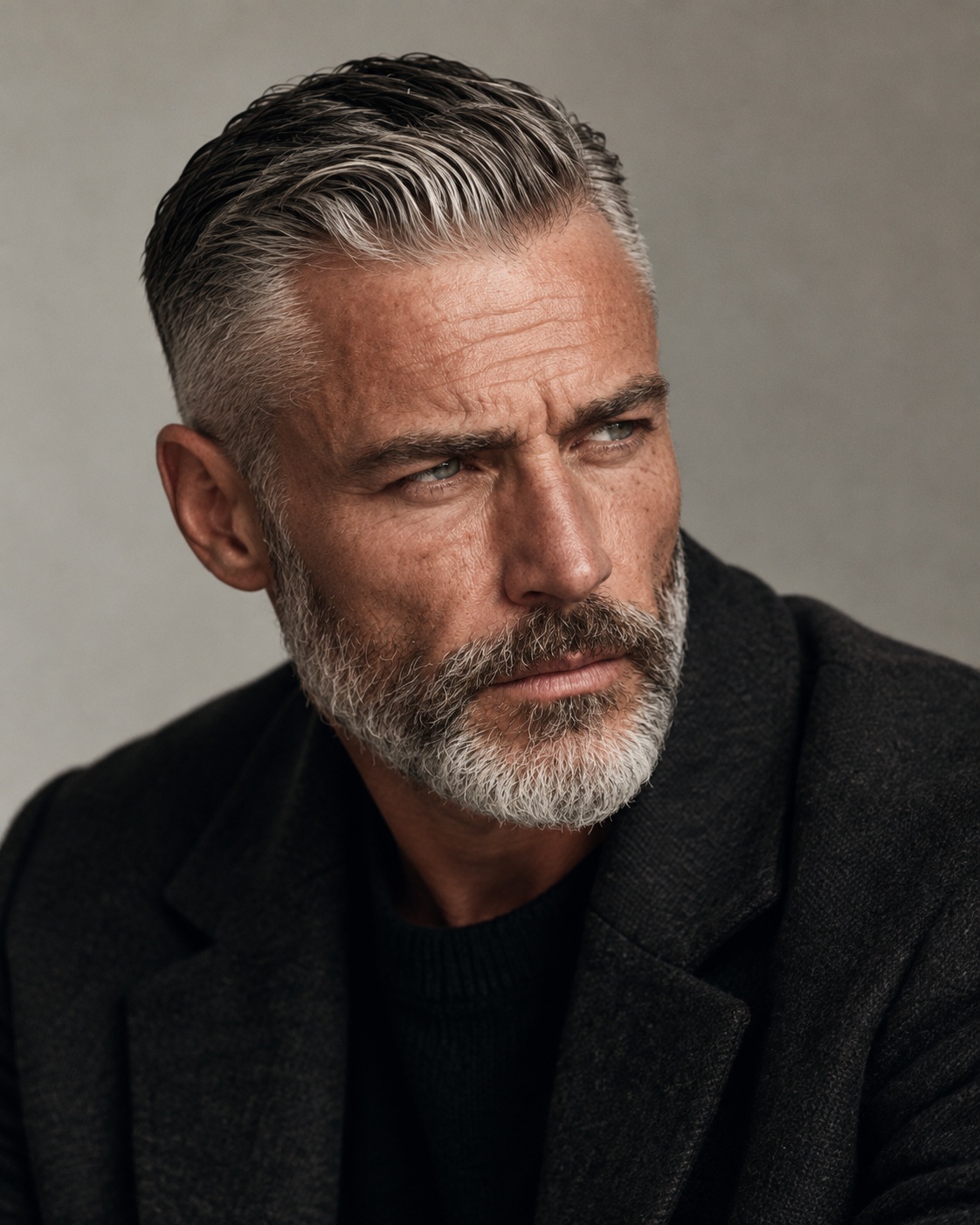
The Ivy League works especially well with a fuller beard when the haircut keeps some structure and height on top. Here, the swept-back shape and neatly tapered sides balance the weight of the beard, so the overall look feels intentional rather than heavy. The gray running through both the hair and beard also gives the style a more mature, distinguished finish.
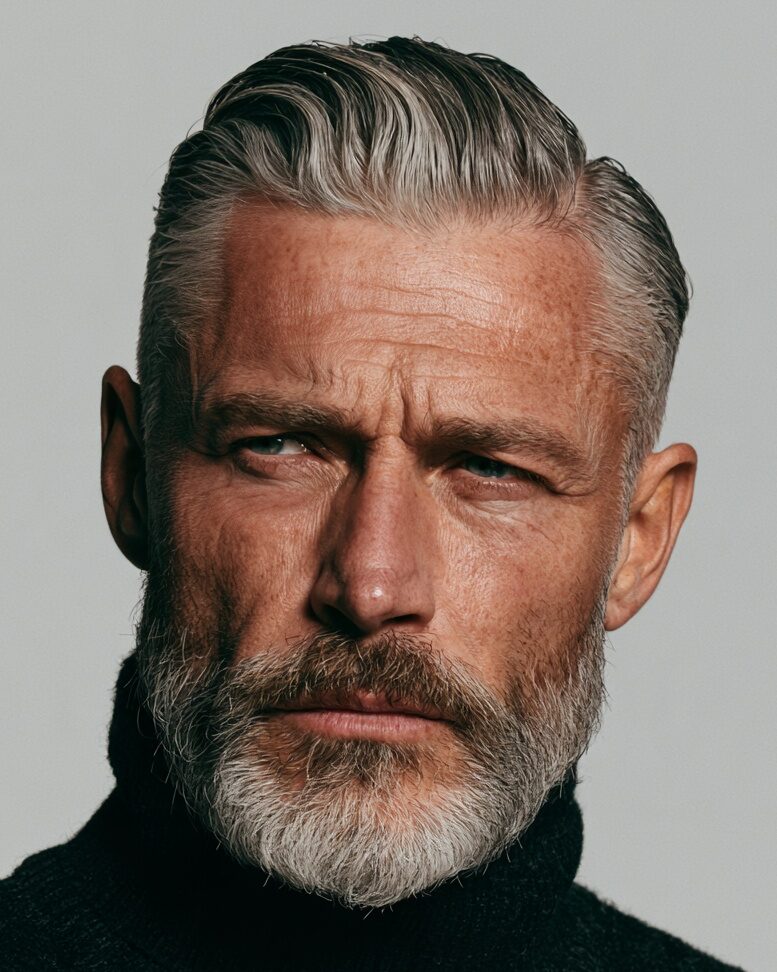
Keep the beard dense but controlled around the cheeks and neckline, and ask your barber to blend the sideburns into the facial hair rather than creating a hard break. A little natural texture in the hair keeps the whole look from feeling too polished.
Explore Trendy Hairstyles for Mature Men: Top Hairstyles for Gray Hair Men Over 50
But… What Exactly Is an Ivy League Haircut?
The Ivy League is a short men’s haircut that evolved from the crew cut, keeping the compact shape but adding enough length through the front for a side part, sweep, or light brush-up.
That flexibility is central to the cut. Barbering manuals such as L. Sherman Trusty’s “The Art and Science of Barbering” (1971) described cuts like the Ivy League as “convertible,” because the longer front could be worn in several ways without changing the underlying shape.
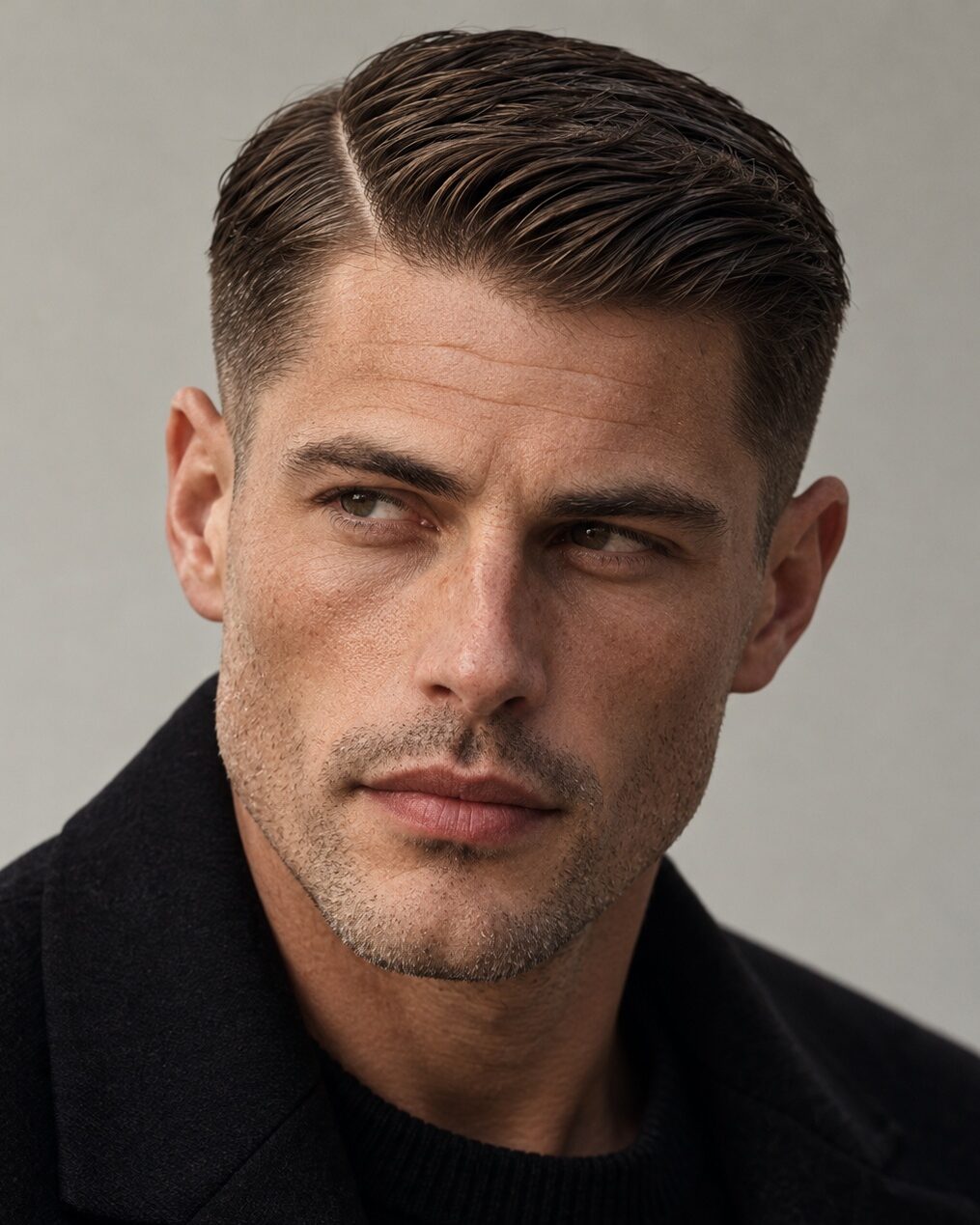
Modern versions may add fades, more texture, or extra length, but the clean, controlled collegiate silhouette remains the defining idea.
There is no single mandatory clipper number or exact top length. In practice, many versions leave roughly 1.5 to 2 inches on top, with more length possible in Princeton-style interpretations. The essential idea is proportion: clean short sides, a compact top, and enough flexibility to make the haircut look polished rather than military.
Ivy League vs. Crew Cut
The Ivy League belongs to the crew-cut family, but it is the longer and more versatile version. A standard crew cut is usually too short through the front to create a conventional side part; an Ivy League preserves enough front length to part, sweep, or lightly brush upward while the crown remains noticeably shorter.
| Ivy League | Crew Cut | |
|---|---|---|
| Top length | Long enough to part, sweep, or lightly brush up | Shorter and more uniform |
| Styling | Side part, texture, sweep, or brush-up | Usually minimal |
| Overall look | Polished, collegiate, versatile | Sporty, compact, military-influenced |
| Maintenance | Low to moderate | Low |
Where the Ivy League Haircut Comes From
The haircut takes its name from the Ivy League universities of the Northeastern United States and from the broader mid-century collegiate style associated with campuses such as Harvard, Yale, Princeton, and Columbia.
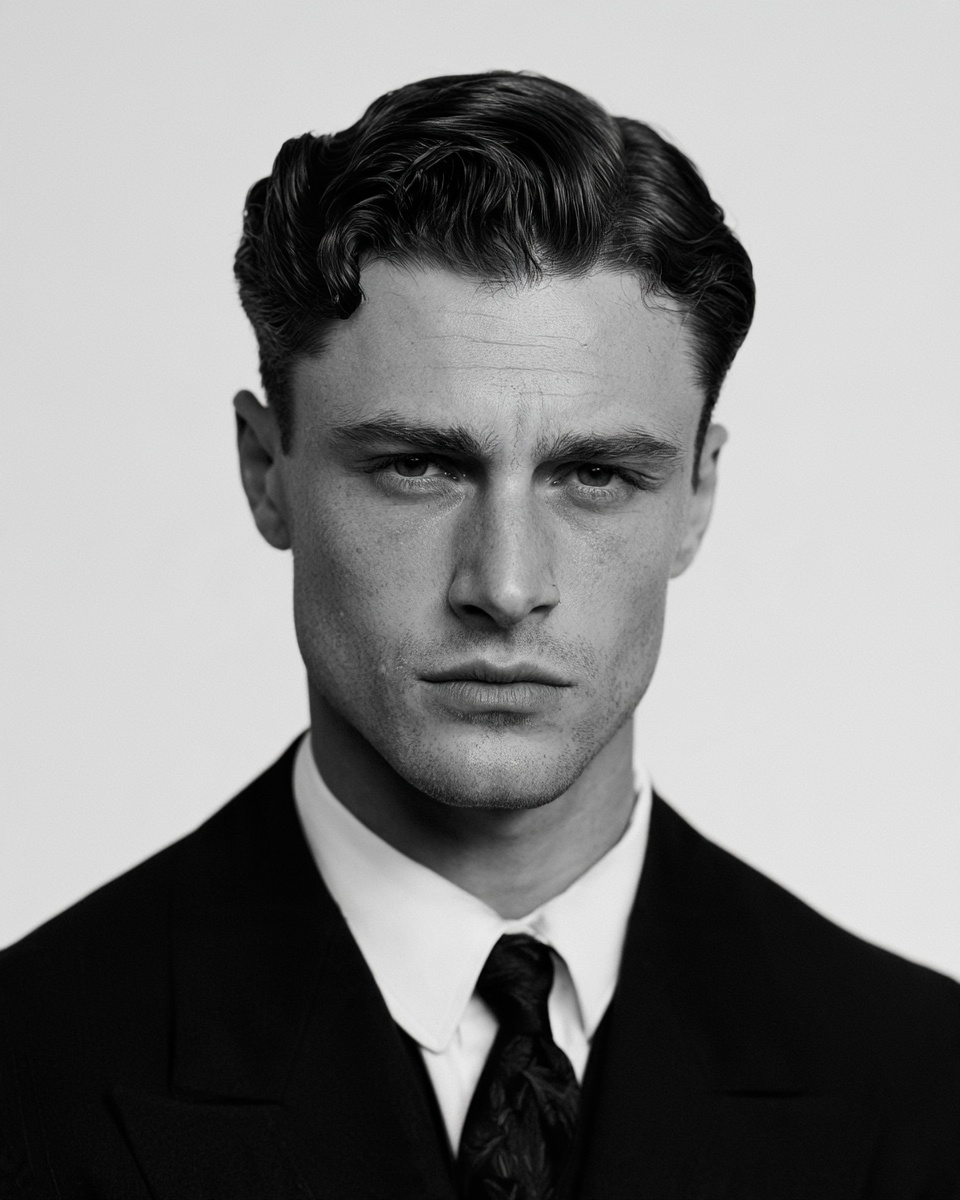
The haircut’s ancestry goes back to the close collegiate crew cuts worn by American university students in the 1920s and 1930s. The longer variation we now recognize as the Ivy League became particularly associated with American collegiate style during the 1950s and early 1960s.
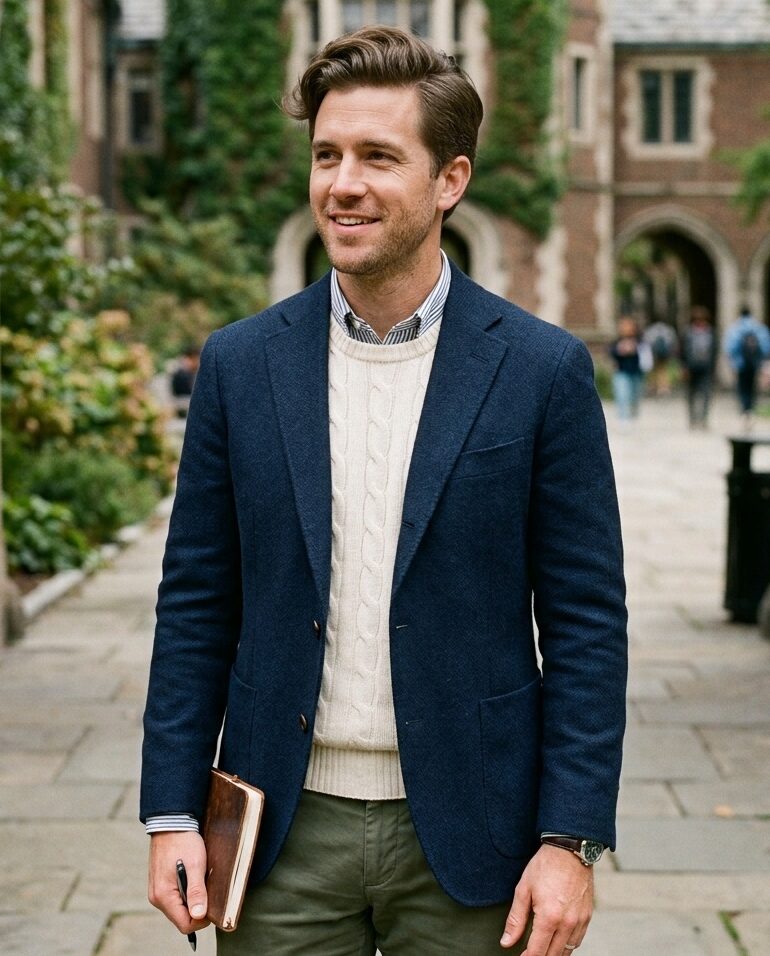
By the mid-century, the slightly longer, side-parted version had become closely associated with the polished Ivy League look.
Short, neat hair belonged to the same visual language as oxford shirts, chinos, loafers, varsity clothing, and the understated preppy wardrobe that became one of the most recognizable American style codes of the period.
Why the Ivy League Still Works
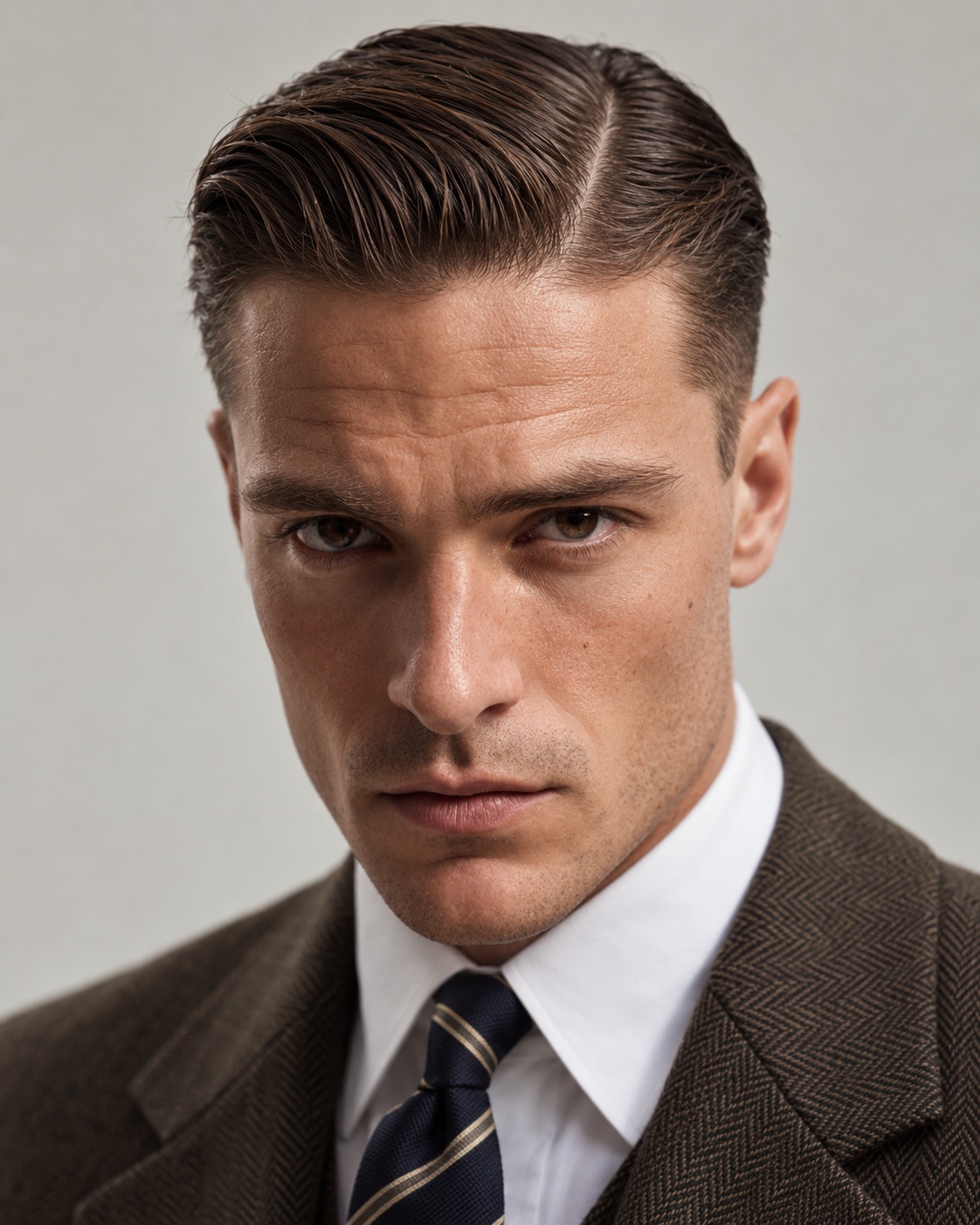
A low fade can make it feel current. A classic taper keeps it closer to its traditional form. Texture can relax it; pomade or gel can sharpen it. It also scales well with age: the same basic shape can work on a man in his twenties, forties, or sixties with relatively small adjustments to length, contrast, and product.
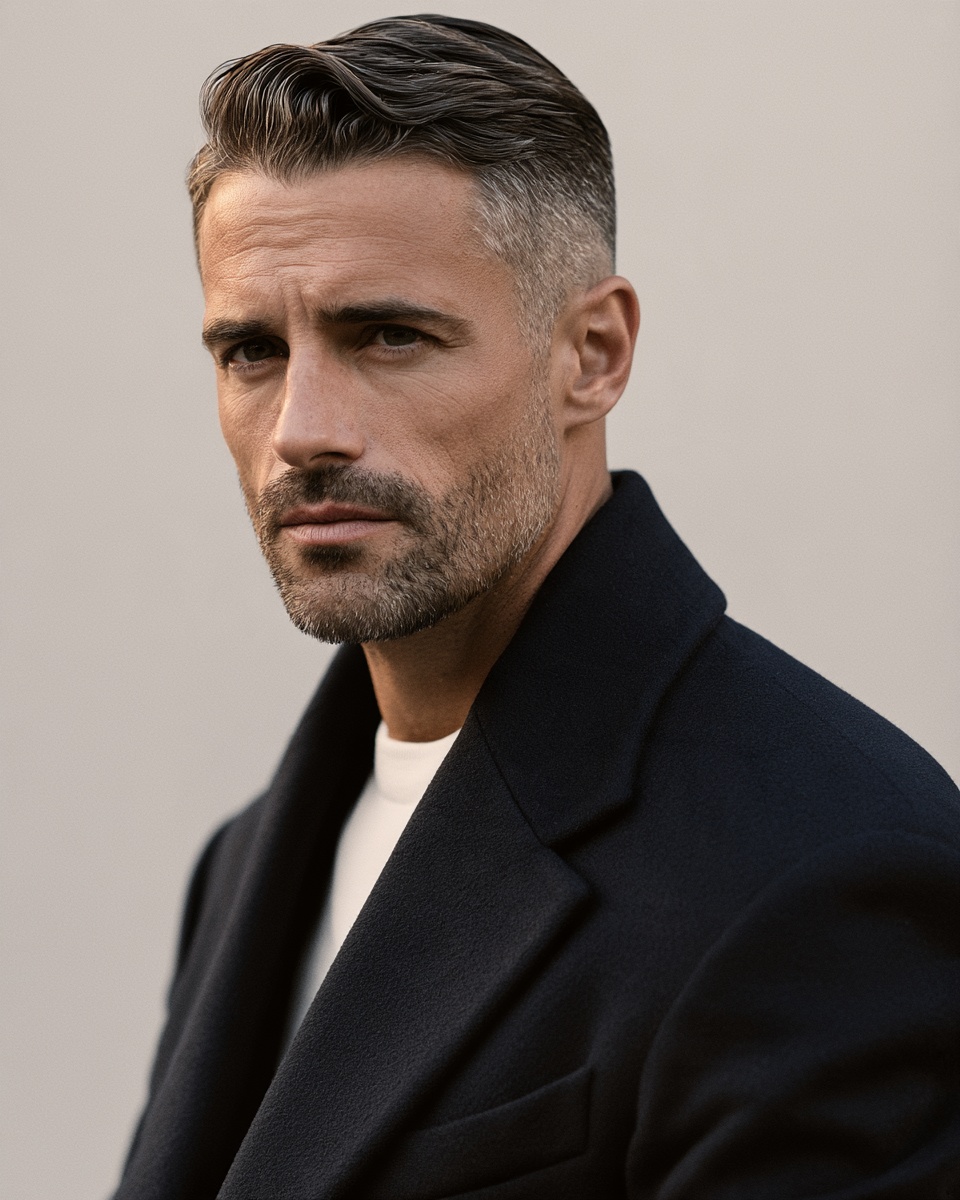
That versatility is also why it keeps reappearing whenever men’s grooming moves back toward cleaner silhouettes. The Ivy League does not rely on an extreme fade, a dramatic fringe, or significant length. It simply uses proportion well.
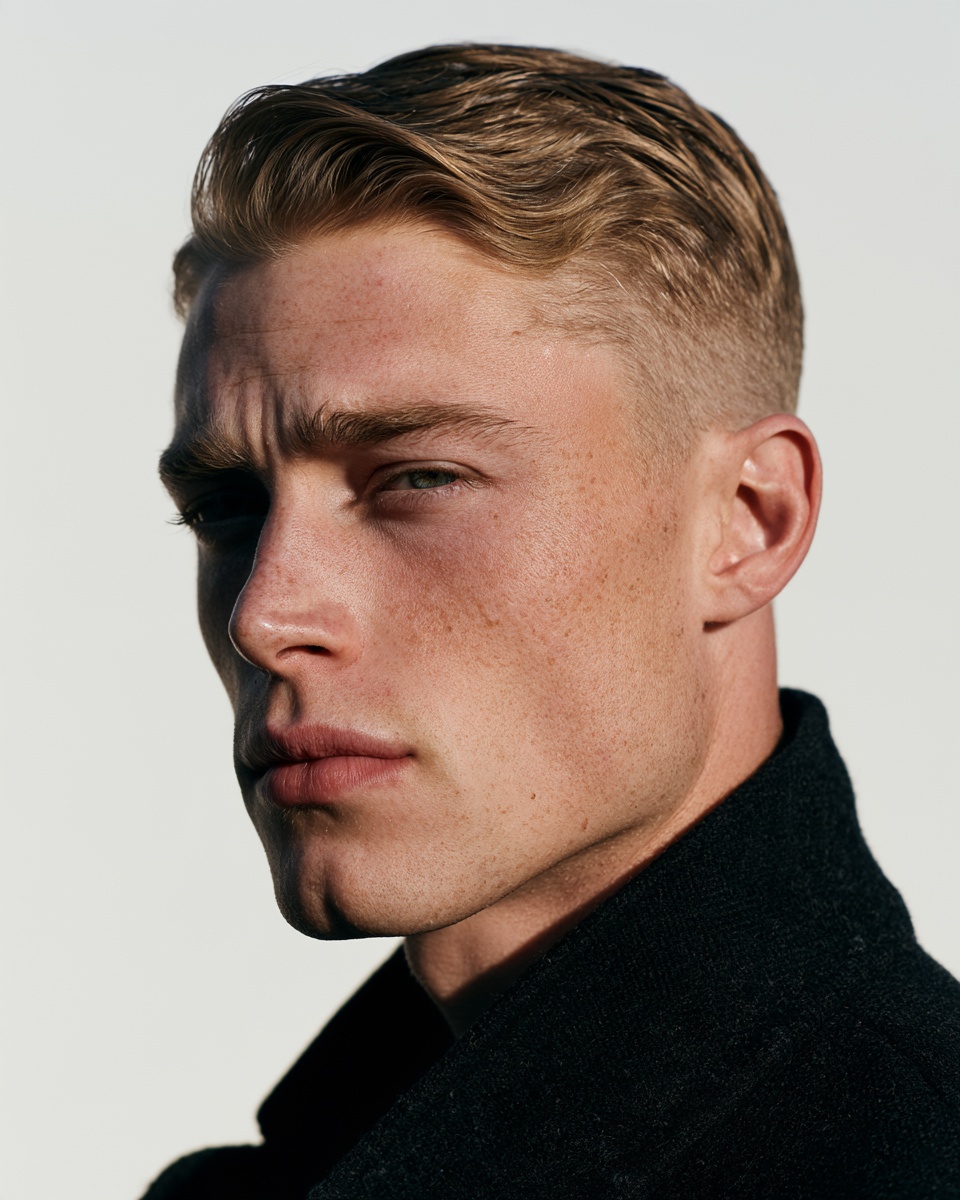
The Ivy League Aesthetic Today
For decades, film, fashion and advertising used the same neat, side-parted look as shorthand for education, ambition and privilege, a man who belonged in a particular East Coast world.
Today, the haircut no longer belongs to one campus, profession, or social group. What survives is the aesthetic logic behind it: restraint, proportion, and the idea that good grooming does not have to look complicated. That is why the Ivy League can sit comfortably beside modern ideas such as old-money style, classic tailoring, quiet luxury, and the broader return to cleaner men’s haircuts.
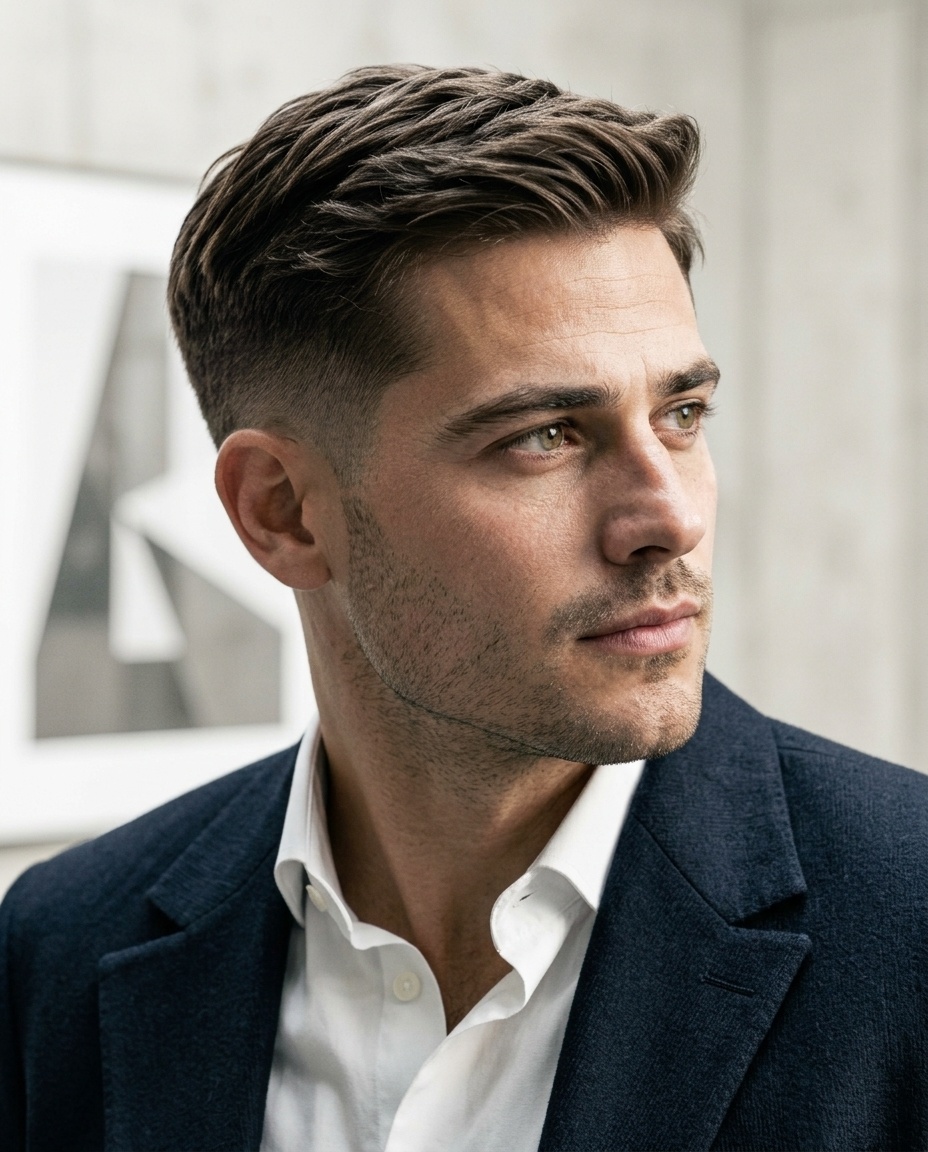
It also explains why the style keeps moving between generations. Younger men can wear it with a fade and matte texture; older men can soften the taper and use less product; someone in a formal workplace can comb it precisely; someone else can simply let the natural part fall into place. The haircut changes, but the visual message remains controlled and intentional.
How to Ask Your Barber for an Ivy League
Start with the shape rather than just the name. Tell your barber you want short tapered or faded sides with enough length on top to create a side part or controlled sweep. Around 1.5 to 2 inches on top is a useful starting point for a classic version, but your barber may leave more or less depending on density, curl pattern, hairline, and how you want to style it.
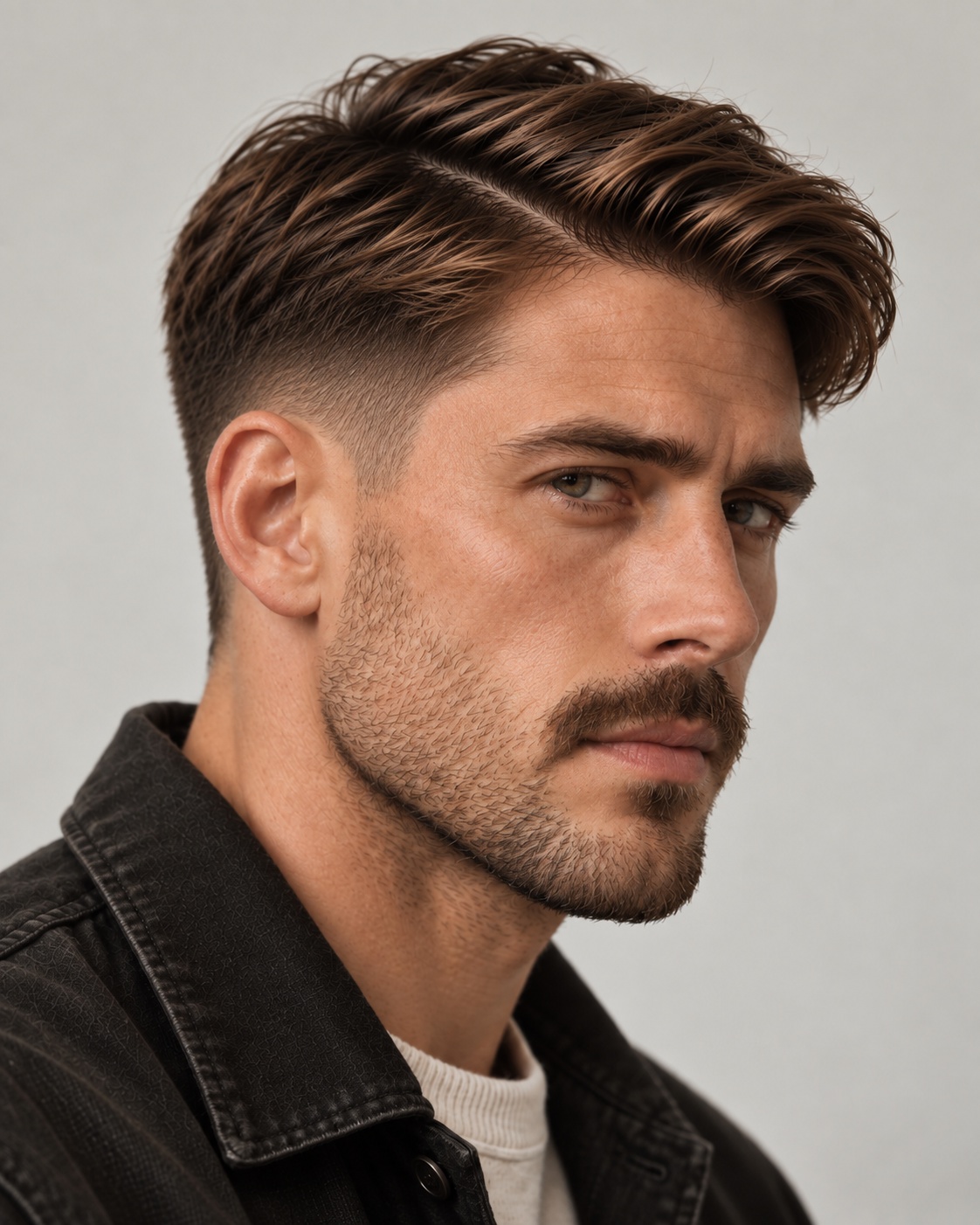
- Choose the sides: classic scissor taper, temple taper, low fade, mid fade, high fade, or skin fade.
- Choose the part: natural part for the most timeless version; hard part for a sharper barbershop finish.
- Choose the texture: smooth and polished, or matte and separated.
- Talk about maintenance: a natural taper grows out more softly than a skin fade or hard part.
- Bring a reference image: showing the barber exactly which version you want is more useful than relying on the haircut name alone.
How to Style an Ivy League Haircut
Most Ivy League haircuts should take only a few minutes to style. Start with towel-dried hair and use a small amount of product. A comb creates the cleanest, most traditional finish; your fingers create softer texture and less obvious separation.
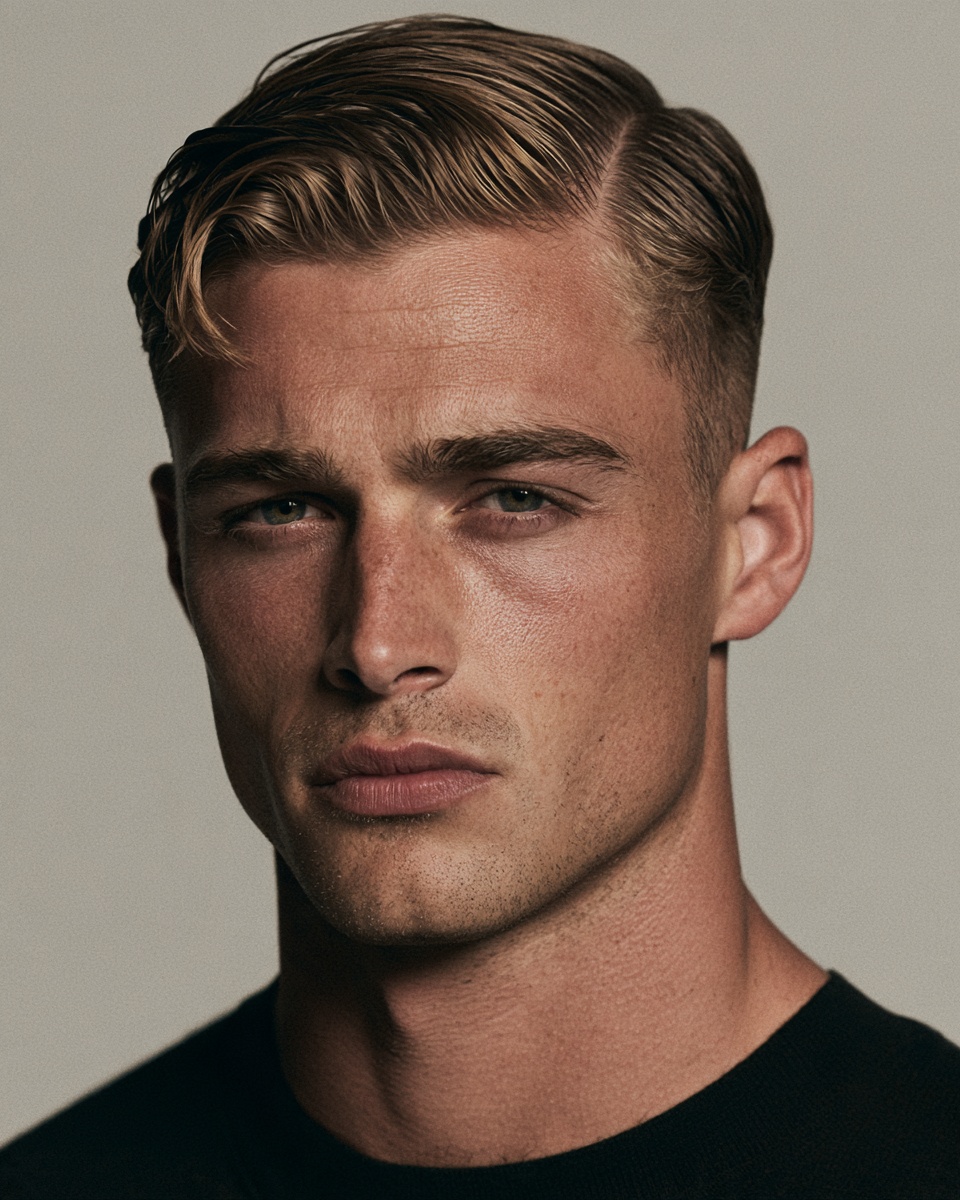
- Classic, preppy, comb-over, or slicked-back Ivy League: light styling cream or medium-hold pomade.
- Textured or messy Ivy League: matte paste, fiber, or clay.
- Fine or thinning hair: lightweight mousse, volumizing powder, or a small amount of matte cream.
- Wavy hair: soft styling cream that controls without flattening the wave.
- Curly hair: curl cream or lightweight gel with flexible hold.
As a general rule, the more formal you want the haircut to look, the more controlled the part and surface should be. The more casual you want it, the more texture and natural movement you can leave in the top.

Best Products for an Ivy League Haircut
You do not need a complicated product routine. For a classic finish, use a light to medium-hold cream or water-based pomade. For a modern matte finish, use a small amount of clay or paste. Fine hair usually looks better with lightweight products that do not collapse the strands, while very thick hair may need a little more hold to stop the top from expanding during the day.
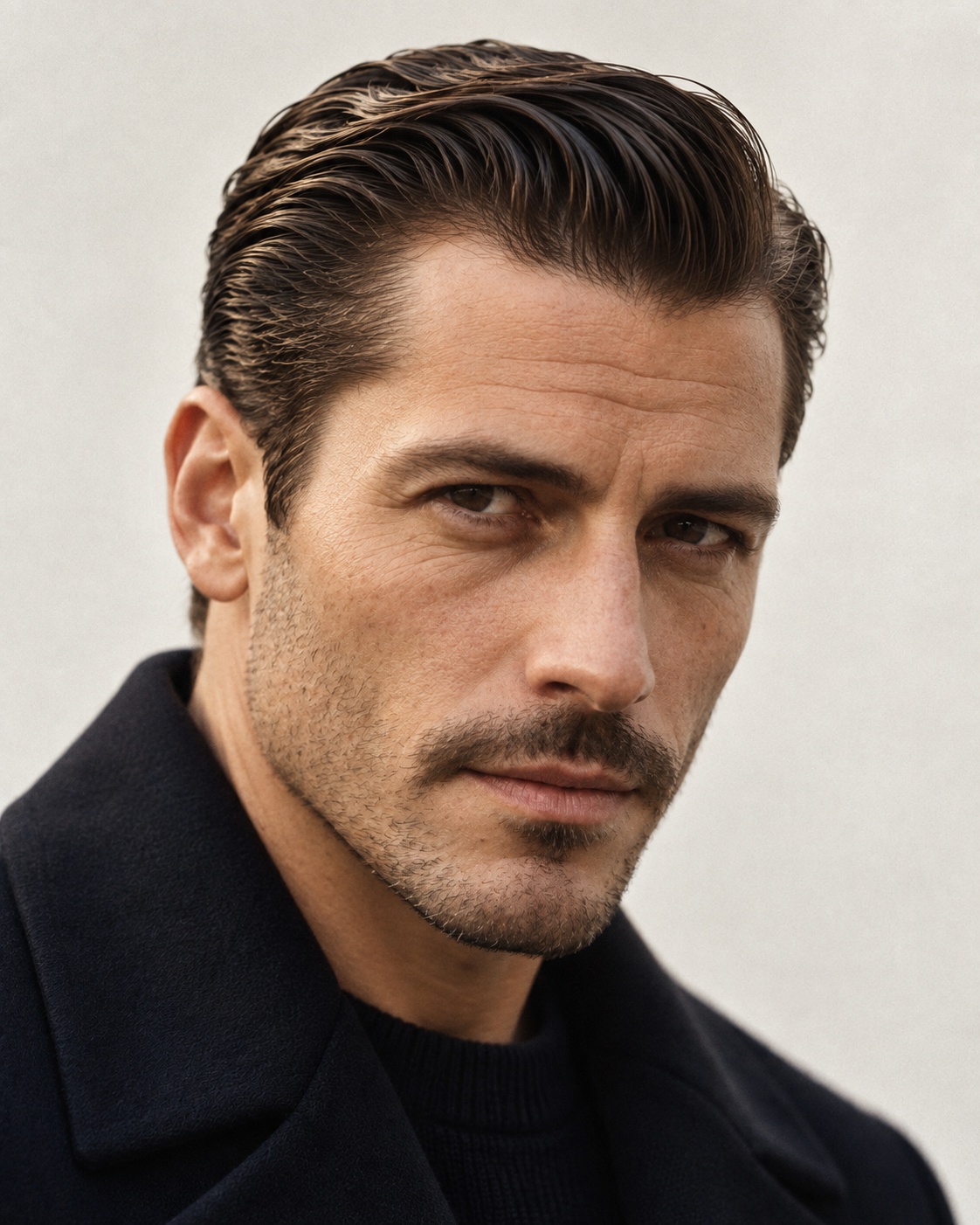
Start with less product than you think you need. The Ivy League looks best when the hair still looks like hair.
How Often Should You Get an Ivy League Haircut?
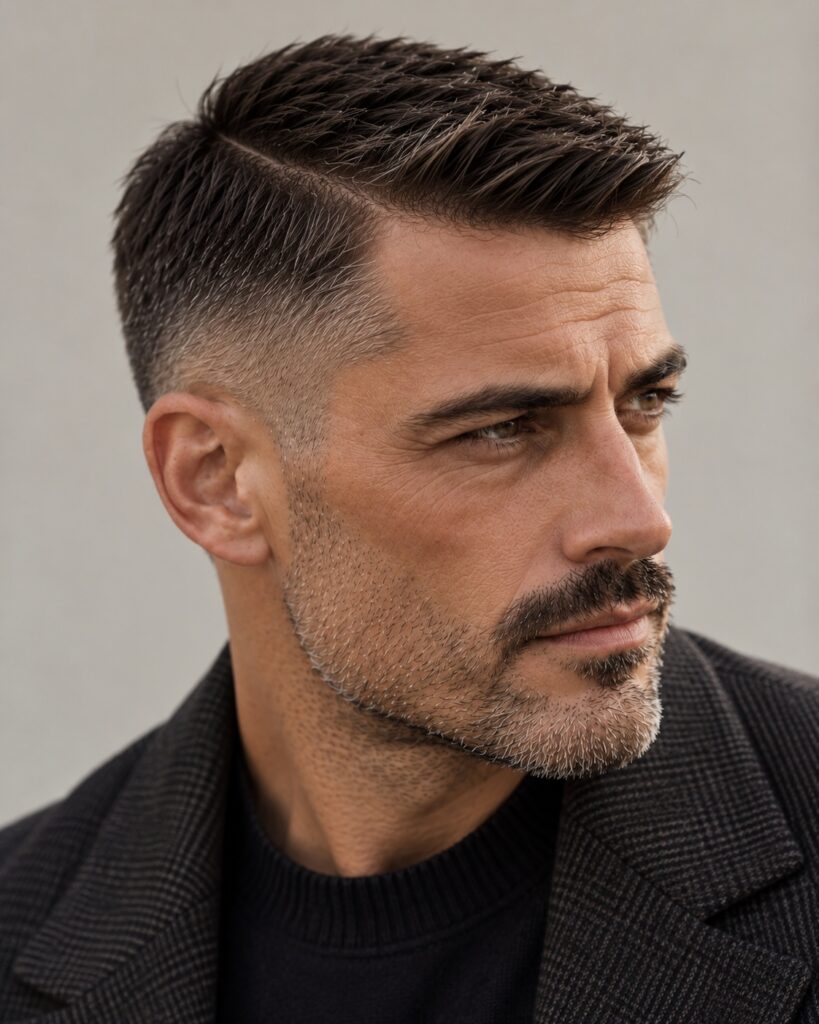
A classic tapered Ivy League usually looks good with a trim every 3 to 4 weeks. A softer version can stretch longer because the sides grow out gradually. A skin fade, hard part, or line up will look noticeably softer sooner and may need a cleanup every 2 to 3 weeks if you want to preserve the freshly cut effect.
Other Frequently Asked Questions
Is an Ivy League haircut the same as a crew cut?
No, not exactly, although the Ivy League belongs to the crew-cut family. Historically, it developed as a longer crew cut with enough length at the front to create a side part or controlled sweep. Wikipedia’s overview of the Ivy League haircut documents this traditional classification and its alternative names, including Princeton and Harvard clip.
How long should the top of an Ivy League haircut be?
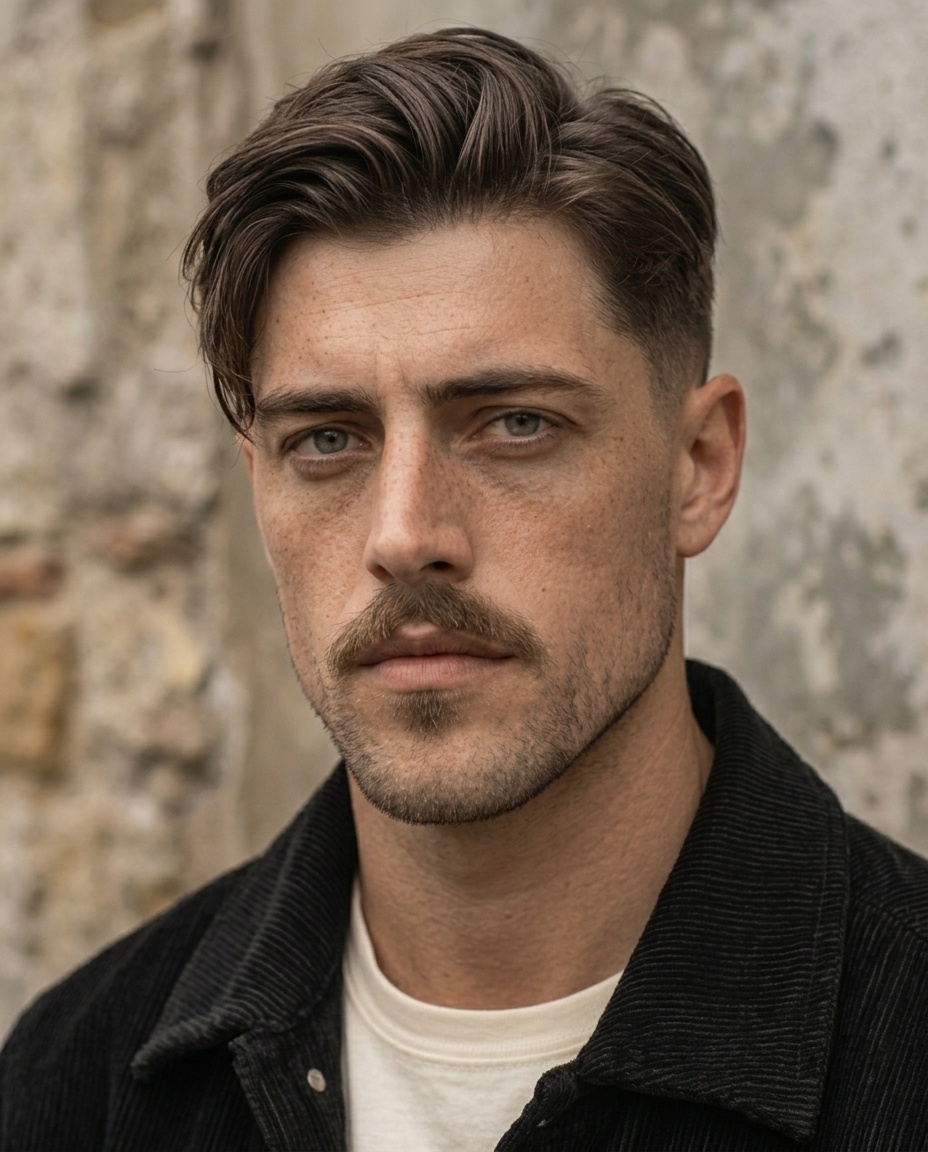
For a classic version, roughly 1.5 to 2 inches on top is a useful starting point. A Princeton-style version can be longer, while a version for thinning or receding hair may work better slightly shorter.
Is an Ivy League haircut good for thinning hair?
It can be. Keeping the hair relatively short and controlled can reduce the contrast between fuller and thinner areas. Avoid heavy, shiny products and very hard parts if they expose more scalp than you want.
Can curly hair work with an Ivy League haircut?
Yes. The haircut will look less traditionally side-parted, but the same proportions still work: compact sides and enough length on top for the natural curl pattern to form.
Is the Ivy League haircut good for older men?
Yes. A softer taper, shorter top, and natural part make it particularly easy to adapt to gray hair, mild thinning, or a receding hairline. It is one of the rare short cuts that can look equally appropriate at 30 or 65.
What is the difference between a Princeton cut and an Ivy League haircut?
The names are often used interchangeably. In practical barbering terms, “Princeton” is sometimes used for a slightly longer, softer version with more top length, but there is no universal technical standard separating the two.
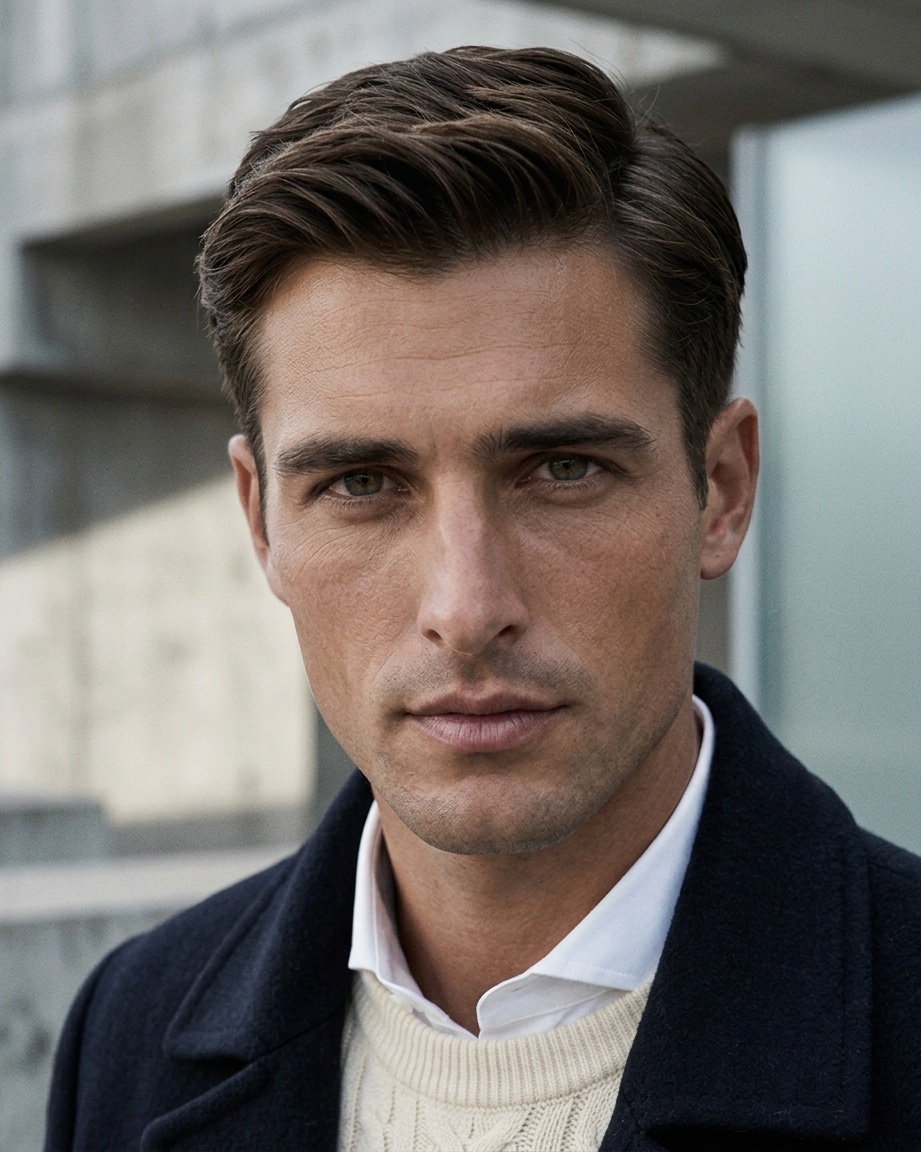
Does an Ivy League haircut need a fade?
No. The classic Ivy League uses a taper rather than a fade. Low, mid, high, and skin fades are modern variations, not requirements.
Final Style Notes
The Ivy League haircut has survived decades of changing men’s hair trends because the basic idea is unusually difficult to improve on: keep the sides clean, leave enough length on top to create shape, and do not overcomplicate it.
Wear it with a soft taper and natural part if you want the classic version. Add a low fade or texture if you want something more contemporary. Shorten it and soften the part if your hair is thinning. Let waves or curls change the surface without changing the proportions. The haircut works because the framework is strong enough to adapt.

Men’s Formal Hairstyles: Looks for Distinguished Settings
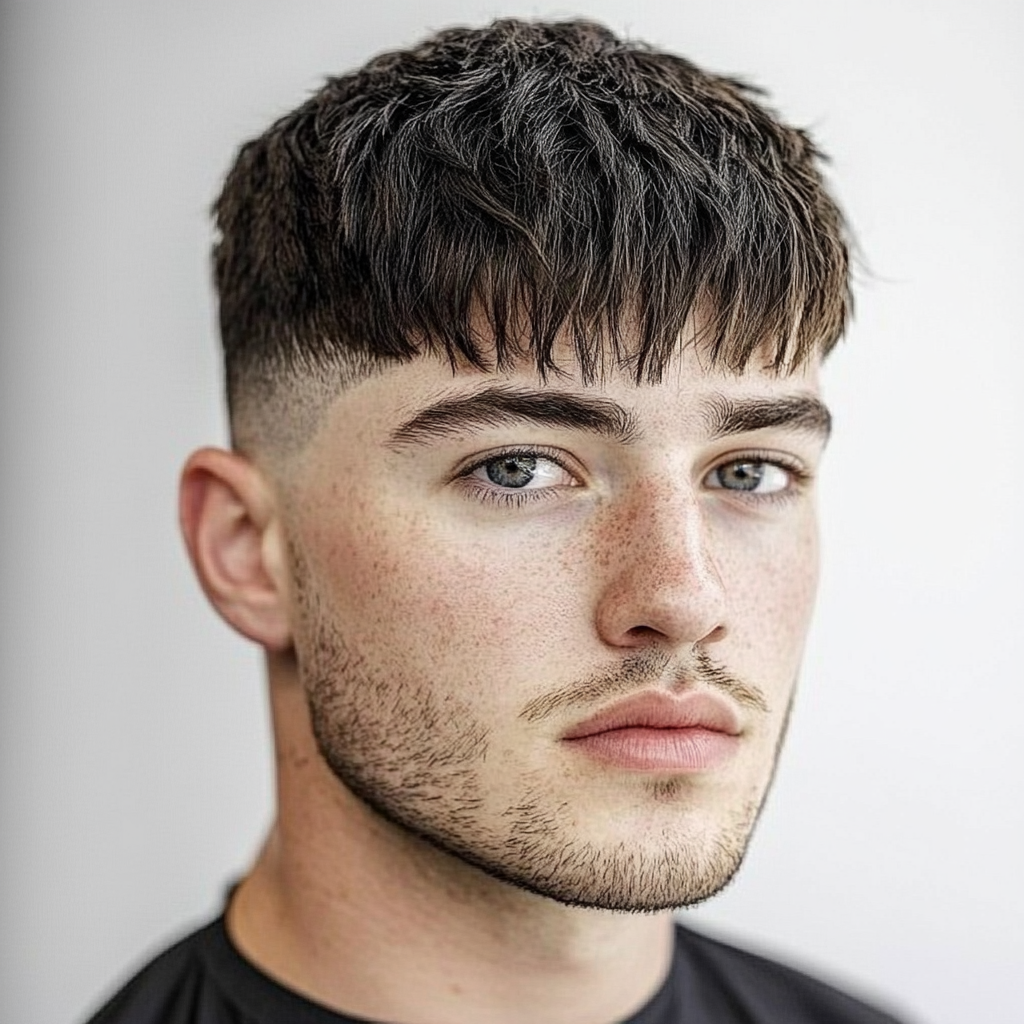
Modern Men’s Haircuts: Top Trendy Hair Styles Right Now
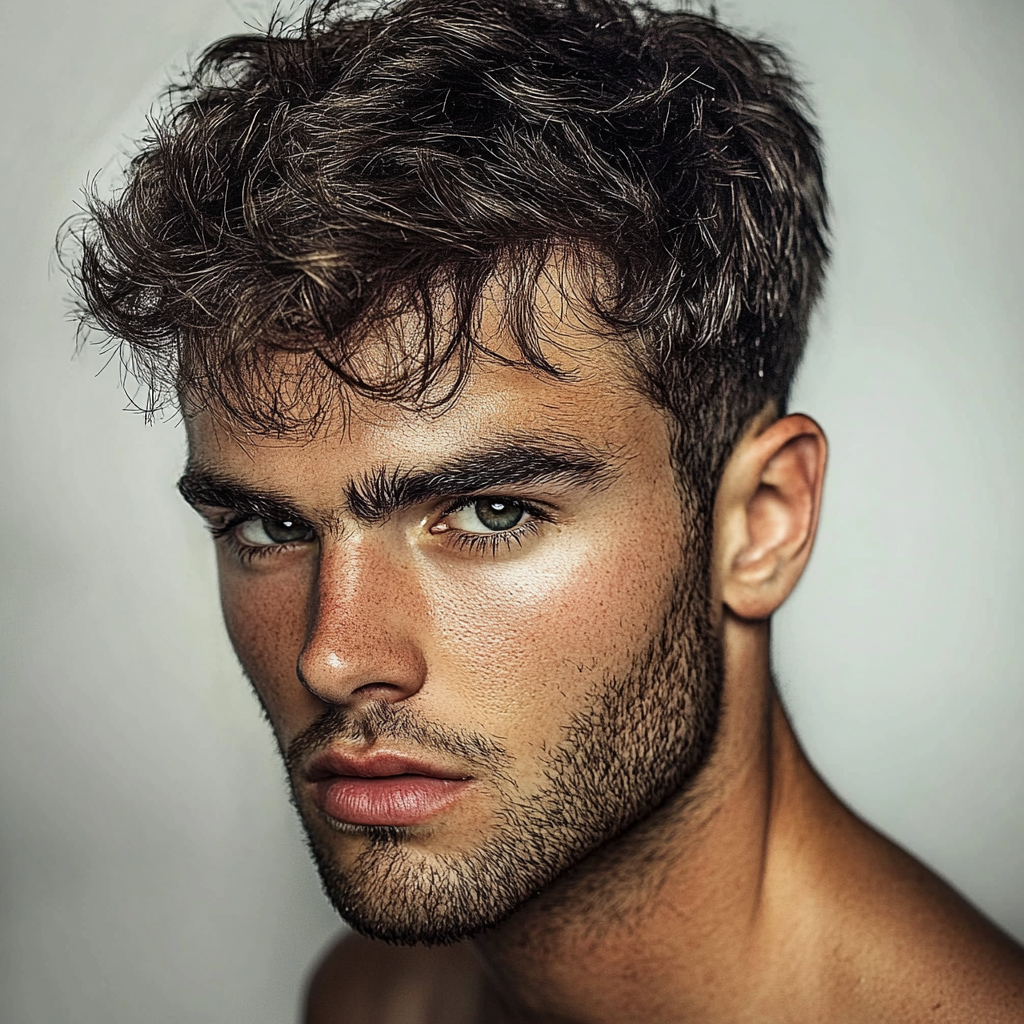
Effortless Wash-and-Wear Haircuts for Men
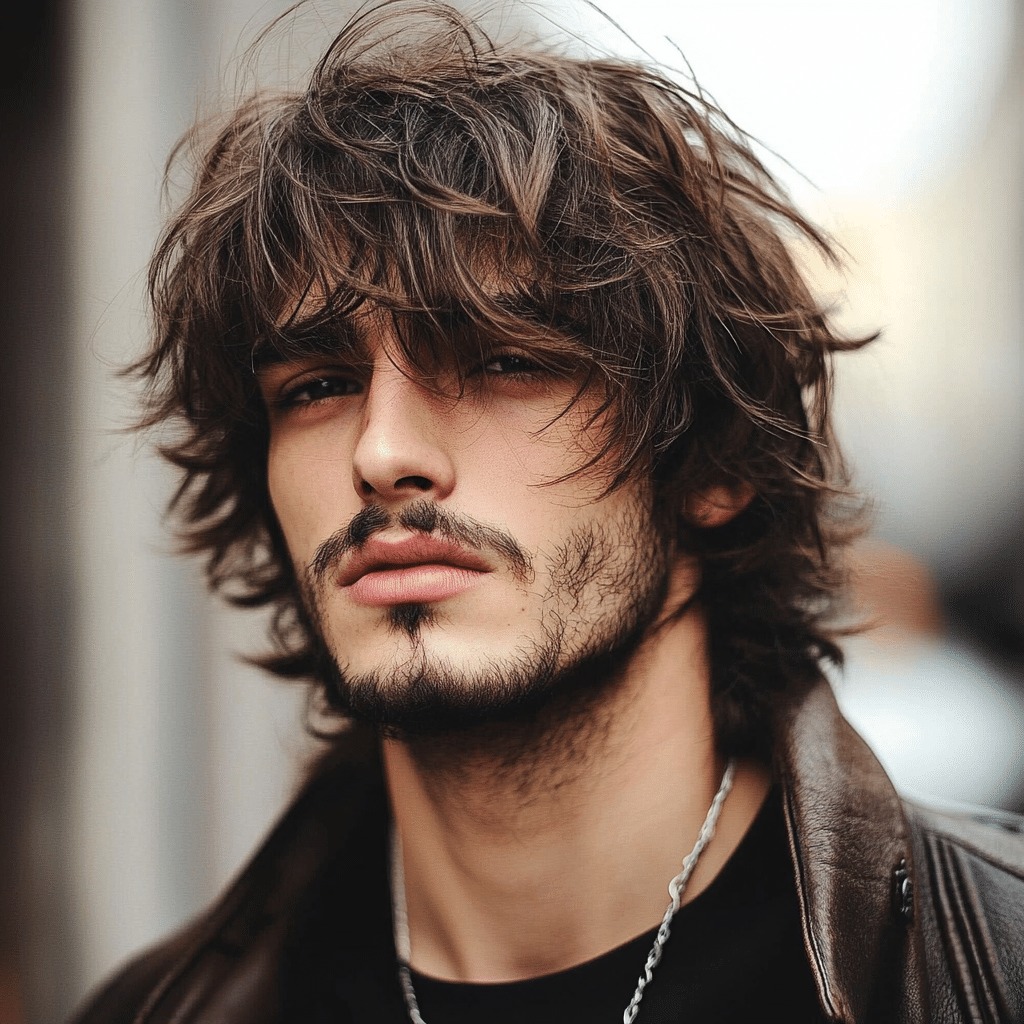
Winter Hairstyles for Men: Stay Stylish and Warm This Season
Blowout Taper with Textured Fringe and Other Blowout Styles for Men