
Find Yourself First: Why the Most Important Work a Man Can Do Is Becoming Himself
I’m in my forties. And I’ll be honest with you about something that took me an embarrassingly long time to admit. For most of my adult life, I had very little idea who I actually was beneath the roles I was playing.
I knew what I did. I knew what I was supposed to want. I knew which version of myself went to work, which one showed up at social events, which one answered when someone asked how things were going. What I didn’t know, not really, was whether any of those versions had much to do with me.
That’s not a comfortable thing to write. But I think it’s a more common experience than men tend to admit. And I think the discomfort of admitting it is exactly why most of us take so long to do it.
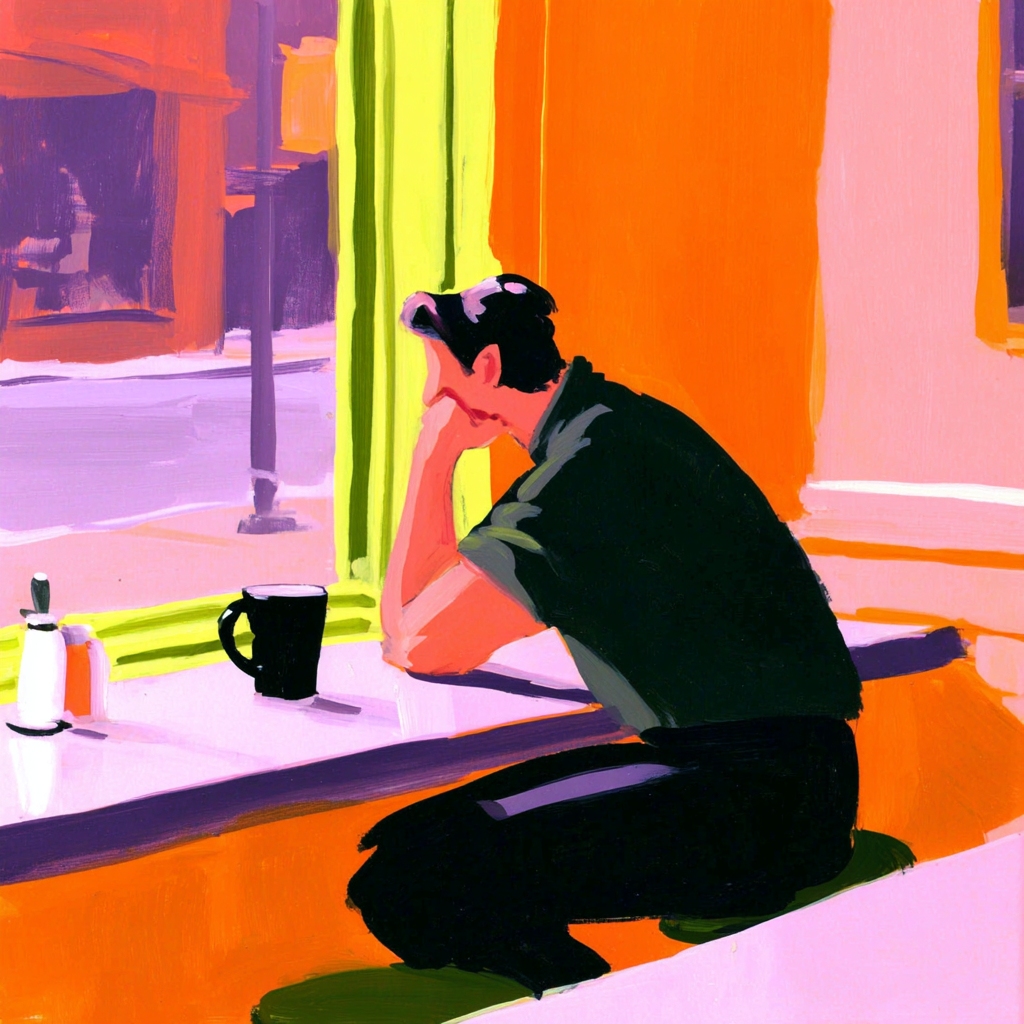
The idea of needing to find yourself first, before building anything meaningful on top of it, used to sound abstract to me. A bit soft. Something people said in self-help books I wouldn’t be caught reading. Now it strikes me as one of the more practical things a man can do.
Not because it makes life easier. It doesn’t, at least not immediately. But almost every problem I’ve had in my adult life, professionally, personally, in how I relate to other people, traces back in some way to the same root. I was making decisions from the outside in rather than the inside out.
That’s what this piece is about. Not a blueprint. Not a protocol. Just an honest look at what happens when a man stops performing and starts paying attention to who he actually is.
The Identity You Didn’t Choose
My identity in my twenties was assembled quickly and under pressure, the way most men’s are. Financial pressure. Social pressure. The pressure of feeling like everyone else had figured something out that I hadn’t yet but was supposed to pretend I had.
So I picked a lane. I committed to an image of myself that seemed credible and got on with it. And for a long time the momentum carried me forward without asking too many questions.
The problem, I see now, is that identity built under those conditions is rarely yours. It’s a composite of pressures. A bit of what your father or family modeled. A bit of what gets approval from the people around you. A bit of what seems impressive, or at least defensible, when someone asks what you do with your life.
You end up inhabiting a life that fits the way a suit fits when someone else has taken the measurements. You can make it work. You can even look good in it. But there’s a kind of low-level friction that never quite goes away.
I don’t think this is a personal failure. I think it’s almost universal for men of my generation. The question is how long you’re willing to keep adjusting the suit rather than admitting it was never really yours.

The Cost of Not Knowing Yourself
For years I told myself that self-reflection was something you did when you had the luxury of time. A private project for later. I had real things to deal with. Work. Responsibilities. Actual problems that required action rather than introspection.
What I didn’t see was that the avoidance of self-knowledge was itself generating problems. The decisions I made for reasons I didn’t fully understand. The frustration I brought into conversations without knowing where it came from. The patterns that kept recurring in my professional life, in my relationships, in the way I responded to pressure, that I kept attributing to bad luck or difficult circumstances rather than to anything I might examine in myself.
The unconscious doesn’t stay unconscious. It finds other channels. And for men who pride themselves on being rational and action-oriented, those channels tend to be invisible until something forces you to look.
Self-knowledge, I’ve come to think, is not a luxury. It’s what allows a man to act with some degree of coherence. To make decisions that reflect his actual values rather than his anxieties. To pursue things he genuinely wants rather than things that manage other people’s perception of him.
The Improvement Industry’s Blind Spot
Like a lot of men, I spent time in my thirties trying to optimise my way out of a vague dissatisfaction. Better habits. Better systems. Better routines. The self-improvement industry has no shortage of tools to offer, and I tried enough of them to know they can produce real results in specific, measurable areas of your life.
What they don’t do is answer the prior question. Optimised toward what, exactly?
Improvement without self-knowledge is just motion. You get more disciplined, more productive, more capable. But the direction is still inherited from the culture around you rather than chosen by you. You become a more efficient version of someone else’s idea of a successful man. The whole industry is structured around this trap. It tells you to work on yourself before it ever asks you to find yourself first.
The philosopher Alan Watts had a line about this that I keep returning to: “Trying to define yourself is like trying to bite your own teeth.”
The harder you work to construct an identity, the more artificial it becomes. Your real self is not something you build. It’s something you uncover. Usually, by clearing away everything that was put there by someone else.
That’s a different project entirely. And in my experience, it’s considerably less comfortable than optimising your morning routine.
What the Forties Actually Teach You
There’s something that happens in your forties that I wasn’t prepared for, and that I don’t think gets talked about honestly enough.
You accumulate enough data on yourself to stop being able to ignore certain things. By this point I’ve tested a few versions of myself and watched several of them fall short. The ambitious version. The accommodating version. The version that believed if he just achieved enough, something would eventually click into place and feel the way it was supposed to feel. None of them were quite right. And the older I get, the harder it is to pretend otherwise.
I don’t think this is a midlife crisis. That framing turns genuine reckoning into a punchline. What it actually is, for men who take it seriously, is the beginning of a more honest relationship with themselves. For many of us, the first real one.
The shift is less dramatic than it sounds from the outside. It’s not a sudden reinvention. It’s more like a quiet recalibration. A growing willingness to admit what you actually value versus what you’ve been performing. What you genuinely want versus what you thought you were supposed to want.
Calm starts to feel more appealing than intensity. Depth more interesting than breadth. A smaller life that’s actually yours starts to look more attractive than a larger one you’re maintaining for an audience that, if you’re honest, you’re not even sure is paying attention.

Approval-Seeking Is a Self-Knowledge Problem
I spent more of my adult life seeking approval than I’d like to admit. Not in obvious ways. I wasn’t boastful or visibly needy. It was quieter than that. I’d edit my opinions before sharing them. I’d make choices based on how they’d sound rather than how they felt. I’d stay in situations I’d outgrown because leaving would require explaining myself.
It took me a while to understand that this wasn’t really a confidence problem. It was a self-knowledge problem. Approval from the outside fills the gap that a stable sense of yourself would otherwise occupy. When you don’t have a solid internal reference point, you need external confirmation to answer the questions that reference point would answer for you. Am I doing the right thing? Am I living well? Is this who I am?
When a man genuinely knows himself, those questions have internal answers. The approval of others becomes less structurally necessary. Not because he stops caring about people, but because he’s no longer depending on them to tell him who he is.
The shift, when it comes, is not about becoming someone who doesn’t care what people think. It’s about no longer organising your choices around what they think. There’s a significant difference between the two. One is arrogance. The other is self-possession. And for most of my life I confused the two, which made me reluctant to aim for either.
What I’ve noticed, in the years since I started taking this more seriously, is that the decisions I make from that more internal place tend to be better ones. Not more selfish. Better. Clearer. Ones I can actually defend to myself rather than to a room.
What Self-Knowledge Actually Looks Like in Practice
I want to be direct about something, because the self-improvement industry rarely is. Self-knowledge is not a pleasant process. Not consistently. It involves noticing things you’d rather not notice.
In my case, it involved noticing that some of my confidence was performative. That some of my ambitions were really someone else’s. That some of the stories I’d been telling myself about why I made certain choices didn’t quite hold up when I looked at them honestly.
This is why most men avoid it. Not because they’re incurious, but because the implications are inconvenient. If you really look at yourself, you might have to change something. You might have to disappoint someone. You might have to admit that a chapter of your life was built on the wrong foundations. And most of us have enough going on without volunteering for that.
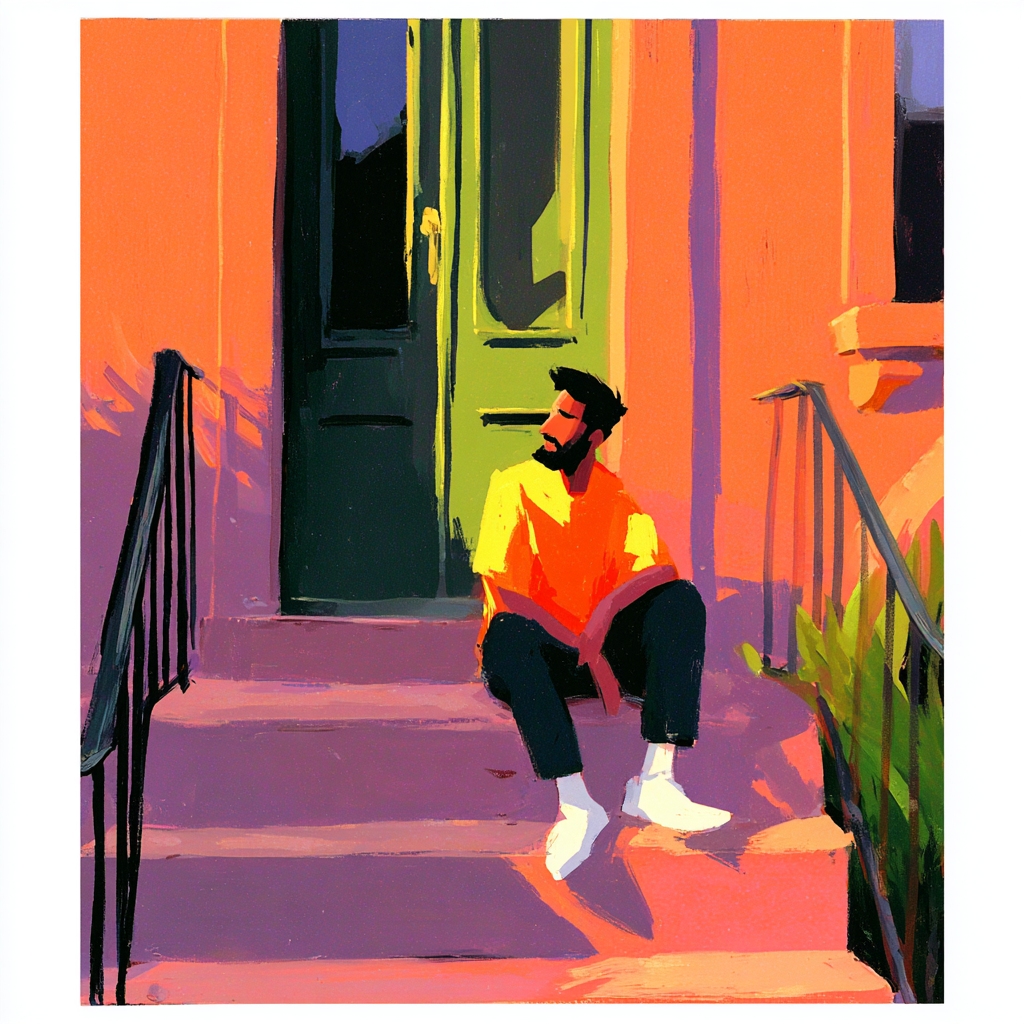
The practice itself is less mystical than it sounds. It’s mostly paying honest attention over time. Noticing what you’re drawn to and what you’re avoiding. Noticing which of your opinions are genuinely yours and which ones you’ve absorbed from the people around you. Asking yourself, when you make a decision, whether you’re acting on your own values or managing someone else’s perception of you.
Small questions, asked consistently, over years. That’s most of what it is. I won’t pretend the answers arrive quickly. But they do arrive. And they tend to be more useful than anything I’ve read in a productivity book.
The Particular Freedom of Knowing What You’re Not
One thing I didn’t expect from this process was how much relief came from knowing what didn’t belong to me. Which paths I could stop pretending to consider. Which comparisons I could stop making. Which version of success I could quietly let go of without feeling like I’d failed at something.
This doesn’t get discussed much because it’s not aspirational in the conventional sense. But it’s been, for me, one of the more practically useful outcomes of taking self-knowledge seriously. Modern life offers an almost unlimited number of directions. Most of the anxiety that comes with that abundance is really just the absence of a clear inner reference point. When you have one, the number of viable options collapses. Not in a limiting way. In a clarifying one.
You stop being pulled in twelve directions by what seems impressive or what someone else is doing. You know what fits and what doesn’t. That’s not a small thing. It’s actually most of the work.
The psychologist Carl Jung put it plainly: “The privilege of a lifetime is to become who you truly are.”
What that requires, first, is an honest reckoning with who you aren’t. And the willingness to stop pretending otherwise. I’m still working on both.
What It Does to Your Relationships
This is the part I wish someone had prepared me for. When you start to genuinely know yourself, some of your relationships stop fitting. Not because you’ve become difficult or superior. But because the version of you those relationships were built around no longer quite exists.
I’ve watched friendships I thought were solid become surprisingly thin once I stopped performing the version of myself they were used to. Some of them were held together by shared ambition, shared anxiety, a shared performance of a certain kind of man. When I stepped off that stage, there wasn’t always much left underneath.
What followed was a specific kind of loneliness I didn’t have language for at first. Not the loneliness of having no one around. The loneliness of being around people you’ve known for years and feeling like you’re speaking from a different place than they are. The gap isn’t about success or status. It’s about where you are in relation to yourself.
Socialising started to feel draining in a way it hadn’t before. Not all of it. But the kind built around performance, around maintaining a version of yourself for an audience, became noticeably harder once I’d started paying attention to what I was actually doing. You can’t unsee it.
What I’ve found, gradually, is that what replaces it is better. Fewer connections, but more honest ones. Conversations that don’t require editing yourself before you speak. People who know roughly who you are and aren’t surprised by it. That’s a smaller social world in some ways. But it’s a real one.
Why You Have to Find Yourself First, Before Anything Else
I want to be clear about one thing, because I think the self-discovery conversation often promises more than it delivers. Finding yourself first doesn’t mean everything falls into place afterwards. It doesn’t resolve the mess. It doesn’t produce certainty. It doesn’t mean you stop struggling with things.
What it means, in practice, is that you struggle more honestly. You become less easily fooled by your own rationalizations. Less likely to pursue things you don’t actually want and more likely to notice when you’re doing it anyway. The pattern recognition improves. The gap between what you say you value and how you actually live starts to narrow, even if it never quite closes.

There’s also something that happens to your relationship with time. Before I started taking this seriously, the future was always where things were going to make sense. The right circumstances, the right version of me, always slightly ahead. What I notice now is a different relationship with the present. Not contentment exactly. More like engagement. Actually being in the life I have rather than rehearsing for the one I’m still waiting on.
That’s a quieter kind of confidence than the culture usually celebrates. It doesn’t photograph well. It doesn’t make for a compelling personal brand. But it shows up in the quality of decisions I make, the relationships I keep, and the degree to which my life reflects what I actually believe rather than what I’m trying to project. That’s what it means to find yourself first. Not a revelation, but a gradual and ongoing honesty with yourself that I, for one, took too long to start.
Which, when it comes down to it, is the whole point.

Comprehensive Grooming Essentials Guide. Top Tips for Men

Don’t Take Life Too Seriously: A Man’s Guide to Living Lighter

11 Best Home Gym Machines for Men Over 50 (2025 Expert-Tested Guide)

The Performative Male: Why Modern Masculinity Has Become a Full-Time Show

What You Resist Persists: A Personal Reckoning with Inner Tension