
Hobbies for Retired Men: Staying Strong, Curious, and Connected After 60
Retirement gives you something that can be surprisingly difficult to figure out what to do with: time.
For years, work probably determined when you got up, where you went, who you saw and what counted as a productive day. Then suddenly, much of that structure disappears.
That freedom can feel great. It can also leave you wondering what exactly comes next.
A good retirement hobby does more than fill a few hours. It gives you something to get better at, somewhere to go, people to see or a project waiting for you tomorrow.
And you don’t need to reinvent yourself.
You might want to spend more time outdoors. Work with your hands again. Finally learn an instrument. Restore an old car. Get serious about cooking. Travel more. Join a group. Or simply find something satisfying to do on a quiet Tuesday afternoon.
Here are 40 hobbies for retired men, organized around the kind of retirement you actually want to have.
Looking for a Hobby? Start Here
Don’t overthink it. Think about what you want more of in your life right now.
| If you want more… | Try… |
|---|---|
| Time outdoors | Hiking, gardening, fishing, cycling |
| Hands-on projects | Woodworking, classic cars, furniture restoration |
| Creativity | Photography, painting, music, cooking |
| Social interaction | Pickleball, volunteering, Men’s Sheds |
| Mental challenge | Chess, genealogy, languages, astronomy |
| Low-cost activities | Walking, birdwatching, writing, sketching |
| Adventure | Travel, camping, geocaching, kayaking |
| Something to master | Guitar, woodworking, photography, BBQ |
You don’t need to find a single perfect hobby either. One active hobby, one quiet hobby and something social can be a particularly good combination.
Best Hands-On Hobbies for Retired Men
There is something different about a hobby that leaves you with a physical result at the end.
A repaired chair. A wooden table. A restored engine. Tomatoes from your own garden.
If you’ve spent much of your working life behind a desk, hands-on hobbies can feel especially satisfying.
1. Woodworking
Woodworking can be as simple or ambitious as you want it to be.
Start with a birdhouse, planter or small shelf rather than immediately deciding you’re going to build an entire dining table.
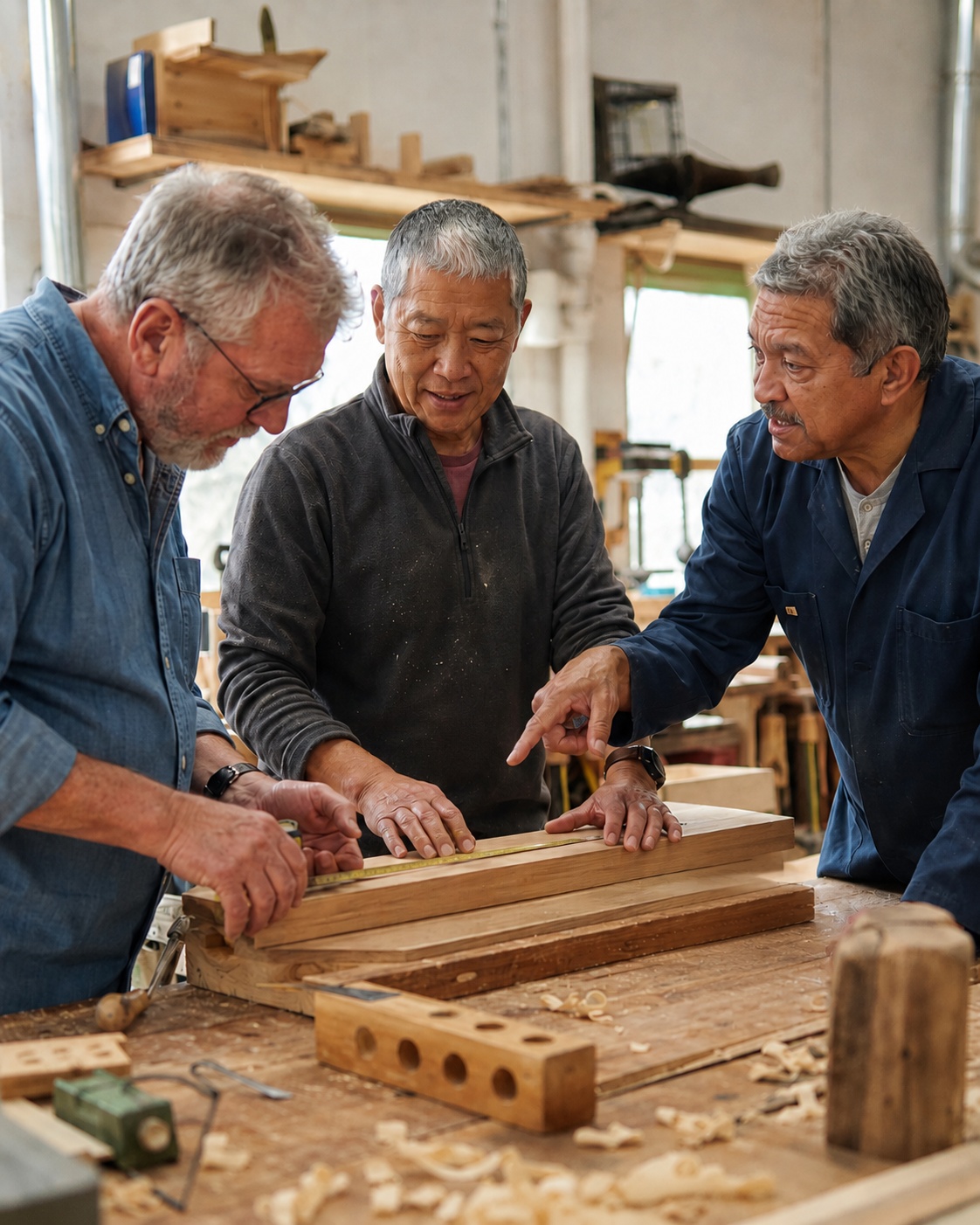
As your skills improve, you can move into cabinetry, furniture, turning, carving or restoring old pieces.
Part of the appeal is that progress is visible. You begin with pieces of timber and eventually have something you can actually use.
Cost: $$–$$$
Activity level: Moderate
Social: Usually solo
Best for: Men who like building and problem-solving
2. Restoring Old Furniture
Old furniture is everywhere, and much of it only needs some attention.
Sanding down a battered desk, repairing a chair or refinishing an old cabinet gives you the satisfaction of restoration without requiring a full workshop.
It can also become a hobby that pays for itself if you eventually start buying neglected pieces and reselling them.
Cost: $–$$
Activity level: Moderate
Social: Solo
Best for: Patient, detail-oriented men
3. Classic-Car Restoration
For the right man, this isn’t really a hobby suggestion because he’s probably already been thinking about it for 30 years.
Retirement finally gives you the time.
You don’t necessarily need a complete engine rebuild in your garage. Start with detailing, interiors, small mechanical jobs or restoring individual components.
Classic-car clubs also turn what could be a solitary project into a surprisingly social hobby.

Cost: $$$
Activity level: Moderate
Social: Either
Best for: Car enthusiasts
4. Model Building
Cars, planes, ships, railroads and architectural models can become extraordinarily absorbing once you get into them.
Model building rewards patience rather than speed.
It’s also one of the easier hobbies to do at home when weather, mobility or space makes outdoor activities less convenient.
Cost: $–$$
Activity level: Low
Social: Solo
Best for: Detail-oriented men
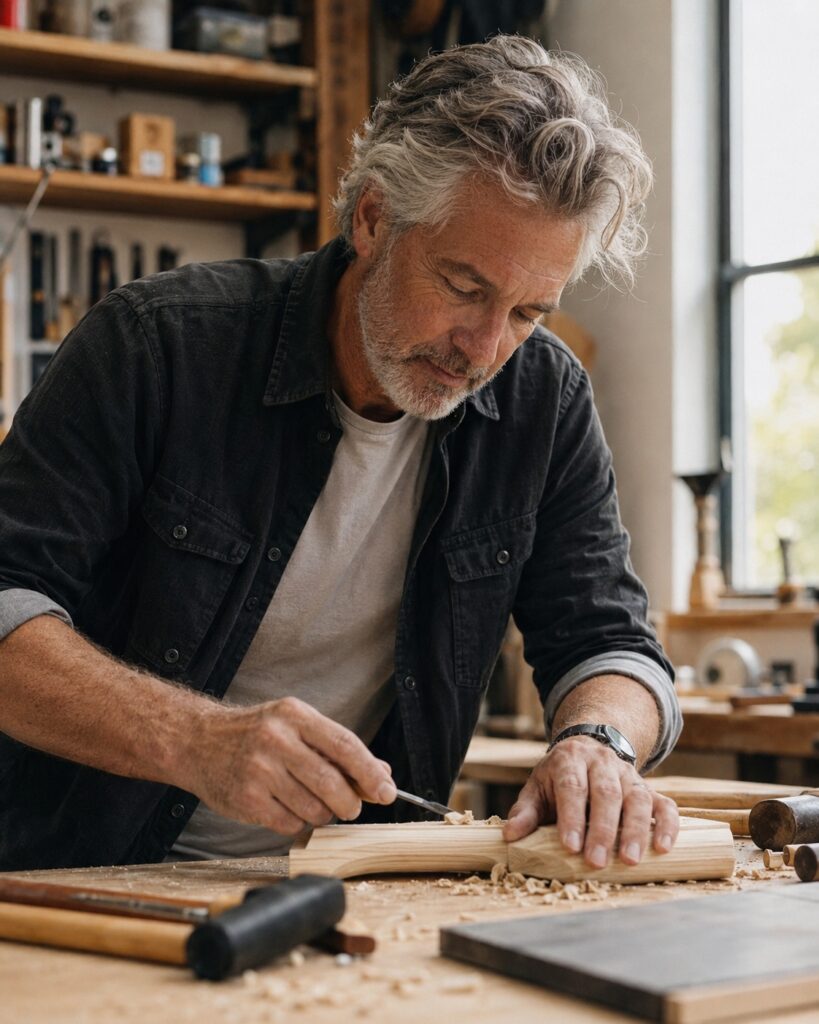
5. Whittling and Wood Carving
You don’t need an entire workshop to work with wood.
A small carving project can be done at a table, on a porch or in the garage with relatively little equipment.
Start with beginner projects rather than intricate decorative carving. The point is to get comfortable with the material and tools.
Cost: $
Activity level: Low
Social: Solo
Best for: Men who want a simple hands-on hobby
6. DIY and Home Improvement
There is always something around the house that could be better.
Painting, shelving, repairing fixtures, improving storage, upgrading a patio or reorganizing the garage can gradually turn into an ongoing hobby rather than a list of chores.
The difference is choosing projects because you enjoy doing them, not because something broke at 9 p.m.
Cost: $$
Activity level: Moderate
Social: Solo
Best for: Practical men
Outdoor Hobbies for Retired Men
More free time also means you don’t have to squeeze the outdoors into one crowded weekend.
Go on Tuesday.
7. Gardening
Gardening remains one of the great retirement hobbies because it combines movement, planning, problem-solving and patience.
Grow tomatoes. Build raised beds. Start an herb garden. Plant fruit trees. Experiment with native plants. Try indoor hydroponics if you don’t have much outdoor space.
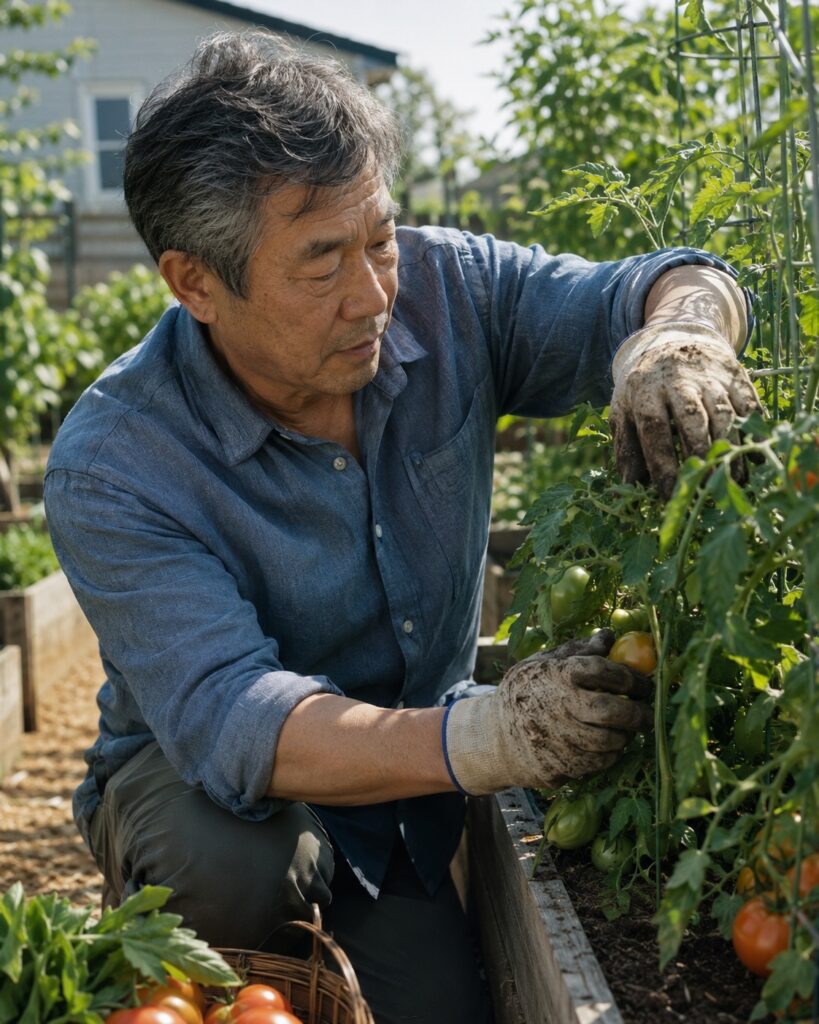
You can make gardening as technical as you like, or just enjoy watching something you planted grow.
Community gardens add a social element without requiring a highly structured group activity.
Cost: $–$$
Activity level: Moderate
Social: Either
Best for: Men who enjoy routine and visible progress
8. Hiking
You don’t have to climb a mountain.
Local trails, parks and countryside walks are enough to turn hiking into a regular part of your week.
One advantage of retirement is being able to explore popular places when they’re quieter.
Start with manageable routes and gradually build distance rather than treating every walk as a test of endurance.
Cost: $
Activity level: Moderate–High
Social: Either
Best for: Men who want exercise without a gym
9. Fishing
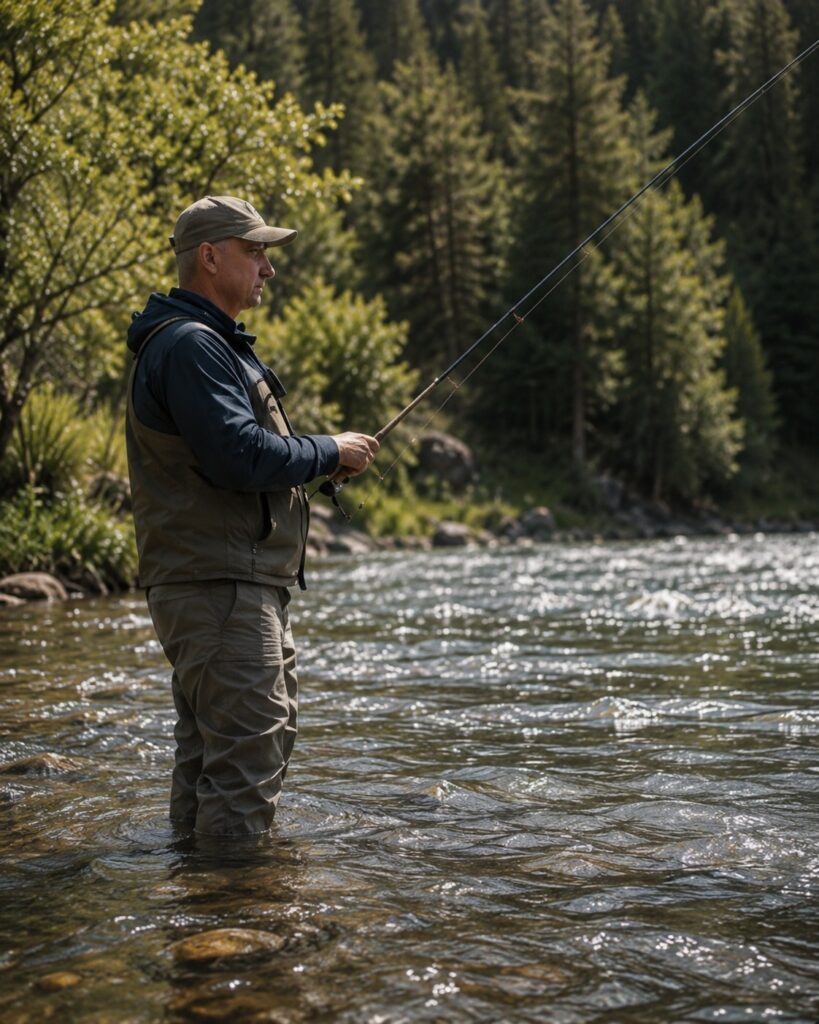
Fishing gives you a reason to go somewhere beautiful and spend several hours doing very little except paying attention.
For some men, that is precisely the appeal.
Freshwater, saltwater, fly fishing and shore fishing all offer different levels of equipment, knowledge and commitment.
And you don’t necessarily have to care very much whether you catch anything.
Cost: $–$$$
Activity level: Low
Social: Either
Best for: Men who enjoy quiet and patience
10. Birdwatching
Birdwatching sounds uneventful until you start recognizing what you’re looking at.
Then every walk changes.
Suddenly you’re noticing behavior, migration, calls, seasons and species you previously walked straight past.
A good pair of binoculars and a field guide or identification app is enough to begin.
Cost: $
Activity level: Low–Moderate
Social: Either
Best for: Curious men who like nature
11. Cycling
Cycling lets you cover far more ground than walking while still experiencing the places you’re traveling through.
You can ride recreational paths, roads or trails depending on your fitness and confidence.
E-bikes have also made cycling accessible to people who want longer rides without treating every hill as a personal battle.
Cost: $$
Activity level: Moderate–High
Social: Either
Best for: Active retirees
12. Golf
Golf isn’t cheap, and it isn’t everyone’s idea of fun.
But as a retirement hobby, it has one major advantage: structure.
You have somewhere to go, something endlessly difficult to improve and usually someone else to do it with.
You don’t even need to play 18 holes every time. Driving ranges and shorter courses make it easier to keep the commitment manageable.
Cost: $$–$$$
Activity level: Moderate
Social: High
Best for: Men looking for both activity and routine
13. Kayaking or Canoeing
Kayaking gives you exercise without necessarily feeling like exercise.
Calm lakes, rivers and protected coastal areas can make a great entry point for beginners.
Take instruction first, use proper safety equipment and choose conditions appropriate to your experience.
Cost: $$
Activity level: Moderate
Social: Either
Best for: Men who live near accessible water
14. Geocaching
Think of geocaching as a worldwide treasure hunt.
People hide containers at GPS coordinates and others try to locate them.

It gives an ordinary walk a destination and can take you to overlooked corners of your own town that you would otherwise never have visited.
Cost: $
Activity level: Moderate
Social: Either
Best for: Men who want walking to have a purpose
Creative Hobbies to Start After Retirement
Being creative doesn’t require being particularly artistic.
It just requires making something.
15. Photography
Photography can completely change the way you experience familiar places.
Architecture. Cars. Wildlife. Landscapes. Street scenes. Portraits. Travel.
You don’t need an expensive camera to start. Your phone is already enough to learn framing, light and composition.
If the interest sticks, then consider better equipment.
Cost: $–$$$
Activity level: Low–Moderate
Social: Either
Best for: Observant men
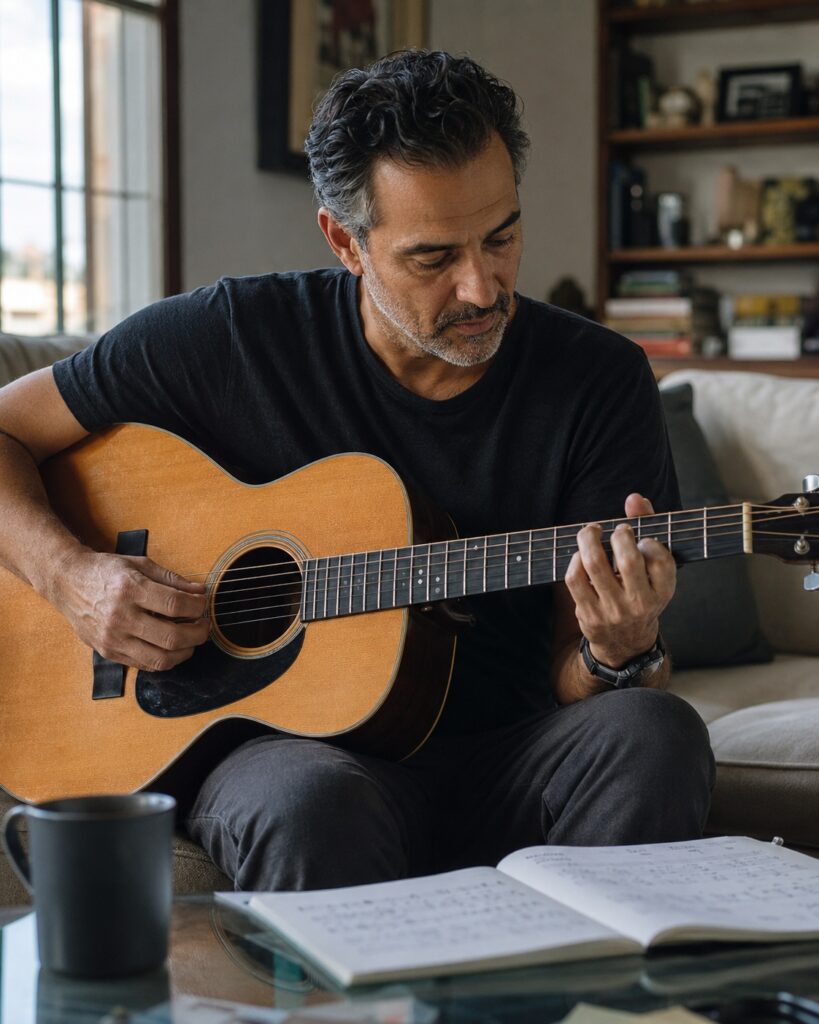
16. Learning Guitar
Maybe you owned a guitar at 22 and never became very good.
That’s fine.
You now have something you probably didn’t have at 22: patience.
Practice for 15 or 20 minutes most days and forget about impressing anyone. Learn songs you actually like.
Cost: $–$$
Activity level: Low
Social: Either
Best for: Music lovers
17. Piano or Keyboard
A keyboard can be even easier to live with than many instruments because you can use headphones and practice without taking over the house.
Start with songs rather than worrying about becoming a concert pianist.
Cost: $$
Activity level: Low
Social: Either
Best for: Music lovers who like structured practice
18. Painting
Painting forces you to look carefully.
That alone makes it worthwhile.
Watercolor is inexpensive and portable. Acrylic is forgiving. Oils require more setup but offer an entirely different experience.
Classes can help if staring at a blank canvas feels intimidating.
Cost: $–$$
Activity level: Low
Social: Either
Best for: Men who want a slower creative hobby
19. Drawing and Sketching
A sketchbook and pencil may be one of the cheapest hobbies on this list.
Draw buildings while traveling. Cars. Faces. Objects around the house. Landscapes.
You don’t need to show the results to anyone.
Cost: $
Activity level: Low
Social: Mostly solo
Best for: Men who want a portable creative hobby
20. Writing
Retirement gives you stories.
Writing gives you somewhere to put them.
You can keep a journal, write essays, record family memories, try fiction or begin the memoir you’ve been threatening to write for years.
The finished product doesn’t need to become a book. The act of thinking through your own experiences can be enough.
Cost: $
Activity level: Low
Social: Mostly solo
Best for: Reflective men and storytellers
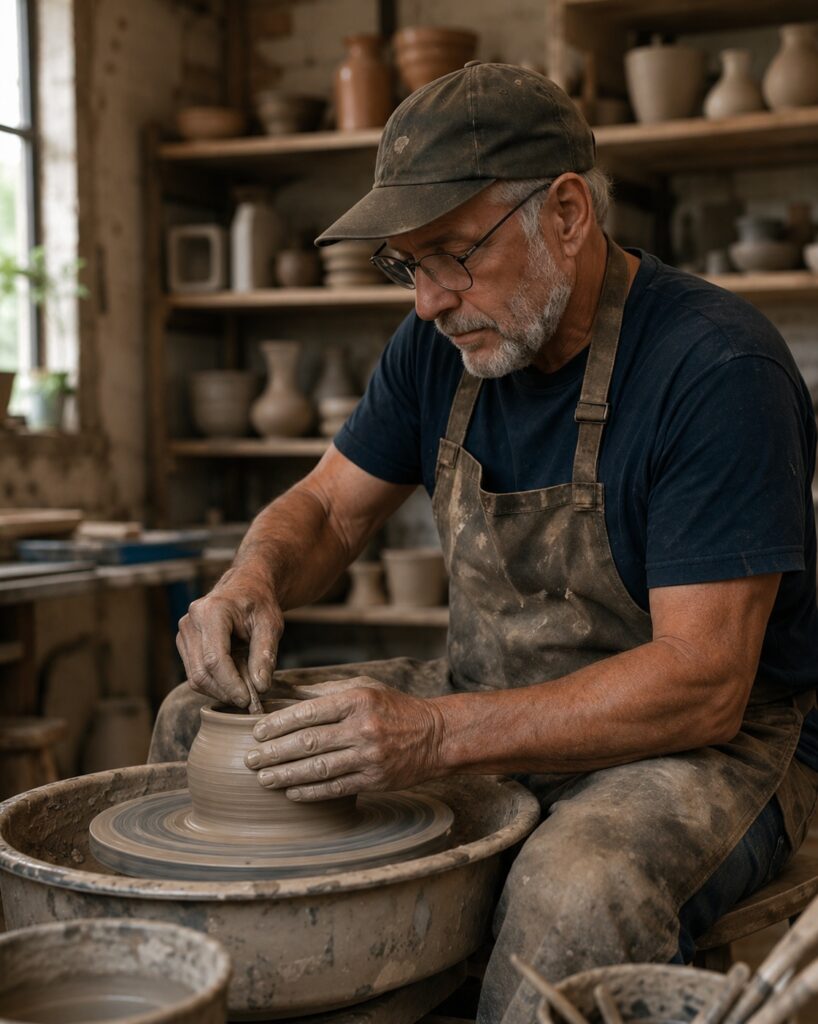
21. Pottery and Ceramics
If you would rather make something physical, look for a local ceramics studio.
Pottery is tactile, technical and difficult enough that there’s always something else to improve.
Classes also make it naturally social.
Cost: $$
Activity level: Low–Moderate
Social: Either
Best for: Men who enjoy tactile creative work
Food Hobbies Worth Getting Serious About
Cooking becomes very different when you aren’t trying to get dinner on the table as quickly as possible.
22. Cooking
Pick something you’ve always wanted to understand properly.
Italian pasta. Japanese food. French sauces. Bread. Indian cooking. Regional Mexican cuisine.
Treat it as a subject rather than a chore.
Learn ten dishes extremely well instead of randomly following hundreds of recipes.
Cost: $–$$
Activity level: Low–Moderate
Social: Either
Best for: Men who like learning through food
23. BBQ and Smoking
There are enough variables in barbecue to occupy a man for years.
Wood. Temperature. Cuts. Rubs. Timing. Equipment.
Perfect one thing at a time.
Your friends and family will probably be supportive of this particular hobby.

Cost: $$–$$$
Activity level: Low–Moderate
Social: High
Best for: Men who enjoy experimenting and entertaining
24. Baking Bread
Bread requires relatively few ingredients but an almost unreasonable amount of experimentation.
Hydration, fermentation, shaping and temperature all make a difference.
It’s cheap to begin and satisfying when you finally get it right.
Cost: $
Activity level: Low
Social: Mostly solo
Best for: Patient men who enjoy process and precision
25. Coffee
If you already drink coffee every morning, learning more about it can turn an automatic habit into a genuine hobby.
Beans, grinders, brewing methods, espresso and roasting provide plenty of territory to explore without dramatically changing your routine.
Hobbies That Keep Your Mind Working
Cost: $–$$$
Activity level: Low
Social: Either
Best for: Curious men who enjoy rituals and fine-tuning
A retirement hobby doesn’t have to involve constant movement.
Sometimes what you want is something difficult enough to hold your attention.
26. Genealogy
Family history tends to become more interesting as we get older.
Names you’ve heard for decades suddenly turn into questions.
Where did they live? What did they do? What happened to them?
Organize family photographs, interview older relatives, build a family tree and record stories before they’re lost.
It can become both a research project and something meaningful to leave behind.
Cost: $–$$
Activity level: Low
Social: Either
Best for: Men interested in family history and research
27. Learning a Language
You don’t need to become perfectly fluent.
Maybe you want enough Italian for a trip. Spanish because part of your family speaks it. French because you always liked the sound of it.
Regular practice gives your brain a problem to keep solving and makes travel more interesting.
Cost: $–$$
Activity level: Low
Social: Either
Best for: Travelers and lifelong learners
28. Chess
Chess is one of those activities you can learn in an afternoon and spend decades failing to master.
Play online, join a club or find one regular opponent.
Cost: $
Activity level: Low
Social: Either
Best for: Strategic thinkers
29. Astronomy
You can begin by simply learning what’s visible in the sky above you.
Then come binoculars.
Then perhaps a telescope.
Then suddenly you have opinions about light pollution.
Astronomy works particularly well if you enjoy learning independently and don’t mind staying up late.
Cost: $–$$$
Activity level: Low
Social: Either
Best for: Curious night owls and science-minded men
30. History
History doesn’t have to mean reading another general book about World War II.
Pick one narrow subject and follow it.
The history of your neighborhood. Local architecture. Aviation. A particular decade. Military history. Ancient civilizations. Cars.
Retirement finally gives you permission to go far deeper into subjects that interest you simply because they interest you.
Cost: $
Activity level: Low
Social: Either
Best for: Men who enjoy research and deep dives
Social Hobbies for Retired Men
One thing work provides almost accidentally is regular contact with other people.
Retirement can remove that overnight.
You don’t need a packed social calendar, but having somewhere you are expected to turn up every week can make a meaningful difference.

31. Pickleball
Pickleball’s appeal isn’t difficult to understand.
Games are relatively short, doubles are inherently social and many recreational groups include a wide range of ability levels.
You can take it seriously or not.
Either way, you have a reason to leave the house.
Cost: $–$$
Activity level: Moderate
Social: High
Best for: Men who want active, social play
32. Men’s Sheds and Maker Spaces
Sometimes men don’t particularly want to sit in a circle and talk.
They’ll happily talk while fixing something.
That idea is part of the appeal of community workshops and Men’s Sheds, where people meet to build, repair, learn and work on shared projects.
If there’s one near you, it can combine woodworking and DIY with regular social contact.
Cost: $–$$
Activity level: Moderate
Social: High
Best for: Men who like making, repairing and working alongside others
33. Volunteering
The best volunteering usually matches something you already understand or care about.
Coach a sport.
Help at a museum.
Mentor someone entering your old profession.
Work with an animal organization.
Help maintain a local park.
Support a community food program.
The right role gives your week structure without making retirement feel like another full-time job.
Cost: $
Activity level: Low–Moderate
Social: High
Best for: Men who want purpose and regular community contact
34. Teaching or Mentoring
Years of experience become much more interesting when they can help someone else.
You might mentor young people, teach a practical skill, help a new business owner or volunteer through a professional organization.
You don’t have to turn it into consulting.
Cost: $
Activity level: Low
Social: High
Best for: Men who want to share experience and skills
35. Cards, Dominoes and Board Games
Dominoes, poker, bridge, backgammon and strategy games give you a recurring reason to gather around a table.
The game almost becomes secondary.
Cost: $
Activity level: Low
Social: High
Best for: Friendly competition and regular socializing
Hobbies That Get You Exploring
Retirement doesn’t have to mean constantly traveling.
But having fewer calendar restrictions opens possibilities that working life rarely allows.
36. Road Trips
You don’t need a three-month expedition.
Start with places three hours away that you’ve somehow never visited.
Create routes around food, architecture, national parks, historic sites or scenic roads.
The planning itself becomes part of the hobby.
Cost: $$–$$$
Activity level: Low–Moderate
Social: Either
Best for: Men who enjoy planning and exploring
37. RVing and Camping
For some men, having your own moving base turns travel into an entirely different experience.
Start small before investing heavily.
Rent first.
A two-week trip will teach you more about whether you enjoy RV life than several months of watching other people do it online.
Cost: $$–$$$
Activity level: Moderate
Social: Either
Best for: Men who want slower, flexible travel
38. Travel Photography
Photography gives travel an additional purpose.
Instead of simply passing through somewhere, you start paying attention to morning light, local architecture, people, details and landscapes.
You come home with a project rather than just a camera roll.

Cost: $$–$$$
Activity level: Moderate
Social: Either
Best for: Travelers who like documenting places
39. Local Exploration
Here’s one retirement hobby that costs almost nothing:
Become a tourist where you already live.
Visit neighborhoods you’ve ignored. Historic sites. Small museums. Markets. Parks. Architectural landmarks. Nearby towns.
Most of us know surprisingly little about places we’ve lived for decades.
Cost: $
Activity level: Low–Moderate
Social: Either
Best for: Curious men who want new experiences close to home
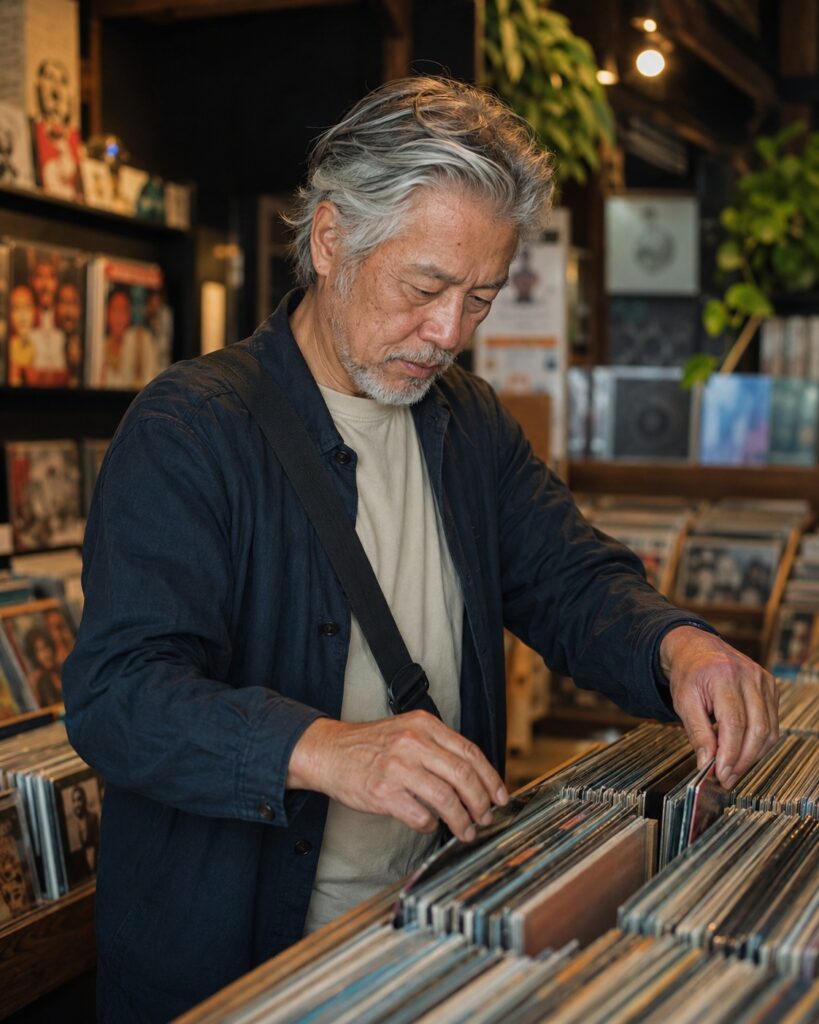
40. Collecting
Vinyl. Watches. Coins. Books. Cameras. Model cars. Vintage tools. Sports memorabilia.
A good collection gives you something to research, hunt for and organize.
The important part is collecting because the subject genuinely interests you, not simply accumulating things.
Cost: $–$$$
Activity level: Low
Social: Either
Best for: Men who enjoy research, hunting and organizing
Hobbies for Retired Men Who Live Alone
Living alone can make hobbies particularly valuable because they introduce structure into days that can otherwise become too similar.
The best options often combine something you can do independently with occasional interaction.
Photography gets you out of the house.
Walking groups make exercise social.
Cooking gives you something to improve.
Volunteering creates regular commitments.
A Men’s Shed or maker space lets you work independently around other people.
Classes put you around people without requiring you to arrive with an existing social circle.
You don’t need to suddenly become extremely outgoing.
Sometimes all you need is one place you go every Wednesday.

Cheap Hobbies for Retirement
Retirement hobbies do not need to turn into another category of spending.
Some of the best ones require very little:
- Walking
- Hiking
- Birdwatching
- Drawing
- Writing
- Gardening from seeds
- Library book clubs
- Genealogy using family records
- Photography with your phone
- Volunteering
- Chess
- Local history
- Geocaching
- Cooking
- Learning a language
Be particularly careful with hobbies that make buying equipment more entertaining than actually doing the hobby.
A $4,000 camera won’t make photography interesting if you don’t enjoy taking photographs.
Start first.
Upgrade later.
How to Find a Hobby You Will Actually Stick With
Don’t choose a hobby because it sounds like the kind of thing a retired man is supposed to do.
Choose based on what you naturally enjoy.
If you always liked fixing things, start there.
If you hated sitting indoors all week, go outside.
If you miss working with other people, find something social.
If your career involved dealing with people constantly and you’re delighted to finally have some silence, don’t force yourself into three clubs.
And give hobbies enough time.
The first guitar lesson won’t feel like playing guitar.
Your first woodworking project may be terrible.
You might be bad at pickleball.
Good.
Being a beginner again is part of the point.

Try the 30-Day Retirement Hobby Challenge
Still not sure where to start?
Don’t decide.
Experiment.
Week 1: Do Something Outside
Take a proper hike.
Try fishing.
Walk somewhere you’ve never explored.
Visit a garden.
Go birdwatching.
Week 2: Make Something
Cook a dish you’ve never attempted.
Build something small.
Sketch.
Repair an old piece of furniture.
Try woodworking.
Week 3: Learn Something
Take your first guitar lesson.
Learn some Spanish.
Research your family tree.
Learn chess.
Find the constellations visible from your backyard.
Week 4: Do Something With Other People
Play pickleball.
Volunteer.
Join a class.
Visit a maker space.
Go to a local club or group.
At the end of the month, don’t ask which hobby you were best at.
Ask which one made you want to do it again.
That’s probably the one worth keeping.
Retirement Is a Good Time to Become a Beginner Again
One of the advantages of getting older is that there’s less reason to do things simply because they’re useful.
A hobby doesn’t have to improve your résumé.
It doesn’t have to become a side hustle.
You don’t have to monetize your woodworking, start a photography business or become competitive at pickleball.
You can do something because you like doing it.
Build a table.
Grow tomatoes.
Learn three guitar songs.
Restore the car.
Photograph birds.
Walk ten miles.
Make exceptionally good barbecue.
Find out where your grandfather grew up.
There is something liberating about getting interested in things again without needing them to lead anywhere.
The best retirement hobby may simply be the one that makes you look at the clock and wonder where the afternoon went.

60+ Actually Good Pick-Up Lines (Plus SFW “Dirty” Ones)

The Moment You Stop Seeking Approval, You Start Living

Inspirational Quotes for Men Over 40

Soccer Players’ Cars: Elite Athletes and Dream Machines

Travel Kits for Men: Essentials for Your Journey