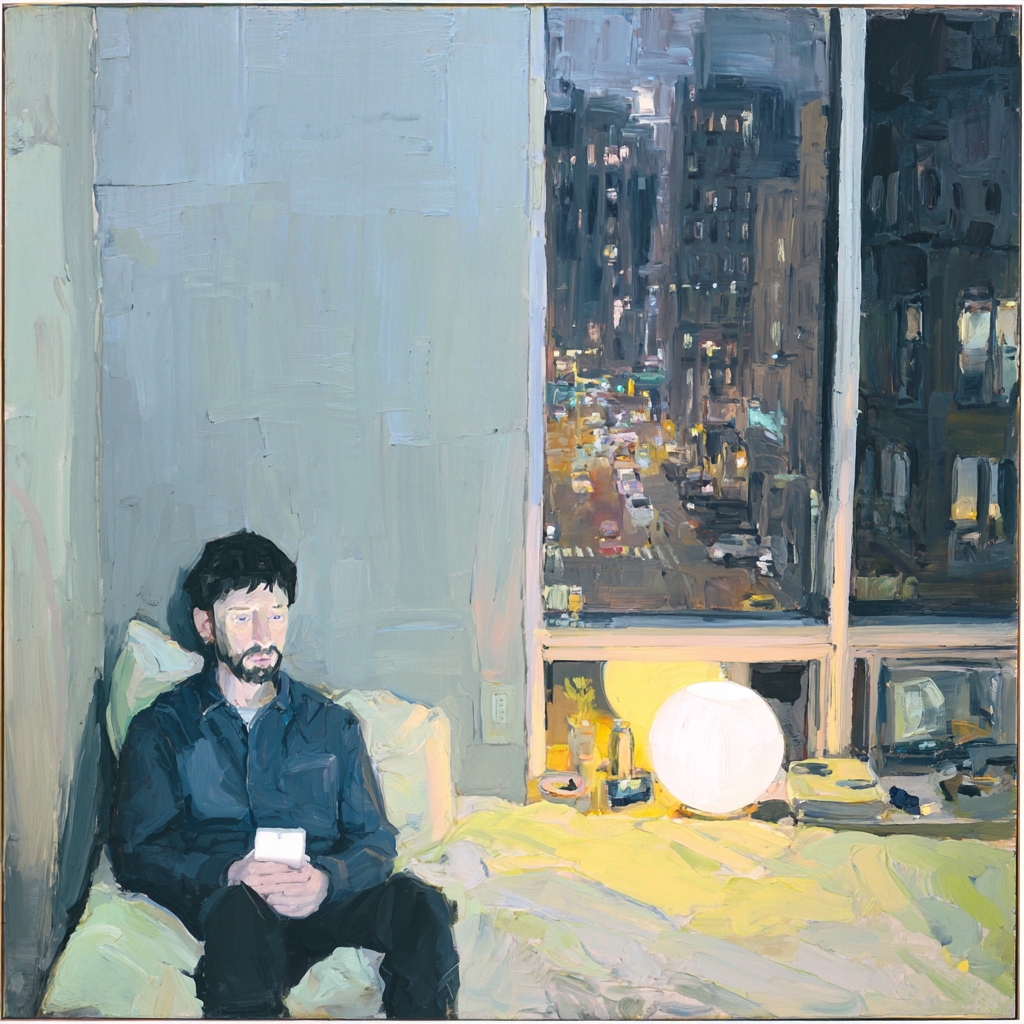
The People You May Know Are Doing Great
Nobody is just happy on LinkedIn.
They’re thrilled. Humbled. Honored to announce. Grateful to an incredible team they’d call a haunted office with decent cold brew, three drinks into an honest conversation.
I opened it Wednesday by accident. That’s not a defense. It’s barely an explanation.
I was on Gregory’s on Park Ave. Line out the door, the kind of overexposed grey morning that makes the whole avenue look like a phone screen left in the sun. A client wanted the homepage to feel “more intentional,” which means nothing, which I understood instantly, because I’ve spent a decade getting fluent in nothing.
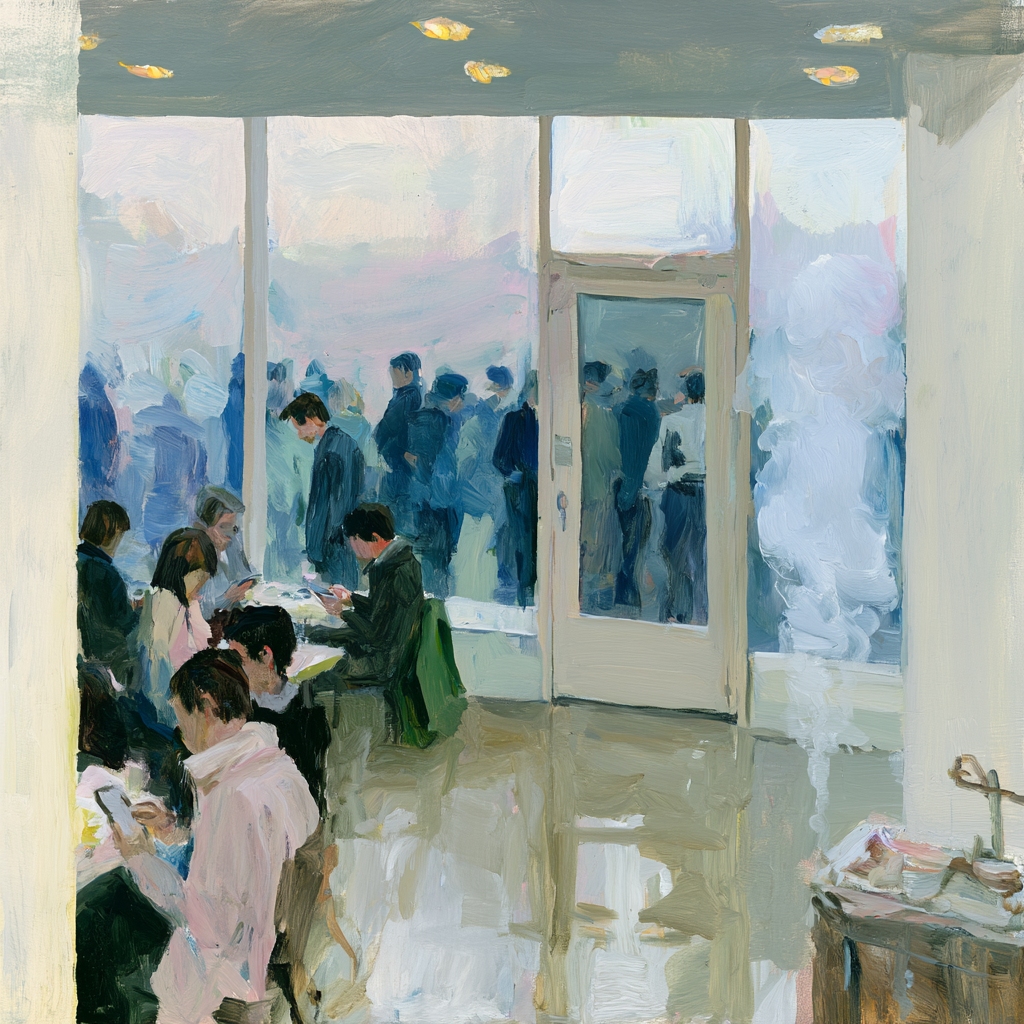
First post I saw: Daniel, from college, thrilled to announce a new role as Senior Director of Brand Strategy at one of the Big 7.
Good for him.
That’s the only thing I’m going to say about Daniel, because he isn’t actually the story. He’s just the domino. The feed kept going after him, the way it always does, and what was underneath was bigger and stupider than one guy’s good week.
Another acquaintance is now at Apple. Someone from a 2016 pitch meeting, now writing about “building with intention at scale,” which is corporate for I make decks that justify other decks.
Then the section nobody asked for. People You May Know. Less a feature than light surveillance with a friendly font.
Everyone in it had a three-word title, and one of the words was always Global.
Global Creative Lead.
Global Brand Director.
Global Something That Comes With Health Insurance.
Here’s the part that took me a few blocks to actually see, walking toward Flatiron with the app still open.
There’s an old idea from a sociologist named Erving Goffman, that all of social life runs like a theater. A front stage, where you perform for whoever’s watching, and a backstage, where you finally put the costume down and pick your teeth.
The whole insight depended on there being a backstage. A green room. Somewhere the audience couldn’t follow you.
LinkedIn, like most of the internet now, quietly demolished the backstage and called it networking.
There’s no green room left. You’re front stage in the elevator, front stage at midnight scrolling in bed, front stage in the deli line at eight a.m. with no coffee in you yet and a face that hasn’t agreed to perform anything.
The phone assumes you’re always available for your own opening night.
None of it is lying, exactly. The jobs are real. The titles are real. The companies issue real badges and real salaries and real handshake emojis.
What’s fake is the performance wrapped around the fact, the way every announcement has to be laundered through gratitude before it’s allowed to be a brag.
Nobody says I got a better job and a corner office. They say they’re humbled. Humility, here, isn’t a virtue. It’s a costume status wears so it doesn’t have to be rude in public.
Keep scrolling and you find the other genre, the one that pretends to be its opposite. The failure post. Three years ago I was let go. I cried in a stairwell. Today I lead a team of forty.
Always posted the same week as a funding round or a launch. Vulnerability with a release date. Honesty, scheduled for maximum reach, like a sample sale for feelings.
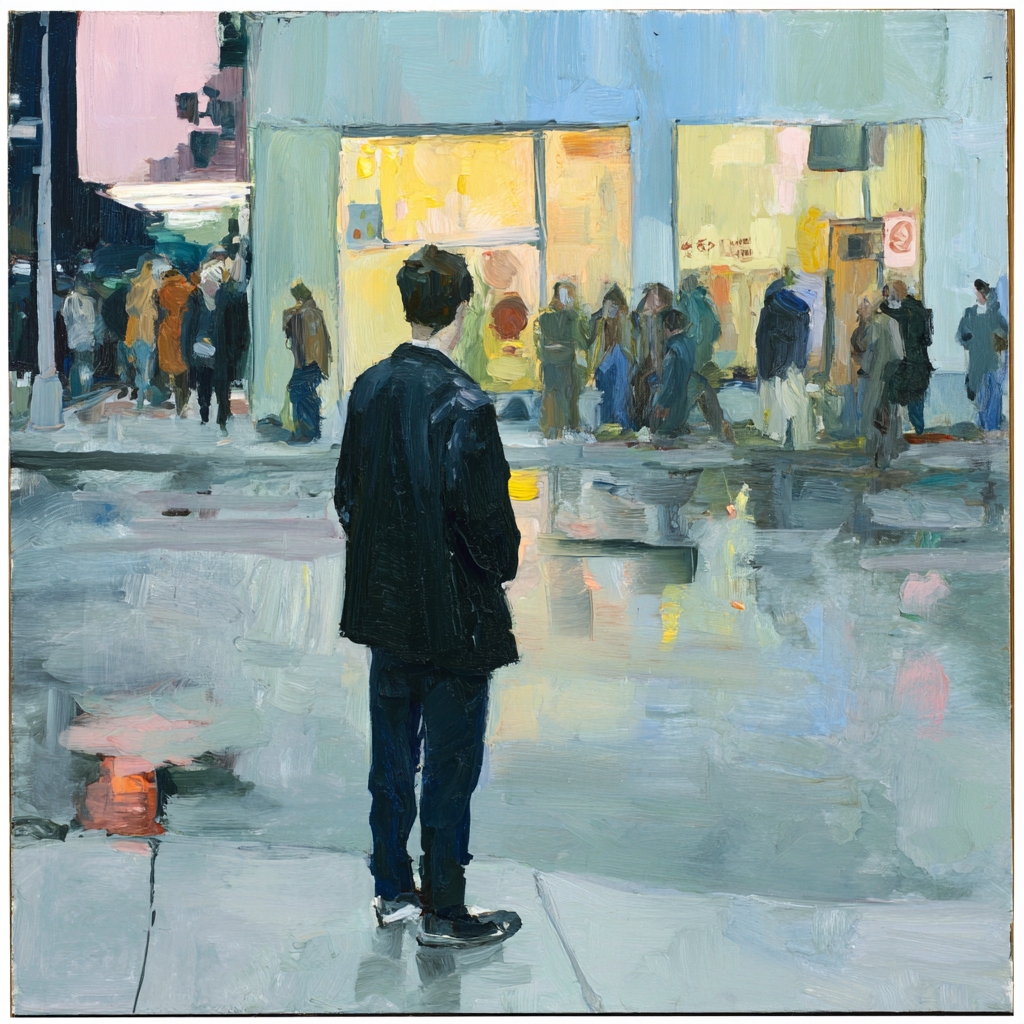
Decades before anyone had a profile to update, a historian named Daniel Boorstin had a term for exactly this: the pseudo-event. Something staged for the sole purpose of being reported on, indistinguishable from news except that nothing would have happened without a camera in the room.
A promotion announcement isn’t news. It’s a pseudo-event with a notification sound, art-directed, scheduled, and over before it ever has the chance to mean anything.
This is the part nobody wants to say out loud, so I’ll say it walking past a guy in a Patagonia vest explaining his startup to a woman who has already decided not to sleep with him.
Nobody actually wants real anymore. Not really. Real doesn’t perform well. Real has dead air in it, and silences that don’t resolve, and opinions that haven’t been workshopped into something quotable. What people want, what the whole architecture is built to reward, is something real-shaped. Real enough to post. Not real enough to live inside.
It isn’t only the career feed. Open a dating app sometime and read the bios. No games. Real ones only. Down to earth. Written by people running split tests on their own openness, optimizing the exact sentence that’s supposed to prove they’re past optimizing.
The phrase “no games” has become the single most reliable signal that you’re talking to someone fluent in the game. Authenticity turned into a setting you toggle on, the way you’d toggle dark mode.
I’d know. My job, on a good week, is manufacturing that exact feeling for money. A client wants the homepage to feel “more human.” So I make it feel more human. Warmer type. A photo of someone laughing at something off-camera that nobody actually said. A founder’s letter written by me, in a voice I invented for a man I’ve met twice. It works. It always works. Which should bother me more than it does.
Marcus called while I was crossing 23rd.
“You sound annoyed,” he said.
“I opened LinkedIn.”
“That’s on you.”
“Someone from school got a big title today.”
“Naturally. Everyone’s thrilled about something over there.”
“Nobody’s thrilled. They’re advertising.”
“For what?”
“Themselves. As a product. Same way my client wants the homepage to feel human. Nobody wants human. They want the feeling of human, in a font they can trust.”
“That’s the whole industry, my friend. Yours and mine both.”
“You think anyone on that app is actually being honest?”
“Define honest.”
“Real. Not performing.”
“Nobody’s ever wanted real. Real doesn’t have a leaderboard. People want something real enough to screenshot, not real enough to sit with. You know what a costly signal is?”
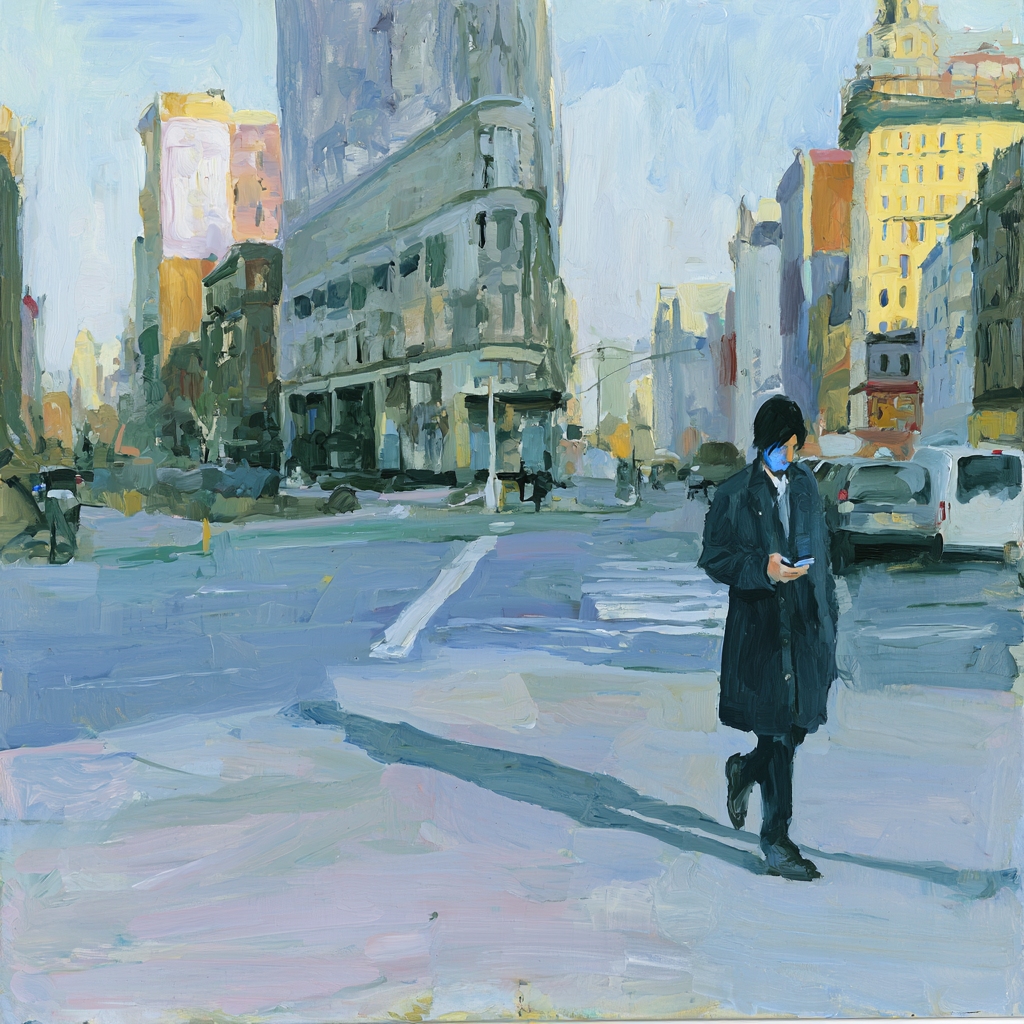
“Enlighten me.”
“Evolutionary biology. The peacock’s tail. Enormous, useless, basically a dinner bell for predators. And that’s exactly why it works as a signal. Nobody fakes a tail that expensive. A title’s the same trick. Eight years, a corner office, a comp package nobody actually needed: an expensive, inefficient proof you’re worth something. Cheap signals get ignored. Expensive ones get believed.”
“That’s almost interesting.”
“I read,” Marcus said. “Some of us read things that aren’t decks.”
I stopped walking, because that deserved a full stop in real life too.
“That’s bleak.”
“That’s accurate. You keep saying that like it’s an insult.”
“It’s a terrible way to think about people.”
“It’s an excellent way to think about a platform. Speaking of, update yours. It still says Freelance Web Designer, like you’ve never once tried to win.”
“It’s accurate.”
“Accuracy doesn’t get clicked. Nobody scrolls past Visionary of Digital Ecosystems to read accurate.”
“I fixed someone’s font hierarchy last week. I’m not a visionary.”
“Doesn’t matter. The whole platform’s grown adults narrating themselves into furniture nobody asked for. You’re the one piece of honest IKEA in a showroom full of antiques nobody actually owns. It’s costing you leads.”
He wasn’t wrong. That’s the most annoying thing about Marcus, a skill he’s cultivated the way other men cultivate a golf handicap.
In the eighteen-hundreds, before any of this, a person who wanted to be taken seriously left a calling card. Engraved name, a few abbreviations in the corner noting the nature of the visit. P.P.C. if you were leaving town for good.
The whole etiquette existed so a stranger could know who you were without the inconvenience of actually finding out. We didn’t invent the shortcut. We just put a notification sound on it.
A title starts as a description.

Then a habit.
Then, if nobody’s paying attention, the whole costume, and you can’t find the seam anymore between the man and the role.
The executive performs certainty. The founder performs obsession. The creative performs taste. Everyone terrified the room stops believing the noun the second they stand still long enough to just be a person in it.
The title isn’t really information anymore. It’s a score. A level cleared. Proof you’re winning a game nobody agreed was a game, which is the only kind worth playing if you want to win it quietly.
I perform too. Independent, same quiet hope nobody checks the receipts too closely.
Some of it’s true.
Some of it’s a costume I happen to own and wear convincingly, mostly because the alternative is explaining myself at length to strangers who have somewhere to be.
People assume freelance means a museum at two on a Tuesday.
It isn’t that.
I’d trade the Tuesday museum without blinking for what actually matters, which isn’t the clock. It’s not asking permission. Not for the schedule.
For the thoughts. For the unscheduled hour where nobody’s decided yet who I’m supposed to be in it, and nothing I do during it will be screenshotted, scored, or congratulated.
That’s the part the platforms can’t touch, and I think that’s exactly why almost nobody spends time there. The unscheduled hour has no feedback. No likes, no rank, no green dot telling you whether you’re doing it correctly.
Worth Reading: When Joy Goes Quiet, Something Else Begins
For most people, that’s not freedom. That’s exposure. It’s an hour with no rules to win at, and we have apparently decided, collectively, that an experience with no way to win isn’t worth having.
We’ll take the artificial over the real every time, because the artificial comes with a scoreboard and the real comes with nothing but the weather and your own unsponsored thoughts.
I’m not exempt. Some nights I still want the easy sentence as much as anyone, the one that lets people understand you before they’ve had to listen. There’s relief in being legible. In being a title someone can repeat at a dinner table without a follow-up question. I get the appeal. I get why almost everyone takes it.
I just don’t think it’s honest to call that wanting something real. It’s wanting something that resolves. Real things don’t resolve. They sit there, unfinished, refusing to become a caption.
Six o’clock, the app sent its follow-up. Congratulate him on his new role. One branded blue button, clean, civilized, almost beside the point.

I looked at it about as long as it takes to order a coffee, then closed the tab. Not protest. The moment had already happened without the button’s help, somewhere back around Flatiron, when I understood the post was never really about him. He was just the first domino. Everyone after him kept falling in exactly the same direction, toward the same flattering light.
Next morning, the other favorite kind of update.
You appeared in 14 searches this week.
Fourteen people, out looking for a version of me efficient enough to fit a headline. A score, of a kind. Proof I exist, of a kind. Once, leaving a card meant someone might actually remember you’d called. Now the algorithm remembers for me, fourteen times over, and recalls nothing at all about who I am. Only that I was searched for. The way a calling card never asked anyone to feel anything. Just to note the visit, and move on.
I haven’t found that efficient version of myself either. The one with a number attached.
For the first time in a while, that didn’t feel like a problem still waiting on a fix.
It felt like the only honest line on the entire platform. The only one that wasn’t trying to win anything.
D.S.
“The Unmarried Man” is a column about dating and life in New York City from the perspective of a man in his late thirties.
When Dinner Starts Feeling Like Adulthood: A Single Man at a Brooklyn Dinner Party

OUTBOUND — Photo Editorial by Natalie Kucken

Do You Say Thank You to ChatGPT?
The Text (Or: How I Learned to Stop Worrying and Just Hit Send)
BAST-ARDIZED – An interview with Brooklyn street artist Bäst