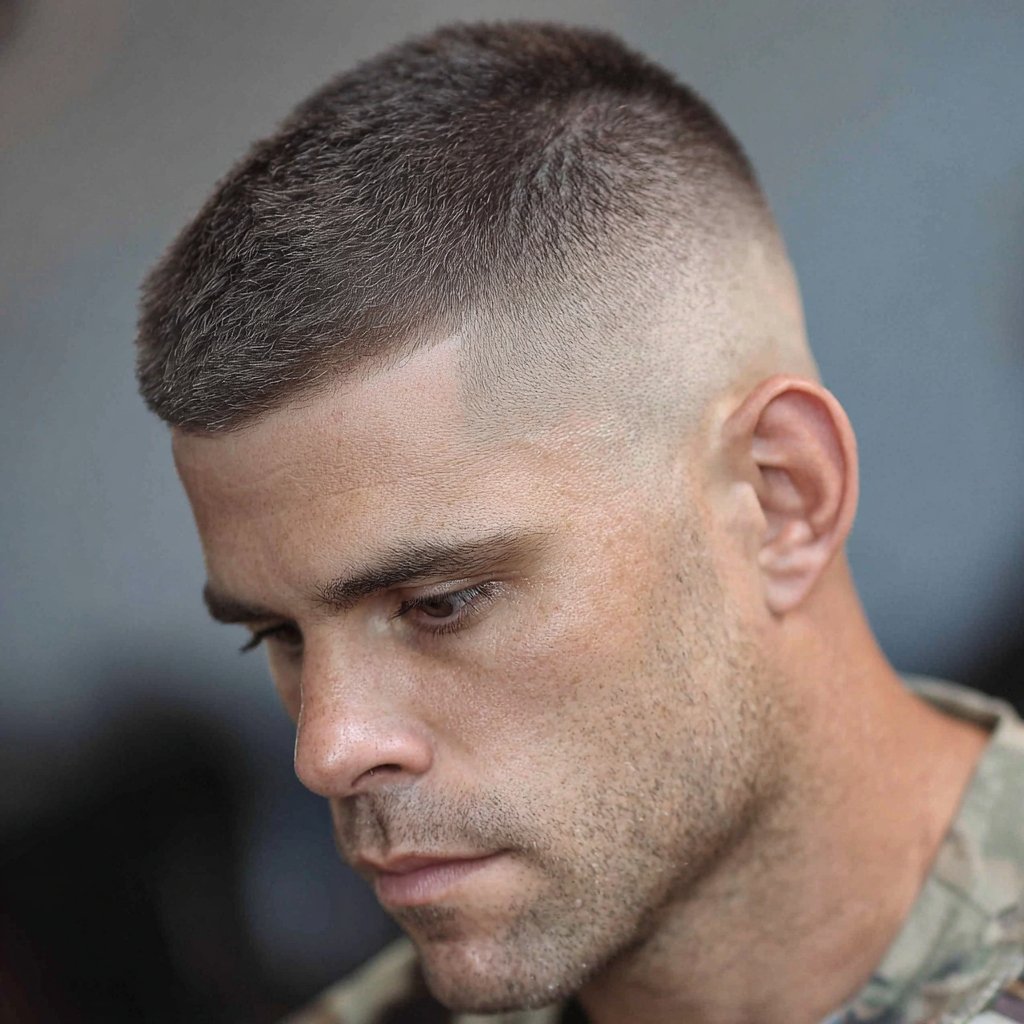
Taper Fade Haircut: Style Variations for Every Face Shape + Maintenance Tips
The taper fade haircut has become the gold standard of modern men’s hairstyling, seamlessly blending classic barbering techniques with contemporary style.
This versatile cut features hair that gradually transitions from longer lengths on top to progressively shorter sides and back, creating a clean, polished appearance that works for virtually every face shape and hair type.
The cut’s popularity has exploded across social media platforms, with everyone from Hollywood actors to your next-door neighbor sporting some variation of this timeless style.
Unlike other trending haircuts that come and go, this style has proven its staying power. This look can be adapted to suit your age, hair texture, and personal brand.
What is a Taper Fade Haircut?
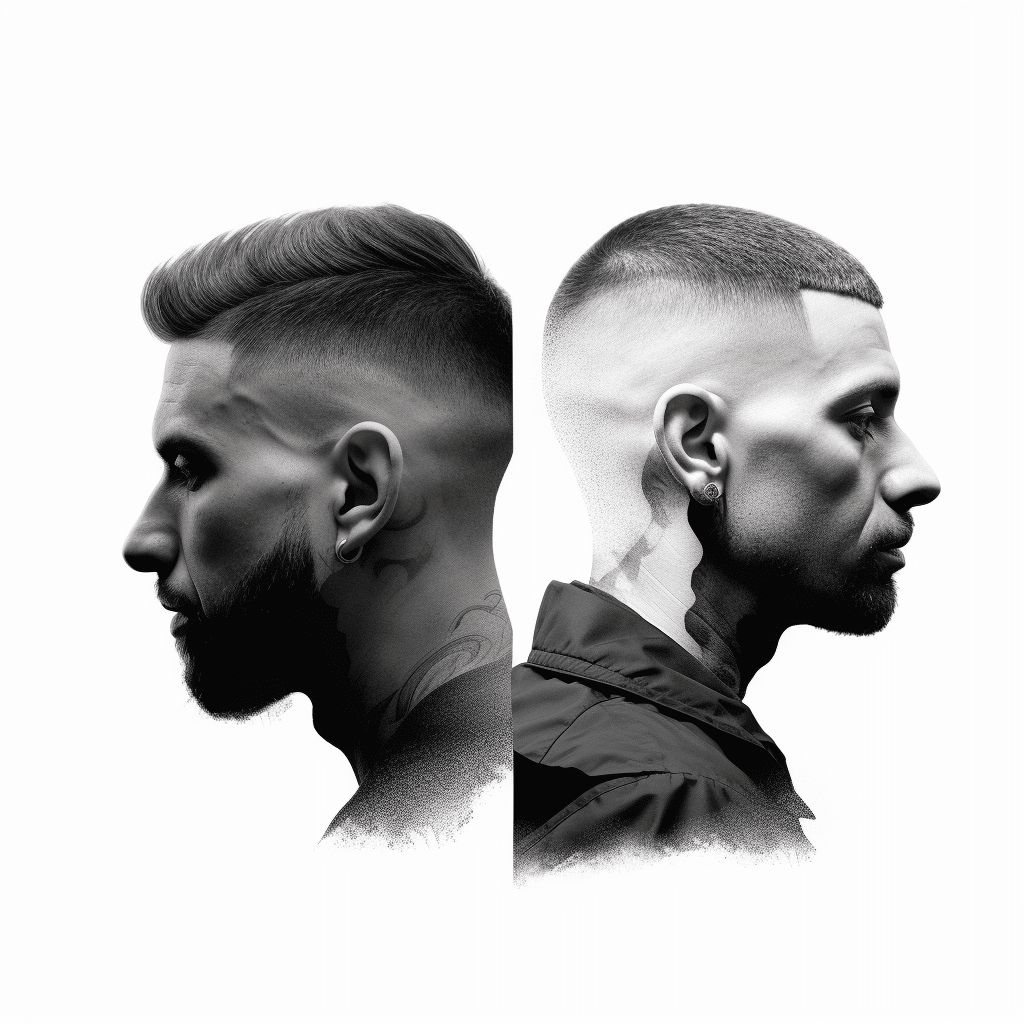
Understanding this haircut requires breaking down its two key components: the taper vs. the fade. A traditional or classic taper haircut gradually shortens hair length from the crown to the neckline using scissors only.
It maintains some length at the bottom. A fade haircut creates a sharp transition from hair to skin using clippers. Often more dramatic.
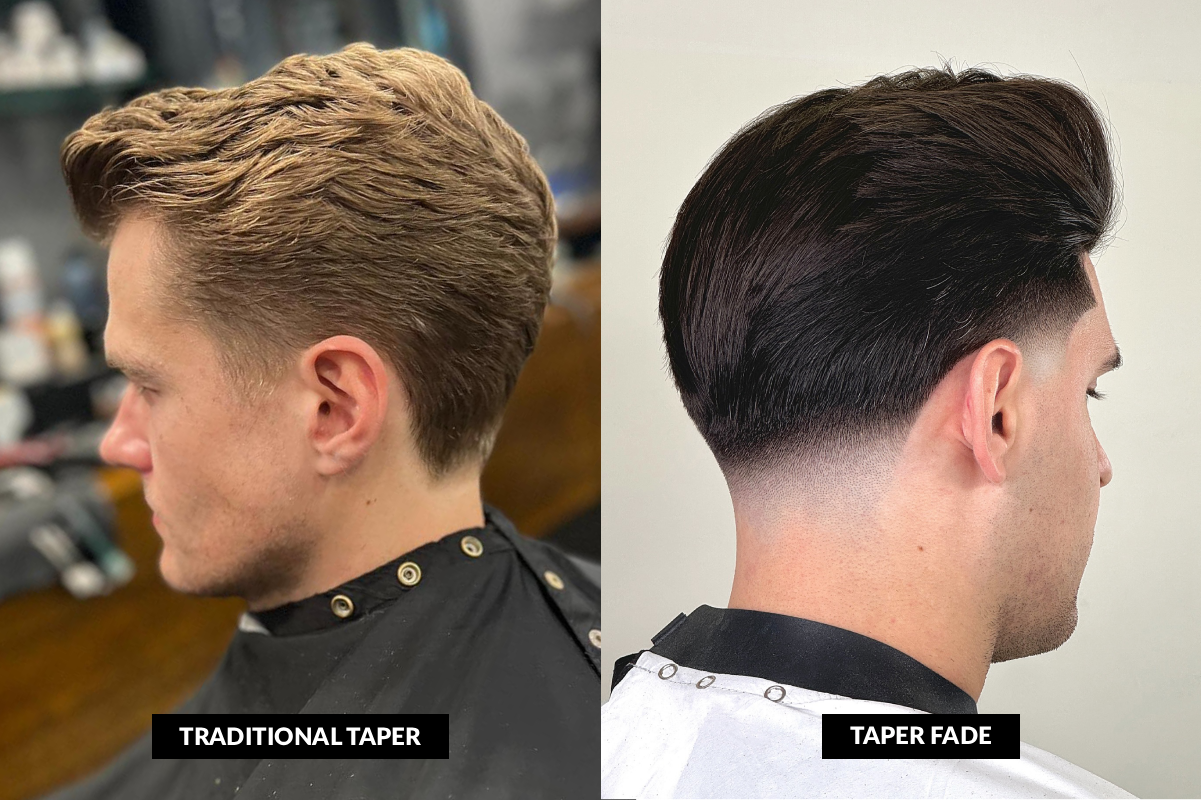
(left image by barber by barber @shota_hair_ — right image by barber @il.magri)
From a technical barbering standpoint, the term “taper fade” is somewhat redundant. Traditionally, these are two different techniques that shouldn’t be combined in name. However, this terminology has become incredibly popular through TikTok and modern barbering culture. Now it represents a widely understood style request.
What’s actually happening in most “taper fade” cuts is primarily fade work (clipper blending) with varying degrees of gradual transition. The “taper” portion typically refers to how smoothly and gradually the fade is executed. It doesn’t indicate that scissors are used throughout the entire cut. Traditional barbers might simply call these low fades, mid fades, or high fades. But “taper fade” has become the popular terminology that clients use and expect.
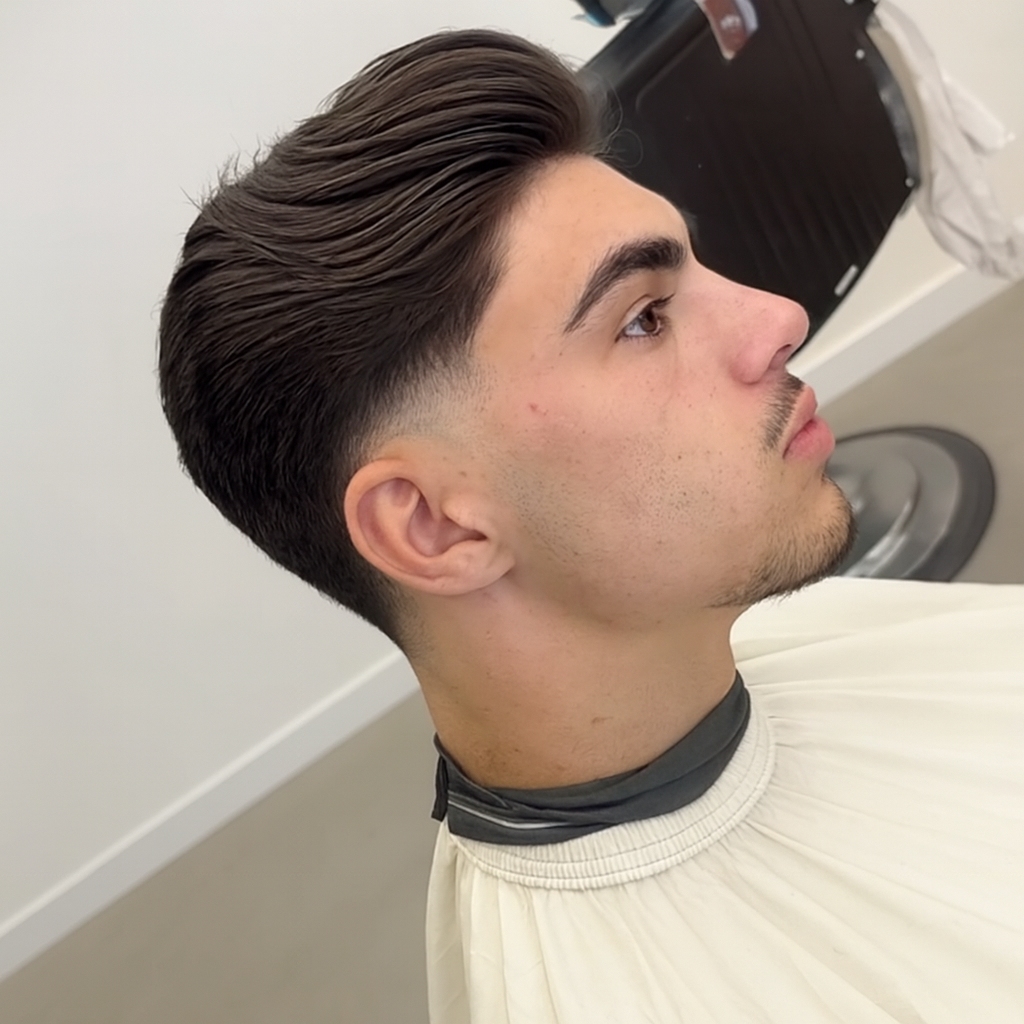
The taper fade works with all hair textures. From pin-straight to tight curls. It can be modified to complement any face shape or head size. This style masterfully combines both traditional techniques when done properly. The result is a cut that’s more dramatic than a standard taper but more natural than a traditional fade.
Key Features That Define the Taper Fade
Gradual Length Transition: Hair seamlessly flows from longer lengths on top to shorter sides. This creates smooth visual continuity rather than harsh lines.
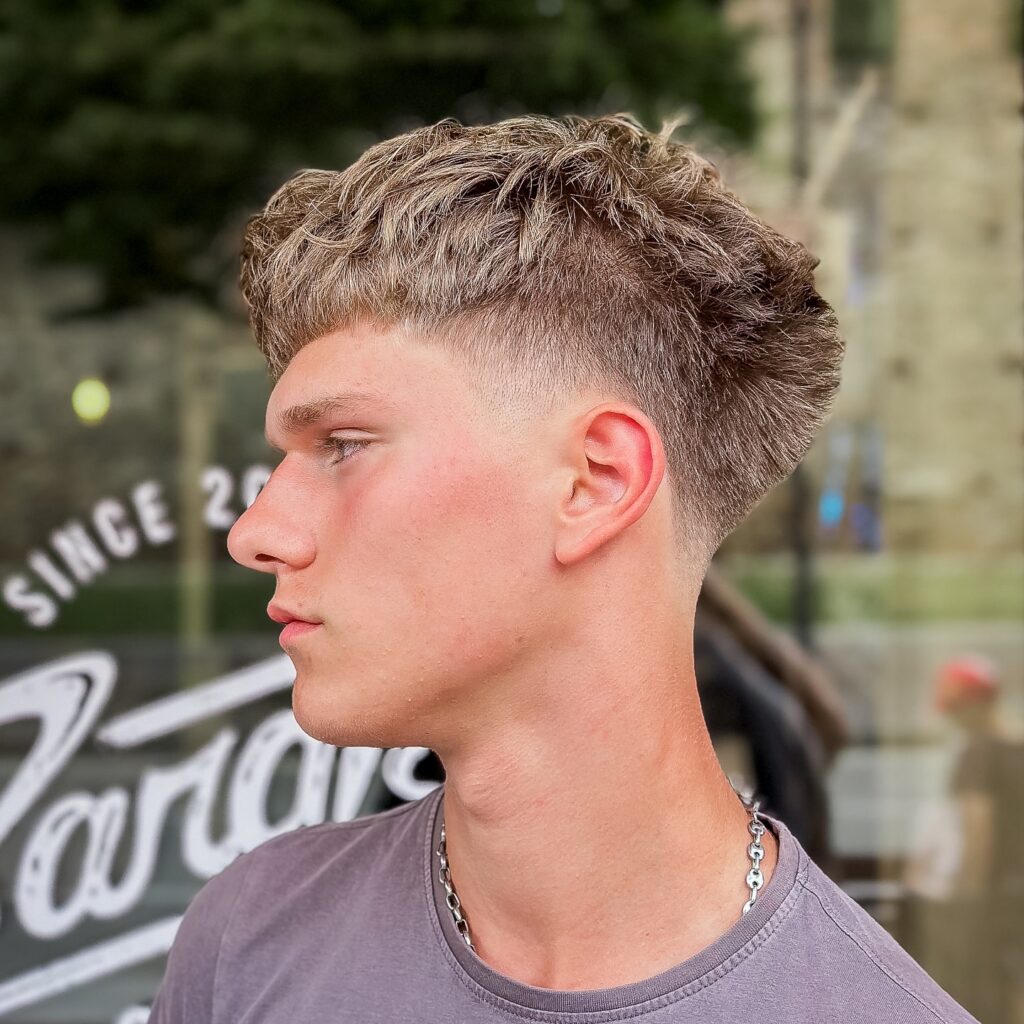
Versatile Styling Options: The longer top section can be styled in countless ways. Swept back, textured, curled, or kept natural—all while maintaining the clean fade underneath.
Clean Perimeter: In a taper fade, the sides and back gradually shorten toward the temples and neckline. This creates a clean, neat look with edges that appear blended and natural. Not razor-sharp or squared-off. Some barbers may add a subtle line-up. But it isn’t the defining feature of the cut.
Types of Taper Fade Haircuts
The beauty of this style lies in its adaptability through three distinct height variations. Each type offers unique advantages. Each suits different personalities, lifestyles, and professional requirements.
Low Taper Fade
The low version represents the most understated and versatile option in the family. The fade begins just above the ear. This creates a subtle transition that maintains maximum hair coverage while still delivering that clean, modern edge.
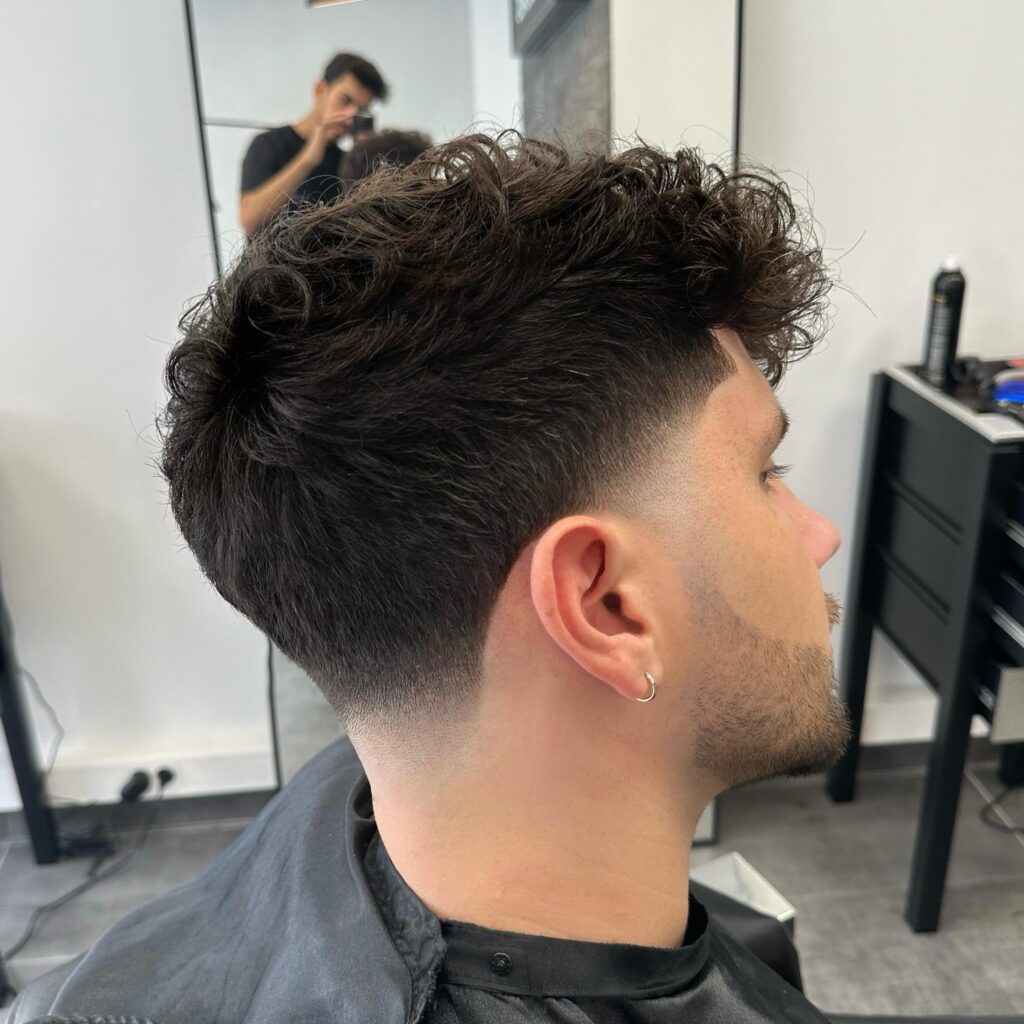
Taper fade haircut by barber @crescendo_men in Nancy, France
This conservative approach makes the low fade perfect for professional environments. Great for academic places with strict grooming policies. Ideal for men who prefer refined elegance over bold statements. The gradual fade creates natural-looking results. Works exceptionally well with business casual attire and formal occasions.
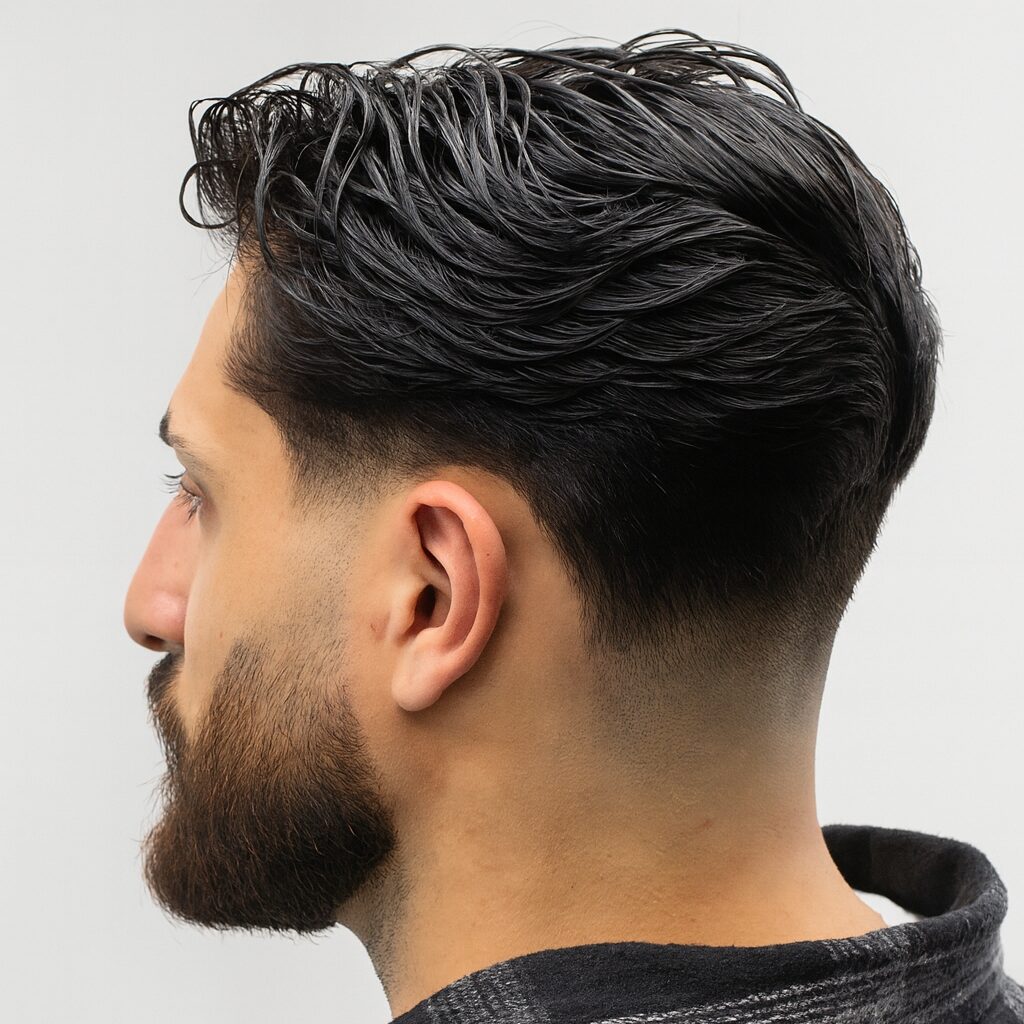
What sets the low fade apart is its incredible growing-out period. Because the fade starts lower, you’ll maintain a polished appearance for 3-4 weeks between cuts. Makes it both economical and practical for busy schedules.
Explore More: 20 Slick Back Haircuts for Men: Classic, Textured, and Modern Cuts
Mid Taper Fade
The mid version strikes the perfect balance between subtle and bold. Positions the fade at temple level for optimal versatility. This placement creates more noticeable contrast than the low fade. Still remains appropriate for most professional and social settings.
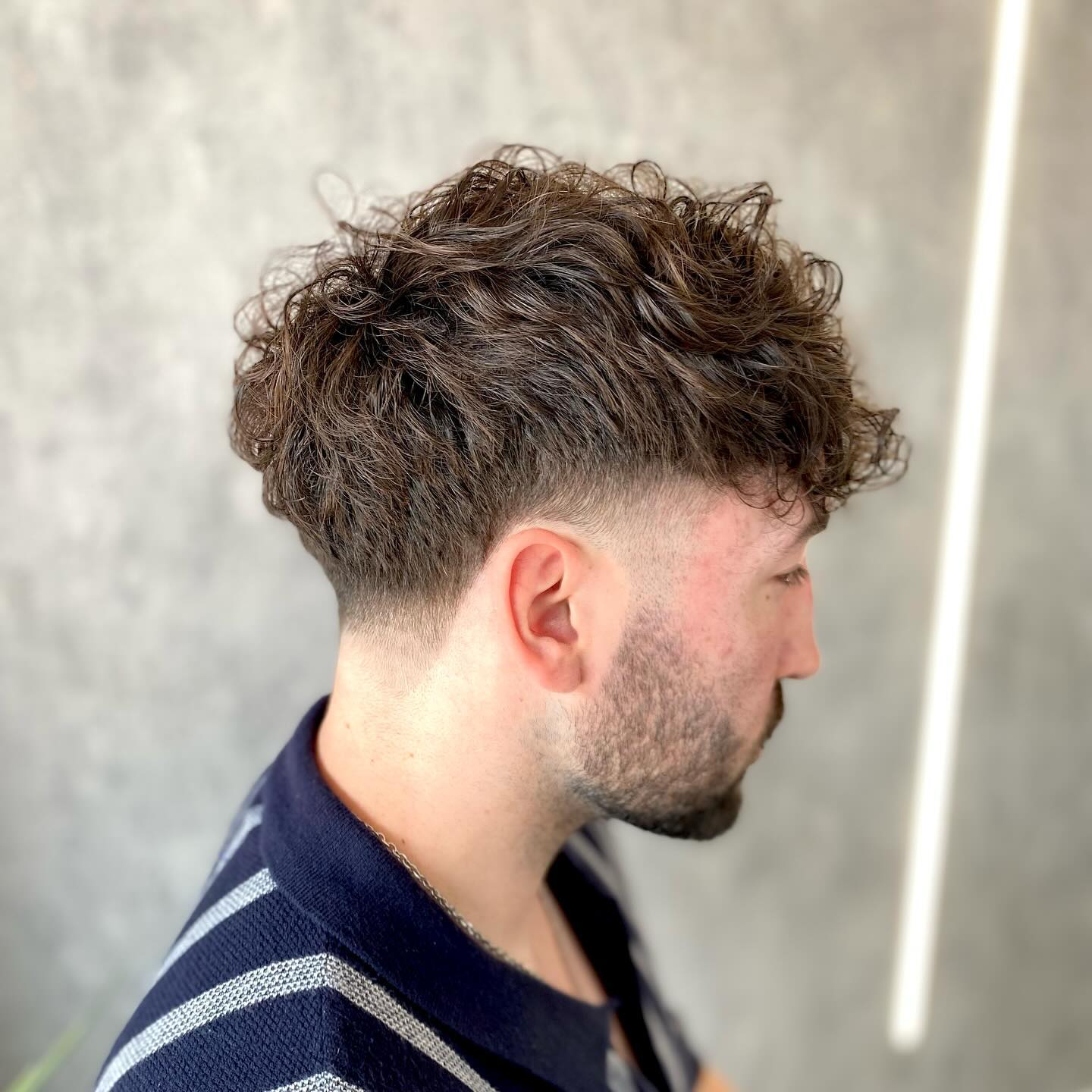
This balanced approach makes the mid fade incredibly popular. Perfect for men who want styling flexibility. The retained length on top allows for various texturing techniques. Pompadours, quiffs, or natural styling all work. The mid-level fade provides enough contrast to create visual interest and modern appeal.
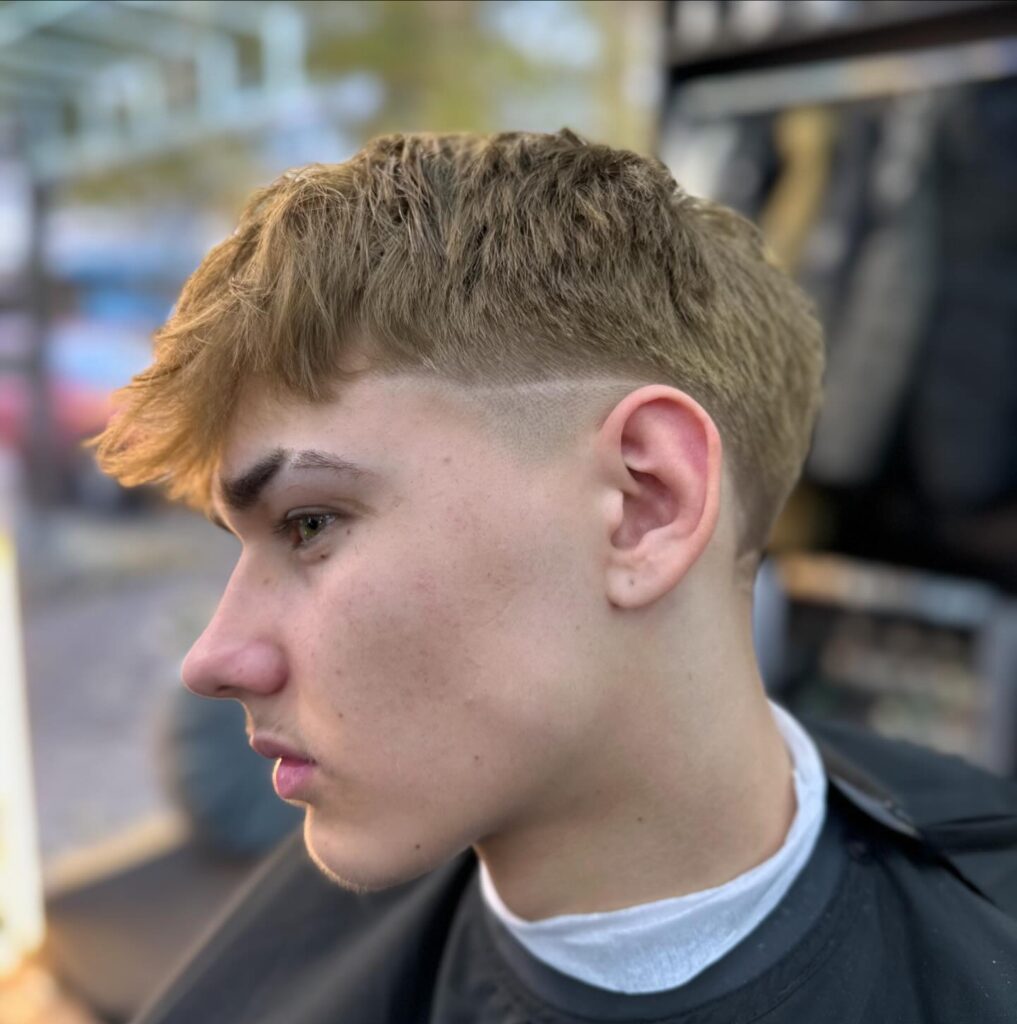
Mid fades work exceptionally well with textured and curly hair types. The fade level allows natural texture to shine on top. Keeps sides neat and manageable. For men with thick, coarse hair, this cut reduces bulk in just the right places. Maintains enough coverage to avoid an overly sharp appearance.
Read more about these taper haircuts: Low Taper vs Mid Taper: Key Differences Explained
High Taper Fade
The high version makes the boldest statement. The fade begins at or above the temples for maximum contrast and modern edge. This placement creates significant visual impact. Emphasizes the hair on top while creating clean, sharp lines that photograph beautifully for social media.

This style works particularly well with contemporary trends. Textured crops, natural afros, and styled-forward looks all require strong contrast to shine.
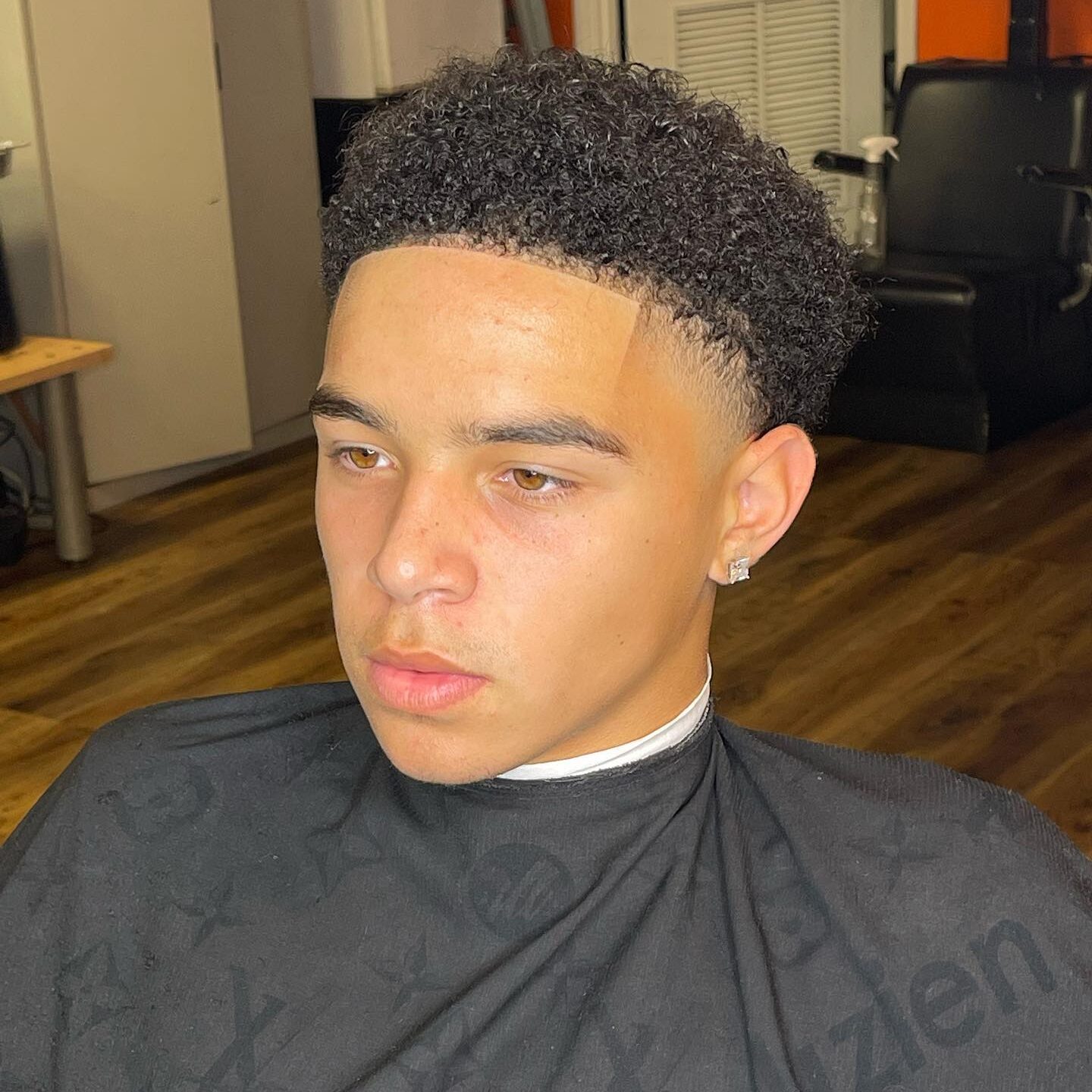
High fades are perfect for men with strong facial features. The bold contrast complements and enhances natural bone structure. While the high fade requires more frequent maintenance (every 2-3 weeks), it delivers unmatched style impact.
Popular Style Variations
This versatile cut adapts to any hair type or vibe. Makes it one of the most flexible foundations in men’s hairstyling. Here are the trending variations that showcase this style’s incredible flexibility:
Taper Fade with Curly Hair
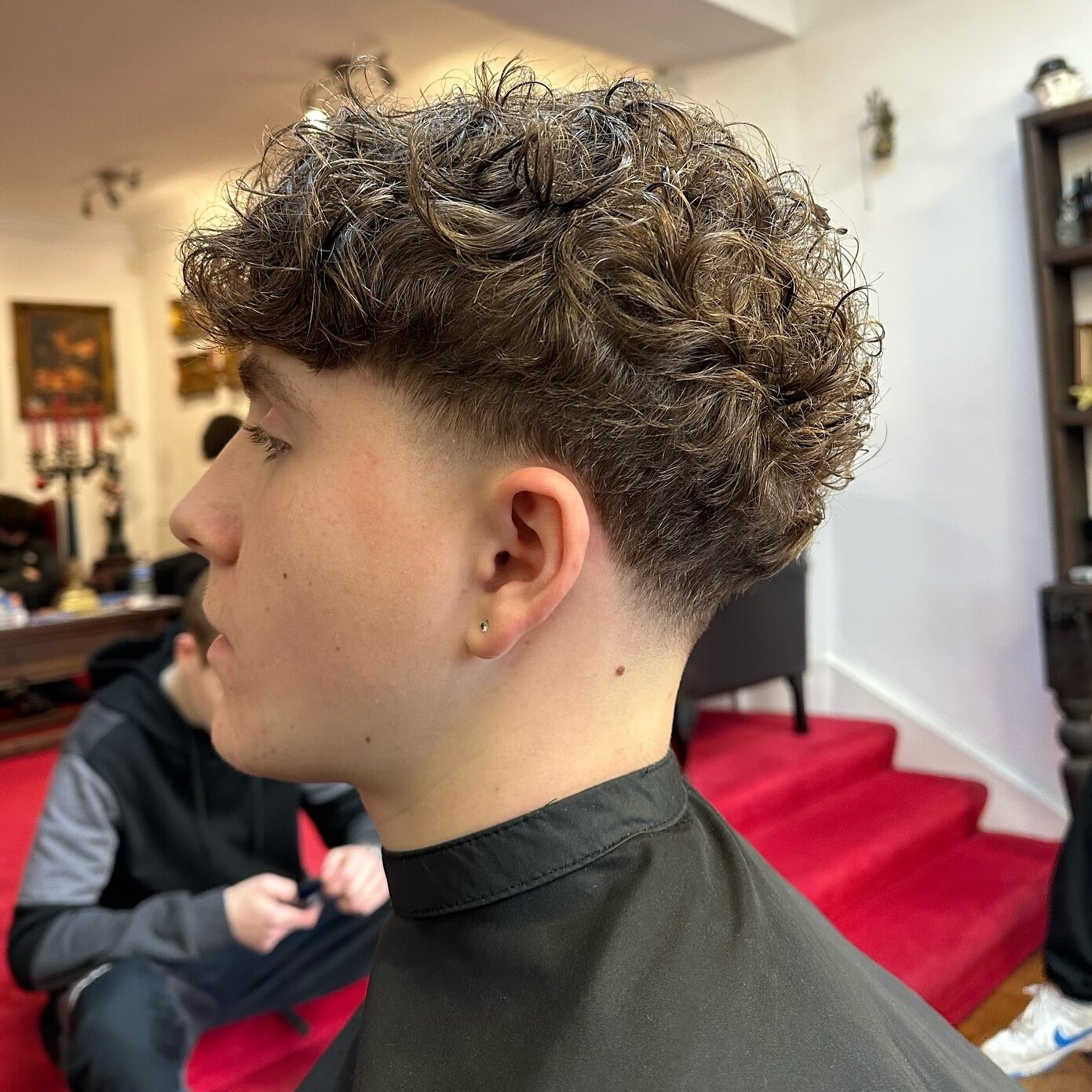
This variation transforms natural texture into a style statement. Allows curls to shine on top while keeping sides controlled and professional. Men with curly hair can rock a fade that enhances their natural curls. The key is keeping enough length on top. Let the curls do their thing. The clean fade adds sharpness and definition. This combination is perfect for showcasing natural texture while managing bulk.
Taper Fade with Straight Hair
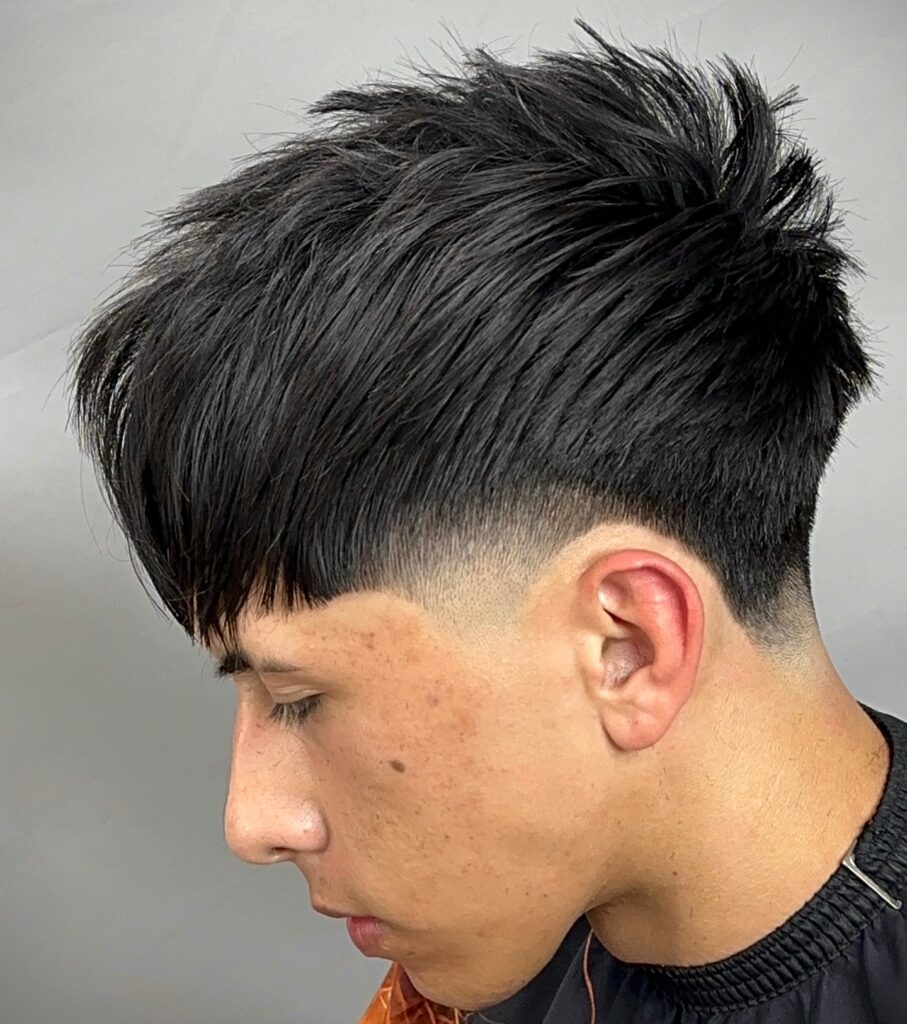
Creates sleek, modern looks perfect for pompadours, side parts, or textured styling. Maximum versatility and clean lines. This classic version works exceptionally well with straight or slightly wavy hair. Offers simplicity and elegance with styling flexibility.
Taper Fade with Textured Crop
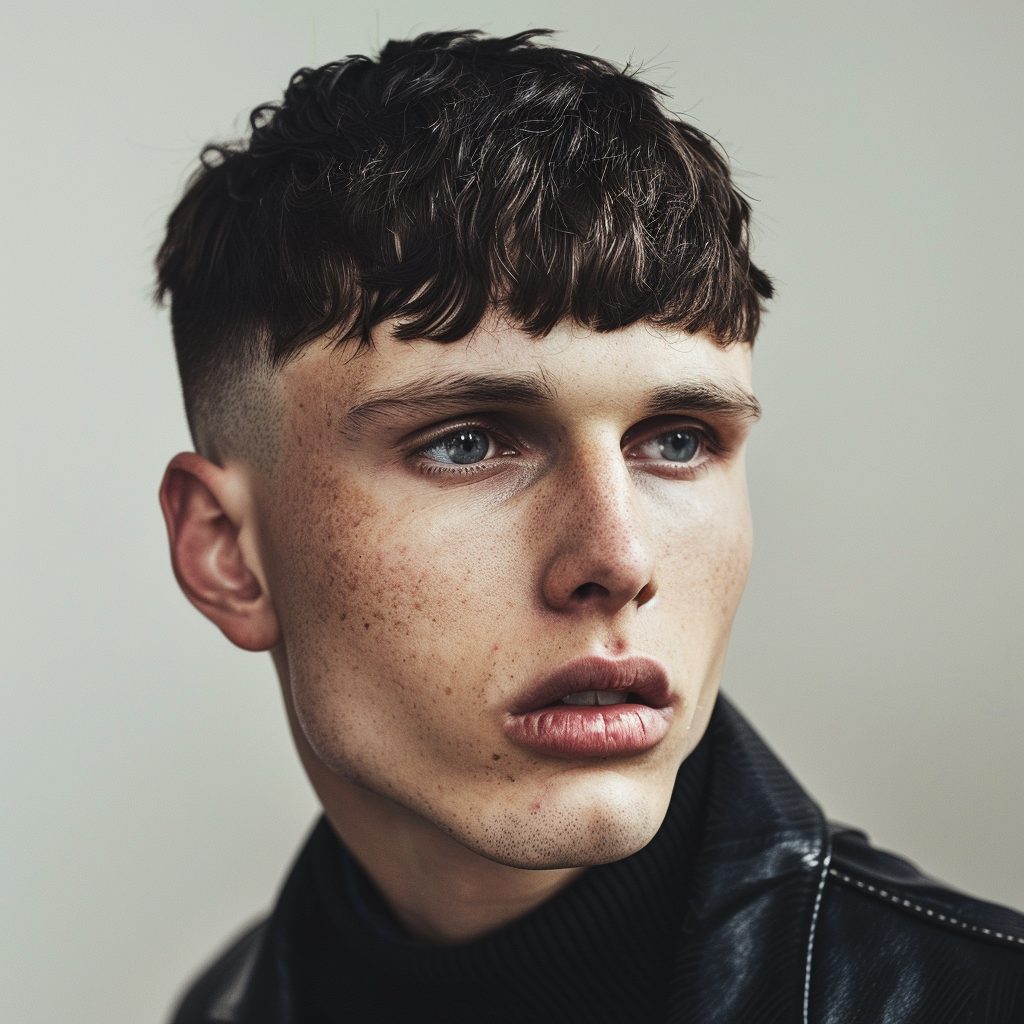
Adding texture to the top gives a more dynamic and modern twist to the traditional fade. Can be achieved with styling products like pomades or waxes. These provide a matte finish and help create volume and movement. This style is ideal for those with thicker, coarser hair. Embraces natural texture and volume on top. Creates casual, approachable looks that photograph beautifully. Requires minimal daily styling.
Blowout Taper Fade with Fringe
The blowout taper fade with fringe blends the gradual, clean sides of a taper with the bold volume of a blowout on top. The hair is lifted upward and slightly forward. Creates height through the crown while leaving the fringe textured and messy.
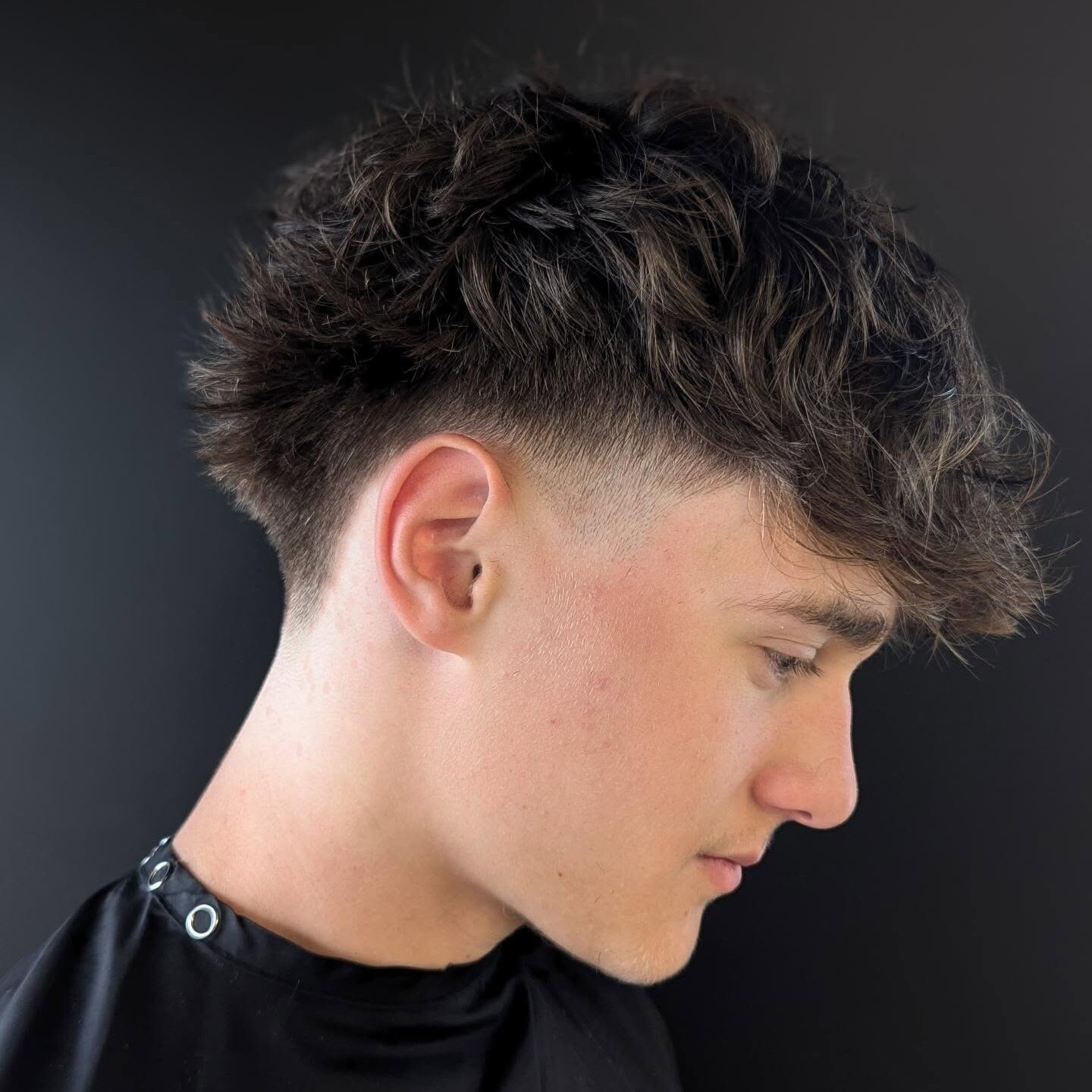
This style delivers a youthful, high-energy look. Works especially well for men with thick or wavy hair. The blowout enhances natural volume. The taper keeps everything sharp and controlled. A favorite on social media. Balances streetwear cool with polished grooming. Versatile for both casual days and nights out. To style, blow-dry with a round brush for lift. Finish with matte paste or sea salt spray for natural, touchable hold.
Taper Fade with Mullet
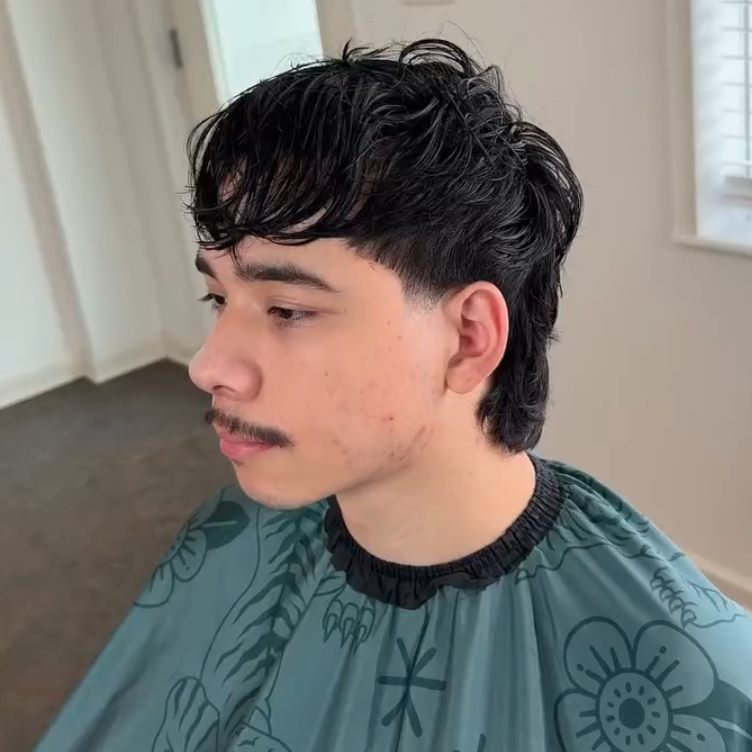
Combines classic fade technique with a modern mullet. Creates edgy, fashion-forward looks for men who want to make a statement. This bold combination offers striking contrast. Opens up numerous styling possibilities.
Taper Fade with Pompadour
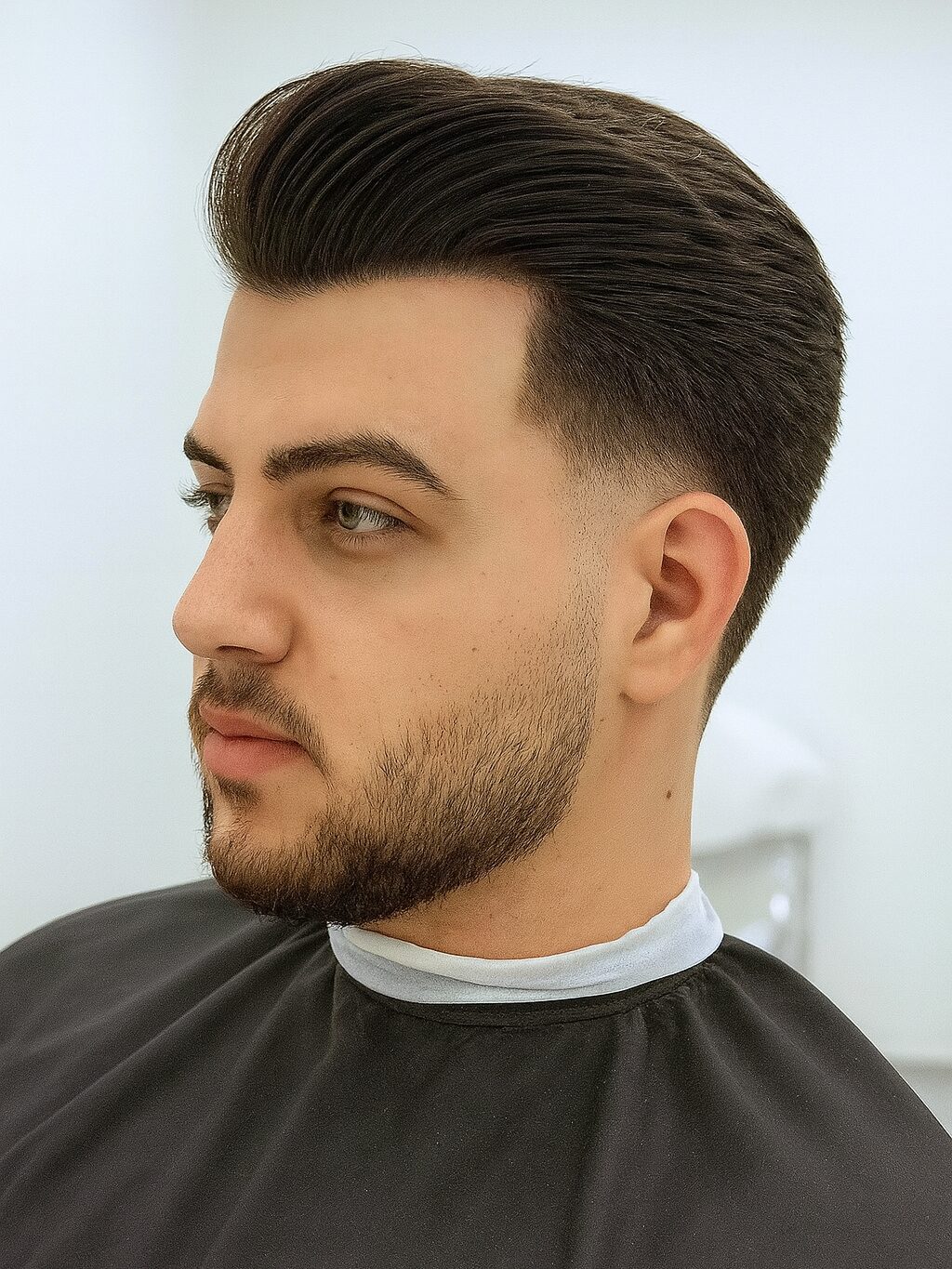
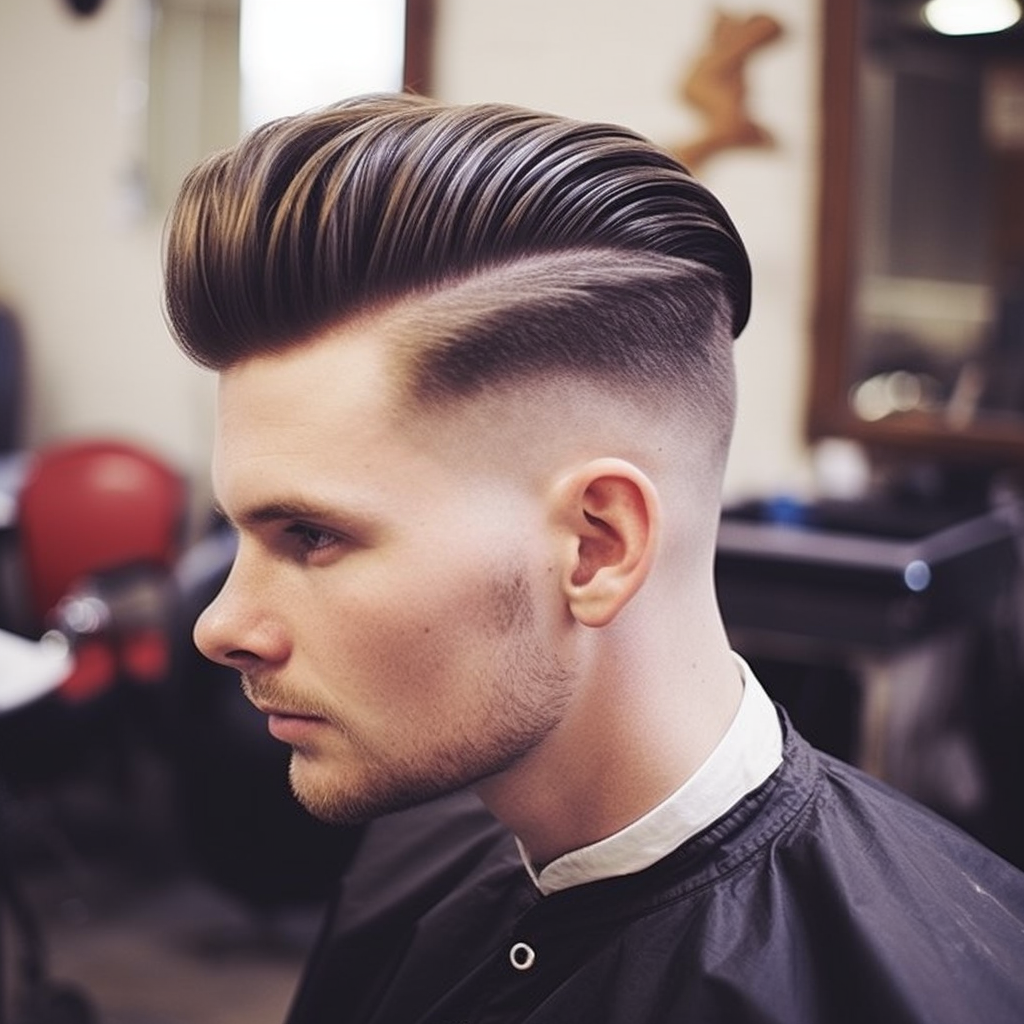
The taper fade paired with a modern pompadour combines clean faded sides with height and volume on top. The hair is styled upward and back. Often with a blow dryer and pomade to create lift and hold. This look strikes a balance between sharp edges and flowing movement. A polished yet versatile style that works for both formal and casual settings.
Taper Fade with Design
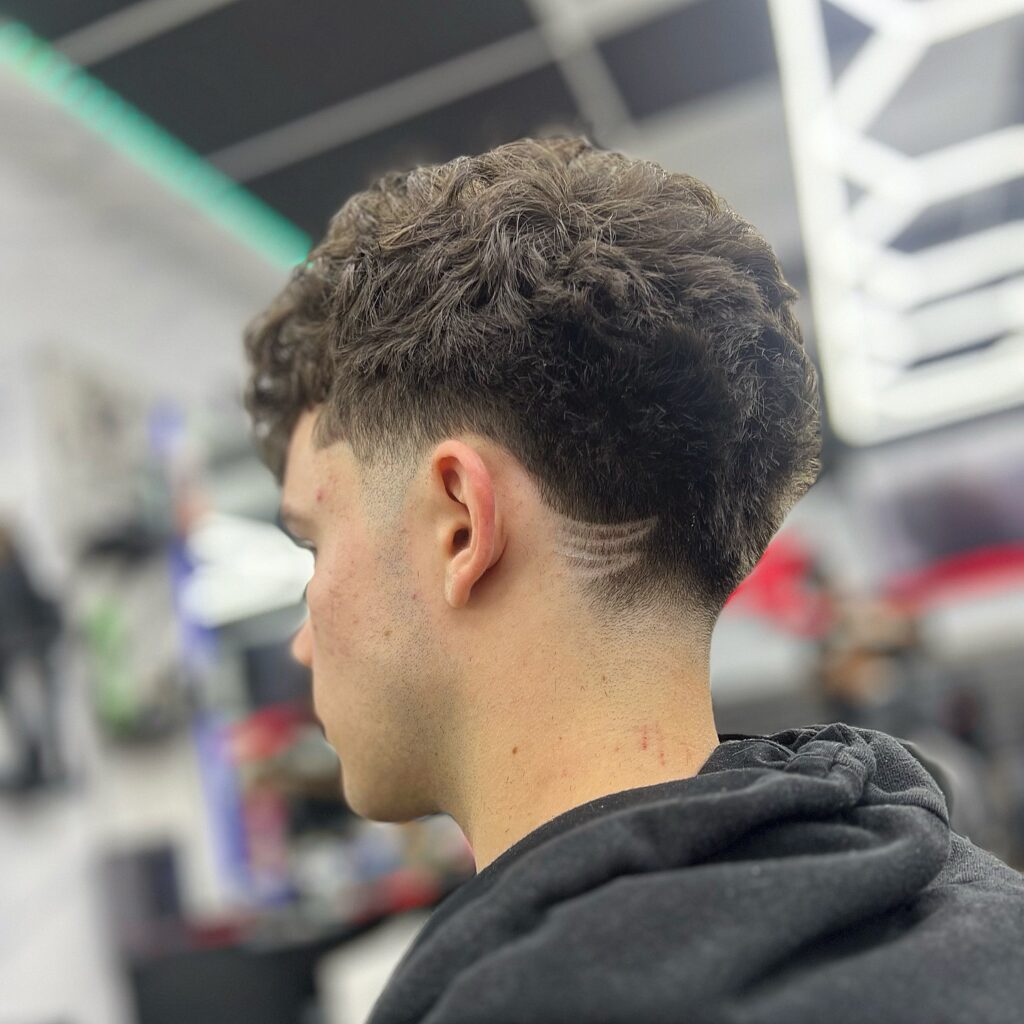
For those wanting to make a statement, incorporating a design into the fade adds a unique touch. Could range from simple lines to intricate patterns shaved into the fade. This style is especially popular among younger men. Perfect for those looking to stand out in a crowd.
Taper Fade with Long Hair
Combining a fade with long hair on top offers striking contrast. Opens up a plethora of styling possibilities. From ponytails to buns or simply letting the long hair flow naturally. This style is perfect for those who like to mix edgy and bohemian vibes.
Taper Fade with Faded Beard
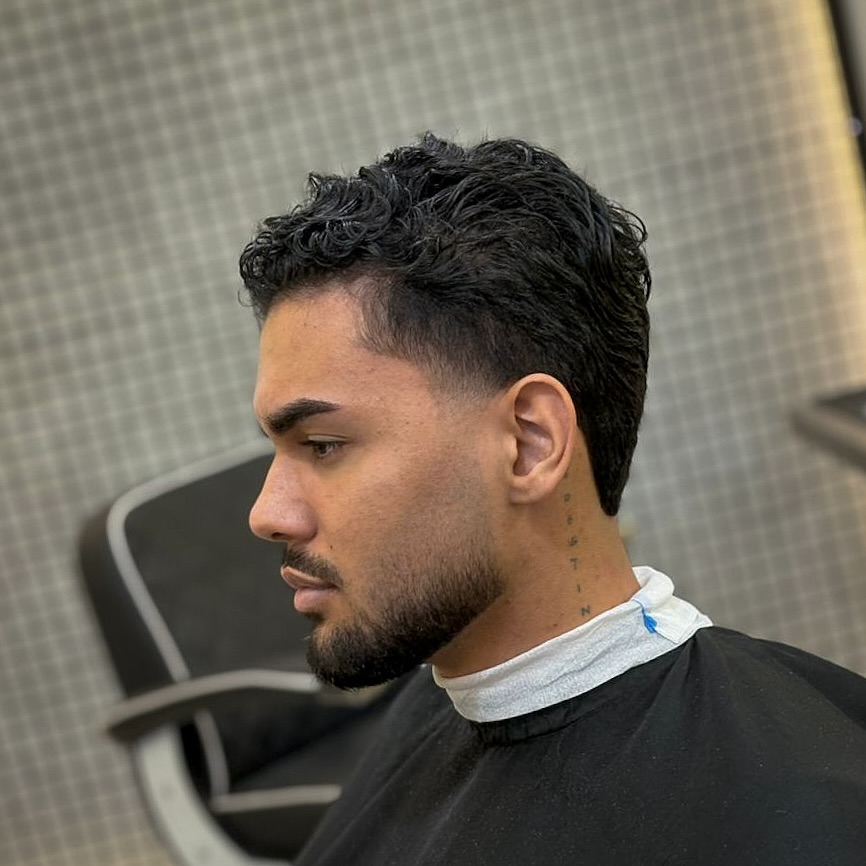
Integrating a beard with a taper fade creates a rugged yet refined look. The key to this style is ensuring the beard is well-groomed. Blends seamlessly into the faded sides. Can enhance the jawline and overall facial features.
High Taper with Volume on Top
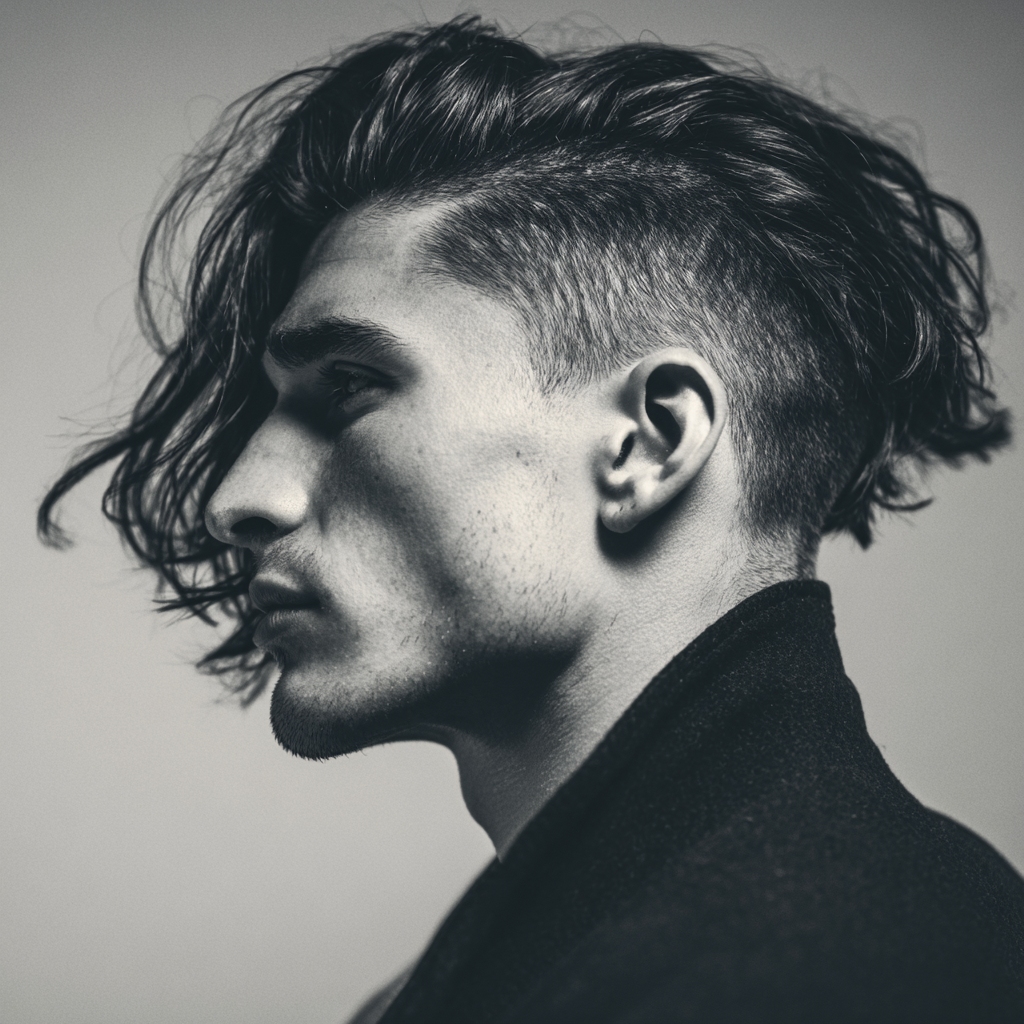
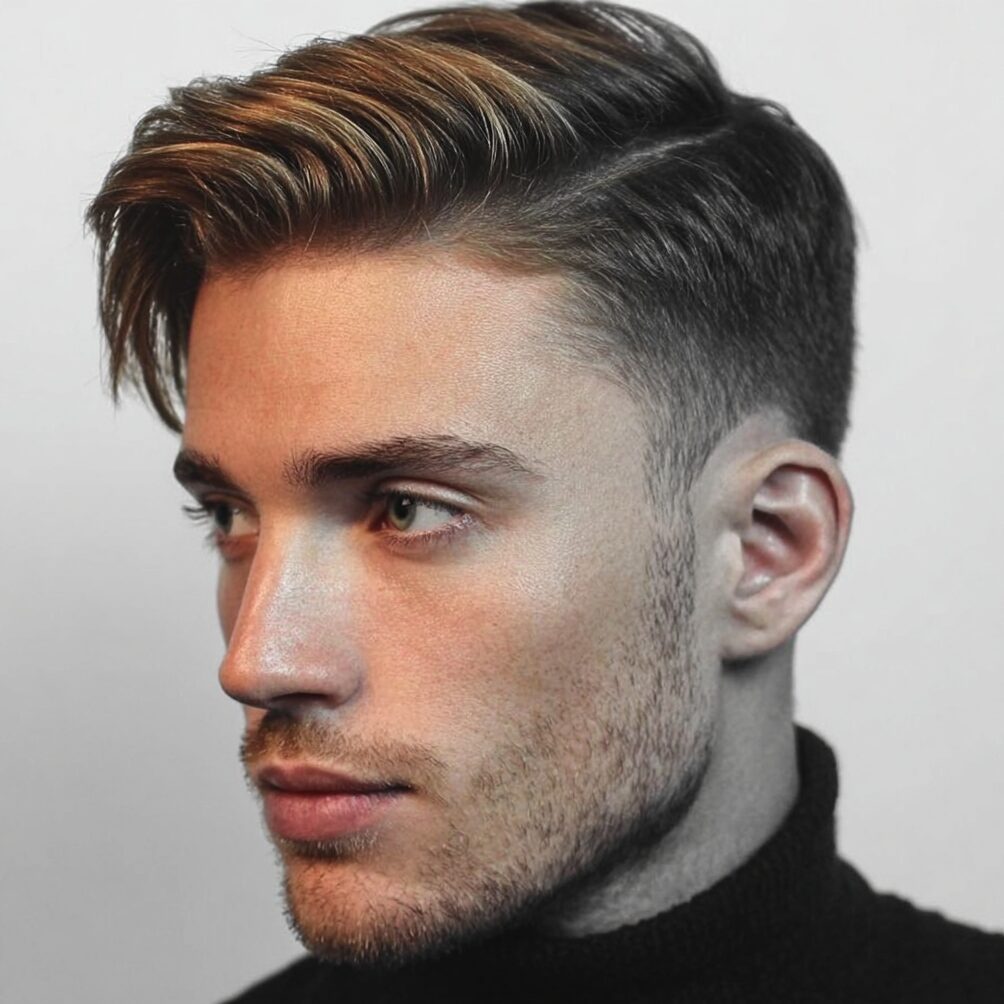
This style combines the clean sharpness of a taper fade with long, flowing hair on top. Sweeps dramatically to the side. The faded sides create a modern, structured outline. The extended length adds movement and edge. Depending on your hair texture, you can wear it loose and natural. Push it back for a sleeker look. Or enhance the flow with styling cream for added definition.
Face Shape Guide: Choosing the Perfect Taper Fade for Your Features
Choosing the right fade height isn’t just about personal preference. It’s about working with your natural facial structure. This creates the most flattering and balanced appearance. Professional barbers understand that the same fade can look completely different on various face shapes. Face shape analysis is crucial for achieving your best look.
Note: These are general styling guidelines. A skilled barber will assess your individual features and preferences to create the best look for you.
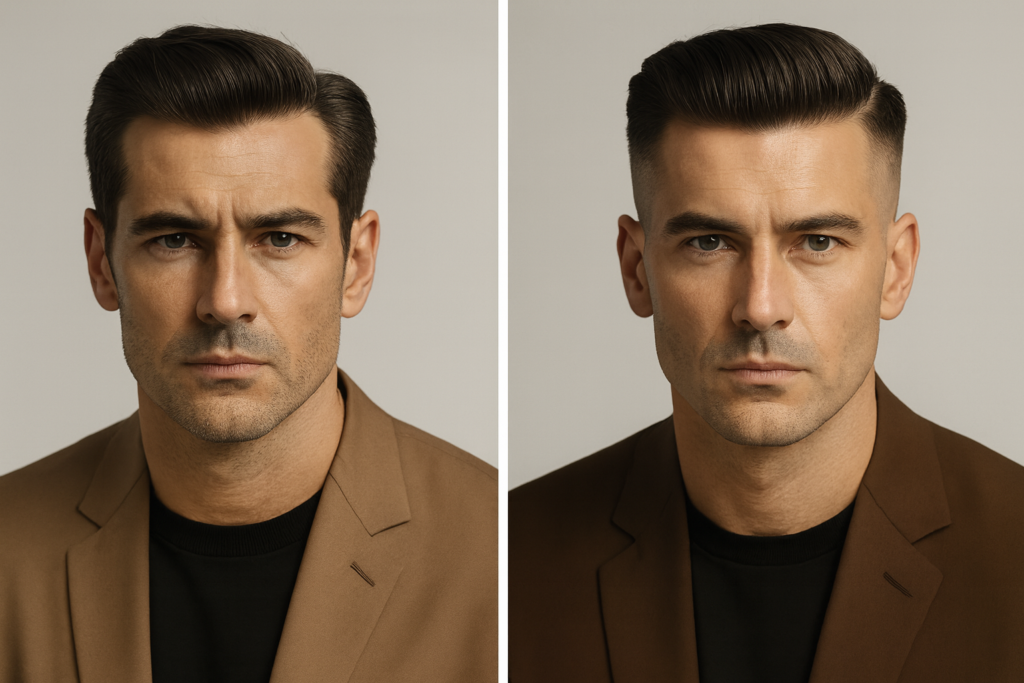
On the left, the traditional scissor taper keeps more length on the sides. It gives a square face shape a fuller, classic look. On the right, the high fade strips the sides down much shorter, emphasizing the jawline. It sharpens the overall impression. The same face looks subtly different: one style reads timeless and business-ready, the other feels bolder, more modern, and assertive.
How to Determine Your Face Shape: Stand in front of a mirror. Pull your hair back completely. Using a washable marker or lipstick, trace the outline of your face on the mirror. Step back and analyze the shape you’ve created. This reveals your true face shape without hair influence.
Oval Face Shape: The Universal Canvas
Best Options: Low, Mid, or High (you’re lucky—everything works!)
Why It Works: Oval faces have naturally balanced proportions. Compatible with any fade height.
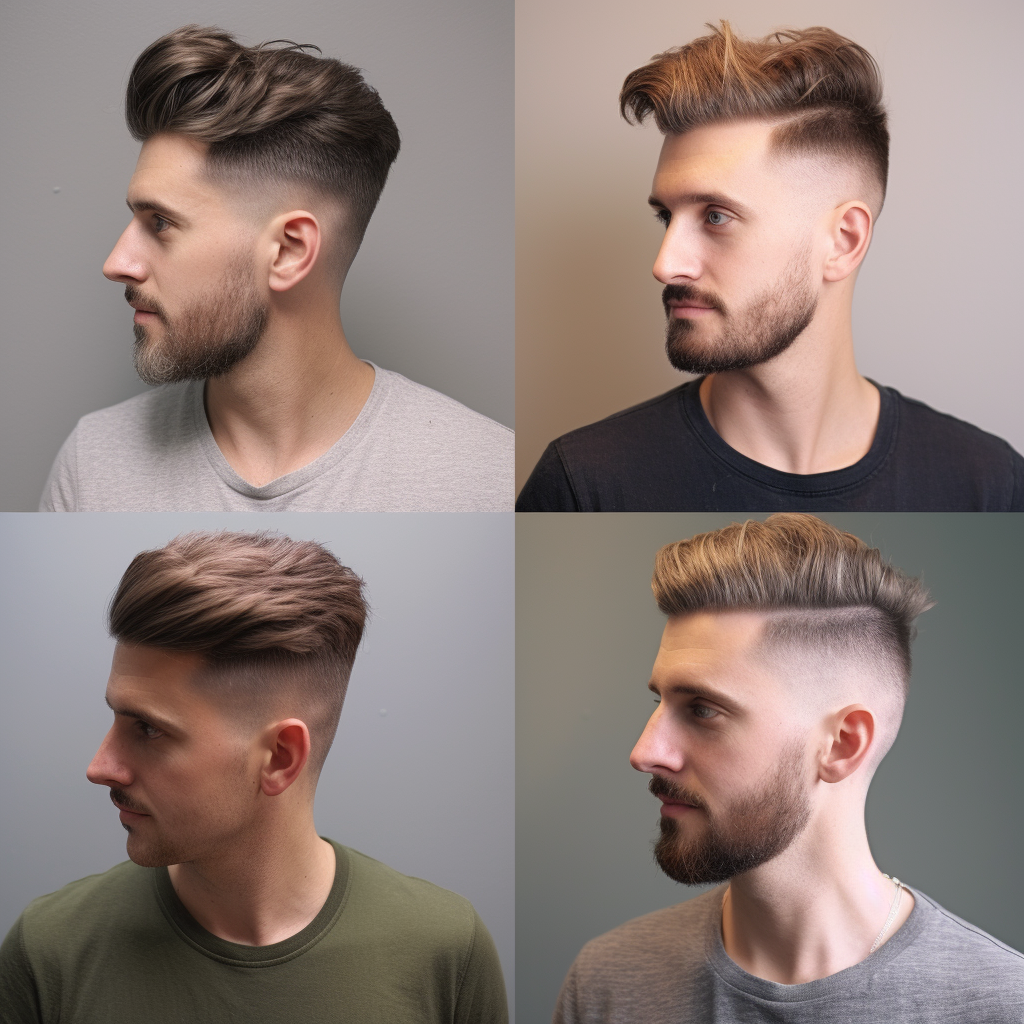
Recommended Approach: Let lifestyle and personal preference guide your decision. Conservative professionals might prefer low fades. Creative types can embrace high fades for maximum impact. Mid fades offer the perfect middle ground for versatile styling.
Pro Tip: Oval faces can experiment with different fade heights seasonally. Or based on hair growth. This allows you to try various looks without concern for proportion issues.
Round Face Shape: Creating Length and Structure
Best Options: Mid to High Fade
Avoid: Low fades (can emphasize roundness)
Why Mid/High Fades Work: The higher fade placement creates vertical lines. Elongates the face visually. The contrast draws attention upward. Makes the face appear longer and more structured. Keep more length on top. Consider styling it with height or texture.
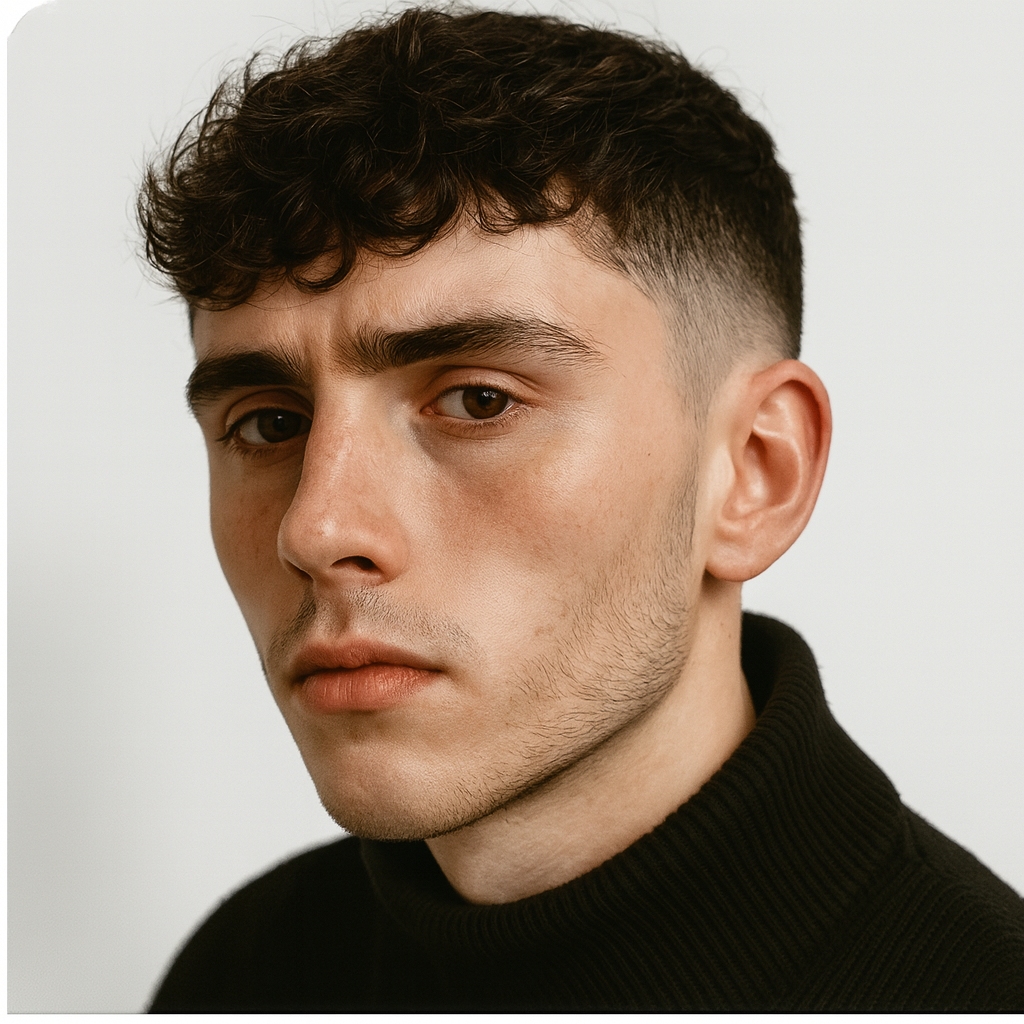
Styling Strategy: Add volume and height to the top section. Use texturing sprays, pompadours, or quiffs. Avoid slicked-down styles that emphasize the face’s width. Side parts can also help create asymmetrical interest.
Square Face Shape: Softening Strong Jawlines
Best Options: Low to Mid Fade
Avoid: Very high fades (can emphasize jaw width)
Square faces feature strong, angular jawlines. Similar width measurements at the forehead, cheeks, and jaw. The objective is to soften these strong angles while maintaining masculine appeal.
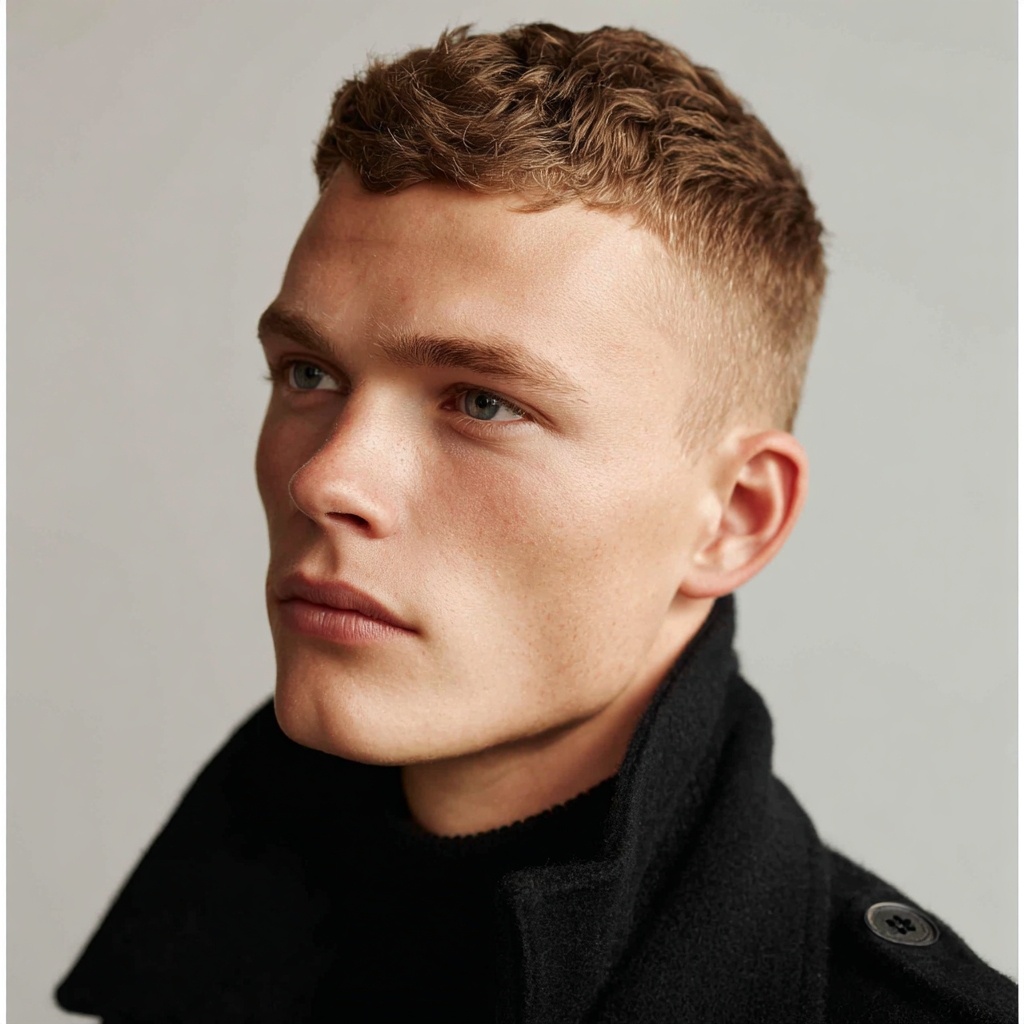
Why Low/Mid Fades Work: Keeping more hair on the sides helps balance the strong jawline. Doesn’t compete with it. The gradual fade creates softer transitions. Complements rather than contrasts with angular features.
Styling Strategy: Consider slightly longer styles on top. Can be swept to the side or styled with gentle texture. Avoid overly sharp, geometric cuts that emphasize the square structure. Soft, natural styling works best.
Oblong/Rectangle Face Shape: Adding Width and Proportion
Best Options: Low Fade to Mid Fade
Avoid: High fades (can make face appear even longer)
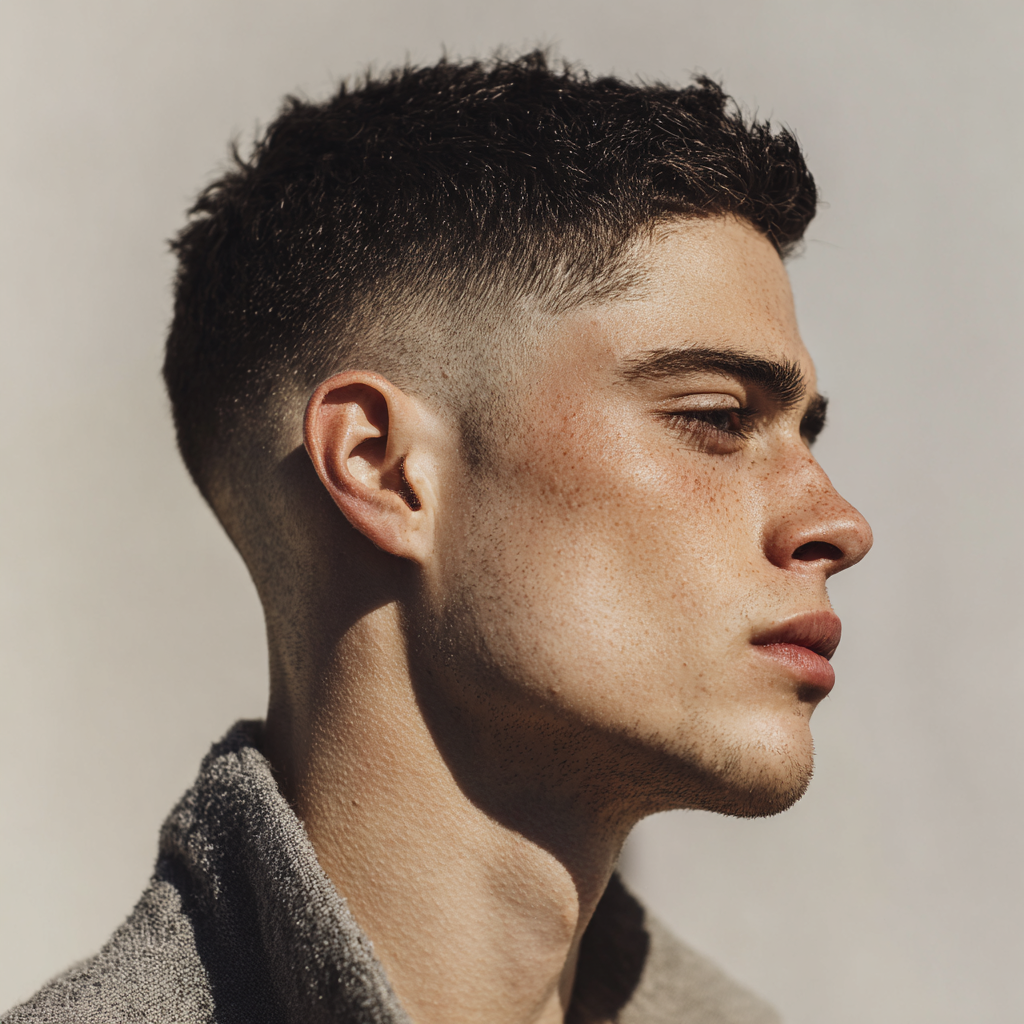
Why Low or Mid Fades Work: Keeping more hair on the sides adds visual width. Helps balance the face’s natural length. The lower fade line creates a horizontal emphasis. Counteracts the vertical dominance.
Styling Strategy: Consider styles that add width rather than height. Think textured, voluminous sides rather than slicked-back tops. Side parts work well. You can embrace natural texture for added visual weight.
Heart/Triangle Face Shape: Balancing Wide Foreheads
Best Options: Low to Mid Fade
Avoid: Very high fades (emphasize the wide forehead)
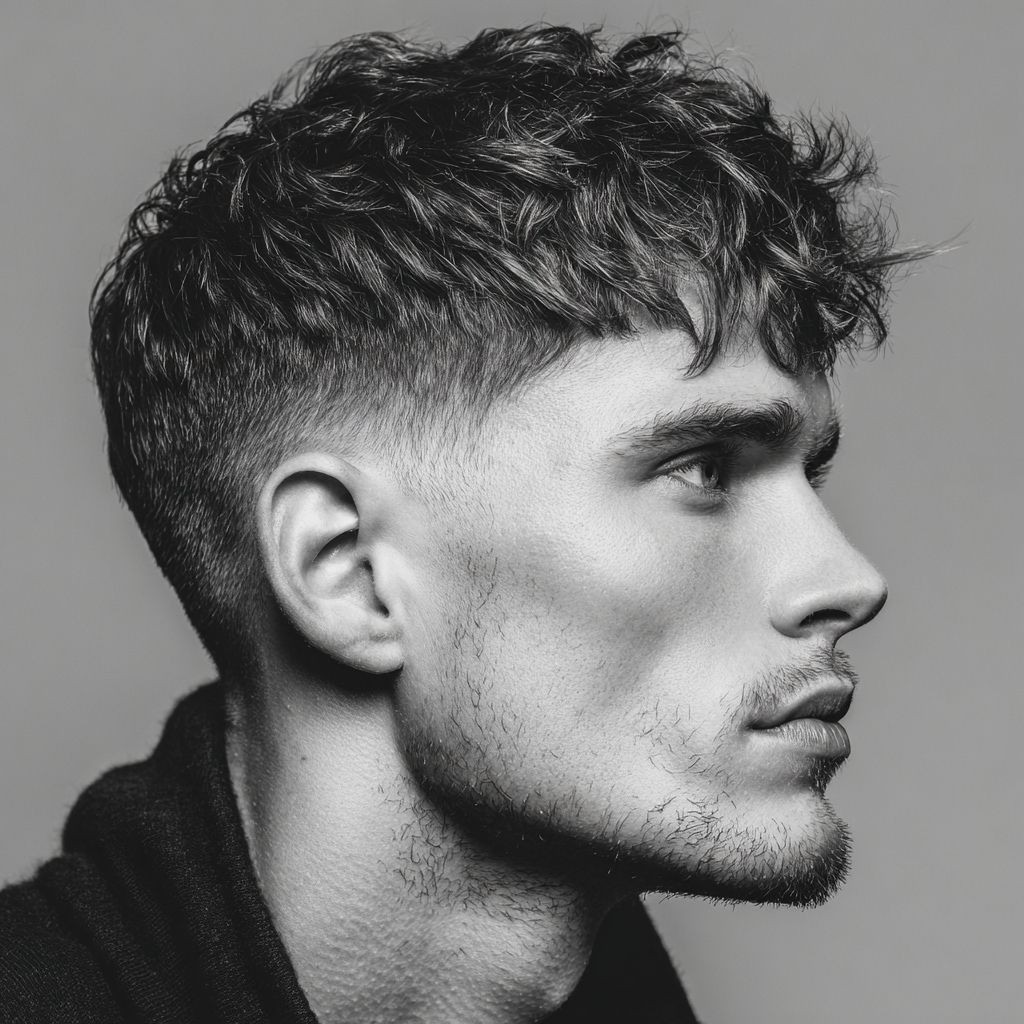
Heart-shaped faces feature wider foreheads. Narrow significantly toward a pointed or narrow chin. The strategy involves minimizing forehead width. Add visual weight to the lower portion of the face.
Why Low/Mid Fades Work: Maintaining some hair volume on the sides helps balance the wide forehead. Doesn’t draw additional attention upward. The fade should create smooth transitions. Doesn’t emphasize the triangular shape.
Styling Strategy: Consider longer fringe or textured front sections. Can partially cover the forehead. Side-swept styles work particularly well. You can add texture to the lower sections for visual weight.
Diamond Face Shape: Highlighting Cheekbones
Best Options: Mid to High Fade
Avoid: Very low fades (can make cheeks appear wider)

Diamond faces feature wide cheekbones. Narrower foreheads and jawlines. This rare face shape has natural drama and angular beauty. Can be enhanced with the right approach.
Why Mid/High Fades Work: These heights complement the natural angular structure. Draw attention to the eyes and cheekbones—your best features. The clean lines echo the face’s natural geometry.
Styling Strategy: Embrace your unique proportions with confident styling. Textured tops, modern pompadours, or styled-forward looks all work beautifully. You can handle bolder styling choices than most face shapes.
Quick Reference Guide
| Face Shape | Best Fade Height | Goal | Avoid |
|---|---|---|---|
| Oval | Any height | Maintain balance | Nothing – you’re flexible! |
| Round | Mid to High | Create length | Low fades, width emphasis |
| Square | Low to Mid | Soften angles | Very high fades |
| Oblong | Low | Add width | High fades, extra height |
| Heart | Low to Mid | Balance forehead | Very high fades |
| Diamond | Mid to High | Highlight cheekbones | Very low fades |
How to Ask Your Barber for a Taper Fade
Effective communication with your barber is crucial for achieving the perfect result. Here’s exactly what to say and bring:
Be Specific About Fade Height
Start by specifying the fade height. Low, mid, or high. Then state the desired length on top. Numbers help eliminate confusion.
Example requests:
- “I want a mid taper fade with about 2 inches on top, blended down to a 1 guard at the fade line”
- “Low fade starting just above the ears, keep 3 inches on top for styling”
- “High fade at temple level, textured crop on top around 1.5 inches”
Bring Reference Photos
Photos are your best friend. Bring 2-3 reference images showing the exact style from different angles. This eliminates guesswork. Ensures you and your barber share the same vision.
What to show:
- Front view of the style
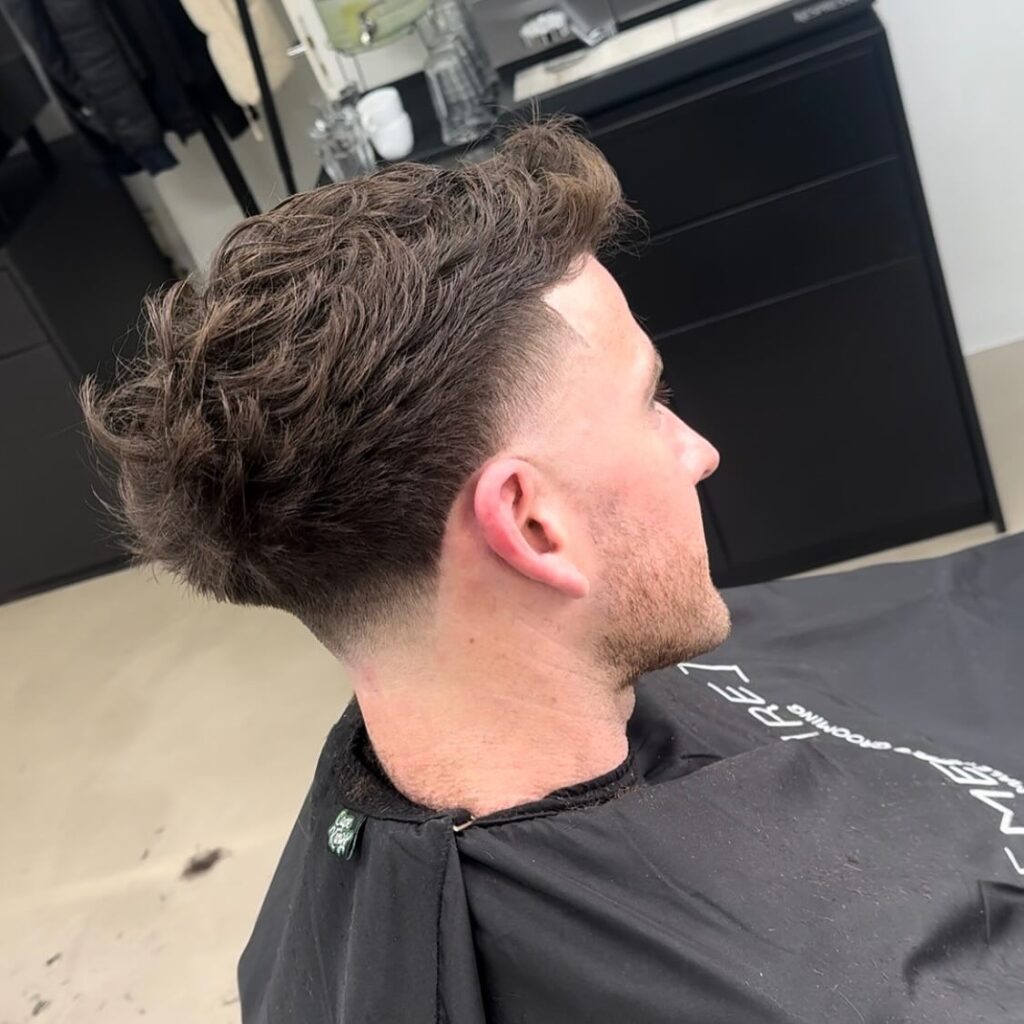
- Side profile showing fade height
- Back view showing neckline treatment
Discuss These Details
Neckline shape: Blocked (square), tapered (natural), or rounded?
Sideburn length: Where should they end? Top, middle, or bottom of ear?
Part placement: Natural part, hard part, or no part?
Texture on top: Choppy layers, point cutting, or blunt cut?
Questions to Ask Your Barber
These questions help ensure you’re on the same page:
- “How often will I need to come back to maintain this fade height?”
- “What products do you recommend for my hair type and this style?”
- “Can you show me how to style this at home?”
- “Will this work with my hair’s natural texture and growth pattern?”
What NOT to Say
Avoid vague requests that lead to miscommunication:
- ❌ “Just clean me up”
- ❌ “The usual” (at a new shop)
- ❌ “Make it look good”
- ❌ “Whatever you think”
Regional Terminology Differences
Be aware that fade terminology varies by location:
United States: “Taper fade” is widely understood
United Kingdom: Often called “skin fade” or “graduated cut”
Australia: “Fade” is standard, “taper” less common
Latin America: “Degradado” (Spanish) or “Desvanecido”
If traveling, bring photos to overcome language barriers.
Red Flags in a Bad Barber
Watch for these warning signs:
- Doesn’t ask clarifying questions about what you want
- Rushes through the consultation
- Uses equipment that appears poorly maintained
- Doesn’t check your face shape or hair texture
- Refuses to look at reference photos
- Can’t explain their process or recommend products
A skilled barber takes time to understand your vision. Assesses your hair and face shape. Offers professional input on what will work best.
Can You Cut a Taper Fade at Home?
While it’s technically possible to attempt a taper fade at home with clippers, achieving professional results requires significant training and experience. The blending techniques, symmetry, and precision that define a quality fade take barbers years to master.
Our recommendation: Visit a professional barber for your initial cut. Between appointments, you can maintain the neckline with a trimmer. But leave the actual fade work to the experts. Most barbers offer touch-up services at reduced rates if you’re a regular client.
A quality taper fade is an investment in your appearance. The difference between a professional cut and a DIY attempt is immediately visible.
Professional Barbering Techniques Behind Great Taper Fades
Note: This section is educational only. These techniques require professional training and should not be attempted at home.
Understanding what makes a professional taper fade exceptional helps you appreciate the craft. Also helps you maintain realistic expectations.
Clipper Guard Progression
Professional barbers use a strategic guard progression for seamless blending:
Low fade example:
- Top section: Scissors or guard #4-8 depending on desired length
- Upper transition: Guard #3
- Mid transition: Guard #2
- Lower transition: Guard #1.5
- Fade line: Guard #1 or #0.5
- Lowest edge: Open clipper blade or #0
The transition zones get blended using: Clipper-over-comb technique, flicking motions at the fade line, and multiple passes with slight guard adjustments.
Blending Methods
Clipper-over-comb: Provides the smoothest transitions. Requires holding a comb at specific angles while running clippers over it.
Freehand fading: More advanced technique. Barber adjusts clipper angle and pressure to create gradual transitions without guards.
Stretching technique: Pulling hair taut while cutting. Ensures even length distribution and clean fade lines.
Time Investment
A professional taper fade typically takes:
- Simple low fade: 20-30 minutes
- Mid fade with styling: 30-40 minutes
- High fade with design work: 40-60 minutes
If a barber rushes through your cut in 10-15 minutes, the blend probably isn’t refined. Quality fades require patience and attention to detail.
What Separates Good from Great
Crisp guidelines: The initial fade line should be razor-sharp before blending begins.
Seamless transitions: You shouldn’t be able to see distinct lines between guard lengths.
Symmetry: Both sides should match perfectly when viewed from the front.
Clean perimeter: Neckline and edges should be refined and intentional.
Personalized adjustments: Great barbers account for your head shape, hairline, and growth patterns.
Maintenance & Styling Tips
Proper maintenance keeps your cut looking fresh and professional between barber visits. The maintenance schedule varies significantly by fade height.
Maintenance Schedule by Fade Type
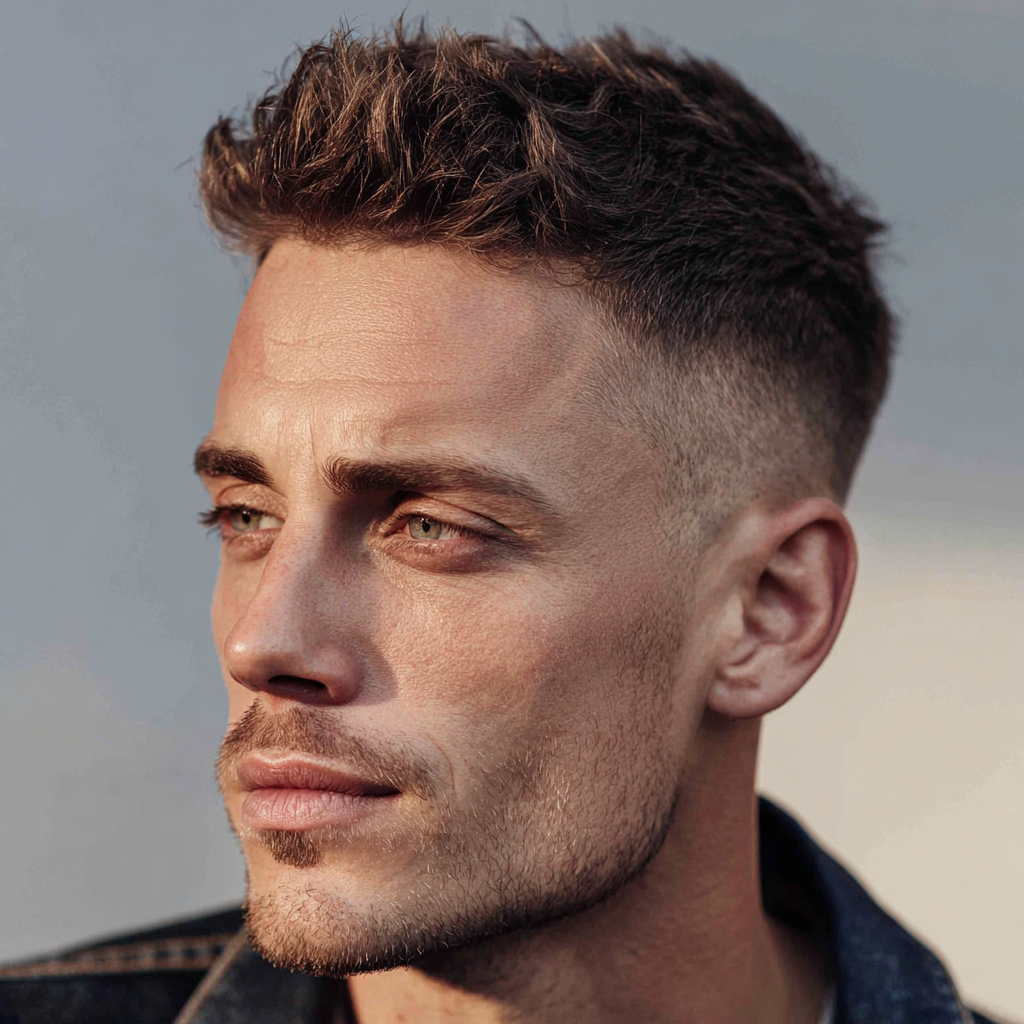
Low fades: Touch-ups every 3-4 weeks
Mid fades: Touch-ups every 2-3 weeks
High fades: Touch-ups every 2 weeks for optimal appearance
Between Cuts: DIY Maintenance
Week 1-2: Style as normal. The fade looks freshest.
Week 2-3: Use a trimmer to clean up the neckline. Keeps things tidy. Don’t attempt to re-fade.
Week 3+: Consider a lineup at the edges. Or book your next appointment.
Styling Products by Hair Type
Choose the right styling products based on your hair texture and desired finish:
Pomade: Creates sleek, polished looks. Perfect for professional settings and formal occasions. Best for straight to wavy hair.
Matte clay: Provides natural texture and volume. For casual, contemporary styling. Works best with thicker hair types.
Styling cream: Enhances natural texture while controlling frizz and flyaways. Ideal for curly or wavy hair.
Sea salt spray: Adds texture and movement. For effortless, beachy vibes. Great for fine to medium hair.
Texturing powder: Adds volume and grip. Perfect for fine hair that needs lift.
Daily Styling Routine
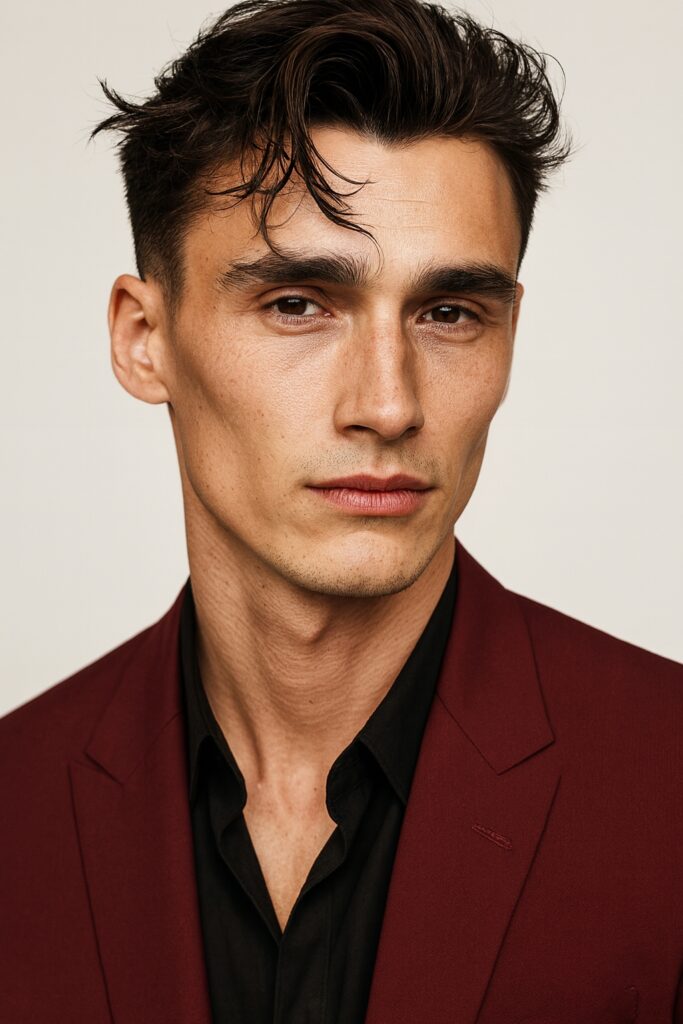
Morning:
- Dampen hair with water or light spray
- Apply small amount of product (quarter-size for short hair)
- Work through hair with fingers or comb
- Style into desired shape
- Allow to air dry or use blow dryer for volume
Evening:
- No need to restyle unless you have an event
- Light touch-up with minimal product if needed
Daily Hair Care
Shampooing: Every other day for most hair types. Daily shampooing strips natural oils.
Conditioning: 2-3 times per week. Focuses on the longer top section. Avoid over-conditioning short faded areas.
Scalp care: Massage scalp during shampooing. Promotes healthy circulation and hair growth.
Product removal: Make sure to fully rinse out styling products before bed. Prevents buildup and scalp issues.
Weekly Deep Care
Once per week:
- Use clarifying shampoo to remove product buildup
- Apply deep conditioning treatment to top section
- Exfoliate scalp gently with soft brush or scrub
- Check for any irritation in faded areas
Sleep Protection
Silk or satin pillowcase: Reduces friction. Maintains your style overnight. Prevents frizz and breakage.
Pre-bed routine: Lightly dampen and reshape your style before sleeping. Wake up with minimal work needed.
Product Application Tips
Less is more: Start with a small amount. You can always add more. Too much product makes hair look greasy and weighs it down.
Warm it up: Rub product between palms to warm it. Distributes more evenly through hair.
Apply to damp hair: Most products work best on slightly damp hair. Provides better hold and more natural finish.
Work back to front: Start at the crown. Work your way to the front. This prevents over-applying at the hairline.
Troubleshooting Common Taper Fade Issues
Even with a great cut, you might encounter issues. Here’s how to address them:
Uneven Fade on Both Sides
Causes: Barber error, or your head shape requires adjustments.
Solutions:
- Return to your barber for a free touch-up within 48 hours
- Take photos of both sides to show the difference
- Most reputable shops will fix it immediately
Fade Line Too Harsh or Visible
Causes: Poor blending between guard lengths.
Solutions:
- Ask barber to soften the transition line with clipper-over-comb technique
- This is easily fixable and shouldn’t require a full redo
Awkward Grow-Out Phase
Causes: Natural hair growth reveals the fade structure.
Solutions:
- Book maintenance appointments every 2-3 weeks
- Use styling products to manage top length between cuts
- Consider a slightly lower fade next time for longer intervals
Cowlicks Disrupting the Style
Causes: Natural hair growth patterns working against the style.
Solutions:
- Use stronger hold products on problem areas
- Blow dry against the cowlick direction when drying
- Ask your barber to cut with the cowlick pattern, not against it
Fade Looks Different After Washing
Causes: Styling products were masking fade imperfections.
Solutions:
- Assess your cut on clean, dry hair during the appointment
- Ask barber to style with minimal product so you see the actual cut
- Return if the clean cut reveals problems
Neckline Growing Out Messy
Causes: Natural hair growth at the nape.
Solutions:
- Use a small trimmer at home to maintain the neckline shape
- Be conservative—only clean up obvious strays
- Don’t attempt to re-create the fade yourself
Thinning or Bald Spots Becoming Visible
Causes: Very short fades can reveal scalp irregularities or thinning.
Solutions:
- Opt for a slightly lower fade that maintains more coverage
- Discuss with your barber about styling options that work with your hair density
- For concerns about hair loss, consult a dermatologist or trichologist
Seasonal Adjustments for Your Taper Fade
Your taper fade maintenance and styling should adapt to seasonal changes:
Summer Maintenance
Challenges: Sweat, humidity, chlorine, saltwater
Adjustments:
- Schedule cuts every 2 weeks (hair grows faster in warm weather)
- Use lighter, water-based styling products
- Rinse hair after swimming to prevent chlorine/salt damage
- Consider a slightly higher fade for better air circulation
- Use SPF spray on exposed scalp areas
Best summer variations: High fades with short crops, buzz cut taper fades, textured styles that work with humidity
Winter Maintenance
Challenges: Dry air, static, hats, slower growth
Adjustments:
- Extend time between cuts to 3-4 weeks
- Use heavier moisturizing products
- Add leave-in conditioner for the top section
- Combat static with anti-static spray or light oil
- Protect fade areas from harsh cold wind
Best winter variations: Low to mid fades with longer tops, styles that work under beanies, pompadour fades
Humidity Management
High humidity locations:
- Embrace natural texture rather than fighting it
- Use anti-humidity styling products
- Consider shorter top lengths that don’t go frizzy
- Texturizing products work better than slick products
Dry climate considerations:
- Focus on moisture and hydration
- Use cream-based products over alcohol-based
- Regular conditioning is essential
- Beard oil can work on short faded areas to prevent dryness
Taper Fades Across Different Age Groups
This versatile style adapts beautifully across age ranges when executed appropriately:
Teens and Early 20s
Popular choices: High fades with designs, blowout fades, textured crops, mullet combinations
Styling focus: Bold, trendy, social media-worthy. Experimentation encouraged.
Maintenance reality: May need parents’ financial support for frequent cuts. Consider mid fades for better value.
Late 20s to 30s
Popular choices: Mid fades with professional styling, pompadour fades, clean textured looks
Styling focus: Balancing professional requirements with personal style. Versatility is key.
Maintenance reality: Busy schedules require styles that look good between cuts. Low to mid fades work best.
40s to 50s
Popular choices: Low to mid fades with classic styling, distinguished side parts, natural texture
Styling focus: Sophisticated, age-appropriate, refined. Less about trends, more about timeless appeal.
Maintenance reality: May be dealing with thinning hair. Lower fades provide better coverage while staying modern.
50s and Beyond
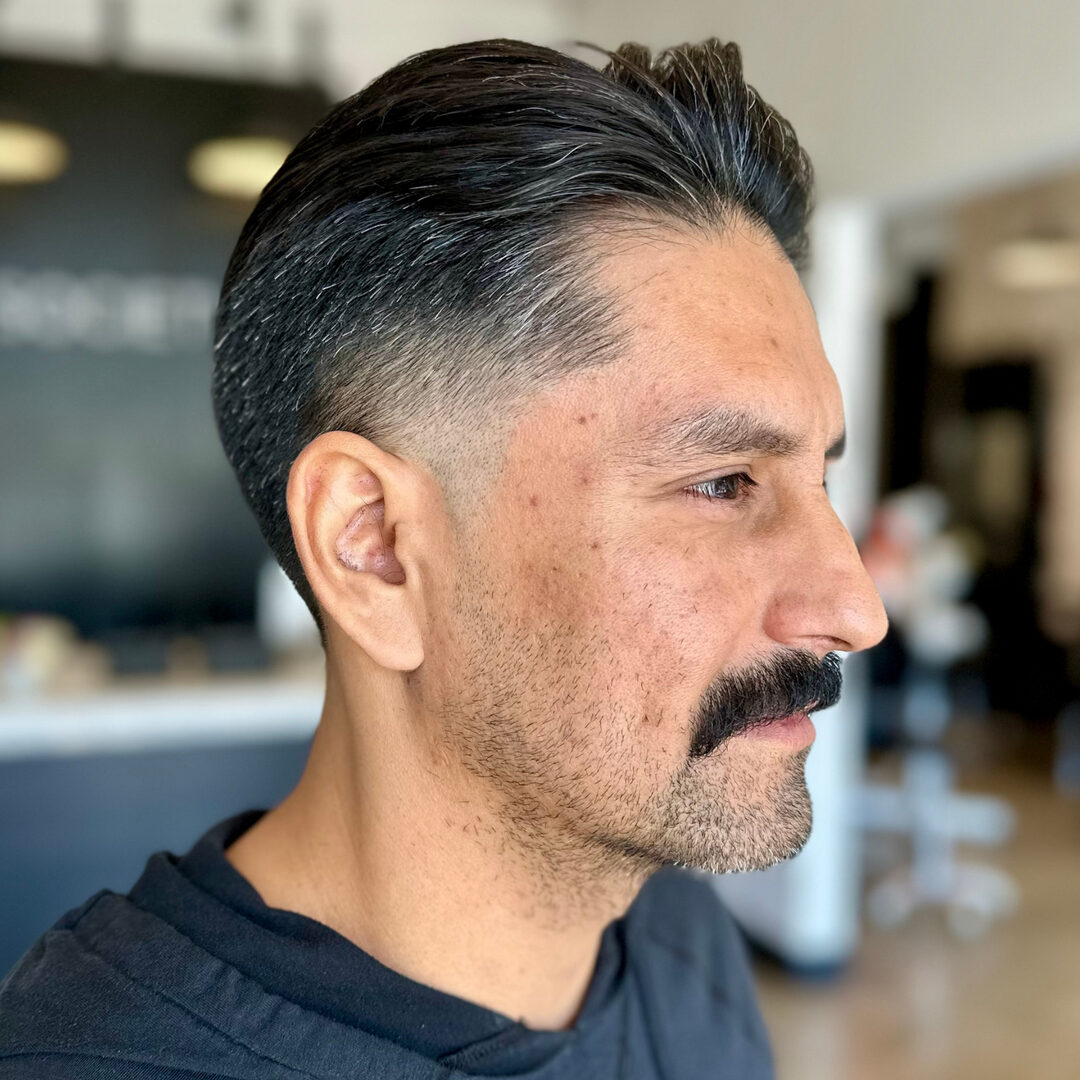
Popular choices: Low fades with longer tops, classic tapers with modern edges, styles that work with gray hair
Styling focus: Dignified, professional, works with natural hair changes (graying, thinning)
Maintenance reality: Lower fades look distinguished longer. Gray hair often has different texture requiring adjusted products.
Taper Fades for Different Professions
Your career may influence which variation works best:
Corporate/Finance/Law
Best options: Low to mid fades with conservative styling
Avoid: High fades, designs, extreme texturing
Why: Professional environments often require subtle grooming
Creative Industries (Design, Marketing, Media)
Best options: All fade heights welcome, texturing encouraged
Experiment with: Designs, color, contemporary variations
Why: Creative fields embrace personal expression
Healthcare/Medical
Best options: Low to mid fades, must be neat and hygienic
Avoid: Styles requiring constant adjustment or product
Why: Hair shouldn’t interfere with patient care or PPE
Military/Law Enforcement
Best options: High fades, military-regulation compatible
Requirements: Tapered appearance, neat edges, minimal maintenance
Why: Strict grooming standards, needs to work with uniforms/helmets
Education/Academia
Best options: Low to mid fades, professional but not corporate-stiff
Consider: Age-appropriate variations for your student demographic
Why: Respectable appearance while remaining approachable
Hospitality/Service Industry
Best options: Mid fades with neat styling, must look fresh through long shifts
Practical needs: Styles that stay put and look professional
Why: Customer-facing roles require polished, maintained appearance
Tech/Startups
Best options: Complete freedom—all variations welcome
Popular: Contemporary trends, individual expression valued
Why: Typically the most flexible dress code environments
Frequently Asked Questions
What’s the difference between a taper and a taper fade haircut?
A traditional taper gradually shortens hair using scissors only. A taper fade combines tapering with clipper fade techniques. Creates sharper contrast and cleaner lines at the bottom.
Is this style appropriate for business and professional settings?
Absolutely. Taper fades, especially low and mid variations, are widely accepted in corporate and professional environments. The clean lines and polished appearance actually enhance professional presentation. Considered appropriate business attire.
Does this work on curly hair?
Yes, this style works exceptionally well with curly hair. The fade helps manage bulk while allowing natural texture to shine on top. Creates balanced, stylish results.
How often do I need to trim this haircut?
Maintenance frequency depends on fade height: low fades every 3-4 weeks, mid fades every 2-3 weeks, and high fades every 2 weeks for optimal appearance.
Can older men wear this style?
Definitely. These cuts suit all ages when properly executed. The clean lines and versatile styling options create age-appropriate sophistication for professional gentlemen.
Will a taper fade work with thinning hair?
Yes, taper fades can actually be beneficial for men with thinning hair. The clean sides draw attention away from thinning areas. The gradual transition creates the illusion of fuller hair.
What’s the cost difference between fade types?
Generally, all taper fade variations cost the same at most barbershops. The price difference usually comes from the barber’s experience level and location. Not the specific fade type.
How long does a taper fade take to cut?
Professional cuts typically take 20-40 minutes depending on complexity:
- Simple low fade: 20-25 minutes
- Mid fade with styling: 30-35 minutes
- High fade with design: 40-60 minutes
Can I get a taper fade if I have a receding hairline?
Yes. A skilled barber can work with receding hairlines. Often incorporating the natural recession into the fade. Mid to high fades can actually make receding hairlines less noticeable by creating intentional contrast.
What’s the best first fade for someone who’s never had one?
Start with a low fade. It’s the most conservative and forgiving. Easiest to maintain. Gives you a sense of the style without dramatic change. You can always go higher on subsequent cuts.
Final Notes About the Taper Fade Haircut
This versatile haircut has earned its place as one of men’s most enduring and adaptable hairstyles for good reason. Its unique combination of classic barbering techniques and modern styling creates a look that’s simultaneously professional and fashionable. Conservative and contemporary.
This isn’t just a haircut. It’s a foundation for personal style that evolves with you through different life stages, career changes, and style preferences. The clean lines and gradual transitions create a polished appearance. Photographs well, looks great in person, and requires minimal daily maintenance.
Taper Fade vs. Other Fade Styles: What’s the Difference?
Understanding how taper fades compare to other popular fade variations helps you communicate exactly what you want.

Taper Fade vs. Drop Fade
The drop fade features a curve that wraps around the ear. Drops lower as it reaches the back of the head. Adds a unique contour to the hairstyle.
Taper fade: Maintains a consistent horizontal line around the head. More uniform and traditional.
Explore More: Drop Fade Haircut Styles
Taper Fade vs. Burst Fade
Burst fade: Fades in a semi-circle around the ear only. The back remains longer, often connecting to designs or mohawks.
Taper fade: Fades completely around the entire head. More comprehensive coverage.
Explore More: Burst Fade Haircut Styles
Taper Fade vs. Skin Fade (Bald Fade)
Skin fade: Fades completely down to bare skin. Maximum contrast and sharpness.
Taper fade: Fades to very short hair, not necessarily skin. Slightly softer appearance.
Best for: Skin fades make bold statements. Taper fades suit professional environments better.
Explore More: Skin Fade Hair Styles
Taper Fade vs. Undercut
Undercut: Hard disconnect between long top and short sides. No gradual transition.
Taper fade: Smooth, blended gradient from top to sides. No harsh lines.
Best for: Undercuts create dramatic contrast for fashion-forward looks. Taper fades offer natural, professional versatility.
Explore More: 15+ Undercut Hairstyles for Men of All Ages
These variations offer a range of aesthetics. From subtle and clean to bold and edgy. Allows customization according to personal style and hair type:
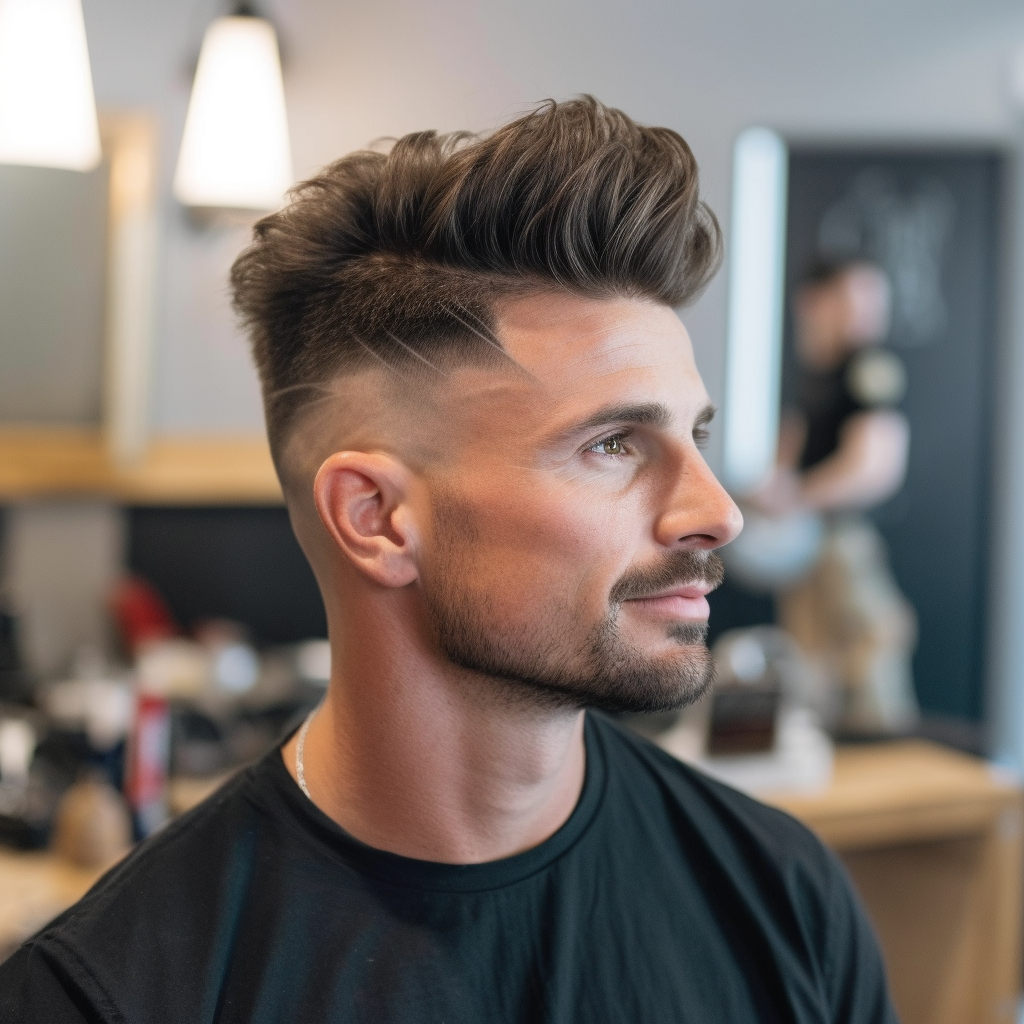
Skin Fade (or Razor Fade) – The hair gradually fades until it completely disappears into the skin. Can be combined with low, mid, or high fades.
Burst Fade Haircuts: Style, Trends, and Inspiration: From subtle variations to daring mohawks. The burst fade adapts to personal style while delivering a fresh, eye -catching finish.
Burst Fade Mohawk: A Modern Twist on a Timeless Style: The burst fade mohawk takes the rebellious edge of the classic mohawk. Refines it with a clean, curved fade around the ears.
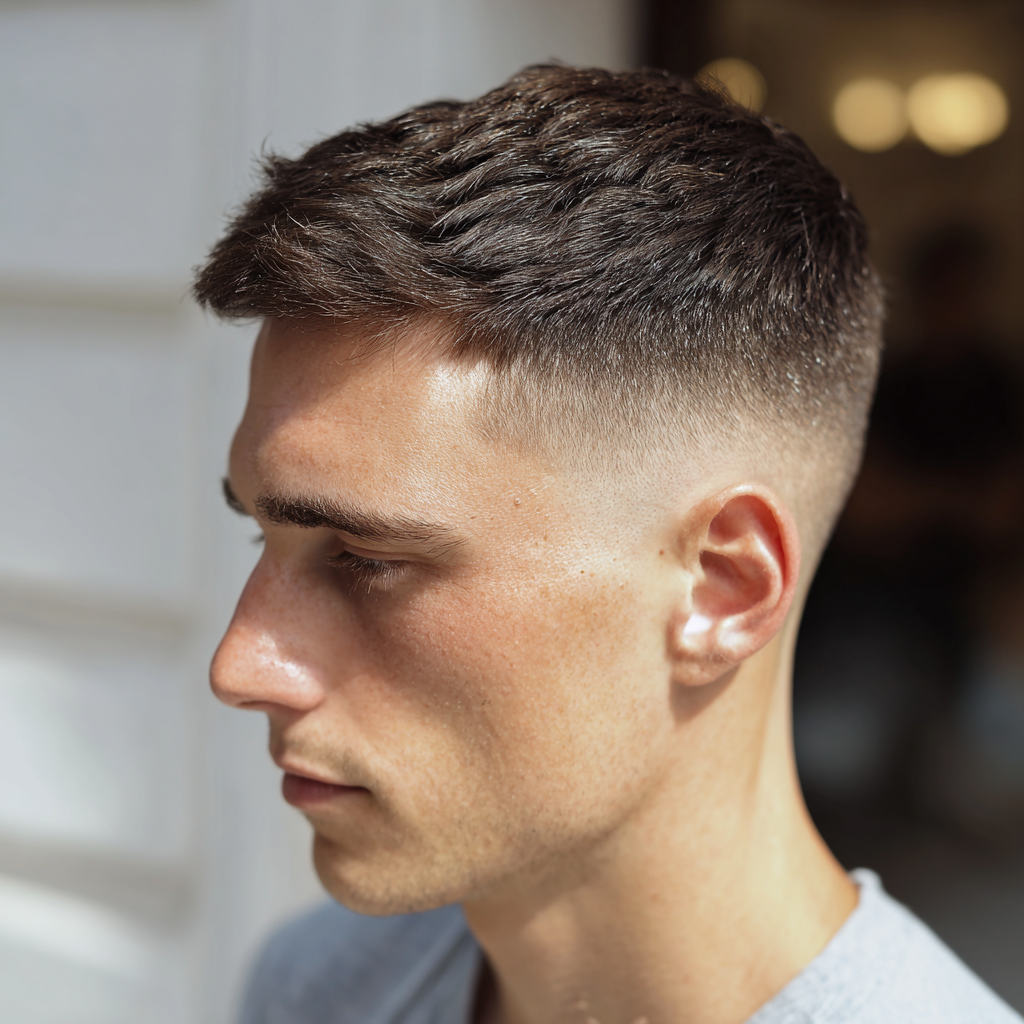
Temple Fade (or Temp Fade) – Focuses on fading the hair around the temples. Creates a clean, sharp line that frames the face.
Scissor Fade – Uses scissors instead of clippers. Achieves a softer, textured fade. Less structured but still gives a gradient effect.
The Taper Fade Comb Over: A Celebs and Soccer Players Trend: Combining clean faded sides with a sleek comb over on top. Delivers a sharp, fashionable style.

The Military High Fade Comb Over: A Blend of Discipline and Style: The high fade delivers bold contrast on the sides. The comb over keeps the top sleek and professional.
High Temp Fade vs. Low Temp Fade: Understanding the Difference: A high temp fade starts above the temples. Creates a bold, eye-catching effect. A low temp fade begins closer to the ear for a more subtle, natural finish.
Edgar Haircut – This haircut is defined by its bold, straight fringe across the forehead paired with a clean fade on the sides. Emphasizes sharp edges and a boxy outline. Gives it a striking look.
— Edited by Fernando Lahoz-García, a fashion journalist and art director researching men’s style and haircuts.
This article is intended as an editorial guide and highlights the creative work of modern barbers and hairstylists from different cities around the world. If your work is featured and you’d like edits, updates, or credit adjustments — or if you’d like to be featured in future articles — please feel free to reach out.
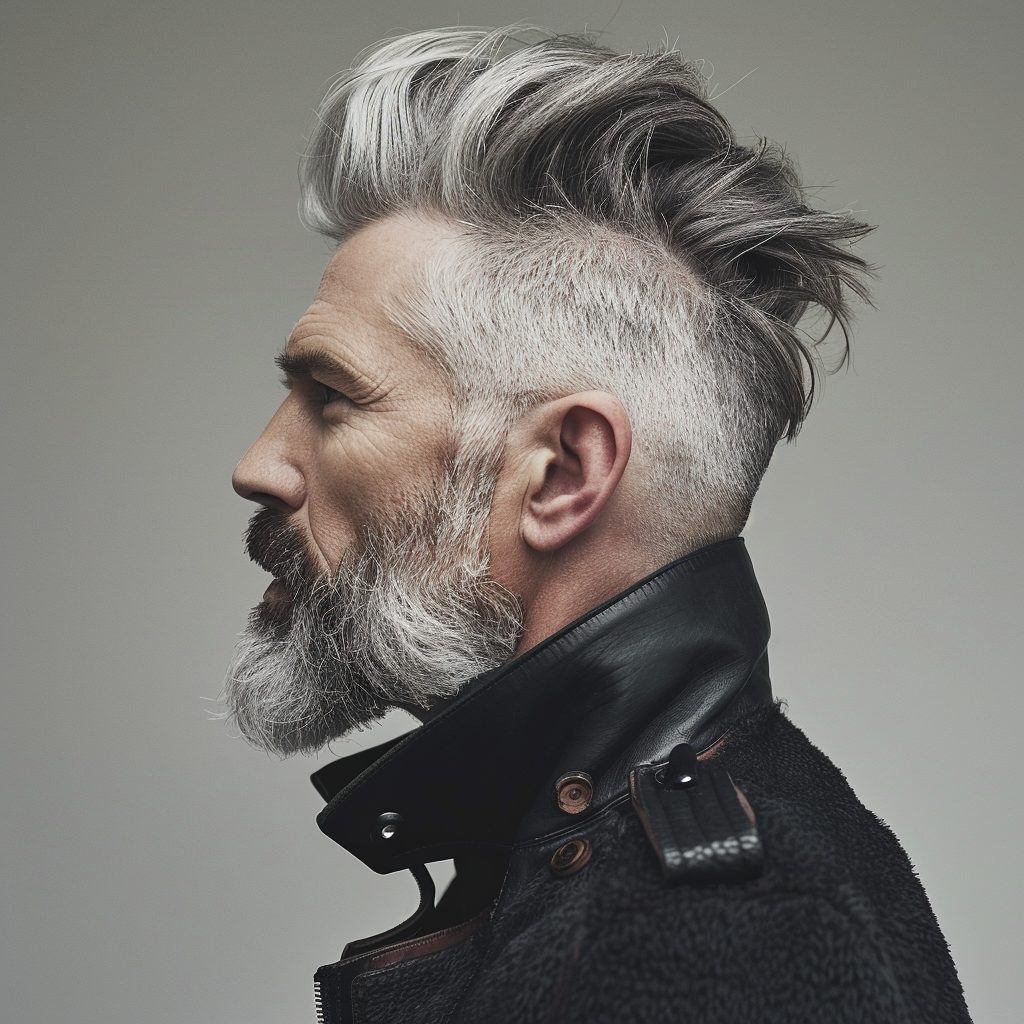
Top Hairstyles for Gray Hair Men Over 50 | New Looks

Stylish Outfits for Men Over 50: Inspiring Selection of Looks
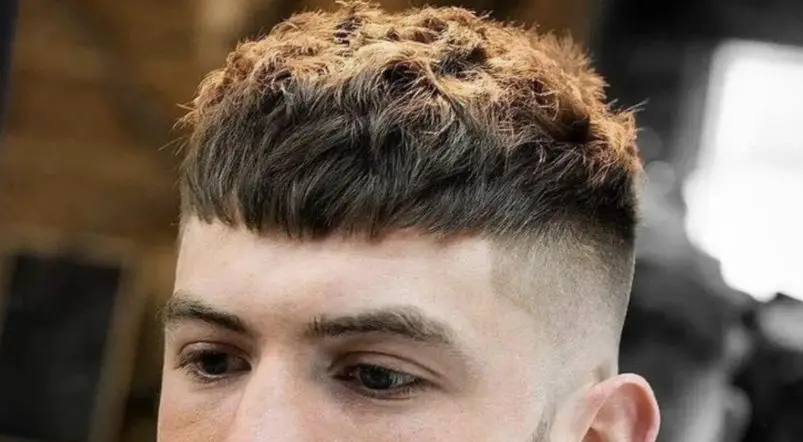
The French Crop for Men: Elevating Style With Effortless Sophistication
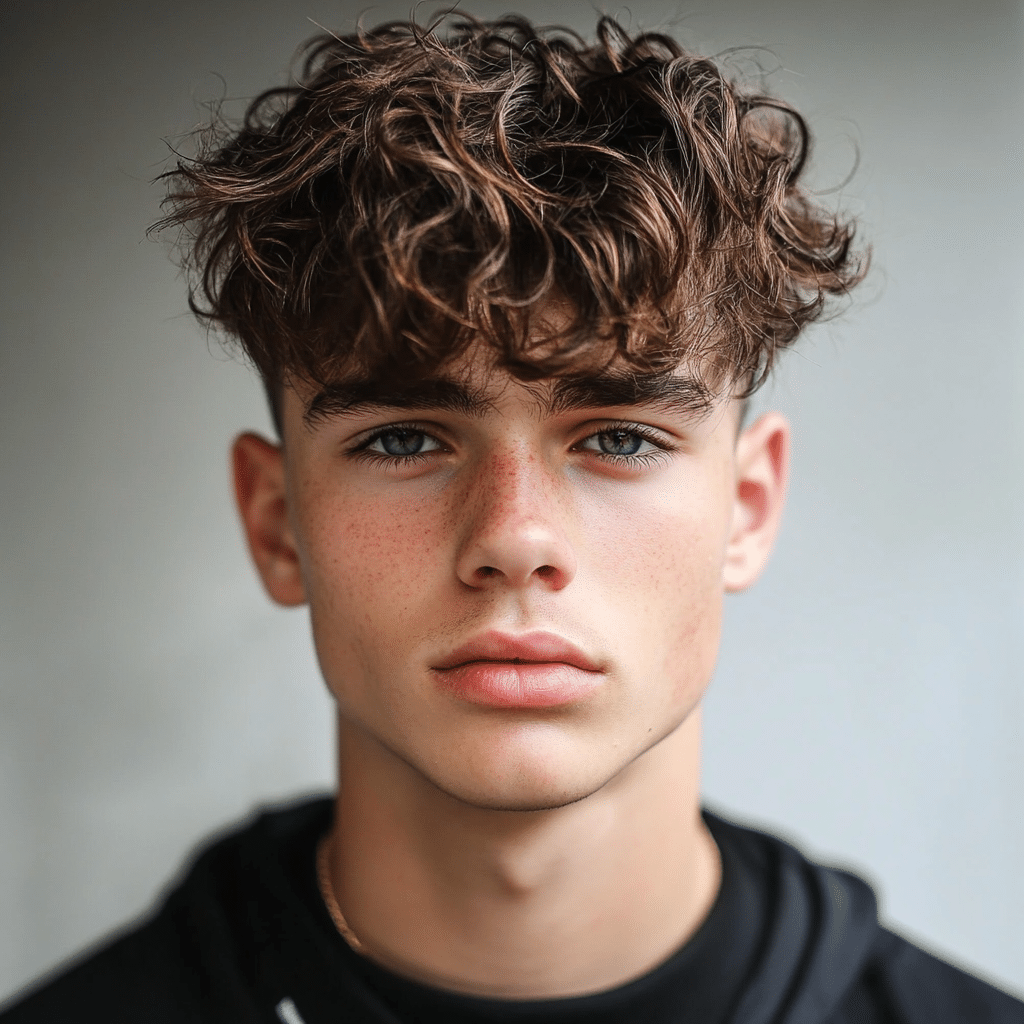
25 Teen Boy Haircuts: Cool & Trendy Styles for 2025-2026
The Razor Fade: A Sharp and Distinctive Haircut Explained