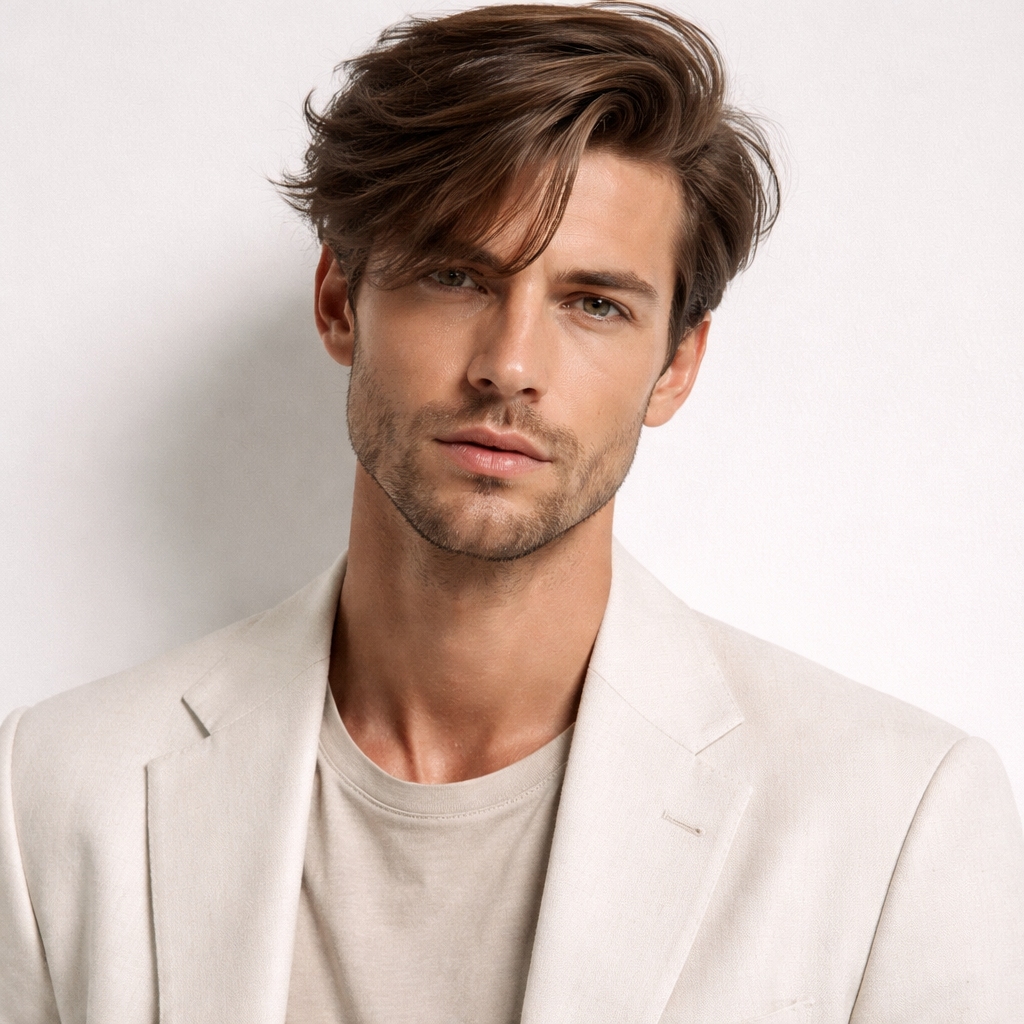
20+ Modern Pompadour Hairstyles: Old School vs. Modern Pompadour
Why the Pompadour Haircut Is Still Relevant Today
The pompadour never really went away. It simply learned how to survive different decades, different barbers, and different ideas of masculinity.
It changed, of course. The slick, high-volume Elvis version became something more textured, more relaxed, and more adaptable.
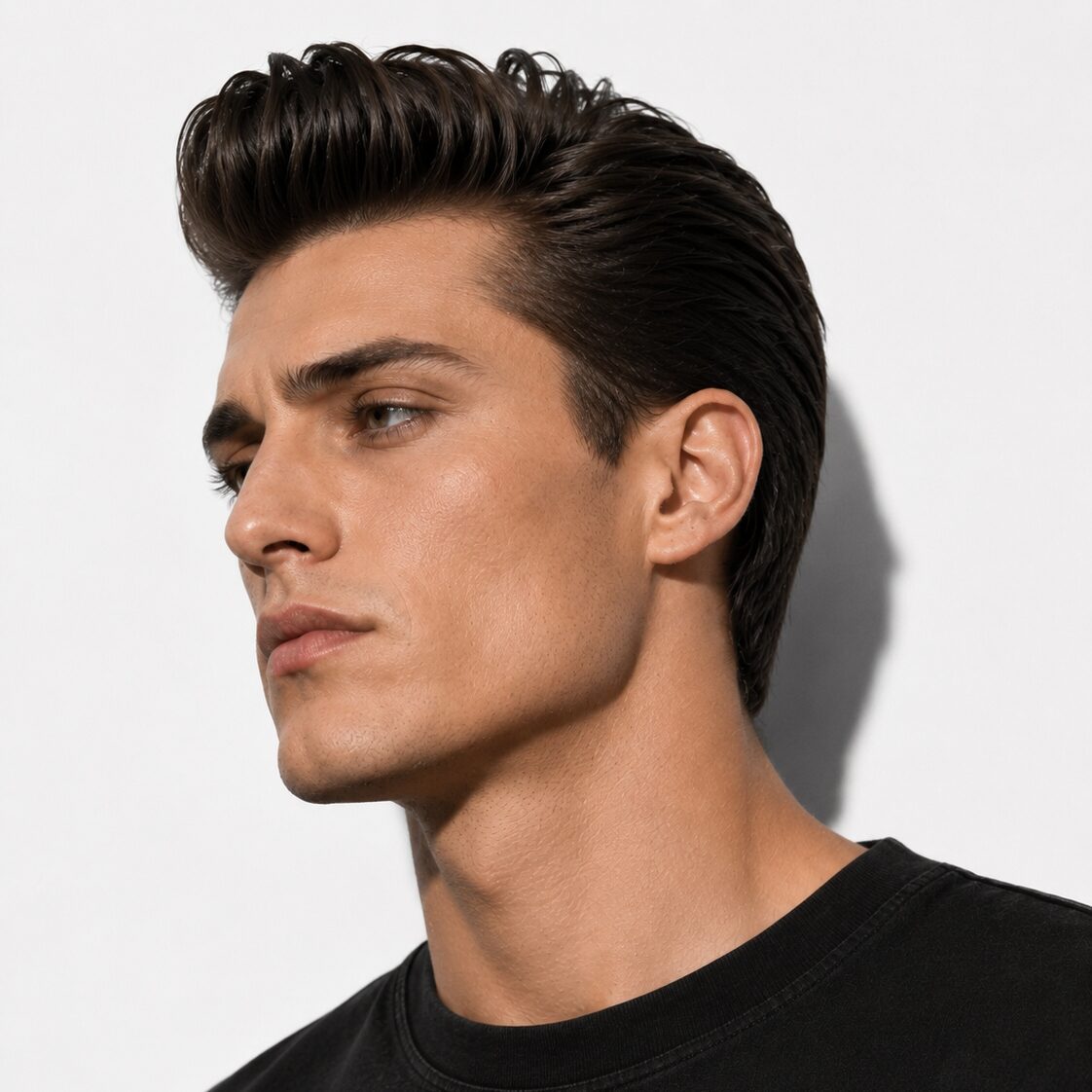
But the architecture has barely moved in decades. Volume at the front. Shorter at the sides. Hair swept back with intention.
The combination of structure and volume creates a look that is confident without needing to shout.
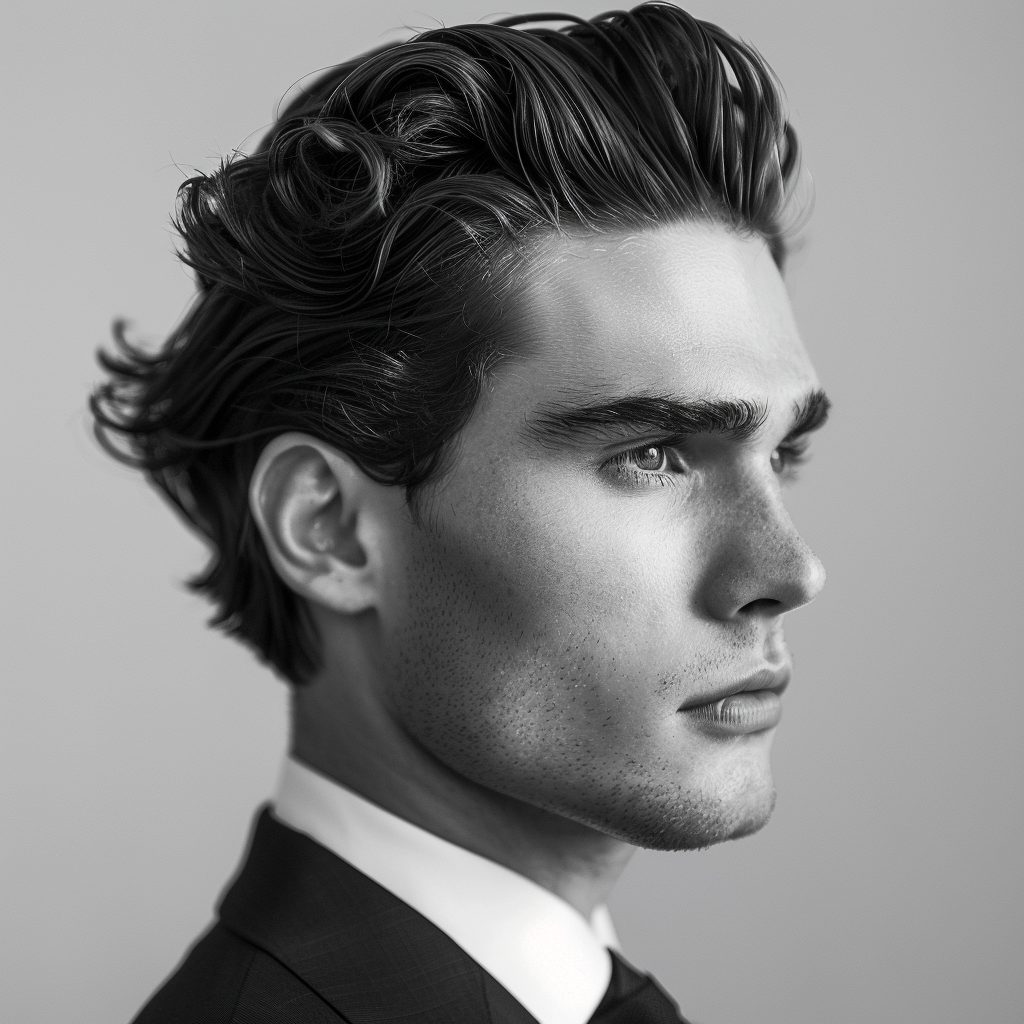
A good modern pompadour hairstyle frames the face, adds presence, and gives the whole silhouette a sense of direction.
That is why this haircut is timeless. It carries history, but it still knows how to walk into a modern room.
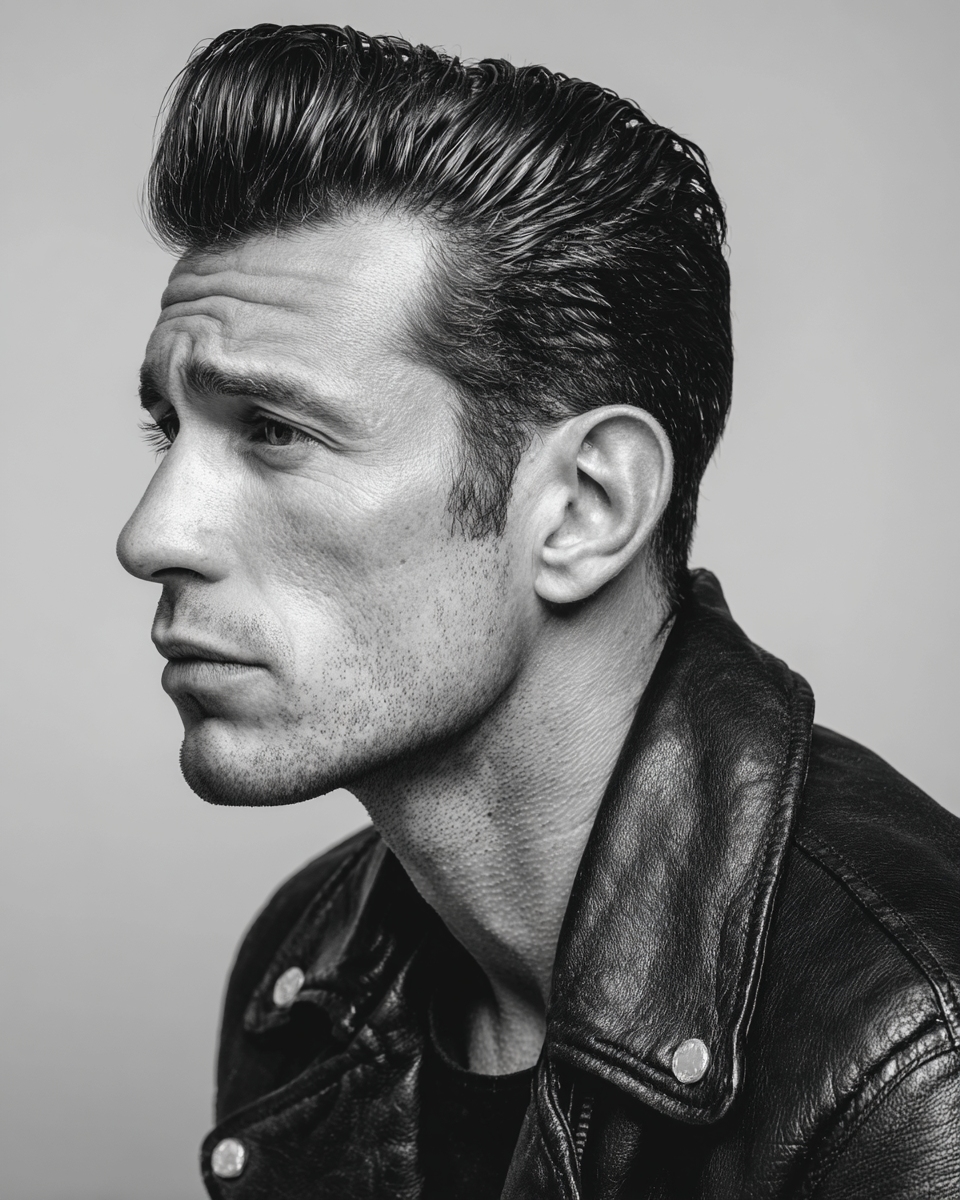
From its aristocratic beginnings with Madame de Pompadour in the 18th century to its iconic presence in the rock and roll era of the 1950s, the cut has evolved while maintaining its essence.
Style, confidence, and a refusal to disappear quietly. Every decade seems to rediscover the pompadour haircut, usually right after declaring itself original.
The Old School Pompadour
The classic pompadour is a classic haircut associated with the mid-20th century, when men treated grooming like ritual and hair product like structural engineering.
Elvis wore it. Johnny Cash wore it. James Dean wore it. The defining quality was height. The front section lifted dramatically, slicked back with heavy pomade, with the sides kept short and controlled.
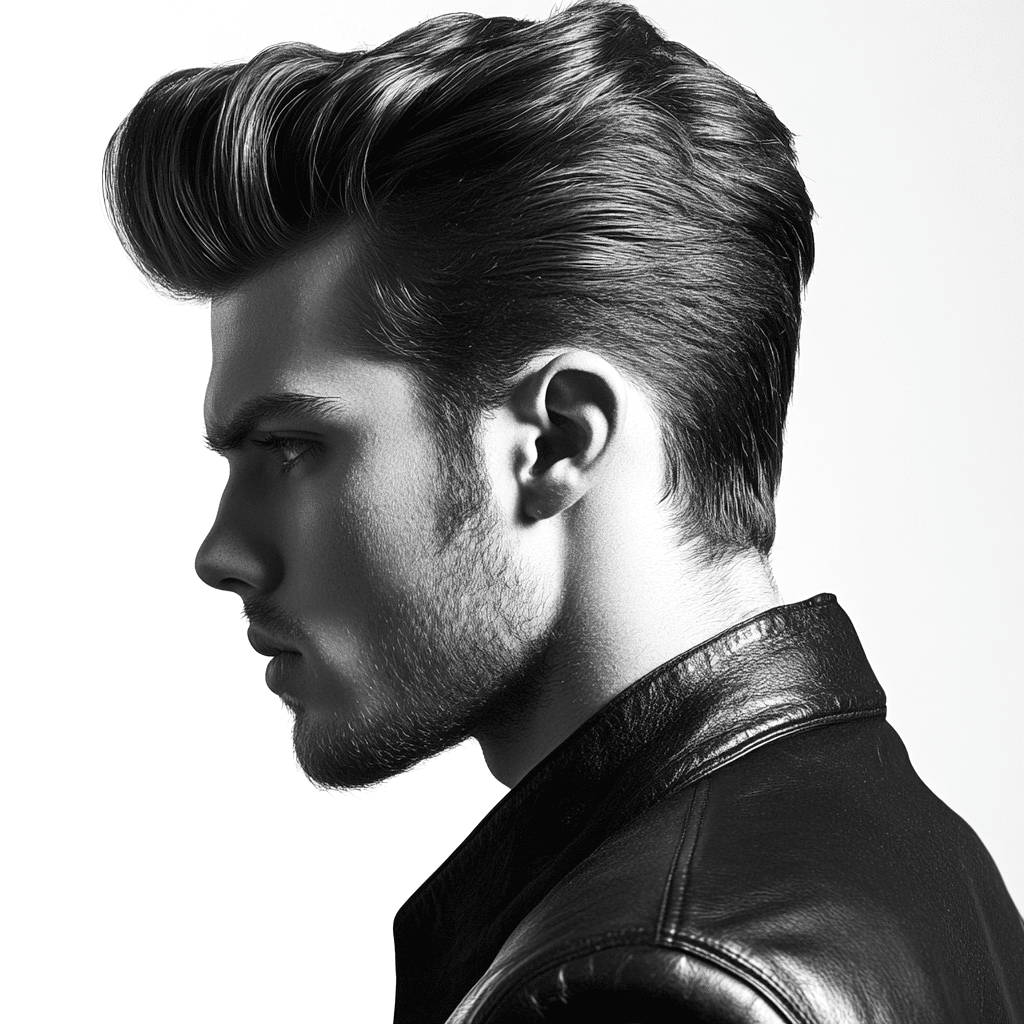
It was not trying to look accidental. The old school pompadour haircut was built, shaped, and meticulously maintained.
This is the version most people picture first: polished, sculptural, and almost architectural. The height is part of the attitude. It gives the face lift, shadow, and drama before a man even opened his mouth.
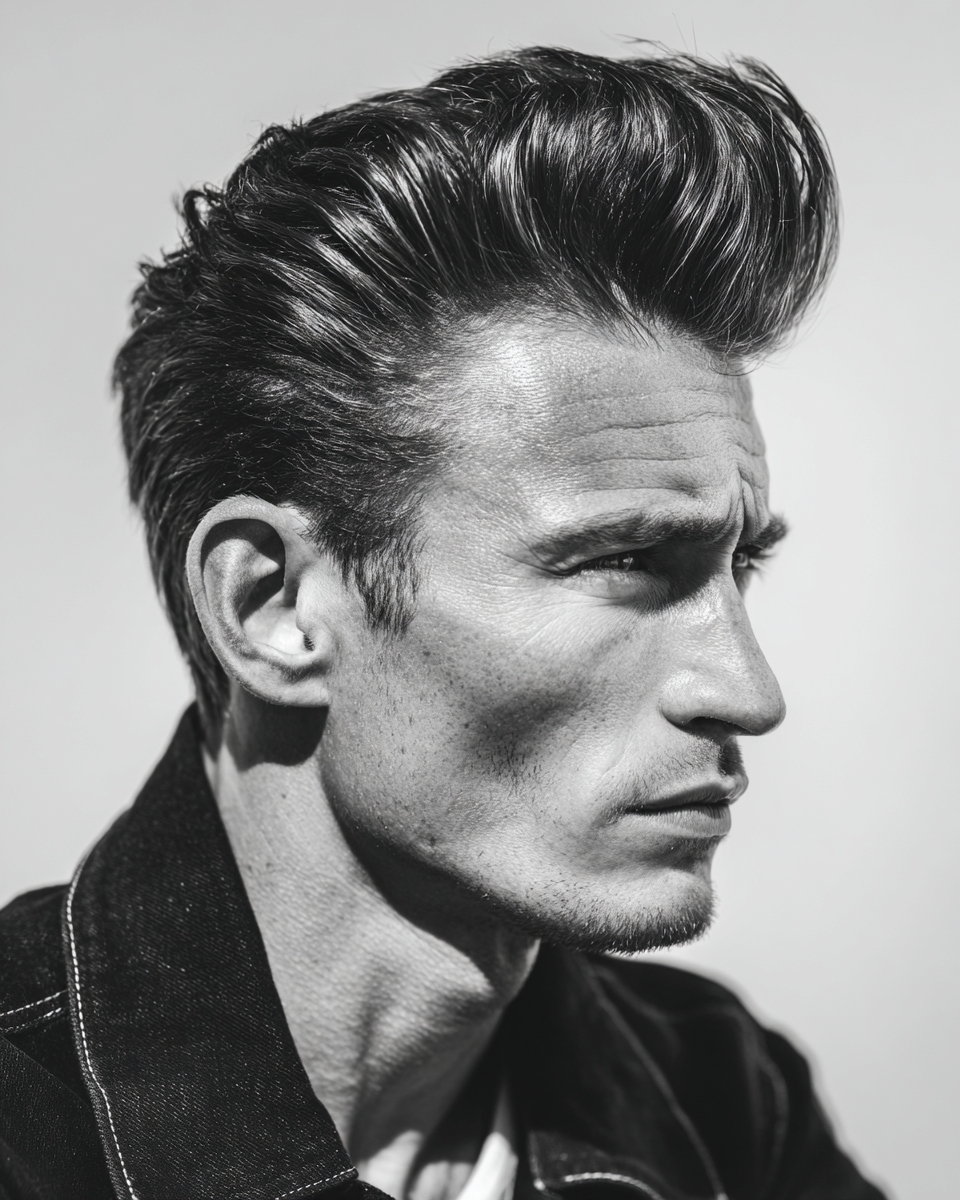
The classic versions of the pompadour heavily depends on height and proportion. Too little lift and it becomes a slick back. Too much lift and it becomes pure theater. Somewhere between those extremes is the reason the style survived.
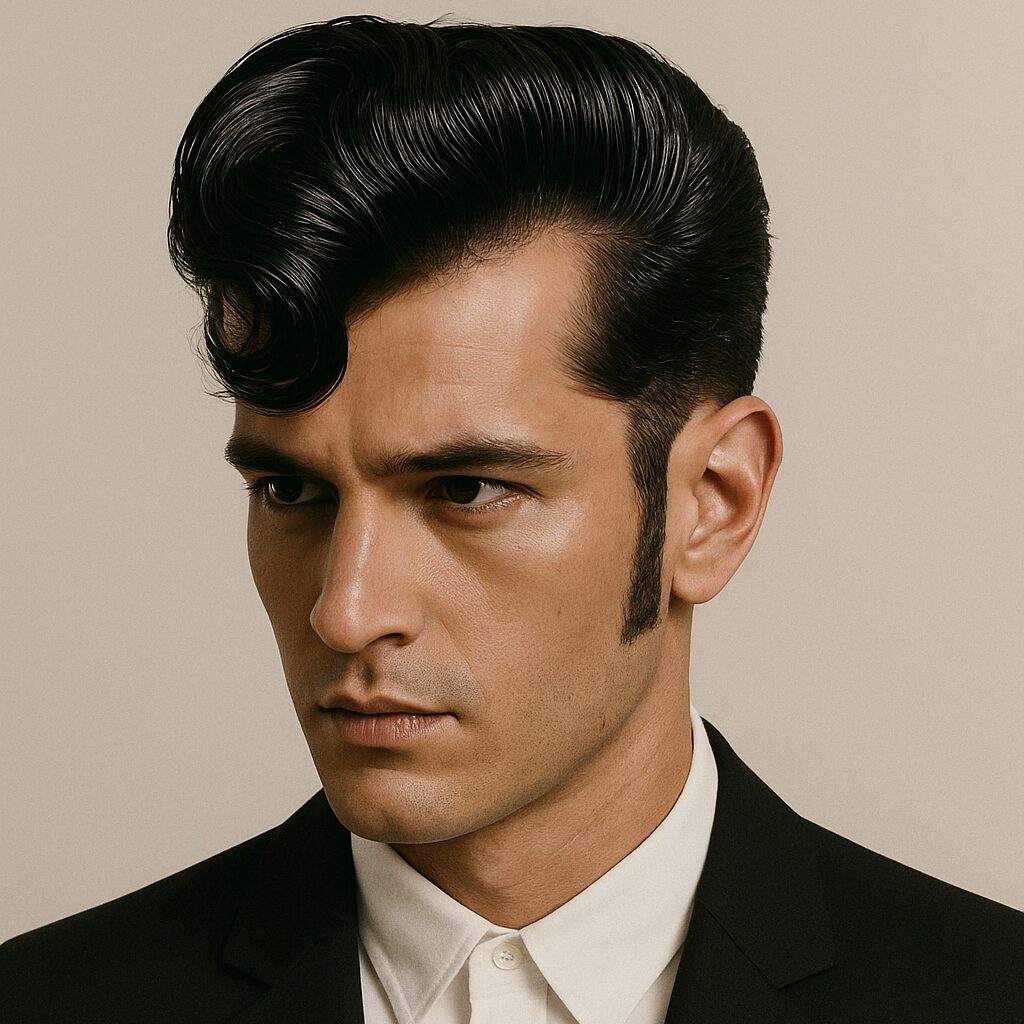
The elephant’s trunk variation pushed the pompadour haircut into rebellion. It was grooming as posture: part precision, part defiance, part “yes, I meant to leave the house like this.” Somehow, civilization continued.
There is also an old school pompadour that is less rebellious, more controlled. The height remains, but the finish is tidier.
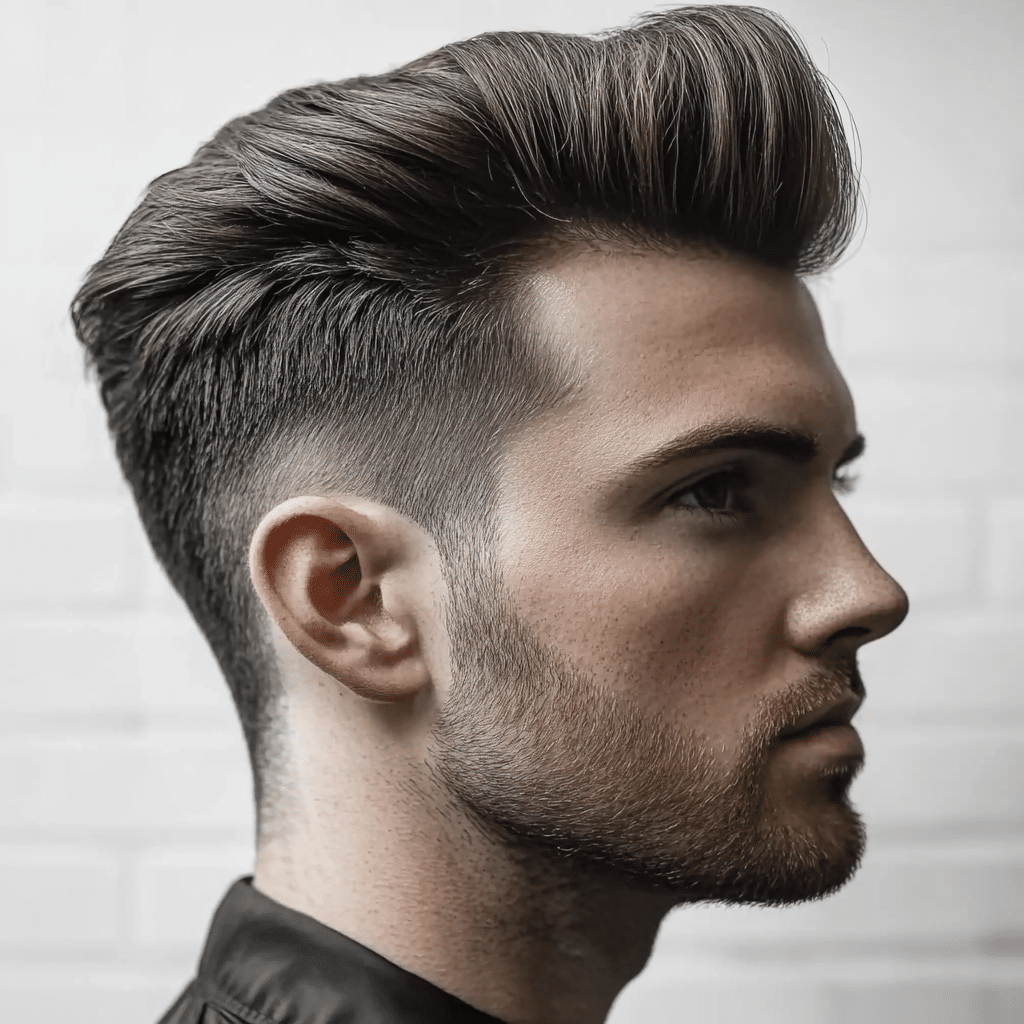
This is where the cut starts to look less like a costume and more like a permanent part of men’s grooming history.
Achieving the old school pompadour requires a blow dryer and strong-hold pomade. Dry the front section upward and back. Comb into shape.
Finish with another pass of pomade for hold and shine. The style is precise and requires maintenance to keep it looking right.
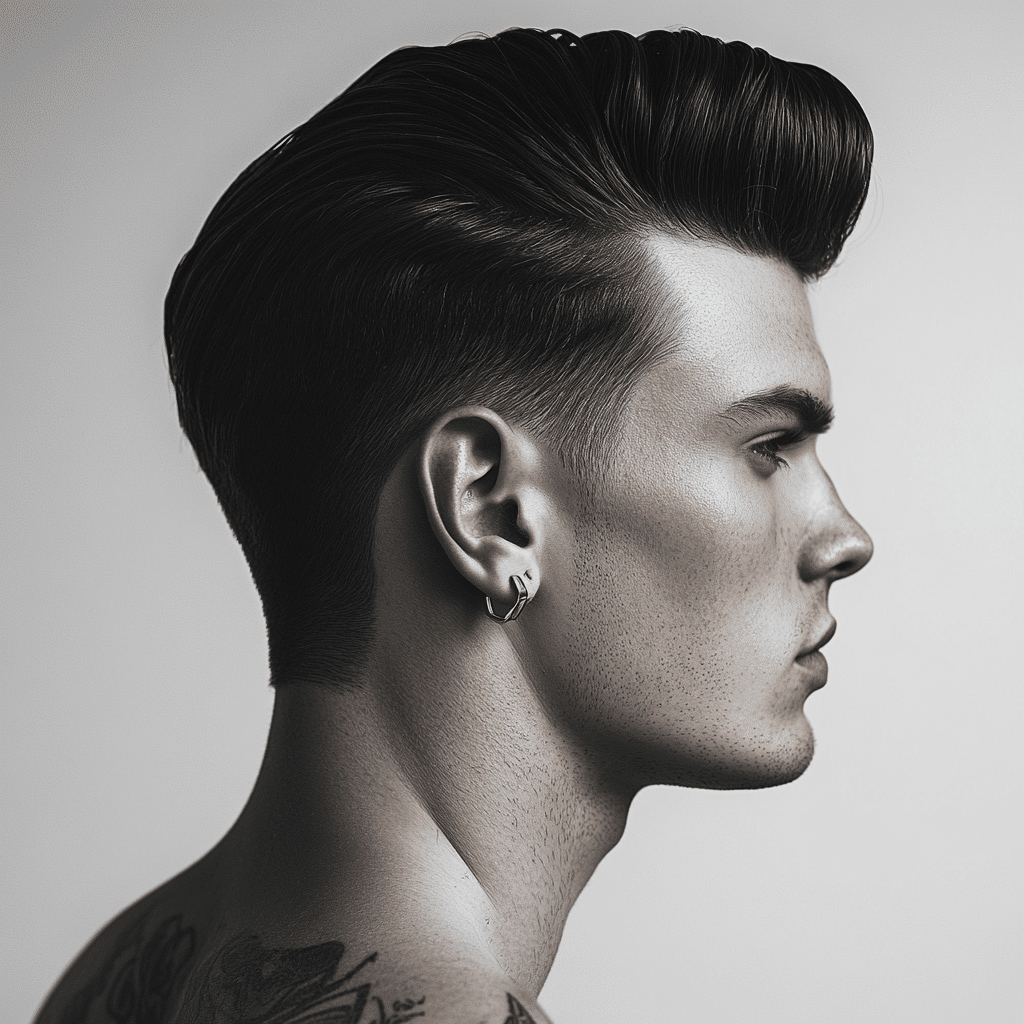
By the time the rock and roll version arrived, the pompadour hairstyle had become more than hair. It was visual shorthand for energy, youth, and controlled trouble.
Key Differences: Old School vs. Modern
| Element | Old School | Modern |
|---|---|---|
| Volume | High and dramatic | Moderate and natural |
| Texture | Slick and controlled | Textured and relaxed |
| Sides | Short, sharp contrast | Fade or taper, gradual blend |
| Products | Heavy pomade or gel | Light cream, paste, or mousse |
The Modern Pompadour Hairstyle
The modern variation keeps the signature volume on top, but it softens the rules. Sides now use a fade or taper rather than a hard cut. Up top, more texture, more air, more movement, less product.
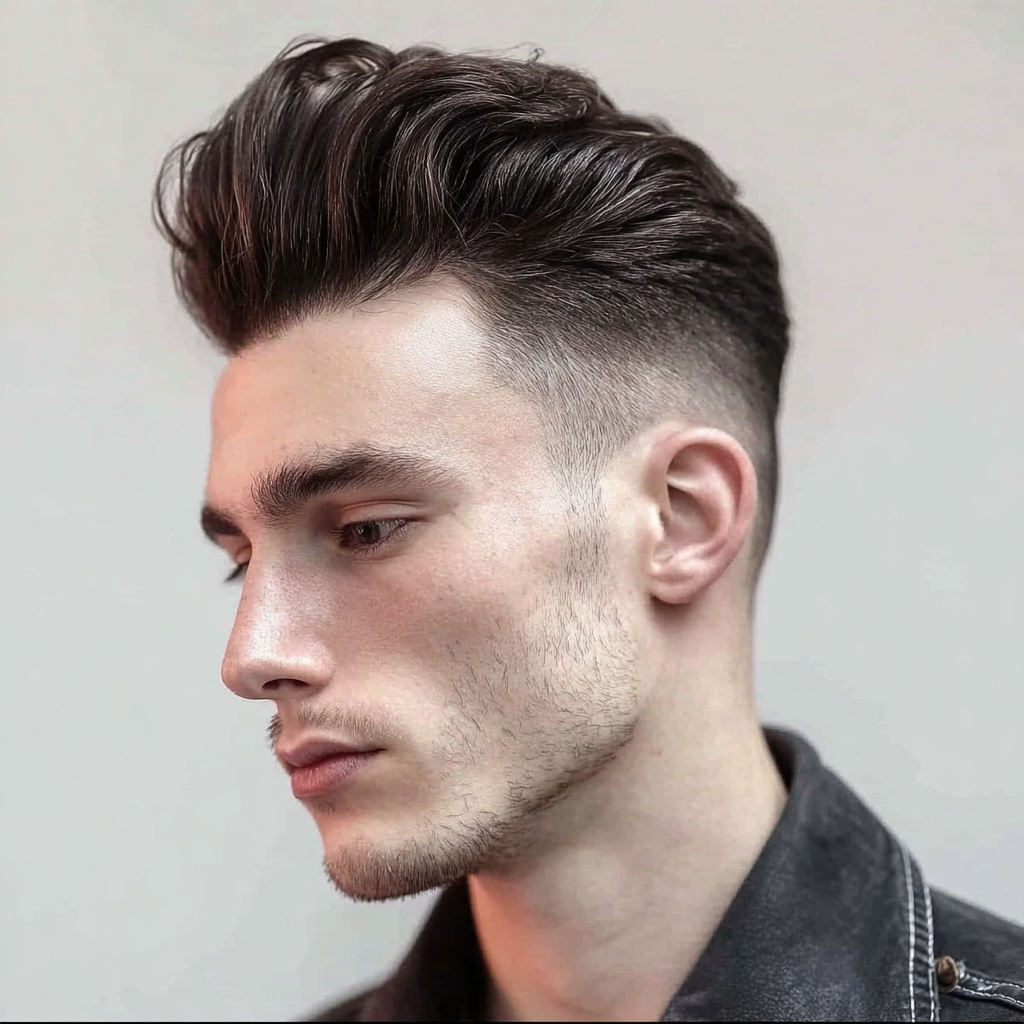
Lighter products replace heavy pomade. Texture replaces slickness. The result is a pompadour haircut that adapts to more styles, more ages, and more occasions.
More texture on top instead of the sleeker greaser look. Shorter sides with a fade or taper.
It can look sharp in a wool coat, casual with denim, and mature in gray hair without feeling like a 1950s tribute act.
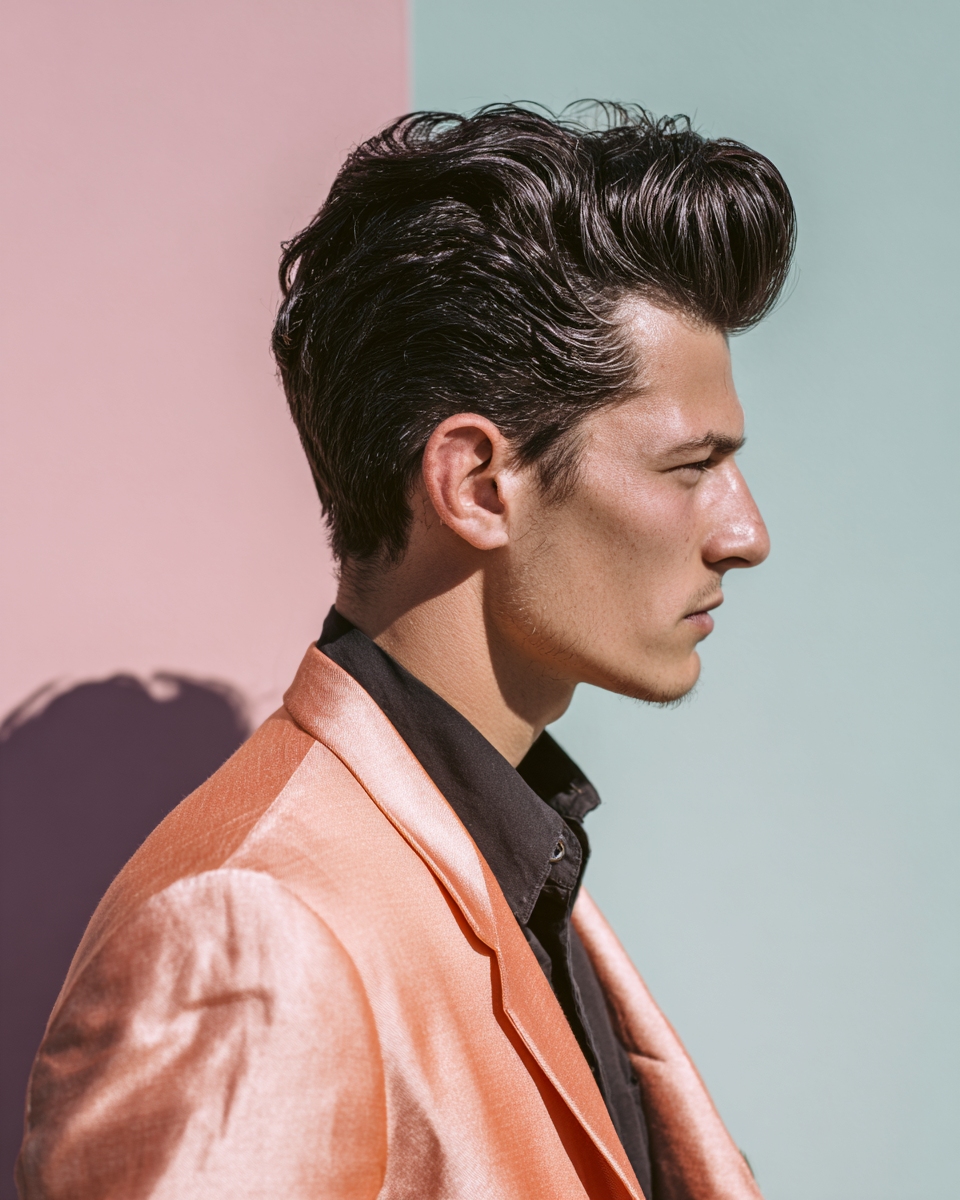
This is where the modern version starts to separate itself. The silhouette still nods to the old school pompadour, but the finish feels lighter.’
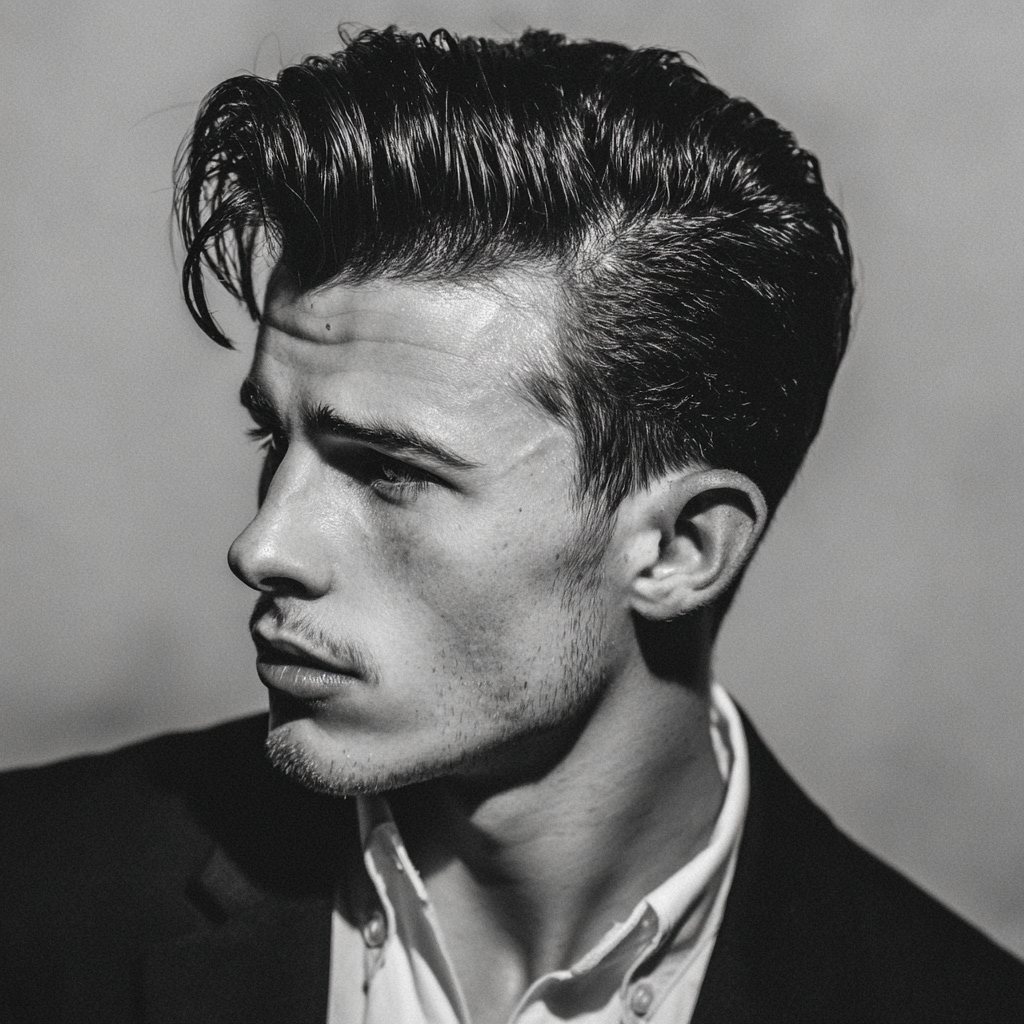
20 Modern Pompadour Hairstyles
The modern pompadour hairstyle is not one single cut. It is a family of shapes built around height, direction, and contrast.
Some versions are clean and controlled. Others are textured, gray, faded, or deliberately looser.
The right pompadour haircut depends on hair density, face shape, lifestyle, and how much time a man is willing to spend with a blow dryer before pretending it all happened naturally.
1. Classic Modern Pompadour
The foundation. Volume swept back, sides faded cleanly. This is where most men should start.
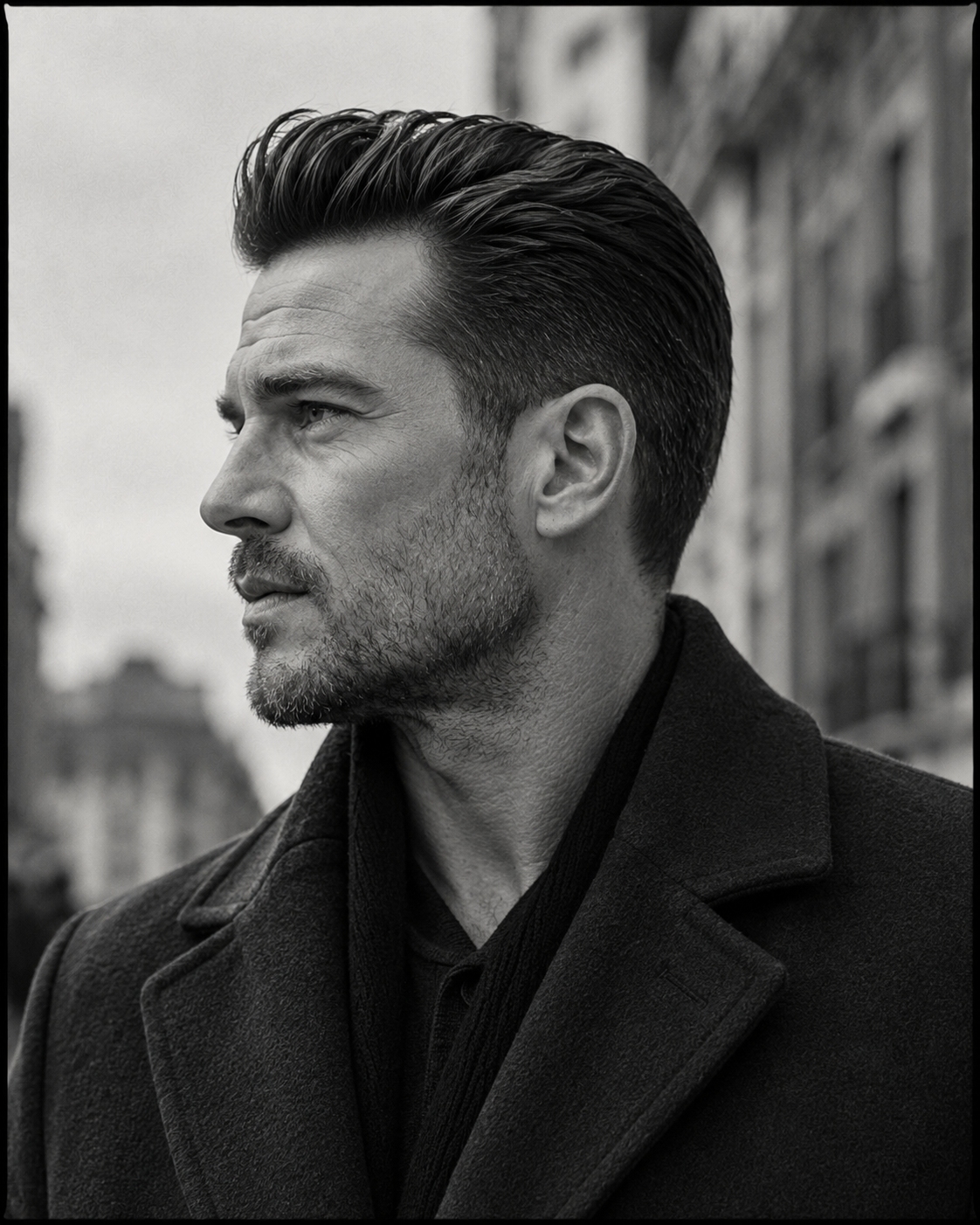
Volume at the front swept back with moderate height. Sides tapered or faded. Less dramatic than the old school version, but still clearly a pompadour hairstyle. More versatile for everyday wear.
Products: medium-hold pomade, matte or natural finish. Blow dry the front section upward while damp, then comb back. The shape sets as the hair dries.
2. Textured Pompadour
The textured version matters because it removes the fear of perfection. A pompadour does not have to sit like polished marble. In 2026, the better version often looks touched, moved, and lived in.
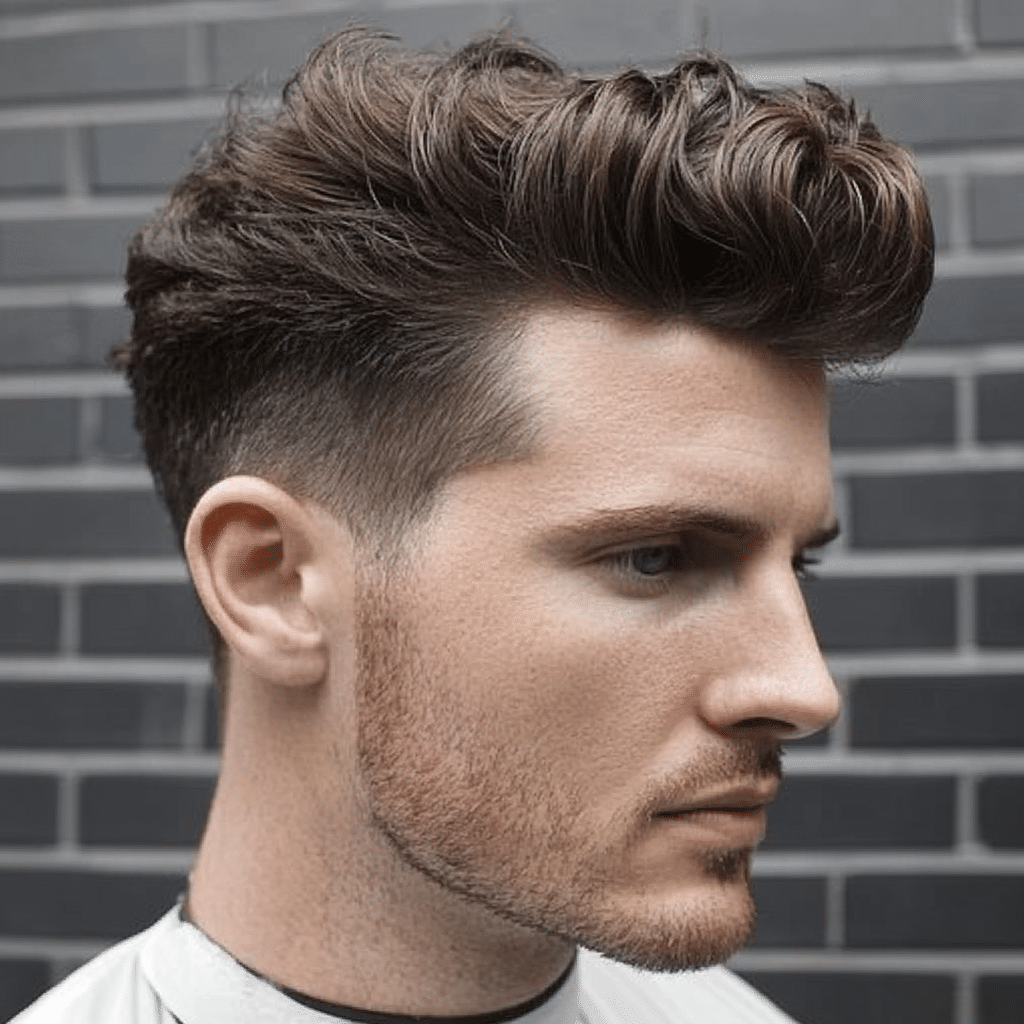
This is the most popular modern version. Movement and separation on top rather than a smooth swept shape.
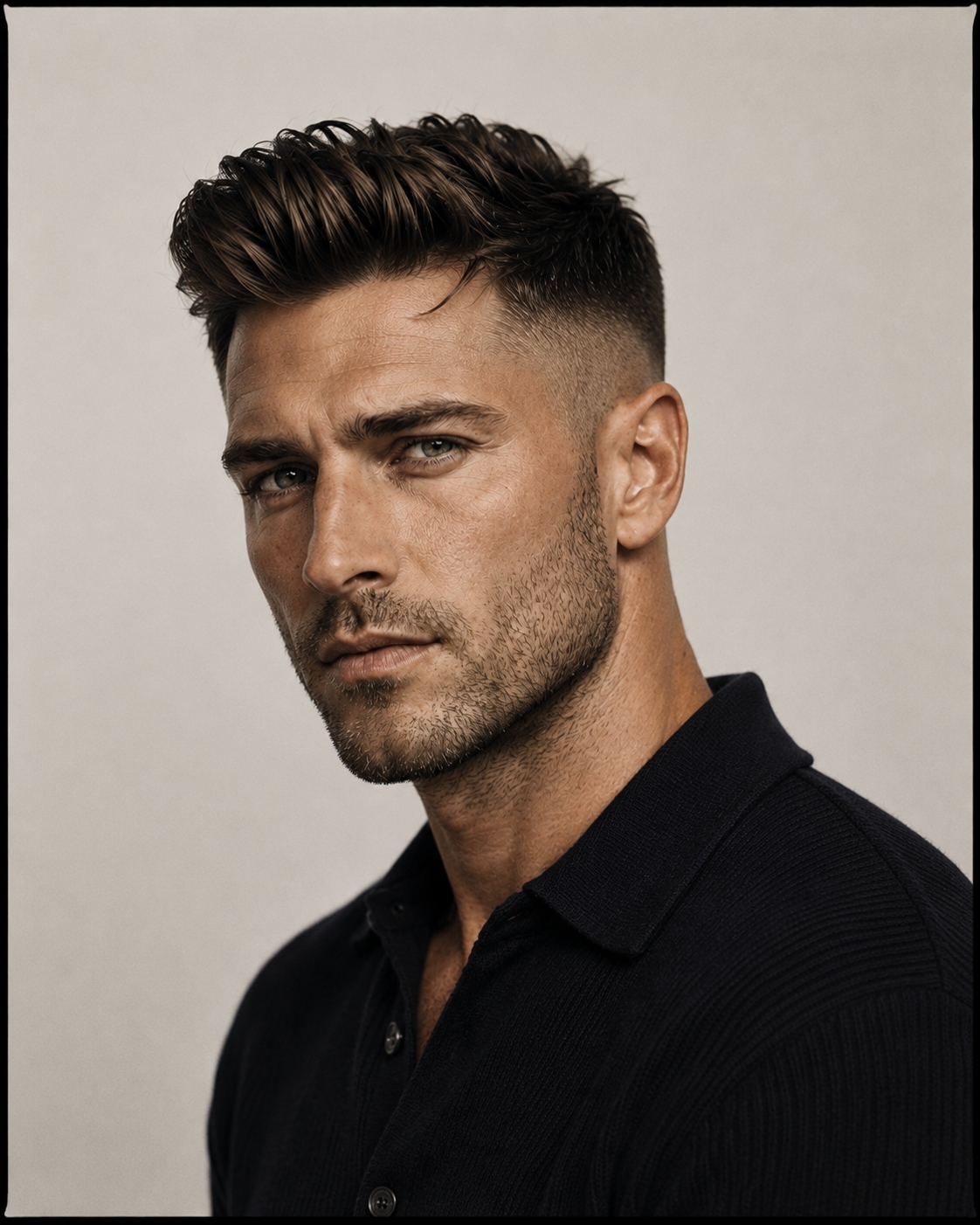
This pompadour haircut looks deliberate rather than over-styled, which is the difference between style and looking trapped in your own grooming routine.
Products: matte paste or clay on damp hair. Finger-styled rather than combed. Works best for wavy or thick hair.
3. Pompadour with Skin Fade
The skin fade maximizes contrast. The difference between the bare sides and the volume on top is stark and deliberate.
It is the boldest contemporary version of the pompadour haircut, especially when the top keeps real height.
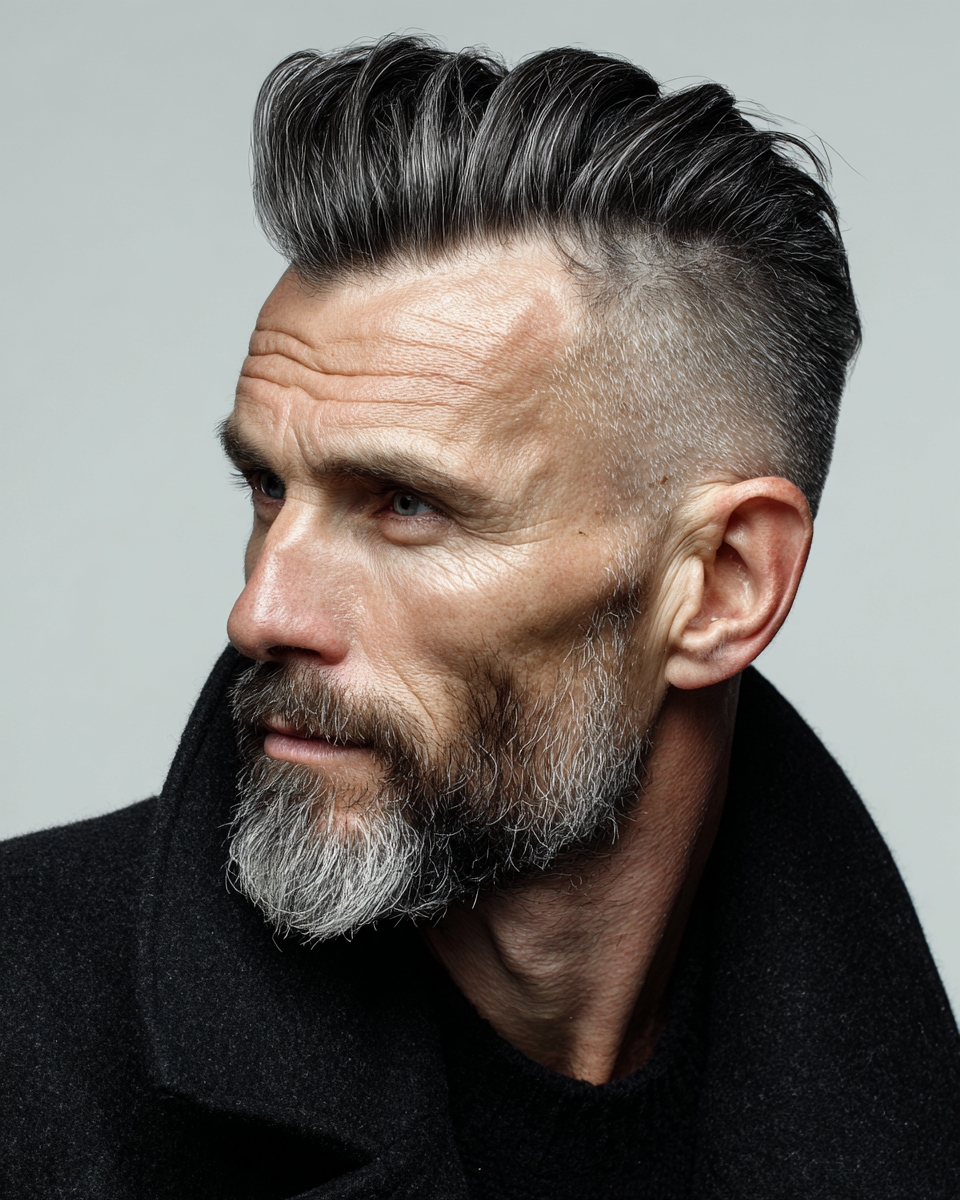
A mid-fade is more versatile. High skin fade is the most committed. Plan on a barber visit every two to three weeks to keep the fade sharp.
4. Low Pompadour
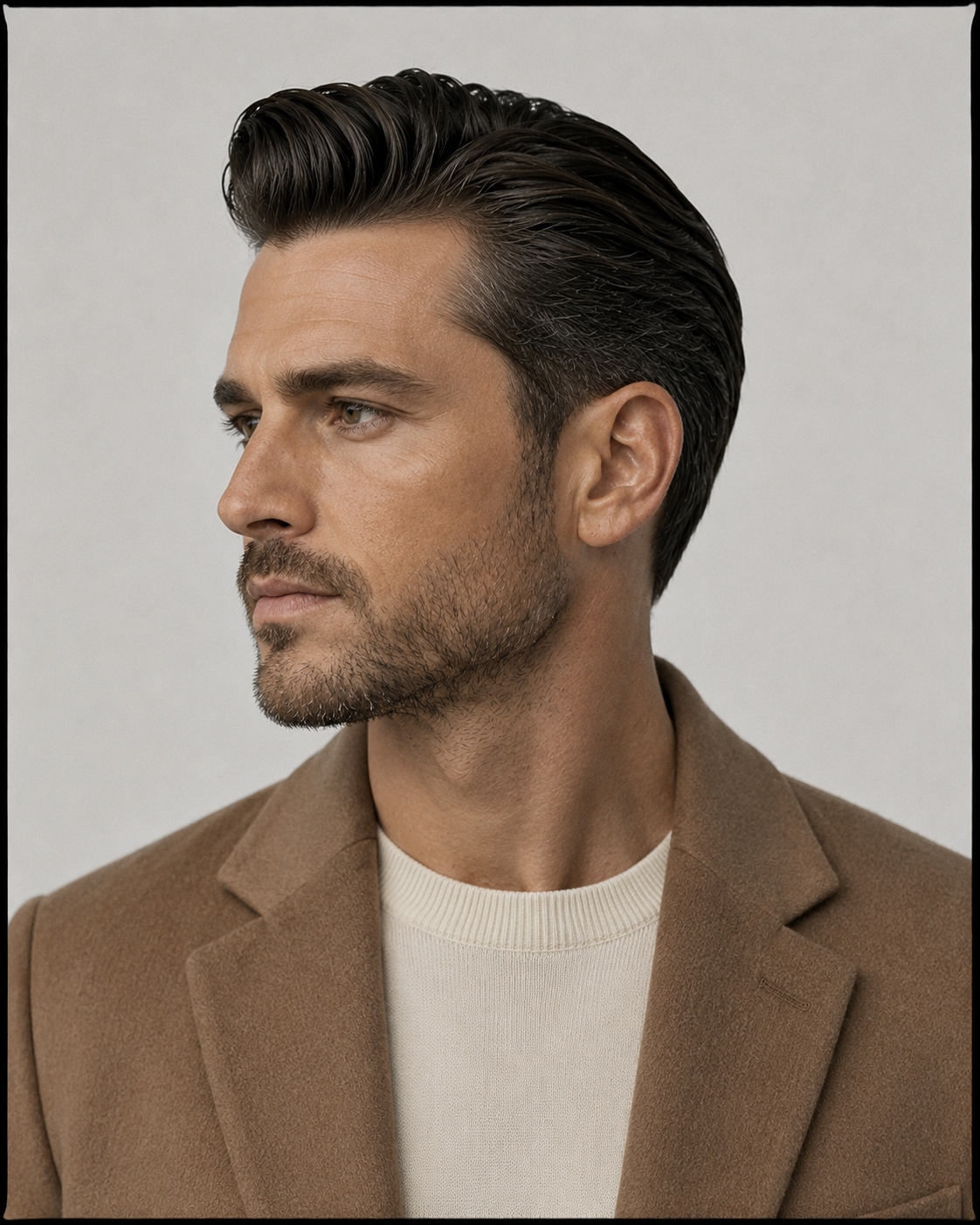
Same shape as the classic, lower volume. The most wearable version for professional environments. Still clearly a pompadour. The sweep is present but understated.
Products: light cream applied sparingly. A comb rather than fingers keeps it tighter and more controlled.
5. Modern Pompadour with Straight Textured Hair
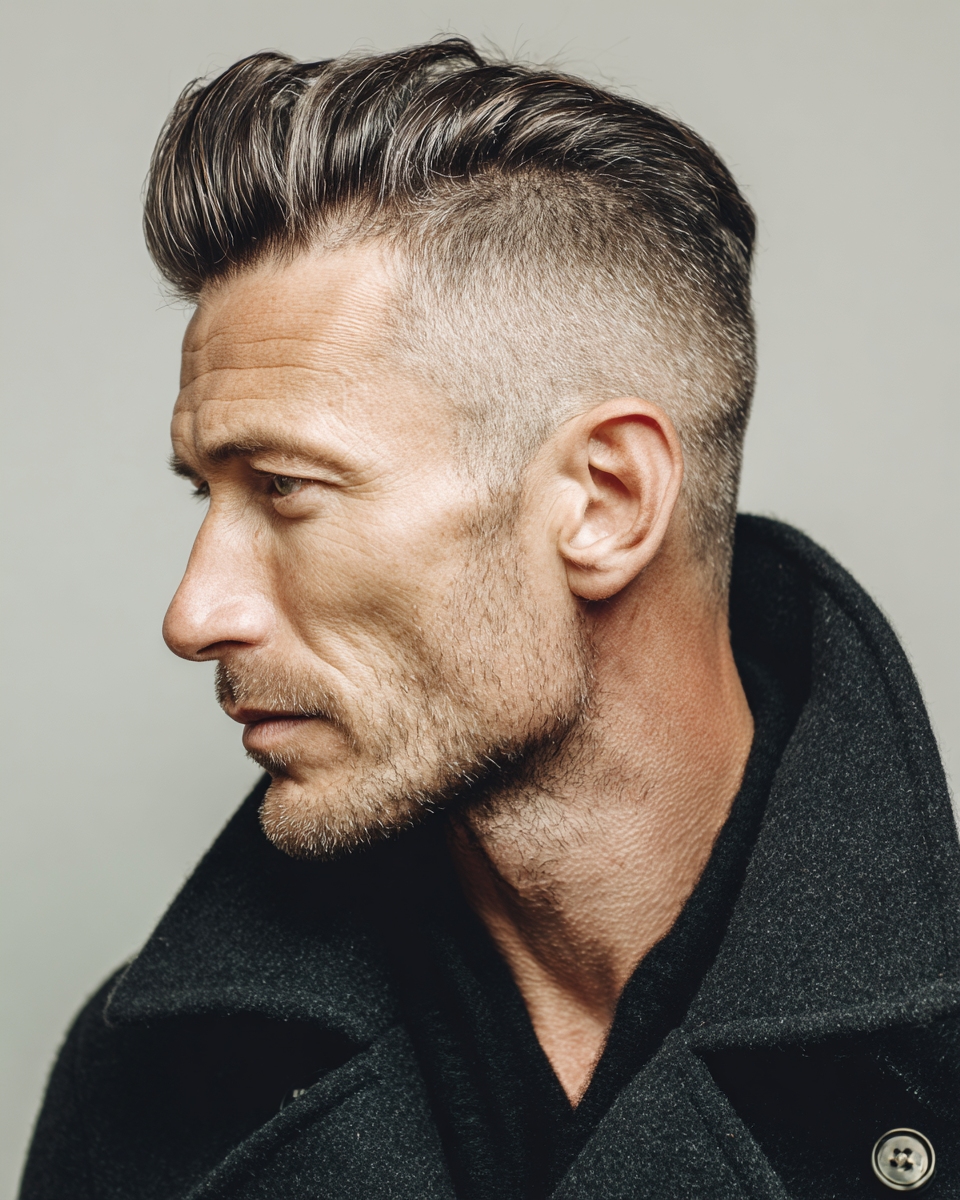
With straighter or lighter hair, the barber’s shaping becomes more visible. The blend, the front lift, and the direction of the sweep all show clearly. There is less room for lazy cutting, which is unfortunate news for lazy cutting.
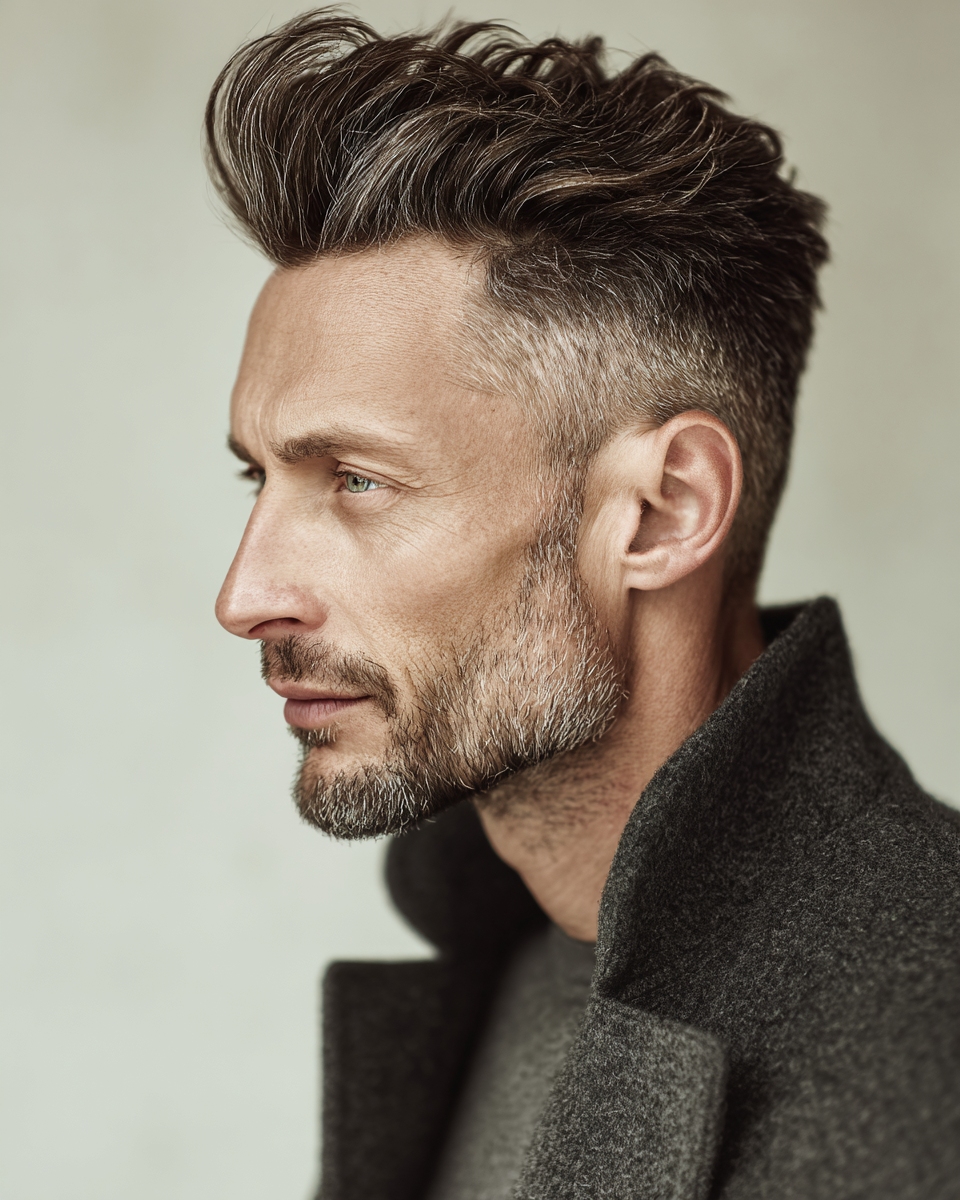
Add facial hair and the cut becomes more grounded. The short beard gives the height on top something to balance against, especially when the sides are faded close.
On lighter hair the pompadour shape reads particularly clearly. The volume at the front is visible from a distance. The contrast with the faded sides is strong without needing to go to a full skin fade.
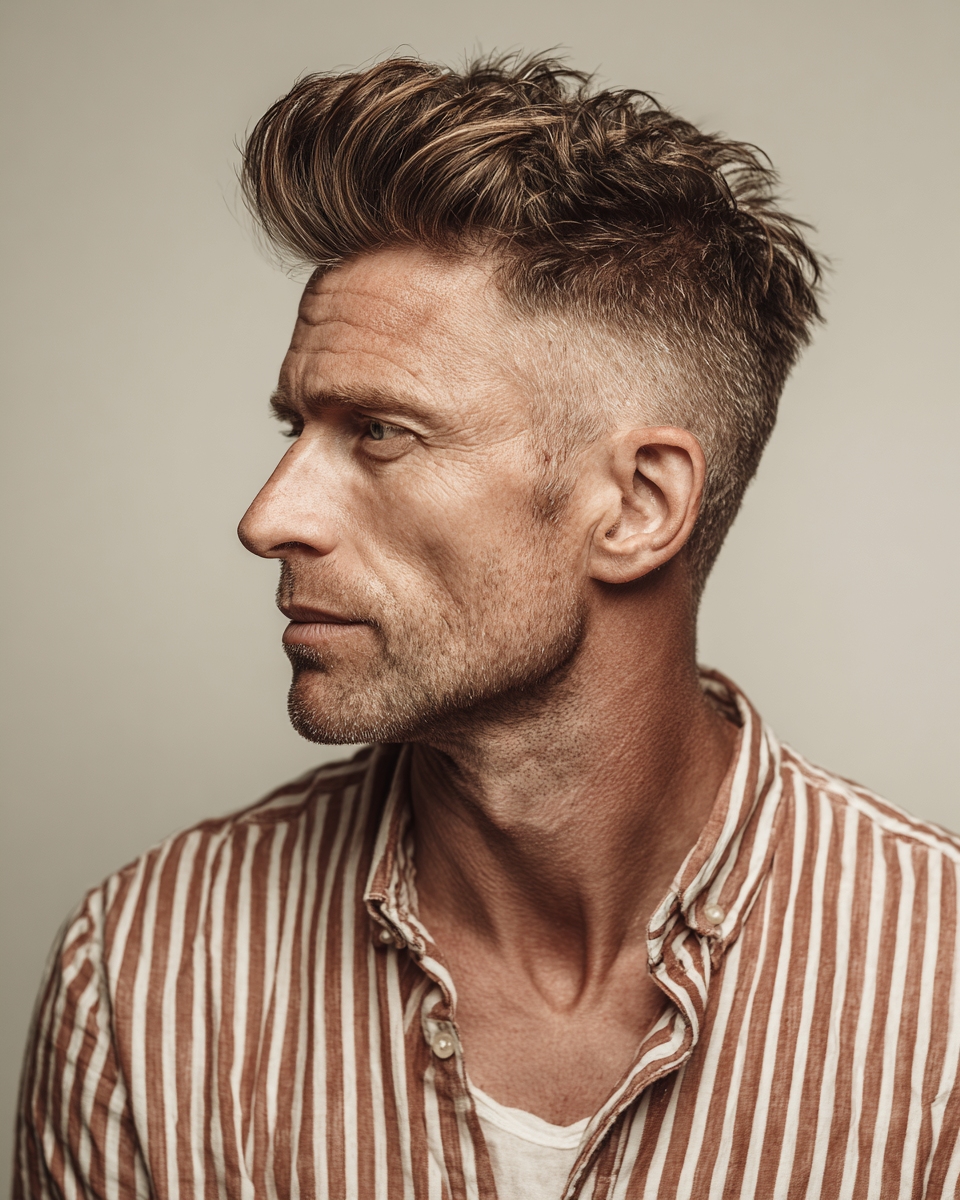
6. Wavy Hair Pompadour
On darker hair, the pompadour haircut often reads with stronger graphic contrast.
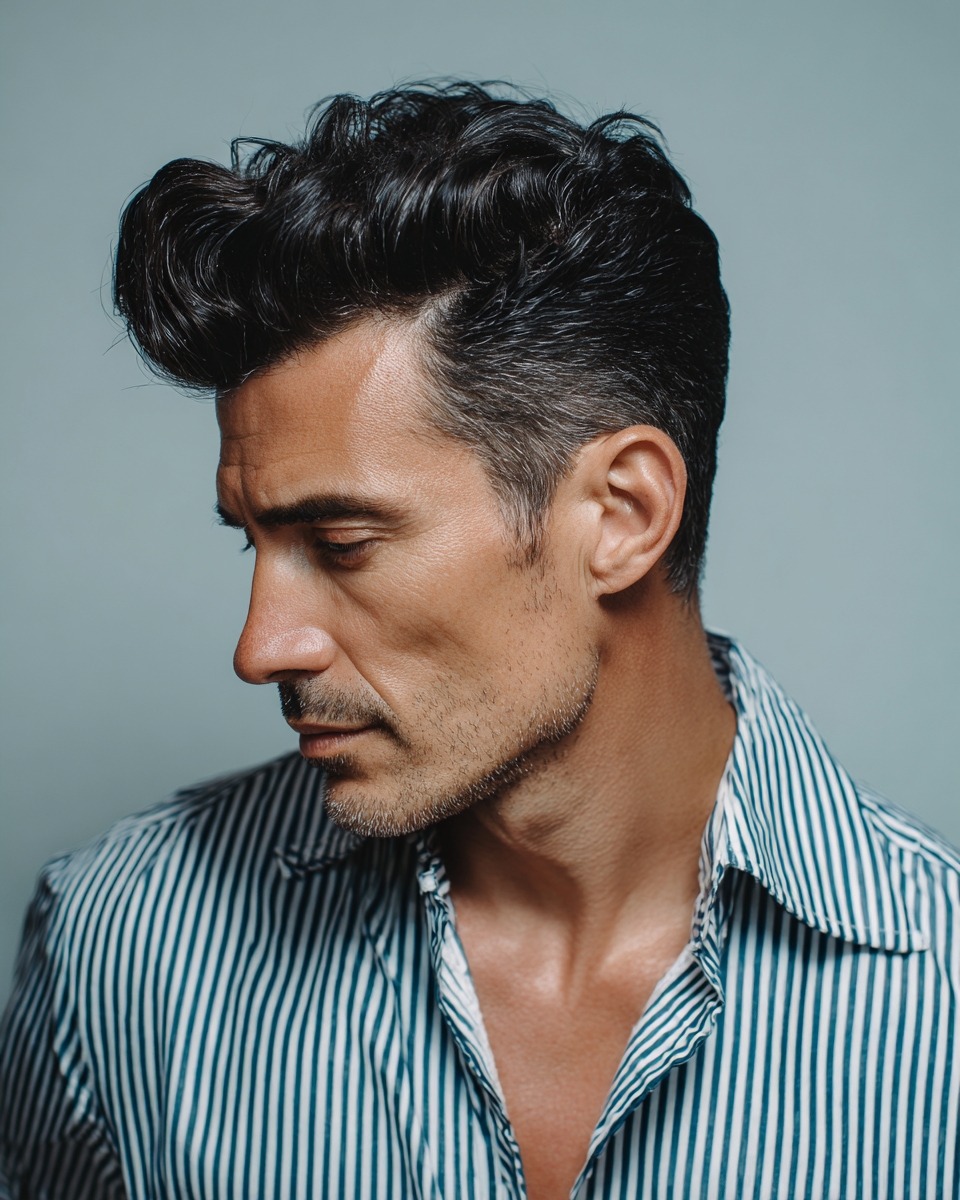
The sweep catches light across the top while the fade carves out the profile. It is a simple formula, which naturally means people will still find ways to complicate it.
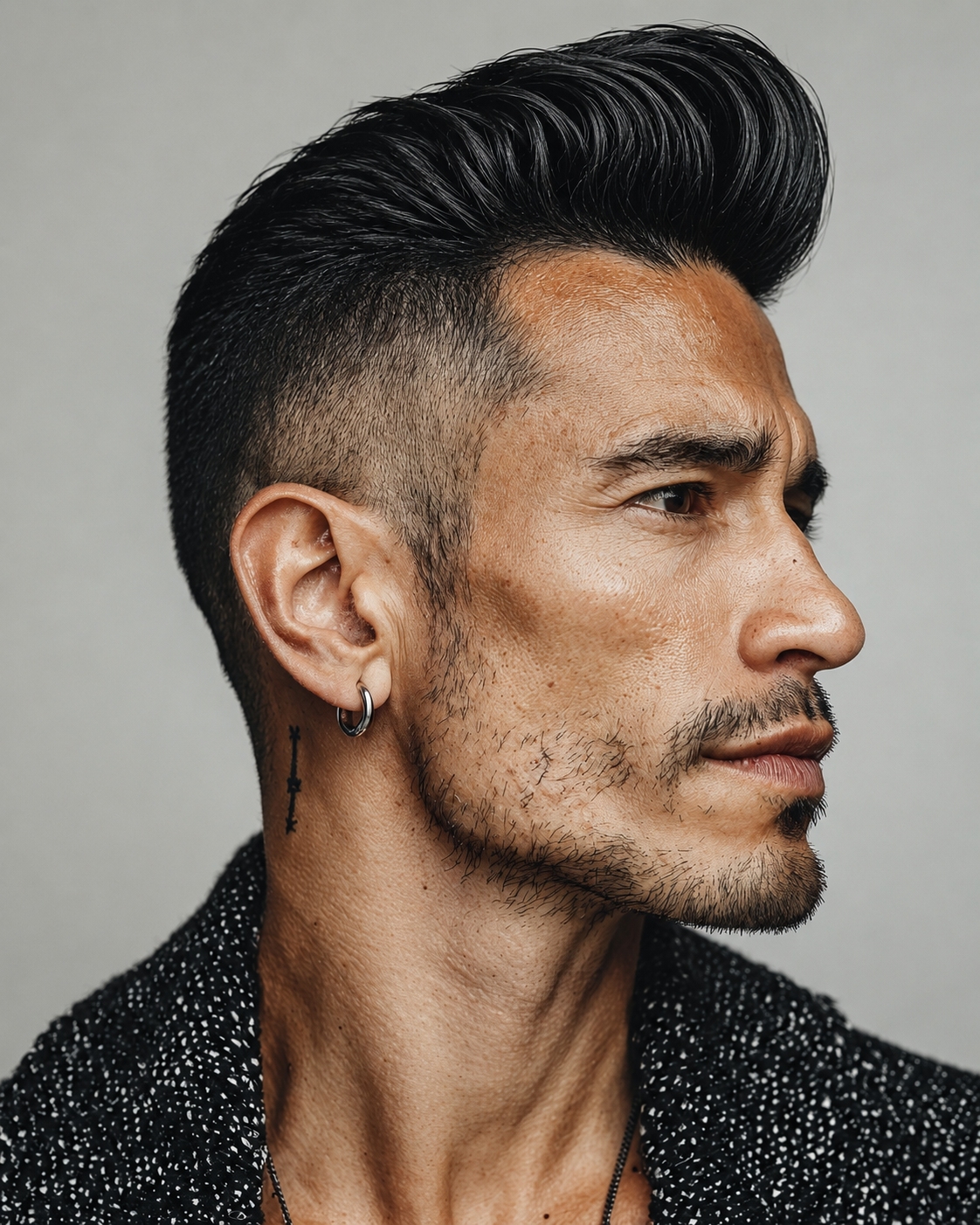
Dark thick hair with natural wave is ideal pompadour material. The wave creates the volume the style needs without aggressive blow-drying. This version takes it further with a high skin fade and more disconnected contrast.
7. Rock Pompadour
This is not the quiet version. The rock pompadour needs height, attitude, and enough control to keep the shape from collapsing into a generic swept-back cut.
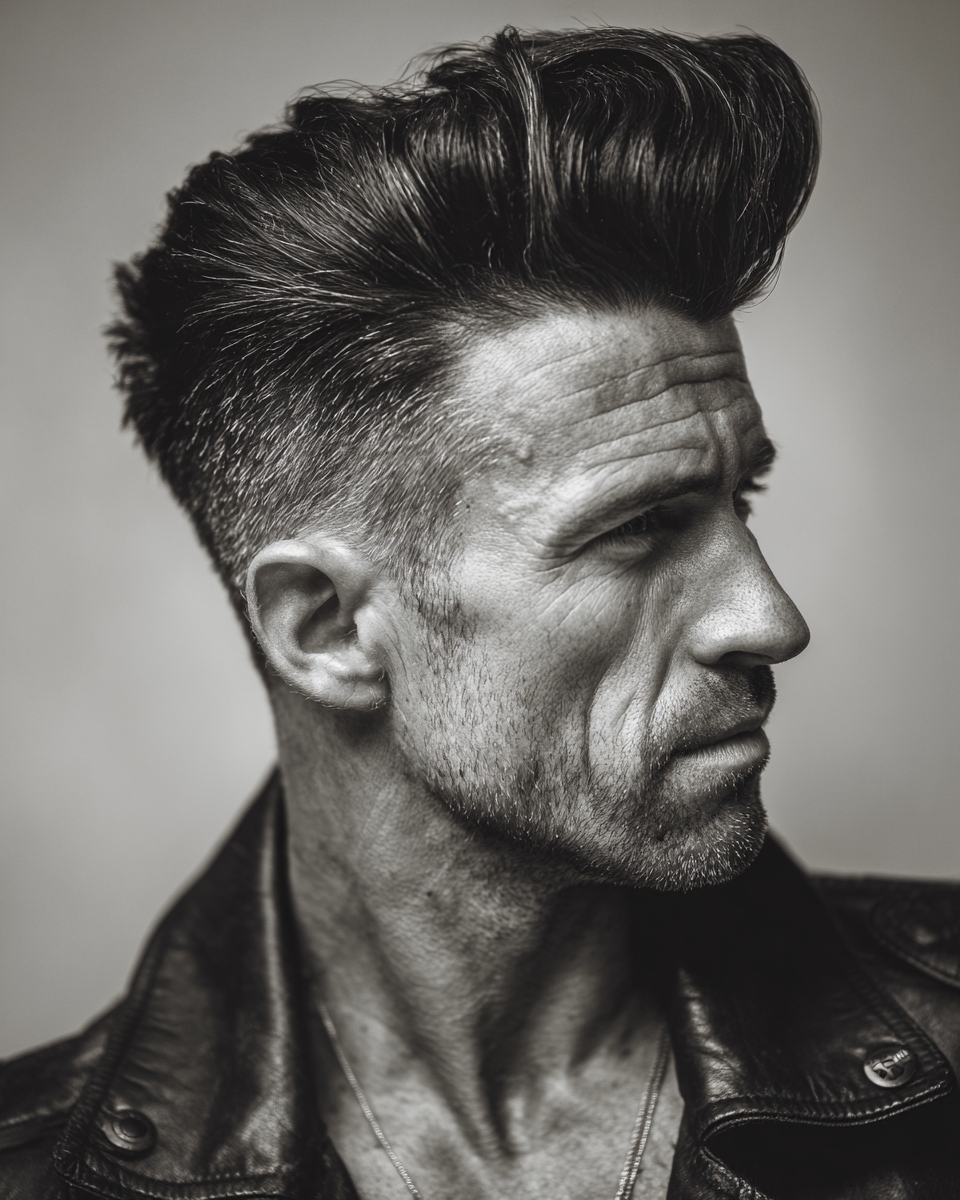
It works best when the clothes support it: leather, denim, boots, dark tailoring, anything with a little visual bite.
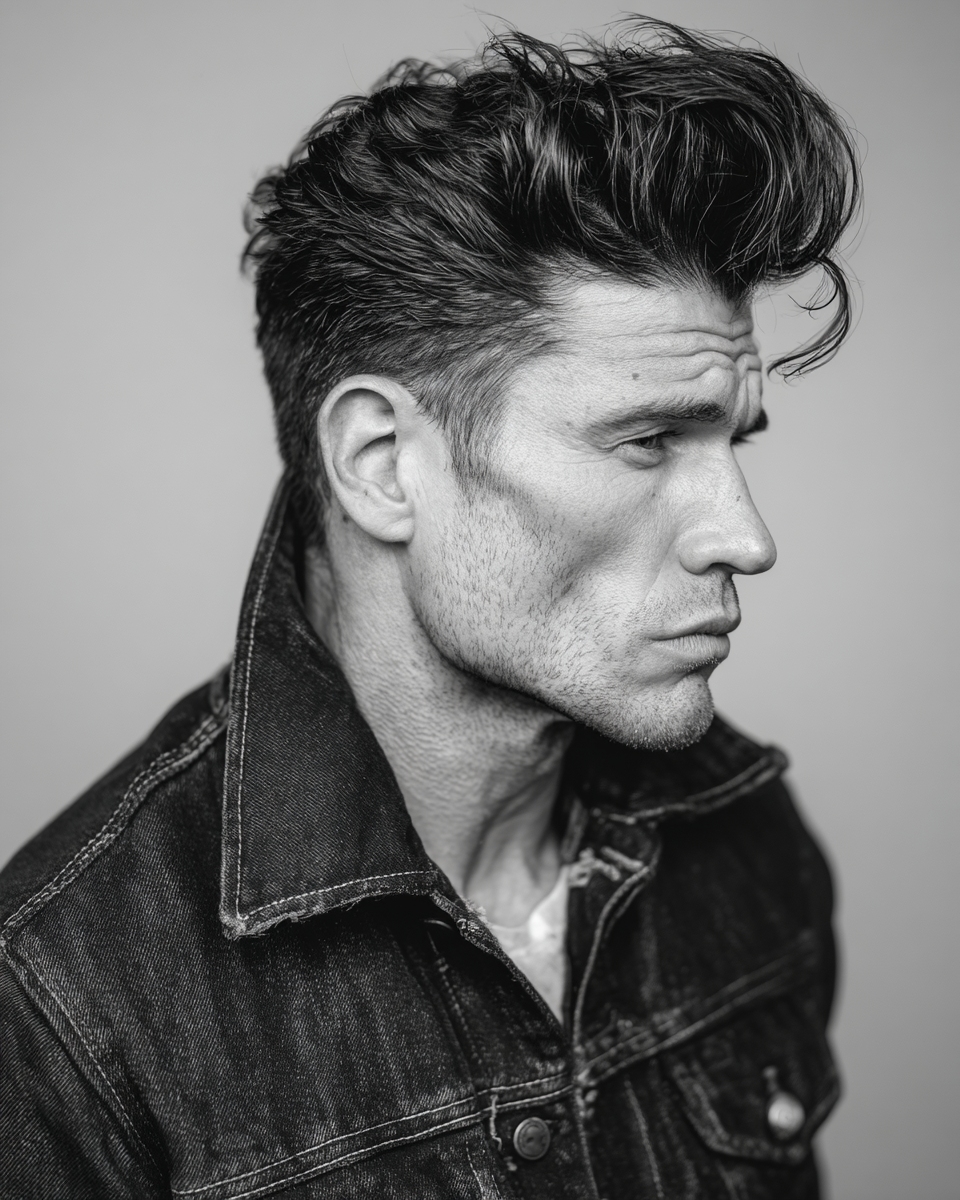
More volume than the contemporary standard, closer to the 50s rockabilly version. The reference is deliberate. Stronger hold, more structure. Not trying to be relaxed.
8. Pompadour with Beard
Works when the fade haircut connects both elements. A low or taper fade that gradually meets the beard line creates one unified shape. Keep the beard shorter than the top length to avoid top-heavy proportions.
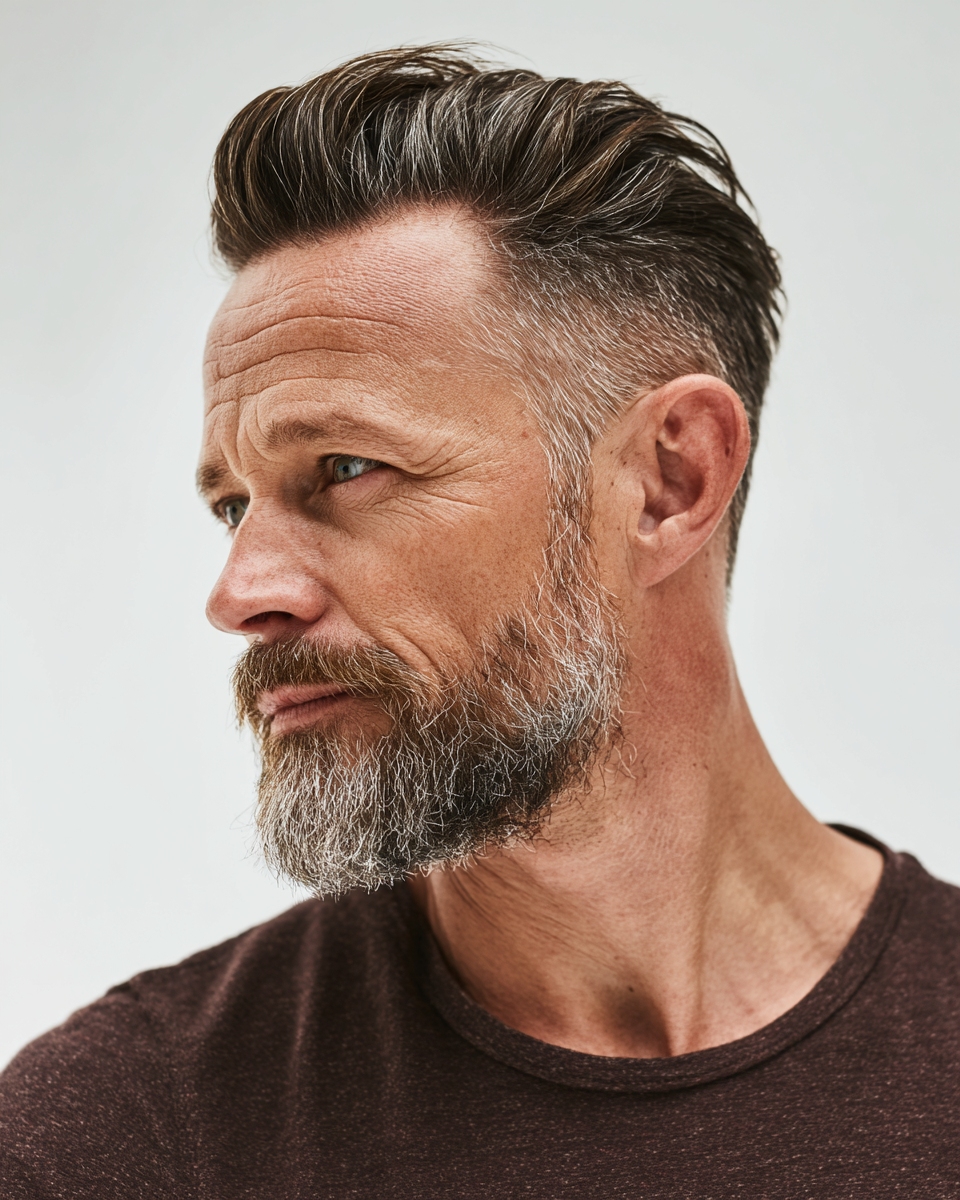
9. Textured Pompadour Across Ages
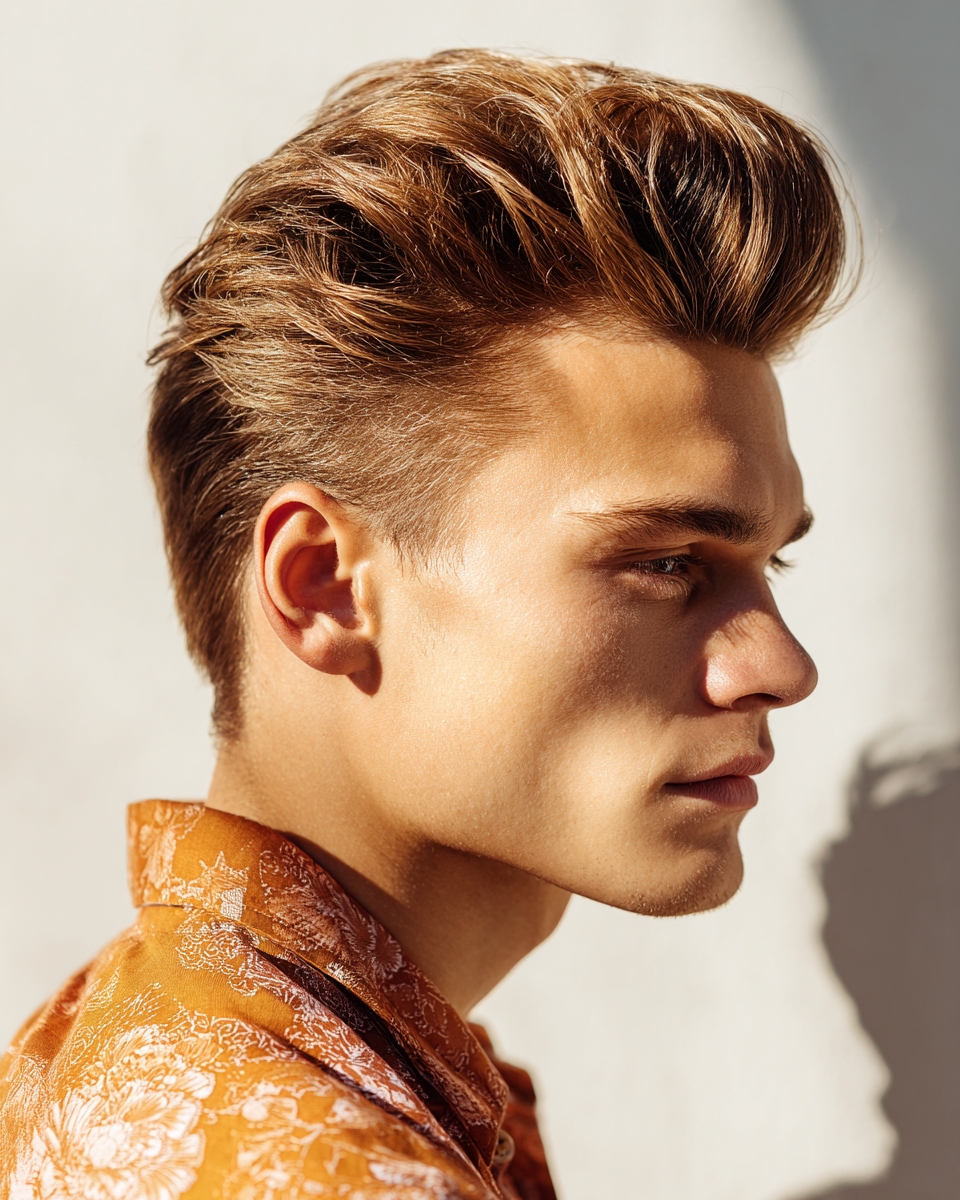
The texture looks intentional, lived-in, and far more interesting than the usual safe or structured haircut.
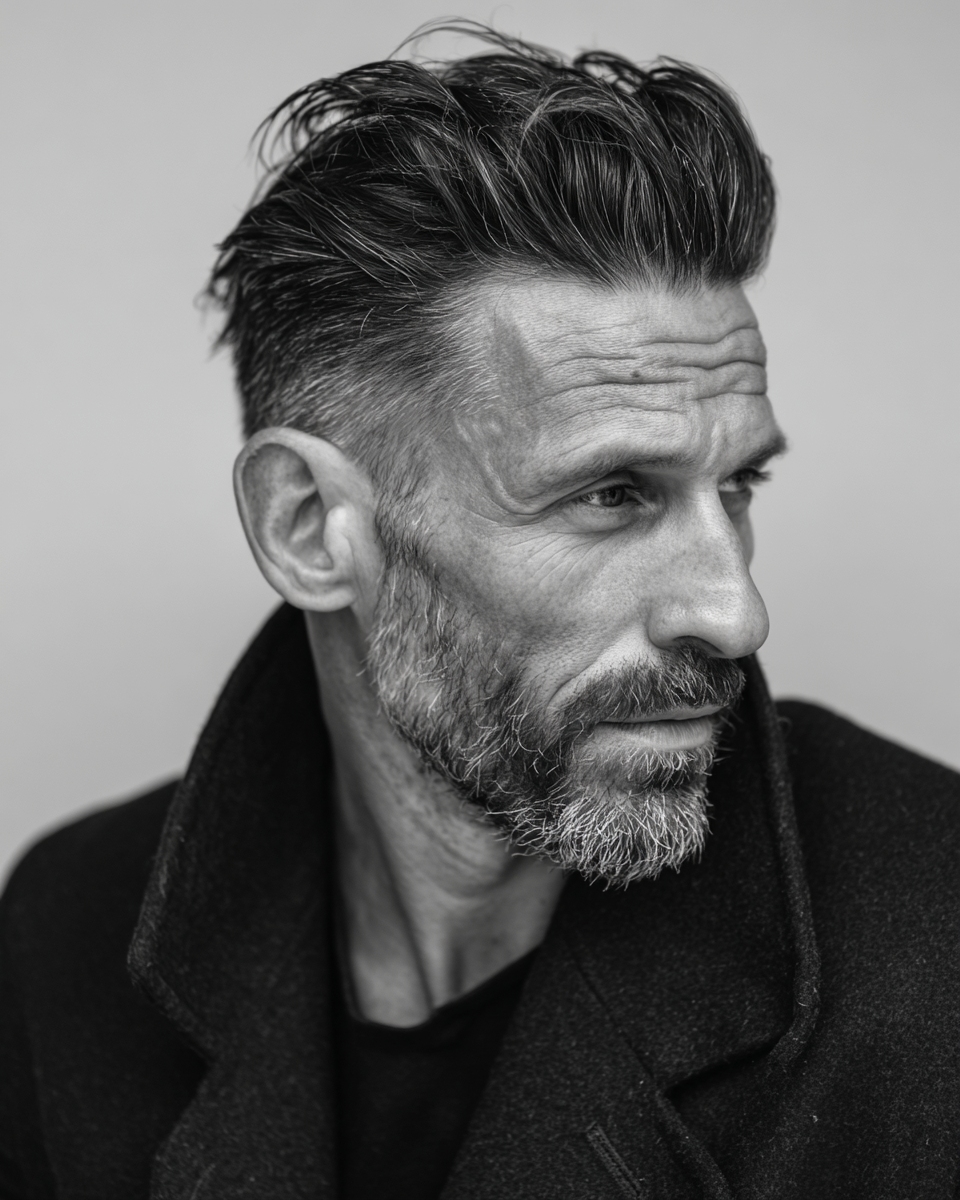
The textured pompadour works across age and hair color. On younger hair with natural highlights it reads casual and contemporary. On gray hair with a beard it reads distinguished and deliberate.
10. Gray Pompadour
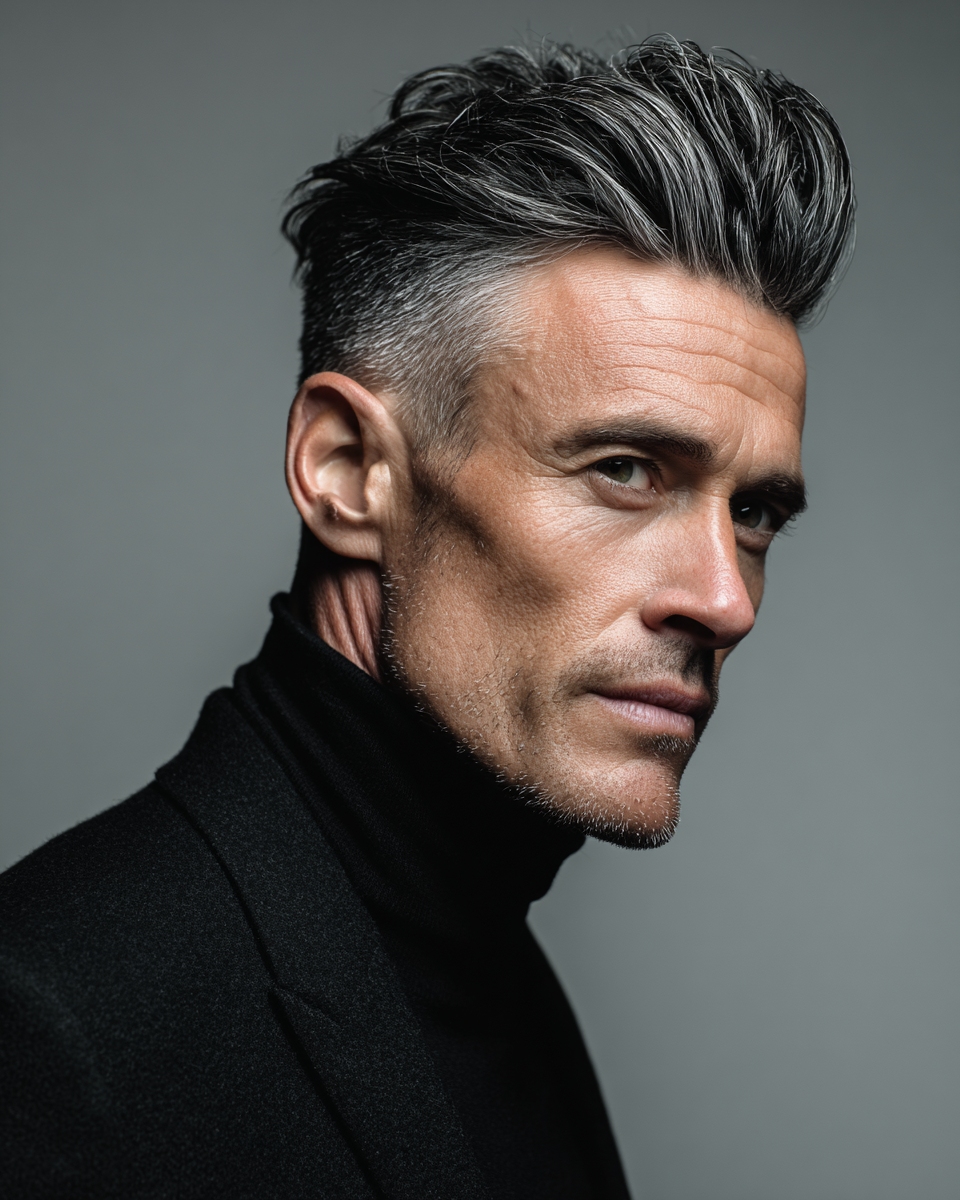
Gray hair gives the pompadour hairstyle a different kind of authority. It does not need to chase youth. The volume reads as confidence, while the color gives the cut depth and texture before any product touches it.
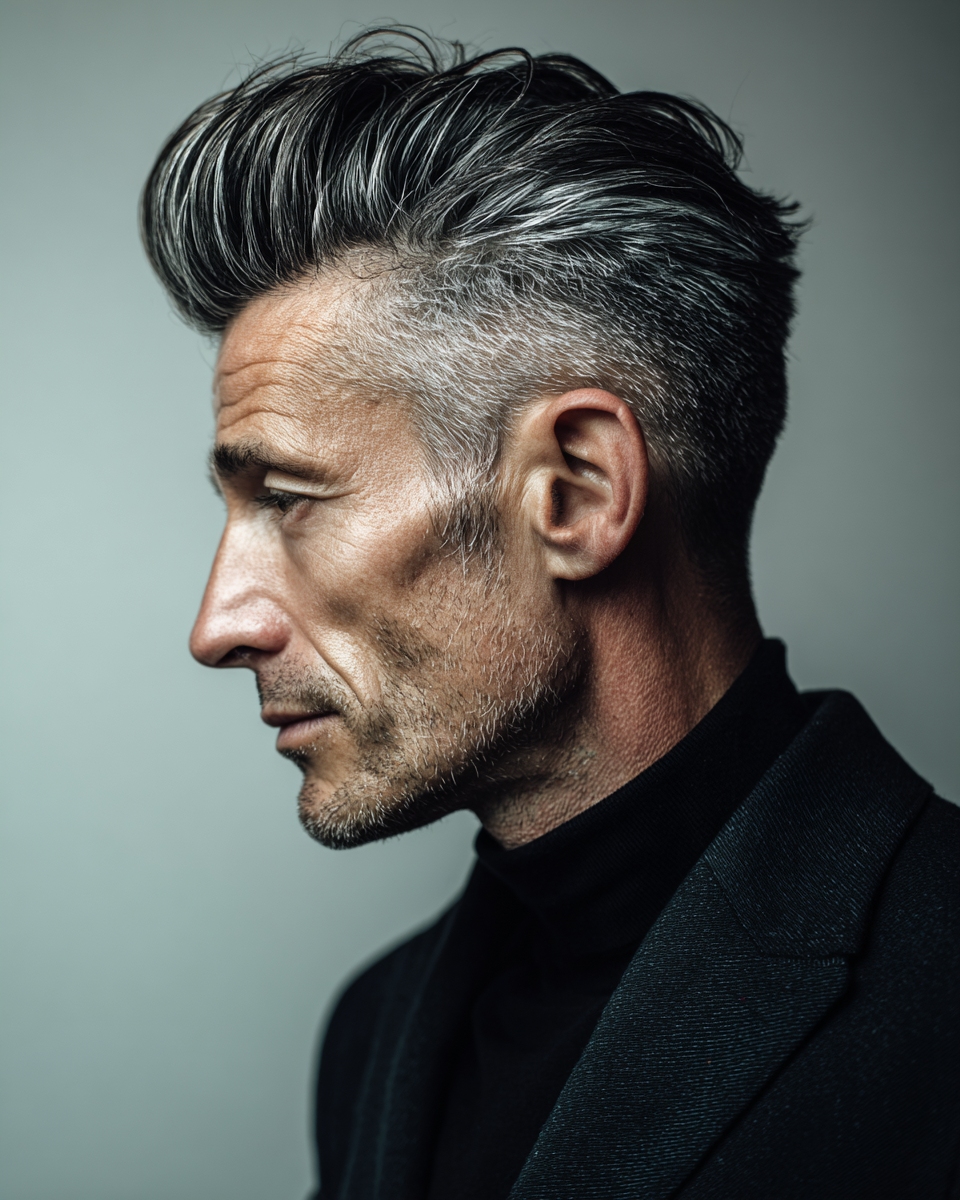
The silver color makes the volume more visible and gives the swept-back shape more presence than the same cut in darker hair.
Products: Gray hair is more porous. Use a hydrating styling cream rather than heavy pomade.
For more: gray hair hairstyles for men over 50.
11. Salt and Pepper Pompadour
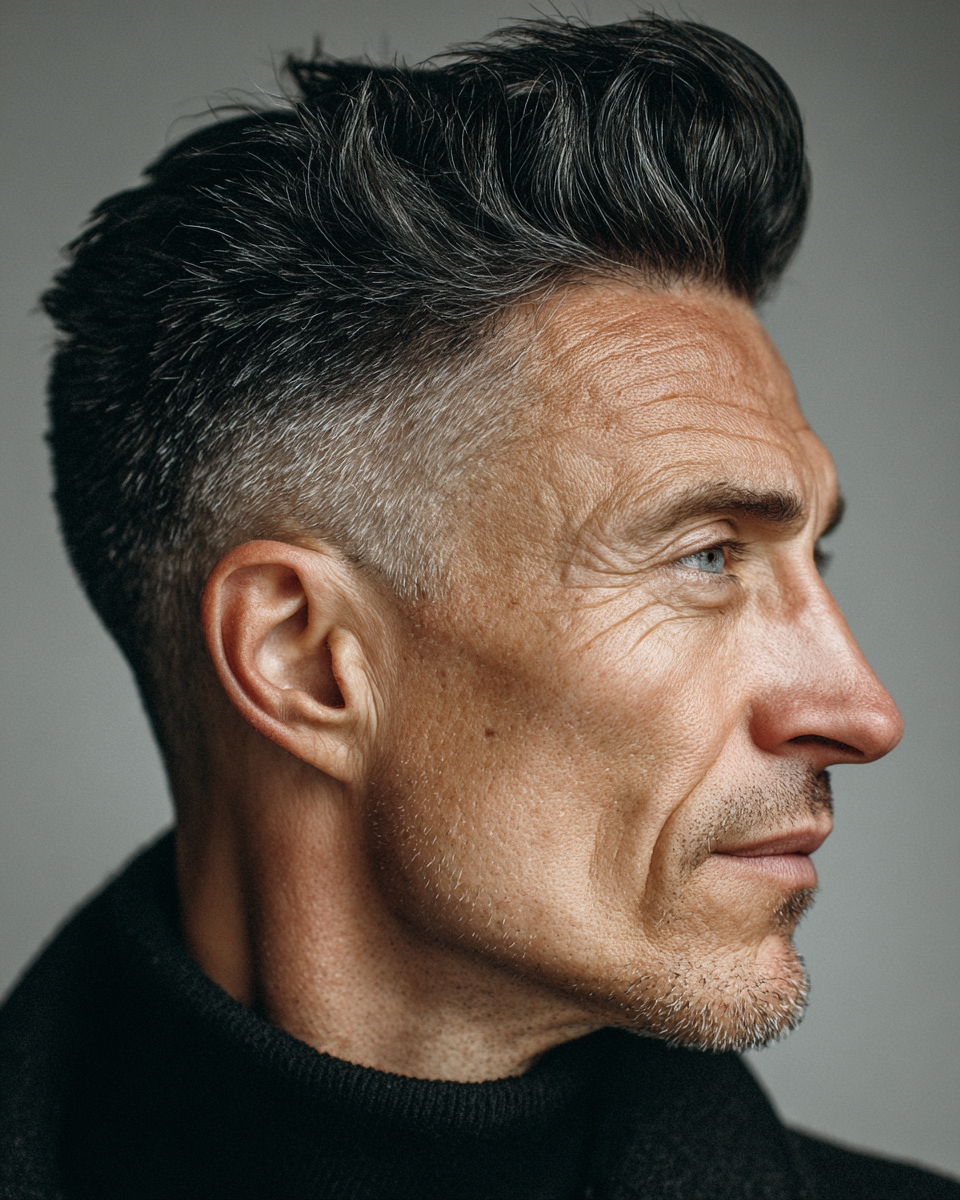
Salt and pepper hair adds something younger hair often has to fake with highlights: dimension. The darker sections create depth, while the silver catches the shape of the sweep. Nature occasionally does decent art direction. Alarming, but true.
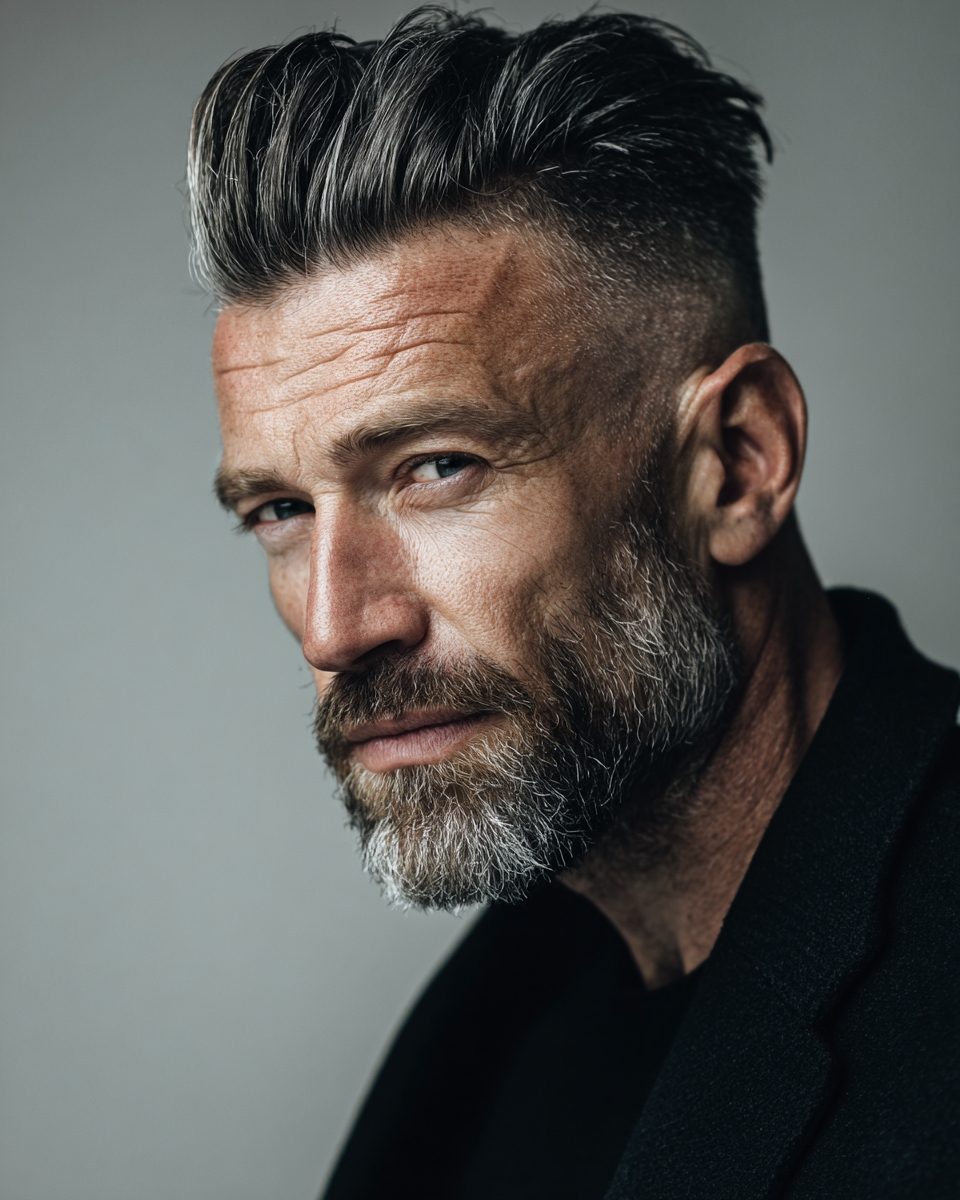
Mostly dark hair with gray coming through. The mixed pigment adds dimension that younger hair cannot replicate. One of the most visually dynamic versions of the cut.
12. Gray Pompadour with Beard
When the beard and hair share the same silver tone, the whole look becomes more coherent. The beard keeps the face anchored, while the height on top adds lift.
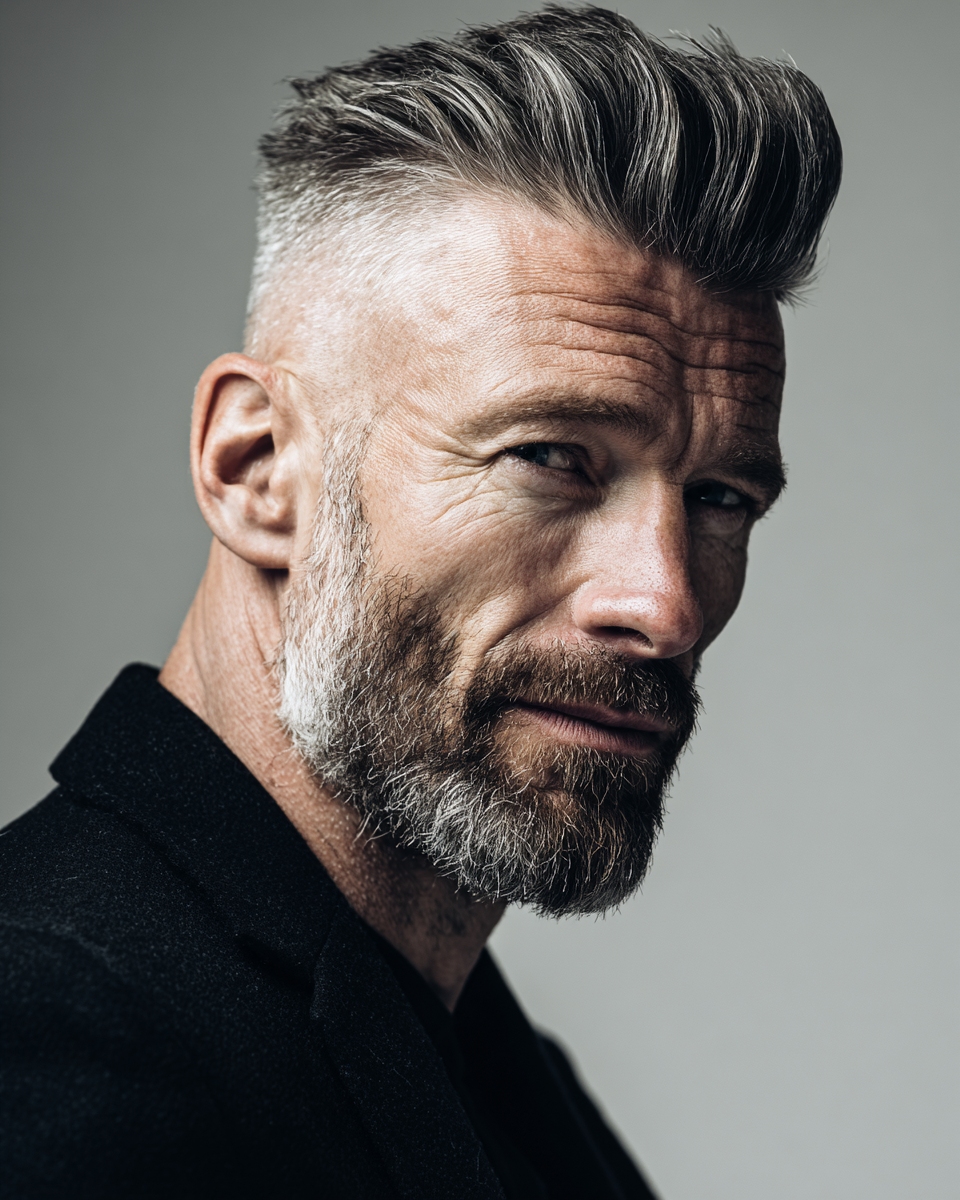
It is mature without being passive, which is the whole point.
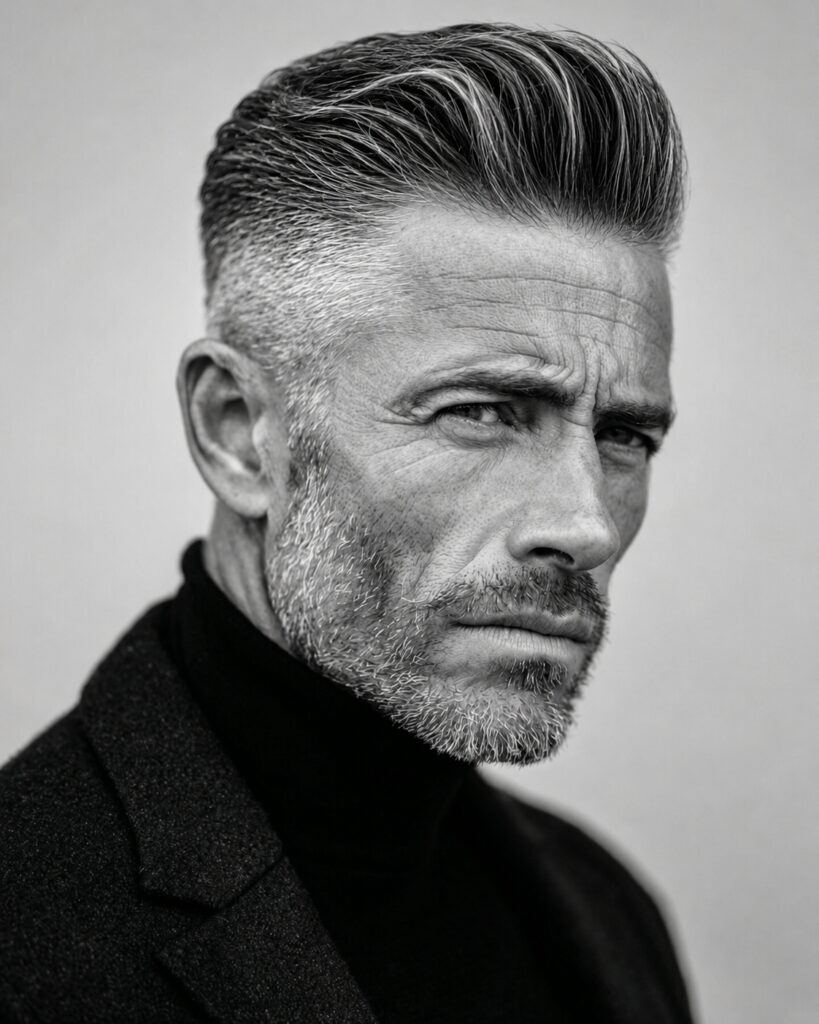
Two approaches to the same combination. One with a skin fade and structure. One with natural taper and more flow. The choice depends on how much maintenance you want to commit to.
13. Flowing Gray Pompadour
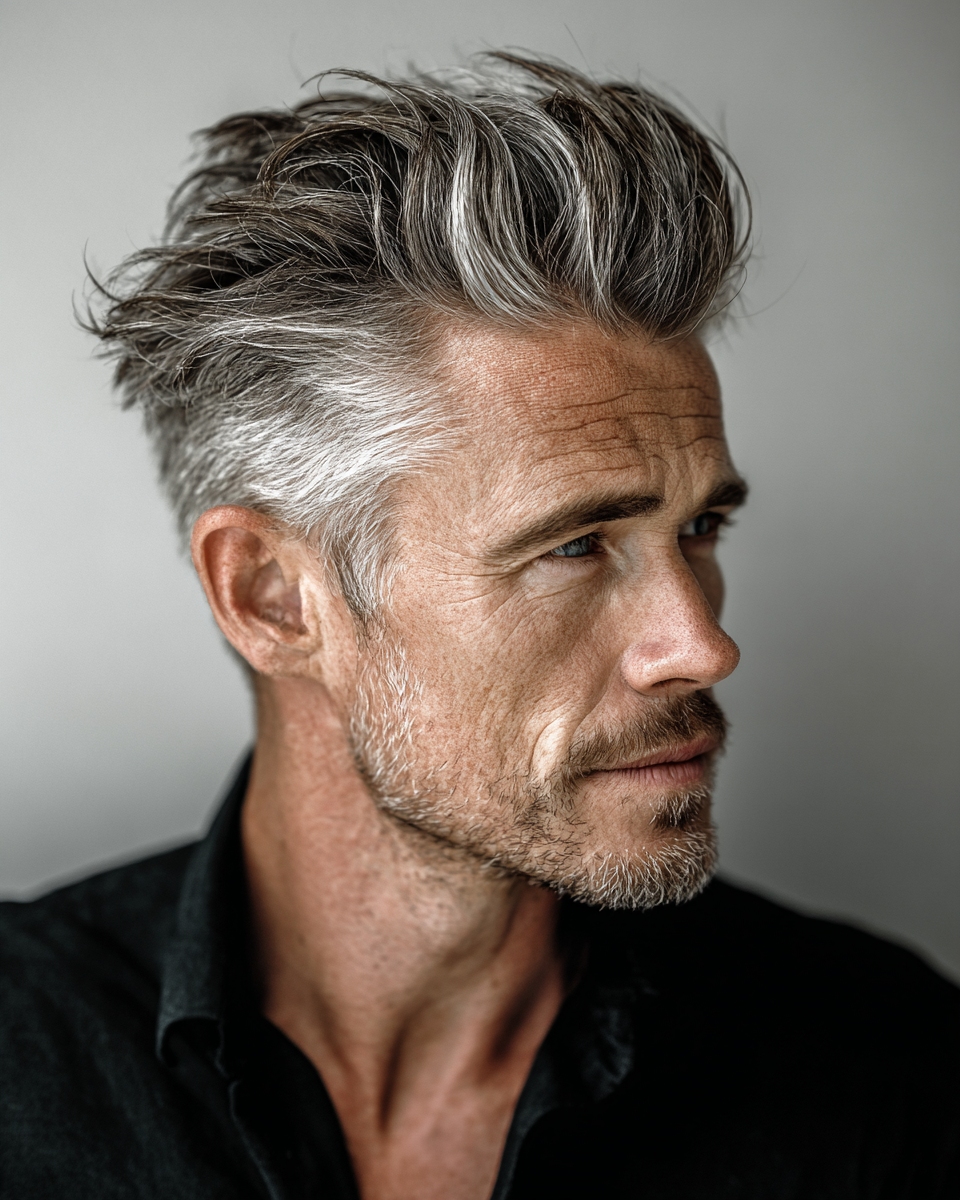
Full silver hair with natural movement rather than rigid structure. The pompadour shape is present but softer. More flow, less precision. Works particularly well for men with naturally thick gray hair.
14. High Volume Modern Pompadour
More volume than the contemporary standard, less than the 1950s version. The height reads deliberate rather than retro. Best for men with naturally thick hair that holds volume without constant product reapplication.
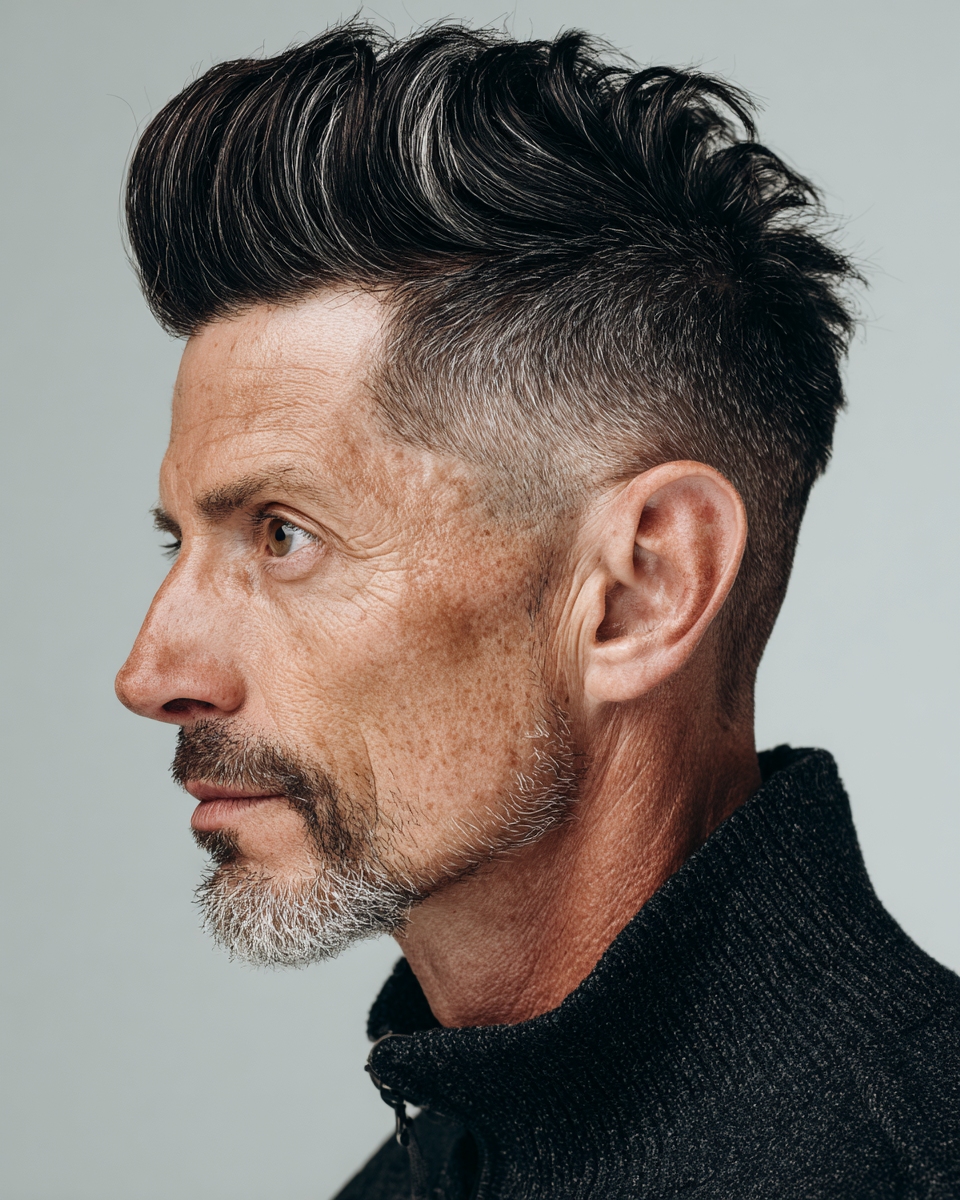
15. Pompadour for Thinning Hair
Thinning hair and the pompadour can work together. Keep the volume lower and more concentrated rather than trying to match the height of thicker hair. A skin fade on the sides reduces the contrast that draws attention to thinning areas.
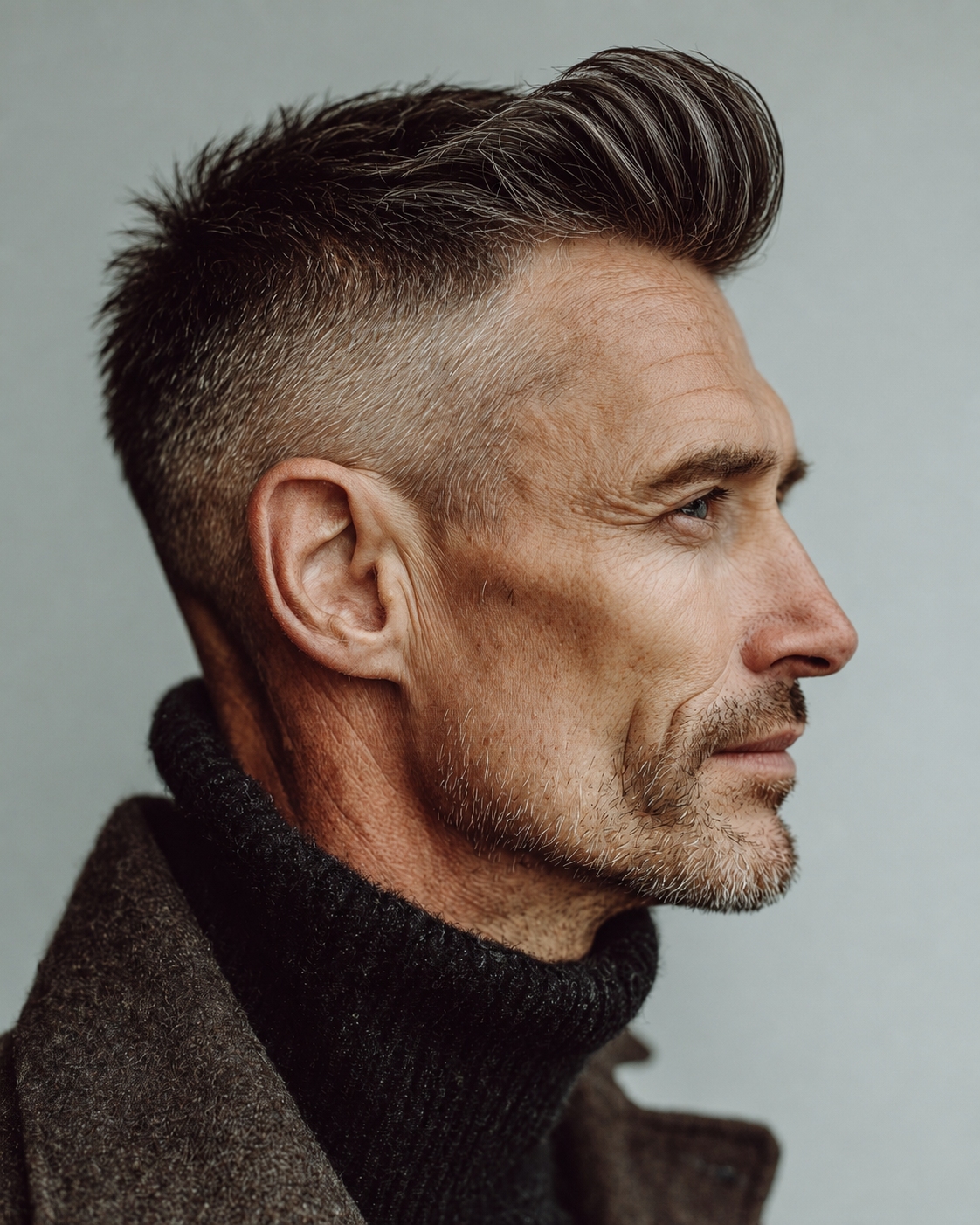
A volumizing mousse applied to damp hair before blow-drying adds body. Keep the back of the top section shorter so the hair you have is concentrated where it shows most.
16. Pompadour for Receding Hairline
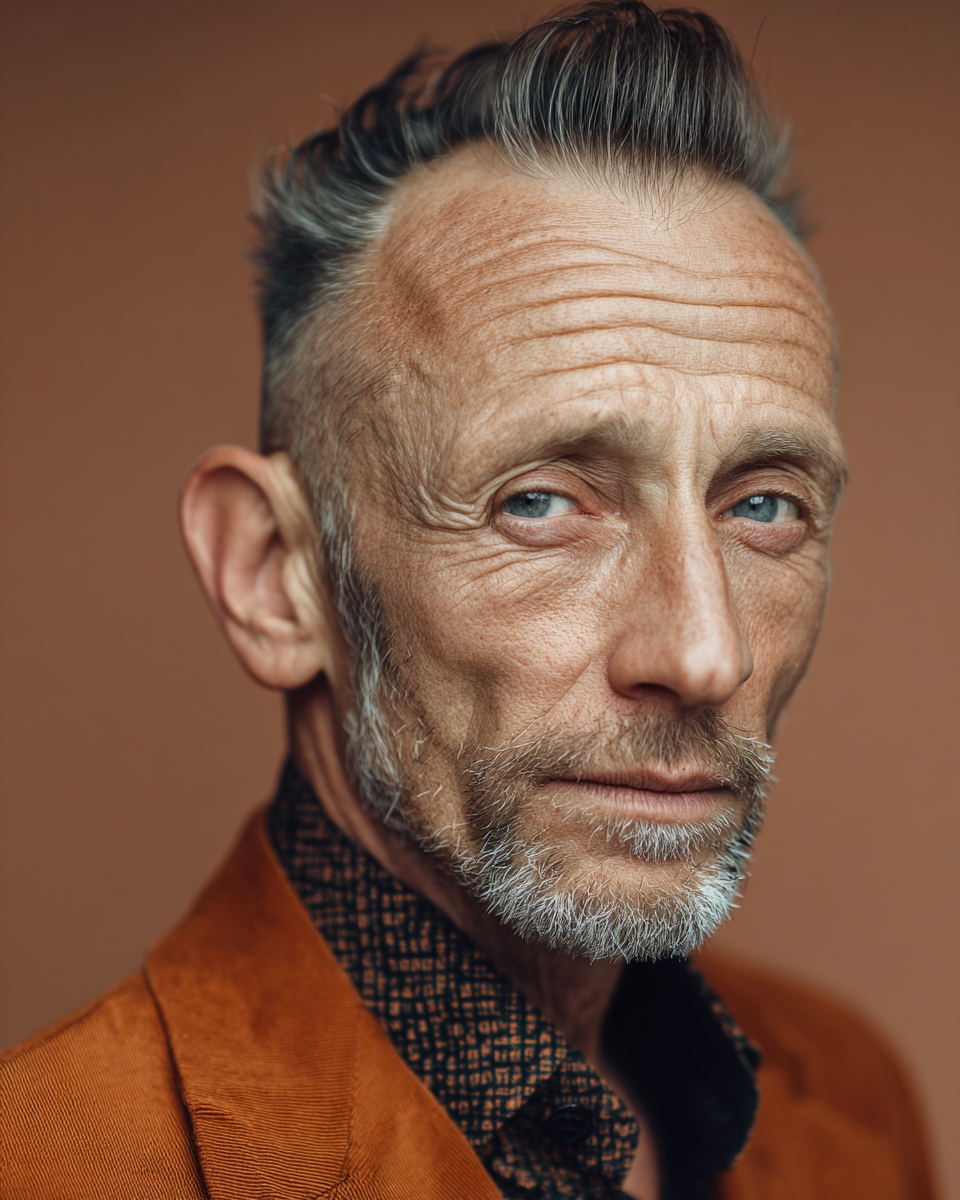
A receding hairline does not disqualify the pompadour. It changes the execution. The swept-back shape can complement the hairline when worn with confidence. Keep the volume lower at the front where the recession begins.
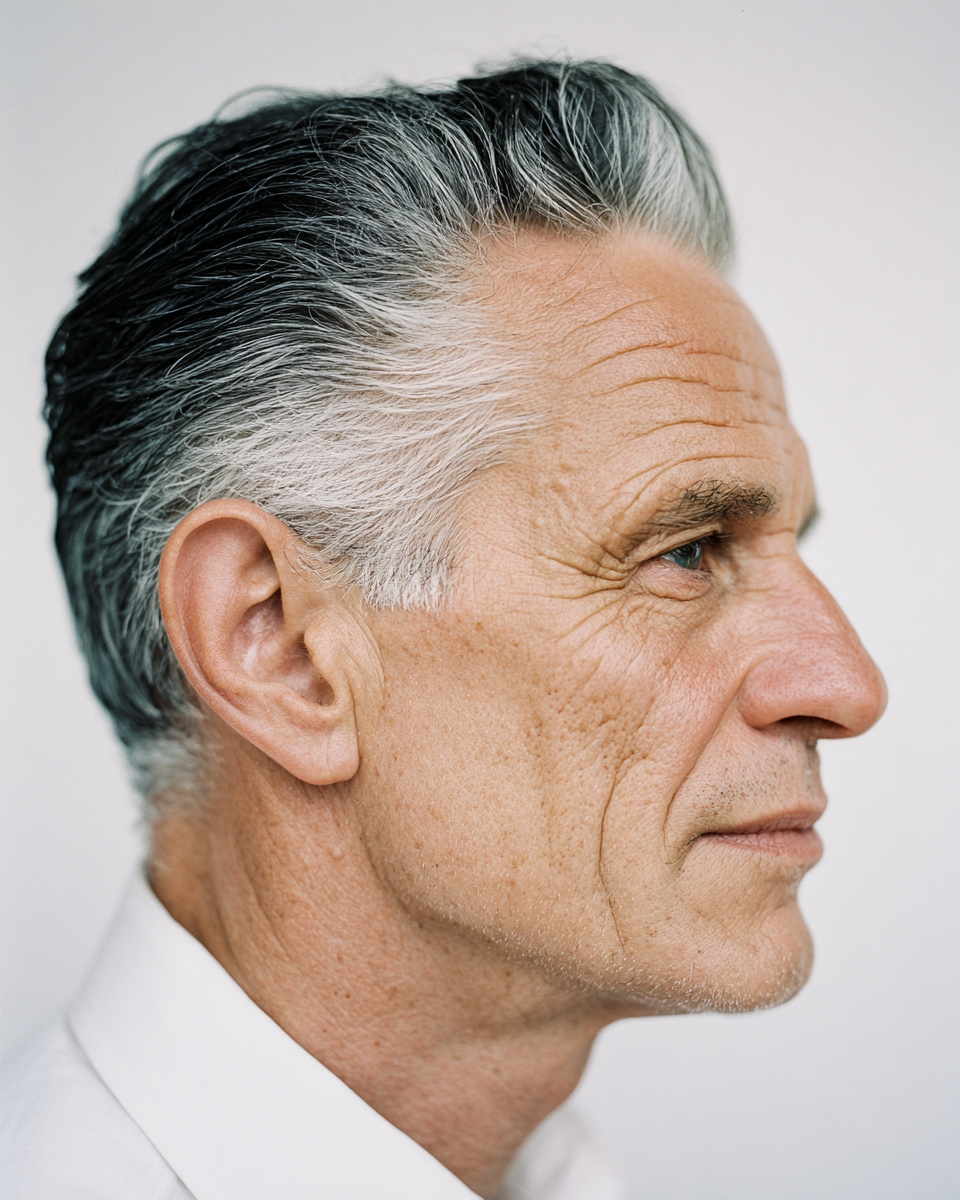
Explore more: Receding hairline haircuts for men over 50
17. Senior Pompadour
For senior men, the best pompadour haircut is rarely the highest one.
It is the version that keeps the sweep, respects the hairline, and avoids the tragic little helmet effect some products seem designed to create. Lighter is usually better.
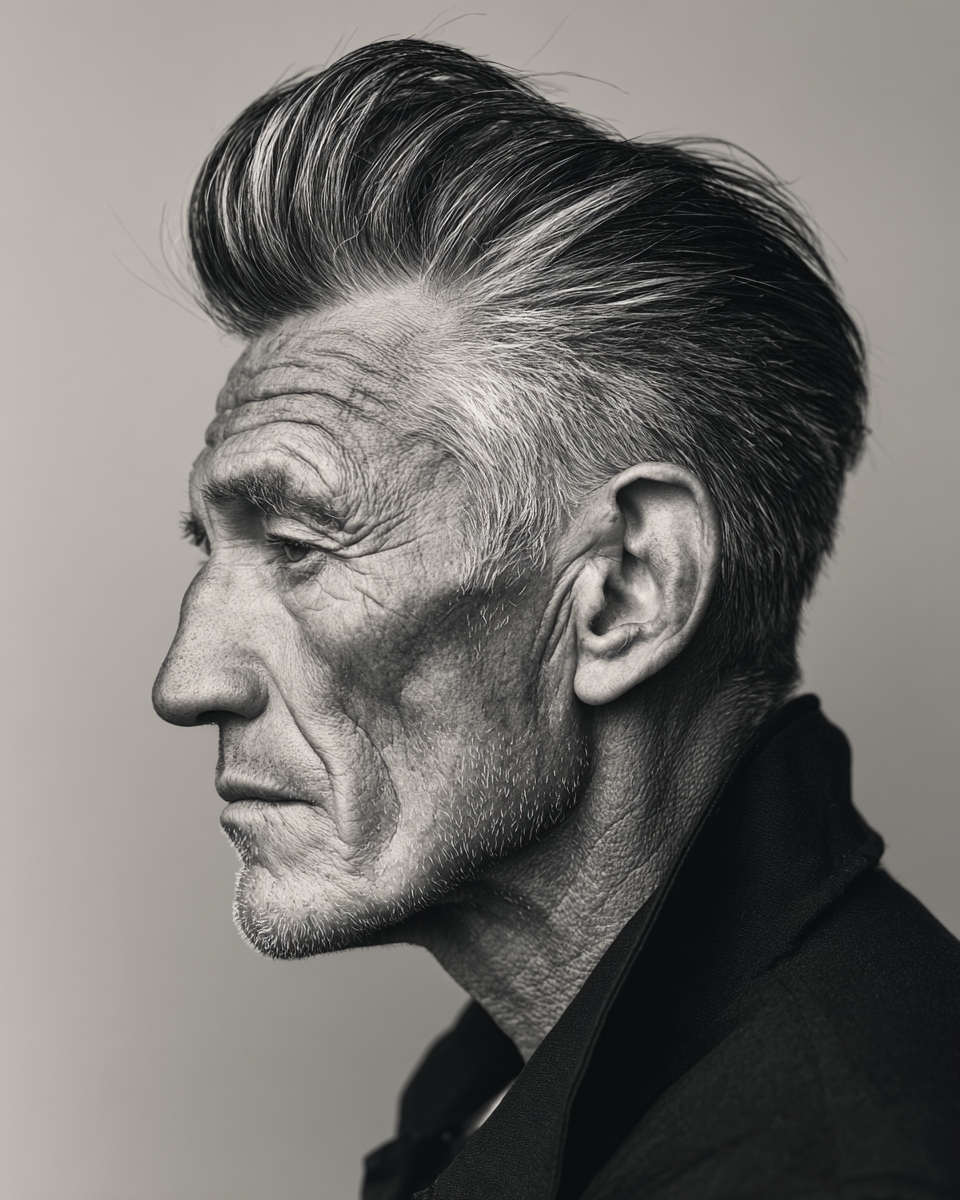
The pompadour at 60+ works when it is updated rather than nostalgic. Lighter product, natural finish. Keep the cut current. A barber visit every five weeks is what separates this from simply grown-out hair. The goal is presence, not reenactment.
More ideas: Older Men’s Hairstyles for Thin Hair: 5 Flattering, Easy-to-Style Looks
18. Disconnected Pompadour
No fade blend. The sides are clipped close and the transition to the top is a hard line rather than a gradual taper. Maximizes contrast. The boldest version of the modern pompadour hairstyle.
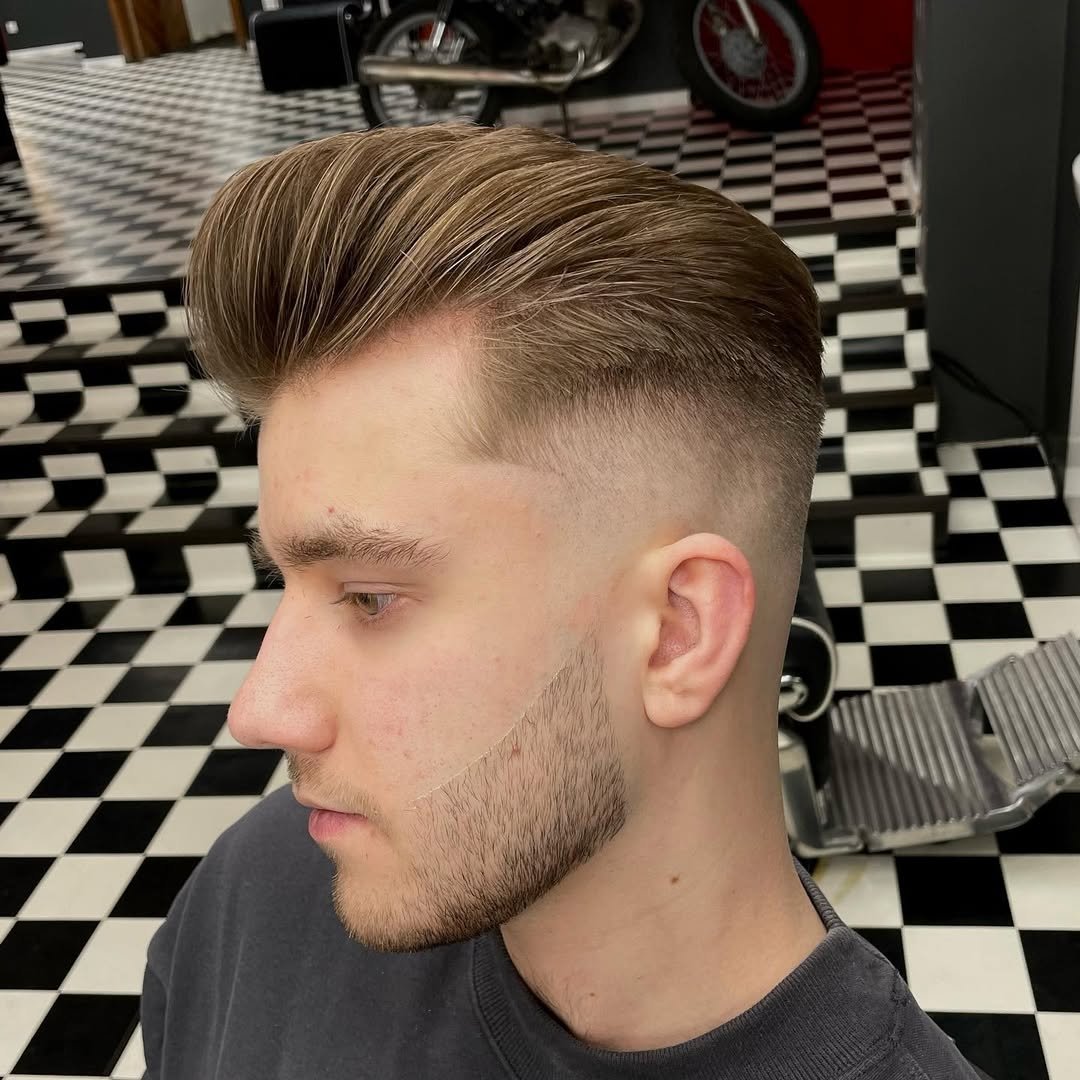
Requires the most maintenance. The hard line needs resharpening every two weeks. Not the choice for men who want low upkeep.
19. Quiff Pompadour Hybrid
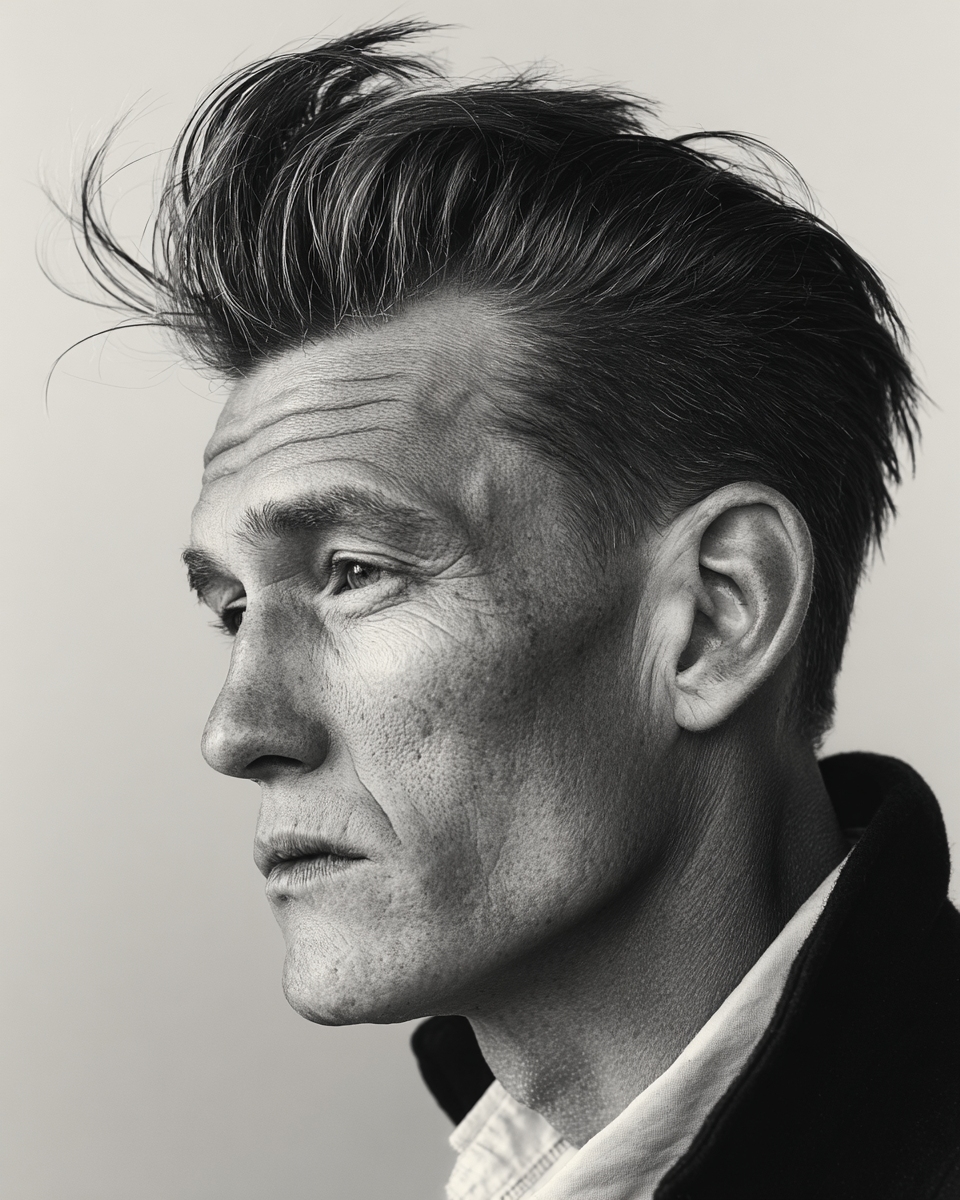
The quiff sweeps slightly forward, the pompadour sweeps back. The hybrid sits between. Volume at the front, partial sweep, natural movement in both directions.
The most casual of the swept-front styles. For men who want the volume without the full commitment of a back-swept shape.
20. Confident Pompadour
Not the 1957 version. A swept-back volume cut that shares its DNA with the 1950s original but belongs to now.
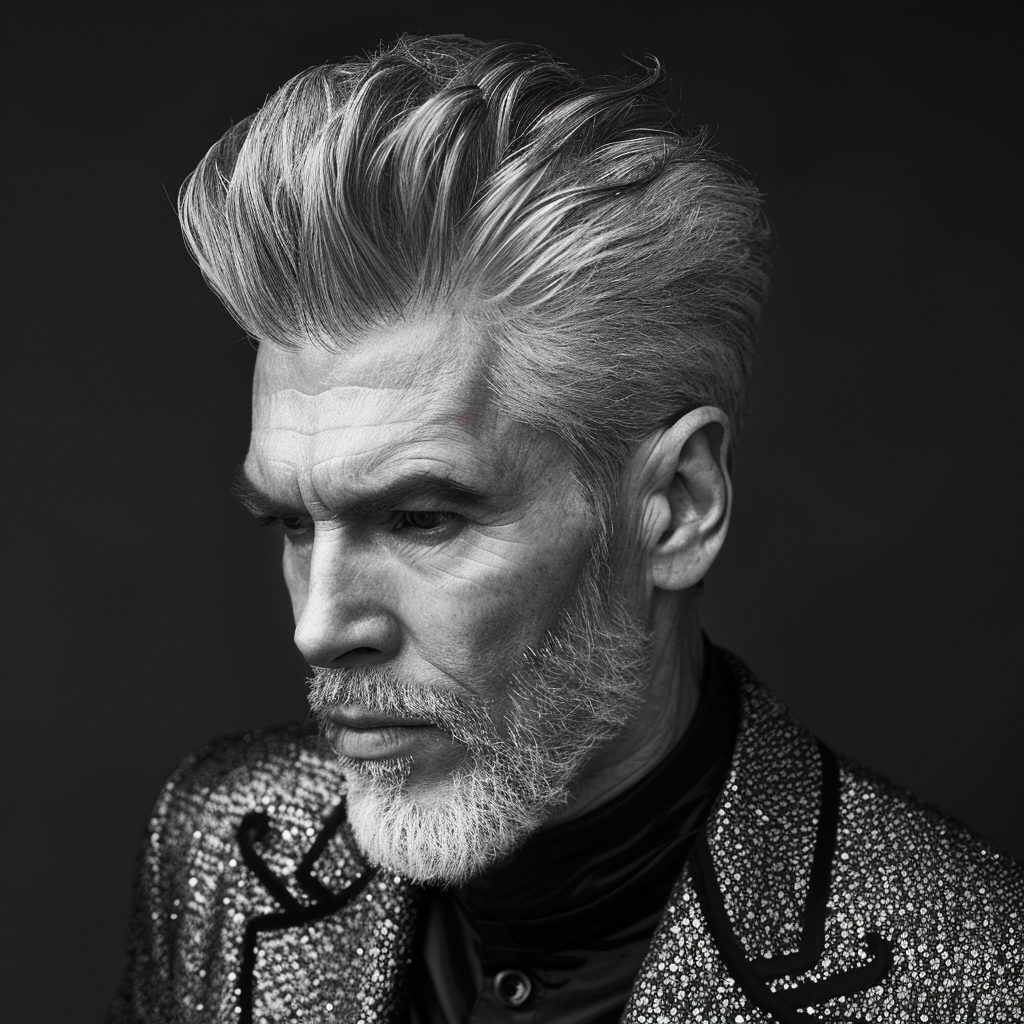
Salt and pepper or full gray. Moderate volume. Light product. The age in the face and the confidence in the expression do the rest.
How to Style the Modern Pompadour Hairstyle
Every good pompadour haircut starts before the product. The cut gives you the architecture. The styling gives you the lift. Skip either one and the whole thing begins to sag, much like every online promise of “effortless style.”
- Start with clean, damp hair. Volumizing shampoo. Towel dry until damp but not soaking wet.
- Apply product to damp hair. Classic: medium-hold pomade. Textured: matte paste or clay. Low volume: light cream. Work through evenly from roots to ends.
- Blow dry with a round brush. Lift the front section upward at the roots while drying. Direct heat upward and back. This step sets the shape.
- Comb or finger-style. Classic: comb back smoothly. Textured: fingers only, separate and shape without over-smoothing.
- Finish. Light flexible hairspray for hold without stiffness. Skip the spray if the product hold is already sufficient.
Products by Pompadour Style
| Style | Product | Finish |
|---|---|---|
| Old school classic | Heavy-hold pomade or gel | Slick and shiny |
| Classic modern | Medium-hold pomade | Natural to slight shine |
| Textured or messy | Matte clay or paste | Matte, no shine |
| High volume | Strong-hold gel or pomade | Shine or matte |
| Low pompadour | Light cream | Natural |
| Gray or thinning hair | Hydrating volumizing cream | Natural, no heavy hold |
Pompadour by Face Shape
The pompadour adds height. That changes how every face shape reads. This is why the same pompadour haircut can look elegant on one man, exaggerated on another, and quietly heroic on a third who finally found a barber with functioning eyes.
- Oval face: The ideal shape for a pompadour. Any version works.
- Square face: The added height lengthens the face well. Go for height, not width. Avoid wide side volume.
- Round face: The height helps. A mid or skin fade keeps visual weight at the top. Avoid low-volume versions.
- Long face: Lower pompadour, less height. A textured version with some width works better than a high-volume classic.
- Diamond face: Works well. Volume at the crown balances narrower forehead and chin proportions.
What to Tell Your Barber
Leave at least 3 to 4 inches on top for the sweep. Without sufficient length there is no pompadour shape. Many barbers take more off the top by default. Be specific.
Specify the side treatment. High skin fade for maximum contrast. Mid-fade for balance. Low taper for professional environments. Precise instruction rather than “clean it up.”
Show an image. The word pompadour means different things to different barbers. Some hear Elvis. Others hear “I will improvise wildly and hope for applause.” The image removes the ambiguity.
FAQ
What is the difference between an old school and modern pompadour hairstyle?
The old school pompadour uses heavy pomade for a slick, high-volume finish with short, unblended sides. The modern pompadour hairstyle uses lighter products for more textured, natural movement and typically incorporates a fade or taper rather than a hard side transition.
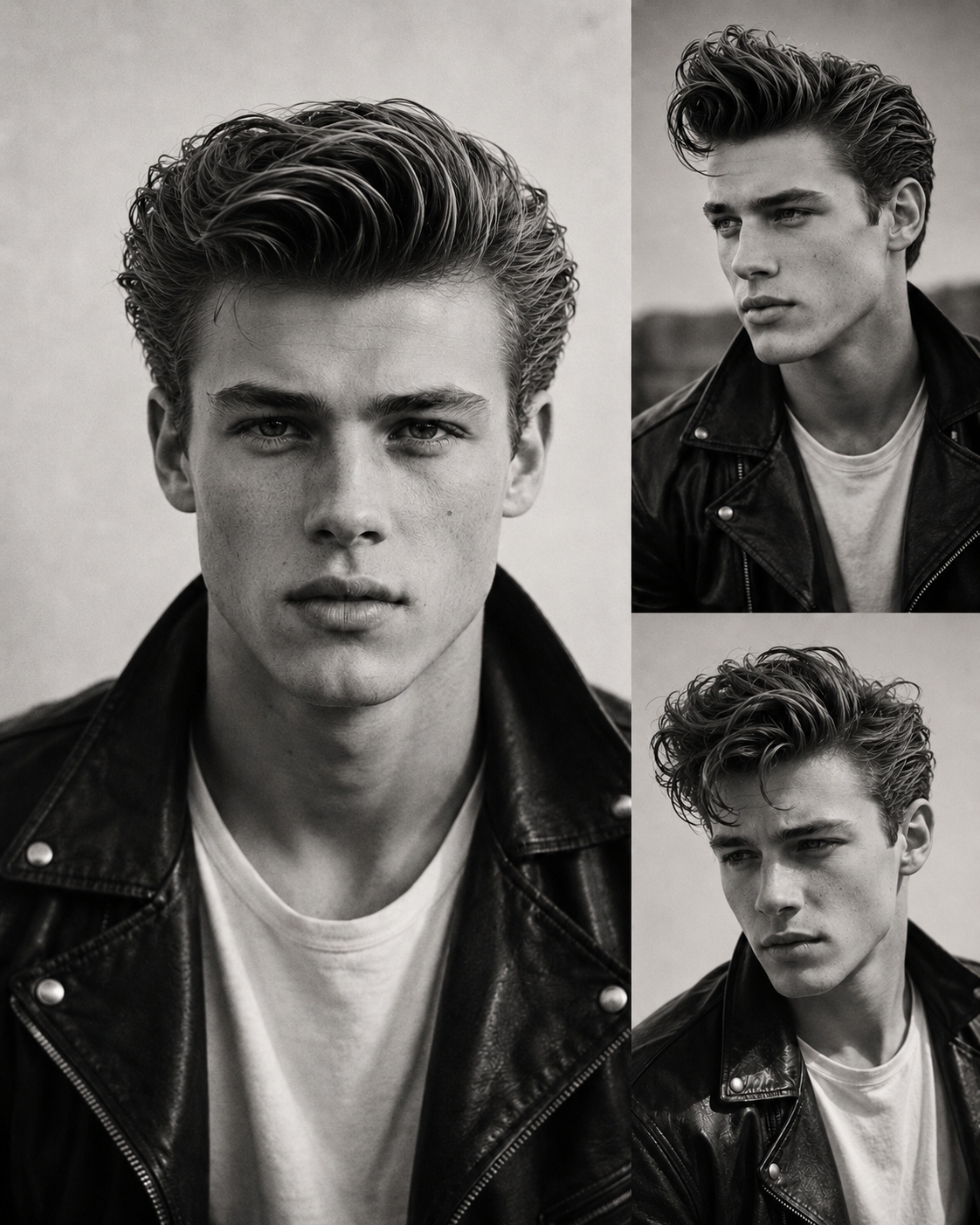
Does the modern pompadour hairstyle work for men over 50?
Yes. A lower-volume modern pompadour in gray or salt-and-pepper hair is one of the most distinctive looks for men over 50. The key is wearing it as a current cut rather than a nostalgic reference. Updated proportions, lighter product, and a current fade make the difference.
Does the pompadour work for thinning hair?
Yes, with the right approach. Keep the volume lower and more concentrated rather than trying to match the height of thicker hair. A skin fade on the sides reduces contrast near thinning areas. A volumizing mousse before blow-drying adds body to fine strands.
What hair type works best for the modern pompadour?
Thick or wavy hair creates the easiest pompadour volume. Fine hair can achieve the shape with volumizing products and a blow dryer but requires more maintenance. Curly hair creates natural volume that works well with the shape. The pompadour works across most hair types with the right product approach.
How often does a pompadour hairstyle need to be cut?
Every four to six weeks for the fade or taper sides to stay clean. The sides determine how the cut reads. When they start to grow out, the shape loses its definition. The top length can grow between cuts.
Can you wear a pompadour hairstyle in a professional environment?
Yes. A low-volume modern pompadour with a taper rather than a skin fade reads professional in most industries. The low pompadour and the salt-and-pepper version are the most office-appropriate options. Avoid very high volume or disconnected versions in formal environments.
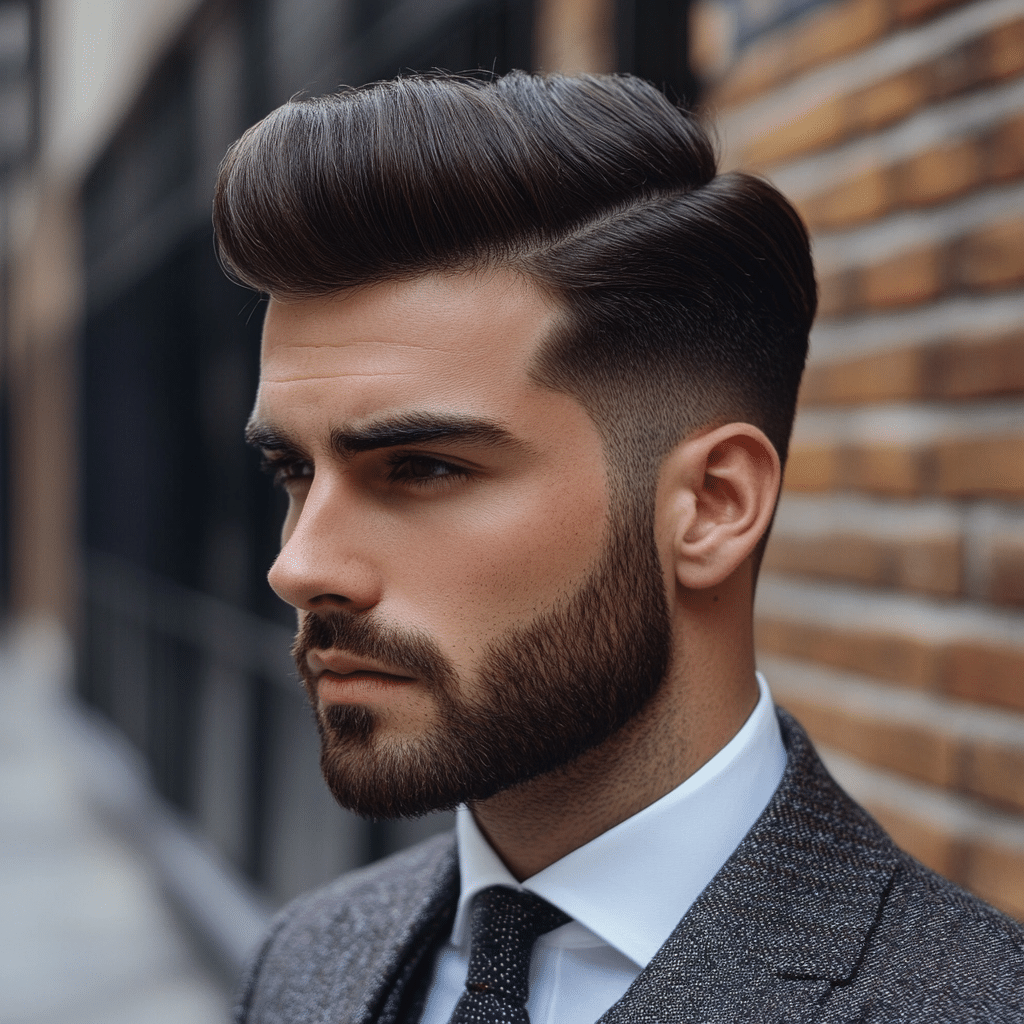
The modern pompadour hairstyle has lasted because it knows how to change without losing its identity. Whether worn slick, textured, gray, faded, or low and professional, the best version is the one that works with the man wearing it.
The haircut should add presence, not costume. That remains the difference between a strong pompadour and a historical accident with hairspray.
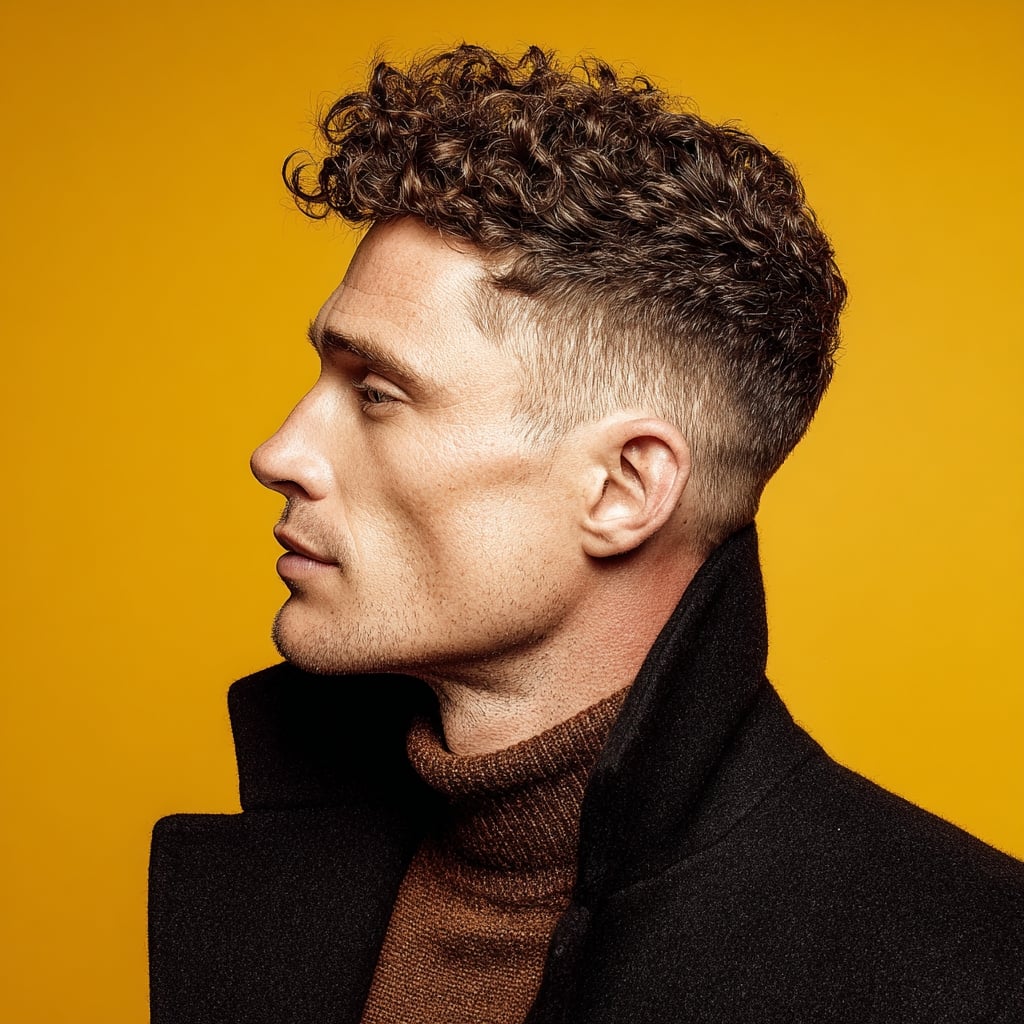
Modern Haircuts for 40-Year-Old Men: Stylish Edgy Looks
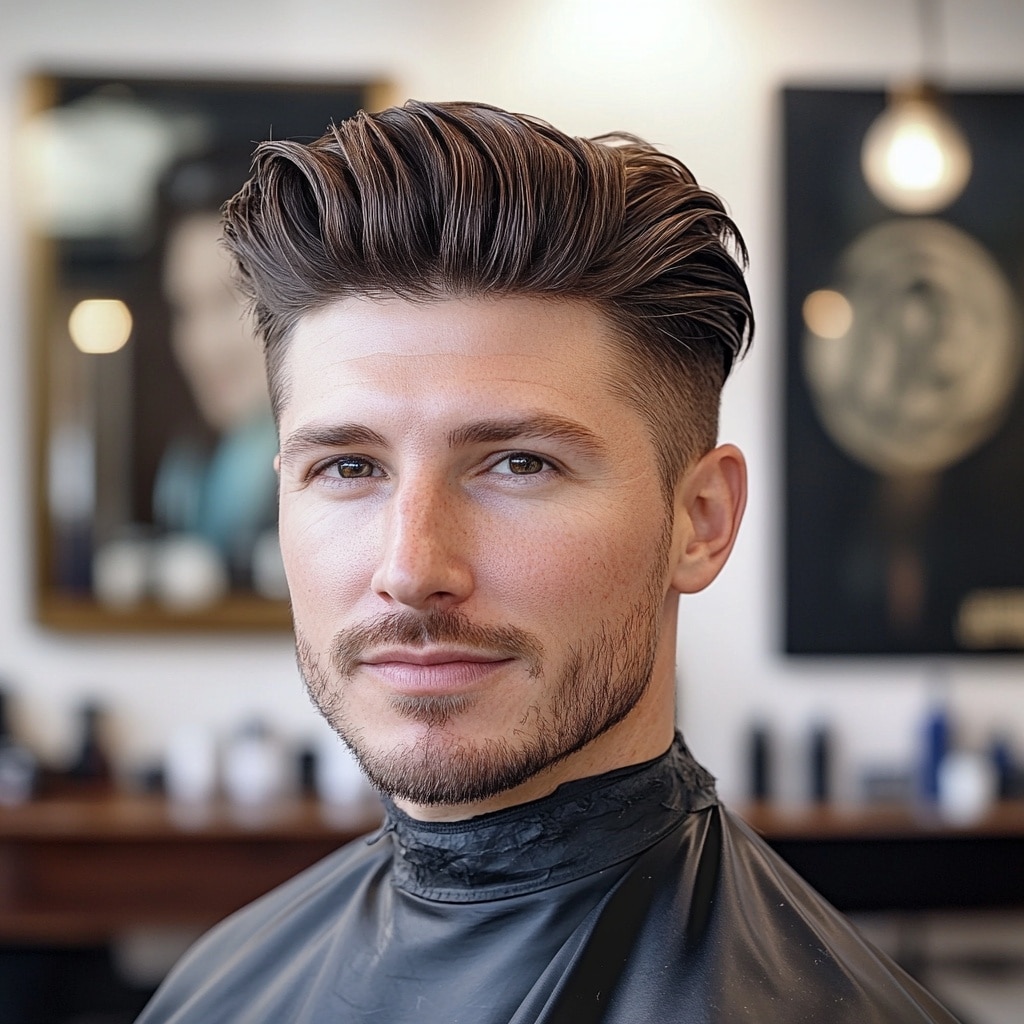
Semi Short Haircuts for Guys: The Perfect Middle Ground
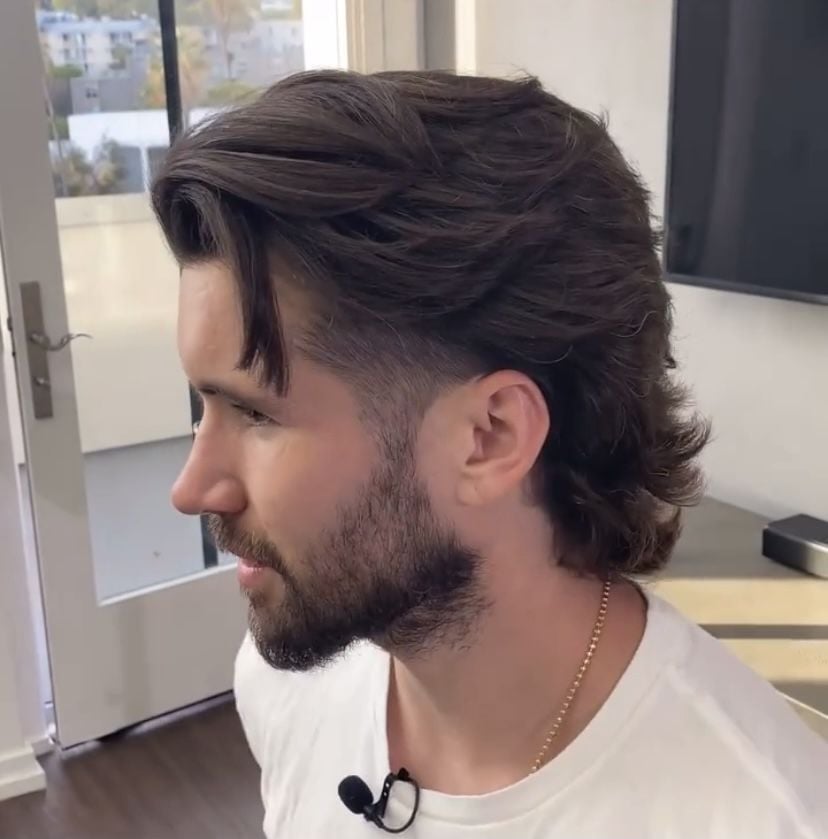
Mullet Hairstyles for Men: The Iconic Cut Reimagined
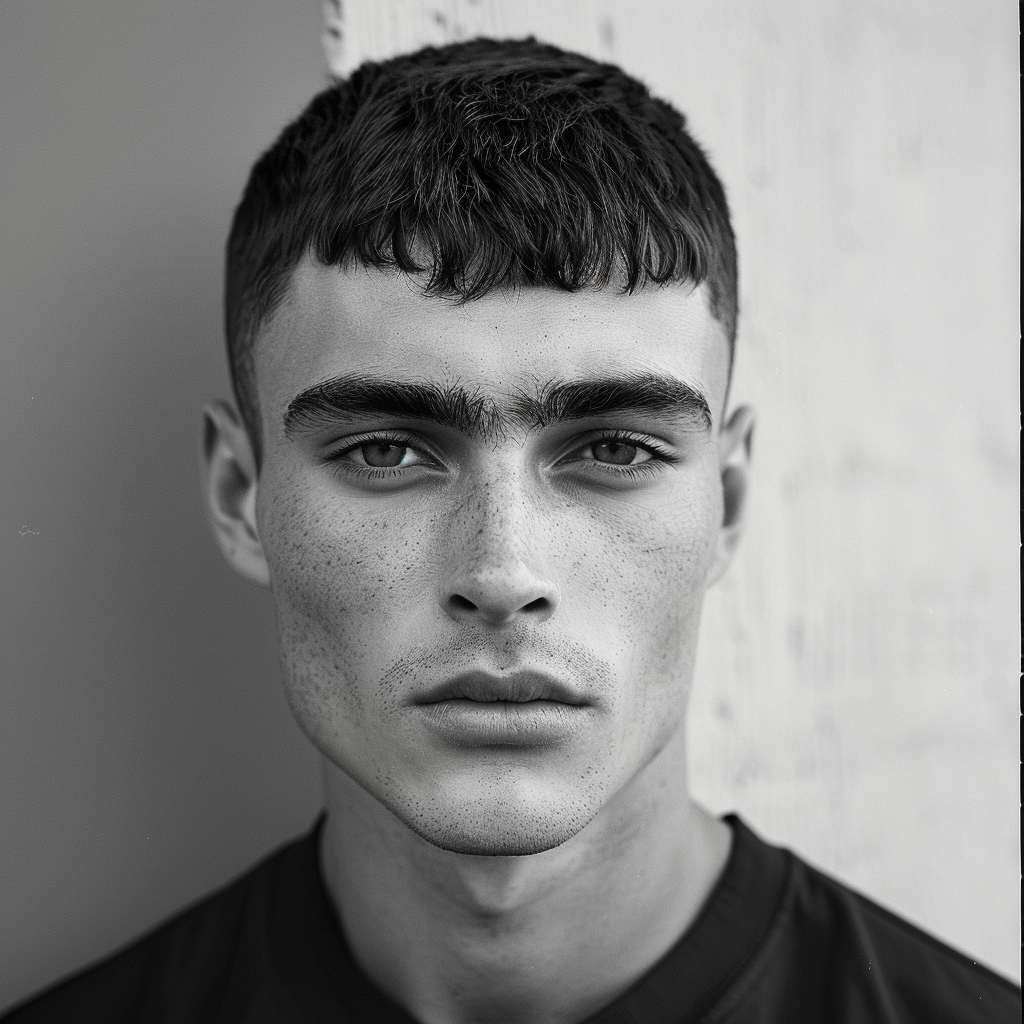
Timeless Men’s Haircuts: Classic Styles Every Man Should Know
Professional Hairstyles for Men with Edgy Personal Style