10+ Receding Hairline Haircuts for Men: Read Your Hairline, Choose the Right Cut
Your hairline is moving. You have been adjusting the lighting before you look in the mirror. Time to stop doing that.
A receding hairline is not the beginning of the end. It is a decision point. Men who look good with a receding hairline are not the ones who disguised it best. They are the ones who chose the right cut and moved on.
This guide covers the early to middle stages of recession, Type A through Type C. The right cut for where you actually are right now.
If you are over 50 and further along, we have a dedicated guide to receding hairline haircuts for men over 50.
The Right Time Is Now — Whatever Your Age
Whether you are 28 or 44, the logic is the same. Where your hairline is today determines the right cut. Not where it was. Where it is.
If you are at Type A or B, you likely still have real density. Good volume. Hair that responds well to product and texture. That changes what is available to you, and it means the earlier you act, the more options stay open.
One thing worth saying directly: if you have not spoken to a dermatologist, it is worth doing. There are proven treatments that can slow or stabilise hair loss, and they work best when started early. This guide covers haircuts. A doctor covers the rest. The two are not mutually exclusive.
None of this requires resignation. It requires accuracy.
Read Your Hairline First
Before choosing a haircut, identify where you actually are. Most men either overestimate how bad it is or underestimate it. Both lead to the wrong cut.
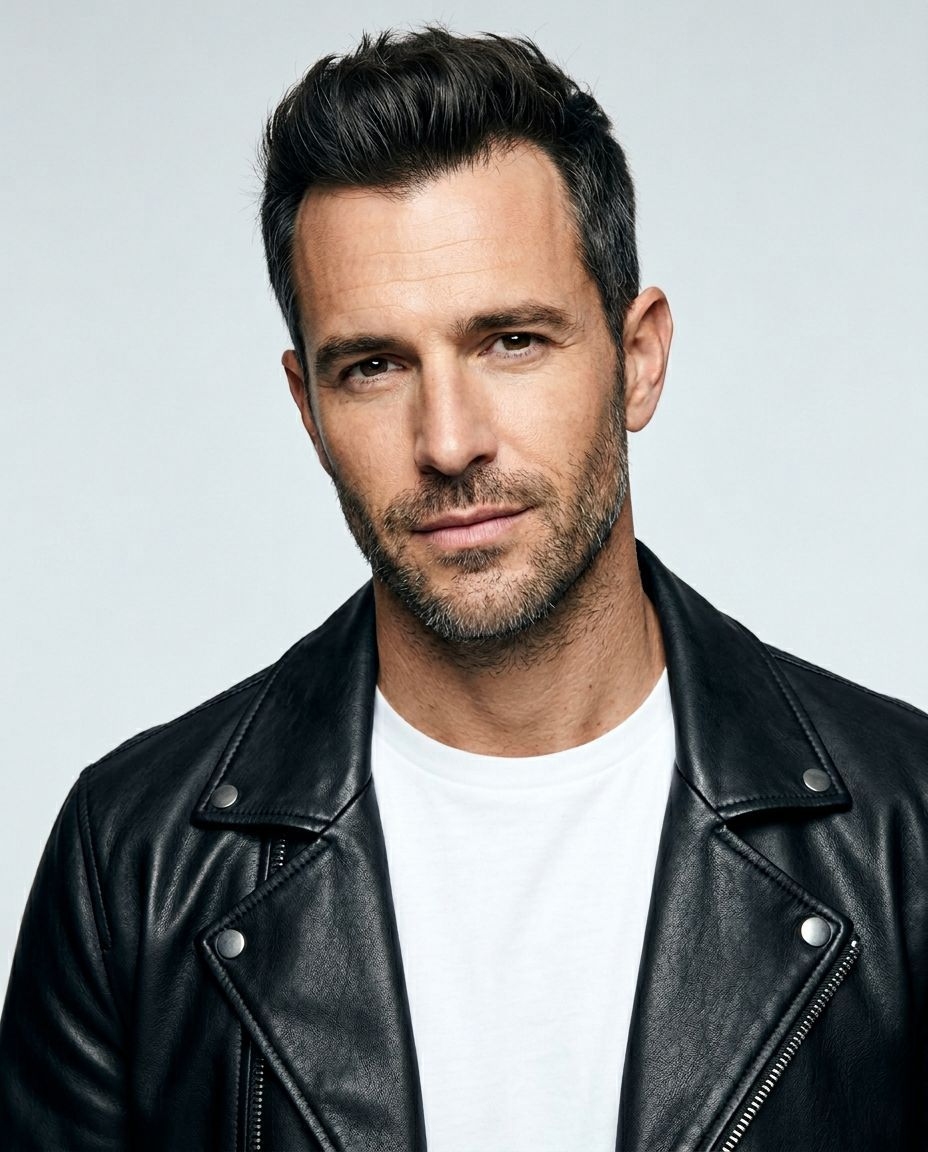
Type A — Temples just beginning to move. The M-shape is barely forming. Density is still good. Most haircuts still work here.
Type B — Clear frontal recession. The M is defined. The crown is still good and density on top is usually still reasonable. The sweet spot for the widest range of stylish options.
Type C — Diffuse thinning on top. Density is dropping across the entire top. Volume-chasing stops working. Texture and structure become the tools.
Type D — Crown thinning. Different from frontal recession. Requires different cutting logic. See the bald spot section below.
Type E — Heavy recession or very fine hair throughout. The architectural cuts start to look dramatically better than anything trying to hold onto length.
The One Rule That Covers Everything
Volume is not the enemy. Uncontrolled length is. The french crop, the quiff, the textured crop. All use lift, texture, and natural movement. Those work. What stops working is trying to build height or fullness over thinning hair hoping it creates coverage. It exposes the scalp underneath and makes the contrast worse.
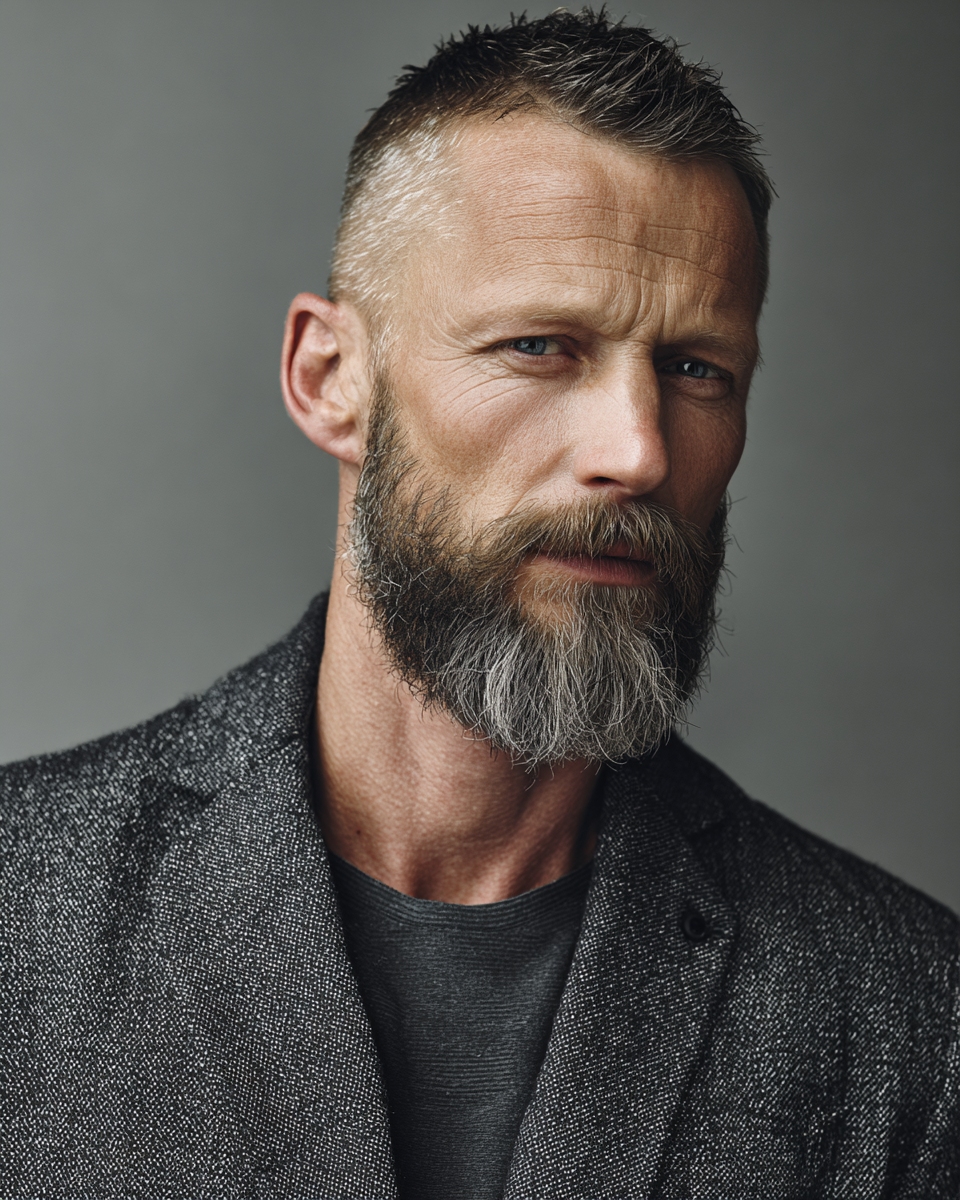
Deliberate texture sits close, moves naturally, and works with the density you have. Desperate volume fights the hair you have left and loses.
The fix is choosing cuts that use your density intelligently, reduce contrast at the temples and hairline, and focus on structure rather than coverage.
10 Best Receding Hairline Haircuts for Men
1. The French Crop — Best for Type A and Type B
A short, broken fringe reframes where the hairline sits. The eye reads the fringe first. The recession becomes secondary. Modern, low-maintenance, works at every age.
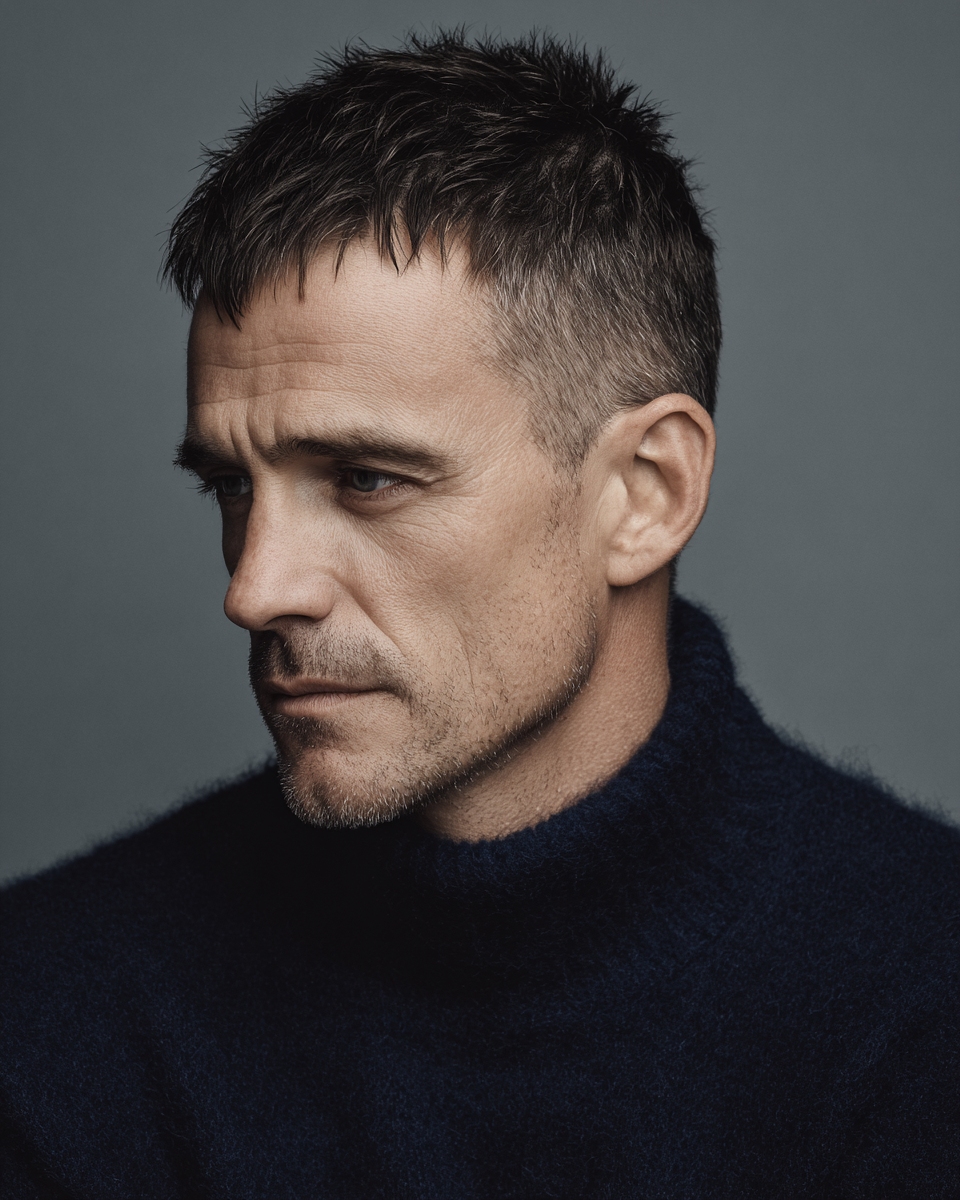
Why it works:
- The fringe redirects the eye away from the temples
- Short length keeps texture controlled so density does the work
- Soft taper haircut on sides keeps the silhouette clean
Best for: Type A and Type B. Oval, square, and rectangular faces.
What to tell your barber: “Short French crop, about an inch on top, textured finish. Soft taper on the sides, not a fade. No hard line on the fringe, keep it broken and natural.”
Product tip: American Crew Fiber worked through damp hair, pushed slightly forward. Matte finish, no shine.
2. The Short Textured Quiff — Best for Type A and Type B
About 1.5 inches on top with natural upward movement and slight forward direction. No hard product. Controlled texture that sits forward rather than back. At Type A and B you still have the density to carry this. The quiff uses that remaining volume deliberately — lift and texture forward, away from the receding temples.
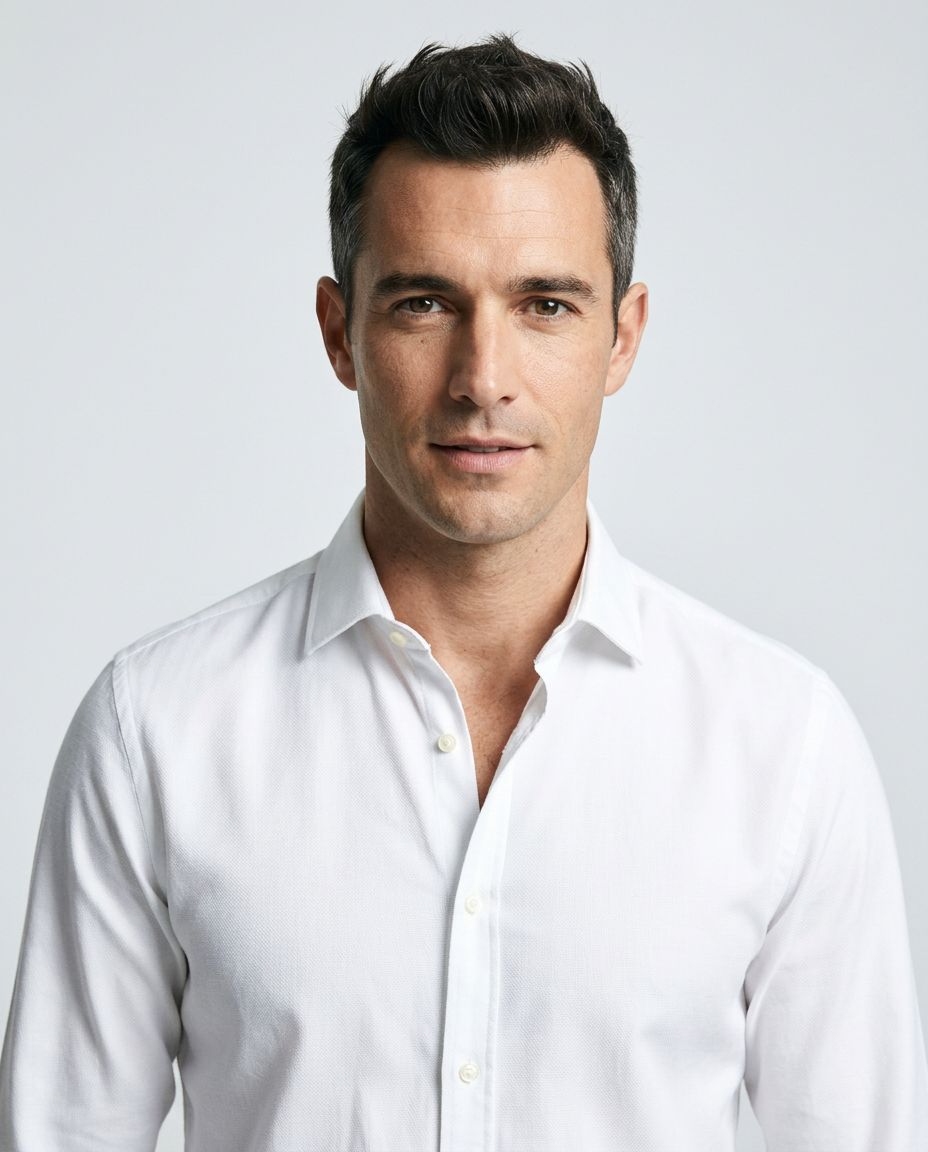
Why it works:
- Natural upward movement uses your density rather than fighting it
- Forward direction keeps weight away from receding temples
- Does not work once thinning becomes diffuse
Best for: Type A and Type B. Oval and square faces. Men with good density on top.
What to tell your barber: “Short quiff, about 1.5 inches on top, natural upward texture. Soft taper on the sides. Forward slightly, not swept back. No hard product look.”
Product tip: Clay Pomade. Medium hold, matte. Apply to damp hair and work upward and forward with fingers.
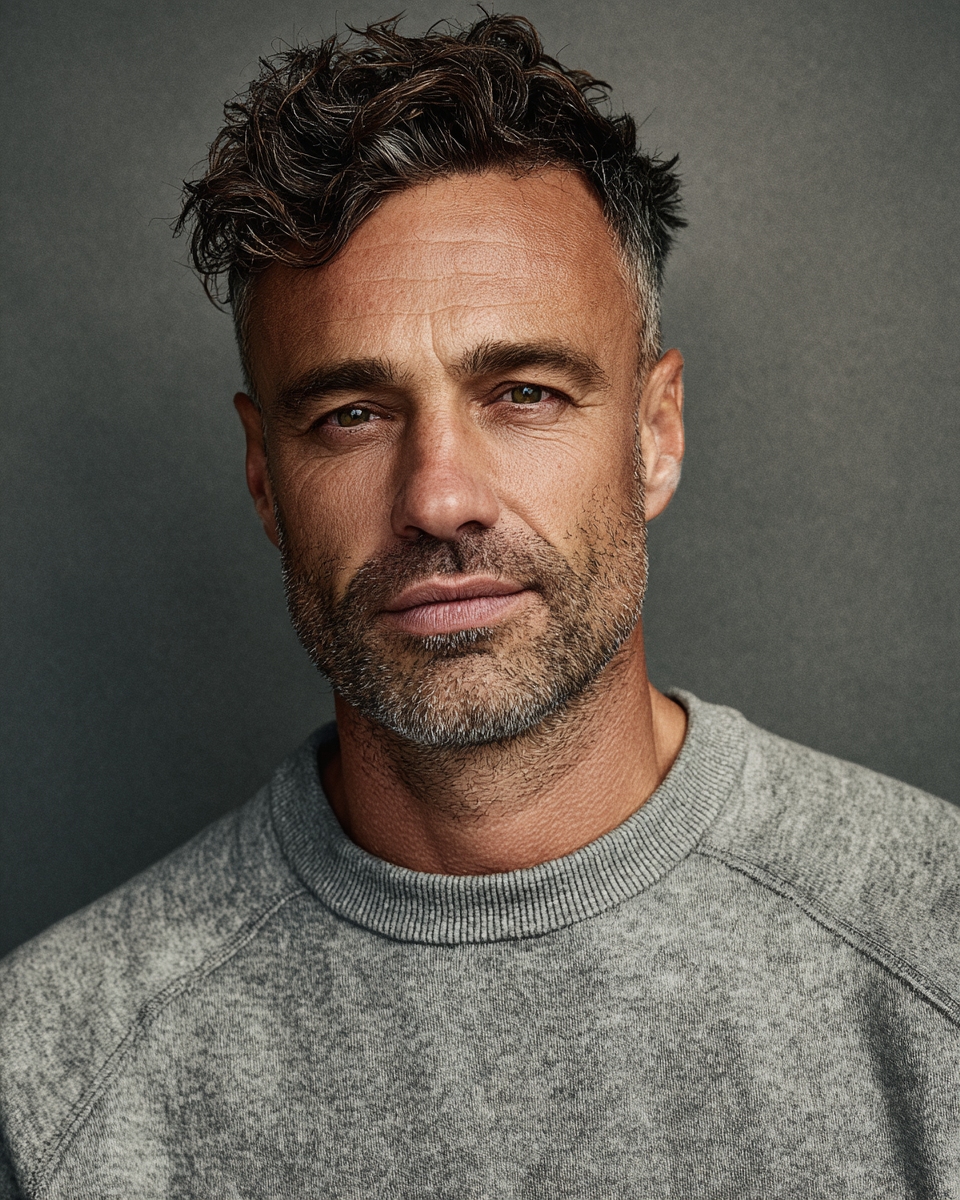
3. The Textured Crop — Best for Type B and Type C
Short enough to control contrast. Textured enough to look deliberate. At Type B it uses your remaining density. At Type C the short length makes thinning read as texture rather than loss.
Why it works:
- Natural texture and separation work with the hair rather than against it
- Short length reduces the appearance of thin spots at Type C
- No sharp part or exposed scalp lines
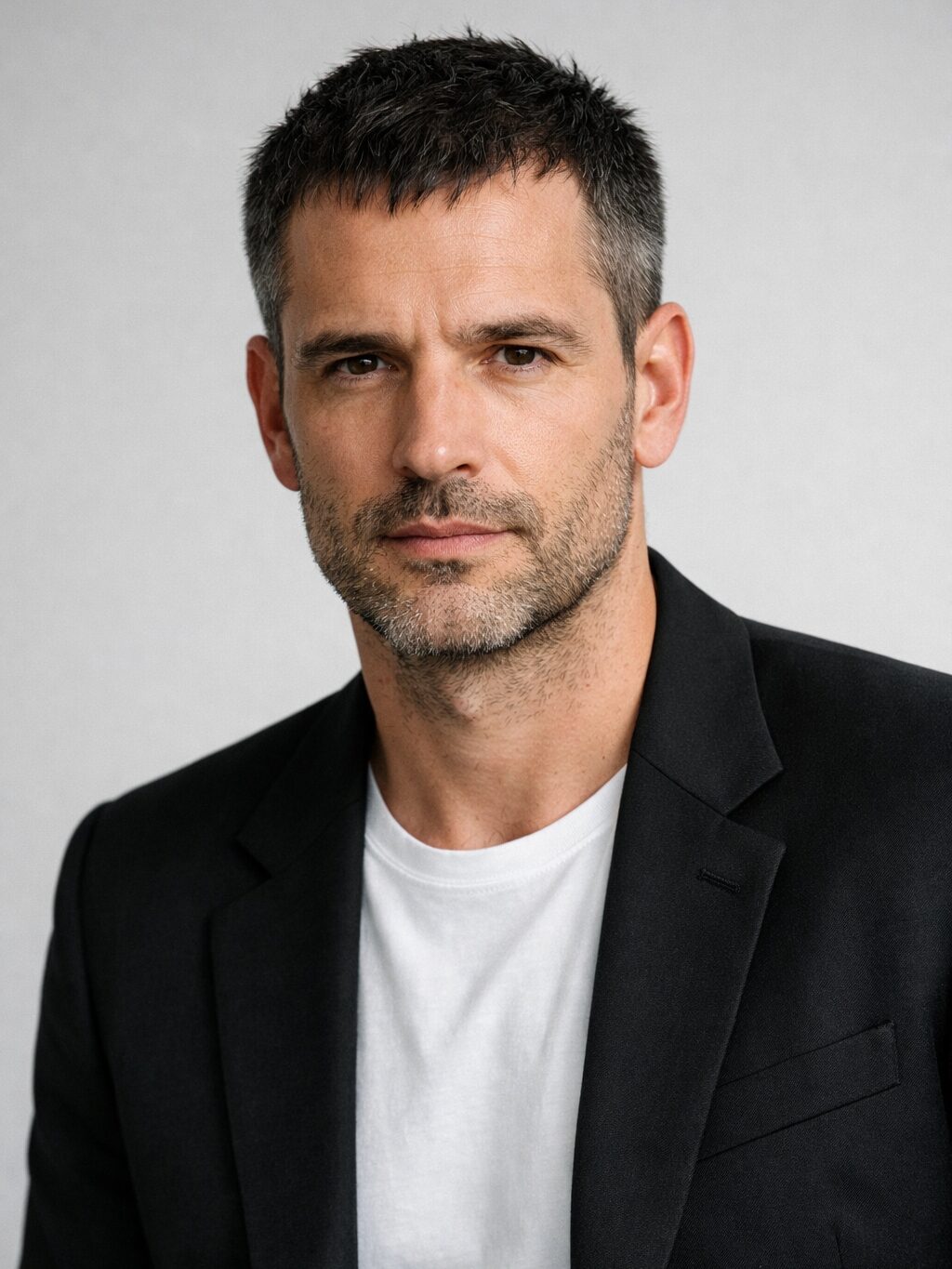
Best for: Type B and Type C. All face shapes.
What to tell your barber: “Short crop, about three-quarters of an inch on top, textured. Soft taper on the sides. No fade line, no hard part. Texture without obvious product.”
Product tip: American Crew Boost Powder on the roots. Then a small amount of American Crew Fiber through dry hair.
4. The Modified Ivy League — Best for Type A and Type B
The original Ivy League haircut with a hard side part and slicked back does not work with a receding hairline. The updated version does. Shorter, looser, forward-sitting, no hard part. At Type A and B you have the density to carry the length. Keep it forward-sitting so that density works at the hairline rather than behind it.
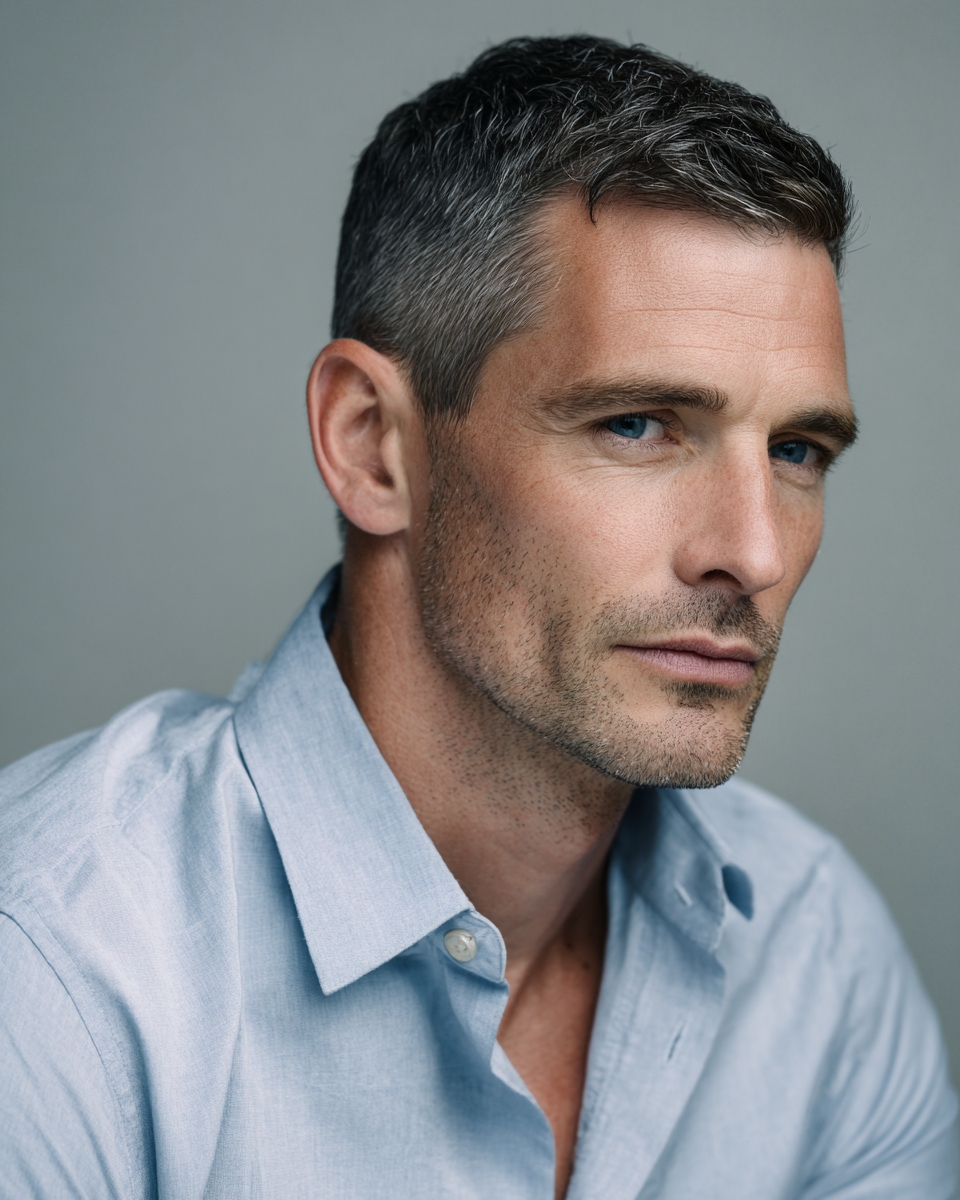
Why it works:
- No hard part means no exposed scalp line
- Forward movement puts density where it does the most work
- Works in professional environments where the French crop feels too casual
Best for: Type A and early Type B. Oval and square faces. Professional environments.
What to tell your barber: “Textured Ivy League, an inch to an inch and a half on top. No hard part. Soft taper on the sides. Forward naturally, not swept back.”
Product tip: American Crew Forming Cream. Light to medium hold, natural finish. Apply to damp hair and work forward with the palm.
5. The Crew Cut — Best for Type B and Type C
The crew cut is one of the most practical haircuts for a receding hairline because it does two things simultaneously: keeps the top short enough to reduce contrast and tapers the sides gradually so the overall shape stays proportional. It is not trendy. It just works.
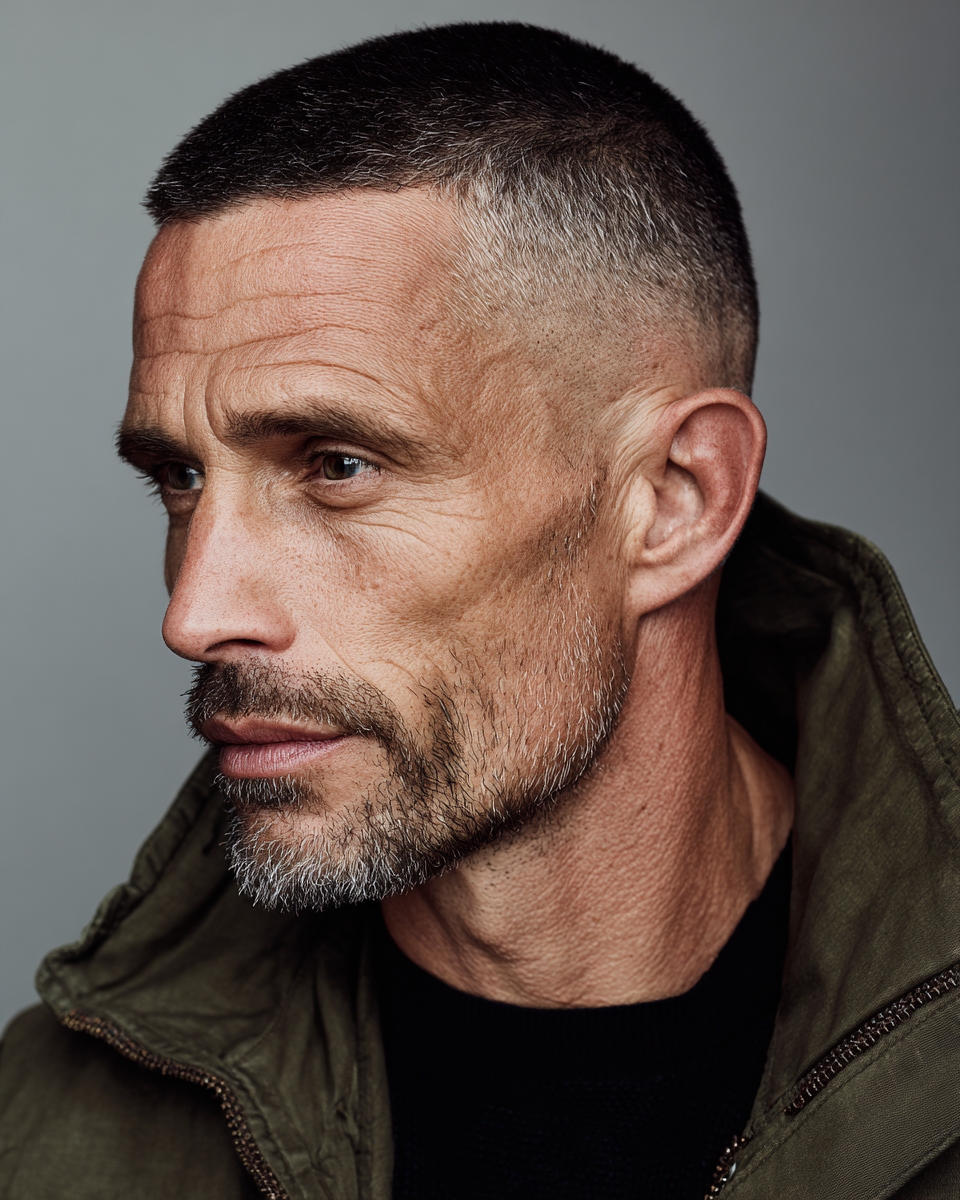
Why it works:
- Short length on top reduces the visibility of thinning and recession
- Graduated sides keep the silhouette balanced without hard contrast
- Works in every context from boardroom to weekend
Best for: Type B and Type C. All face shapes. Dark, salt-and-pepper, or gray hair.
What to tell your barber: “Classic crew cut, about an inch on top, slightly longer at the front. Taper fade on the side. Clean neckline. I want it sharp but not severe.”
Product tip: American Crew Forming Cream. Light hold, natural finish. Keeps the front sitting forward without stiffness.
6. The High Fade — Best for Type B and Type C
The high fade is the one fade that can work with a receding hairline, but only when the top is kept short and textured. Most fades pull the eye upward and make recession more obvious. The high fade sidesteps this by creating a clean, deliberate structure that reads as a style decision.
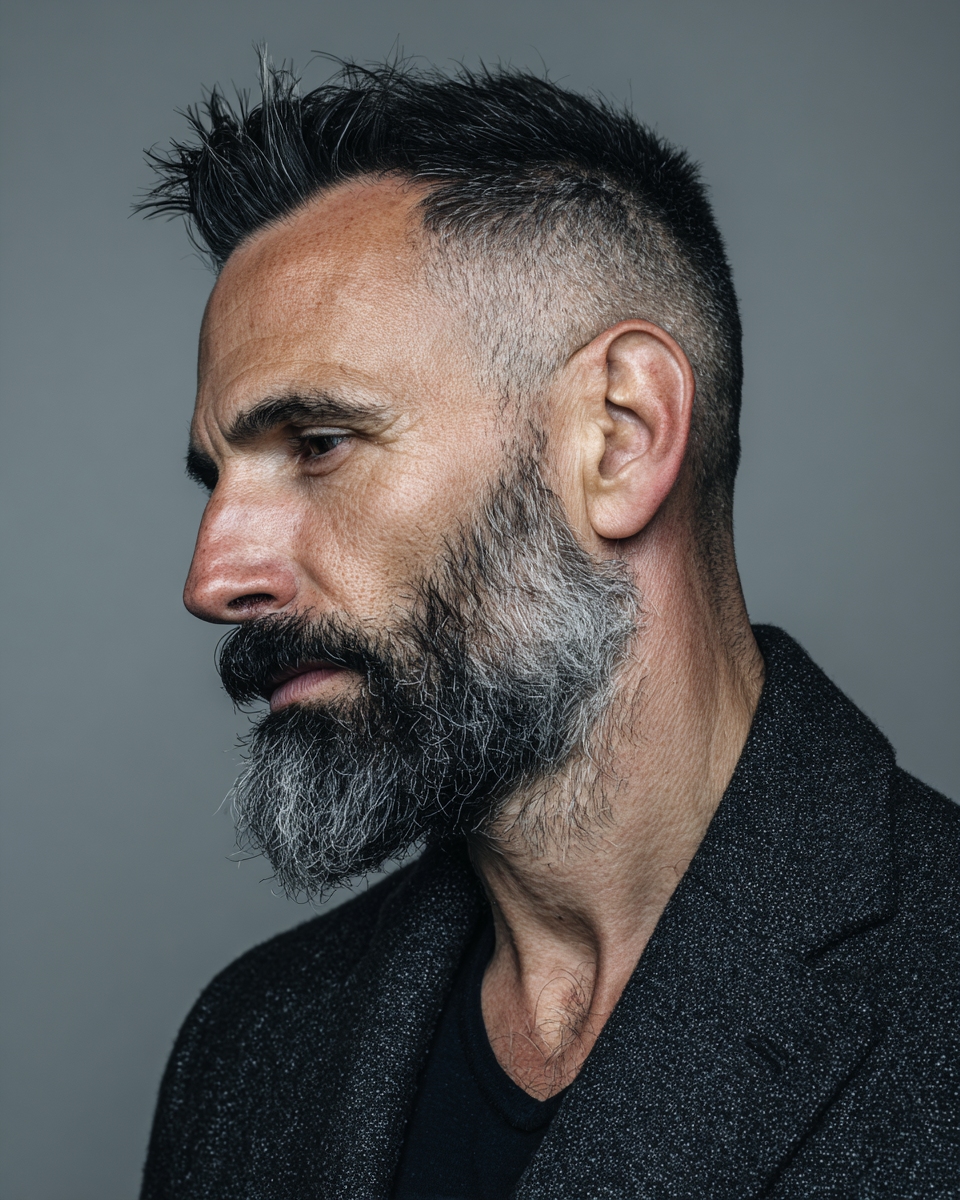
Why it works:
- Clean, structured silhouette that reads as intentional
- Short textured top keeps the contrast between sides and top manageable
- Modern and current — works well with dark hair and early salt-and-pepper
Best for: Type B and Type C. Square and diamond faces respond best. Requires maintenance every two to three weeks or the structure collapses.
What to tell your barber: “High fade on the sides, skin at the temples blending up. Keep the top short and textured, about half an inch to three-quarters. I do not want a hard line between the top and the fade.”
Product tip: American Crew Fiber on the top. Strong matte hold that keeps short hair looking deliberate rather than flat.
7. The Caesar Cut — Best for Type C
A short horizontal fringe creates a deliberate front line. At Type C where diffuse thinning makes most styles fight the hair, the Caesar haircut works because even length across the top removes the contrast entirely. Shorter and more textured than the 1990s version. No gel. No hard lines.
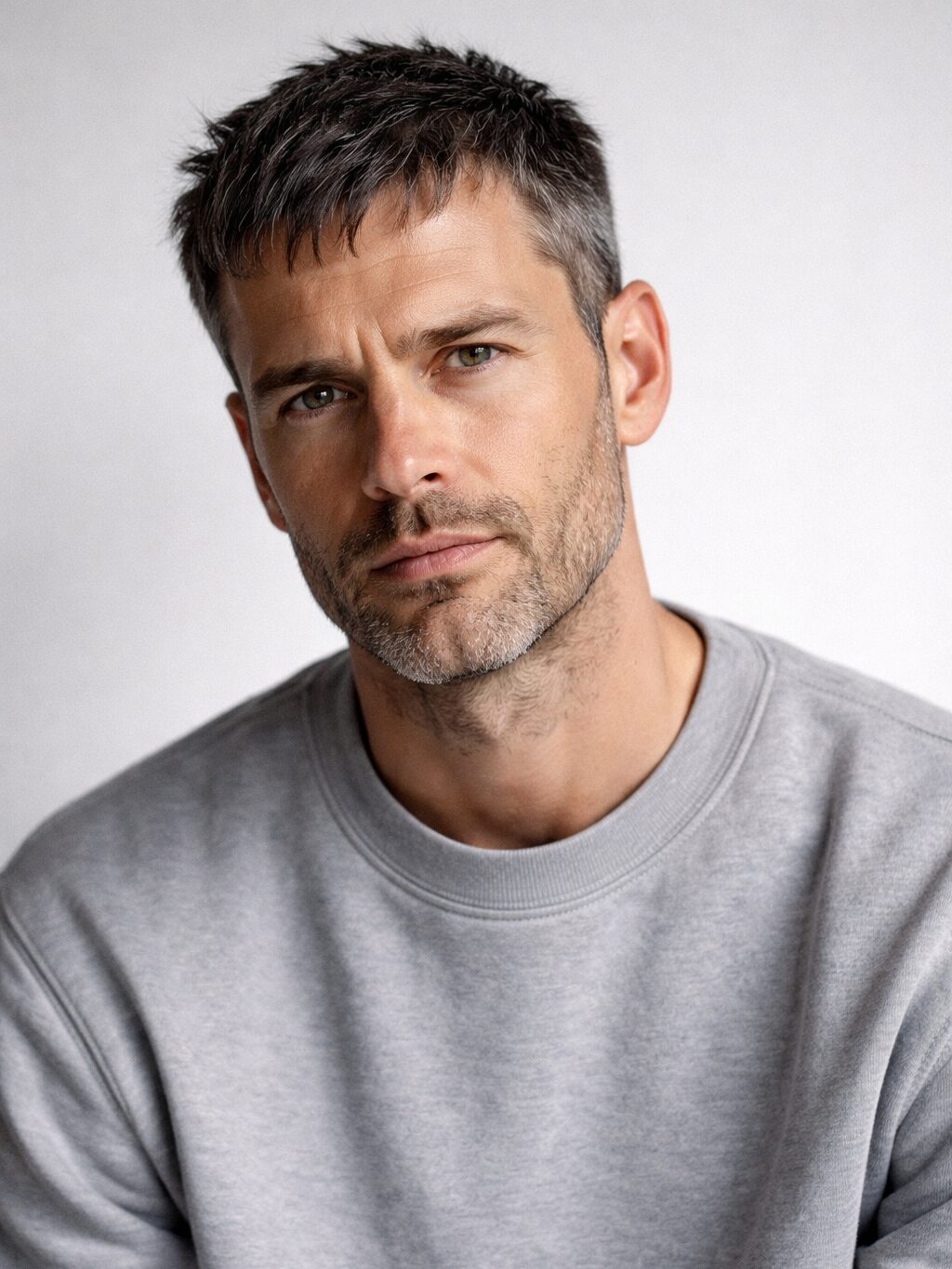
Why it works:
- Even length reduces thinning contrast across the top
- Horizontal fringe creates a visual anchor at the forehead
- Minimal daily styling required
Best for: Type C. Square and oval faces.
What to tell your barber: “Modern Caesar, half an inch to three-quarters all over, soft horizontal fringe. No hard line on the fringe, keep it broken. Tapered sides, not faded.”
Product: Texture Hair Powder on the roots. Small amount of Clay Pomade to define the fringe.
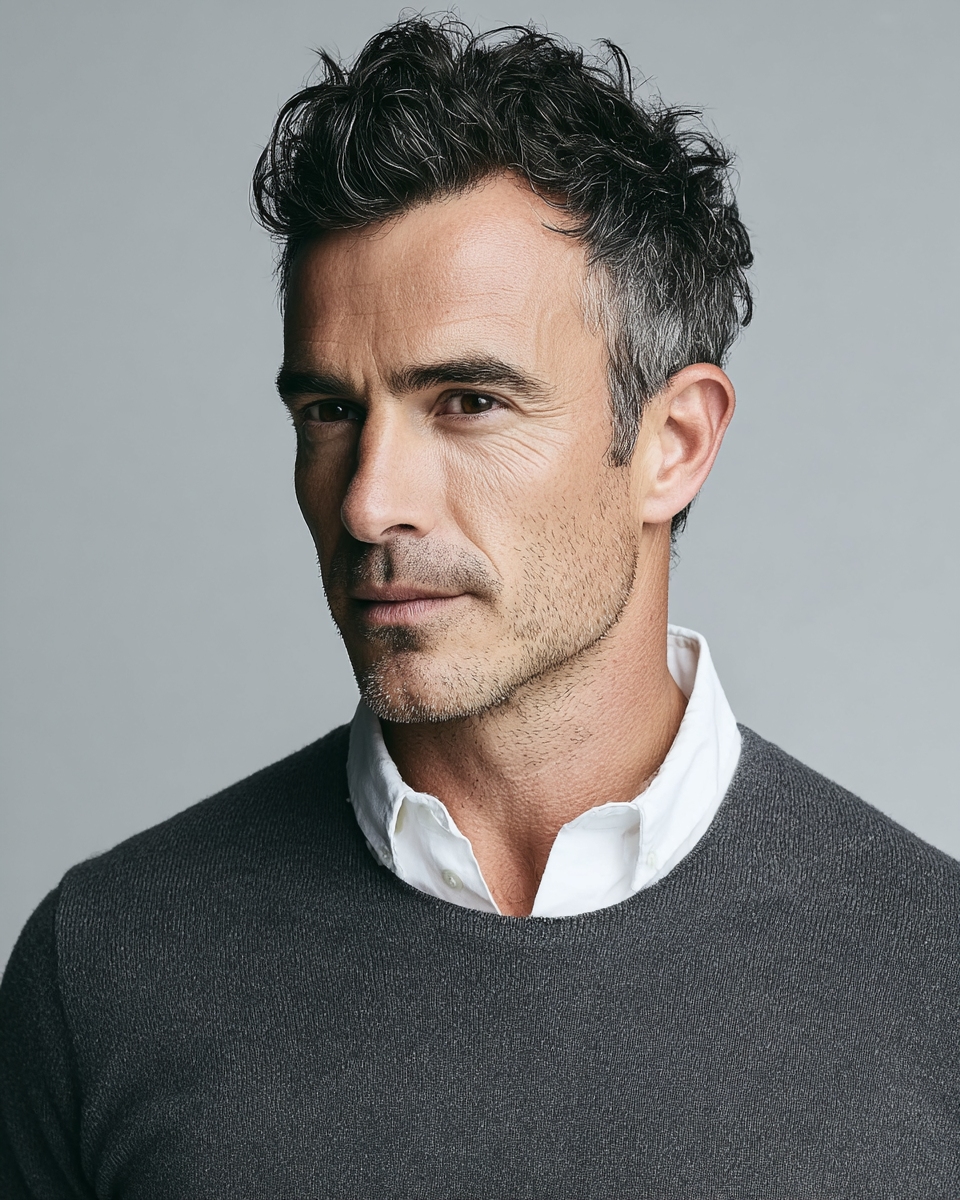
8. The Textured Top with Taper — Best for Type B, C, and D
This is the grown-up version of the textured crop. Same idea, just without the “trying too hard” energy. A short textured top paired with a clean taper gives you structure without shouting about it.
It’s controlled. Intentional. And most importantly, it doesn’t fight your hairline.
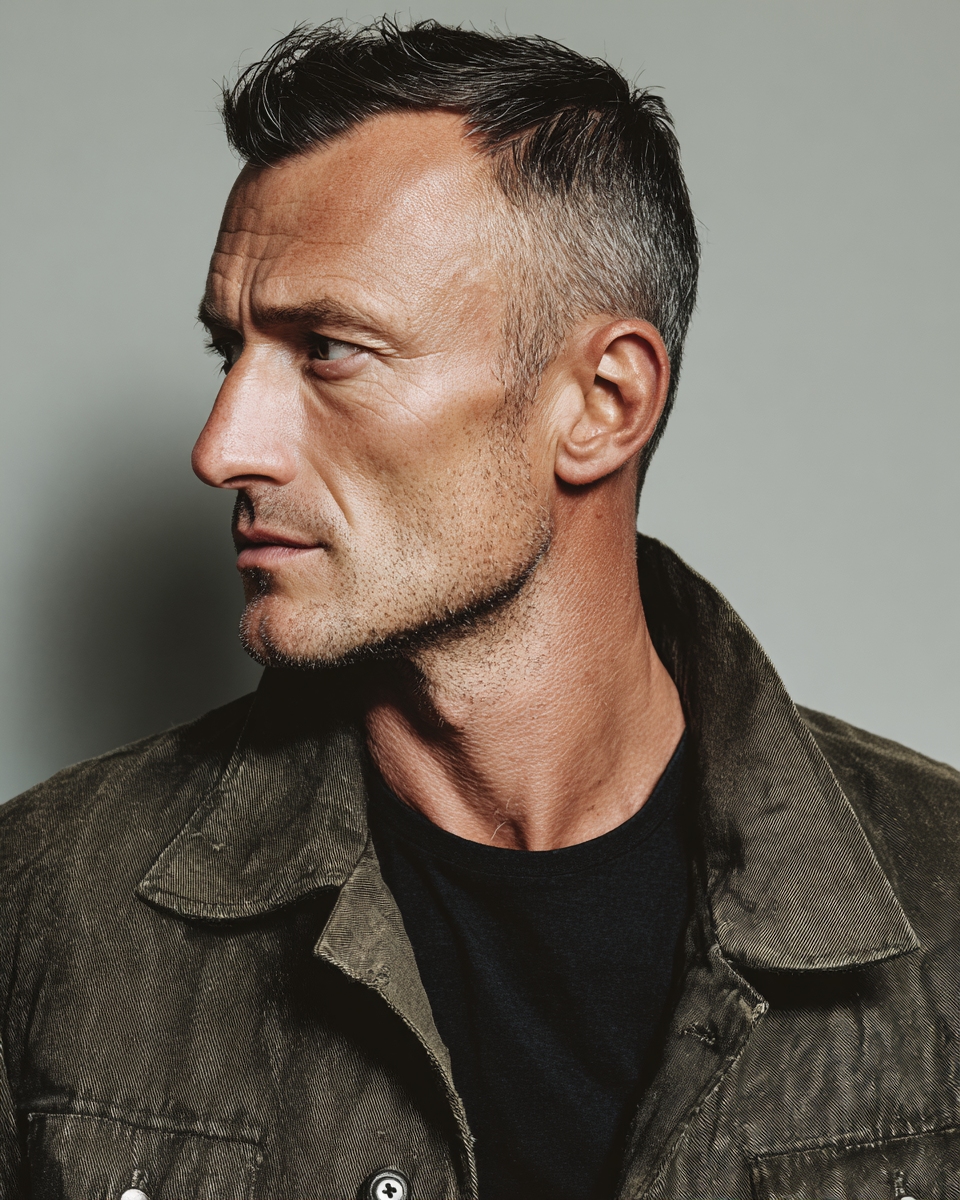
Why it works:
- The eye moves downward, not straight to the temples
- The taper keeps everything soft and natural instead of harsh
- Texture adds shape without forcing volume where it doesn’t belong
Best for: Type B, C, and D. Works across most face shapes. Ideal if you want something sharp but still low-maintenance and age-appropriate.
What to tell your barber: “Short textured top with natural movement, styled slightly to the side or into a soft quiff. Keep a clean taper on the sides and back, no skin fade.”
Product tip: Use American Crew Fiber for light hold and a natural finish that doesn’t make your hair look like it’s been shellacked into submission.
9. The Buzz Cut — Best for Type D and Type E
Same length everywhere. The recession becomes invisible because there is nothing to compare it to. A buzz cut at any age is not defeatist. Most men who make this move say the same thing: they waited too long.
Why it works:
- Eliminates contrast completely
- Emphasises facial structure rather than hair loss
- Requires almost no daily styling
Best for: Type D and Type E. Square, oval, and diamond faces. Round faces add stubble or a beard for jaw definition.

What to tell your barber: “Number 4 all over, or 1.5 on the sides blending to a 2 on top. Clean the neck and ears. No fade line.”
Product tip: Skip the hair product. Daily Moisturizer on the scalp. Hydration matters more than styling.
10. The Induction Cut — Best for Type D and Type E
Number 0-1 guard all over. The scalp is visible through the hair but a trace of coverage remains. For many men this is the more comfortable step before committing to a full shave — and for some it is where they stay permanently. Both are valid.
At this length recession and thinning are completely irrelevant. The scalp and the remaining hair become one uniform surface. Clean, architectural, almost zero daily maintenance.
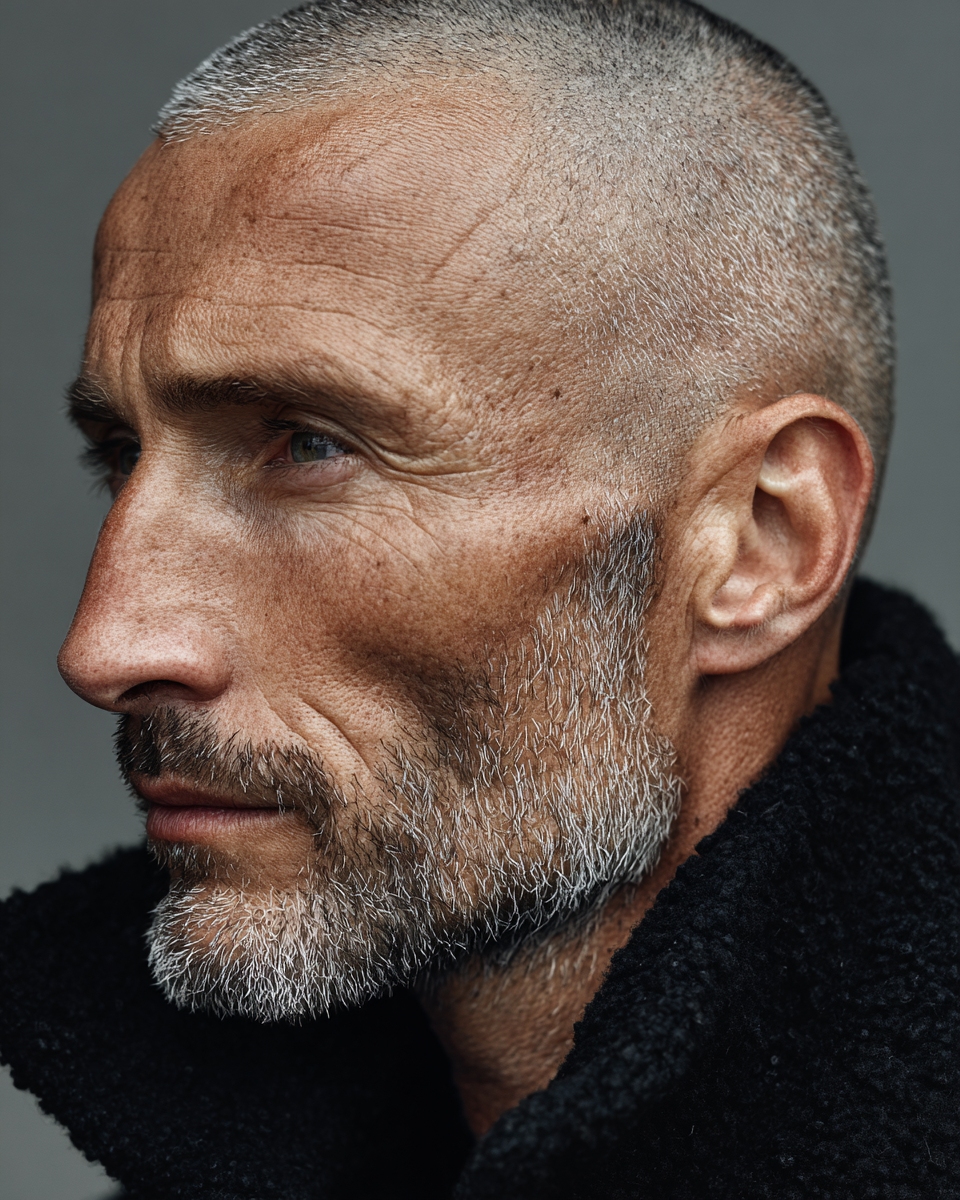
Why it works:
- Number 1 guard eliminates all contrast — thinning becomes invisible
- Lower commitment than a full shave, near-identical result
- Works across all hair textures and ethnicities
Best for: Type D and Type E. All face shapes. Men who want the result without the daily razor.
What to tell your barber: “Number 1 all over, uniform length. Clean the neckline hard. I will be back every two weeks.”
Product tip: SPF every morning. At this length the scalp is exposed skin. Treat it that way.
What About Bald Spots?
A bald spot at the crown is a different problem. With frontal recession you see it every time you look in the mirror. With a crown bald spot you often do not know how significant it is until a photograph or someone mentions it.
The biggest mistake is keeping length on top with short sides. This creates a tent effect: longer hair collapses over the bare patch and makes the bald spot the most prominent feature of the haircut. The fix is counterintuitive. Go shorter overall, not longer.
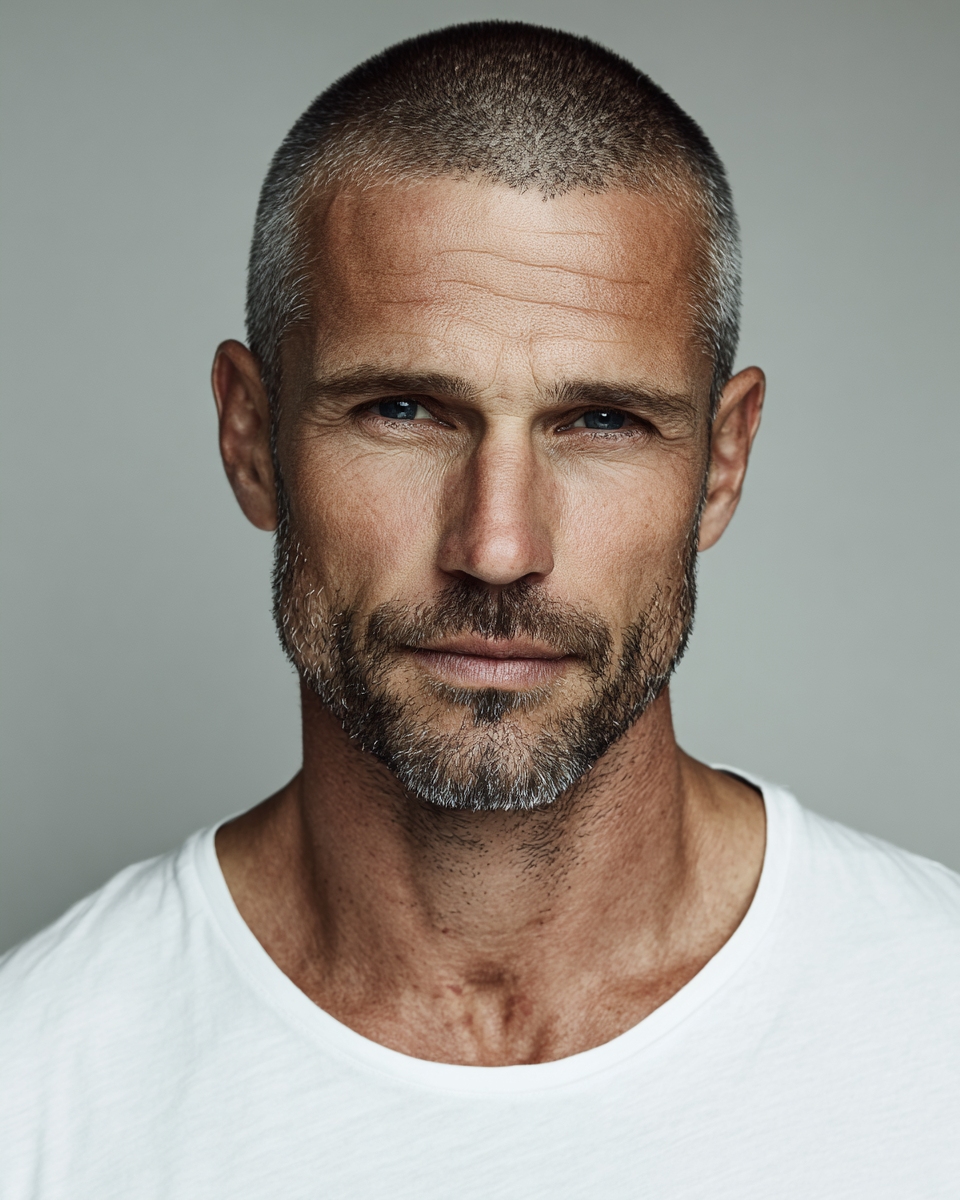
What works at the crown:
- Uniform short length — the textured crop and Caesar cut reduce contrast between the patch and surrounding hair
- The buzz cut eliminates it entirely
- A beard draws the eye downward and away from the crown
What to avoid: Long hair on top. Hard fades with length on top. Sweeping hair over the patch from any direction — it always looks worse than the patch itself.
What to tell your barber: “I have a bald spot at the crown. Uniform short length all over so the contrast disappears. Do not try to cover it, just make the whole cut even.”
Both a receding hairline and a crown bald spot forming simultaneously puts you at Type D. Buzz cut or induction cut. Both eliminate both problems in one move.
Styling Rules That Actually Apply
Matte products only. Shine magnifies thinning. Matte paste, clay, or powder. Nothing with gloss.
Never comb straight back. Creates a long exposed track between hairline and crown. Always forward or to the side.
Fingers not a brush. Brush styling flattens fine hair and increases contrast. Fingers create separation and texture.
Dry shampoo at the roots. Grip, lift, and thickness in under a minute. Essential on day-two hair.
Cut every three to four weeks. A receding hairline looks considerably worse when the proportions collapse. Maintenance is part of the haircut.
Should You Consider a Hair Transplant?
At an early stage of recession you are in a good position to consider one. The donor area is at or near its densest. Results tend to look more natural when the procedure is done before significant further loss.
A transplant does not stop ongoing loss. The native hair around the transplanted area will continue to thin. Additional treatments are usually recommended alongside any procedure to stabilise ongoing loss.
FUE is the current standard. Individual follicles removed one by one. No linear scar. Faster recovery. Almost always the better option over FUT if you wear your hair short.
Design the hairline for your age, not your younger self. A hairline that is too low will look increasingly unnatural as the face ages. A good surgeon designs for where your face will be in fifteen years.
Questions to ask any clinic: What is my donor density? Where do you recommend placing the hairline given my likely future loss? What ongoing treatment do you recommend? Can I see results on patients with a similar recession pattern?
A transplant is a refinement tool. Even excellent results still need the right haircut to look natural.
The Mindset Shift That Actually Helps
The men who look best with a receding hairline stopped treating the hairline as the problem and started treating the haircut as the solution. Those are different things. The first keeps you defensive. The second puts you in control.
Your hairline is not the most interesting thing about you. The sooner the haircut stops trying to argue otherwise, the better you will look.
Final Thoughts
A receding hairline is not a problem to manage indefinitely. Address it once, correctly, and stop thinking about it. Choose a cut that works with your hairline. Get it cut regularly. Use the right product. If a transplant makes sense, have that conversation while you are still a strong candidate.
Explore More:
Receding Hairline Haircuts for Men Over 50: If you are over 50 and further along in the process, this guide covers 10 haircuts organised by hair type with barber briefs, products, and an honest look at transplants at this stage.
Hairstyles for Balding Men: What Actually Works: If significant thinning or baldness is already the situation, this is the guide. Coverage types, architectural cuts, beard strategy, and scalp care.
Silver Fox Hair for Men: Style & Grooming Tips: From haircut choices to grooming details, this guide shows how to refine the silver fox look with intention and effortless confidence.
Salt and Pepper Hair and Beard for Men: Embrace Personal Style: An editorial take on pairing salt-and-pepper hair with a beard, focusing on balance, grooming, and a strong personal style at any age.
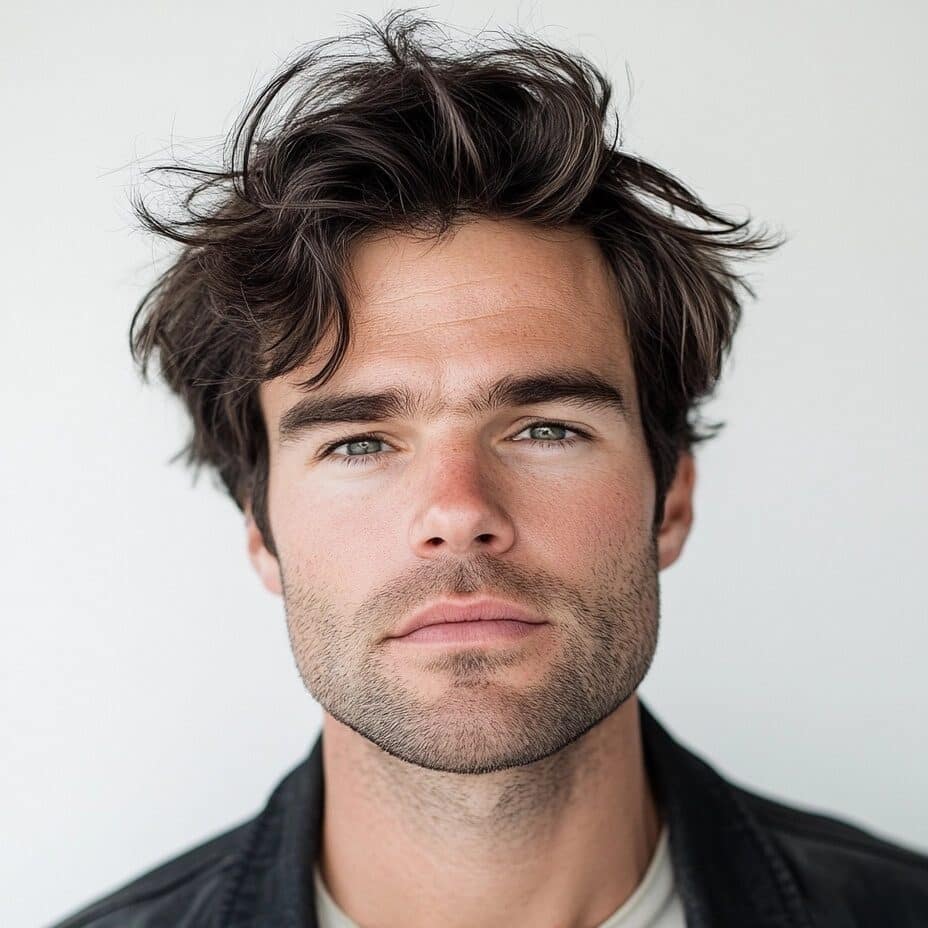
How to Get Tousled Hair for Men: Short-to-Long Hair Essentials

Messy Short Surfer Hair: Beach-Inspired Style Tips

The Mod Cut Haircut for Men: A Timeless and Trendy Fashion Statement
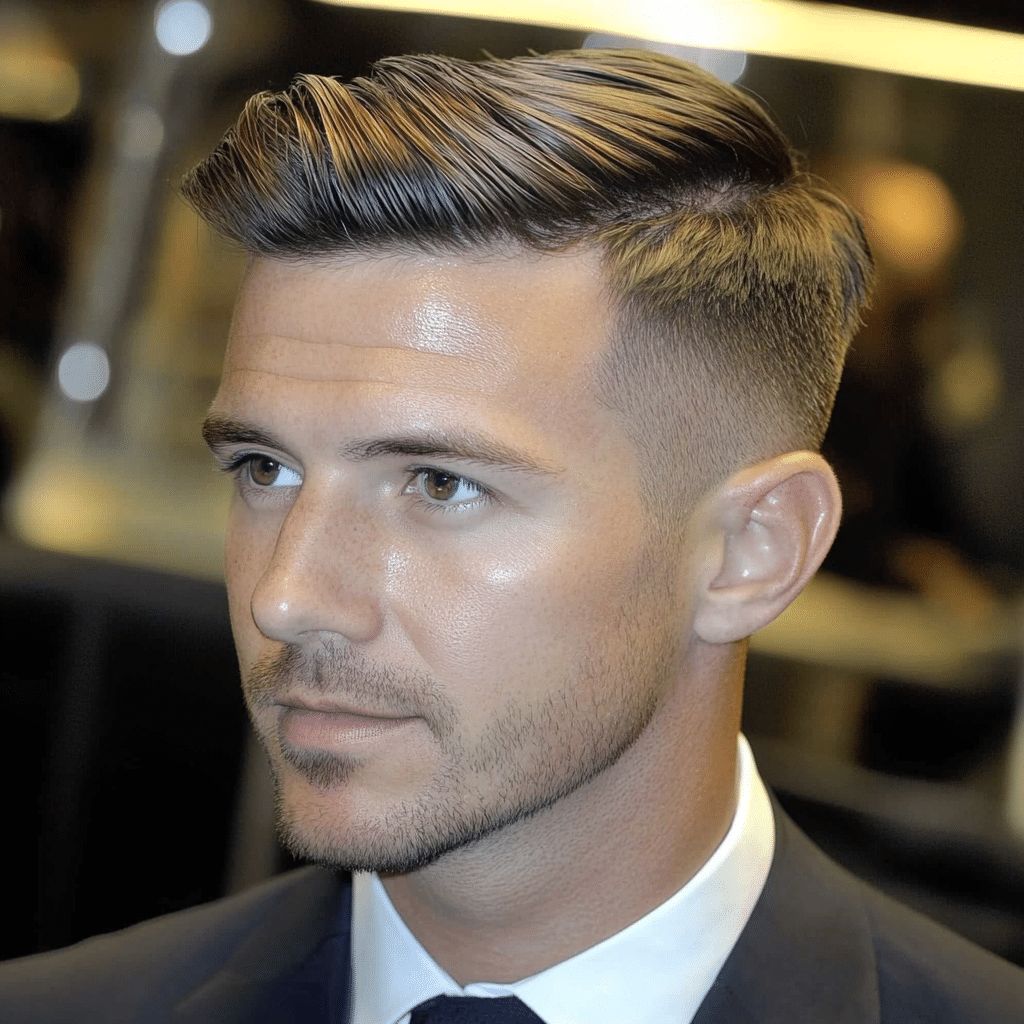
The Taper Fade Comb Over: A Celebs and Soccer Players Trend

10 Long Hairstyles for Edgy Guys: Unleashing Your Bold Side