

How to Smell Good: An Essential Routine for Men
Smelling good isn’t about cologne. It’s about removing what smells bad first, then adding a little of something that smells good. Most men get the order backwards.
They spray more fragrance over a shirt that already holds yesterday’s bacteria, or put on deodorant when the real problem is the back of the neck. The result is a man who smells like a store and something underneath it.

This guide covers where body odor comes from, the routine that fixes it, what changes with age, and the part most guides rush: how to choose, apply and wear a fragrance, with the bottles worth buying.
Where Body Odor Comes From
Fresh sweat barely smells. The odor comes from bacteria on your skin (or clothing) breaking that sweat down, mostly under the arms, in the groin and on the feet. Those same bacteria settle into fabric, which is why a clean man in a dirty shirt still smells.
So the fix has three parts: fewer odor bacteria on your skin, less sweat for them to feed on, and clothes that don’t hold on to them. Fragrance comes last.
The Routine
Six steps. Three start in the shower, one happens at night, one in the laundry, and one is a habit to drop.
1. Shower With a Plan
Most men wash the armpits and groin and let the water do the rest. Use soap and a washcloth on every zone that holds oil or sweat: armpits, groin, feet, back of the neck, behind the ears, chest and upper back. Dry completely before you dress, especially between the toes.
Any decent body wash works if it reaches the right places. A strong-smelling one doesn’t clean better; it just adds a scent that will clash with your fragrance later. Choose a mild, lightly scented or unscented wash.

2. Wash Under Your Arms Properly
Armpit odor is bacteria breaking down sweat, so the fix is cleaning, not covering. Lather properly, give it a few seconds before you rinse, and dry completely; deodorant on damp skin works less well. If you have a lot of hair, trim it. Hair holds sweat and gives bacteria more surface to work on.
If an ordinary wash isn’t enough, try a benzoyl peroxide wash, the kind sold for acne. “It is a bactericidal agent, meaning that it kills bacteria,” write dermatologists Zeena Nawas and Yelena Dokic of Baylor College of Medicine. “With consistent use, benzoyl peroxide can reduce body odor over time.” It can dry the skin, so start with a few times a week, and use a white towel: it bleaches colored fabric.
3. Don’t Skip the Groin and the Feet
Few men talk about either, and both smell for the same reason the armpits do: warm, covered skin where sweat stays put.
Groin: wash it daily with a mild soap, dry it completely, and get out of gym clothes rather than sitting in them. Cotton or merino underwear holds less odor than synthetics. If you want a product, use one labeled for the groin or whole-body use, on the outside only. Your underarm antiperspirant isn’t made for that skin. Trim rather than shave: a razor there brings razor burn and ingrown hairs.
Feet: wash between the toes, not just over them, and dry there completely. Wear clean cotton, merino or wool socks every day, and give shoes a day off between wears so they dry out. A foot powder helps on long or hot days.
Itching, a rash or peeling skin in either place usually means a fungal infection, such as jock itch or athlete’s foot, not a hygiene problem. An antifungal from the pharmacy treats it; no deodorant will.
4. Put Antiperspirant On at Night
“We sweat less at night, so the antiperspirant can come into closer contact with sweat glands and decrease sweating,” Dr. Shari Lipner, a dermatologist at Weill Cornell Medicine, told Today. It keeps working the next day, even after a morning shower, and it saves you a step in the morning.
Know which one you need. Deodorant fights odor. Antiperspirant reduces sweat, and it’s the only one that does.
| Your problem | What to use | Look for on the label |
|---|---|---|
| Odor, normal sweat | Deodorant, in the morning | “Deodorant” or “aluminum-free” |
| Odor and visible sweat | Antiperspirant, at night | “Antiperspirant”; it will list an aluminum-based active ingredient |
The aluminum is what does the work: it temporarily plugs the sweat ducts, which is why the label lists it as an active ingredient. If you’d rather avoid it, or it irritates your skin, deodorant alone is fine as long as sweat isn’t the problem. Source: Ohio State Wexner Medical Center: Should you worry about aluminum in your antiperspirant?
Pick an unscented or lightly scented formula so it doesn’t fight your fragrance. Our deodorant guide goes deeper on each type.
6. Fix Your Fabrics
In a University study, 26 people sweated through an hour of spinning. The bacteria behind the sour smell grew better on polyester shirts than on cotton ones.
- Wear cotton or merino against your skin, especially at the gym.
- Wash workout clothes inside out, soon after wearing, with an enzyme detergent or an oxygen-based booster.
- Skip fabric softener on technical fabrics. It coats the fibers and can hold odor in.
- Don’t rewear a shirt that has been sweated in, even if it looks clean. Change socks daily and rotate shoes so they air out.
6. Stop Covering, Start Removing
Five scented products at once (body wash, deodorant, aftershave, hair product, cologne) don’t make you smell better. They make you smell like a store. Keep everything unscented or close to it, and let one fragrance do the talking. The same goes for breath: brush, floss and clean your tongue rather than reaching for mints.
A routine handles everyday odor. If your smell changes suddenly, or you sweat through your clothes without heat or exercise, that’s one for a doctor or dermatologist, not a new product.
After 40: Why Your Smell Changes
Many men notice it somewhere in their forties. Same soap, same deodorant, and still something is off by afternoon: on a shirt collar, a pillowcase, the inside of a jacket.
In 2001, researchers at Shiseido published a study in the Journal of Investigative Dermatology. Volunteers aged 26 to 75 wore the same shirts for three nights, and the team analyzed what the fabric picked up. Most odor compounds didn’t change with age. One did. A molecule called 2-nonenal turned up only in people aged 40 and older. The researchers described it as greasy and grassy. It forms when certain fatty acids in the oil on your skin oxidize. The study was small, and later research at the Monell Chemical Senses Center is split: one team found support for it, another couldn’t find nonenal in older volunteers at all. The science isn’t settled, but the experience is common, and the fix is the same either way.
It also isn’t a hygiene problem. “The biggest misconception,” Dr. Sonal Choudhary, a dermatologist at the University of Pittsburgh, told Popular Science, is that it “reflects poor hygiene.” Nonenal “begins increasing around middle age and may plateau or vary considerably between individuals,” she said. Not every man gets it, and not to the same degree.
Deodorant won’t touch it, because nonenal sits in the oil on your neck, ears, chest and back, not under your arms. What helps:
- Wash the oily zones every day: back of the neck, behind the ears, chest, upper back and scalp.
- Change pillowcases twice a week. Your neck and scalp sit on them for eight hours.
- Wash collars and the insides of jackets more often than you did at 30.
- Persimmon soaps: in Japan, soaps made with persimmon extract are sold specifically for “aging odor.” Brands claim strong results from their own lab tests, but there is no independent study yet. Try one if you’re curious; don’t expect a cure.
- Rethink your fragrance. More on that below.
How to Choose and Wear a Fragrance
I spent years working on beauty and fragrance campaigns for houses like COTY and Estée Lauder. Fragrance advertising sells a fantasy. What actually works is quieter: the right scent, in the right amount, on clean skin.
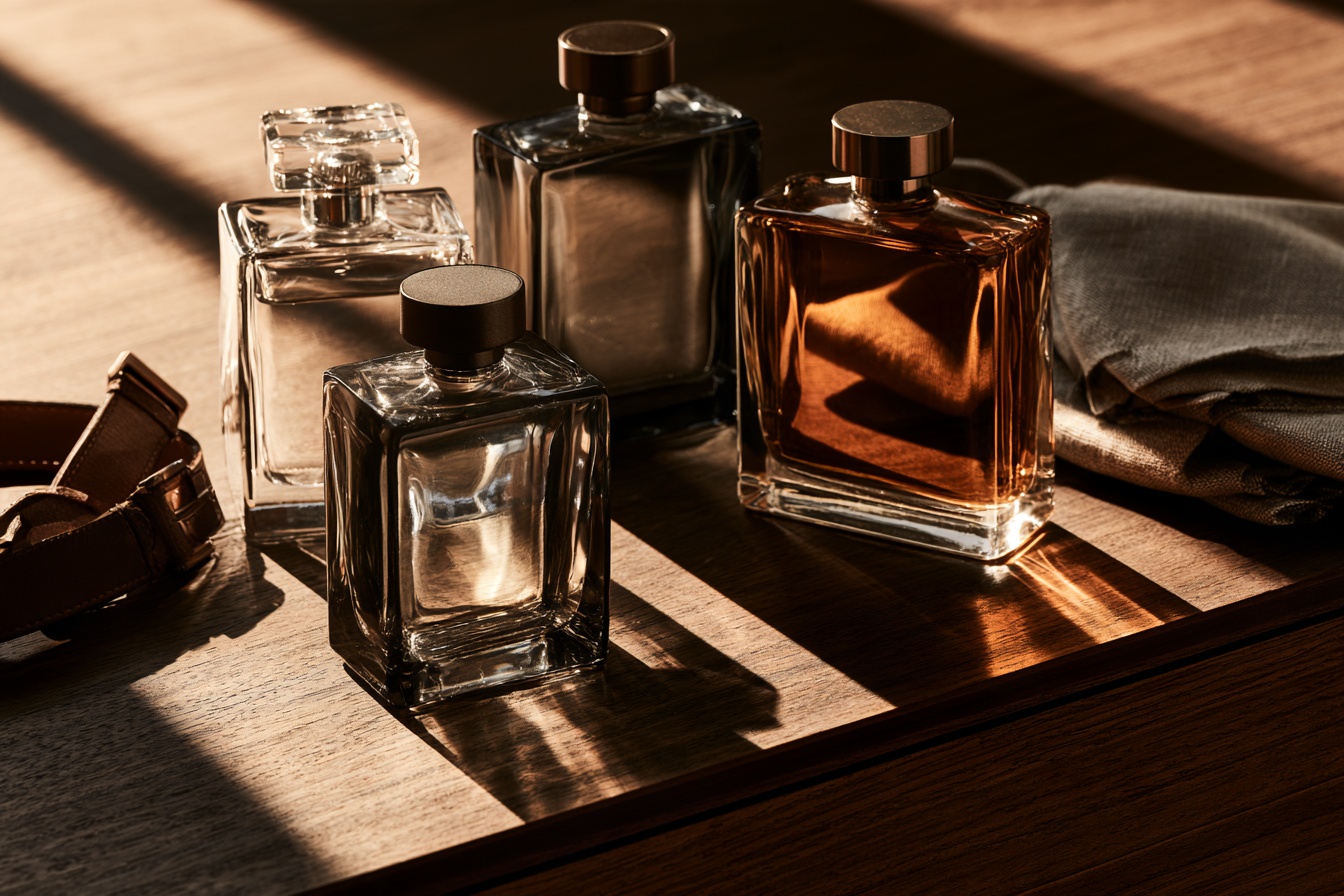
Read the Label: Strength
The name on the bottle tells you how concentrated it is, and so how much to use:
- Eau de cologne: the lightest. Fresh, short-lived, made for heat.
- Eau de toilette: the everyday strength. Good for the office.
- Eau de parfum and parfum: richer and longer-lasting. Use one spray less than you would of a toilette.
Where and How to Apply It
- Two sprays, three at most, on the chest or the sides of the neck. Your nose stops registering your own scent within minutes. Everyone else still smells it.
- Don’t rub your wrists together. “Don’t rub,” perfumer Francis Kurkdjian told Into The Gloss. “It’s like hitting fast-forward on a cassette tape.” Frédéric Malle, founder of Editions de Parfums Frédéric Malle, gave Mr Porter the same advice: “Just let it dry by itself.”
- Keep it off your face. Splashing cologne on after a shave is an old habit worth dropping. “I would not put cologne on my face because the higher alcohol content without emollients could dry out your skin,” Malle said.
- Apply to clean, dry skin, after deodorant has set. Fragrance over yesterday’s sweat doesn’t cover it. It mixes with it.
How to Choose One
- Shop by family, not by brand. Find the family you like (citrus, vetiver, woods, iris, spice), then compare a few within it.
- Smell it on skin, then wait. The first minute is the top notes. What you live with is the drydown, 30 minutes later. Wear a sample for a full day before you buy.
- Let your fragrance grow up with you. The big sugary “blue” scents that work at 25 can read as trying too hard at 50. With age, woods, vetiver, iris, citrus and leather usually wear better.
- Own two or three, not ten. One fresh for day and warm weather, one deeper for evening and cold months. Kurkdjian goes further: “I think having just one perfume is nonsense.” Two or three well-chosen bottles cover almost every situation.
The Fragrances Worth Buying
Seven classics, one or two per family, from an inexpensive everyday cologne to an evening splurge. None of them is new. They’ve lasted because they work, and none of them smells like it’s trying too hard.
Best Everyday Cologne: 4711 Original Eau de Cologne
Family: Citrus. Price: $. Wear it: mornings, heat, after the gym.
Lemon, bergamot, a little neroli and rosemary, from Cologne, Germany. It fades within an hour or two, which is the point: a clean, cheap reset you can reapply without anyone noticing a cloud. Keep a bottle at the office.
Best Summer Classic: Acqua di Parma Colonia
Family: Citrus. Price: $$. Wear it: warm weather, daytime, linen season.
An Italian citrus cologne from 1916, softened with lavender and rosemary. It’s what a well-pressed shirt would smell like. Lasts longer than 4711, still never loud.
Best for the Office: Bvlgari Pour Homme
Family: Tea, soft musk. Price: $$. Wear it: daily, close quarters, meetings.
Built around Darjeeling tea, it smells like clean skin, only better. It stays close to the body, so it never fills an elevator. The safest blind buy on this list.
Best Classic: Guerlain Vetiver
Family: Vetiver, green. Price: $$. Wear it: day, office, year-round.
Earthy, green, slightly smoky, with a dry tobacco edge. It has been around since the early 1960s and still reads as the definition of a well-dressed man’s scent. The one to choose if you want to smell like a classic tailored suit.
Best All-Rounder: Terre d’Hermès
Family: Woody, mineral. Price: $$. Wear it: anytime, any season.
Orange and grapefruit over cedar, vetiver and something like warm stone. Created by Jean-Claude Ellena in 2006, it works with a suit and with a sweater, in July and in January.
Best for Fall and Winter: Dior Homme Intense
Family: Iris, soft woods. Price: $$. Wear it: autumn and winter, day into evening.
Powdery iris, a touch of pear and soft woods. Polished without being sweet, and one of the best answers to “what should a grown man smell like at dinner.” It’s an eau de parfum: two sprays is plenty.
Best for Evening: Tom Ford Oud Wood
Family: Woods, spice. Price: $$$. Wear it: evenings, cold weather.
Smoky oud, sandalwood and a little pepper, smoothed out for people who don’t want the harsh, barnyard side of real oud. Expensive, so buy the sample first. One spray goes a long way.
| Fragrance | Family | Best for | Price |
|---|---|---|---|
| 4711 Original Eau de Cologne | Citrus | Everyday reset | $ |
| Acqua di Parma Colonia | Citrus | Summer | $$ |
| Bvlgari Pour Homme | Tea, musk | Office | $$ |
| Guerlain Vetiver | Vetiver | Day, year-round | $$ |
| Terre d’Hermès | Woody, mineral | All-rounder | $$ |
| Dior Homme Intense | Iris | Autumn, dinner | $$ |
| Tom Ford Oud Wood | Woods, spice | Evening | $$$ |
Buy samples or a travel size first. A full bottle you don’t love is the most expensive mistake in grooming.
How to Smell Good All Day
A good morning routine gets you to lunch. For a long day, a flight or dinner straight from the office, keep a small kit in your bag:
- Unscented body wipes to reset the armpits and neck before you reapply anything.
- A travel deodorant for a midday reapply after a wipe-down. Don’t layer it over sweat.
- A travel atomizer of your fragrance. One spray in the late afternoon, not three.
- Mints or gum, especially after coffee.
- A spare undershirt if you sweat through shirts in summer or on the commute.

Fragrance also lasts longer on fabric than on skin. A light mist on the inside of a jacket or scarf carries through the evening; just test it first, since some fragrances can mark delicate fabric.
FAQ
How can a man smell good all day?
Remove odor before adding scent: a proper wash under the arms, antiperspirant at night, clean cotton or merino clothes, then two sprays of fragrance on clean skin. Carry wipes and a travel deodorant for a midday reset.
Why do I still smell after showering?
Usually one of two things: zones you didn’t wash, like the neck, ears and chest, or odor bacteria living in your clothes, towels and pillowcases. A shower can’t fix fabric.
What’s the difference between deodorant and antiperspirant?
Deodorant fights odor. Antiperspirant reduces sweat with an aluminum-based active ingredient. If sweat isn’t your problem, deodorant is enough.
Is “old man smell” real?
The change many men notice is real, though the science is still debated. A 2001 study linked it to a compound called 2-nonenal, found only in people 40 and older, but later research is split. Either way, it isn’t poor hygiene, and daily washing of the oily zones plus clean bedding helps most.
How many sprays of cologne is right?
Two, three at most, and one less for an eau de parfum. You stop smelling your own fragrance within minutes, which is why most men overspray.
How do I stop odor in the groin?
Wash and dry the area daily, wear breathable underwear, and change after exercise. If you want a product, use one made for the groin, on the outside only, never an underarm antiperspirant.
Where should a man spray cologne?
On the chest or the sides of the neck, on clean, dry skin. Don’t rub it in, and keep it off your face, where the alcohol dries the skin.
What’s the best fragrance for men over 40?
Something less sweet than what you wore at 25: vetiver, woods, iris or a classic citrus. Guerlain Vetiver and Terre d’Hermès are two of the safest choices.
How do I get the smell out of gym clothes?
Wash them inside out soon after training, use an enzyme detergent or oxygen booster, and skip fabric softener on technical fabrics. If a polyester shirt still smells after washing, replace it with cotton or merino.

Find Yourself First: Why the Most Important Work a Man Can Do Is Becoming Himself

How Men Over 40 Can Let Go of What Wasn’t And Embrace What Is

Best Deodorant for Men: The Good, Bad & Sweaty

Frédéric Malle The Night: Embracing the Dark Allure of Luxury

Inspirational Quotes for Men Over 40
