When Dinner Starts Feeling Like Adulthood: A Single Man at a Brooklyn Dinner Party
I was invited to dinner on a Saturday.
Not drinks.
Dinner.
At someone’s apartment.
That distinction matters by thirty-nine. Drinks are easy. Drinks can be extended, shortened, abandoned, lied about. Drinks let everyone remain slightly aerodynamic.
Dinner is different.
Dinner has weight.
Dinner means someone has thought about the evening before the evening arrived. Someone bought ingredients. Someone washed glasses. Someone owns enough chairs to suggest a theory of other people.
I got the text from Maya around noon.
Dinner at ours Saturday? Small group. Nothing fancy. 8ish.
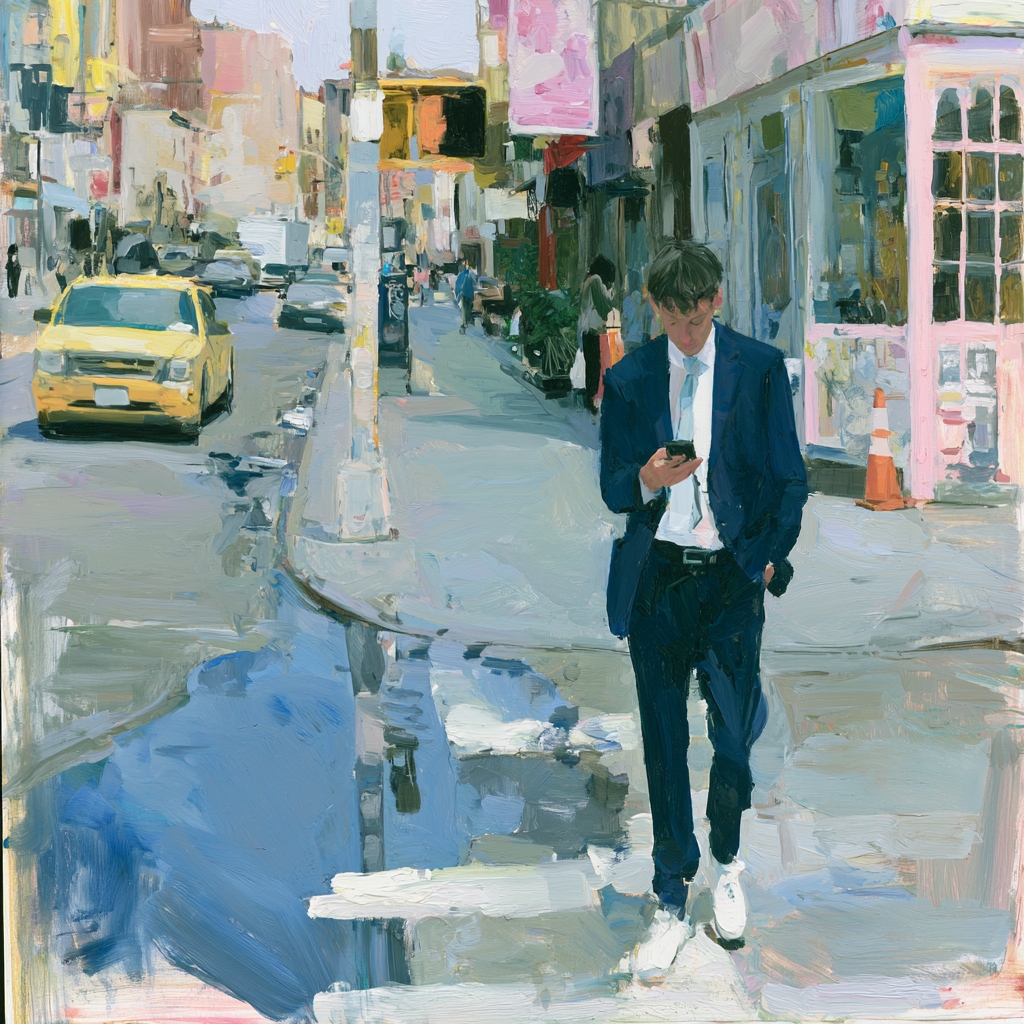
Nothing fancy.
That’s how you know someone has already made a sauce.
Maya used to close bars with us in the East Village. Back when closing bars still felt like evidence of vitality and not just dehydration with witnesses. She smoked Parliament Lights, wore men’s coats, dated musicians with beautiful hands and no furniture, and once threw a drink at a guy outside Welcome to the Johnsons because he said he “didn’t believe in therapy.”
Now she lived in Cobble Hill with Aaron, their dog, and apparently a dining table that could seat six people without anyone having to balance a plate on a stack of art books.
People don’t change completely.
They just acquire better lighting.
I hadn’t seen her in months.
That happens now.
You don’t lose friends all at once. They become scheduled. First it’s “let’s get a drink soon.” Then “next month is insane.” Then suddenly someone you used to see at 2 AM is inviting you to dinner with a calendar link implied.
I texted back:
Sounds good. What can I bring?
She replied:
Just yourself!
Never believe “just yourself.” Yourself is not a contribution. Yourself arrives hungry, compliments the smell, and pretends to understand the cheese.
I went to Astor Wines and bought a bottle of red I actually liked. Not the cheapest. Not the one with the beautiful label, though I looked at it, because I am still a man and therefore vulnerable to graphic design.
The guy at the store asked what I was bringing it to.
“Dinner at an old friend’s,” I said.
“What are they serving?”
“No idea.”
He handed me a bottle and said, “This will behave.”
That seemed like a lot to ask from wine.
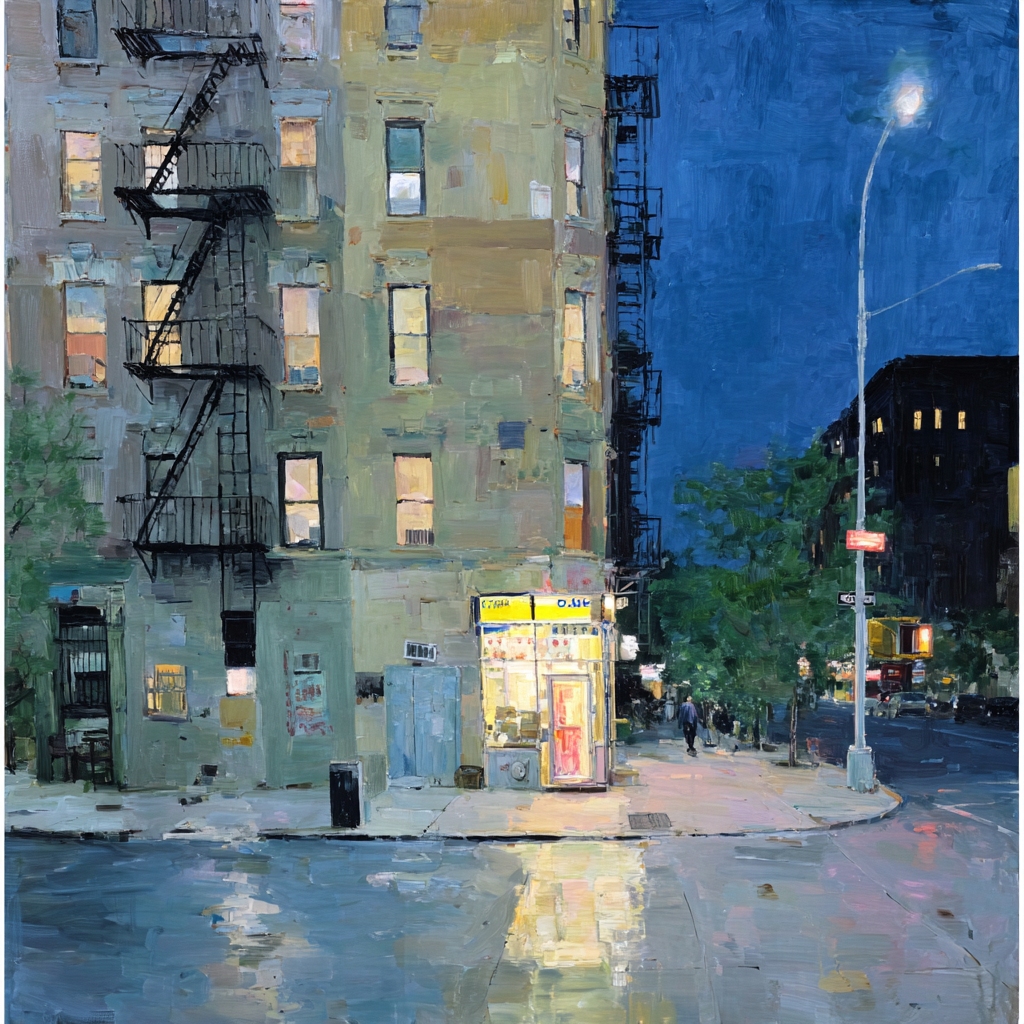
Saturday came cold and clear. The kind of New York night where everyone looks better than they feel.
I put on a charcoal coat, dark jeans, boots, a sweater that had survived enough years to look intentional, and took the F train to Bergen Street.
My apartment, for the record, is not tragic.
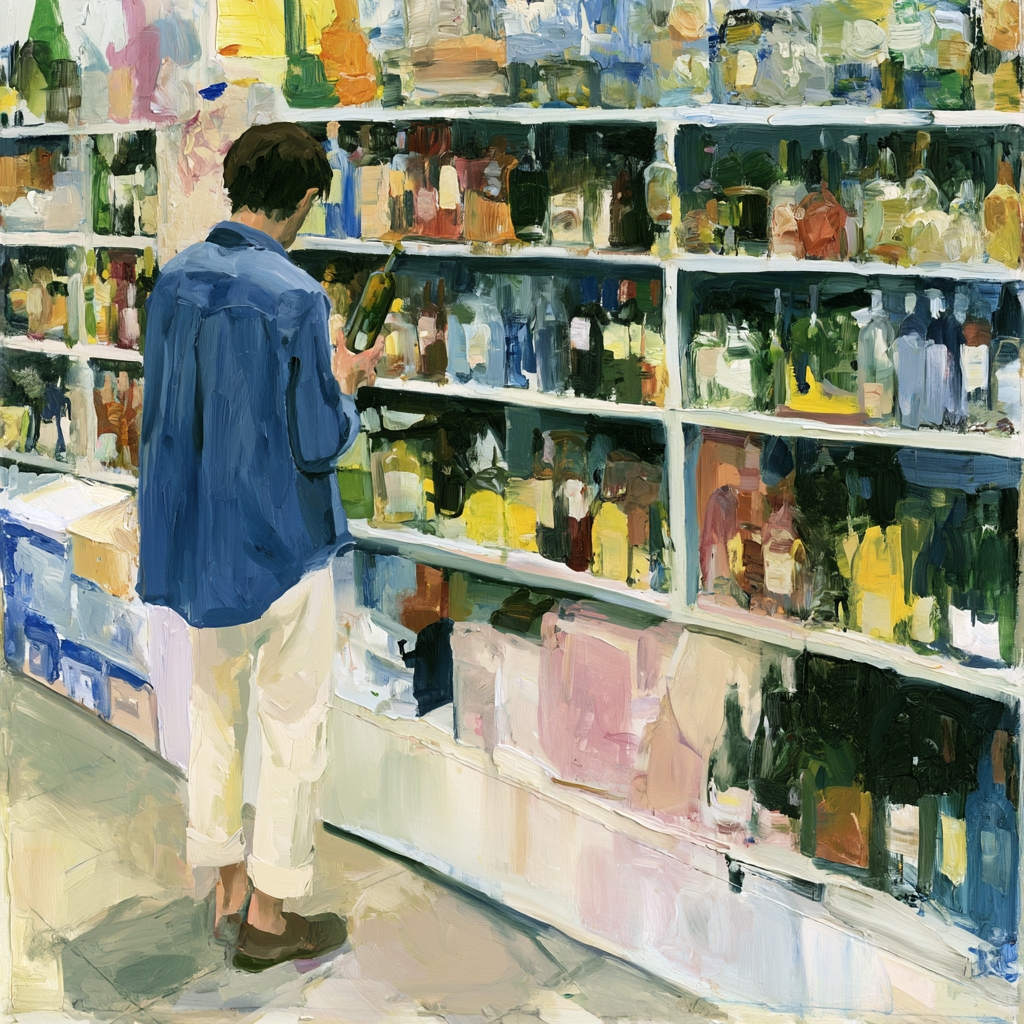
This feels important.
It is not one of those places where a grown man owns three forks and a mattress with opinions. I have good lamps. Real books. A framed photograph from Lisbon. Two beautiful glasses I bought after a woman once told me drinking whiskey from a mug was “emotionally hostile.”
I have taste.
Taste is not the problem.
My place has atmosphere. It has silence. It has good music and low light and enough charm to make a person stay later than she planned. Sarah once said it felt cinematic, which I took as a compliment until I realized cinematic can also mean nobody knows where to put their coat.
It is a good apartment for a drink.
A better apartment for an ending.
It is not, I realized on the train, an apartment built around arrival.
That was the difference.
Maya opened the door wearing a black dress and bare feet.
Not linen, thank God. We are all doing our best, but there are limits.
“Hi,” she said.
She hugged me the way old friends do when they still remember the former versions of you and have decided, generously, not to lead with them.
The apartment smelled like rosemary, garlic, and the particular confidence of people who know where their serving spoons are.
Aaron was in the kitchen, sleeves rolled, stirring something in a Dutch oven. Of course there was a Dutch oven. Every stable couple in Brooklyn owns one heavy pot that suggests both dinner and inheritance.
“Man, good to see you,” he said.
“You too.”
I handed him the wine.
He looked at it and nodded.
A real nod.
Not the fake nod men give when they recognize a label but not a feeling.
Maya took my coat and handed me a glass.
This is the first sign of civilization.
Someone taking your coat.
It’s a small gesture, but it changes the room. It says you are expected to be here long enough that your outer layer deserves a location.
There were four other people already there.
Two couples.
Naturally.
Couples now travel in pairs inside pairs. Like nesting dolls with shared health insurance.
Ben and Laura had moved from Williamsburg to Park Slope and spoke about it with the humility of war correspondents. Nina and Josh had a baby at home with a sitter and the pale, erotic glow of people who had paid someone else to watch their child for three hours.
“Where’s your person?” Ben asked.
Not cruelly.
Worse.
Casually.
I smiled.
“She had a prior engagement.”
This was not technically true.
Sarah and I were not at the stage where I could say “my person” without both of us needing air. We had been seeing each other, then not seeing each other, then orbiting each other in that elegant New York way where no one wants to call something over because the word itself feels provincial.
But “she had a prior engagement” sounded adult.
So I used it.
Everyone accepted the sentence.
This is another sign of civilization: people allowing your lies to remain decorative.
I looked around.
The place was not expensive in the vulgar way. No giant marble island. No aggressive art. No sofa that looked like it had been chosen by an algorithm trained on wealthy minimalism.
It was better than that.
Accumulated.
There were books in small, uneven stacks. A photograph leaning against a wall, still waiting to be hung, but somehow not neglected. A scratched table. Candles burned low in holders that did not match. A bowl of lemons sat on the counter with the quiet arrogance of people who cook.
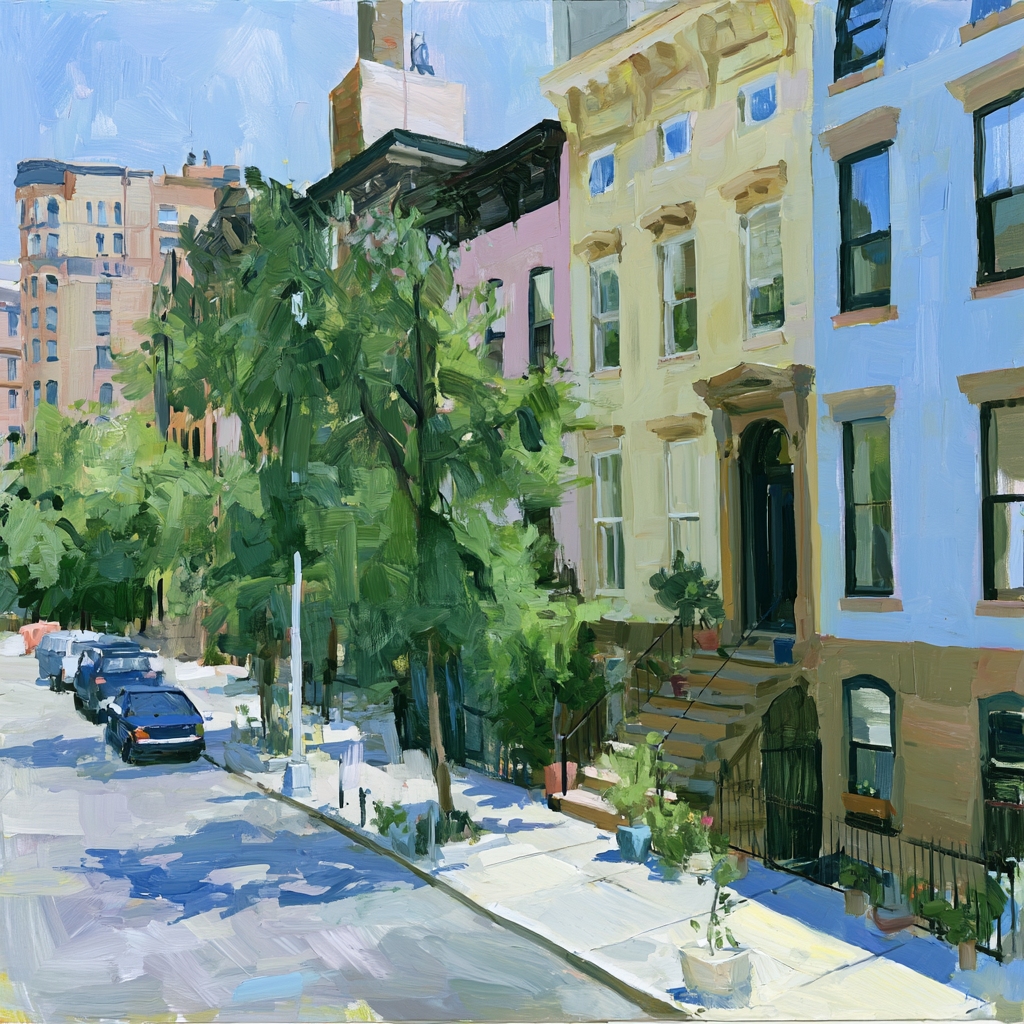
It wasn’t perfect.
That made it worse.
Perfect homes are easy to dismiss. You can call them sterile and move on.
This one had life in it.
Not performance.
Use.
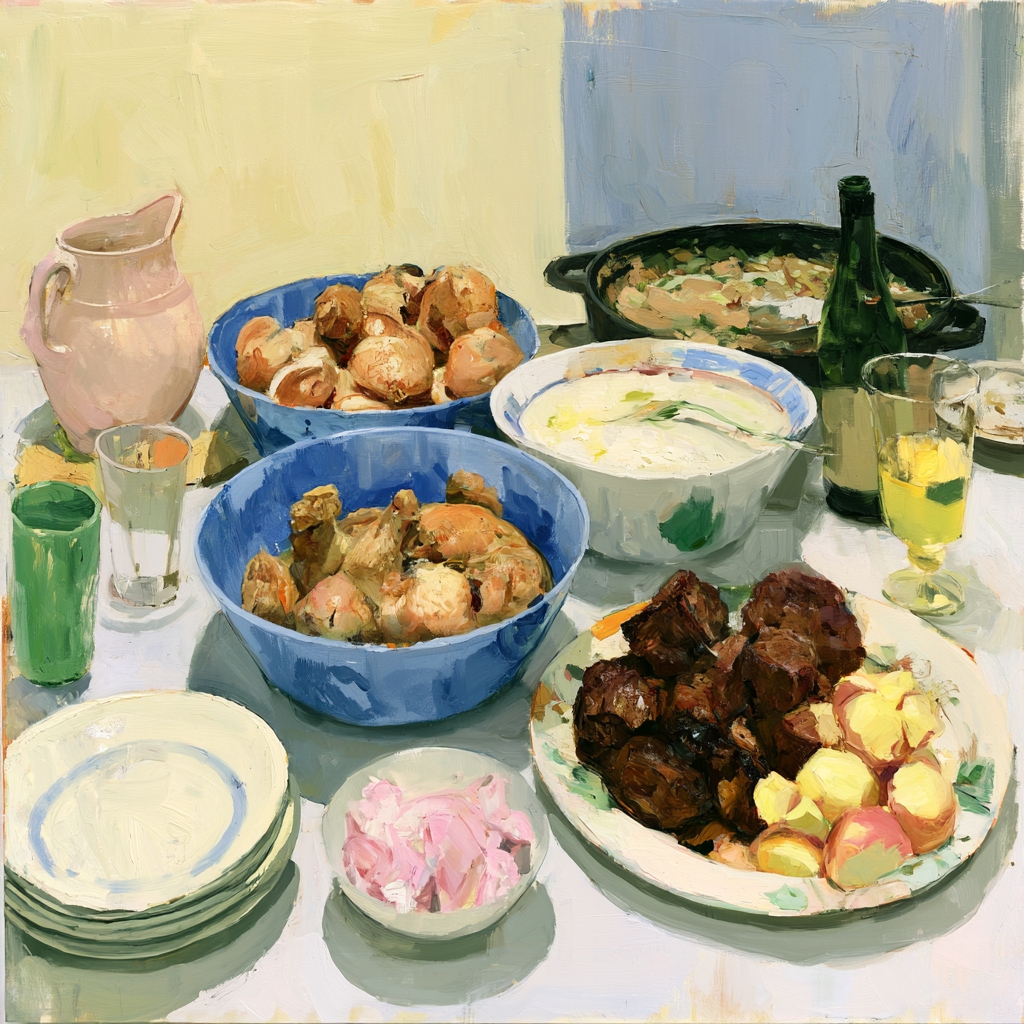
Then I saw the serving bowls.
Three of them.
White ceramic. Wide. Slightly irregular. The kind of bowls that look casual until you pick one up and realize someone paid seventy dollars for humility.
One had roasted carrots with yogurt and herbs.
One had farro.
One had salad with pomegranate seeds.
Beside them, on a platter, was a roast chicken with lemon and rosemary, the kind of food that makes a room feel briefly governed by adults.
Pomegranate seeds.
People with pomegranate seeds have crossed a line. Not a moral line. A logistical one. Somewhere between “I live here” and “I have accepted the future.”
I took a sip of wine and watched Maya move through the room.
This was still Maya. Same laugh. Same sharp mouth. Same woman who once left a date because he corrected her pronunciation of Basquiat.
But there was another rhythm to her now.
She was not performing domesticity.
That would have been easier to mock.
She was inhabiting it.
There is a difference.
Ease forgets it is being watched.
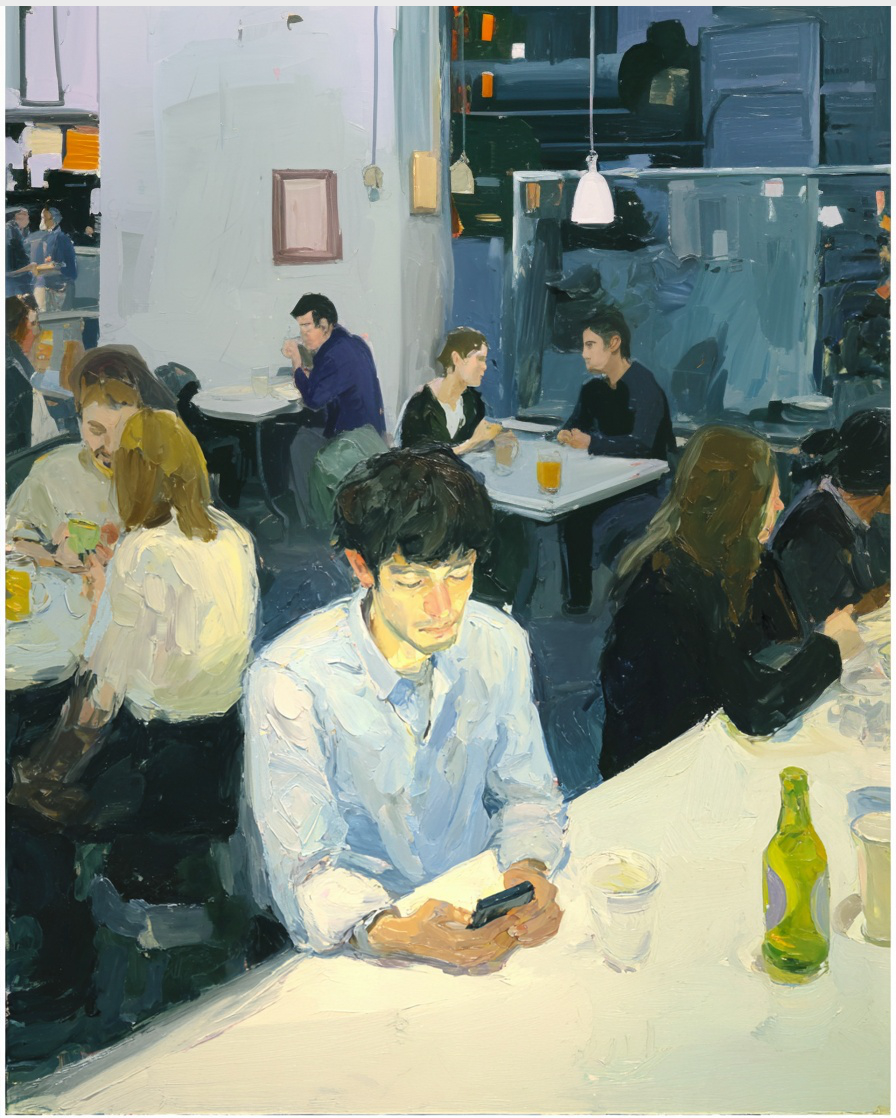
Dinner was served at an actual table. Six chairs. Real napkins. Nothing too precious. Nothing too coordinated. Just enough order to make the night feel held.
I sat between Laura and Josh.
The conversation started with work, because New Yorkers need fifteen minutes of professional context before admitting they are people.
Ben was “transitioning into product.”
Nina was “thinking about consulting.”
Josh was “deep in research.”
Aaron was “trying not to become the guy who talks about rates.”
Maya said she was tired of everyone using the word “season.”
“It’s my season of rest,” she said, putting a bowl on the table. “No, you’re burned out and avoiding email.”
That’s why I’ve always liked her.
She could make cruelty feel medicinal.
Someone asked about my work.
I gave the short version.
Independent design. Brand systems. Digital projects. Clients who want clarity but send feedback in riddles.
“Still enjoying the freedom?” Aaron asked.
It was an innocent question.
Those are the dangerous ones.
“I enjoy not asking permission,” I said.
That was the truest answer I had.
Not freedom in the soft-focus way people use it online. Not laptop-on-a-terrace freedom. Not “working from anywhere,” which usually means working from the same chair while pretending the chair is a lifestyle.
I mean the deeper thing.
Not asking permission to think.
Not asking permission to be absent.
Not asking permission to leave a room where everyone has agreed to pretend the meeting matters.
Not giving your day to people who confuse visibility with value.
Aaron nodded.
“Fair,” he said.
He meant it.
That helped.
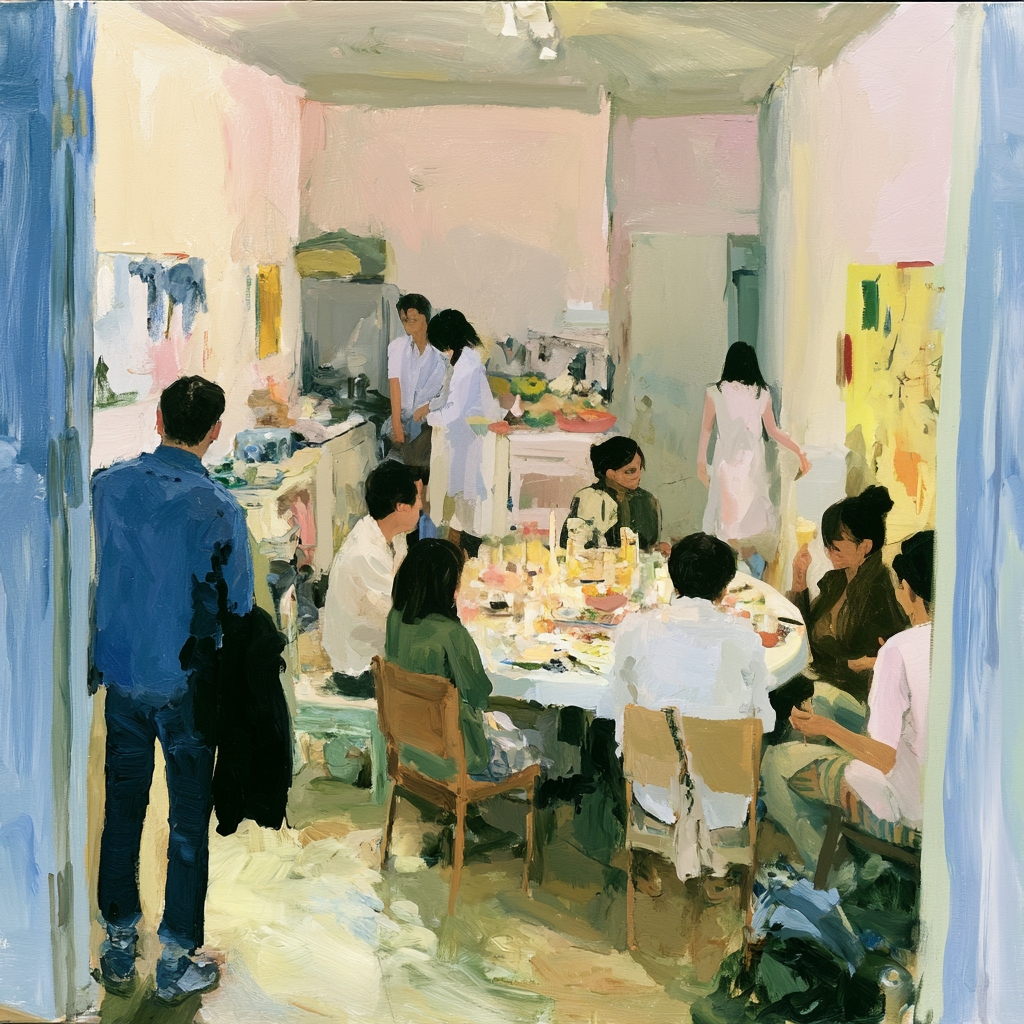
The food was good.
Annoyingly good.
I wanted to be above it. I wanted the farro to taste like punishment. I wanted the carrots to be earnest and disappointing.
They weren’t.
The meal had warmth. Not ambition. Warmth.
That is harder.
Ambition wants applause. Warmth wants you to have seconds.
At some point, Maya asked about Sarah.
Of course she did.
Old female friends are dangerous because they remember your tone, not your facts.
“Are you still seeing her?”
I took a drink.
“Define seeing.”
Maya smiled.
“I hate when men do that.”
“I know.”
“Are you?”
“Sometimes.”
“That’s not an answer.”
“It’s a very current answer.”
She looked at me for a second.
“You like her?”
“Yes.”
“Does she like you?”
“Yes.”
“And?”
“And sometimes two people can like each other and still not know where to put it.”
Maya held my gaze a little longer than necessary.
That was the thing about her. She could hear the evasion without needing to embarrass you in front of the table.
“Sounds familiar,” she said.
Then she passed me the carrots.
Mercy, with yogurt.
Across the table, Aaron refilled Maya’s glass without asking. She didn’t thank him. Not because she was rude. Because the gesture was part of the room.
That got to me more than it should have.
Not the glass.
The fluency.
Couples who have lasted long enough develop a private grammar. A glance, a reach, a plate moved slightly to the left. Nothing dramatic. Nothing anyone would put in a wedding toast.
But it’s there.
A life made of small permissions no one has to ask for anymore.
I have known desire.
That is not the issue.
I know the charge of a first drink. The voltage of a woman leaning closer in a dark bar. The pleasure of being chosen for an evening. The private theater of bringing someone home and watching her decide, in real time, whether the room matches the man.
I like that part.
More than I should, probably.
There is a kind of freedom in erotic attention. In being wanted without being required. In the door closing behind someone who may or may not return.
It is not empty.
People lie about that.
Casual intimacy is still intimacy. It just has shorter legs.
But dinner at Maya’s was something else.
Less electric.
More dangerous.
Because it suggested a life where being known did not have to arrive as a surprise.
After dinner, Aaron cleared plates without announcing himself as helpful.
Another sign of civilization.
A man who knows where things go.
Dessert came out.
Olive oil cake.
Of course.
Nobody makes regular cake anymore. Cake now needs a Mediterranean passport.
It was delicious.
I had seconds.
Principles are important until dessert.
The conversation loosened.
Someone mentioned a friend moving to Rhinebeck. Someone said Hudson. Someone else said they could never leave the city, but in the tone of a person who had already searched school districts at midnight.
This is another stage of New York adulthood.
First, you say you’ll never leave.
Then you say maybe one day.
Then you start describing towns by train distance.
Then suddenly you own boots for mud.
Space came up.
It always does.
Space is the final luxury here.
Not money.
Not status.
Not even love.
Space.
A closet. A second bedroom. A table that can hold six plates without negotiation. Enough room for other people to arrive and not feel temporary.
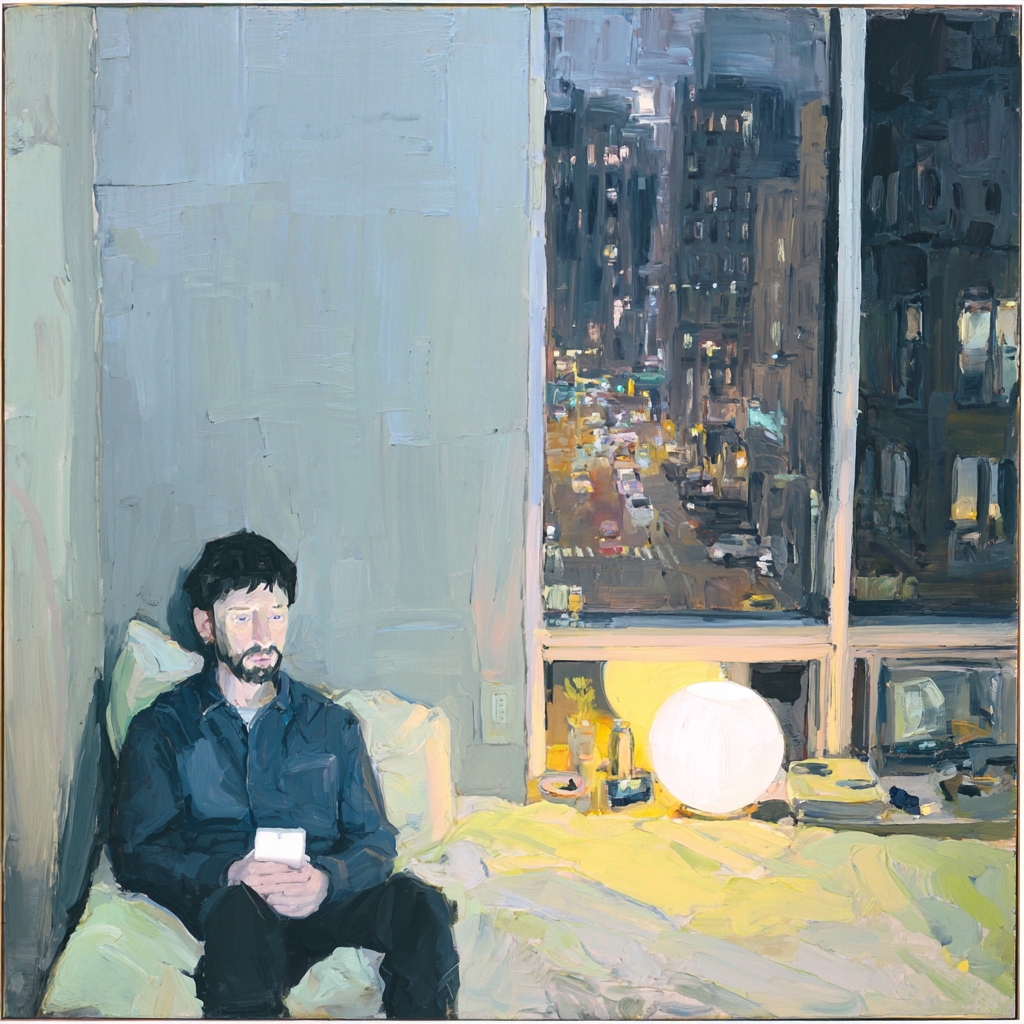
I checked my phone under the table.
Nothing.
Not from Sarah. Not from a client. Not from Marcus.
For once, nobody needed me.
I expected relief.
Instead, I felt the strange little drop of being unclaimed.
That is not the same as being lonely.
Lonely is simpler.
Unclaimed is what happens when your life works perfectly well and still has no one built into its architecture.
I looked around the table and realized they hadn’t escaped anything.
That was almost comforting.
They were still tired. Still vain in small, forgivable ways. Still checking their phones under the table like the rest of us poor laboratory animals.
But they had made peace with a kind of repetition I had always treated as surrender.
Dinner. Dog. Baby. Mortgage. Sunday market. Someone knowing how you take your coffee without turning it into a personality test.
Maybe that was the thing.
Not happiness.
Continuity.
I have spent years distrusting repetition.
Repetition sounded like surrender.
Maybe I was wrong.
Maybe repetition is how some people make a place for tenderness to survive.
Around eleven, people started leaving.
Eleven.
That’s when dinner parties end now.
Not because the night is over. Because people have morning routines. Dogs. children. Pilates. Farmers markets. Lives with load-bearing Sundays.
Maya packed leftovers into a glass container and handed it to me.
A real container.
With a lid that knew its purpose.
“You don’t have to,” I said.
“I know,” she said.
That almost got me.
Not dramatically. I didn’t suddenly understand love because someone gave me farro. I am not that fragile, despite evidence gathered by several women and one therapist.
But there was something about it.
Someone had made too much food and assumed I should take some home.
That is intimacy too.
Not the cinematic kind.
The useful kind.
The kind with lids.
On the train back, I held the container in my lap like evidence.
Across from me, a couple leaned against each other, half-asleep. A guy in a puffer jacket watched TikToks without headphones because society continues to fail at the simplest level. Two teenagers laughed at something on one phone.
I thought about my apartment.
Not as failure.
As choice.
The low lamps. The books. The good sheets. The photograph from Lisbon. The chair no one sits in but me. The beautiful glasses. The unfinished corner I keep meaning to deal with and don’t, because some unfinished things begin to feel like personality.
My place has seduction.
It has solitude.
It has control.
What it does not have is much evidence of other people staying.
That is a different problem.
A quieter one.
New York at midnight lets you pretend the night is still young, even when you’re carrying leftovers from Cobble Hill and realizing your life may be more deliberate than you thought and less open than you hoped.
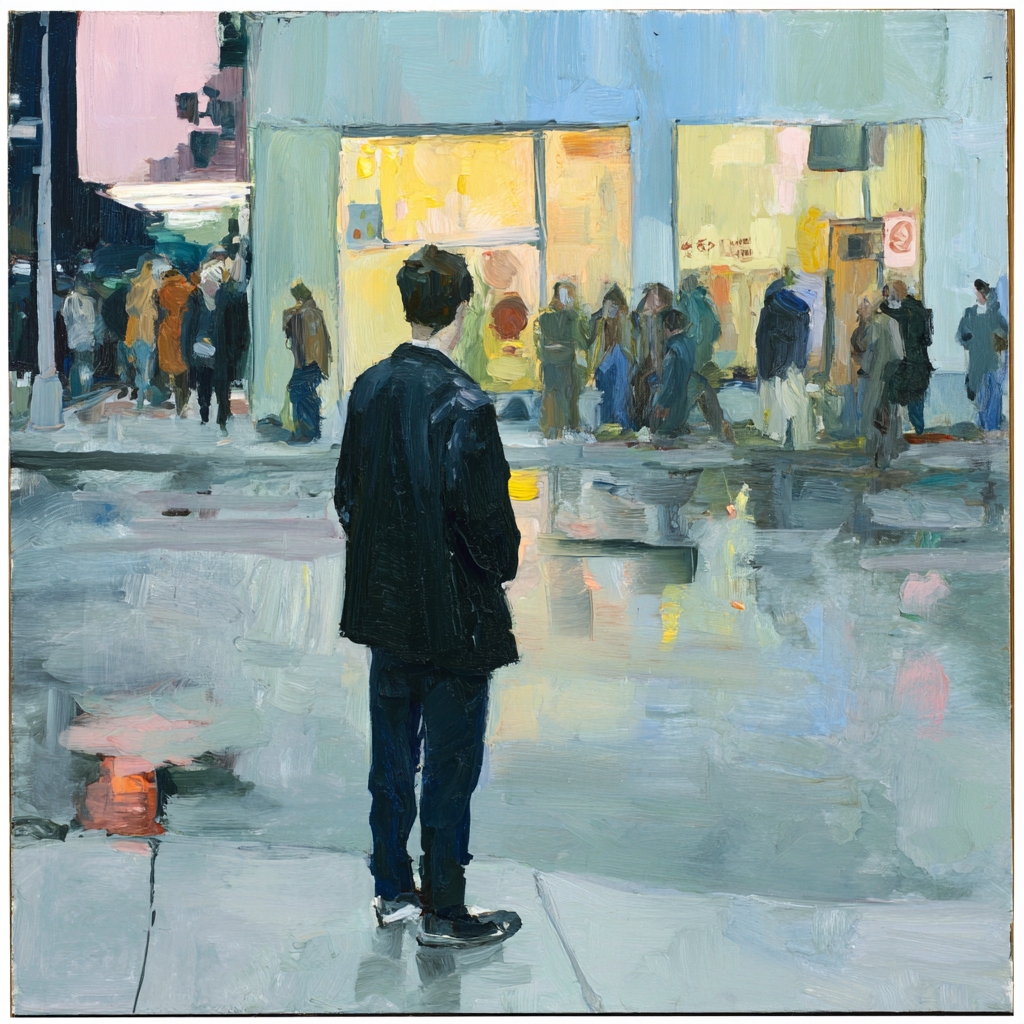
I got off at Second Avenue and walked home through the cold.
At home, I put the container in the fridge.
Opened it once.
Closed it.
Poured bourbon.
Did not sit down right away.
The apartment looked good.
That annoyed me.
It looked exactly the way I had designed it to look. Calm. Sharp. A little unfinished. A place where a man could think, drink, work, read, desire, recover, disappear.
A place for one person to remain himself.
That is not nothing.
But it is not everything.
Marcus texted around midnight.
Still alive?
I wrote:
Barely. Everyone has serving bowls now.
He replied:
That’s how it starts. Next they get matching towels.
I looked around my apartment.
My towels are actually fine.
This is what I mean about people making assumptions.
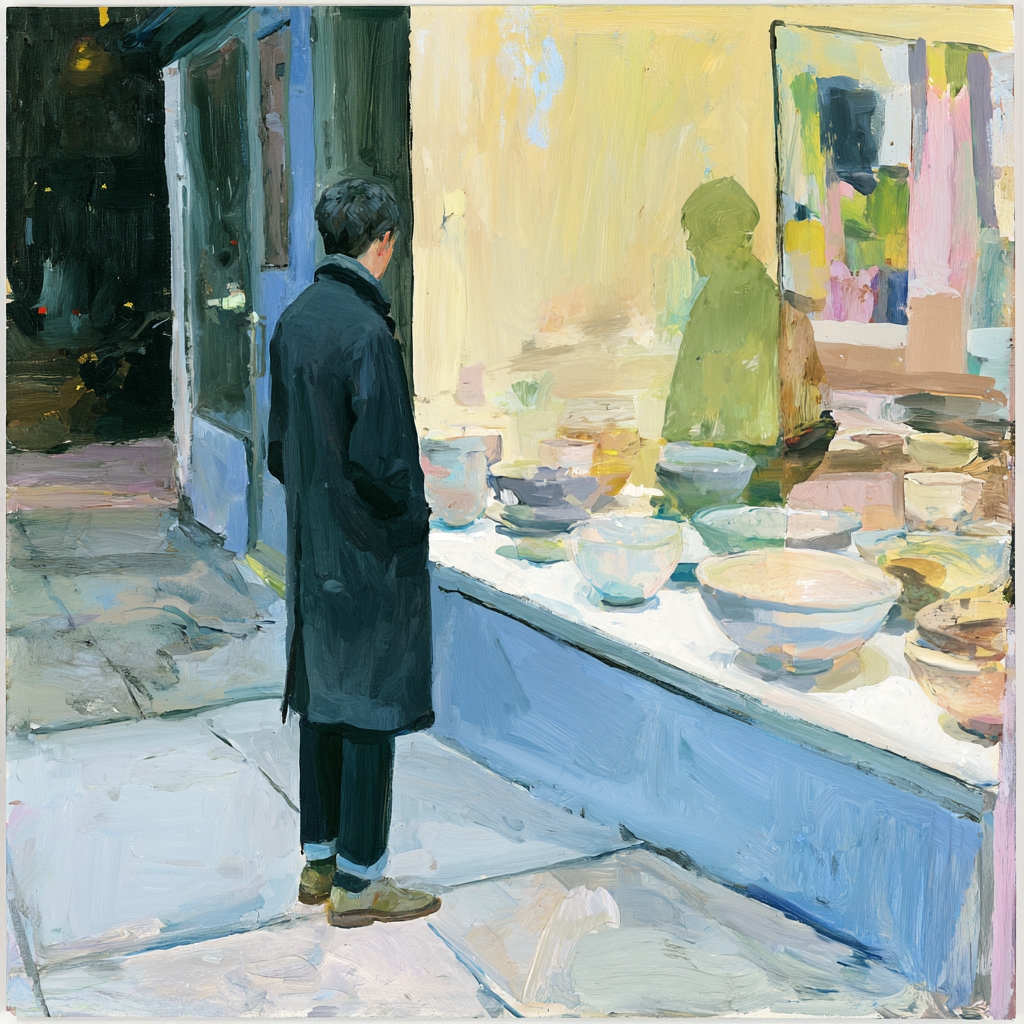
The next morning, I walked down the Bowery and passed a homeware store with bowls in the window.
Beautiful bowls.
Expensive bowls.
Bowls made for people who say things like “we’re doing a casual dinner” and somehow produce lamb.
I stopped for a second.
Not long.
Long enough to see myself reflected in the glass, standing there in yesterday’s coat, looking at objects meant for a life I did not quite want and did not entirely dismiss.
I didn’t go in.
That felt right.
Buying a bowl would have made the whole thing too easy. Too symbolic. Too much like a man learning a lesson in the third act because ceramics entered his life.
I don’t put that kind of faith in objects.
A bowl is a bowl.
It does not make a home.
People do.
Repetition does.
The willingness to be expected somewhere does.
Still, I stood there another second.
Then I kept walking.
At home, I ate Maya’s leftovers for lunch, standing at the counter because some habits deserve their dignity.
The food was better the next day.
Most things are, once they stop trying to be an event.
D.S.
—“The Unmarried Man” is a weekly column about dating and life in New York City from the perspective of a man in his late thirties.