What You Resist Persists: A Personal Reckoning with Inner Tension
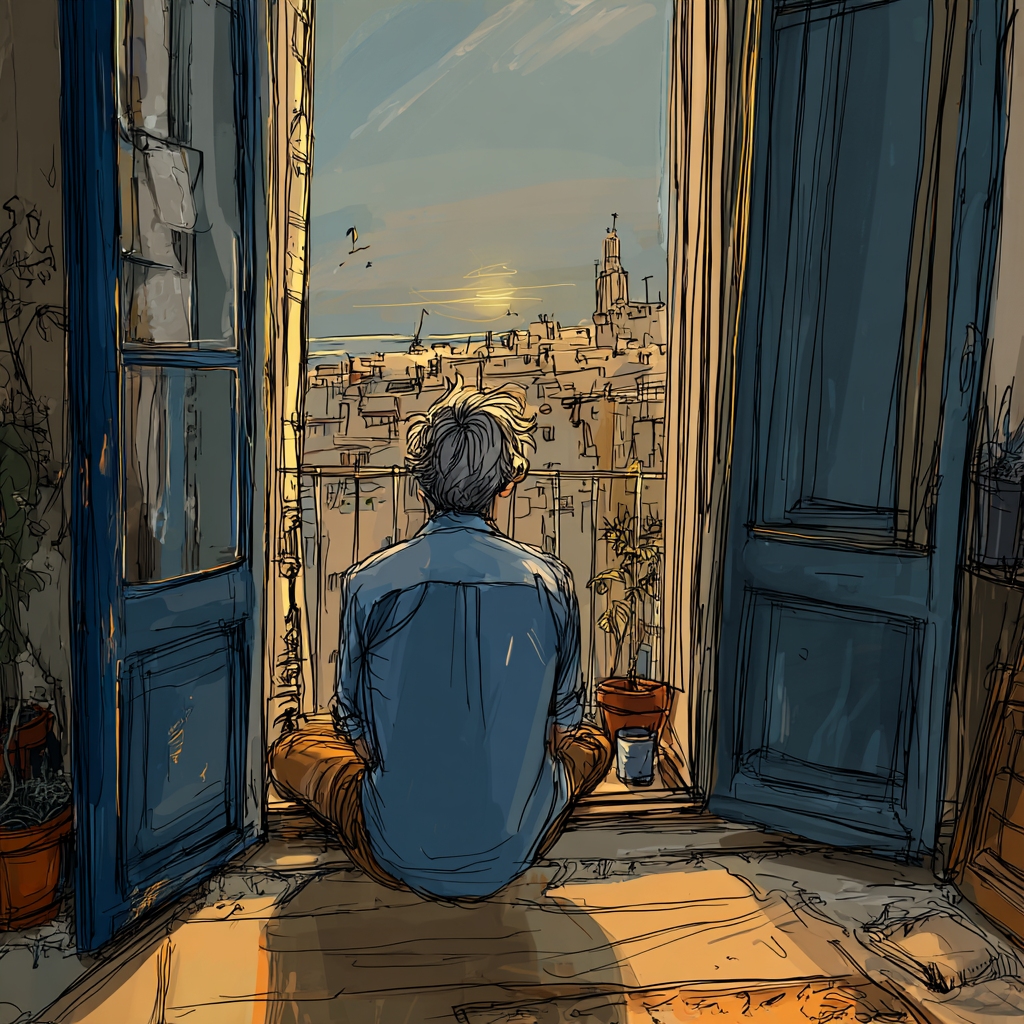
I’m in my forties. I’ve spent years wrestling with my own mind.
The spiral of worry about things that never happened. The battles inside my head that nobody else could see…
This essay is my own experience working through what I’ve learned about inner anxiety and tension, not from a clinical textbook, but from living with it, studying philosophy, and understanding why fighting made everything worse.
This is personal reflection. My experience. My perspective.
But if any of this resonates, if it helps you see your own war differently, then it’s worth sharing.
Let’s begin.
You’re at War With Yourself
Every day. Every hour. Sometimes every minute.
Your mind attacks. You defend. The cycle never stops.
You think this is normal. You think everyone lives like this.
They do. But that doesn’t make it right.
The Enemy You Can’t See
Here’s what’s happening inside your head right now.
A part of your brain scans for danger. Constantly. It never sleeps.
This scanner evolved to keep you alive. To spot the lion in the grass. To notice the bad berry. To sense the threat.
It saved your ancestors. It keeps you breathing.
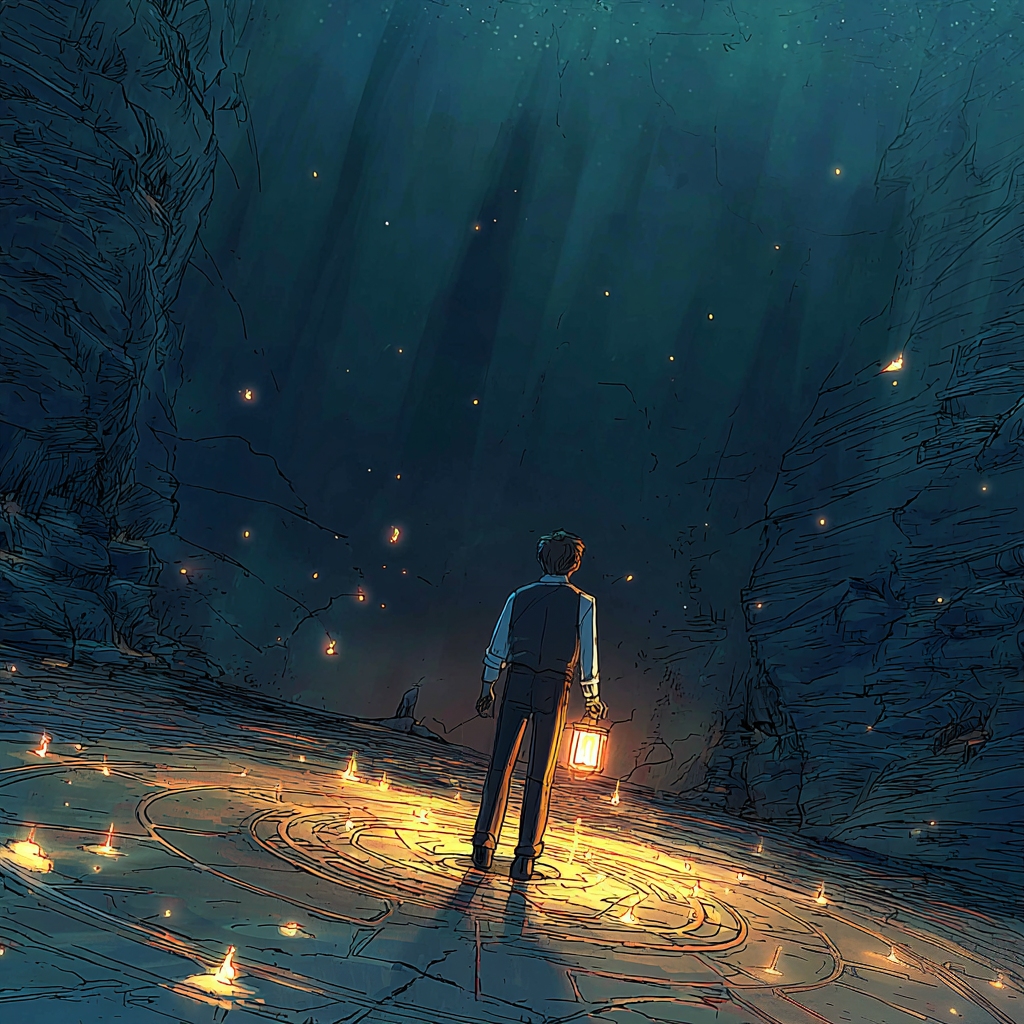
But it’s gone haywire.
The scanner no longer looks for lions. It looks for rejection. Failure. Embarrassment. Financial disaster.
It manufactures threats that don’t exist yet. It replays threats that already happened. It invents threats that will never happen.
And you believe every single one.
Why? Because you think the scanner is you.
You think the worried voice in your head is your voice. The racing thoughts are your thoughts.
They’re not.
You are not the scanner. You are not the thoughts. You are not even the thinker.
You are the awareness that notices all of this happening.
But we’ll get to that.
The Trap You Built Yourself
Here’s the cruel joke.
You feel anxious. The scanner kicks in. It says: “This feeling is bad. We must fix this.”
So you try to fix it.
You read self-help books. You practice positive thinking. You meditate. You exercise. You cut out caffeine.
You do everything right.
And the feeling gets worse.
Why?
Because you’re using the problem to solve the problem. You’re using the worried mind to cure the worried mind.
It’s like trying to put out a fire with gasoline.
The scanner says: “You’re tense.” You think: “I shouldn’t be tense.” Now you’re stressed about being stressed.
Congratulations. You’ve doubled your problem.
This is called a meta-loop. Anxiety about anxiety. Fear about fear.
The original tension might be about giving a presentation. Or making a phone call. Or talking to someone attractive.
But now you have a second layer. A more powerful layer.
You’re terrified of the feeling itself. Of having it. Of people seeing it. Of losing control to it.
So you monitor yourself constantly. Scanning for signs. Checking your pulse. Watching your breath.
“Am I nervous? Am I getting nervous? What if I get nervous?”
You’ve become the prison guard watching yourself. The thought police monitoring your own mind.
And the more you watch, the more you find.
What You’re Really Running From
Let’s get honest for a second.
What scares you most isn’t failure. Isn’t rejection.
It’s the sensation itself.
That tightness in your chest. That knot in your stomach. That electric hum in your nervous system.
The racing heart. The shallow breath. The fog in your head.
You’ll do anything to avoid that feeling.
You’ll work yourself to exhaustion. You’ll drink. You’ll scroll your phone until 2 AM. You’ll pick fights. You’ll chase success you don’t even want.
All to escape one simple sensation.
But here’s what you don’t understand: the sensation isn’t the problem.
Your war against the sensation is the problem.
Think about physical pain for a moment.
If you touch a hot stove, your hand hurts. That pain is useful. It’s information. It makes you pull your hand away.
You don’t fight the pain. You don’t get stressed about having pain. You just move your hand and let it heal.
But with emotional discomfort, we do something bizarre.
We feel the tension. Then we feel bad about feeling it. Then we stress about feeling bad about feeling it.
We create layers upon layers of suffering on top of a simple sensation.
The Buddha figured this out 2,500 years ago. He called it the “second arrow.”
Life shoots you with one arrow, the original discomfort, the original tension. That hurts. That’s unavoidable.
But then you shoot yourself with a second arrow. And a third. And a fourth.
“Why do I feel this way?” “I shouldn’t feel this way.” “What’s wrong with me?” “I need to fix this.”
Those are the arrows you shoot at yourself. And they hurt far more than the original feeling.
The Security Myth
You think you need security. You think that’s what you’re building toward.
Enough money. Enough success. Enough respect. Enough control.
Get enough of these things, and the inner turmoil disappears. Right?
Wrong.
Security doesn’t exist. It never did. It never will.
The universe is a river. Everything flows. Everything changes.
Your body replaces every cell in seven years. Your thoughts change every second. Your circumstances shift constantly.
You are not a thing. You are a process. A pattern. A temporary arrangement of energy.
And you’re demanding that this flowing, changing, dying reality stand still for you.
You’re building sand castles on the beach. And screaming at the tide to stop coming in.
It won’t work. It can’t work. It will never work.
But we spend our entire lives trying anyway.
We chase the permanent in a world where nothing is permanent. We seek the fixed in a reality that is pure flow.
This is the fundamental tension of human existence. The desire for security in an insecure universe.
And here’s the kicker: the desire for security and the fear of insecurity are the same thing.
Think about that.
To want security is to be acutely aware that you don’t have it. It’s a confession of vulnerability.
Every wall you build to feel safe is built from the bricks of your fear.

The More You Defend, The More You Lose
Watch what happens when you chase security.
You build something. A career. A reputation. A bank account. A relationship.
Good. You’ve got something to defend now.
Is it strong enough? Is it safe? What if you lose it? What if it falls apart? What if someone takes it?
You’ve added more worry, not less.
The fortress becomes a prison. The thing you built to feel safe now terrifies you.
You have more to lose. More to protect. More to stress about.
This is why successful men often feel more tense than broke men. They have bigger fortresses. More walls to defend. More to lose.
The inner turmoil doesn’t decrease with success. It compounds with it.
I’ve watched this happen to friends. To colleagues. To myself.
Guy starts a business. Works insane hours. Builds it into something real.
Now he can’t relax. Can’t take a vacation. Can’t stop checking his phone.
Why? Because he has something to lose now.
The business was supposed to give him security. Instead, it gave him more to worry about.
The bigger the castle, the more gates you have to guard.
What Resistance Actually Does
Here’s a fundamental law: what you resist persists.
The more you fight a feeling, the stronger it gets.
Push against the tension, and it pushes back harder. Run from it, and it chases you faster.
This isn’t mystical. It’s basic psychology.
Try not to think about a pink elephant. What’s the only thing you can think about?
Your mind works the same way with uncomfortable feelings.
“Don’t be nervous.” Now you’re monitoring for nervousness. Scanning for signs. Hyper-aware of every flutter in your chest.
You’ve just guaranteed you’ll be nervous.
This is the trap most men live in. Fighting feelings they create by fighting them.
I learned this the hard way.
Years ago, I started getting tense before public speaking. Not unusual. Most people do.
But instead of just feeling nervous and speaking anyway, I decided to fix it.
I read books on confidence. I practiced power poses. I did breathing exercises. I rehearsed obsessively.
And I got worse.
Why? Because my entire focus was on not being nervous.
Before every talk, I’d check myself. “Am I nervous? How nervous? Can people tell?”
I was so busy monitoring my state that I couldn’t focus on what I was actually saying.
The inner battle became the main event. The talk was secondary.
I’d created a self-fulfilling prophecy. I was tense about being tense, which made me more tense, which made me more worried about being tense.
It took me years to realize: the solution wasn’t trying harder to not be nervous.
The solution was stopping the fight entirely.

The Intelligence of Surrender
You hear “surrender” and think “weakness.”
You think it means giving up. Becoming passive. Letting life run you over.
That’s not surrender. That’s defeat.
Real surrender is different. It’s intelligent. It’s powerful.
Think about swimming.
The beginner panics in water. He flails. He fights. He grabs and thrashes.
And he sinks.
The expert relaxes. He trusts the water. He works with it instead of against it.
He doesn’t fight the current. He uses it.
That’s surrender. That’s strength.
The water will support you. But only if you stop attacking it.
Philosopher Alan Watts had a beautiful way of describing this. He said:
“To have faith is to trust yourself to the water. When you swim, you don’t grab hold of the water, because if you do you will sink and drown. Instead, you relax, and float.”
This is what surrender looks like with internal struggles.
You stop grabbing at them. Stop trying to push them away. Stop fighting them.
You let them be there. You allow the feeling.
And something remarkable happens.
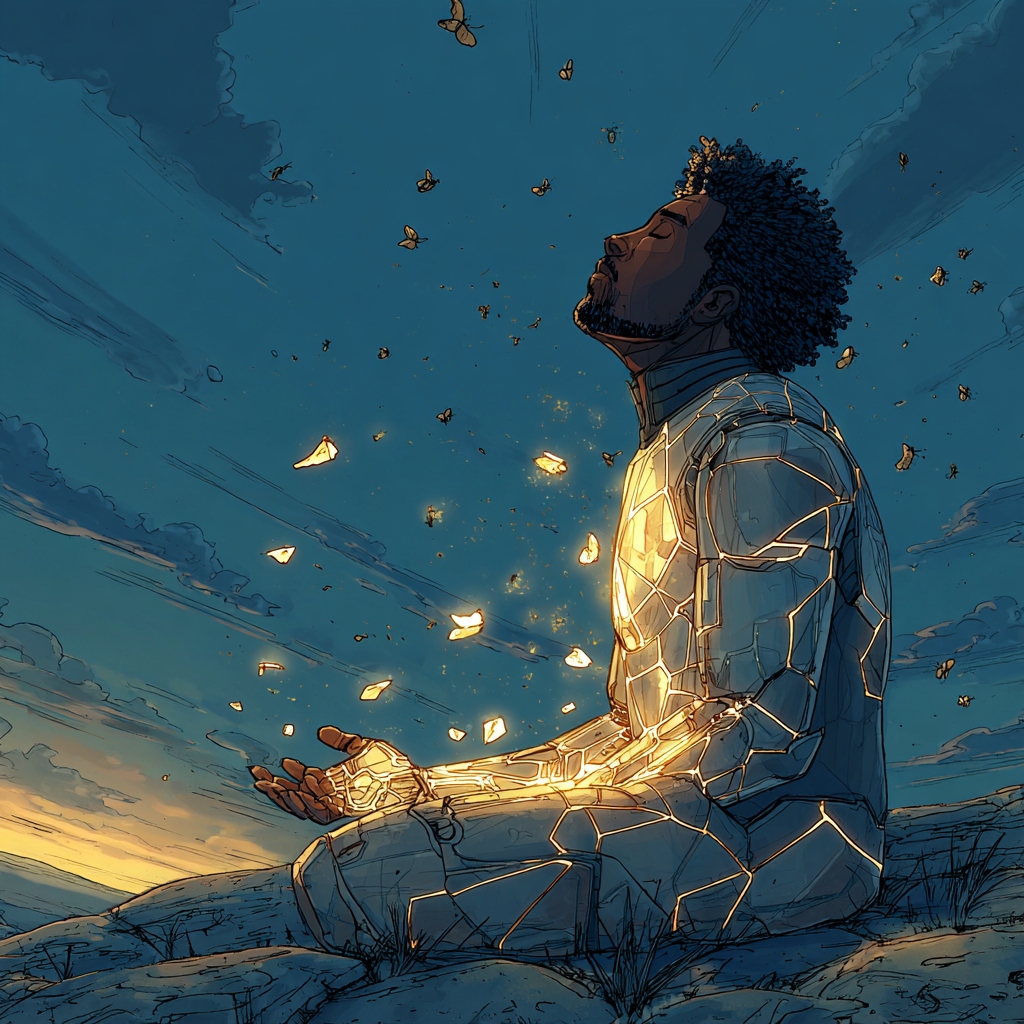
When you stop feeding tension with resistance, it loses its power. It becomes just a sensation. A wave passing through.
It rises. It peaks. It fades.
Like all sensations do.
But we never discover this because we’re too busy fighting. We never let the wave complete its natural cycle.
We grab at the water and wonder why we’re drowning.
You Are Not Your Thoughts
This is the key. The breakthrough. The thing that changes everything.
You are not the worried voice in your head.
That voice is the scanner. The troubleshooter. The warning system.
It’s a tool. A useful one. But it’s not you.
You are the space in which thoughts appear. The awareness that watches them.
The sky, not the clouds. The ocean, not the waves.
This isn’t abstract philosophy. This is direct experience.
Right now, you can notice thoughts appearing in your mind. Worries. Plans. Judgments. Commentary.
Who is noticing the thoughts?
Not the thoughts themselves. They can’t watch themselves.
Something else is there. Something that is aware of the thoughts but is not itself a thought.
That’s you. That’s what you actually are.
You are the awareness. The consciousness. The space in which experience happens.
When you feel tense, don’t say “I am anxious.”
Say: “I am aware of tension in my body.”
Feel the difference?
In the first version, you and the feeling are the same thing. It consumes you. It defines you.
In the second version, there’s distance. There’s separation. There’s you. And there’s a feeling passing through you.
The feeling can’t touch what you actually are. It can only move through your awareness like weather through the sky.
The sky doesn’t become the storm. The sky doesn’t try to stop the storm. The sky simply allows the storm to pass through.
You can do the same with uncomfortable feelings.

The Future Doesn’t Exist
Your worries live in the future. Always.
What if I fail? What if they reject me? What if I lose everything? What if I embarrass myself? What if something terrible happens?
But the future is a ghost. A story. A concept.
It never arrives. It can’t arrive. When tomorrow comes, it’s called today.
The only thing that exists is now. This moment. Right here.
And in this moment, not the story about this moment, but the raw experience of it, where is the tension?
Stop reading. Feel your body. Hear the sounds around you. See the light.
Right now. Just this. No story. No future. No past.
The discomfort isn’t here in the same way, is it?
Oh, the physical sensations might be here. The tight chest. The tense shoulders.
But those are just sensations. They’re not problems. They’re just feelings in a body.
The suffering, the mental anguish part, is in the story you’re telling about what might happen later.
“This feeling means something bad is coming.” “I can’t handle this.” “Something’s wrong with me.”
That’s the story. That’s where the suffering is.
Drop the story. Come back to now. The mental turmoil loses its fuel.
It has to. Because you’re no longer feeding it attention.
“The real secret of life is to be completely engaged with what you are doing in the here and now. And instead of calling it work, realize it is play.”
This applies to internal struggles too.
When you’re completely engaged with the present moment, there’s no room for worry about the future.
The two can’t coexist.
Mental anguish requires time travel. It requires you to leave now and project into then.
Presence ends that journey. It brings you back.
The Practice: Stop and Feel
Here’s what to do when the wave hits.
Don’t fight it. Don’t analyze it. Don’t try to fix it.
Stop. Literally stop what you’re doing.
Feel the sensation. Where is it in your body? Chest? Stomach? Throat? Head?
Don’t judge it. Don’t label it as bad. Just feel it.
What does it actually feel like? Tightness? Heat? Pressure? Buzzing? Emptiness? Tingling?
Get curious about it. Like a scientist observing something interesting.
“Huh. So this is what tension feels like in my body right now.”
That’s it. Just feel it without resistance.
Don’t try to make it go away. Don’t wish it were different. Just allow it to be exactly what it is.
Watch what happens.
The sensation rises. It peaks. It changes. It fades.
Like a wave. It moves through you and dissolves.
It doesn’t stay. It can’t stay. Nothing stays.
Energy is always moving. Always flowing. Always changing form.
But when you fight it, when you resist it, when you run from it. You interrupt the natural flow.
You dam the river. You create stagnation.
Your resistance is the feeling’s life support.
Cut the resistance, and the sensation completes its cycle naturally.
I practice this constantly now.
The nervous storm shows up. I feel the familiar tightness in my chest.
Instead of thinking “Oh no, not again, I need to fix this,” I think: “There it is. Hello, old friend.”
I locate it in my body. Usually my chest and throat.
I feel into it. Really feel it. Not the story about it. The actual physical sensation.
And I stay with it. I don’t run. I don’t distract myself. I just feel it.
Within minutes, sometimes seconds, it shifts. It changes. It softens.
Not because I tried to make it soften. But because I stopped preventing it from completing its natural cycle.
This isn’t positive thinking. This isn’t affirmations. This isn’t trying to feel better.
This is radical acceptance. Radical allowance.
And it works better than any technique I’ve ever tried.
The Cosmic Joke
Here’s the punchline you’ve been missing.
You are what you’re seeking.
The peace you’re chasing? You are that peace underneath the noise.
The security you’re building toward? You are that security. You are existence itself.
The strength you’re trying to develop? You are the universe. You are the energy that creates galaxies.
You just forgot.
You got so identified with the character you’re playing, the struggling guy, the guy who needs to fix himself, that you forgot what you actually are.
You are not in the universe. You are the universe.
You didn’t come into this world. You came out of it. Like a wave comes out of the ocean.
The wave thinks it’s separate. It thinks it’s alone. It thinks it might fade.
But it’s always been the ocean. It was never separate. It cannot end.
It’s just water temporarily pretending to be a wave.
You’re doing the same thing.
You’re the universe temporarily pretending to be a person who lives in a specific city with a set of problems.
And you’ve been pretending so well, so convincingly, that you forgot it’s a game.
You forgot you’re playing a role. You forgot the curtain will eventually fall.
And in that forgetting, you suffer.
Because the character is vulnerable. The character can fail. The character can be rejected.
But what you actually are can’t be harmed. Can’t fail.
You are the awareness in which the whole drama unfolds. The screen on which the movie plays.
The movie can be tragic or beautiful or terrifying. But the screen is never damaged by what appears on it.
You are the screen.
The inner turmoil is just part of the movie.
Stop Taking Yourself So Seriously
The universe is playing. Having fun. Creating and destroying for the joy of it.
Stars explode. Galaxies collide. Species evolve and go extinct.
It’s all part of the dance. The cosmic game.
But you take your little part in this drama so seriously.
You think your worries matter cosmically. You think your failures define you. You think your story is the only story.
You’ve forgotten it’s all a game. A play. A temporary expression of something eternal.
You’re an actor who forgot he’s acting. Who thinks he really is Hamlet. Who thinks the danger is real.
Step back. See the absurdity. Laugh at it.
Not cruel laughter. Cosmic laughter. The laughter of recognition.
“Look at me. A temporary arrangement of atoms worried about its temporality.”
That’s hilarious. That’s beautiful. That’s the human condition in a nutshell.
When you see the joke, the tension can’t survive. It has nowhere to hide.
Because internal struggle depends on taking yourself seriously. On believing the story completely.
When you see it’s just a story, one story among billions, the grip loosens.
You can still play your part. You can still care about things. You can still work hard.
But you do it lightly. Playfully. Without the desperate clinging.
Like a kid playing make-believe. Totally absorbed in the game. But not confused about what’s real.
What This Actually Looks Like
So how do you live this?
You don’t abandon responsibility. You don’t become passive. You don’t check out.
You do your work. You pay your bills. You take care of your people. You pursue your goals.
But you do it differently.
You work hard without working yourself to burnout. You care deeply without needing to control outcomes.
You plan for the future without living in it. You learn from the past without drowning in it.
You stay here. Now. In the only moment that exists.
You let the feelings come. You let them pass. You don’t resist. You don’t cling.
Like clouds through the sky. Like waves through the ocean.
You are the sky. You are the ocean. Not the temporary weather passing through.
This doesn’t mean you never feel discomfort. You will. You’re human.
But the relationship to discomfort changes completely.
Before, it was the enemy. The thing you fought. The thing that meant something was wrong with you.
Now, it’s just weather. A sensation. Information from your nervous system.
It rises. You notice it. You feel it. It passes.
No drama. No story. No war.
Just experience happening.
When the Mind Calms Down
Here’s what I’ve noticed in my own life.
The less I fight the inner storms, the fewer storms I have.
Not because I’m trying to have fewer. But because I’ve stopped creating the conditions that produce them.
I no longer live in the future. I no longer treat my thoughts as gospel truth.
I no longer identify with the worried voice in my head.
When tension shows up, I welcome it. “Oh, there you are. I see you.”
And something shifts.
The feeling loses its power when I stop treating it like an enemy.
It’s just a sensation. A pattern of energy. A temporary state.
It doesn’t mean anything about me. It doesn’t mean I’m broken. It doesn’t mean something’s wrong.
It’s just what’s happening right now.
And right now always changes.
My life hasn’t become perfect. I still face challenges. I still have stressful situations.
But the baseline tension, the chronic, grinding, always-there feeling, has dissolved.
Because I stopped feeding it with resistance.
I stopped fighting myself.

The War Ends When You Stop Fighting
You can’t win a war against yourself.
The harder you fight, the more you lose. The more you defend, the more vulnerable you become.
The cure isn’t more fighting. It’s a ceasefire.
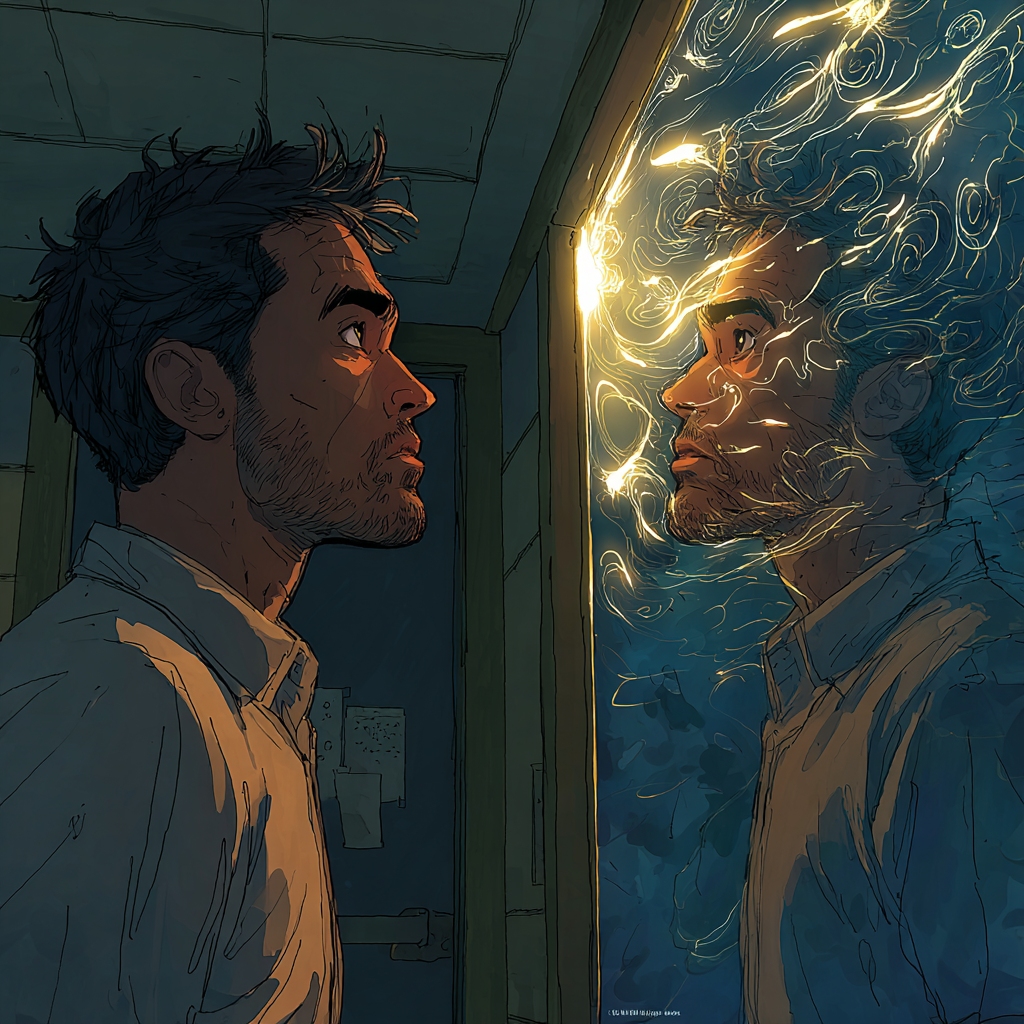
It’s laying down your weapons. Looking at your enemy. And realizing it was always your reflection.
The nervous system isn’t attacking you. It’s part of you trying to protect you.
It’s the scanner doing its job. Warning you. Keeping you alert.
Thank it. Feel it. Let it do its job without believing everything it says.
You don’t have to be at war anymore.
The battle was always optional. You just didn’t know it.
You thought you had to fight. You thought that’s what strength was.
But real strength is the opposite.
Real strength is the ability to feel without fragmenting. To experience without resisting.
Real strength is staying present with discomfort instead of running from it.
Real strength is being vulnerable. Open. Alive to whatever shows up.
That’s what warriors throughout history actually understood.
The expert swimmer doesn’t fight the current. He accepts the river’s power completely. And in that acceptance, he becomes fluid.
Not because he’s immune to danger. But because he doesn’t resist the flow.
He feels the pull. He acknowledges it. And he moves with it anyway.
That’s the path I’m suggesting.
Not the elimination of uncomfortable feelings. But the end of the war with them.
Right Now
Stop reading for a second.
Feel your breath. Feel your body. Notice where you are.
This is it. This is all there is. This moment.
Not perfect. Not peaceful. Not anything special.
Just this. Just here. Just now.
And in this moment, without the story, without the future, without the fight, who are you?
Not the struggling guy. Not the guy who needs fixing. Not the character in the drama.
Just awareness. Just presence. Just life happening.
That’s what you are. That’s what you’ve always been.
The war was with a ghost. The struggle was fighting a shadow.
You were never in danger. You were never separate. You were never broken.
You just believed you were.
Stop believing it.
The war is over.
You won. You always had.
Because there was never anyone to fight.
The enemy was always you. The warrior was always you. The battlefield was always you.
It was all you. Playing all the parts. Fighting yourself.
And now you can stop.
Put down the sword. Take off the armor. Rest.
You’re home.
You always were.
A Final Word
I’m still figuring this out. Still practicing. Still learning.
Some days I remember. Some days I forget and get caught in the old patterns.
But more and more, I find myself living from this understanding.
Less fighting. More allowing. Less future. More now.
Less identification with the worried voice. More awareness of the space in which it appears.
It’s not perfect. But it’s better.
And that’s enough.
If any of this resonates with you, try it. Not as a technique to fix yourself. But as an experiment.
What happens when you stop fighting?
What happens when you allow the discomfort to be there without trying to change it?
What happens when you come back to now?
You might be surprised.
Not by what you gain. But by what you discover you never lost.
About This Essay
—Written and edited by Miami-based Fernando Lahoz García, M.A. in Journalism from Complutense University of Madrid.
This piece reflects my personal experience navigating anxiety as a man over 40, drawing philosophical inspiration from Alan Watts’ teachings on consciousness, resistance, and the nature of self. This is personal reflection and philosophical exploration, not medical or therapeutic advice. If you’re experiencing persistent or severe anxiety, please consult a qualified mental health professional.

Fitness and Exercise Routines for Men Over 50

Sings a Man is in Love vs. Signs He Doesn’t Love You

How Men Over 40 Can Let Go of What Wasn’t And Embrace What Is

Tech-Inspired Men’s Wellness: Harnessing Technology for Health and Fitness

Healing the Past: How Men Over 40 Can Overcome Childhood Trauma