20+ Caesar Hairstyles for Men: The Modern Haircut Guide
The Caesar haircut has been a timeless classic since ancient Rome, and it continues to be one of the most versatile and low-maintenance hairstyles for modern men.
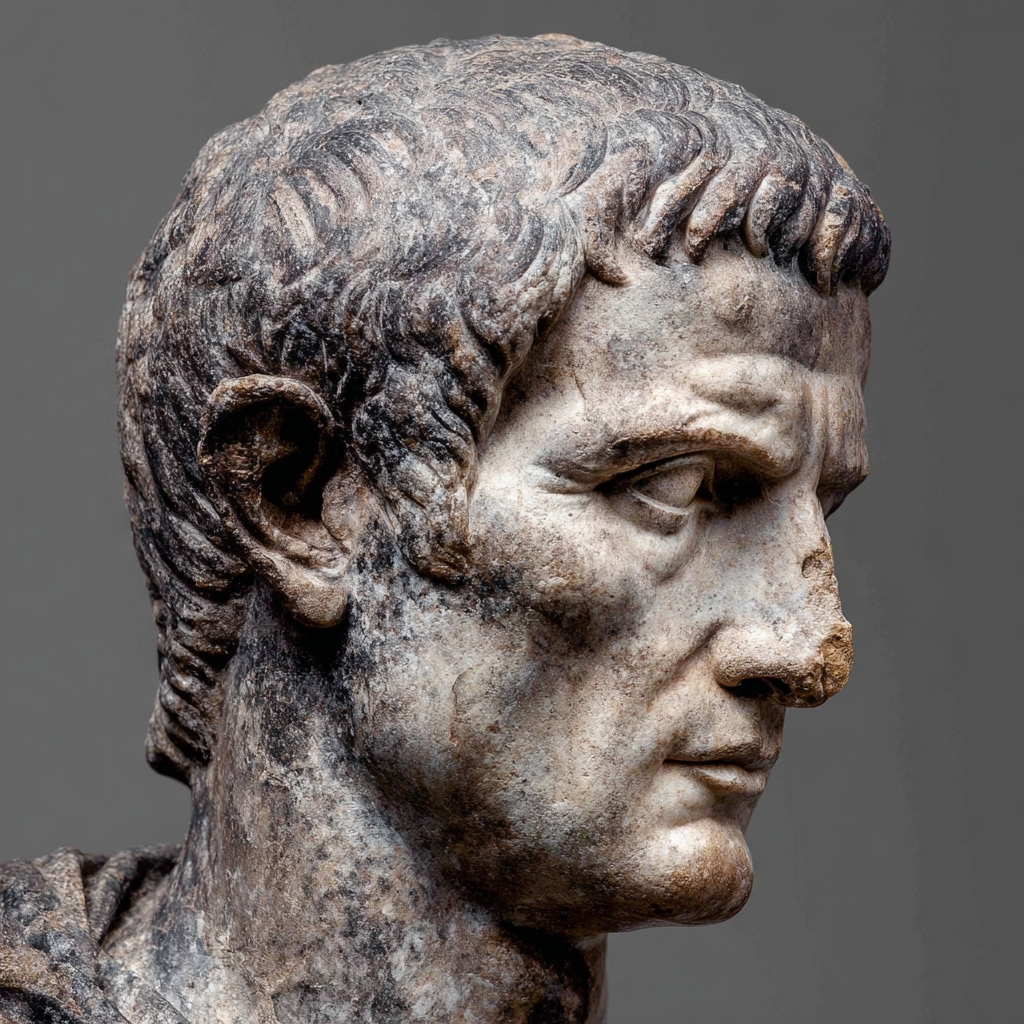
Named after Julius Caesar, who reportedly wore his hair forward to disguise his receding hairline, this cut has evolved into numerous contemporary variations that suit different face shapes, hair types, and personal styles.
What is a Caesar Haircut?
The Caesar haircut is characterized by short hair all around with a horizontally straight-cut fringe that extends 1-2 inches from the hairline.
The classic Caesar haircut maintains a uniform length on top, sides, and back, creating a subtle appearance with gentle layering. The defining feature is the short, blunt fringe that’s brushed forward toward the forehead.
Why Choose a Caesar Haircut?
Low Maintenance: Requires minimal styling and looks great with just a quick brush or comb.
Versatile: Works with various hair types including straight, wavy, and curly hair.
Professional: Acceptable in corporate environments while still being stylish.
Face Shape Friendly: Suits most face shapes, especially oval, square, and diamond faces.
Thinning Hair Solution: The forward styling helps conceal receding hairlines and thinning crowns.
20 Caesar Haircut Variations
1. Classic Caesar
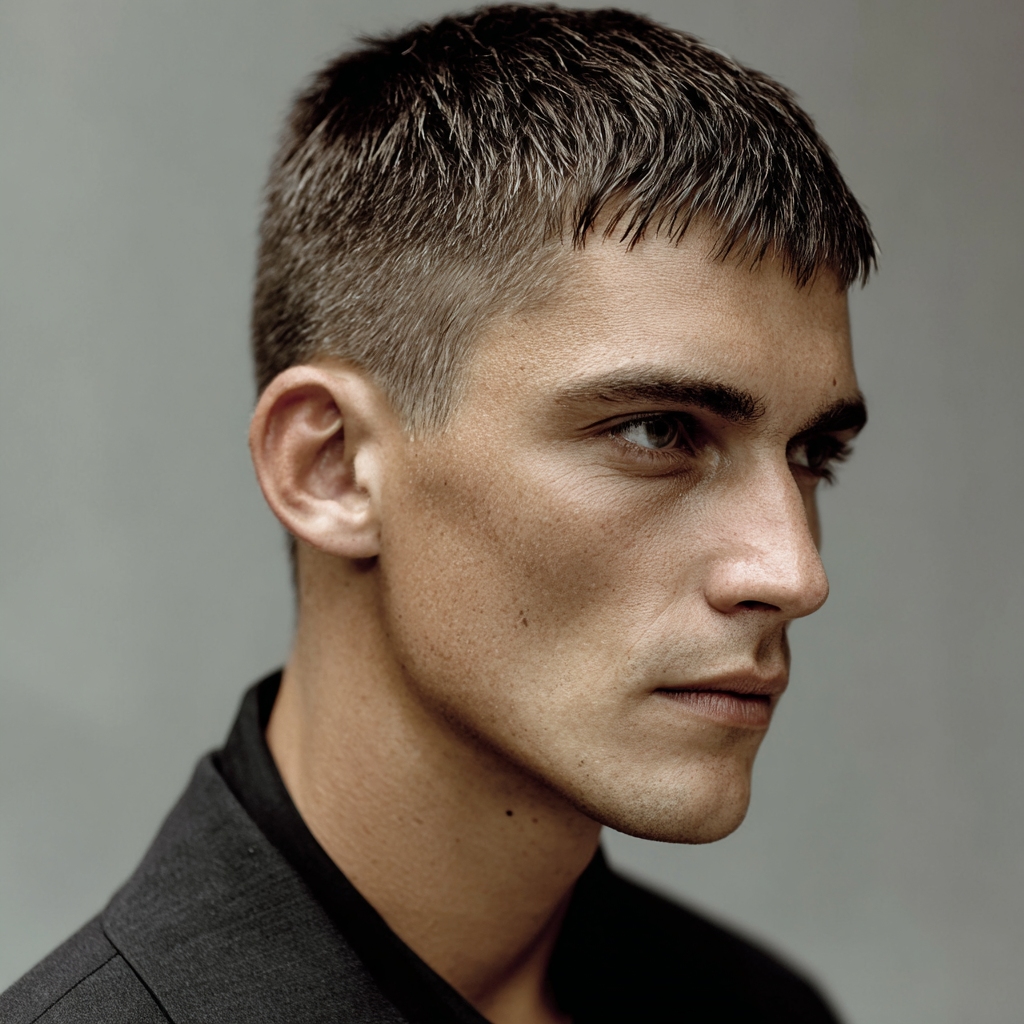
The original and most recognizable version features uniformly short hair (about 1-2 inches) all over with a slightly longer fringe brushed forward.
The sides and back are cut to the same length as the top, creating a neat, rounded silhouette. This timeless style works in any setting and requires virtually no styling.
2. Short Caesar Cut
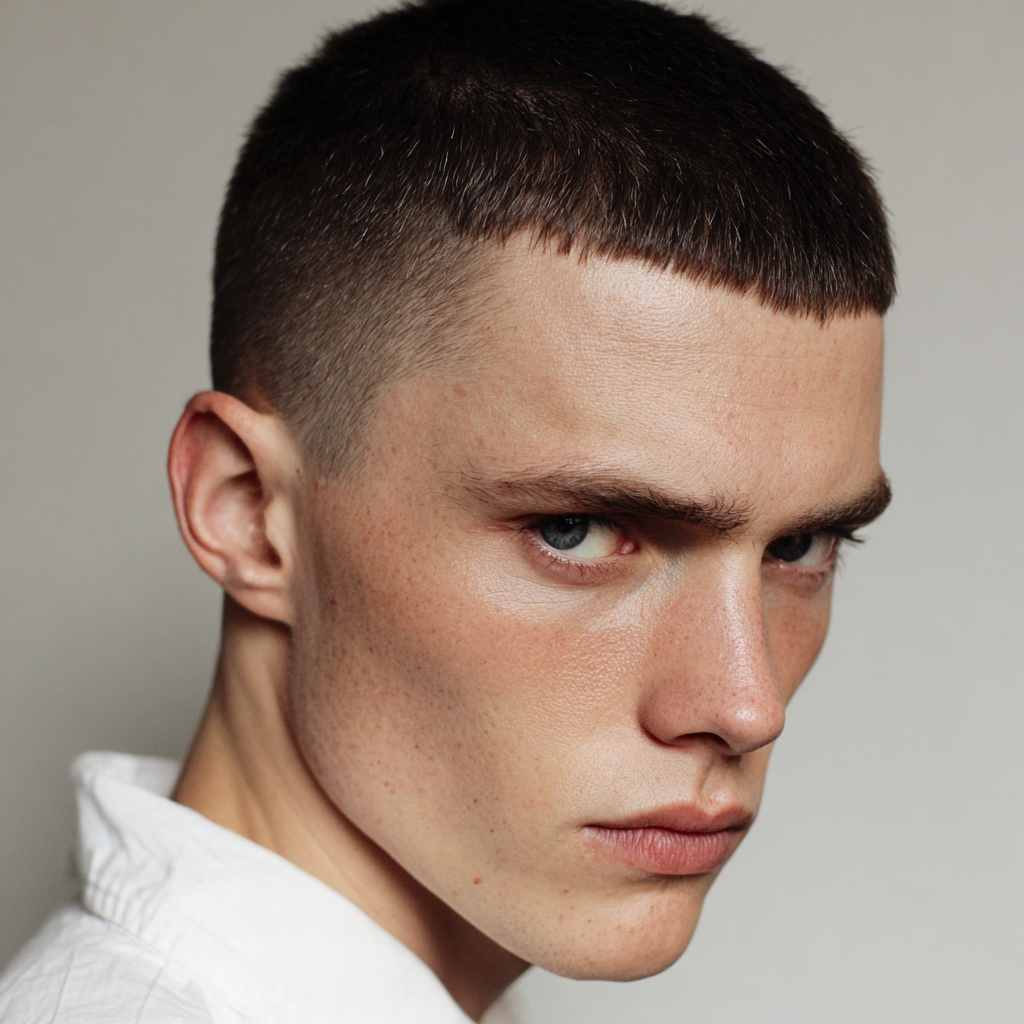
An ultra-low-maintenance option with hair cut to about 0.5-1 inch all over. The fringe is minimal but still present, brushed slightly forward.
Perfect for men who want the Caesar aesthetic with even less upkeep, and excellent for those with thick hair who want to reduce bulk.
3. Long Caesar

Features 3-4+ inches of length on top with a more pronounced fringe. This variation offers more styling versatility while maintaining Caesar’s signature forward fringe.
The extra length allows for texture and movement closer to a 70s shag cut while maintaining a clean, structured appearance.
4. Textured Caesar Haircut
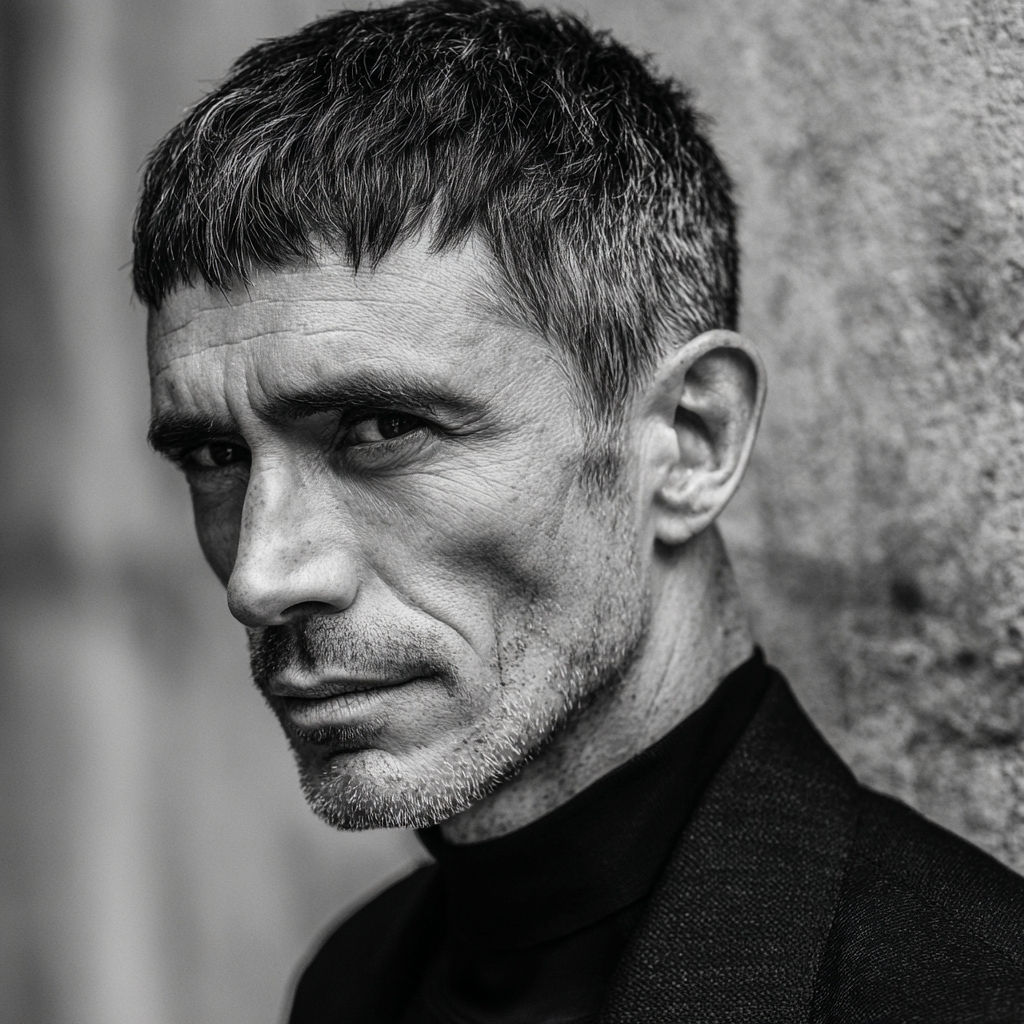
Incorporates choppy, piece-y layers throughout the top and fringe for a modern, edgy look. The texture adds dimension and movement, making this style particularly popular with younger men.
Point-cutting techniques create separation between sections, giving the haircut a more casual, lived-in appearance.
5. Caesar Fade
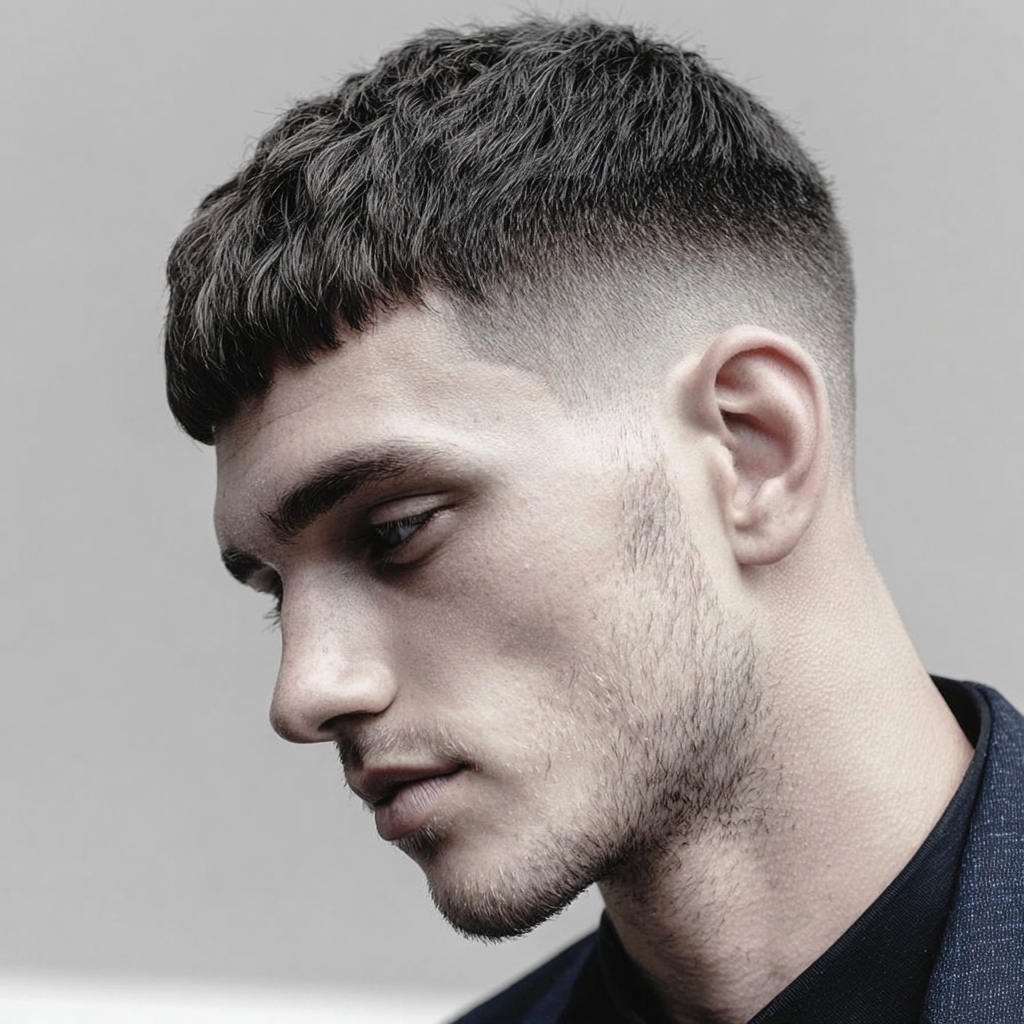
Combines the classic Caesar top with faded sides that gradually transition from longer hair on top to skin or very short hair near the ears and neckline.
This creates a sharp, contemporary contrast that’s become one of the most popular Caesar variations. The fade haircut can be low, mid, or high, depending on preference.
6. High Fade Textured Caesar Haircut
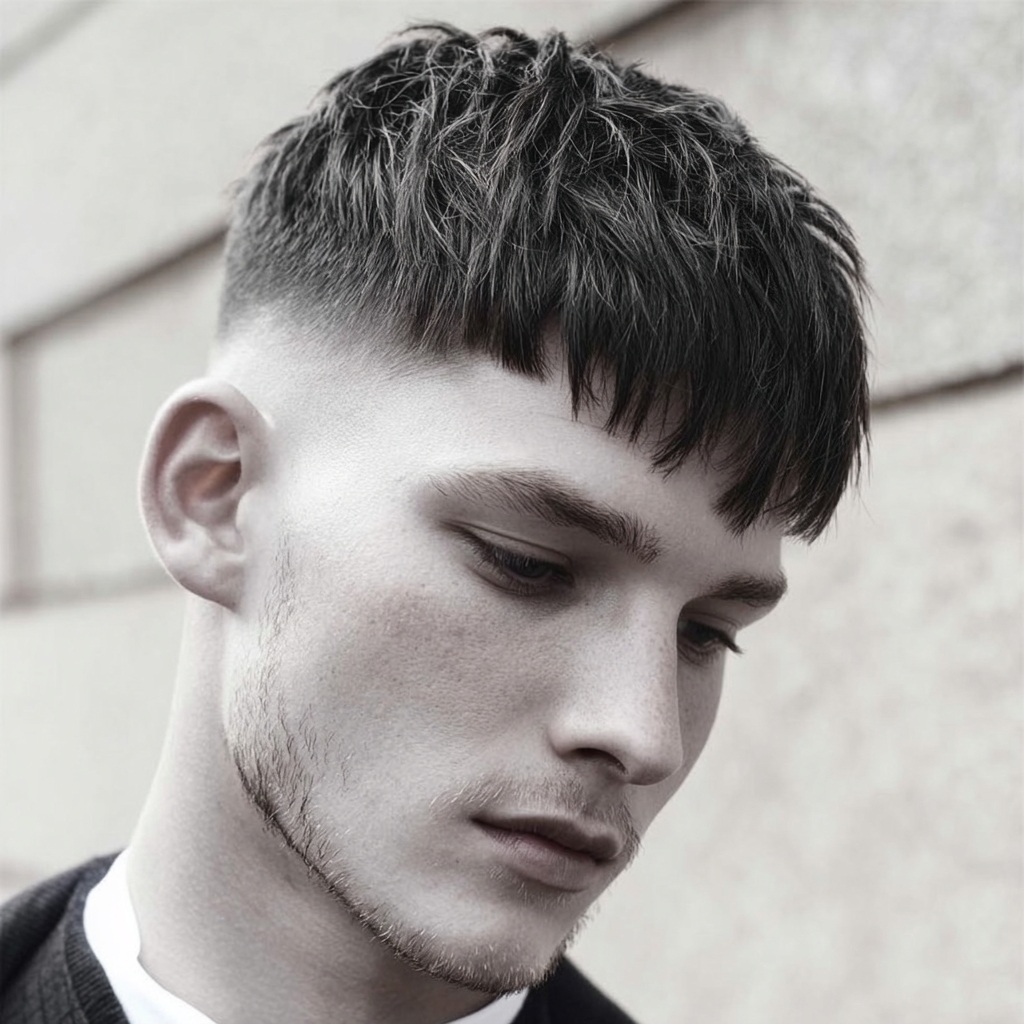
Features a dramatic fade that starts high on the sides, creating maximum contrast between the top and sides.
The fade begins around the temple area and creates a bold, modern look that’s perfect for making a statement. This style works especially well with sharply defined fringe lines.
7. Low Fade Caesar Cut
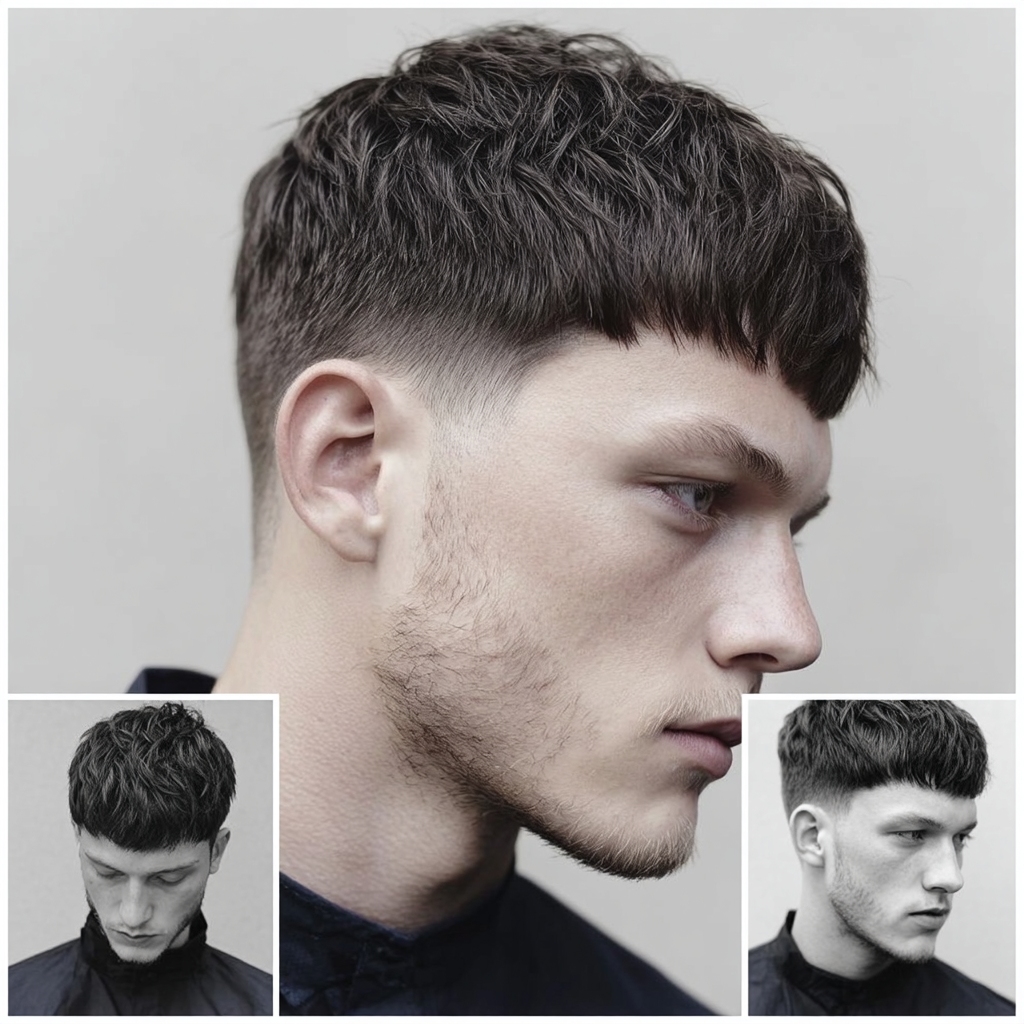
A more subtle approach where the fade begins just above the ears and gradually tapers down. This creates a gentler transition and a more conservative appearance while still adding modern flair.
Ideal for professional environments where you want style without being too bold.
Explore More: 25 Low Taper Fade Haircuts for Men: Trending Hairstyles Guide
8. Mid Fade Caesar
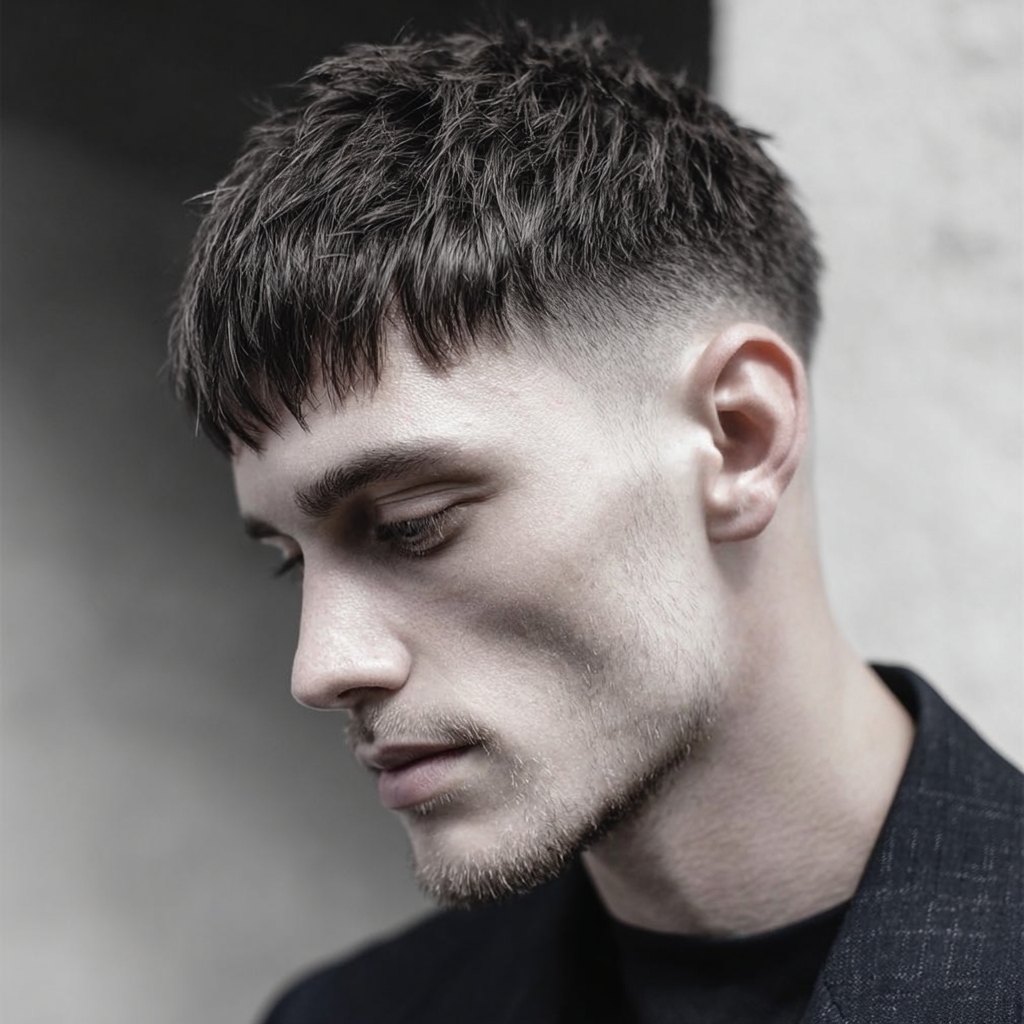
The fade begins halfway up the sides, offering a balanced look between the high and low fade versions.
This is often considered the most versatile fade option, working well in both casual and professional settings. The mid fade provides enough contrast to be interesting without being extreme.
Explore More: Mid Taper Fade & Mid Fade: Complete Style Guide for Straight, Curly, Fluffy, and Messy Hair
9. Short Caesar Cut with Skin Fade
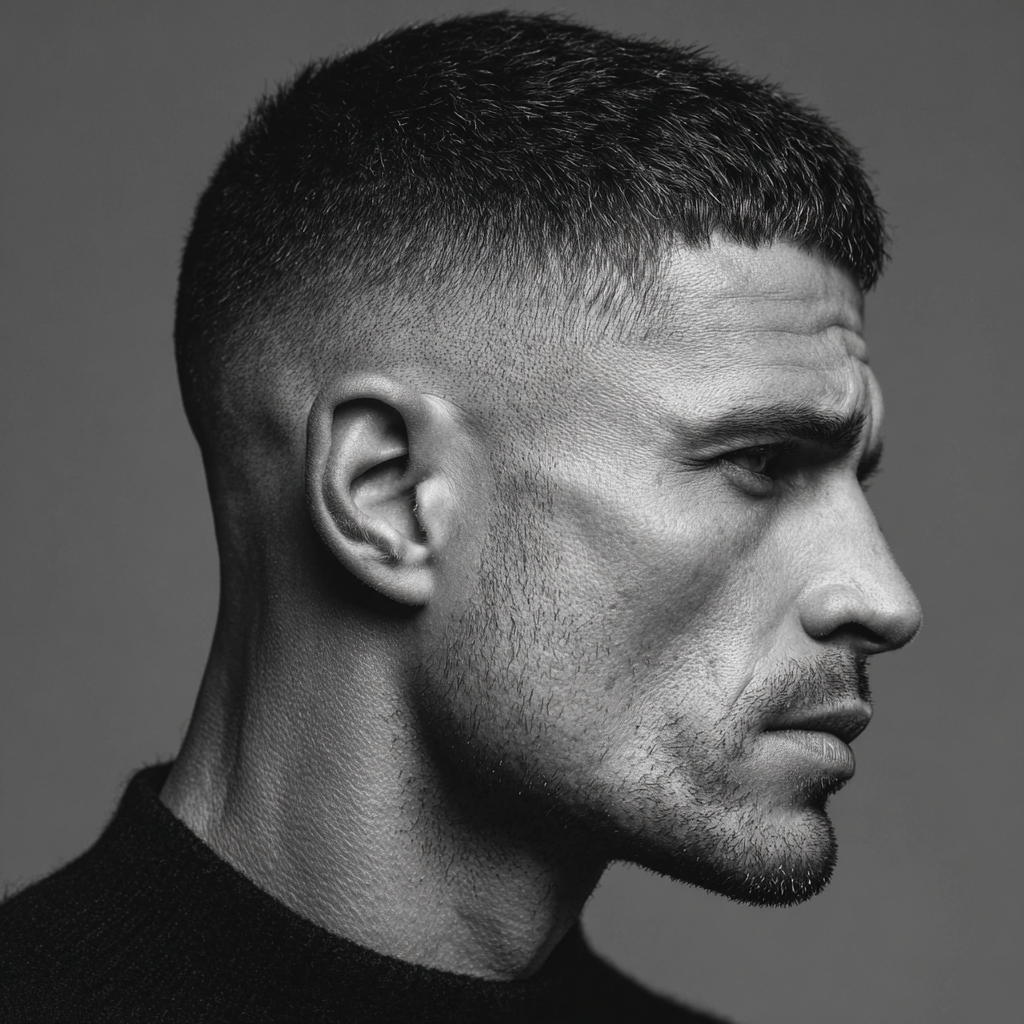
Takes the fade all the way down to the skin at the sides and back, creating maximum contrast with the top. The transition from hair to skin is gradual and smooth, requiring skilled barbering.
This ultra-modern variation is bold and requires more frequent maintenance to keep the fade crisp.
10. Taper Caesar Haircut
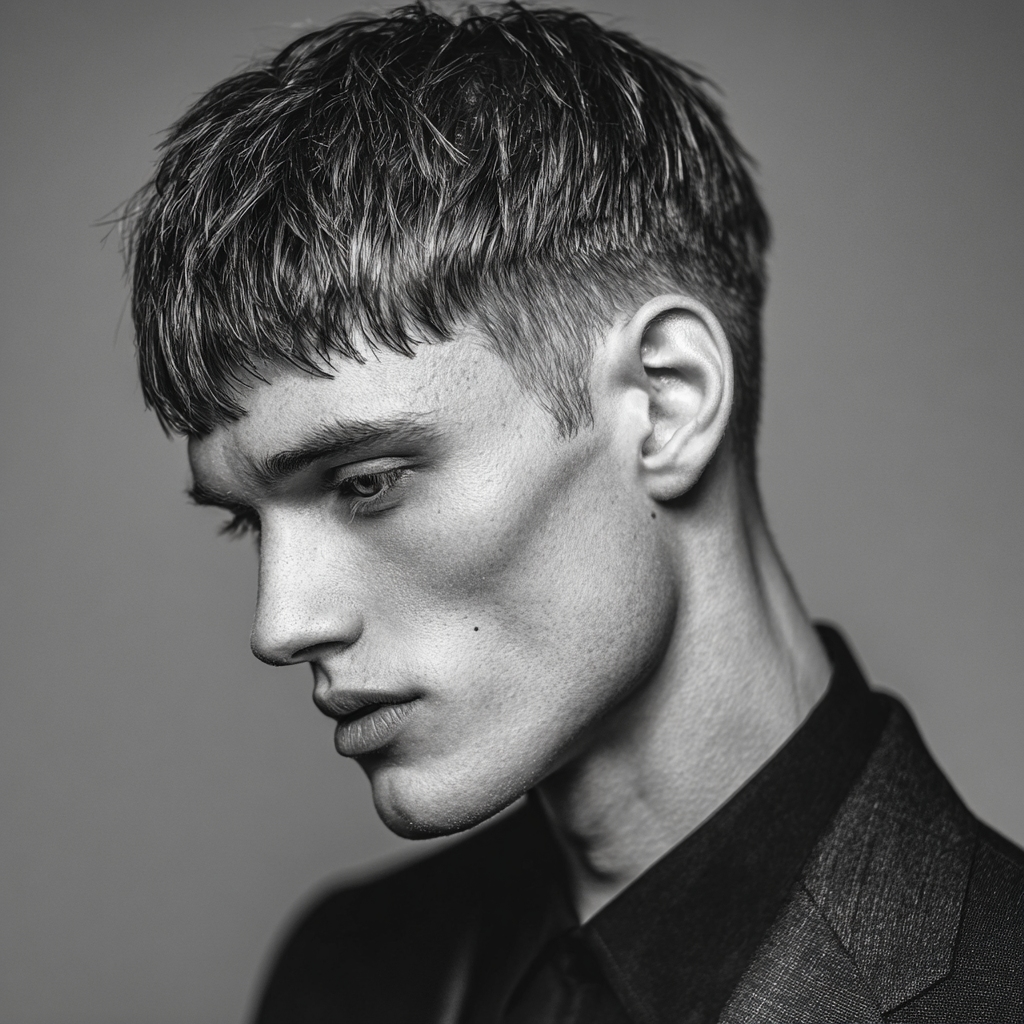
Similar to a fade but with a more subtle, gradual shortening of hair on the sides and back using scissors rather than clippers.
The taper cut creates a softer, more natural transition that’s less dramatic than a fade. This classic barbering technique suits men who prefer traditional styling.
11. Micro Fringe Caesar

A refined variation featuring a very short, tightly controlled fringe that sits just above the forehead. The micro fringe sharpens the classic Caesar silhouette while maintaining its forward direction.
This subtle adjustment modernizes the cut without introducing elements that conflict with its structure.
12. Short Messy Caesar Haircut

A deliberately disheveled version with tousled texture and an unstructured fringe. The hair is cut with similar principles but styled to look effortlessly undone.
This casual variation works well for creative professionals or weekend styling, offering a relaxed alternative to the traditional neat Caesar.
13. Caesar Haircut with Undercut

A sharper, more modern take on the classic Caesar. The Caesar undercut keeps the signature forward fringe but contrasts it with clearly disconnected sides and back.
The top is left longer and heavier, while the undercut creates a bold separation that gives the style structure and edge without drifting into try-hard territory.
Explore More: 15+ Undercut Hairstyles for Men of All Ages
14. Caesar with Beard

Pairs any Caesar variation with complementary facial hair, creating a complete, cohesive look. A well-groomed beard balances the short haircut and adds maturity to the style.
The combination works particularly well with faded sides, where the fade can blend seamlessly into the beard line.
15. Cropped Caesar Haircut
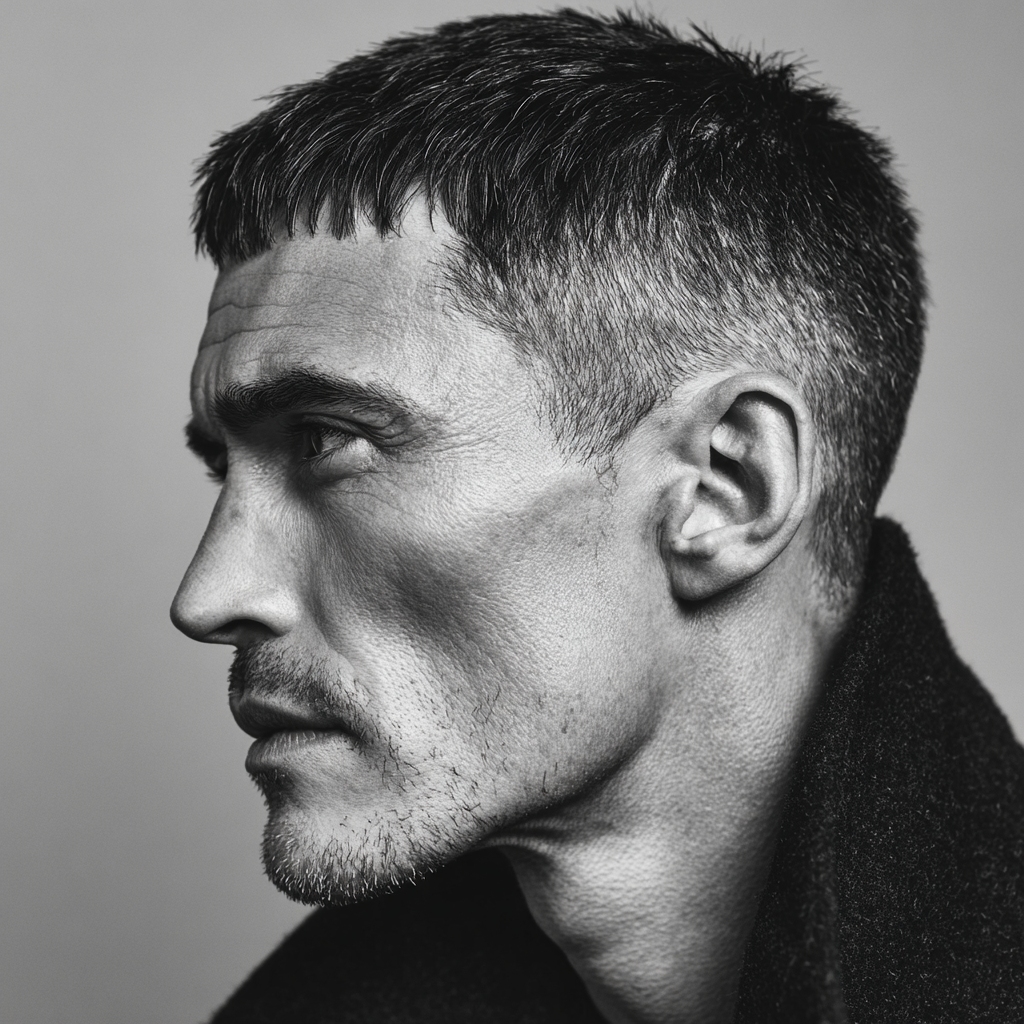
A stripped-back, no-frills version of the classic Caesar where the hair is cut uniformly short across the top and fringe, with minimal contrast between sections.
The emphasis is on proportion and head shape rather than fades, texture, or styling. This variation feels timeless, practical, and deliberately understated.
16. Platinum Caesar Cut

Any Caesar variation dyed platinum blonde or another bold, light-reflective color. The dramatic color shift turns a traditionally minimal haircut into a statement look, placing the Caesar firmly in contemporary fashion territory.
Popularized in part by soccer players, this trend emphasizes contrast, texture, and shape, offering a modern, editorial edge without changing the haircut itself.
17. Curly Caesar Haircut
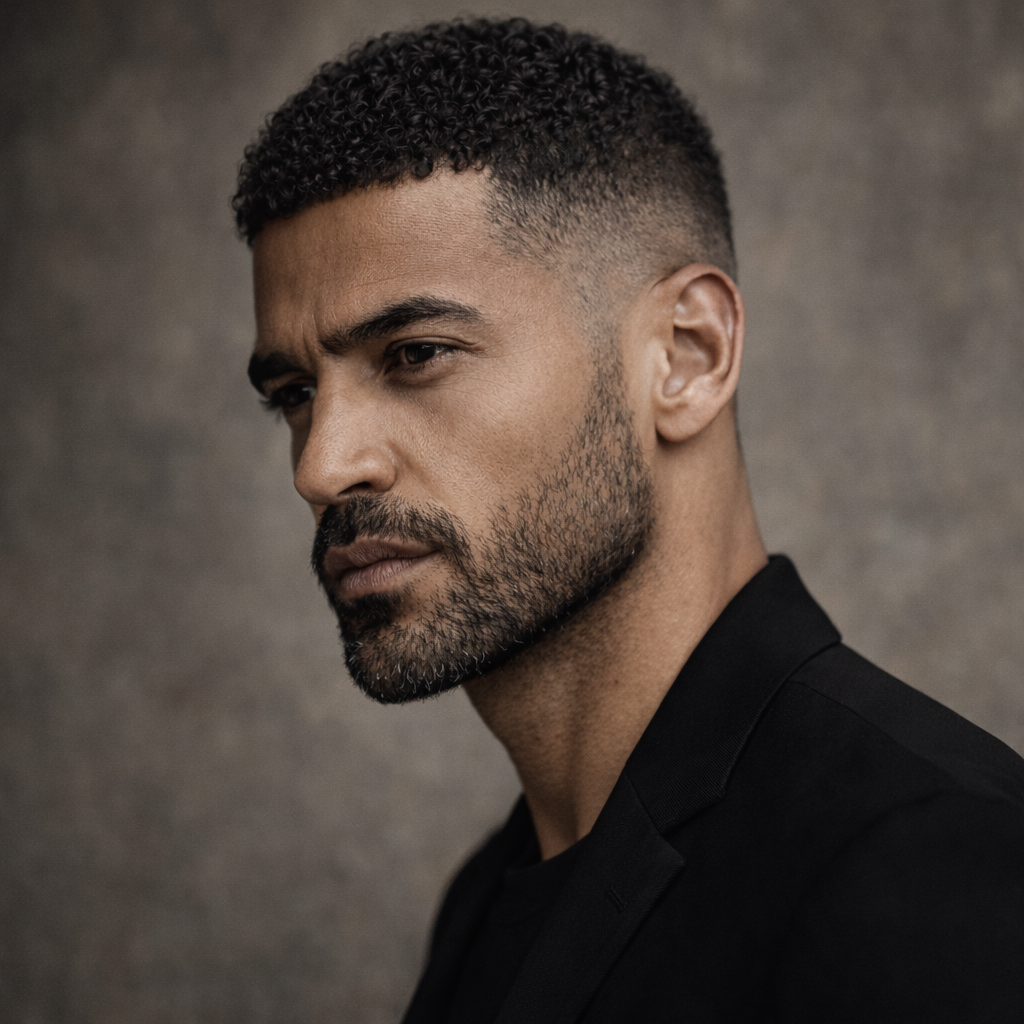
Specially adapted for naturally curly or coily hair, maintaining the Caesar’s forward direction while embracing natural texture.
The curls add volume and dimension, creating a unique interpretation of the classic style. This variation works beautifully with all curl types and requires products that enhance natural curl patterns.
18. Relaxed Fringe Caesar

A softer interpretation of the Caesar where the fringe is slightly longer and worn naturally rather than tightly controlled.
The top remains short and structured, but the fringe moves freely, creating a casual, effortless look. This variation bridges classic Caesar proportions with a more laid-back, everyday feel.
Explore More: 30+ Fringe Haircut Styles for Men: Modern and Classic Variations
19. Low-Contrast Caesar
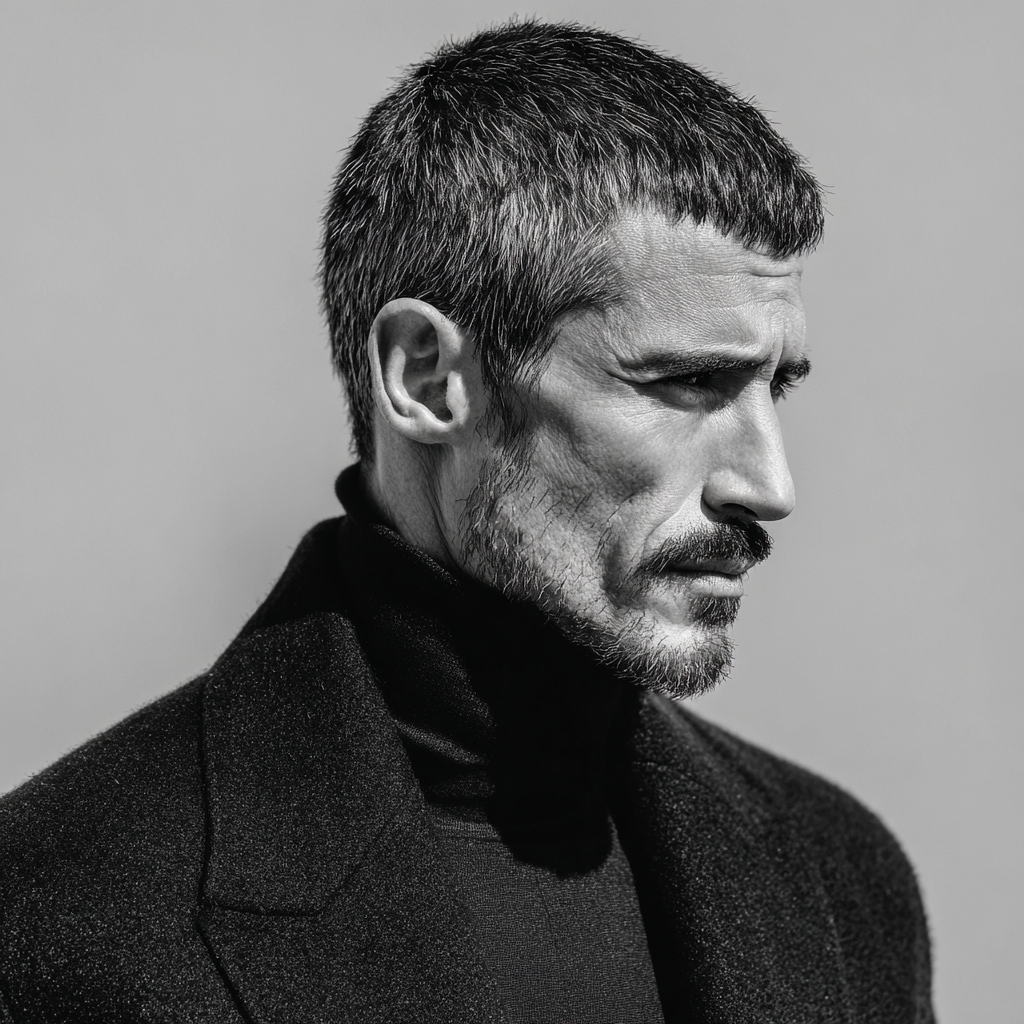
A subtle variation of the Caesar haircut where the difference between the top and sides is intentionally minimal.
Instead of sharp fades or decorative elements, the haircut relies on proportion and balance, creating a soft, cohesive silhouette. This understated approach feels modern, refined, and easy to maintain.
20. Textured Forward Caesar Haircut

A modern update that keeps the hair moving forward but introduces light layering and natural texture throughout the top.
Unlike messy versions, the texture here is intentional and controlled, adding dimension without disrupting the Caesar’s clean silhouette. The result is relaxed but polished, suitable for everyday wear.
How to Style a Caesar Haircut
Daily Styling: Apply a small amount of light pomade, styling cream, or matte clay to damp hair. Use your fingers or a comb to brush everything forward toward your forehead. The style should look natural and effortless.
For Texture: Use a texturizing paste or sea salt spray and work it through with your fingers, pulling sections forward and slightly to the side for a more lived-in look.
For Curly Hair: Apply a curl-defining cream or leave-in conditioner to damp hair and let it air dry or use a diffuser, gently encouraging curls forward.
For Formal Occasions: Use a medium-hold pomade for a sleeker, more polished appearance. Comb hair forward with clean, defined lines.
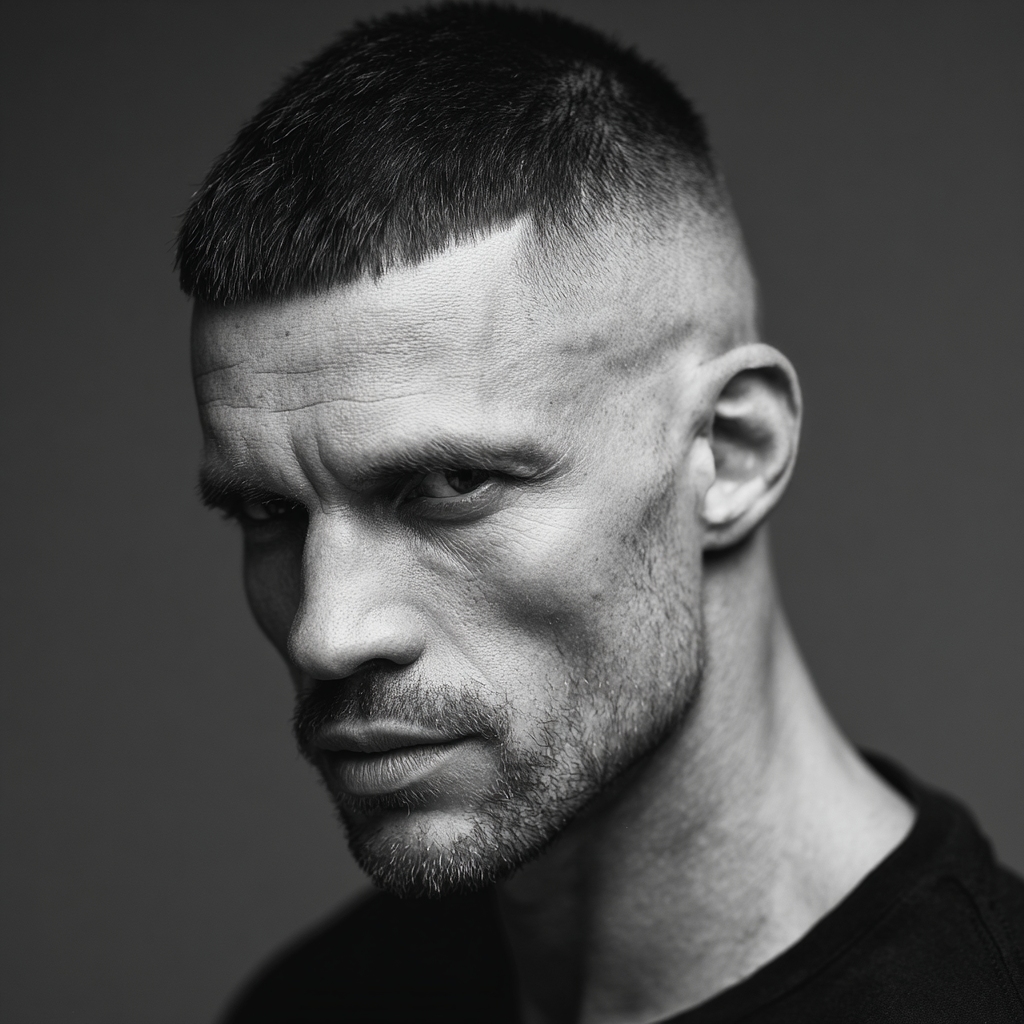
A sharp, modern Caesar featuring a clean forward fringe and tightly faded sides, blending classic structure with contemporary precision.
Maintenance Tips
Regular Trims: Visit your barber every 3-4 weeks to maintain the shape and length, especially if you have a fade.
Home Maintenance: For versions with fades or line ups, you may want to touch up edges at home between barber visits using a trimmer.
Product Selection: Use lightweight products that won’t weigh down the short hair or make it look greasy.
Washing Routine: The Caesar’s short length means it’s less prone to oiliness, so washing every other day is often sufficient.

A soft forward fringe and natural texture, offering a clean yet contemporary update on the classic style.
Notice how the length of a Caesar haircut can vary, but the defining element is the shape. As long as the hair stays compact with a forward fringe that echoes the clean, rounded silhouette seen in ancient Roman statues, it remains a Caesar.
Who Should Get a Caesar Haircut?
The Caesar works exceptionally well for:
- It works well on men with receding hairlines or thinning hair on top
- Those seeking a low-maintenance, practical style
- Men with active lifestyles who need hassle-free hair
- Anyone wanting a professional yet stylish appearance
- Those with rounder face shapes (the horizontal fringe creates length)
Final Style Thoughts
The Caesar haircut’s enduring popularity stems from its perfect balance of style and practicality.
Whether you choose a classic version or a modern variation with fades and texture, you’re getting a haircut that’s stood the test of time while remaining completely contemporary. The numerous variations mean there’s a Caesar style for every personality, profession, and preference.
Consult with a skilled barber who can assess your hair type, face shape, and lifestyle to recommend the perfect Caesar variation for you.
With proper maintenance and the right styling products, your Caesar haircut will keep you looking sharp with minimal daily effort.
—Edited by Fernando Lahoz-García, a fashion art director and journalist with over 15 years of experience working across the U.S. and Europe. Currently based in Florida.
Best Haircuts for Men with Thick, Voluminous Hair
Stylish Hairstyles for Men Over 50 with Glasses
Haircuts for Men with Curly Hair: Top Looks & Styling Guide
Best Haircuts for Men 2025: Top Trending Styles
Layered Haircuts for Men and How to Style Them