
High-Performance Electric Vehicles: Porsche, Lamborghini, and Other Supercar Innovators
The automotive world is witnessing a seismic shift: luxury car brands once known solely for roaring engines are now turning their attention to high-performance electric vehicles. From Porsche—which pioneered its Taycan to rave reviews—to Lamborghini, McLaren, and beyond, supercar manufacturers are proving that electric power can be just as exhilarating as traditional combustion engines. The marriage of instant torque, sophisticated battery systems, and aerospace-inspired materials is giving rise to a new generation of electrified exotica.
In this article, we’ll examine the electric transformations underway at Porsche and other elite marques. We’ll delve into their flagship EVs, engineering breakthroughs, and the unique driving experiences these cars offer. Along the way, we’ll highlight how each brand balances heritage with innovation, ensuring that the emotion of high-performance motoring remains intact. If you’re curious about where the next wave of supercar evolution is headed—and how some of the world’s most revered brands are adapting—read on to discover the future of electrified speed, luxury, and sustainability.
Porsche: Redefining Electric Performance
The Groundbreaking Taycan a High-Performance Electric Vehicle
Porsche made a bold move with the Taycan, introduced in 2019. A four-door electric sports sedan, the Taycan epitomized Porsche’s legendary performance ethos:
- 0-60 mph in well under 3 seconds in high-end variants.
- 800-volt architecture allowing faster charging and consistent power output.
- Signature handling that fans of the 911 lineage appreciate.

Upcoming Electric Models:
- Macan EV: Porsche is developing an all-electric version of its popular Macan SUV, expected to feature the brand’s signature performance characteristics.
- 718 Boxster and Cayman EVs: The 718 series, encompassing the Boxster and Cayman models, is slated to transition to fully electric versions. These models aim to deliver a lightweight and balanced driving experience, maintaining the essence of their gasoline-powered predecessors.
- Cayenne EV: Porsche plans to electrify the Cayenne SUV, aligning with its broader electrification strategy.
Expanding the Electric Family
Building on the Taycan’s success, Porsche is rumored to be developing EV and hybrid versions of its iconic 911 classic car, as well as electric crossovers. This expansion is part of Porsche’s goal to have 80% of its lineup electrified by the early 2030s, merging race-inspired performance with eco-conscious technology.
Lamborghini: Charging Toward a New Bull Market
The Sián and Beyond
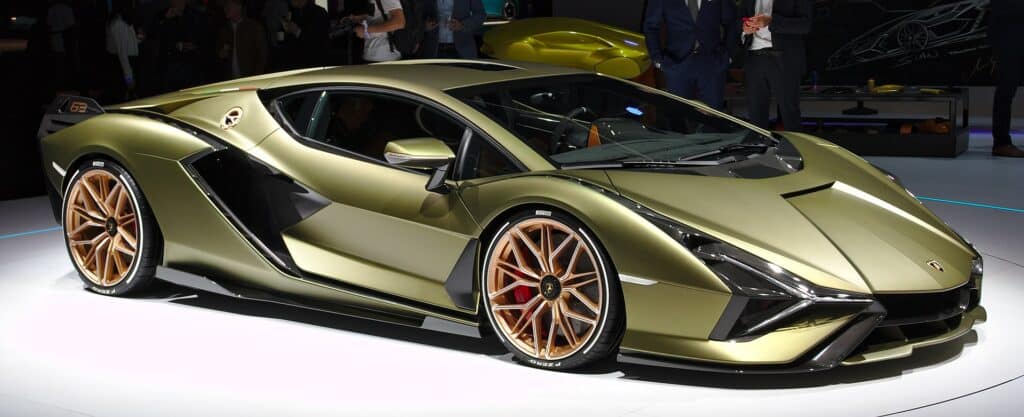
Though not fully electric, Lamborghini’s Sián utilized a supercapacitor-based hybrid system, hinting at the brand’s plan to integrate electrification. Its V12 roar remains central to Lamborghini’s identity, but the assist from electric components elevates torque and responsiveness.
Lamborghini has been strategically integrating electrification into its lineup, blending traditional performance with innovative technology.
Lamborghini’s Electrification Journey
- Terzo Millennio Concept: Introduced in 2017, this concept car showcased Lamborghini’s vision for future electric super sports cars, emphasizing energy efficiency and advanced materials.
- Revuelto: Launched in 2023, the Revuelto is Lamborghini’s first plug-in hybrid, combining a V12 engine with three electric motors, delivering a combined output of 1,015 CV.
- Urus SE: In 2024, Lamborghini unveiled the Urus SE, a plug-in hybrid variant of its popular SUV, featuring a new design and an electric-only range of over 60 km.
- Lanzador: Revealed in 2023, the Lanzador is a 2+2 coupé concept car with significant ground clearance, equipped with two electric motors providing all-wheel drive and a peak power exceeding one megawatt.

Urus: A Sales Leader
The Urus SUV has significantly contributed to Lamborghini’s sales success. In 2024, Lamborghini delivered a record 10,687 vehicles, with the Urus playing a pivotal role in this achievement.
As stated in the video below, the Lamborghini Urus is primarily classified as a high-performance luxury SUV. However, due to its exceptional performance capabilities, it often blurs the lines between traditional SUV classifications and those of supercars. Lamborghini refers to the Urus as the first “Super Sport Utility Vehicle,” combining the soul of a supercar with the functionality of an SUV.
Upcoming All-Electric Lambo
Reports suggest Lamborghini is heavily investing in battery research to launch a fully electric model, possibly an SUV or four-seater GT. Striking a balance between brutal horsepower and environmental regulations poses design and engineering challenges, but Lamborghini’s track record implies a jaw-dropping debut.
Aston Martin: British Elegance Meets EV Ambition
Aston Martin has embarked on a journey toward electrification, aiming to blend its legacy of British elegance with modern electric vehicle (EV) technology.
The RapidE Concept
In 2015, Aston Martin unveiled the RapidE concept, marking its initial foray into electric mobility. This concept car was based on the Rapide Sedan and showcased the brand’s commitment to zero-emission luxury without compromising performance. Although the RapidE was intended for limited production, it underscored Aston Martin’s dedication to evolving alongside its competitors while maintaining quintessential British style.
Lagonda Revival
Aston Martin announced plans to resurrect the Lagonda marque as a fully electric luxury sub-brand, positioning it to rival high-end EV sedans and crossovers. The Lagonda Vision Concept, revealed in 2018, embodied this vision by integrating advanced electrification and autonomous driving technologies. Lagonda aimed to be the world’s first zero-emission luxury brand, harmonizing true luxury with modern design.

Lagonda All-Terrain Concept
Building on the Vision Concept, Aston Martin introduced the Lagonda All-Terrain Concept at the 2019 Geneva Motor Show. This ultra-stylish, fully electric vehicle was designed to transport occupants to remote locations in supreme luxury, showcasing the brand’s commitment to innovation and sustainability.
Recent Developments
Despite these ambitious plans, Aston Martin has faced challenges in its electrification journey. The company has delayed the launch of its first battery electric vehicle (BEV) multiple times, with the latest postponement pushing the release to the latter part of the decade. This decision aligns with a strategic shift to prioritize plug-in hybrid models, reflecting the evolving market dynamics and consumer preferences.

McLaren: Hybrid Supercars and Electric Horizons
Artura: The First Series-Production Hybrid
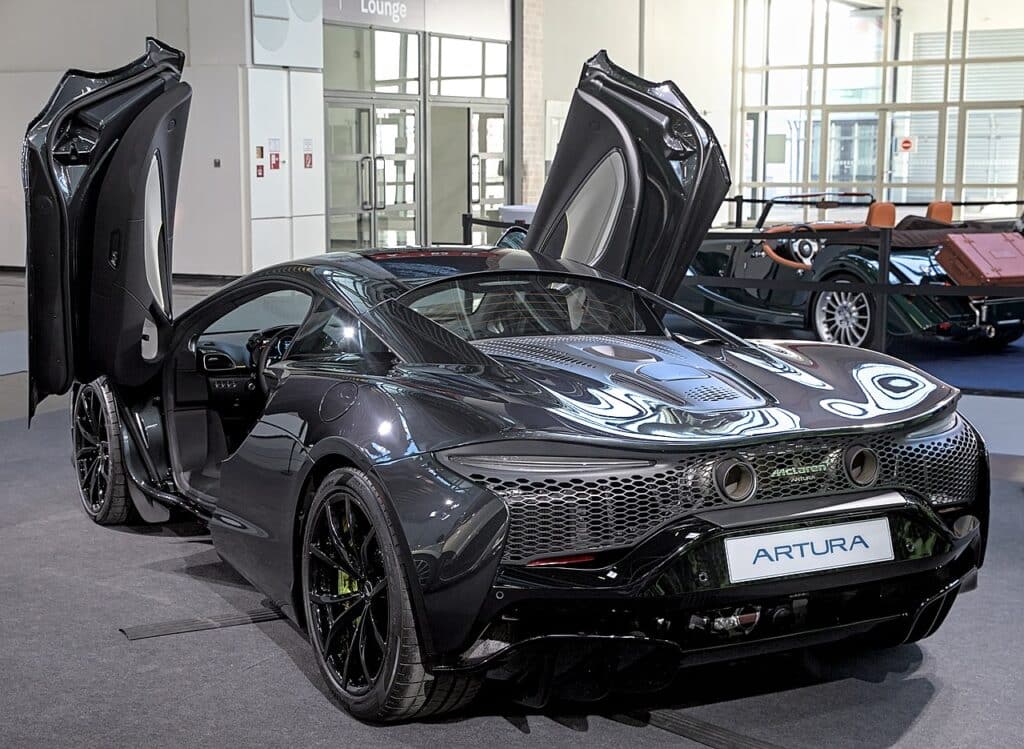
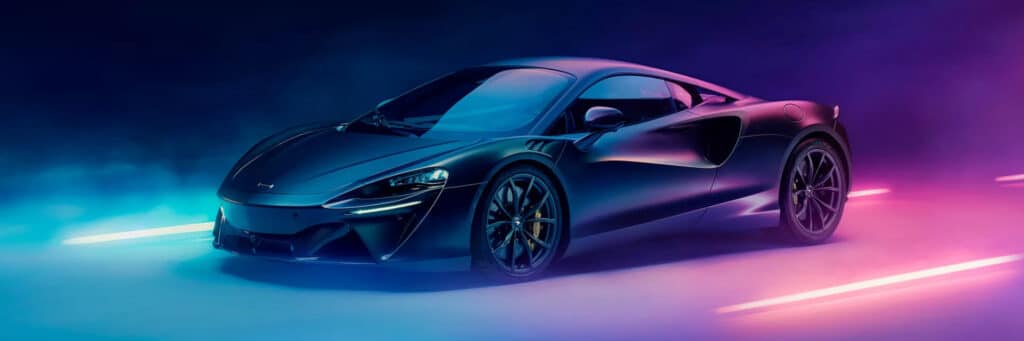
The McLaren Artura marks a significant milestone as the brand’s inaugural series-production hybrid supercar. It features a twin-turbocharged 3.0-liter V6 engine paired with an electric motor, collectively producing 690 horsepower and 531 lb-ft of torque. This configuration enables acceleration from 0 to 60 mph in approximately 2.6 seconds and a top speed of 205 mph. The Artura’s 7.4 kWh battery offers an electric-only range of up to 19 miles, emphasizing McLaren’s commitment to blending high performance with everyday usability.
Artura Spider: Open-Air Hybrid Performance
Expanding the Artura lineup, McLaren introduced the Artura Spider, a convertible variant that retains the coupe’s performance credentials while offering open-air driving experiences. The retractable hardtop operates swiftly, and the Spider’s design ensures minimal weight gain, preserving the dynamic handling characteristics McLaren is renowned for.
Future Electrification Plans
While McLaren has not disclosed specific timelines for a fully electric model, the company continues to invest in hybrid technology and partnerships with battery technology firms. This strategic approach aims to maintain McLaren’s track-focused performance ethos as it transitions towards electrification.
Bugatti: Navigating the Electric Horizon
Bugatti, celebrated for producing some of the world’s fastest production cars, is currently emphasizing hybrid technology. The brand plans to continue developing hybrid models throughout the 2020s, with a fully electric vehicle not expected until after 2030.
In a bold move that melds its storied legacy with cutting-edge innovation, Bugatti unveiled the Tourbillon, the highly anticipated electric successor to the Chiron. This new hypercar signifies Bugatti’s commitment to embracing hybrid technology while maintaining the unparalleled performance and luxury that define the brand.
Recent Developments: Bugatti Tourbillon
In recent news, Manchester City footballer Erling Haaland purchased a rare Bugatti Tourbillon for £4 million. This exclusive car features a hybrid powertrain, combining a petrol engine with electric components, capable of reaching 62 mph in two seconds and a top speed of 277 mph.

Koenigsegg: Pioneering Hybrid Innovations
Koenigsegg’s Gemera represents a bold venture into hybrid technology, combining a compact combustion engine with electric motors to deliver exceptional performance. This four-seat hypercar showcases the brand’s commitment to innovation and sustainability.
Future Electric Ambitions
Founder Christian von Koenigsegg has expressed interest in developing a fully electric hypercar. However, he acknowledges the challenges posed by current battery technology and the need to justify the high costs associated with hypercars in an electric age.
The Convergence of Racing and Electric Innovation
Formula E and Endurance Racing
Many of these high-end brands have participated in or studied Formula E—the premier electric motorsport series—using it as a testing ground for battery management, aerodynamics, and regenerative braking systems. Lessons gleaned from the track inform the day-to-day refinement of consumer-focused supercars.
Collaborative Breakthroughs
Some of the best EV tech emerges from partnerships between manufacturers, technology startups, and racing teams. These cross-industry collaborations accelerate battery research, charging infrastructure improvements, and advanced driver-assistance solutions—ultimately benefiting luxury car buyers.
Navigating Challenges and Opportunities
Balancing Heritage with Innovation
Each of these manufacturers faces the delicate task of embracing electrification without eroding brand identity. From trademark exhaust notes to signature design cues, preserving authenticity while integrating modern technology is no small feat.
Infrastructure and Range Anxiety
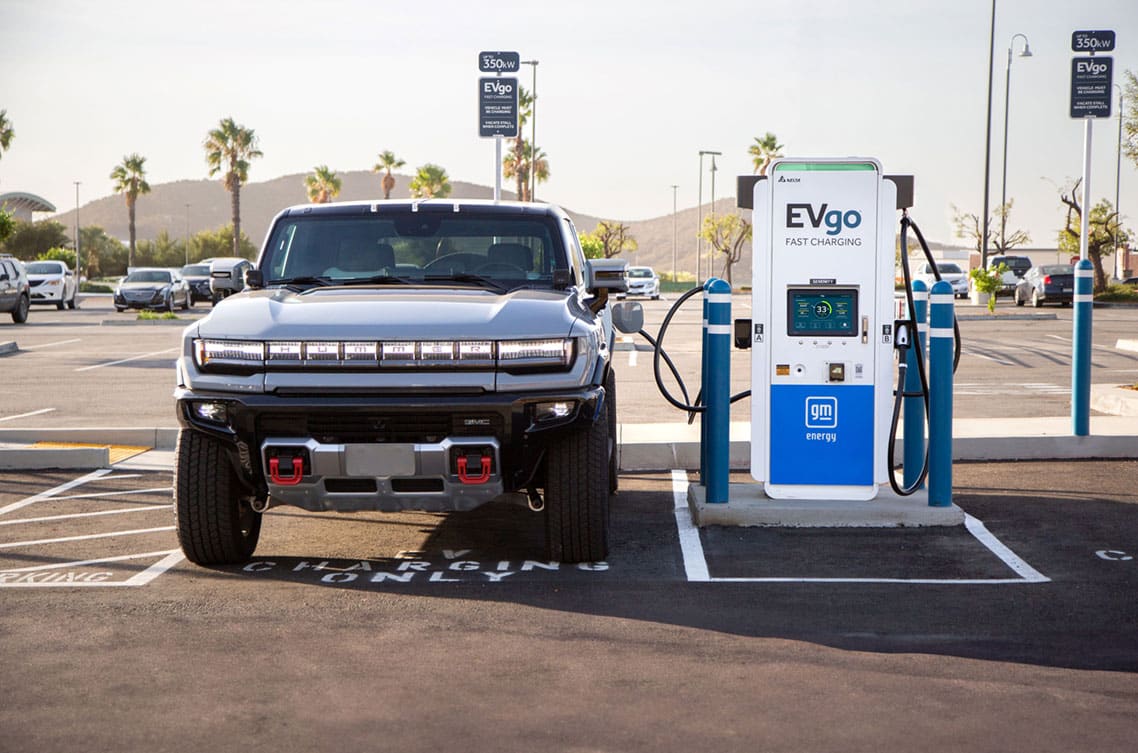
Performance EVs can achieve thrilling acceleration but still rely heavily on charging networks. As fast-charging infrastructure expands worldwide, owners of high-end electric supercars gain more freedom to use these vehicles for daily or extended journeys.
Final Notes about Luxury Electric Cars
The wave of high-performance electric vehicles is fundamentally reshaping our understanding of speed, luxury, and sustainability. Manufacturers like Porsche, Lamborghini, Aston Martin, McLaren, and Bugatti once championed roaring internal combustion engines, yet they now innovate aggressively with battery-powered technology. As these brands adapt to stringent regulations and evolving consumer tastes, the supercar landscape undergoes a dramatic transformation—one that harmonizes a storied past with a cleaner, electrified future.
Based on the distinctions among high-performance cars, supercars, and hypercars, the vehicles mentioned in the article can be categorized as follows:
High-Performance Cars:
- Porsche Taycan: An all-electric sports sedan that delivers exceptional performance with 0-60 mph times under 3 seconds in its higher trims. While it offers high performance, it is designed for daily usability and is produced in relatively higher numbers compared to supercars and hypercars.
Supercars:
- McLaren Artura: A plug-in hybrid supercar featuring a twin-turbocharged V6 engine paired with an electric motor, producing a combined 671 horsepower. It accelerates from 0 to 62 mph in 2.9 seconds and represents McLaren’s commitment to blending high performance with hybrid technology.
- Lamborghini Sián: Lamborghini’s first hybrid supercar, utilizing a supercapacitor-based system alongside a V12 engine to produce a combined output of 819 horsepower. Its design and performance characteristics align with the supercar category.
Hypercars:
- Koenigsegg Gemera: Dubbed a “mega-GT,” the Gemera is a four-seater hypercar featuring a hybrid powertrain that delivers a combined output of 1,700 horsepower. Its innovative design and limited production run categorize it as a hypercar.
These classifications reflect each vehicle’s performance capabilities, exclusivity, and technological advancements within the automotive industry.
Electric Cars 101: A Beginner’s Guide to EVs

From Dunes to Downtown: The Ultimate Jeep Experience in Dubai
Cruising in Style: Tips for Matching Your Outfit to Your Car
A Look Into Jaguar Cars History: From Inception to Global Icon
Understanding High-Performance Cars, Supercars, and Hypercars